
Yoga for back pain can help reduce stiffness and improve function for many people, especially with chronic, non-specific low back pain, when it’s done gently and consistently. Clinical guidelines from the American College of Physicians include yoga among recommended non-drug options for certain types of low back pain, and a 2022 review from the Cochrane Library found yoga may provide small improvements versus no exercise for chronic non-specific low back pain.
Understanding which poses are “back-friendly,” how to modify them, and when to stop is important because the wrong intensity or range can flare symptoms. The guidance below keeps the focus on safe, beginner-friendly positions and simple form cues.
Does yoga actually help back pain?
For many people, yes—but expectations should be realistic.
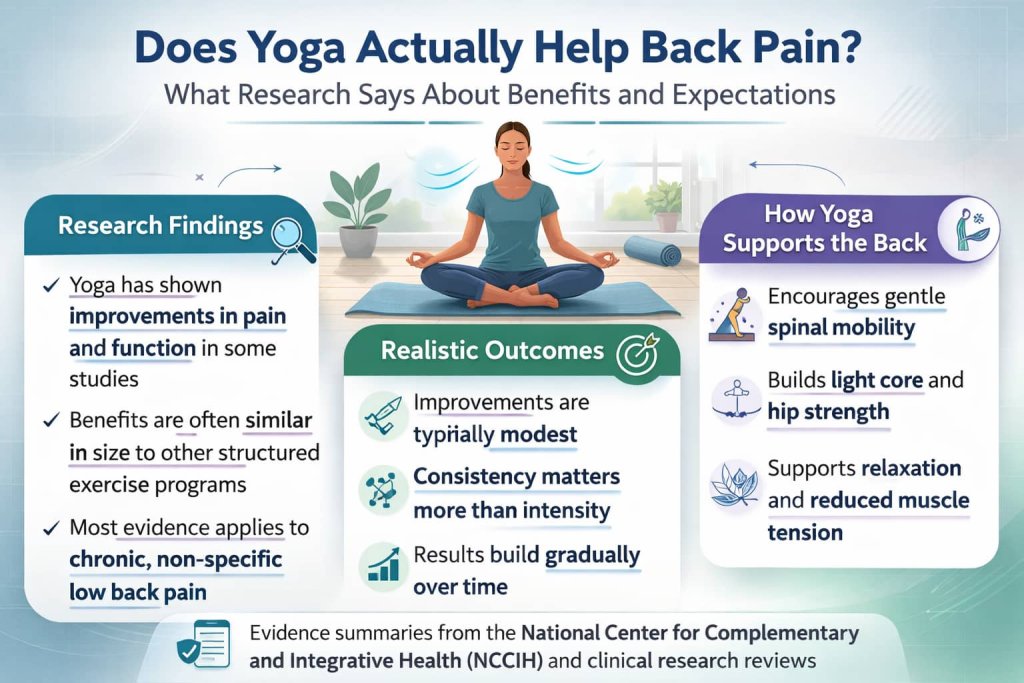
Evidence summaries from the National Center for Complementary and Integrative Health (NCCIH) note that yoga has shown improvements in pain and function for low back pain in some studies, often similar in size to other structured exercise programs. Research reviews also suggest that benefits are typically modest and more noticeable with consistent practice rather than occasional sessions.
In practice, yoga tends to work best when it’s treated like gentle movement training: mobility, light strength, and relaxation, repeated consistently.
Who Yoga for Back Pain Is Best For
Yoga for back pain is most suitable for people with chronic, non-specific low back pain, meaning pain not linked to a serious underlying condition. The American College of Physicians recommends non-drug treatments like exercise and yoga as first-line options for many cases of ongoing low back discomfort.
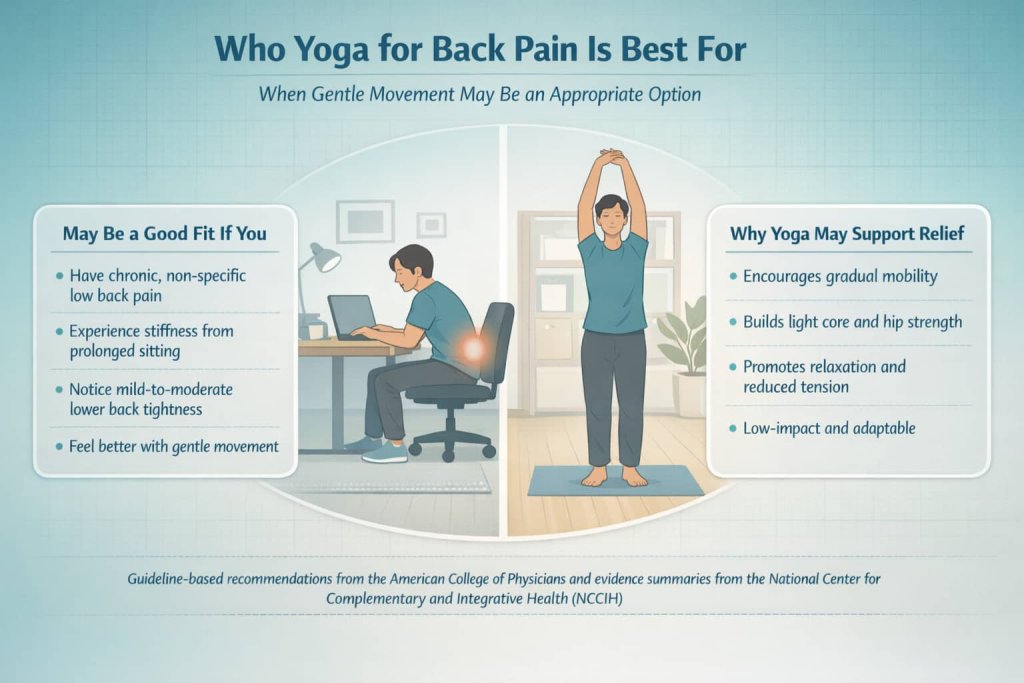
You may benefit most if you:
- Have stiffness from prolonged sitting
- Experience mild-to-moderate lower back tightness
- Feel better with gentle movement rather than rest
- Want a low-impact way to improve flexibility and core support
Evidence summaries from the National Center for Complementary and Integrative Health (NCCIH) note that improvements are usually gradual and modest, especially with consistent practice.
11 Best Yoga Poses for Back Pain Relief and Better Flexibility
These are arranged from gentler “down-regulation” positions to more active mobility and stability.
1) Child’s Pose (Balasana)
How to do it:
- Kneel with big toes together and knees apart (as comfortable).
- Sit back toward your heels.
- Reach arms forward or rest them by your sides.
- Breathe slowly for 5–8 breaths.
Why it works:
This gentle stretch lengthens the back muscles and hips while encouraging slow breathing. It may help reduce muscle guarding and ease stiffness, especially after prolonged sitting.
Muscles worked:
Lats, mid-back muscles, glutes, and deep spinal stabilizers (light activation).
Trainer Tip:
If your knees feel tight or pressured, place a pillow or folded blanket between your thighs and calves for support.
2) Knees-to-Chest (Apanasana)
How to do it:
- Lie on your back with knees bent.
- Hug one knee in, then the other.
- Keep shoulders relaxed against the floor.
- Hold 20–40 seconds.
Why it works:
This position encourages gentle lumbar flexion and can help relieve a tight or compressed lower back sensation.
Muscles worked:
Lower back (gentle stretch) and glutes.
Trainer Tip:
If pulling both knees in feels too intense, hug one knee at a time and switch sides.
3) Supine Twist (Reclined Spinal Twist)
How to do it:
- Lie on your back with knees bent.
- Let both knees slowly fall to one side.
- Keep shoulders heavy on the floor.
- Hold 20–40 seconds per side.
Why it works:
This pose introduces mild spinal rotation, which can improve mobility and reduce stiffness through the mid-to-lower back.
Muscles worked:
Obliques (light), glutes, and spinal rotators (gentle stretch).
Trainer Tip:
Place a pillow or folded blanket under your knees if they do not comfortably reach the floor.
4) Cat-Cow (Marjaryasana–Bitilasana)
How to do it:
- Start on hands and knees.
- Inhale: gently arch your back and lift your chest.
- Exhale: round your upper back and tuck your pelvis slightly.
- Repeat 6–10 slow, controlled reps.
Why it works:
Controlled spinal movement improves joint awareness and warms up tissues without aggressive stretching.
Muscles worked:
Spinal erectors, deep core muscles, and shoulder stabilizers (light).
Trainer Tip:
Keep movements smooth and controlled—avoid forcing the spine into extreme ranges.
5) Sphinx Pose
How to do it:
- Lie on your stomach with elbows under shoulders.
- Place forearms on the floor and gently lift your chest.
- Keep ribs down and glutes relaxed.
- Hold 15–30 seconds.
Why it works:
A mild backbend that may feel helpful for people who respond well to extension-based movements.
Muscles worked:
Spinal extensors, glutes (light), and chest (stretch).
Trainer Tip:
If discomfort increases, lower down and choose a gentler position like Child’s Pose.
6) Low Cobra
How to do it:
- Lie face down with hands under shoulders.
- Press lightly to lift your chest a few inches.
- Keep pelvis in contact with the floor.
- Hold 2–3 breaths and repeat 3–5 times.
Why it works:
This builds gentle spinal extension strength while keeping the movement controlled and low-load.
Muscles worked:
Spinal extensors, upper back muscles, and glutes (light).
Trainer Tip:
Think about lengthening your chest forward rather than pushing upward aggressively.
7) Bridge Pose
How to do it:
- Lie on your back with knees bent and feet hip-width apart.
- Exhale and lift hips until your body forms a gentle line from shoulders to knees.
- Hold 2–5 breaths.
- Lower slowly and repeat 6–10 reps.
Why it works:
Strengthening the glutes and posterior chain can support spinal stability and reduce strain on the lower back.
Muscles worked:
Glutes, hamstrings, and core stabilizers.
Trainer Tip:
If hamstrings cramp, move your feet slightly closer and focus on squeezing your glutes.
8) Figure-4 Stretch (Supine Pigeon)
How to do it:
- Lie on your back with knees bent.
- Cross one ankle over the opposite thigh.
- Gently pull the uncrossed thigh toward your chest.
- Hold 20–40 seconds per side.
Why it works:
Tight hip rotators can contribute to back tension. This stretch targets those muscles and may ease strain patterns.
Muscles worked:
Glutes (deep external rotators) and hips.
Trainer Tip:
Keep your pelvis level and tailbone grounded during the stretch.
9) Downward-Facing Dog
How to do it:
- Start on hands and knees.
- Tuck toes and lift hips up and back.
- Bend knees as needed to lengthen your spine.
- Hold 3–5 breaths.
Why it works:
This pose stretches the posterior chain while encouraging spinal length and shoulder stability.
Muscles worked:
Shoulders, lats, calves, hamstrings, and core stabilizers.
Trainer Tip:
Prioritize a long, neutral spine rather than forcing your heels to the floor.
10) Low Lunge
How to do it:
- Step one foot forward into a lunge.
- Lower the back knee to the floor.
- Keep ribs stacked over hips.
- Hold 20–40 seconds per side.
Why it works:
Improving hip flexor flexibility may reduce anterior pelvic tension that can contribute to lower back strain.
Muscles worked:
Hip flexors (stretch), glutes (support), and quadriceps.
Trainer Tip:
If you feel pinching in the front hip, shorten your stance and gently tuck your pelvis.
11) Legs-Up-the-Wall
How to do it:
- Sit beside a wall and lie back as you swing your legs up.
- Scoot hips toward the wall as comfortable.
- Rest arms by your sides and breathe slowly.
- Stay for 2–5 minutes.
Why it works:
This restorative position promotes relaxation and reduces overall muscle tension after long periods of sitting or standing.
Muscles worked:
Minimal activation; gentle stretch for hamstrings and calves.
Trainer Tip:
If hamstrings feel tight, move your hips slightly farther from the wall to reduce stretch intensity.
A Simple 10-Minute Yoga for Back Pain Routine
Do this 3–5 days per week:
- Cat-Cow: 6–10 reps
- Child’s Pose: 5–8 breaths
- Figure-4 Stretch: 20–40 seconds per side
- Low Lunge: 20–40 seconds per side
- Bridge Pose: 6–10 reps
- Supine Twist: 20–40 seconds per side
- Legs-Up-the-Wall: 2–5 minutes
For many people, consistency matters more than intensity. Keep the poses that feel clearly better during and after, and reduce or remove any that flare symptoms.
Quick safety rules before you start
Use these rules for safer practice, especially if your back is currently sensitive:
- Aim for “comfortable effort,” not pain. Stop any pose that causes sharp, burning, or worsening symptoms.
- Move slowly in and out of positions; avoid bouncing or forcing end ranges.
- Use props (pillow, folded blanket, yoga blocks) to reduce strain.
- Keep breaths slow and steady; if you’re holding your breath, the pose is too intense.
If your back pain is severe, worsening, limiting day-to-day activities, or not improving after a few weeks of home care, check in with a clinician, as advised by the NHS.
Who yoga for back pain may help most
Yoga is often a good fit if you:
- Have chronic or recurring non-specific low back tightness
- Feel stiff from prolonged sitting
- Want a low-impact way to build mobility and core control
Be more cautious if you have pain shooting below the knee with numbness or weakness, a recent injury, osteoporosis with fracture risk, or you’re unsure what’s causing your pain—get medical guidance first.
Common Mistakes That Can Make Back Pain Worse
- Forcing deep forward folds
- Holding intense twists too long
- Chasing flexibility during flare-ups
- Letting ribs flare and over-arching the low back
- Ignoring hip mobility and glute strength
When to Avoid Yoga for Back Pain
Yoga is not appropriate for every type of back pain. Seek medical guidance before practicing if you have:
- Severe or worsening pain
- Back pain after a fall or injury
- Numbness in the groin or both legs
- Loss of bladder or bowel control
- Progressive leg weakness
The NHS advises medical evaluation when back pain is severe, persistent, or accompanied by neurological symptoms.
If you have osteoporosis, significant nerve-related leg pain, or a diagnosed spinal condition, consult a healthcare professional before starting yoga.
FAQs
Is yoga safe for back pain?
It can be, especially when it’s gentle and modified. If symptoms are severe or worsening, seek medical advice before continuing.
How often should I do yoga for back pain?
Short routines performed several times per week are often more helpful than long, infrequent sessions.
Which yoga poses should I avoid with back pain?
Avoid any pose that causes sharp pain, numbness, or worsening symptoms. Deep forward folds and aggressive backbends may need modification.
How long does it take to feel improvement?
Some people feel short-term relief after a session, but meaningful change usually requires several weeks of consistent practice.
Is yoga better than other exercises for back pain?
Research suggests yoga performs similarly to other structured exercise programs. The best option is one you can do safely and consistently.
Can yoga help sciatica?
Radiating leg pain can have different causes. Gentle movement may help some individuals, but persistent numbness or weakness should be medically evaluated.
Conclusion
Yoga for back pain works best when it is gentle, consistent, and tailored to your comfort level. A simple, repeatable routine often provides more benefit than pushing into deep stretches. Start slowly, track how your back feels over 24–48 hours, and adjust accordingly. If symptoms are severe, worsening, or not improving, seek professional guidance.
This content is for informational purposes only and not medical advice.
References
- Journal of Orthopaedic & Sports Physical Therapy (JOSPT) — Low Back Pain Clinical Practice Guideline (2021)
- NICE (UK) — Low Back Pain and Sciatica in Over 16s: Assessment and Management (NG59)
- Guy’s and St Thomas’ NHS Foundation Trust — Low Back Pain: When to Seek Help
- JAMA Network Open — Virtual Yoga for Chronic Low Back Pain (2024 Randomized Clinical Trial)