
Lower back stretches are gentle movements that can help reduce tightness and support better mobility when done slowly, consistently, and without pushing into pain.
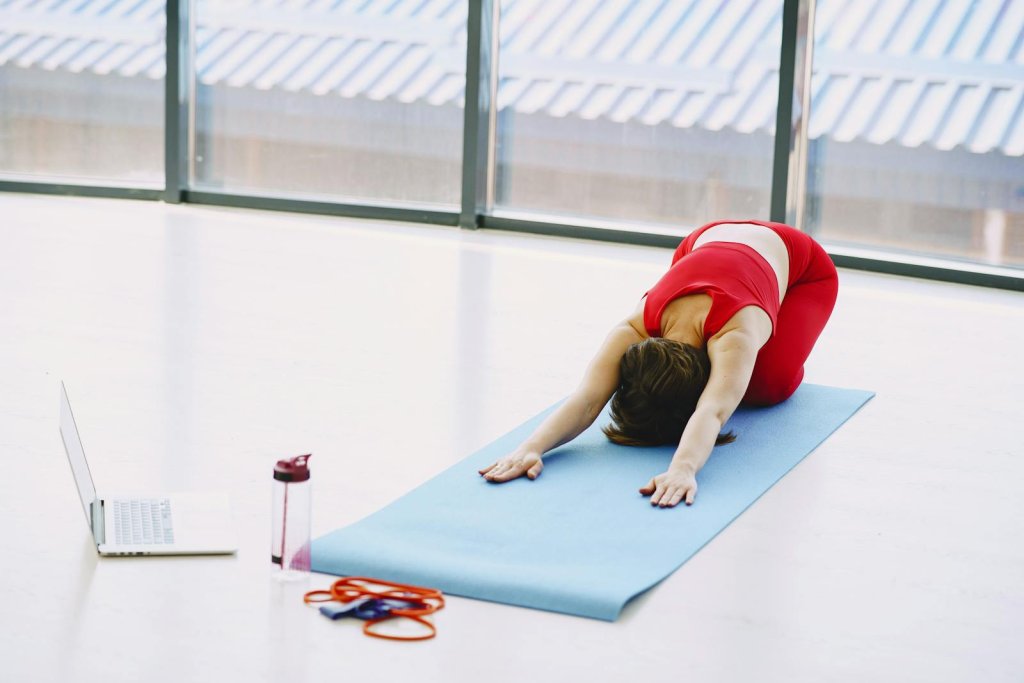
Understanding which stretches to use (and when to stop) matters because the lower back often feels tight due to a mix of hip stiffness, prolonged sitting, and poor movement variety, not just one “tight muscle.”
What are lower back stretches
Lower back stretches are controlled positions and movements designed to improve comfort and range of motion in the lumbar area and nearby regions that influence it, especially the hips, glutes, and hamstrings.
Many “lower back” tightness complaints are linked to surrounding areas, so the best routine usually includes:
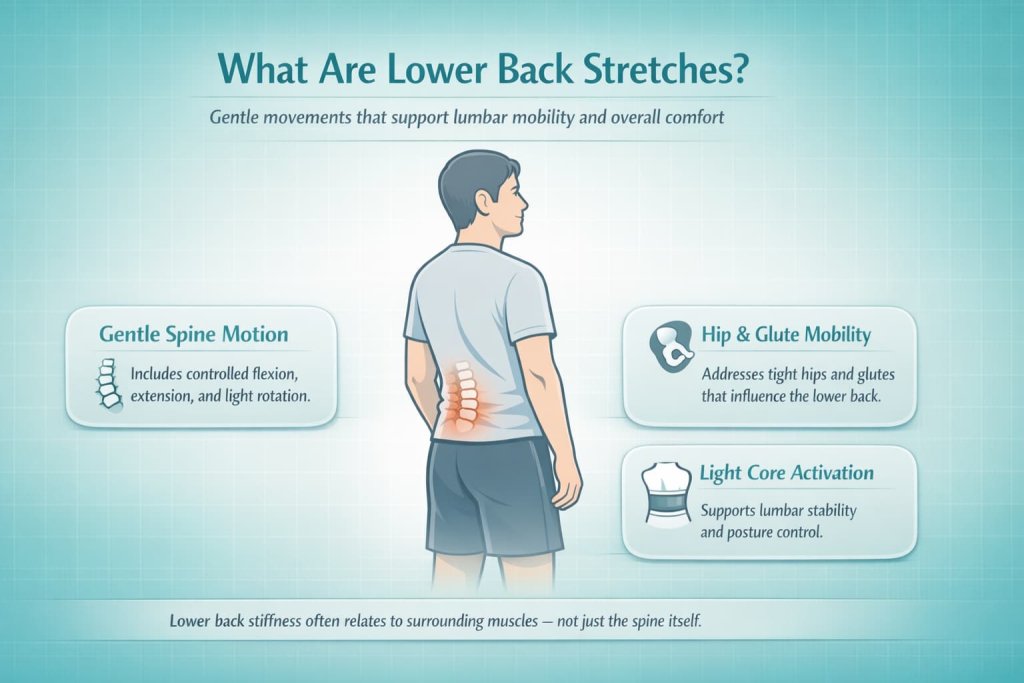
- Gentle spine motion (flexion/extension and rotation)
- Hip and glute stretches
- Light core activation (to support the spine)
What Causes Lower Back Tension and Stiffness?
Lower back tension is often linked to reduced movement, muscle imbalance, and prolonged sitting—not just one “tight” muscle. The Mayo Clinic explains that most back discomfort is mechanical, meaning it relates to muscles, posture, and movement habits rather than serious structural problems.
Common causes include:
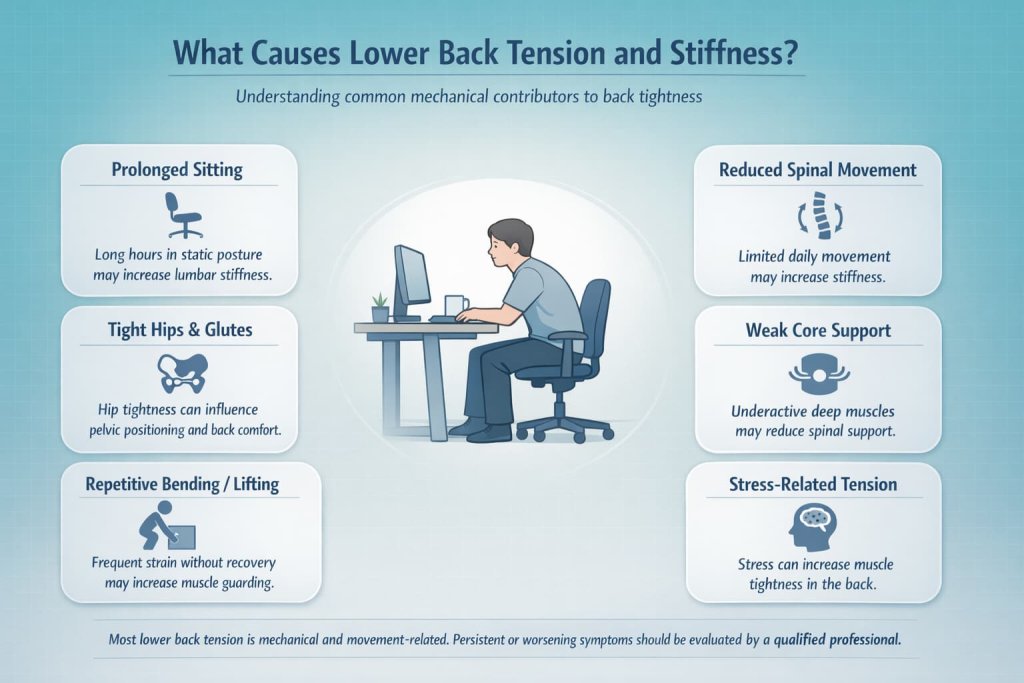
- Prolonged sitting or poor posture
- Tight hip flexors and glutes
- Reduced spinal movement throughout the day
- Weak or underactive deep core muscles
- Repetitive bending or lifting
- Stress-related muscle tension
In many cases, gradual movement and flexibility work can improve stiffness. However, ongoing or worsening symptoms should be evaluated by a professional.
8 best lower back stretches
Below are eight dependable, beginner-friendly stretches commonly included in major rehab-style back programs such as the AAOS Spine Conditioning Program and hospital education resources.
1) Single Knee-to-Chest Stretch
How to do it:
- Lie on your back with both knees bent and feet flat on the floor.
- Slowly bring one knee toward your chest.
- Hold behind your thigh or just below the knee—avoid pulling directly on the kneecap.
- Keep the opposite foot flat on the floor, or straighten that leg if it feels comfortable.
- Relax your shoulders and keep your head resting on the floor.
- Hold for 20–30 seconds, breathing slowly.
- Lower your leg with control and repeat on the other side.
Why it works:
This stretch gently flexes the lumbar spine and hip joint, helping reduce the “compressed” sensation many people feel after prolonged sitting. It also promotes relaxation of surrounding tissues and encourages gentle spinal mobility without strain.
Muscles worked:
Gluteus maximus, hip extensors, lower back soft tissues, and supporting lumbar muscles.
Trainer Tip:
Keep your tailbone heavy on the floor. Avoid yanking the knee in—let the stretch build gradually with steady breathing.
2) Double Knee-to-Chest Stretch
How to do it:
- Lie on your back with knees bent and feet flat.
- Bring one knee toward your chest, then bring the second knee in to join it.
- Hold behind your thighs or wrap arms gently around your shins.
- Keep your neck relaxed and shoulders resting on the floor.
- Hold for 20–30 seconds while breathing slowly.
- Slowly return one foot at a time to the floor.
Why it works:
Bringing both hips into flexion increases lumbar flexion, which many people find soothing for stiffness. It also provides a gentle stretch to the lower back and glute region simultaneously.
Muscles worked:
Gluteus maximus, lumbar paraspinals, hip extensors.
Trainer Tip:
If you feel pinching or sharp pressure in the spine, reduce the range or return to the single knee-to-chest variation.
3) Pelvic Tilt
How to do it:
- Lie on your back with knees bent and feet hip-width apart.
- Gently tighten your abdominal muscles.
- Flatten your lower back toward the floor by slightly tilting your pelvis.
- Hold for 3–5 seconds without holding your breath.
- Slowly release back to a neutral spine.
- Repeat 8–12 controlled repetitions.
Why it works:
Pelvic tilts improve awareness and control of lumbar positioning. This subtle movement helps reduce stiffness and supports coordination between the deep core and lower back.
Muscles worked:
Transverse abdominis, lower abdominals, glute muscles (light activation), deep spinal stabilizers.
Trainer Tip:
Think “small and controlled.” Over-tilting often causes unnecessary tension or breath-holding.
4) Cat-Cow
How to do it:
- Start on hands and knees with wrists under shoulders and knees under hips.
- Inhale and gently drop your belly while lifting your chest slightly (cow).
- Exhale and round your back, drawing your belly inward (cat).
- Move slowly between the two positions for 6–10 repetitions.
- Keep the movement smooth and pain-free.
Why it works:
Cat-cow moves the spine through controlled flexion and extension, encouraging circulation and reducing stiffness. It promotes spinal awareness without excessive load.
Muscles worked:
Spinal erectors, deep core stabilizers, shoulder stabilizers, glutes (supportive role).
Trainer Tip:
Avoid forcing the end range. The goal is mobility and control—not maximum arching.
5) Child’s Pose
How to do it:
- Kneel on the floor and sit your hips back toward your heels.
- Reach your arms forward along the floor.
- Lower your chest toward your thighs as comfortable.
- Rest your forehead on the floor or a pillow.
- Breathe slowly and hold for 20–30 seconds.
- Gently return to upright.
Why it works:
This position lengthens the back muscles and may reduce overall tension when combined with steady breathing. It also gently opens the hips.
Muscles worked:
Latissimus dorsi, lumbar extensors, glutes, hip muscles.
Trainer Tip:
If knees feel uncomfortable, widen your knees slightly or place support under the hips.
6) Supine Knee Rolls
How to do it:
- Lie on your back with knees bent and feet flat.
- Extend your arms out to the sides for balance.
- Slowly lower both knees toward one side while keeping shoulders grounded.
- Pause briefly at a comfortable range.
- Return to center and repeat on the opposite side.
- Perform 5–8 slow repetitions per side.
Why it works:
Gentle rotation restores movement to the lumbar spine and surrounding tissues, especially after prolonged sitting or guarding.
Muscles worked:
Obliques (light), spinal rotators, glute muscles, deep stabilizers.
Trainer Tip:
Keep the movement controlled. If one side feels tight, reduce the depth rather than forcing it.
7) Figure-4 Glute Stretch
How to do it:
- Lie on your back with knees bent.
- Cross one ankle over the opposite thigh to form a “4.”
- Reach behind the bottom thigh and gently pull it toward your chest.
- Keep your head and shoulders relaxed.
- Hold for 20–30 seconds, then switch sides.
Why it works:
Tight glute and deep hip muscles can contribute to lower back tension. This stretch helps release hip tightness that influences lumbar comfort.
Muscles worked:
Gluteus maximus, gluteus medius, piriformis, deep hip rotators.
Trainer Tip:
The stretch should be felt in the hip or buttock area—not the knee. If needed, adjust the angle.
8) Half-Kneeling Hip Flexor Stretch
How to do it:
- Kneel on one knee with the other foot forward in a lunge stance.
- Keep your torso upright and ribs stacked over hips.
- Gently shift your hips forward without arching your lower back.
- Hold for 20–30 seconds.
- Switch sides and repeat.
Why it works:
Tight hip flexors may increase anterior pelvic tilt and low-back tension. This stretch helps balance the hip position and reduce strain on the lumbar spine.
Muscles worked:
Iliopsoas, rectus femoris, quadriceps.
Trainer Tip:
Lightly squeeze the glute on the kneeling side to keep the stretch focused in the hip rather than the lower back.
How to Safely Perform Lower Back Stretches
Lower back stretches should feel gentle and controlled. The NHS recommends staying active but stopping exercises if pain increases.
Follow these safety tips:
- Stretch to mild tension, not sharp pain
- Hold each stretch for 10–30 seconds (as supported by the American Heart Association)
- Breathe normally—avoid holding your breath
- Move slowly in and out of positions
- Perform 1–2 sessions daily if comfortable
A simple 5-minute lower back stretch routine
Try this once per day or after long sitting:
- Pelvic tilt: 8–10 reps (slow)
- Cat-cow: 6–8 reps (slow)
- Single knee-to-chest: 20–30 seconds each side
- Supine knee rolls: 5 reps each side
- Figure-4 stretch: 20–30 seconds each side
If you’re working through ongoing low back pain, hospital physiotherapy resources often emphasize staying as active as possible and progressing gradually, like this guidance from Guy’s and St Thomas’ NHS Foundation Trust.
Lower back stretches benefits you can expect
When done consistently and comfortably, lower back stretches may help you:
- Feel less stiffness after sitting or waking up
- Move more easily during walking, bending, and daily tasks
- Improve body awareness and posture control
- Support a broader plan that includes light strengthening
Mayo Clinic notes that exercise often helps ease back pain and prevent further discomfort, especially when it includes both stretching and strengthening.
Safety rules before you start
Follow these rules to keep stretching helpful (not irritating):
- Stretch to “mild tension,” not sharp pain.
- Move slowly and breathe normally.
- Stop if symptoms worsen or new pain appears.
- If you have pain that travels down the leg, numbness, weakness, fever, or bowel/bladder changes, get medical advice promptly.
The NHS specifically recommends stopping stretches if your pain gets worse and getting advice.
How long to hold each stretch
A practical, widely used range is:
- Hold each stretch for 10–30 seconds
- Repeat 2–5 times depending on comfort
This aligns with flexibility guidance from the American Heart Association.
Common mistakes that make stretching less effective
- Holding your breath (makes tension worse)
- Moving too fast and bouncing
- Pushing into sharp pain
- Only stretching the back and ignoring hips/glutes
- Skipping strengthening altogether (stretching works best as part of a bigger plan)
When to seek professional guidance
Consider professional help if:
- Pain worsens with stretching or doesn’t improve over time
- Symptoms spread down the leg, or you notice numbness/weakness
- Your back pain is linked to a fall, accident, or unexplained symptoms
Mayo Clinic also notes that physical therapy can teach flexibility and strengthening exercises and ways to stay active without flaring symptoms.
FAQs
How often should I do lower back stretches?
Most people do well with gentle stretching daily or most days, especially after long sitting. If symptoms flare, reduce frequency or range and follow the stop rules from the NHS.
Should lower back stretches hurt?
No. Mild tension is okay, but sharp pain or worsening symptoms is a sign to stop and reassess.
Is it better to stretch in the morning or at night?
Either can work. Morning stretching can reduce stiffness after sleep, while evening stretching may help you unwind after sitting all day.
What if I feel the stretch mostly in my hips, not my back?
That’s common and often a good sign. Hip tightness can strongly influence how the lower back feels.
Are lower back stretches enough on their own?
They help, but many trusted programs pair stretching with light strengthening and staying active for better long-term results.
How long does it take to notice results?
Some people feel looser after one session, but meaningful changes typically come from consistent practice over several weeks.
Conclusion
Lower back stretches can be a safe, practical way to reduce daily tightness and improve how you move, especially when you keep the intensity gentle and stay consistent. Start with the 5-minute routine, track what feels best, and build up gradually.
If you want, tell me your audience (beginners, desk workers, seniors, athletes), and I’ll tailor the eight stretches and the routine timing to match your readers.