
You can stop overeating by changing your eating environment, eating with fewer distractions, building more filling meals, and using simple tracking and stress/sleep supports to reduce triggers. If overeating feels automatic or out of control, these evidence-based steps can help you regain consistency without extreme rules—and help you recognize when extra support may be useful.
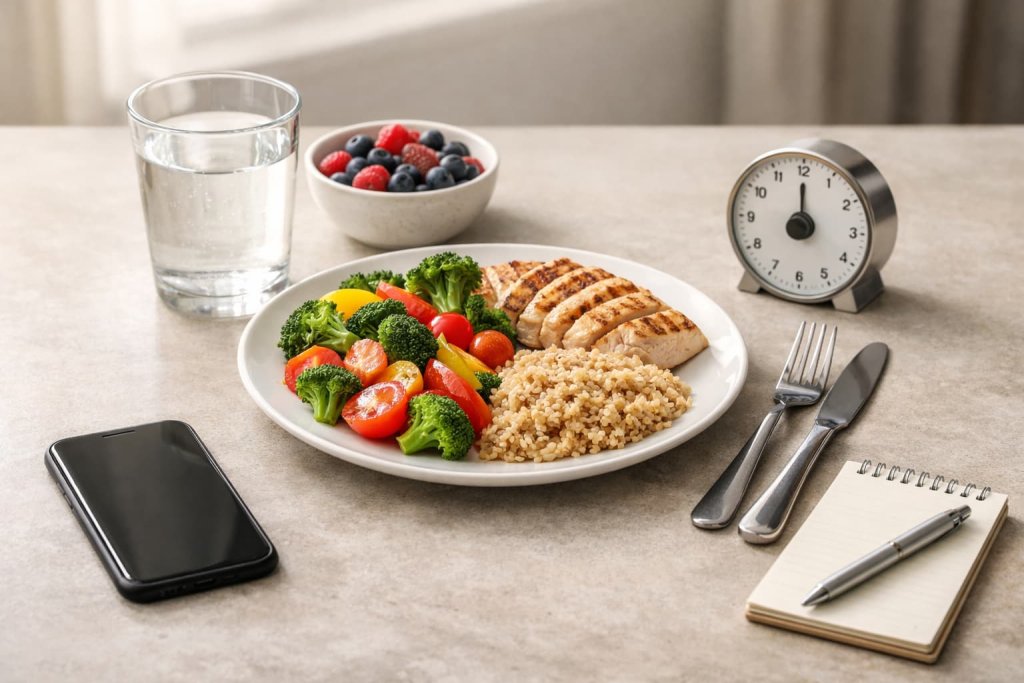
Why overeating happens (and why willpower isn’t the whole story)
Overeating often isn’t about “lack of discipline.” It’s commonly driven by:
- Distraction (screens, eating on the go)
- Large portions and easy access to highly palatable foods
- Skipping meals and arriving overly hungry
- Stress and emotions
- Poor sleep (which can increase hunger signals)
- Habit loops (same time, place, cue)
That’s good news—because most of these triggers are changeable with practical systems.
Quick checklist: 12 strategies at a glance
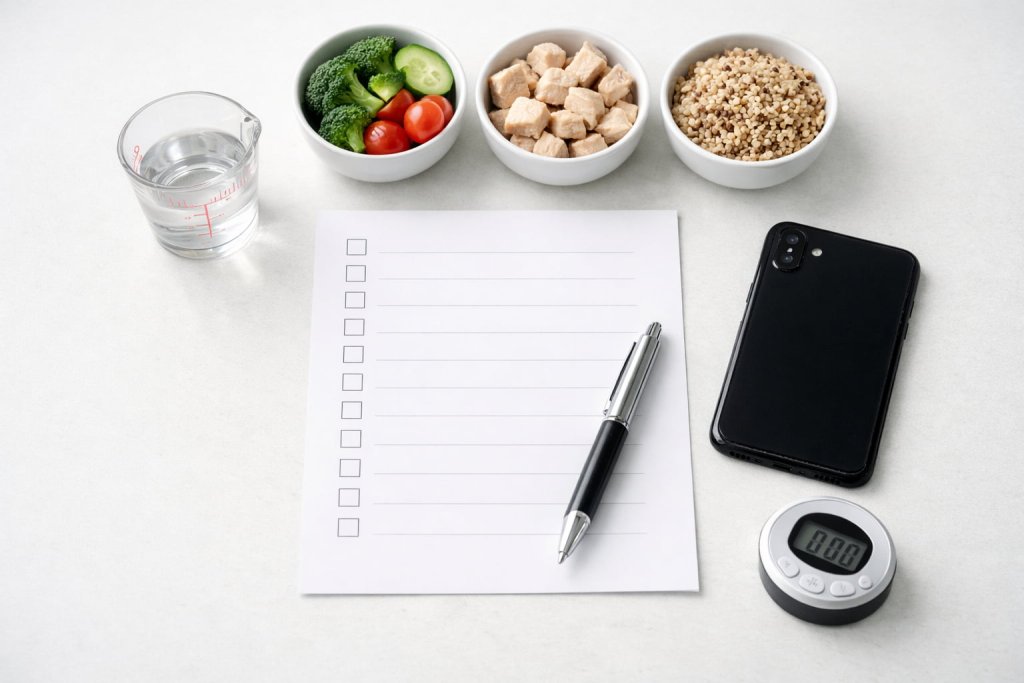
Use this as your “pick 2–3 for this week” list:
- Eat at a table, without screens
- Slow down (build in a pause)
- Plate your food (don’t eat from packages)
- Use smaller plates and bowls
- Keep regular meals and planned snacks
- Build meals for fullness (protein + fiber + volume)
- Drink water and avoid “liquid calories” autopilot
- Make your kitchen environment work for you
- Use a simple hunger and trigger log
- Create a craving plan (urge surfing)
- Improve sleep consistency
- Get support early when it feels out of control
Common mistakes that keep overeating going
If these are happening, you’re not failing—your system just needs a tweak:
- Skipping meals, then trying to “white-knuckle” cravings later
- Eating straight from packages or keeping serving bowls on the table
- Trying to fix overeating with extreme restriction (often rebounds)
- Relying on willpower when you’re stressed, tired, or underslept
- Not eating enough protein or fiber at meals, then snacking all evening
- Treating every craving like an emergency instead of using a pause routine
Pick one fix from the strategies below rather than trying to overhaul everything at once.
Strategy 1: Remove distractions while eating
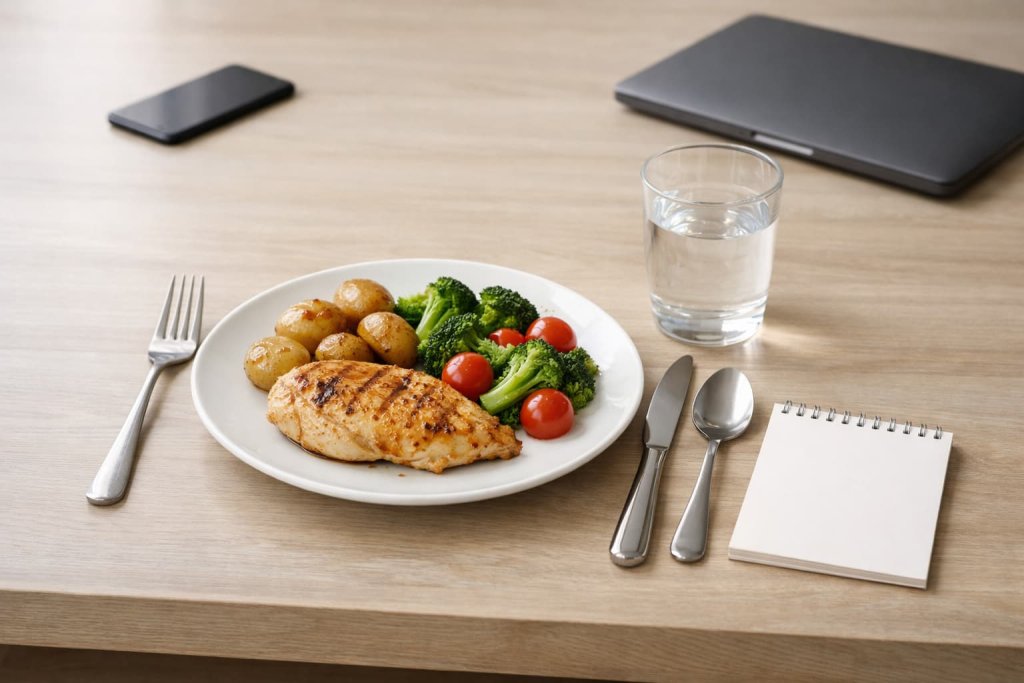
One of the fastest wins is changing where and how you eat. The NIDDK (NIH) recommends eating meals at a table and turning off screens so you don’t mindlessly eat or drink more than you intended.
Try this today:
- Sit down for your next meal
- Put your phone out of reach
- Eat only what’s on your plate (no refills until you pause)
Strategy 2: Slow your eating speed with a built-in pause
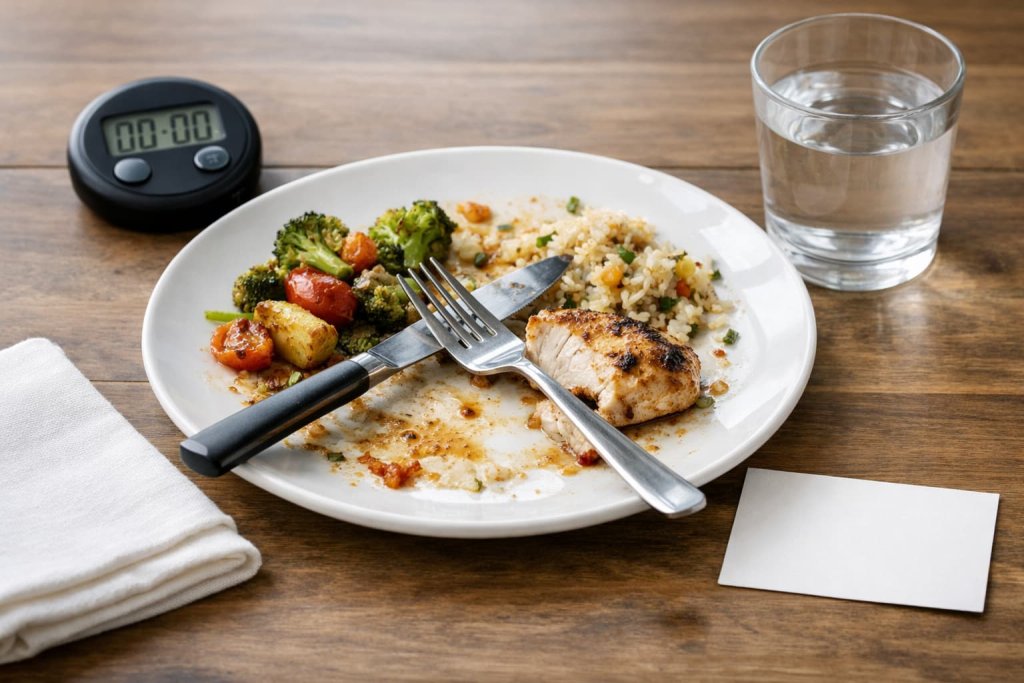
Fast eating makes it easier to overshoot fullness. Instead of trying to “eat slow” perfectly, use a simple structure:
- Halfway through the meal, pause for 60 seconds
- Take a drink of water
- Ask: “Am I still hungry, or just not done yet?”
A pause is easier than forcing a slow pace from the first bite.
Use a quick hunger-fullness check (30 seconds)
Use a simple 0–10 scale to reduce autopilot eating:
- 0–2: Very hungry (shaky, urgent hunger)
- 3–4: Hungry but steady (best time to start eating)
- 5–6: Neutral to satisfied (comfortable)
- 7–8: Full (starting to feel heavy)
- 9–10: Uncomfortably full
Goal most days: start eating around 3–4 and stop around 6–7. If you routinely hit 9–10 at night, it usually means you’re getting too hungry earlier or your portions are too easy to overshoot.
Strategy 3: Plate your food (stop eating from the bag or box)
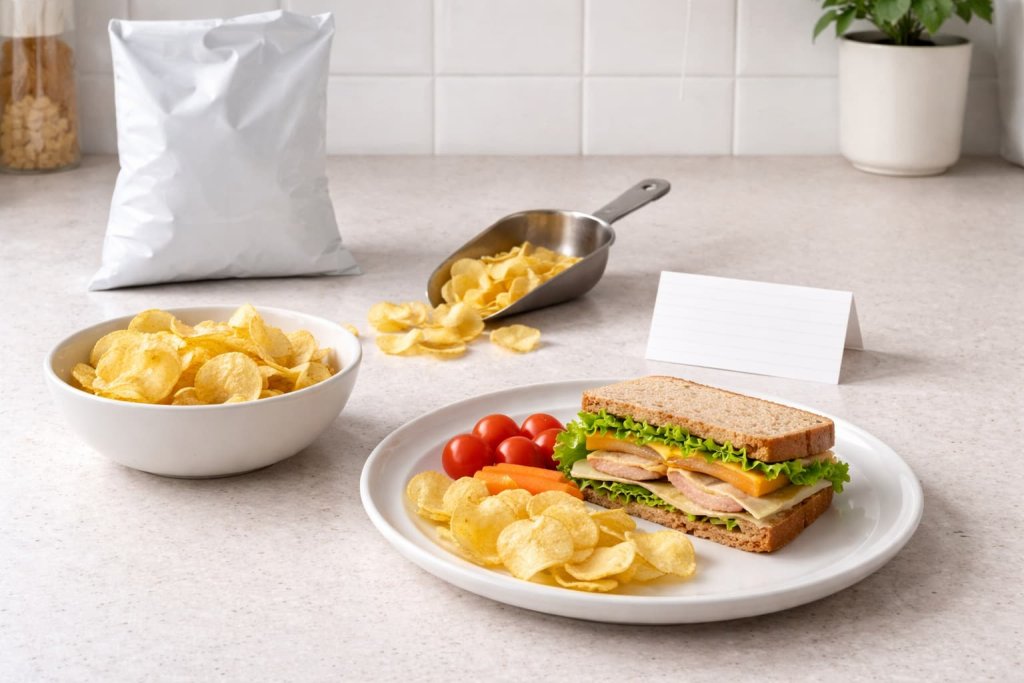
Portion size cues matter more than most people realize. The CDC explains that larger portions can lead to unintentionally eating more and recommends practical fixes like serving a portion onto a plate instead of eating straight from the package.
Make it automatic:
- Put chips/snacks in a small bowl
- Put leftovers away before you start eating
- Don’t bring the container to the couch or desk
Strategy 4: Use smaller plates and bowls to reduce portion distortion
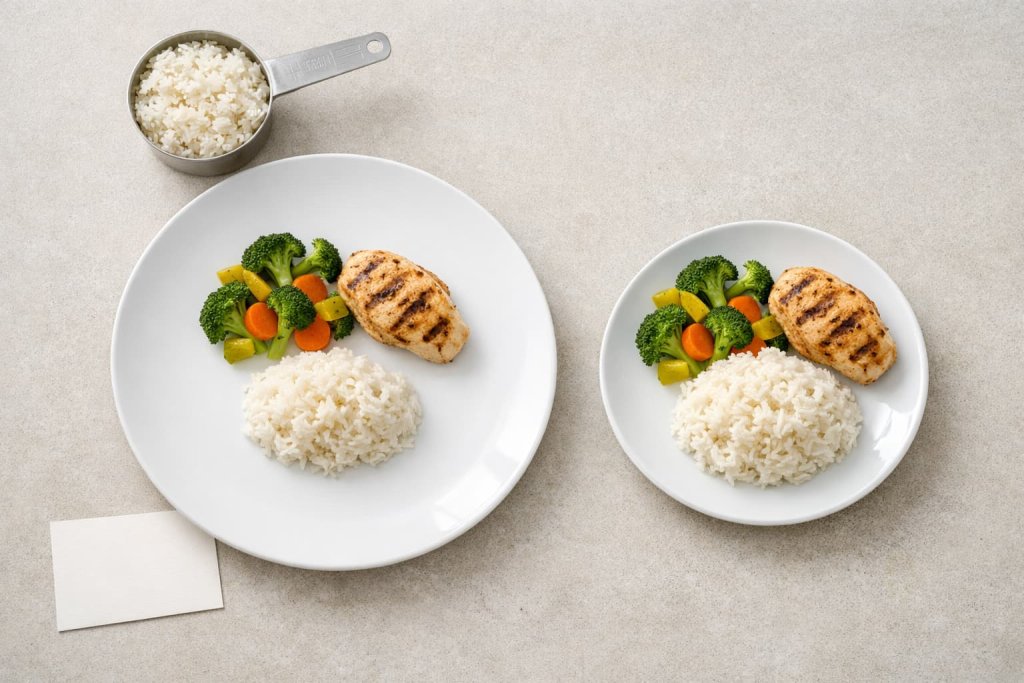
This isn’t a trick—it’s an environment nudge. Smaller dishware can make reasonable portions feel visually satisfying.
Simple upgrades:
- Use a smaller bowl for cereal, ice cream, and snacks
- Use a 9-inch plate instead of a 12-inch plate
- Serve family-style food from the counter, not the table
Restaurant and takeout strategies that prevent accidental overeating
Restaurants often serve portions that are larger than what most people eat at home. These steps help without needing perfect willpower:
- Ask for a to-go box right away and pack half before you start
- Order one anchor item (protein or vegetables) so the meal is more filling
- Choose one indulgence on purpose (app, drink, or dessert) instead of all three
- If you’re sharing, plate your portion first rather than grazing from the middle
If you overeat mainly when you eat out, this section alone can reduce your weekly “extra” intake a lot.
Strategy 5: Don’t arrive starving (regular meals beat all-or-nothing days)
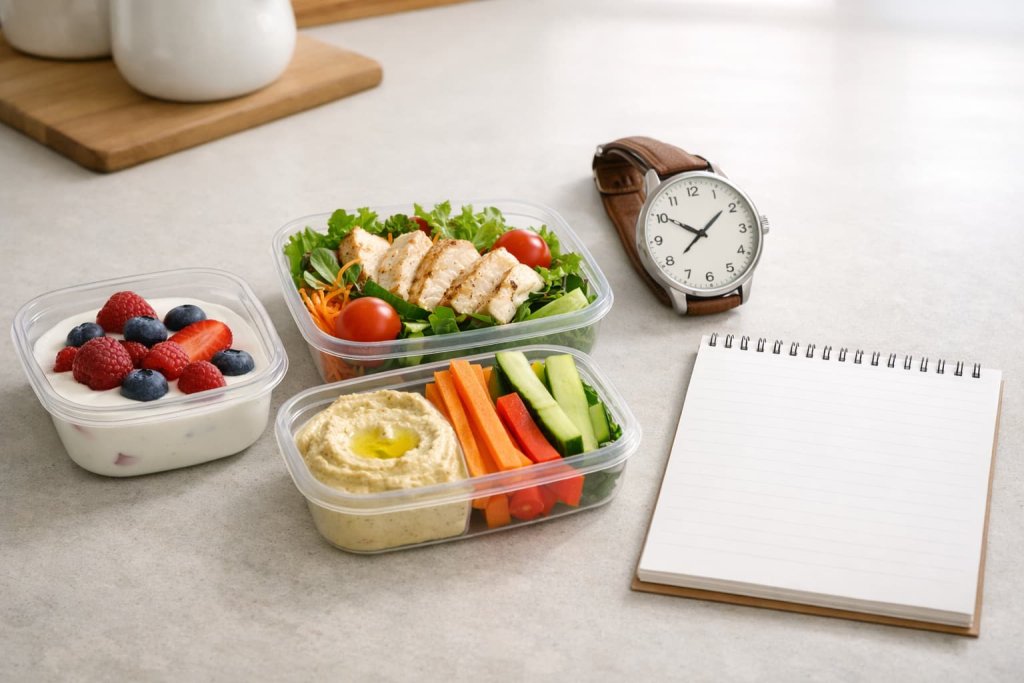
A common overeating pattern is: “I’ll be good today,” then a long gap, then intense hunger and overeating at night.
Try a steady rhythm:
- Eat every 3–5 hours while awake
- Plan a protein-forward snack if dinner is far away
- If mornings are tough, start with something small and easy (yogurt, eggs, oatmeal, or a smoothie)
Consistency beats perfection.
Strategy 6: Build meals that actually keep you full
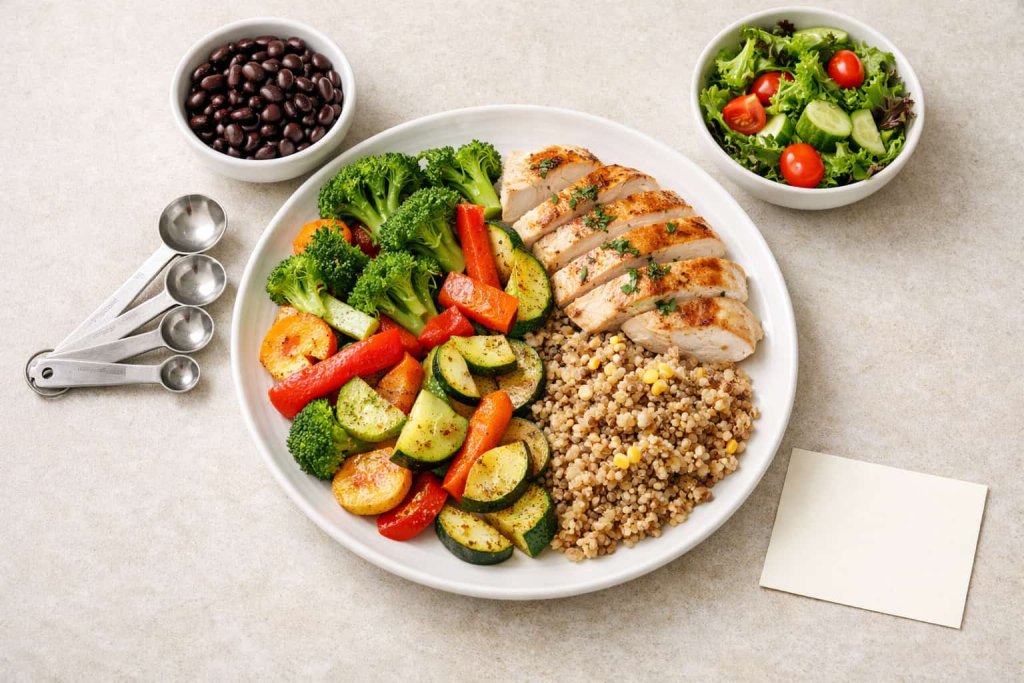
Overeating gets easier when meals are low in satiety. For most people, fullness improves when meals include:
- Protein (eggs, fish, poultry, beans, tofu, Greek yogurt)
- Fiber-rich carbs (beans, lentils, oats, whole grains, fruit)
- Volume foods (non-starchy vegetables, soups, salads)
Practical plate template:
- Half plate: vegetables
- Quarter plate: protein
- Quarter plate: high-fiber carbs
- Add a small amount of fat for satisfaction (olive oil, avocado, nuts)
Quick satiety upgrades (use 1–2 per meal)
If your meals don’t hold you, add one protein option and one fiber/volume option:
- Protein add-ons: eggs, Greek yogurt, cottage cheese, tuna/salmon, chicken, tofu/tempeh, beans/lentils
- Fiber/volume add-ons: a big salad, roasted vegetables, vegetable soup, berries, apples, oats, chickpeas, edamame
Simple rule: if a meal is mostly refined carbs or snack foods, it’s easier to keep eating. If it has protein + fiber, it’s usually easier to stop.
Strategy 7: Track liquid calories and mindless sips

Many people don’t realize how easily drinks and add-ons can push intake up (sweet coffee drinks, soda, juice, frequent tastes).
A low-stress approach:
- Choose water or unsweetened drinks most of the time
- If you want a sweet drink, have it intentionally—small, planned, and not throughout the day
Strategy 8: Change your food environment (make overeating less convenient)
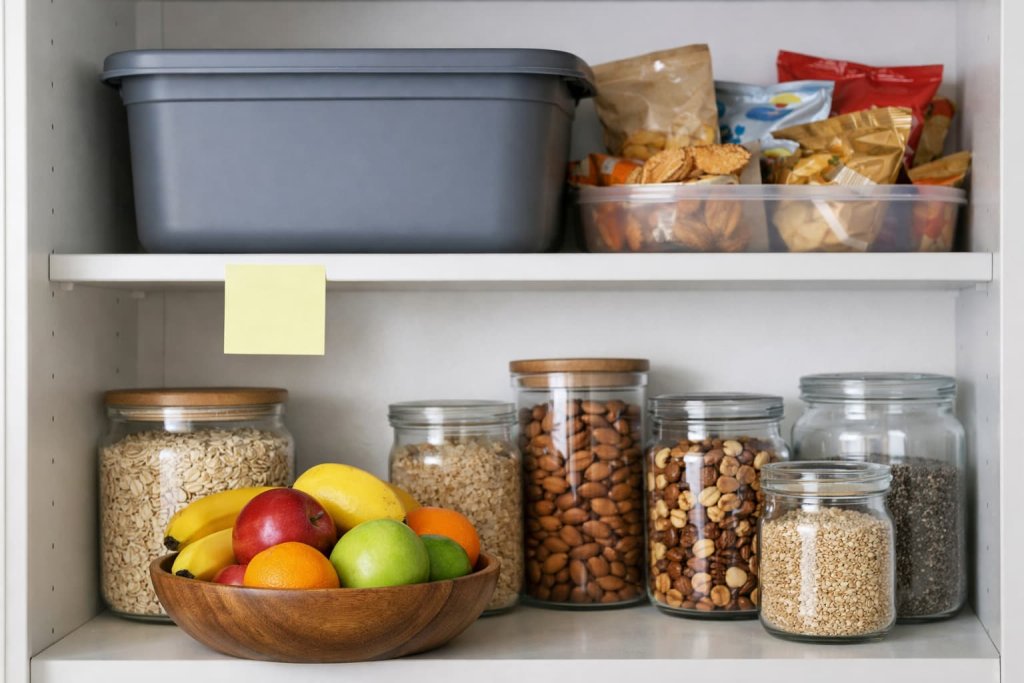
Your surroundings shape your defaults. The goal isn’t to ban foods—it’s to reduce constant cues.
Try these friction moves:
- Put snack foods in opaque containers, on a higher shelf
- Keep ready-to-eat fruits/veg visible at eye level
- Pre-portion snack foods into small containers for the week
- Keep a go-to meal list so you don’t rely on random grazing
Strategy 9: Use a simple food-and-trigger log (no calorie counting required)
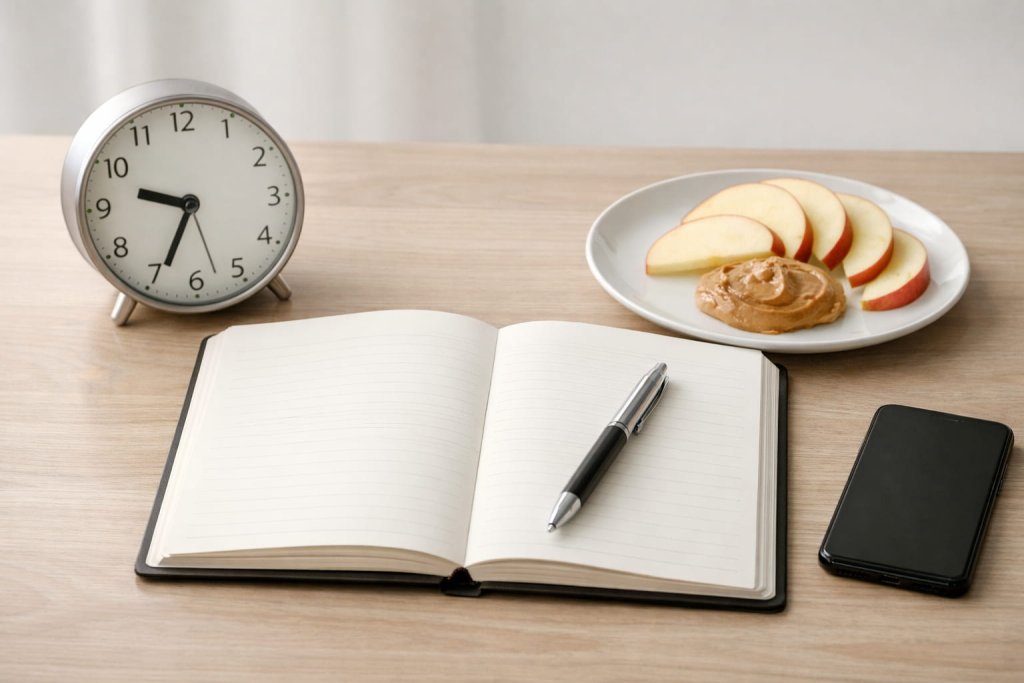
Tracking doesn’t have to be intense. The CDC notes that a food and beverage diary can help you understand what you eat and drink regularly, including serving sizes.
What to write (30 seconds per entry):
- Time
- Hunger level (0–10)
- Emotion (stressed, bored, tired, calm)
- Location (desk, couch, kitchen)
- What you ate (rough notes)
After 7 days, patterns usually show up clearly.
Strategy 10: Make a craving plan (delay + substitute + decide)
Cravings are normal. What helps is a repeatable plan you can do even when stressed.
Use the 10-minute method:
- Delay for 10 minutes (set a timer)
- Do one alternative: walk, shower, tea, music, quick chore
- Decide after: “Do I still want it?”
- If yes: portion it and eat it intentionally
- If no: move on without guilt
This reduces automatic overeating without strict rules.
Turn your biggest trigger into an If-Then plan
This is one of the fastest ways to reduce overeating because you decide in advance.
Examples:
- If I feel snacky while cooking, then I will drink water and eat a planned protein bite (like yogurt or a boiled egg) instead of grazing.
- If I want seconds, then I will wait 10 minutes, clean the kitchen, and reassess hunger.
- If I feel stressed and want sweets, then I will do 5 minutes of breathing first, then decide on a portioned dessert if I still want it.
Pick one trigger that happens 3+ times per week and write one If-Then plan for it.
Strategy 11: Protect your sleep to reduce appetite spikes
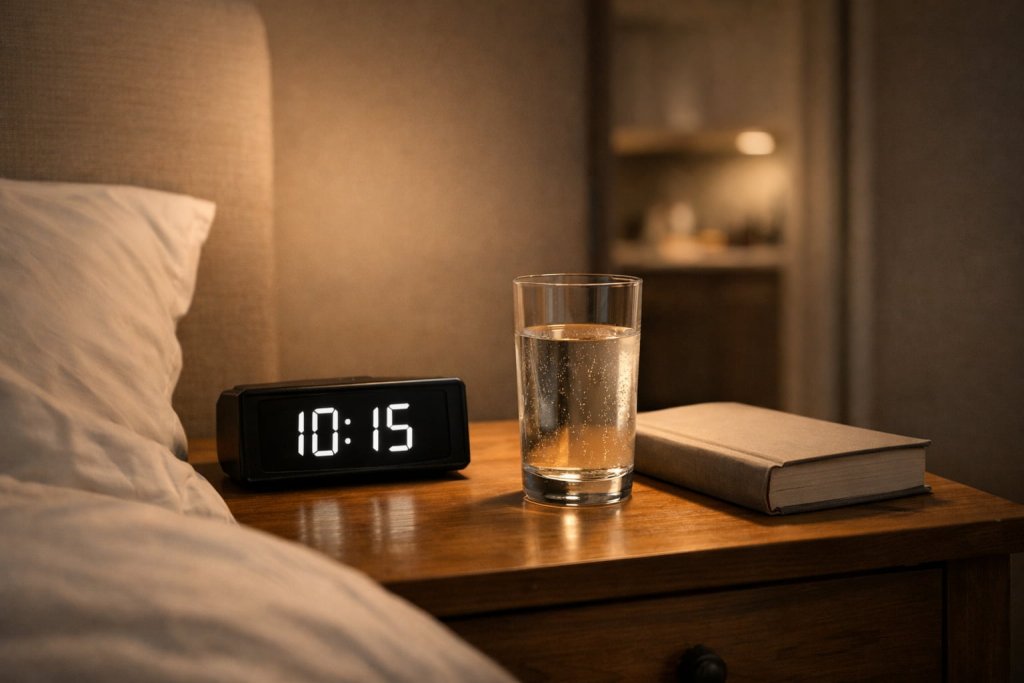
Poor sleep can shift hunger and fullness hormones. The NHLBI (NIH) notes that sleep deprivation is linked with changes such as increased ghrelin (hunger) and reduced leptin (fullness), which can make you feel hungrier.
Two realistic sleep habits that help:
- Keep a consistent wake time (even weekends)
- Set a kitchen closed time 2–3 hours before bed (most nights)
A simple kitchen closed routine (takes 5–10 minutes)
Use a short routine to break the cue → snack habit:
- Brush teeth or use mouthwash
- Make a non-caffeinated drink (water or herbal tea)
- Do a calming cue: light stretching, shower, reading, or music
- If hunger is real: choose a planned snack (protein + fiber), then stop
This keeps you from negotiating with cravings when you’re tired.
Strategy 12: Treat stress eating as a stress problem, not a food problem
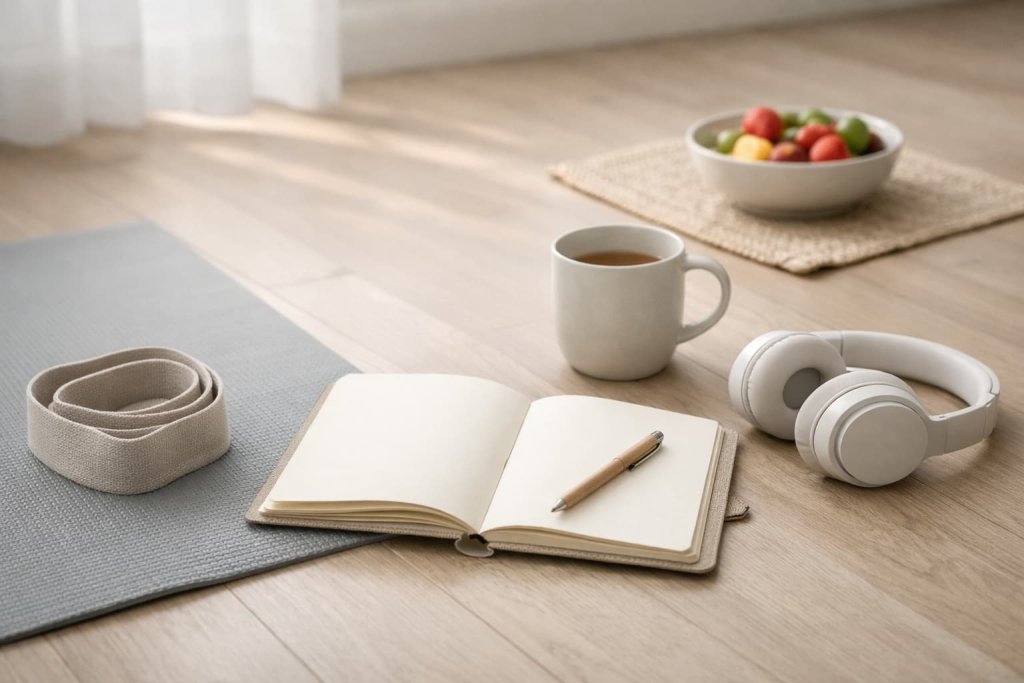
Stress can change appetite and food choices. The American Psychiatric Association explains that stress often increases comfort-food eating for many people (while others may eat less), and responses vary.
Better coping options to test:
- 5 minutes of slow breathing
- Brief movement (walk, stretching, a few sets of squats)
- A quick connection (text someone, step outside)
- A short decompression routine after work/school before entering the kitchen
Over time, the goal is: stress → coping routine → then food if you’re still hungry.
Who these strategies work best for
These steps are especially helpful if you:
- Snack without noticing
- Overeat at night
- Feel driven by stress or fatigue
- Eat too little earlier and make up intake later
- Struggle with portions at restaurants or with packaged foods
One-day starter template (adjust portions to your needs)
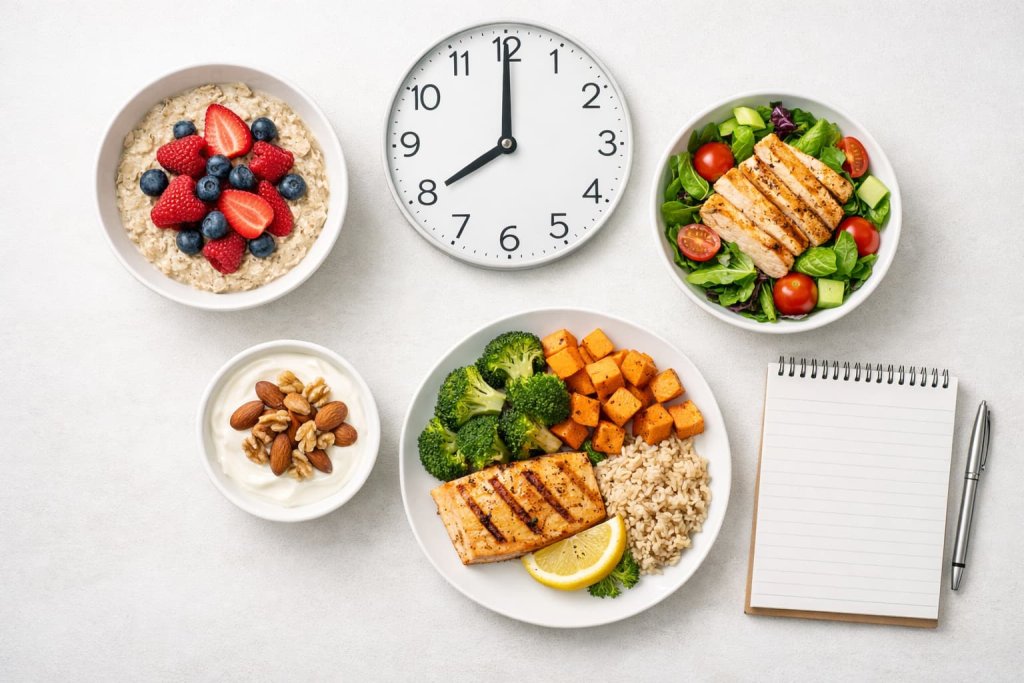
Use this as a structure to prevent long hunger gaps that often lead to overeating:
- Breakfast: protein + fiber (eggs + fruit, or oatmeal + yogurt)
- Lunch: plate template (protein + vegetables + high-fiber carb)
- Snack (optional): protein-forward (Greek yogurt, nuts + fruit, hummus + veggies)
- Dinner: plate template again
- After dinner: decide your kitchen closed time and do a non-food wind-down routine
This isn’t a strict plan—just a steady rhythm that reduces rebound overeating.
Who should be extra careful
Consider extra support or personalization if you:
- Are pregnant, managing diabetes, or have a medical condition that affects appetite/weight
- Have a history of eating disorders or intense restriction cycles
- Feel significant guilt, shame, secrecy, or loss of control around eating
When to seek professional help
If overeating feels frequent and out of control—or you suspect binge-eating patterns—it’s worth getting support sooner rather than later.
Signs it’s worth seeking support sooner:
- Episodes of eating much more than intended with a strong loss-of-control feeling
- Eating rapidly, eating in secret, or feeling intense guilt/shame afterward
- Frequent cycles of strict restriction followed by overeating
- Overeating that causes distress or interferes with daily life
Support can be medical, nutrition-focused, or mental-health focused—what matters is getting the right help for your pattern. The MedlinePlus (NIH) overview is a helpful starting point, and NEDA outlines binge eating disorder support options and why early help matters.
You don’t need to wait until it’s severe to talk to a clinician or registered dietitian.
Frequently asked questions
How long does it take to stop overeating?
Many people notice improvement within 1–2 weeks if they consistently apply 2–3 strategies (like eating without screens, planned meals, and pre-portioning). Long-term change usually comes from repeating small defaults, not one perfect week.
What if I only overeat at night?
Night overeating often improves when you (1) eat enough earlier, (2) plan a satisfying dinner, and (3) set a kitchen closed routine with a calming activity before bed.
Do I need to count calories to stop overeating?
Not necessarily. Many people succeed using a hunger/trigger log and portion/environment strategies first. Calorie tracking can help some people, but it isn’t required.
What should I eat to feel full with fewer cravings?
A protein + fiber + volume approach tends to help: protein at each meal, fiber-rich carbs (beans, oats, fruit), and plenty of vegetables or soup/salad for volume.
How do I handle cravings without feeling deprived?
Use portion and permission: delay briefly, decide intentionally, and if you choose the food, portion it and enjoy it—without eating straight from the package or multitasking.
Can stress really cause overeating?
Yes, stress can affect appetite and food preferences for many people, though responses vary. Building a stress off-ramp routine often helps reduce overeating urges.
Conclusion
Stopping overeating isn’t about stricter rules—it’s about building smarter defaults. Start by picking two strategies this week (most people do best with no screens while eating plus planned meals and snacks). Once those feel easier, add one more. Small changes repeated consistently are what make overeating fade.
Safety disclaimer: This content is for informational purposes only and not medical advice.