
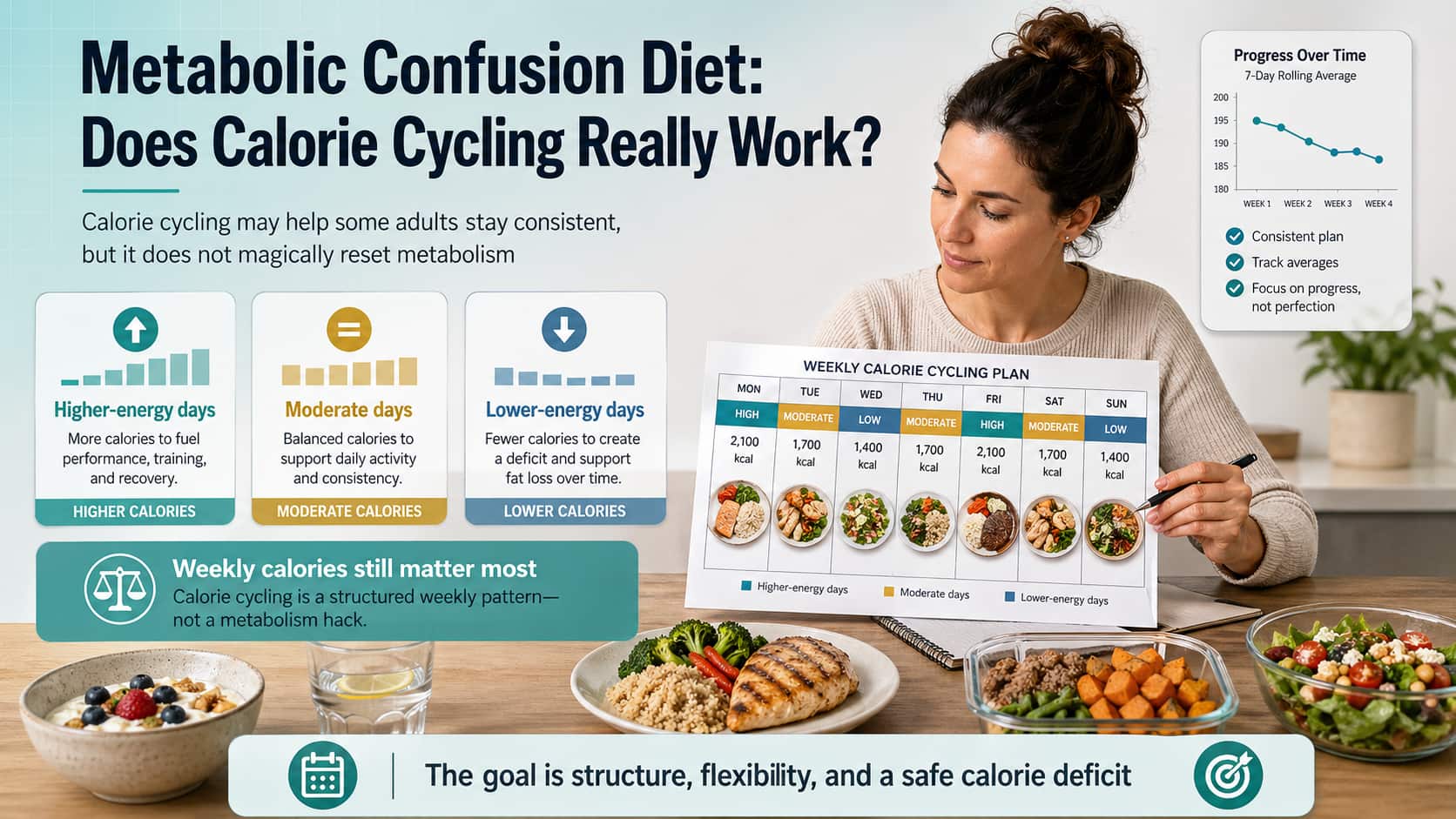
The metabolic confusion diet may help some adults lose weight if it creates a safe calorie deficit, but it does not magically “trick” or reset your metabolism. A more accurate name is calorie cycling, which means eating more on some days and less on others while keeping your weekly intake aligned with your goal.
This approach can feel more flexible than eating the same number of calories every day. But it still depends on the basics: nutritious meals, enough protein and fiber, regular movement, sleep, stress management, and a plan you can follow safely.
What Is the Metabolic Confusion Diet?
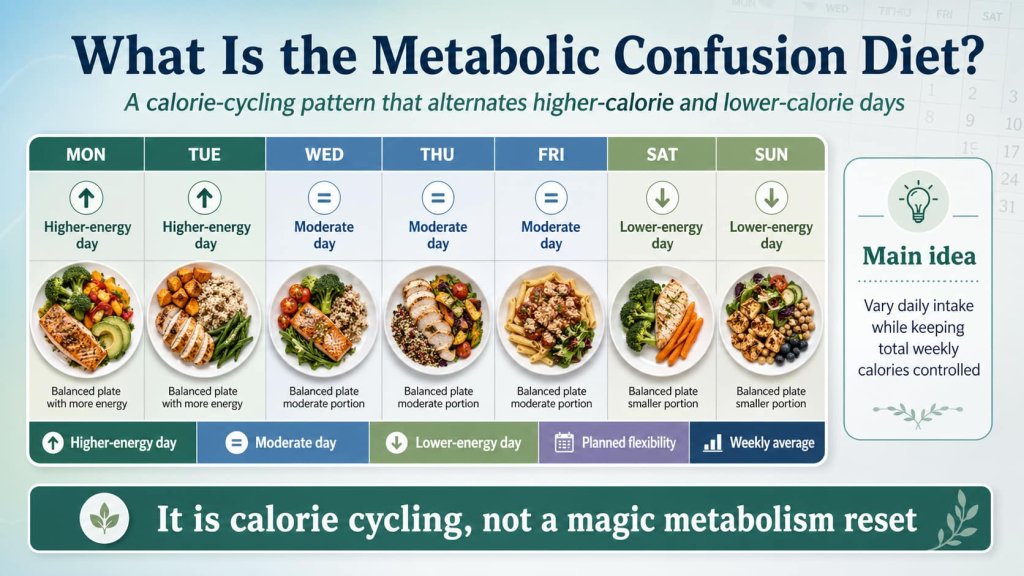
The metabolic confusion diet is a popular eating pattern that alternates higher-calorie and lower-calorie days.
Instead of eating the same amount every day, you might eat more on harder workout days and slightly less on rest days. Some plans use a weekly pattern, such as a few higher-energy days and several moderate or lower-energy days.
The term “metabolic confusion” sounds scientific, but researchers usually use terms like:
- Calorie cycling
- Intermittent energy restriction
- Alternate-day fasting
- 5:2 dieting
- Diet breaks
- Intermittent calorie restriction
The main idea is simple: vary your daily intake while keeping your overall weekly calories controlled.
How the Metabolic Confusion Diet Works
The metabolic confusion diet works by changing calorie intake across the week. The goal is not to eat randomly. The goal is to create structure and flexibility.
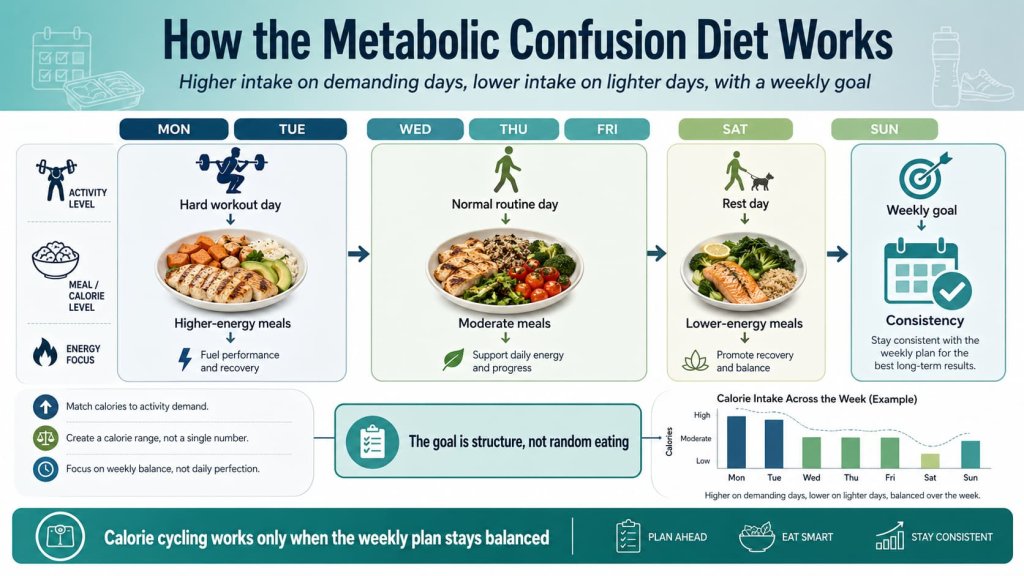
A typical pattern may include:
- Higher-energy days on strength-training or active days
- Moderate-energy days on normal routine days
- Lower-energy days on rest or lighter activity days
- Planned maintenance breaks during longer weight-loss phases
This may help some people feel less restricted. For example, a higher-calorie day can make room for a social meal or a harder workout without abandoning the overall plan.
Still, weight loss comes down to long-term energy balance. Mayo Clinic explains that weight loss usually requires taking in fewer calories than the body uses, and a common adult approach is reducing intake by about 500 to 750 calories per day to support gradual weight loss.
Does the Metabolic Confusion Diet Really Boost Metabolism?
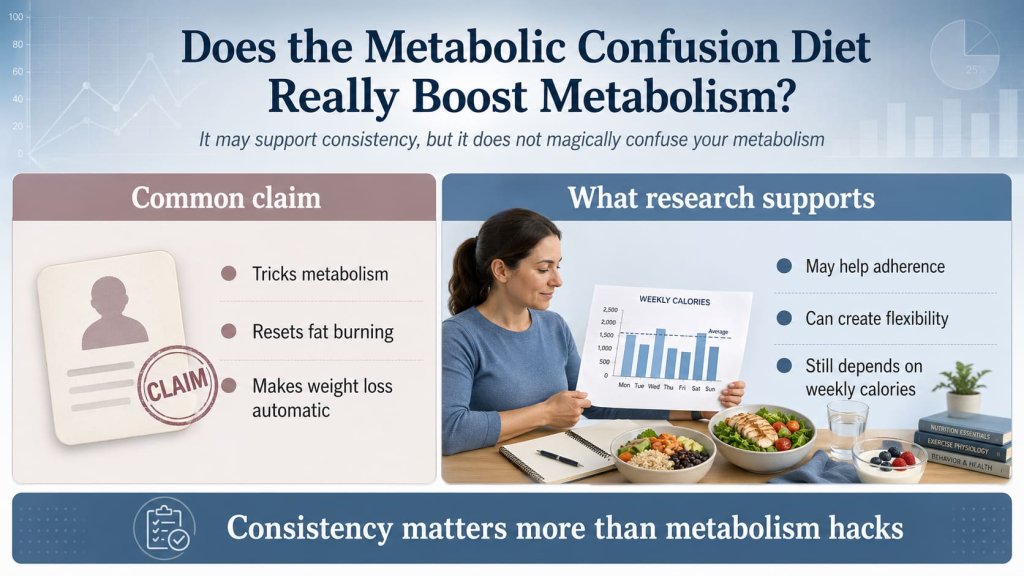
The metabolic confusion diet does not appear to boost metabolism in the dramatic way many online claims suggest.
Your metabolism does not become “confused” because calories change from day to day. What may happen is more practical: some people find calorie cycling easier to follow than a steady daily calorie target.
A 2024 systematic review and meta-analysis in Advances in Nutrition compared intermittent energy restriction with continuous calorie restriction across 28 randomized controlled trials. The review found that intermittent approaches can work, but they were not clearly superior to continuous calorie restriction for weight loss, body composition, or fasting cardiometabolic markers overall.
The MATADOR study found that structured two-week diet breaks improved weight-loss efficiency in men with obesity compared with continuous restriction, but this was a controlled research protocol. It does not prove that random high-calorie and low-calorie days will “reset” metabolism.
Why Weight Loss Slows Over Time
Many people try the metabolic confusion diet because weight loss has slowed. That slowdown is common.
As body weight decreases, the body usually needs fewer calories. Calorie restriction may also reduce energy expenditure beyond what would be expected from weight loss alone. This is often called metabolic adaptation, according to research published through NIH/PMC.
A slower rate of progress does not mean your body is broken. It may mean your plan needs a careful adjustment.
Helpful adjustments may include:
- Rechecking portion sizes
- Increasing daily steps or light movement
- Strength training consistently
- Eating enough protein and fiber
- Improving sleep
- Taking a short maintenance break if diet fatigue is high
- Getting guidance from a registered dietitian or clinician if progress has stalled for a long time
The answer is not extreme restriction. A healthy plan should support energy, nutrition, and consistency.
Metabolic Confusion Diet Benefits
The metabolic confusion diet may offer benefits for some adults when it is structured safely.
It May Feel More Flexible
Eating the same calorie target every day can feel repetitive. Calorie cycling gives some people more flexibility for workouts, family meals, weekends, or higher-hunger days.
That flexibility can make the plan feel easier to follow.
It May Support Diet Adherence
A diet only works if you can keep doing it. Some adults find that planned higher-energy days reduce the “all-or-nothing” mindset that often leads to overeating after strict dieting.
This does not mean cheat days are required. It means planned flexibility can help some people stay consistent.
It Can Support Hard Training Days
If you lift weights, run, play sports, or do demanding physical work, eating more on active days may support energy and recovery.
Higher-energy days are usually most useful when they include nutrient-dense foods, carbohydrates, protein, and enough fluids.
It May Reduce Diet Fatigue
Long periods of steady restriction can feel mentally tiring. Some people may do better with planned maintenance days or short diet breaks.
This works best when higher-calorie days are controlled and intentional, not used as a reason to overeat past comfort.
Metabolic Confusion Diet Risks and Downsides
The metabolic confusion diet can become unhealthy if it turns into extreme low days, binge-style high days, or obsessive tracking.
It Can Encourage Over-Restricting
Lower-calorie days should not mean skipping meals, cutting out entire food groups, or eating as little as possible.
Very low intake can increase fatigue, irritability, hunger, poor concentration, and rebound overeating.
It Can Create a Cheat-Day Cycle
Some versions of metabolic confusion promote strict low days followed by very high “cheat days.” That pattern can backfire.
A safer approach is planned flexibility. Higher-energy days should still include balanced meals, not uncontrolled overeating.
It Can Be Hard to Track
Calorie cycling requires awareness of your weekly intake. For some people, this feels helpful. For others, it can feel stressful or obsessive.
If tracking makes you anxious, a simpler approach may be better: regular meals, balanced plates, portion awareness, and consistent activity.
It Is Not Safe for Everyone
People with diabetes or medications affected by food intake should be careful. NIDDK notes that physical activity and changes in carbohydrate intake may affect blood glucose, especially for people using certain diabetes medicines.
Anyone with a medical condition should get personalized guidance before trying calorie cycling.
Metabolic Confusion Diet vs Calorie Deficit
The metabolic confusion diet is not separate from a calorie deficit. It is one way to organize a calorie deficit across the week.
| Approach | How It Works | Best For |
|---|---|---|
| Steady calorie deficit | Similar intake each day | People who like routine and simplicity |
| Metabolic confusion diet | Higher and lower days across the week | People who want more flexibility |
| Diet break approach | Periods of dieting followed by maintenance days or weeks | People in longer weight-loss phases |
| Random eating | No clear structure or weekly target | Usually not reliable for steady progress |
CDC states that people who lose weight at a gradual, steady pace of about 1 to 2 pounds per week are more likely to keep it off than people who lose weight faster.
That makes the goal clear: use calorie cycling only if it helps you stay consistent without extreme restriction.
Simple Weekly Calorie Example
The easiest way to understand the metabolic confusion diet is to look at the weekly average.
For example, if someone’s target average is about 1,800 calories per day, that equals 12,600 calories per week. They could reach that average with the same calories every day or with higher and lower days.
| Pattern | Example |
|---|---|
| Steady approach | 1,800 calories every day |
| Calorie cycling approach | 2,000 calories on 3 active days and about 1,650 calories on 4 lighter days |
Both patterns can create the same weekly average. The calorie-cycling version is not magic; it simply spreads the weekly intake differently.
What to Eat on a Metabolic Confusion Diet
Food quality still matters. A metabolic confusion diet should not be built around tiny portions on low days and ultra-processed foods on high days.
The current Dietary Guidelines for Americans emphasize whole, healthy, nutritious foods and limiting highly processed foods, added sugars, and refined carbohydrates.
Build most meals around:
- Protein foods such as eggs, fish, poultry, lean meat, Greek yogurt, tofu, tempeh, beans, and lentils
- Fiber-rich carbohydrates such as oats, potatoes, brown rice, quinoa, fruit, beans, and whole grains
- Vegetables such as leafy greens, broccoli, peppers, carrots, tomatoes, and squash
- Healthy fats such as olive oil, avocado, nuts, seeds, and fatty fish
- Water or low-calorie drinks most of the time
Protein and fiber are especially important because they help meals feel more filling. Protein also supports muscle maintenance during weight loss, especially when combined with strength training.
A practical goal is to include a protein source at each meal and choose fiber-rich foods throughout the day. The Dietary Guidelines for Americans recommends choosing vegetables, fruits, whole grains, beans, lentils, nuts, and seeds as part of a healthy eating pattern.
A simple plate method can help:
- Half the plate: vegetables or fruit
- One quarter: protein
- One quarter: fiber-rich carbohydrate
- Small amount: healthy fat
Higher-calorie days can include larger portions of carbohydrates, protein, or healthy fats. Lower-calorie days can use smaller portions of calorie-dense foods while still keeping meals satisfying.
How to Try the Metabolic Confusion Diet Safely
A safe metabolic confusion diet should feel structured, not extreme.
Step 1: Start With Your Weekly Goal
Think in weekly averages instead of trying to make every day perfect.
For adults, the NIDDK Body Weight Planner can help estimate calorie and activity targets for reaching and maintaining a goal weight. NIDDK notes that the tool is for adults and is not intended for younger people or pregnant or breastfeeding women.
Step 2: Match Higher-Calorie Days With Higher-Demand Days
Higher-energy days usually make the most sense on:
- Strength-training days
- Long cardio days
- Active workdays
- Sports or physically demanding days
- Social meal days
- Days when hunger is naturally higher
This makes calorie cycling more practical and less random.
Step 3: Keep Lower-Calorie Days Nourishing
Lower days should still include real meals.
Focus on:
- Protein at each meal
- Vegetables or fruit
- Fiber-rich carbohydrates in reasonable portions
- Smaller amounts of calorie-dense fats
- Enough fluids
- Regular meal timing if skipping meals causes overeating later
A lower day should feel lighter, not punishing.
Step 4: Avoid Extreme Swings
Large calorie swings can make hunger, cravings, digestion, mood, and energy harder to manage.
A better goal is moderate variation. You should not feel like you are starving one day and overeating the next.
Step 5: Track More Than Body Weight
Daily scale changes are normal. Water, salt, digestion, hormones, and workouts can all affect body weight.
Helpful progress markers include:
- Weekly average weight if appropriate
- Waist measurement
- Energy level
- Hunger and cravings
- Strength in workouts
- Sleep quality
- Mood
- Clothes fit
- Blood pressure or blood sugar if monitored by a clinician
Progress should improve your daily life, not make you feel controlled by numbers.
What to Do If Progress Stalls
A short stall does not always mean the plan has stopped working. Body weight can pause because of water retention, digestion, training stress, sleep changes, or normal hormonal shifts.
Before making the plan more aggressive, review the basics:
- Are portion sizes still consistent?
- Are higher-calorie days staying planned, not turning into overeating days?
- Are lower-calorie days still balanced and not causing rebound hunger?
- Are you getting enough protein and fiber?
- Has daily movement dropped?
- Are sleep and stress affecting hunger or energy?
If your weekly average has not changed for several weeks, a small adjustment may help. That could mean slightly reducing portions, adding more walking, improving meal consistency, or taking a short maintenance break if diet fatigue is high.
Sample Metabolic Confusion Diet Schedule
This sample is for general adult education only. It is not a prescription.
| Day | Pattern | Main Focus |
|---|---|---|
| Monday | Higher-energy day | Strength training or harder workout |
| Tuesday | Moderate day | Normal meals and light movement |
| Wednesday | Lower-energy day | Rest day with balanced meals |
| Thursday | Higher-energy day | Strength training or active day |
| Friday | Moderate day | Consistent meals and walking |
| Saturday | Higher-energy or social-flex day | Planned flexibility |
| Sunday | Moderate or lower-energy day | Recovery, meal prep, easy movement |
Example Higher-Energy Day
Breakfast: Greek yogurt with oats, berries, and nuts
Lunch: Chicken, tofu, or beans with rice, vegetables, and olive oil dressing
Snack: Fruit with cottage cheese, yogurt, or nut butter
Dinner: Salmon, eggs, lean meat, or tempeh with potatoes and vegetables
Example Lower-Energy Day
Breakfast: Eggs or tofu scramble with vegetables and fruit
Lunch: Salad bowl with protein, beans, and a small portion of whole grains
Snack: Greek yogurt, fruit, or vegetables with hummus
Dinner: Lean protein, roasted vegetables, and a moderate portion of rice, potato, or legumes
The lower day is still a full eating day. It simply uses slightly smaller portions of calorie-dense foods.
Exercise and the Metabolic Confusion Diet
Exercise is not needed to “confuse” your metabolism. But it supports health, strength, and long-term weight management.
CDC physical activity guidance recommends that adults get at least 150 minutes of moderate-intensity physical activity per week, or 75 minutes of vigorous-intensity activity, plus at least 2 days of muscle-strengthening activity.
Good options include:
- Brisk walking
- Cycling
- Swimming
- Strength training
- Bodyweight exercises
- Resistance bands
- Hiking
- Dancing
- Recreational sports
If you use higher-calorie days, place them near harder workouts. This may help with energy, performance, and recovery.
Who Should Avoid the Metabolic Confusion Diet?
The metabolic confusion diet is not the right fit for everyone.
Avoid calorie cycling or get professional guidance first if you are:
- A child or teen
- Pregnant or breastfeeding
- Managing diabetes or blood sugar concerns
- Taking medication that must be timed with food
- Recovering from an eating disorder or struggling with disordered eating
- Underweight or unintentionally losing weight
- Managing kidney disease, heart disease, digestive disease, or another chronic condition
- An athlete with high energy needs
- Feeling anxious, guilty, or obsessive around food tracking
NIDDK recommends choosing safe weight-loss programs that include healthy eating, physical activity when appropriate, behavior support, and a plan for long-term weight maintenance. It also advises avoiding unrealistic promises such as losing 30 pounds in 30 days.
Safety Box: Before You Try Calorie Cycling
The metabolic confusion diet should never feel like a crash diet.
Be careful if you notice:
- Dizziness
- Ongoing fatigue
- Feeling cold all the time
- Poor sleep
- Mood changes
- Missed or irregular periods
- Loss of workout performance
- Frequent binge-and-restrict cycles
- Food guilt or obsessive tracking
Stop the plan and speak with a qualified health professional if calorie cycling affects your health, mood, training, or relationship with food.
Common Mistakes to Avoid
The metabolic confusion diet is most likely to fail when it becomes extreme or confusing.
Avoid these mistakes:
- Treating higher-calorie days as binge days
- Making lower-calorie days too restrictive
- Skipping protein and fiber
- Ignoring strength training
- Using the scale as the only progress marker
- Copying someone else’s plan exactly
- Trying to lose weight too quickly
- Relying on “metabolism hacks” instead of consistent habits
- Using calorie cycling to make up for poor sleep or high stress
A good plan should make healthy eating easier to sustain.
Is the Metabolic Confusion Diet Good for Fat Loss?
The metabolic confusion diet can support fat loss if it helps you maintain a safe weekly calorie deficit.
It does not guarantee fat loss by itself.
For better results, focus on:
- A moderate weekly calorie deficit
- Enough protein
- High-fiber foods
- Strength training
- Daily movement
- Sleep consistency
- Planned flexibility
- A realistic timeline
If calorie cycling makes your routine easier, it may be useful. If it makes eating feel stressful or extreme, a steady calorie deficit may be a better choice.
Who the Metabolic Confusion Diet Works Best For
The metabolic confusion diet may work best for adults who like structure but do not want the same calorie target every day.
It may be a good fit if you:
- Prefer flexible eating over a strict daily target
- Have higher-hunger days around workouts
- Want room for occasional social meals
- Can track or estimate intake without stress
- Already understand basic portion control
- Feel better with planned higher-energy days
It may not be a good fit if tracking calories feels stressful, if higher-calorie days trigger overeating, or if lower-calorie days lead to intense hunger. In that case, a steady calorie deficit or simple plate-based approach may be easier and healthier.
Metabolic Confusion Diet FAQ
Is the metabolic confusion diet the same as intermittent fasting?
Not exactly. Intermittent fasting usually changes when you eat. The metabolic confusion diet usually changes how much you eat on different days. Some plans combine both, but they are not the same thing.
Can metabolic confusion speed up a slow metabolism?
There is no strong evidence that it dramatically speeds up metabolism. It may help some people stay consistent, which can indirectly support weight management.
How long should you follow the metabolic confusion diet?
There is no single timeline. Some adults use calorie cycling for a few weeks, while others use planned higher and lower days as a long-term structure. If it causes fatigue, cravings, mood changes, or food obsession, it is not a good fit.
Are high-calorie days the same as cheat days?
No. A high-calorie day should still be planned and balanced. A cheat-day mindset can lead to overeating and guilt. Think of it as a higher-energy day, not a day to abandon nutrition.
Can beginners try the metabolic confusion diet?
Beginners may do better with simple habits first: regular meals, protein and fiber at meals, fewer sugary drinks, walking, and strength training. Calorie cycling can be added later if structure and tracking feel manageable.
Is the metabolic confusion diet safe for teens?
No, teens should not use calorie cycling for weight loss unless it is recommended and supervised by a qualified health professional. Teen bodies are still growing and need enough energy and nutrients.
What is the best metabolic confusion diet plan?
The best plan is moderate, balanced, and personalized. It should include enough food, whole-food meals, planned higher-energy days, and no extreme low-calorie days.
Conclusion
The metabolic confusion diet is not magic, but it can be a useful structure for some adults. It works best when you treat it as calorie cycling, not a metabolism hack.
The real goal is to build a flexible routine that supports fat loss, energy, strength, and long-term health. Keep the plan moderate, choose nutrient-dense foods, stay active, and avoid extreme restriction. If you have a medical condition or a complicated relationship with food, talk with a qualified health professional before trying it.
This content is for informational purposes only and not medical advice.
References
- CDC — Steps for Losing Weight
- Mayo Clinic — Metabolism and Weight Loss: How You Burn Calories
- NIDDK — Choosing a Safe and Successful Weight-Loss Program
- USDA/FNS — Dietary Guidelines for Americans
- Advances in Nutrition — Effects of Intermittent Energy Restriction Compared With Continuous Energy Restriction
- PubMed — MATADOR Study: Intermittent Energy Restriction and Weight Loss Efficiency
- NIH/PMC — Impact of Calorie Restriction on Energy Metabolism in Humans