
Intuitive eating is a non-diet approach that helps you eat by paying attention to hunger, fullness, satisfaction, and other internal cues instead of following rigid food rules. It was created by dietitians Evelyn Tribole and Elyse Resch in 1995, and the official framework describes it as a weight-inclusive, evidence-based model rather than a weight-loss diet.

Understanding intuitive eating matters because many people are stuck in a cycle of restriction, guilt, overeating, and starting over. The official Intuitive Eating definition and Harvard’s Nutrition Source overview both make clear that the goal is a healthier relationship with food, body cues, and self-care.
What intuitive eating really means

Intuitive eating is often misunderstood as “eat whatever you want all the time.” That is not the full picture. Harvard explains that intuitive eating is based on internal needs, whether physical, emotional, or other influences, and does not revolve around calorie goals, strict meal timing, or banned foods. It is flexible, but it is still intentional.
The official framework also emphasizes that intuitive eating is a personal, dynamic process. In practice, that means learning to notice what hunger feels like, what fullness feels like, what foods feel satisfying, and when emotional or external triggers are driving the urge to eat. Over time, the goal is to rebuild trust with your body instead of relying on diet rules.
The 10 principles of intuitive eating, in plain English
The 10 Principles of Intuitive Eating are the backbone of the approach. Here is what they mean in everyday life:
1. Reject the diet mentality
Step back from plans, rules, and promises that tell you your body needs fixing before you can eat normally. Intuitive eating starts by questioning the idea that another diet will finally solve everything.
2. Honor your hunger
Waiting until you are ravenous can make eating feel chaotic and out of control. Honoring hunger means feeding yourself before you hit that point.
3. Make peace with food
When foods are labeled “bad” or “off-limits,” they often gain more power. Giving yourself permission to eat can reduce deprivation, cravings, and the rebound effect that strict restriction often creates.
4. Challenge the food police
This means noticing the inner voice that says you were “good” for eating one thing and “bad” for eating another. Intuitive eating asks you to move away from moral judgment around food.
5. Respect your fullness
Fullness is a body signal, not a rule. The official guidance encourages pausing during meals and noticing when you feel comfortably satisfied instead of overly full.
6. Discover satisfaction
Enjoyment matters. The official Intuitive Eating guidance says pleasure and satisfaction are part of eating well, and that when food is satisfying, it can help you feel more content with an appropriate amount.
7. Honor your feelings without using food
Food can be comforting, but it cannot solve stress, loneliness, boredom, or anxiety on its own. This principle is about building other coping tools while dropping shame around emotional eating.
8. Respect your body
Respecting your body does not mean loving every part of it every day. It means treating your body with basic care and dignity instead of punishing it for not matching an ideal.
9. Move for how it feels
Intuitive eating includes movement, but not as punishment for eating. The focus is on energy, mood, strength, and function rather than trying to “earn” food.
10. Honor your health with gentle nutrition
Nutrition still matters. Intuitive eating does not ignore health. It encourages making food choices that support health while avoiding perfectionism and all-or-nothing thinking.
How intuitive eating is different from dieting
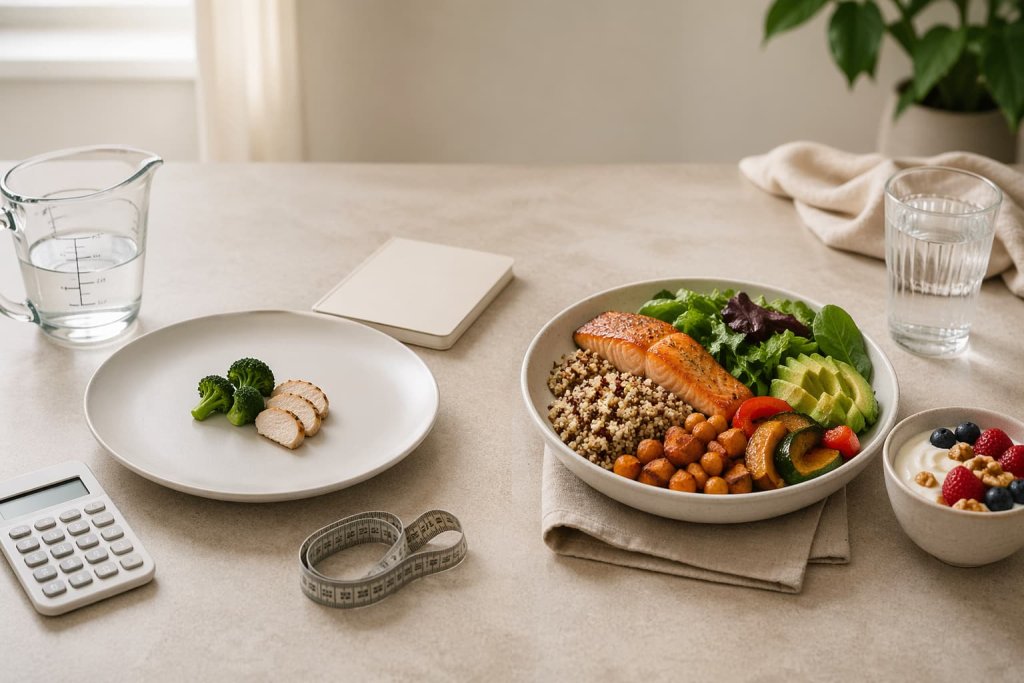
Dieting usually depends on external control: calorie targets, points, macros, meal plans, fasting windows, clean-food lists, cheat days, and scale-based success. Intuitive eating moves in the other direction. It asks you to use internal cues and self-awareness, not strict rules, as your primary guide. Harvard specifically notes that intuitive eating is the opposite of restrained eating and is not built around fixed foods, measured portions, or scheduled eating times.
That does not mean structure is always bad. Some people still benefit from regular meals, planned snacks, grocery routines, or basic nutrition guidance. The difference is that these tools are meant to support body awareness, not override it.
Many people also need to hear this early on: hunger and fullness cues may not feel clear at first. After long periods of dieting, skipping meals, working long shifts, high stress, illness, or disordered eating, body signals can feel muted or confusing. In that situation, a temporary pattern of regular meals and snacks can be a helpful bridge. Rather than waiting for a perfect hunger signal, some people do better starting with gentle structure and letting body awareness rebuild over time.
Potential benefits of intuitive eating
Research on intuitive eating is still developing, but the current evidence is encouraging.
A 2024 systematic review of observational studies found that higher intuitive and mindful eating were significantly linked with lower disordered eating and depressive symptoms, along with greater body appreciation. Because this was largely observational research, it shows association rather than proof that intuitive eating directly causes those outcomes, but it supports the idea that intuitive eating is linked with better psychological well-being.
A 2023 systematic review and meta-analysis of intuitive eating interventions reported that intuitive eating interventions were associated with improved quality of life, lower disordered eating behaviors, and better body appreciation and body image in the studies reviewed. That is an important point for readers who assume intuitive eating is just a social media trend. There is a growing intervention-based research base behind it.
A 2022 systematic review on intuitive eating and diet quality found positive or neutral effects on diet quality across included studies, along with favorable changes in eating behavior. In other words, letting go of rigid dieting does not automatically mean nutrition gets worse. For many people, eating may become more stable and more balanced over time.
That said, intuitive eating is not a guaranteed solution for every eating problem, and it should not be framed as a quick fix. Research is promising, but people’s experiences vary depending on their health history, food environment, stress level, and relationship with food.
Common myths about intuitive eating
Myth 1: Intuitive eating means eating junk food all day
Not really. Many people go through an adjustment period when previously restricted foods feel more exciting. That is normal. But intuitive eating includes fullness, satisfaction, body respect, and gentle nutrition, not endless impulsive eating.
Myth 2: Intuitive eating is a weight-loss plan
This is one of the biggest misconceptions. The official framework and Harvard both make clear that intuitive eating is not designed as a weight-loss diet. Weight may go up, down, or stay the same, depending on the person. The focus is behavior, attunement, and relationship with food, not forcing a specific body size.
Myth 3: You should only eat when physically hungry
Physical hunger matters, but real life is more complex. Harvard notes that people also eat because of emotions, smells, social settings, and external cues. Intuitive eating is not about pretending those influences do not exist. It is about noticing them without shame and responding more deliberately.
Myth 4: Intuitive eating and mindful eating are the same thing
They overlap, but they are not identical. The official Intuitive Eating site explains that intuitive eating is broader. It includes rejecting diet mentality, respecting your body, and using nutrition without judgment, not just paying attention during meals.
Myth 5: If you need meal structure, you are failing at intuitive eating
Not true. Many people, especially those coming out of chronic dieting, busy schedules, or disrupted appetite cues, do better with gentle structure at first. Regular meals and snacks can be part of intuitive eating when they help you reconnect with hunger and fullness instead of ignore them.
Myth 6: You have to trust your body right away for intuitive eating to work
You do not. For many people, body trust is the result of the process, not the starting point. If you have been dieting, ignoring hunger, or feeling anxious around food for years, it is normal for eating more intuitively to feel awkward at first. Progress usually looks like becoming more aware, more consistent, and less fearful over time, not instantly feeling calm and confident around every meal.
How to start intuitive eating
If intuitive eating sounds appealing, start small. You do not need to master all 10 principles at once.
Notice hunger earlier
Try checking in with yourself a few times a day. Ask: Am I physically hungry yet? Am I already past the point where I can think clearly about food? This can help you catch hunger before it turns urgent.
Eat enough during the day
Many people think they “lose control” at night when the real issue is that they did not eat enough earlier. If breakfast or lunch is consistently too small, hunger can rebound hard later. Honoring hunger often starts with regular, adequate meals.
Stop labeling foods as good or bad
Try using neutral language. Instead of saying “I was bad and ate dessert,” say “I ate dessert and now I’m noticing how satisfied I feel.” This sounds simple, but it can reduce guilt and the binge-restrict cycle over time.
Pause for fullness and satisfaction
Partway through a meal, check in. Does the food still taste good? Am I still hungry? Am I comfortably full? The goal is not to stop perfectly every time. The goal is to practice noticing.
For many people, hunger is not just a growling stomach. It can also feel like low energy, trouble concentrating, irritability, shakiness, thinking about food a lot, or feeling suddenly ravenous. Fullness is not always stuffed. It may feel more like the edge coming off hunger, food becoming less exciting, or feeling comfortably satisfied. Learning these signals takes practice, and they may look different from one person to another.
Get curious about emotional eating without judging yourself
Sometimes food really is being used for comfort, distraction, or relief. Instead of turning that into self-criticism, ask what you actually need in that moment. Rest, connection, stress relief, and support are all valid needs.
Add gentle nutrition later, not first
If you have been dieting for years, jumping straight into nutrient perfection can keep you stuck in the same mindset. Once food rules soften and hunger cues feel more reliable, it becomes easier to think about fiber, protein, meal balance, or satisfaction without turning them into another rigid system.
Who intuitive eating may help most

Intuitive eating may be especially helpful for people who:
- feel trapped in a cycle of dieting and regaining weight
- think about food as good or bad all day
- feel guilt after eating
- swing between restriction and overeating
- want a more sustainable, less rule-based relationship with food
These patterns line up with the problems intuitive eating was designed to address: low trust in body cues, heavy reliance on food rules, and shame around eating.
Who should get extra support before trying intuitive eating on their own
Intuitive eating can still be valuable for people with a history of disordered eating, but some readers should not try to navigate this alone.
The National Eating Disorders Association’s evaluation and diagnosis guidance says early detection, evaluation, and treatment are important, and that eating disorders often require medical, nutritional, and psychological assessment. If you have a history of anorexia, bulimia, binge eating disorder, ARFID, purging, rapid weight changes, extreme food fear, or compulsive exercise, working with a clinician or an eating-disorder-informed dietitian is the safest place to start.
NEDA also notes through its screening tool that warning signs can include skipping meals, fear around foods or textures, shame or loss of control around eating, body or food preoccupation, gastrointestinal problems, and feeling weak or cold. If those signs sound familiar, professional support matters more than trying to force yourself to eat intuitively perfectly.
Can intuitive eating work if you have a medical condition?
Yes, but it may need to be adapted. Intuitive eating does not mean ignoring medically necessary nutrition guidance. If you have diabetes, chronic kidney disease, celiac disease, food allergies, GI disorders, or another condition that affects what, when, or how much you eat, intuitive eating may need to work alongside medical nutrition therapy. In real life, that can mean balancing body cues with safety requirements such as consistent carbohydrate intake, avoiding allergens, or following a clinician’s guidance during treatment.
This is where the gentle nutrition principle matters most. The goal is not perfection and it is not chaos. It is learning how to respect internal cues while still making food choices that support your health needs. If eating decisions affect blood sugar, symptoms, medications, or nutrient safety, getting help from a registered dietitian or other qualified clinician is the safest way to start.
A realistic way to think about intuitive eating
Intuitive eating is not a diet, not a free-for-all, and not a test of willpower. It is a skill-building process. At first, it can feel unfamiliar, especially if you have spent years ignoring hunger, fearing certain foods, or measuring success by the scale. But with time, many people find that eating becomes less stressful, more satisfying, and less ruled by guilt.
FAQs
Is intuitive eating healthy?
It can be. Intuitive eating includes body cues, satisfaction, and gentle nutrition rather than rigid dieting. Research reviews suggest it is associated with positive or neutral diet-quality outcomes and better psychological health markers, though results vary by person.
Can you lose weight with intuitive eating?
Maybe, but that is not the goal of the framework. Official and academic sources describe intuitive eating as weight-inclusive and not a weight-loss diet. Some people lose weight, some gain weight, and some stay the same.
Is intuitive eating backed by research?
Yes. The official Intuitive Eating organization describes it as an evidence-based model with a validated assessment scale, and multiple systematic reviews now report favorable associations with body image, disordered eating, quality of life, and diet quality.
How long does it take to learn intuitive eating?
There is no fixed timeline. For some people it starts to feel more natural within weeks. For others, especially after years of dieting or disordered eating, it can take much longer. It is better understood as a gradual practice than a 30-day reset.
The bottom line
Intuitive eating is a structured, evidence-informed way to move away from dieting and rebuild trust with your body. It focuses on hunger, fullness, satisfaction, body respect, and gentle nutrition rather than food rules and guilt. If you want a calmer, more sustainable relationship with eating, intuitive eating can be a strong place to begin. If your relationship with food feels severe, frightening, or out of control, start with professional support instead of trying to fix it alone.
Sources/References
- Intuitive Eating — Definition of Intuitive Eating
- Harvard T.H. Chan School of Public Health, The Nutrition Source — Intuitive Eating
- National Eating Disorders Association — Eating Disorders Evaluation and Diagnosis
- PubMed — A systematic review of observational studies exploring the relationship between mindful eating, intuitive eating, and health outcomes
- PubMed — Outcomes of intuitive eating interventions: a systematic review and meta-analysis
- PubMed — Intuitive Eating Intervention and Diet Quality in Adults