
Oblique exercises for men are movements that train the “side core” muscles to resist twisting, control rotation, and stabilize your trunk—helping build a stronger, more defined midsection. If your goal is a sharper waistline and more athletic core strength, the best approach is a mix of anti-rotation, side-plank strength, carries, and controlled rotation—not endless side crunches.
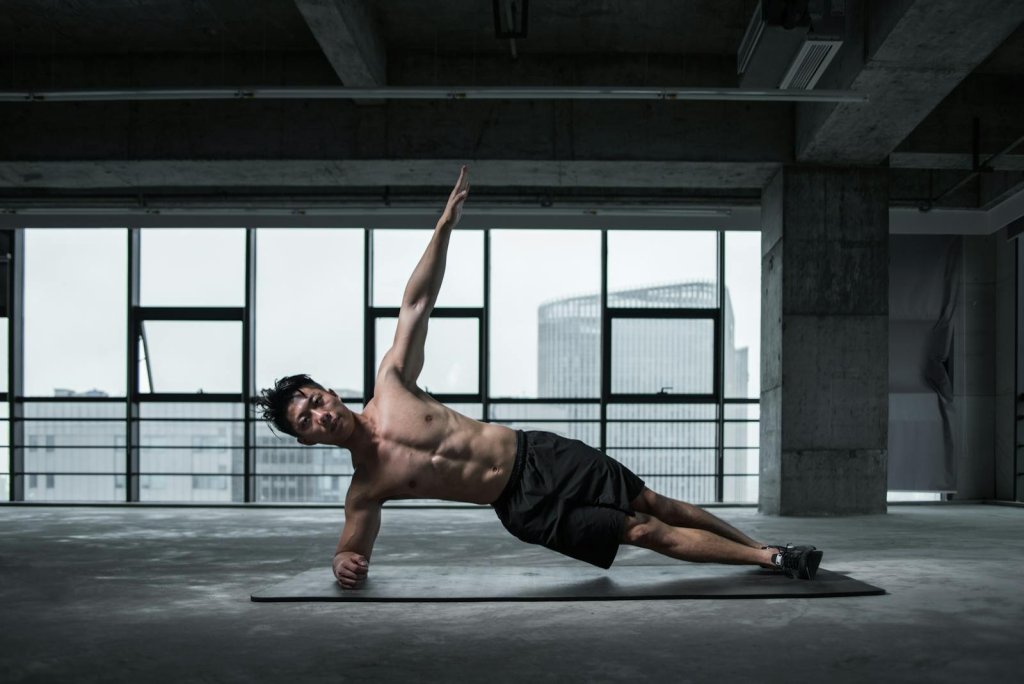
Core training works best when your abs, back, hips, and pelvis learn to work together for real stability and performance, as outlined in core-training guidance from the Mayo Clinic.
What Are the Obliques and Why Should Men Train Them?
The obliques are the muscles along the sides of your abdomen. They include the external obliques (outer layer) and internal obliques (deeper layer). Together, they help you rotate, bend sideways, and stabilize your spine.
Why men should train them:
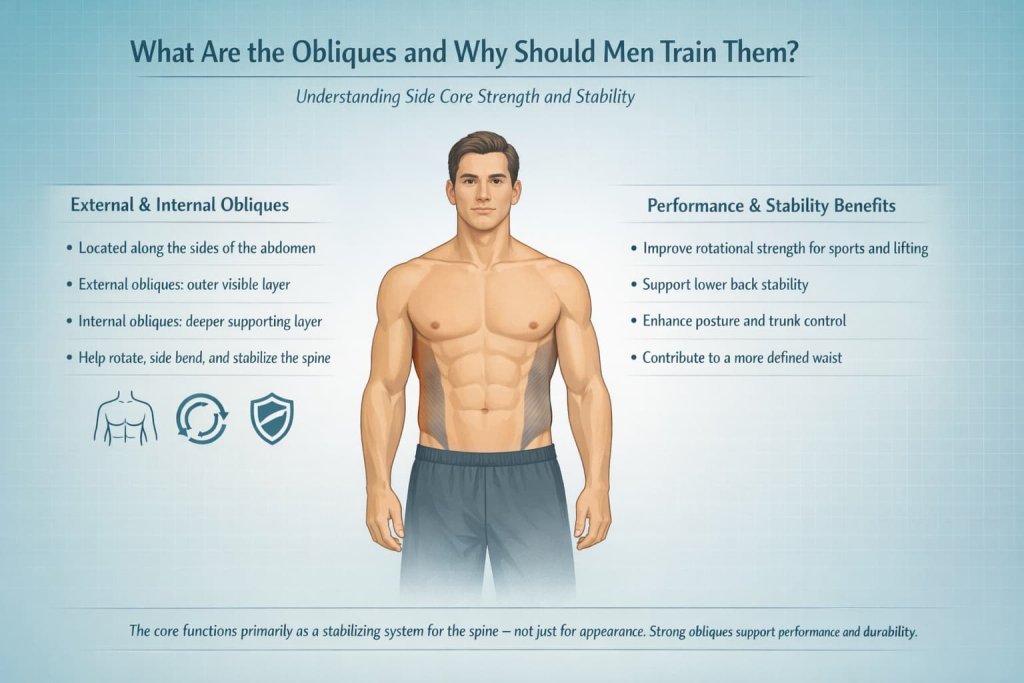
- Improve rotational strength for sports and lifting
- Support lower back stability
- Enhance posture and trunk control
- Contribute to a more defined waist
The Mayo Clinic explains that the core functions primarily as a stabilizing system for the spine—not just for appearance. Strong obliques improve both performance and durability.
15 Best Oblique Exercises for Men
Build a stronger, more defined core with these 15 best oblique exercises for men designed to improve rotation, stability, and total trunk strength. From side planks to anti-rotation presses and carries, these moves target your side core for real strength and visible results.
1) Side Plank
How to do it:
- Lie on your side with elbow under shoulder, forearm on floor
- Stack feet (or stagger for balance)
- Lift hips until body is in a straight line
- Brace ribs down (don’t flare) and hold
Why it works:
Side planks challenge the lateral trunk to resist gravity, building real oblique endurance and anti-side-bending strength while reinforcing proper ribcage and pelvis alignment.
Muscles worked:
External oblique, internal oblique, transverse abdominis, glute medius, shoulder stabilizers.
Trainer Tip:
If your shoulder feels uncomfortable, try the variation from the knees first and focus on keeping your body in one straight line.
2) Side Plank Hip Dips
How to do it:
- Start in a strong side plank position
- Lower hips a few inches with control
- Lift back to a straight line
- Repeat slow, smooth reps
Why it works:
Adding controlled hip movement increases time-under-tension for the obliques and improves dynamic lateral trunk control without losing stability.
Muscles worked:
External/internal obliques, quadratus lumborum, glute medius.
Trainer Tip:
Keep shoulders stacked and avoid rotating forward—move only at the hips.
3) Copenhagen Side Plank
How to do it:
- Place your top leg on a bench (knee or ankle depending on level)
- Support your body on your forearm
- Lift hips and keep body aligned
- Hold, then switch sides
Why it works:
This variation links inner thigh strength with lateral core stability, creating higher overall trunk tension and improving side-chain strength.
Muscles worked:
Obliques, adductors, glute medius, deep core stabilizers.
Trainer Tip:
Start with the knee-supported version before progressing to the ankle-supported variation.
4) Suitcase Carry
How to do it:
- Hold one heavy dumbbell or kettlebell at your side
- Stand tall and walk slowly
- Keep ribs stacked over hips
- Switch hands
Why it works:
The uneven load pulls you sideways, forcing your obliques to resist lateral flexion with every step, which builds functional core strength.
Muscles worked:
Obliques, quadratus lumborum, grip, glutes.
Trainer Tip:
Take slow, controlled steps to increase stability demand and avoid leaning toward or away from the weight.
5) Offset Front Rack Carry
How to do it:
- Hold a kettlebell in one front rack position
- Walk tall without twisting
- Keep hips level
- Switch sides
Why it works:
The front-loaded, offset position challenges both anti-rotation and anti-lateral flexion control, strengthening the obliques in a highly functional pattern.
Muscles worked:
Obliques, transverse abdominis, upper back, glutes.
Trainer Tip:
Lower the load if your torso twists or your ribs flare upward.
6) Pallof Press
How to do it:
- Stand sideways to a cable or band
- Hold handle at chest
- Press straight forward
- Pause, return slowly
- Switch sides
Why it works:
The Pallof press trains the obliques to resist rotational force, reinforcing trunk stability under tension.
Muscles worked:
External/internal obliques, transverse abdominis.
Trainer Tip:
Keep your hips square and avoid letting the handle pull your hands back toward the anchor.
7) Half-Kneeling Pallof Press
How to do it:
- Kneel with one knee down
- Set band or cable at chest height
- Press forward while resisting rotation
- Switch stance
Why it works:
The half-kneeling stance reduces lower-body compensation, increasing demand on the trunk and improving rotational control.
Muscles worked:
Obliques, deep core stabilizers, glutes.
Trainer Tip:
Squeeze the glute on the down-knee side to stabilize your pelvis.
8) Pallof Press Hold
How to do it:
- Press band or cable straight out
- Hold 10–30 seconds
- Breathe steadily
- Switch sides
Why it works:
Isometric tension builds core stiffness and teaches the obliques to maintain alignment under sustained load.
Muscles worked:
Obliques, transverse abdominis.
Trainer Tip:
Reduce resistance if your shoulders rotate or your body starts shaking excessively.
9) Dead Bug With Band Pull
How to do it:
- Lie on your back, knees bent at 90°
- Hold a band pulling from one side
- Extend opposite arm and leg
- Alternate slowly
Why it works:
This movement trains anti-rotation while the limbs move, improving coordination and deep trunk control.
Muscles worked:
Obliques, transverse abdominis, hip flexors (assist).
Trainer Tip:
Keep your lower back gently braced against the floor throughout the movement.
10) Bird Dog Row
How to do it:
- Start on hands and knees
- Extend one leg back
- Row a light dumbbell/kettlebell with opposite arm
- Switch sides
Why it works:
Combining anti-rotation with upper-body pulling improves total-body stability and strengthens the side core.
Muscles worked:
Obliques, spinal stabilizers, lats, glutes.
Trainer Tip:
Keep hips square to the floor and move slowly to avoid twisting.
11) High-to-Low Cable Chop
How to do it:
- Stand sideways to a high cable
- Pull diagonally downward
- Rotate smoothly
- Switch sides
Why it works:
Builds controlled rotational strength across the torso, improving diagonal force transfer.
Muscles worked:
Obliques, serratus anterior, hips.
Trainer Tip:
Initiate rotation through the hips and torso—not just the arms.
12) Low-to-High Cable Lift
How to do it:
- Set cable low
- Pull diagonally upward
- Finish tall
- Switch sides
Why it works:
Strengthens upward diagonal movement patterns important for sport and daily activities.
Muscles worked:
Obliques, hips, shoulders.
Trainer Tip:
Avoid leaning backward at the top; stay tall and braced.
13) Standing Wood Chop
How to do it:
- Hold a medicine ball or cable handle
- Rotate across body with control
- Return slowly
- Switch sides
Why it works:
Develops dynamic rotational control and reinforces coordinated trunk movement.
Muscles worked:
Obliques, hips, upper back.
Trainer Tip:
Keep the movement smooth and controlled—avoid jerking or excessive speed.
14) Renegade Row
How to do it:
- Set up in plank holding dumbbells
- Row one weight without twisting
- Alternate sides
Why it works:
The rowing motion challenges your trunk to resist rotation, increasing anti-rotational core strength.
Muscles worked:
Obliques, lats, shoulders, glutes.
Trainer Tip:
Widen your feet slightly if you struggle to keep your hips level.
15) Hanging Knee Raise With Twist
How to do it:
- Hang from pull-up bar
- Raise knees
- Gently rotate knees side to side
- Lower with control
Why it works:
Combines hip flexion with rotational control, increasing oblique engagement under bodyweight resistance.
Muscles worked:
Obliques, lower abs, hip flexors.
Trainer Tip:
Avoid swinging and control the descent fully to keep tension on the core.
How to Get “Defined” Obliques Without Wasting Time
“Definition” comes from two things:
- Building muscle and strength in the obliques
- Lowering overall body fat over time
Targeting one area for fat loss (like doing only side abs to “burn love handles”) isn’t reliable—fat loss happens across the body, not exactly where you train. The University of Sydney explains why “spot reduction” is largely a myth and why overall fat loss drives visible change.
The Best Oblique Training Plan for Men
To train the obliques the way they actually function, use these 3 categories each week:
- Anti-rotation (resist twisting)
- Anti-lateral flexion (resist side bending)
- Controlled rotation (rotate with control)
This matches common strength and conditioning frameworks that categorize the core by regions and rotational demands, as outlined by the National Strength and Conditioning Association (NSCA).
Quick Programming Guide
Use this simple template:
- Frequency: 2–4 days/week
- Pick: 2–4 moves per session (mix categories)
- Sets: 2–4
- Reps: 6–12 (for controlled reps) or 20–45 seconds (for holds/carries)
- Effort: stop 1–2 reps before your form breaks
If you have back issues or other health concerns, conservative core programming and proper form matter. The Mayo Clinic recommends keeping your back neutral and training with control.
Are Oblique Exercises Enough to Get a Defined Waist?
No. Oblique exercises build muscle, but visible definition depends on overall body fat levels.
Important factors:
- Total calorie intake
- Full-body strength training
- Protein intake
- Sleep and recovery
The University of Sydney explains that “spot reduction” is largely a myth. Fat loss occurs across the body, not just in one trained area.
Oblique exercises strengthen the muscle. Nutrition determines how visible it becomes.
Safety Tips Before Starting Oblique Exercises
Train smart to protect your spine.
Key guidelines:
- Maintain a neutral spine
- Move slowly and with control
- Avoid jerking or excessive twisting
- Progress gradually
- Stop if you feel sharp pain
The Mayo Clinic recommends controlled core training and proper alignment to reduce injury risk.
Common Mistakes That Limit Oblique Results
- Only doing side crunches
- Rotating too fast on chops
- Letting ribs flare and lower back arch
- Going heavy before mastering form
FAQs
Which oblique exercise is best for men?
Side plank variations, Pallof presses, and carries are highly effective because they train anti-rotation and stability.
How often should men train obliques?
2–4 times per week is effective for most men.
Do oblique exercises make your waist thicker?
Heavy side bending can increase muscle size. Anti-rotation and plank variations are often preferred for a tighter appearance.
Can oblique exercises remove love handles?
They strengthen the area, but fat loss happens globally, not in one specific spot.
Are weighted twists safe?
They can be when performed slowly and with control, but rushing them may increase spinal stress.
Bands or cables—what’s better?
Both are effective. Cables offer smoother resistance; bands are portable and convenient.
Conclusion
To build a strong, defined core, combine anti-rotation presses, carries, side planks, and controlled rotational work. Train consistently, maintain strict posture, and progress gradually. Over time, this balanced approach helps develop stronger obliques and better trunk stability.
References
- Core Muscle Activity During Physical Fitness Exercises (systematic review including oblique EMG) — PubMed Central
- Electromyographic Analysis of Core Trunk, Hip, and Thigh Exercises (side-bridge/oblique relevance) — Journal of Orthopaedic & Sports Physical Therapy
- Foundations of Fitness Programming (program design and progression concepts) — NSCA
- Standing Anti-Rotation Press (Pallof press form guide) — American Council on Exercise
- Standing Wood Chop (rotation pattern form guide) — American Council on Exercise