
FUPA exercises can’t “spot reduce” fat, but they can strengthen your lower core, improve pelvic stability, and help your midsection look and feel firmer as you build total-body fitness. Understanding this matters because the “lower belly” area is heavily influenced by posture, deep core control, hip strength, and overall body-fat distribution—not just one muscle.
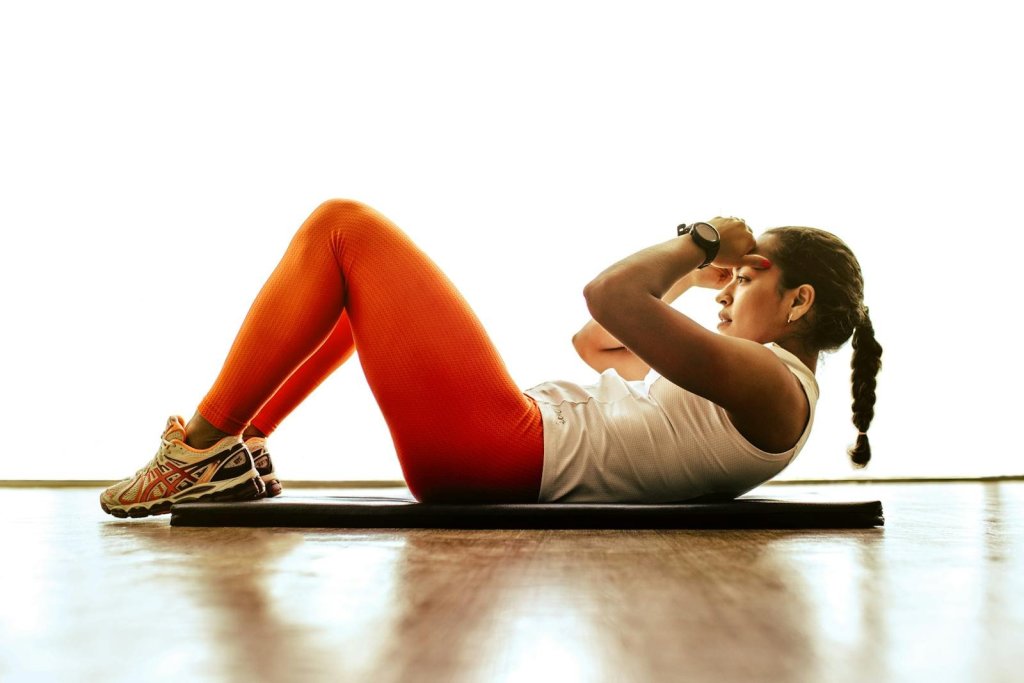
In this guide, you’ll learn the safest, most effective at-home moves to train the deep core (transverse abdominis), obliques, hips, and glutes—plus how to program them, what to avoid, and when to modify.
What “FUPA” Means and What Exercises Can Actually Do
“FUPA” is a slang term often used to describe softer tissue over the lower belly/upper pubic area. It’s commonly influenced by genetics, pregnancy and postpartum changes, weight gain or weight loss, and aging.
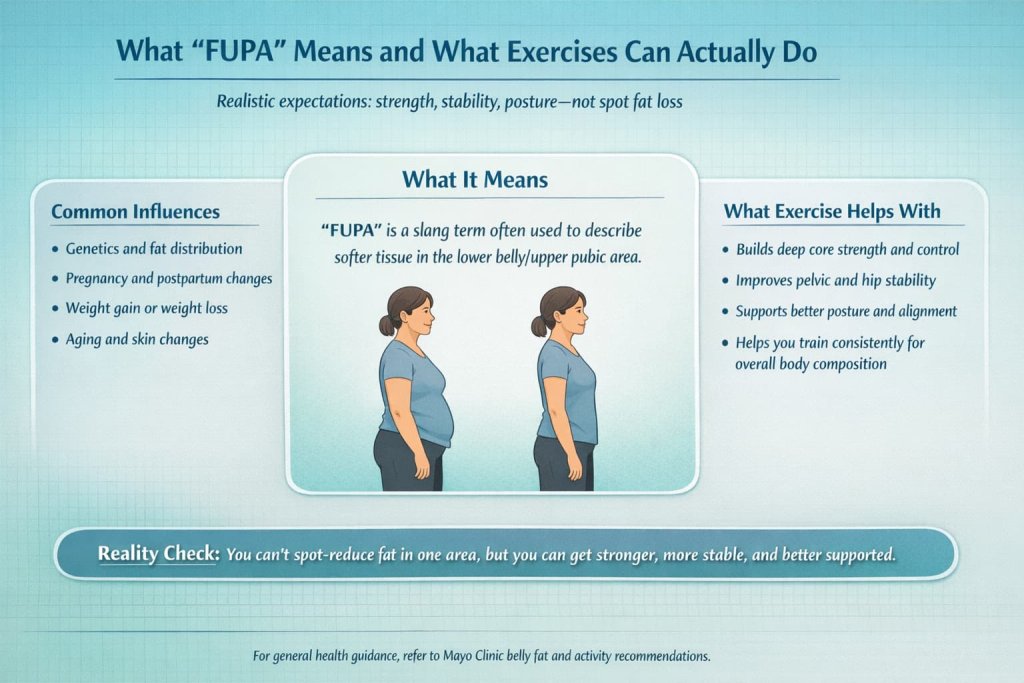
Exercises can’t target fat loss in one specific spot. What they can do is build deeper core strength and control, improve pelvic and hip stability, support better posture (which often changes how the lower belly appears), and help you progress into consistent strength training that supports overall body composition.
What Causes Lower Belly Fat and Why Spot Reduction Doesn’t Work
Lower belly fat (including what some people call “FUPA”) is usually influenced by overall body-fat distribution, not one “problem” muscle. Common causes include:
- Genetics (where your body stores fat)
- Pregnancy/postpartum changes
- Aging and skin/connective tissue changes
- Weight gain or weight loss
- Stress, sleep, and daily activity levels
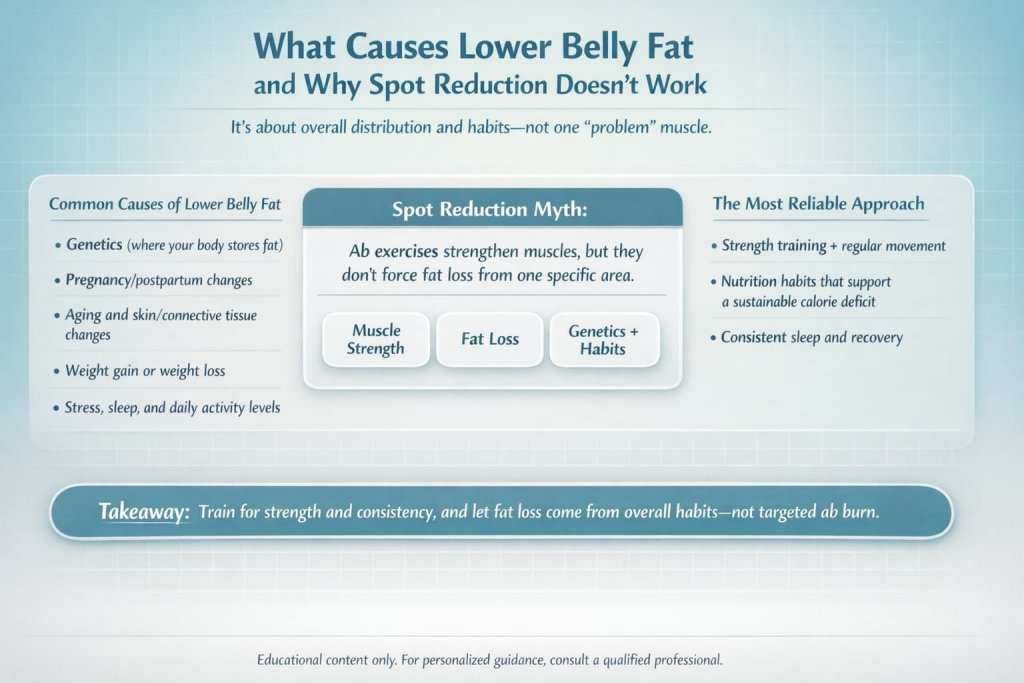
Spot reduction doesn’t work because ab exercises strengthen muscles but don’t force fat loss from one specific area. The most reliable approach is:
- Strength training + regular movement
- Nutrition habits that support a sustainable calorie deficit (if fat loss is your goal)
- Consistent sleep and recovery
8 Best FUPA Exercises to Strengthen Your Lower Core at Home
Build a stronger, steadier lower core with these 8 beginner-friendly FUPA exercises you can do at home with little to no equipment. Follow the simple weekly plan and safe progressions to improve core control, posture, and overall stability over time.
1) Heel Taps (Dead Bug Variation)
How to do it:
- Lie on your back with knees bent at 90 degrees (tabletop)
- Exhale and gently brace your core (ribs down, low back heavy on the floor)
- Slowly lower one heel to tap the floor without arching your back
- Return to tabletop and switch sides
- Move slowly and keep your breathing steady
Why it works:
Heel taps train lower-core control by teaching you to resist low-back arching while the legs move. This is one of the most “FUPA-friendly” patterns because it builds control without aggressive flexion.
Muscles worked:
Deep core (transverse abdominis), rectus abdominis, obliques, hip flexors (light), pelvic stabilizers.
Trainer Tip:
If your back arches or ribs flare, shorten the range and tap closer to your body.
2) Dead Bug (Classic)
How to do it:
- Lie on your back with arms up and knees in tabletop
- Exhale to brace, keeping ribs stacked over pelvis
- Reach one arm back as the opposite leg extends (slow)
- Pause briefly, return, and alternate sides
- Keep the low back gently pressed into the floor
Why it works:
Dead bugs build coordination between breath, bracing, and limb movement. They’re excellent for improving “lower belly control,” especially if you tend to arch your back.
Muscles worked:
Deep core, obliques, rectus abdominis, shoulder stabilizers.
Trainer Tip:
Make the exhale long. If you can’t maintain control, extend only the arm and keep the leg bent.
3) Glute Bridge With Posterior Pelvic Tilt
How to do it:
- Lie on your back with feet flat, knees bent
- Exhale and gently tuck the pelvis (flatten low back slightly)
- Drive through heels to lift hips until your body forms a straight line
- Pause 1–2 seconds, lower slowly, and repeat
- Keep ribs down and avoid over-arching at the top
Why it works:
Glute bridges strengthen the posterior chain and can improve pelvic positioning. Strong glutes often reduce “lower belly dumping” caused by an overly arched posture.
Muscles worked:
Glutes, hamstrings, deep core, spinal stabilizers.
Trainer Tip:
Think “ribs down, belt buckle up” to keep the top position clean.
4) Side Plank From Knees (Beginner-Friendly)
How to do it:
- Lie on your side with knees bent and elbow under shoulder
- Exhale and lift hips so shoulders, hips, and knees align
- Hold while breathing steadily (no breath-holding)
- Lower with control and repeat on the other side
Why it works:
This strengthens obliques and lateral core without straining the lower back. It’s a strong “anti-tilt” move that supports pelvic stability.
Muscles worked:
Obliques, transverse abdominis, glute medius, shoulder stabilizers.
Trainer Tip:
If you feel it in the shoulder more than the side body, press the forearm down and “push the floor away.”
5) Bird Dog (Slow and Controlled)
How to do it:
- Start on hands and knees (hands under shoulders, knees under hips)
- Exhale and brace lightly to keep your trunk steady
- Extend one leg back while reaching the opposite arm forward
- Pause 1 second without rotating, then return and switch sides
- Keep hips square and spine long
Why it works:
Bird dogs train anti-rotation and spinal stability. They build the core’s ability to resist movement, which matters more than crunching for most “lower belly” goals.
Muscles worked:
Deep core, obliques, glutes, low-back stabilizers, upper-back muscles.
Trainer Tip:
Move slower than you think you need to. Control beats range.
6) Reverse Crunch (Small Range, Ribs Down)
How to do it:
- Lie on your back with knees bent and feet off the floor (tabletop)
- Exhale and gently brace
- Curl your pelvis slightly to lift hips a few inches (small motion)
- Lower slowly without letting the low back arch
- Keep the movement smooth and controlled
Why it works:
A controlled reverse crunch targets lower abdominal strength through pelvic motion, but it must be done with precision to avoid hip flexor dominance and back arching.
Muscles worked:
Lower rectus abdominis, deep core, obliques, hip flexors (secondary).
Trainer Tip:
If your neck tenses or your legs swing, reduce the range and slow down.
7) Wall Plank (Incline Plank)
How to do it:
- Place forearms or hands on a wall at chest height
- Step feet back until you feel your core engage
- Exhale and brace: ribs down, glutes lightly on
- Hold 20–40 seconds while breathing normally
- Stop if you feel pressure, doming, or low-back pinching
Why it works:
Incline planks train anti-extension core strength with a lower intensity than floor planks. That makes them a smart option for beginners and postpartum modifications.
Muscles worked:
Deep core, rectus abdominis, serratus anterior, glutes.
Trainer Tip:
Your goal is a steady trunk. Don’t chase a “harder” angle if your form breaks.
8) Suitcase Carry (At-Home March)
How to do it:
- Hold a dumbbell or loaded bag in one hand at your side
- Stand tall with ribs stacked over hips
- March in place slowly for 20–40 steps
- Switch hands and repeat
- Keep shoulders level and avoid leaning
Why it works:
Carries are a powerful anti-lean and anti-rotation drill. They train real-world core stability and pelvic control—two key pieces often missing in “FUPA exercise” routines.
Muscles worked:
Obliques, deep core, grip, glute medius, spinal stabilizers.
Trainer Tip:
If you tilt, use a lighter load and slow the march.
Quick Safety Checklist Before You Start
Scale down or pause if you notice:
- Sharp pain (not normal training effort)
- Pelvic heaviness or pressure that increases during reps
- Leaking, bulging, or doming along the midline
- Numbness, tingling, or pain radiating down the leg
If you’re postpartum, have pelvic floor symptoms, or you’re unsure how to coordinate breathing and bracing, the pelvic floor basics from Cleveland Clinic can help you start safely.
How These FUPA Exercises Work
To make “FUPA exercises” worth your time, your routine should focus on deep core bracing (anti-extension), anti-rotation, posterior chain strength (glutes and hamstrings), and breath and pelvic floor coordination.
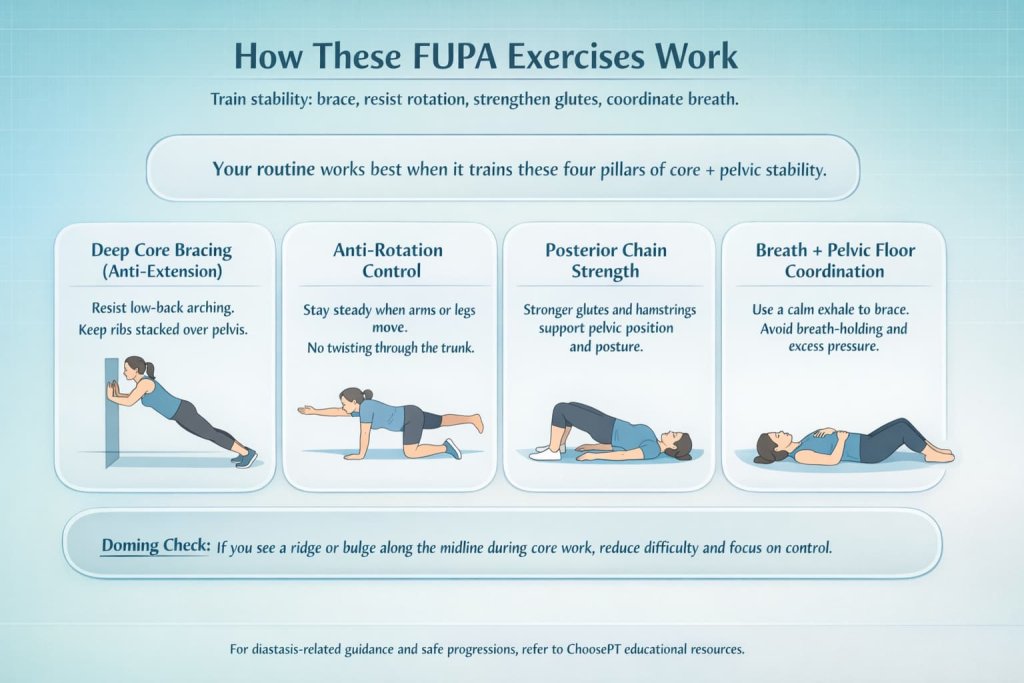
If you ever see midline “doming” (a ridge/bulge along the abs) during core work, scale down and consider professional guidance like the information provided by ChoosePT.
Best Weekly Plan for FUPA Exercises
Do this routine 3 days per week (about 15–25 minutes):
- Heel taps: 2–3 sets of 6–10 per side
- Dead bug: 2–3 sets of 6–8 per side
- Glute bridge: 2–4 sets of 8–12
- Side plank from knees: 2–3 holds of 15–30 seconds per side
- Bird dog: 2–3 sets of 6–8 per side
- Reverse crunch: 2–3 sets of 6–10
- Wall plank: 2–3 holds of 20–40 seconds
- Suitcase carry march: 2 rounds per side
Rest 30–60 seconds between sets as needed.
Common Mistakes That Make FUPA Exercises Less Effective
Common mistakes include doing harder moves too soon and losing control, letting ribs flare or the low back arch, holding your breath, training only abs while ignoring glutes and hips, and chasing a burn instead of clean control.
Who Should Avoid or Modify These Exercises
You should modify or get professional guidance first if you have postpartum pain, pelvic heaviness, or worsening pressure during core work; a history of hernia or recent abdominal surgery; significant low back pain that increases with bracing; or symptoms that spread down the leg (numbness, tingling, radiating pain).
In those cases, start with wall planks, gentle breathing, and glute bridges, and consider a pelvic floor physical therapist for individualized progressions.
Nutrition and Daily Activity Tips That Support Fat Loss
If fat loss is the goal, focus on habits you can repeat.
- Aim for protein at most meals (helps fullness and muscle support)
- Add fiber daily (vegetables, beans, fruit, whole grains)
- Limit liquid calories if progress stalls
- Walk more (short daily walks add up)
- Strength train 2–4 days per week and keep it progressive
- Prioritize sleep to support appetite and recovery
FAQ:
Can FUPA exercises reduce fat in the lower belly?
No. You can’t reliably lose fat in just one area with targeted exercises. These moves strengthen your lower core and improve stability, while fat loss is mainly driven by overall habits.
How long does it take to see results from FUPA exercises?
Many people feel better core control in 2–4 weeks with consistent practice. Visual changes depend on overall training consistency, daily activity, nutrition, sleep, and genetics.
Are FUPA exercises safe postpartum?
Often yes, but you should scale intensity and prioritize breathing, bracing, and pelvic floor coordination. If you notice heaviness, leaking, or doming, modify and get guidance.
What is the best beginner exercise for the lower belly area?
Heel taps and dead bugs are great starting points because they build control with low risk when performed slowly.
Should I do crunches for FUPA?
Crunches can work for some people, but they’re not required and can be too aggressive for beginners or postpartum readers. Stability-based moves are often a better starting point.
Do I need equipment for FUPA exercises at home?
No. A mat and wall are enough. A light dumbbell or bag helps for suitcase carries, but it’s optional.
Can walking help with lower belly fat?
Walking supports daily energy balance and recovery. Pair it with strength training for best long-term results.
Conclusion
FUPA exercises work best when you treat them as a lower-core and pelvic-stability plan—not a spot-fat solution. Build deep core control, strengthen your hips and glutes, practice steady breathing, and stay consistent with full-body movement.
This content is for informational purposes only and not medical advice.
References
- Mayo Clinic Staff. (n.d.). Belly fat in women: Taking off unwanted pounds. Mayo Clinic
- American College of Obstetricians and Gynecologists. (2020). Physical activity and exercise during pregnancy and the postpartum period (Committee Opinion No. 804). American College of Obstetricians and Gynecologists (ACOG)
- Centers for Disease Control and Prevention. (2023). Physical activity guidelines for Americans: Adult overview. Centers for Disease Control and Prevention (CDC)
- Harvard Health Publishing. (n.d.). How to get rid of belly fat. Harvard Health Publishing
- Donnelly, J. E., Blair, S. N., Jakicic, J. M., Manore, M. M., Rankin, J. W., & Smith, B. K. (2009). Appropriate physical activity intervention strategies for weight loss and prevention of weight regain for adults. Medicine & Science in Sports & Exercise, 41(2), 459–471. PubMed
- Bull, F. C., Al-Ansari, S. S., Biddle, S., Borodulin, K., Buman, M. P., Cardon, G., et al. (2020). World Health Organization 2020 guidelines on physical activity and sedentary behaviour. British Journal of Sports Medicine, 54(24), 1451–1462. British Journal of Sports Medicine