
Warm up and cool down exercises are short, low-intensity movements (often 5–10 minutes each) that help your body transition into and out of training more safely and comfortably. A warm-up gradually increases your heart rate and blood flow, while a cool-down brings effort down smoothly and can include gentle stretching once you’re already warm.
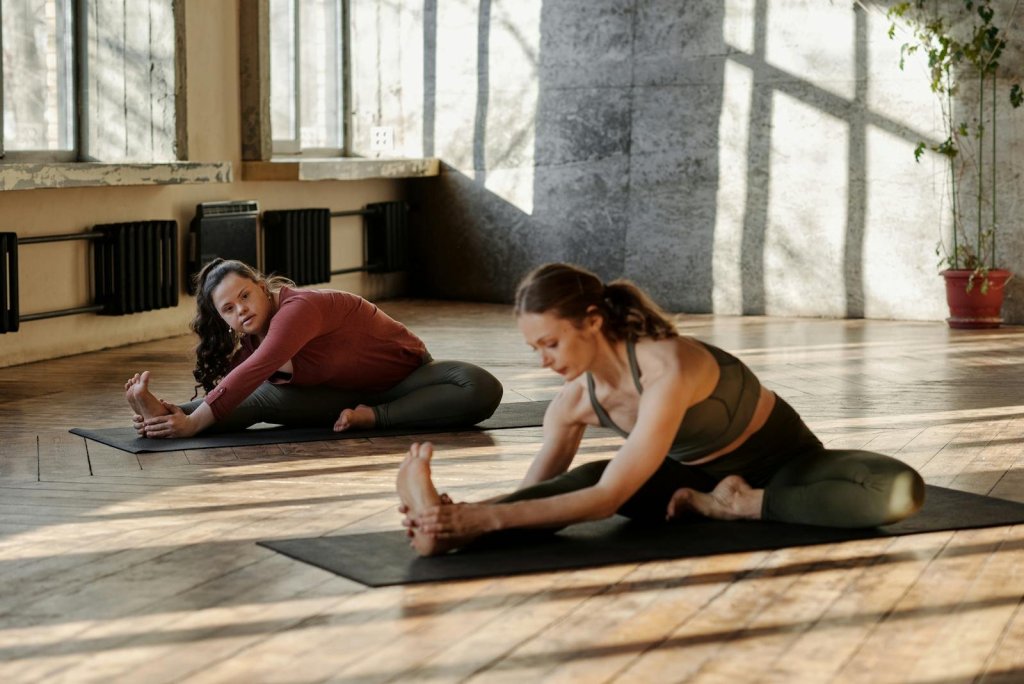
Understanding how to warm up and cool down matters because it can improve how you move during your workout, help you feel less stiff afterward, and support consistent training habits over time. Below you’ll get 14 beginner-friendly options you can mix and match for strength training, cardio, sports, or home workouts.
Who Should Be Extra Careful With Warm Up and Cool Down Exercises?
Warm up and cool down exercises are usually safe, but some people should start slower, choose low-impact options, and stop if anything feels sharp or unusual.
Be extra careful if you:
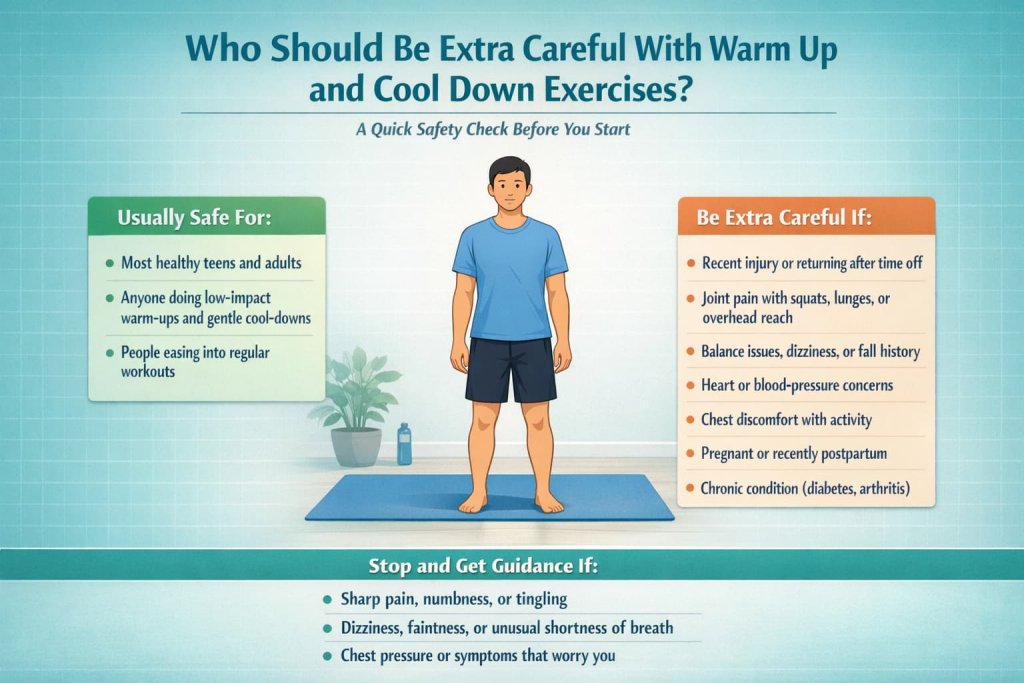
- Have a recent injury or are returning after time off
- Feel joint pain with basic moves (squats, lunges, overhead reach)
- Have balance issues, dizziness, or a history of falls
- Have heart or blood-pressure concerns, or get chest discomfort with activity
- Are pregnant or recently postpartum and need modifications
- Have a chronic condition (like diabetes or arthritis) where intensity changes should be gradual
14 Best Warm Up and Cool Down Exercises
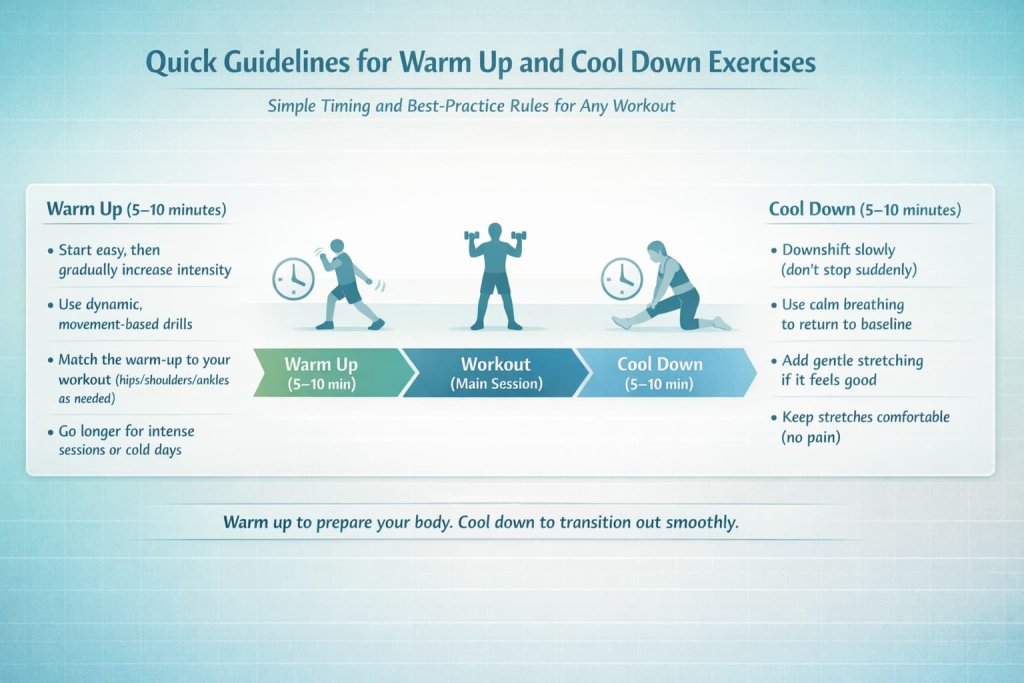
Use these 14 warm up and cool down exercises to prep your joints, boost movement quality, and finish workouts feeling better. Mix and match based on your training day, then follow the quick timing guide to keep it safe and effective.
7 warm up exercises to prep your body
Use 4–7 moves below. Most people do well with 1–2 minutes of easy cardio plus 4–6 dynamic drills.
1) Brisk Walk or Easy Cardio Ramp-Up
How to do it:
- Walk, cycle, or march in place at an easy pace for 60 seconds.
- Gradually increase pace for another 60–120 seconds.
- You should feel warmer and slightly out of breath, not exhausted.
Why it works: This gently raises your heart rate and increases blood flow to working muscles, helping your body “ramp up” before harder effort so the first few minutes of training feel smoother.
Muscles worked: Calves, quads, hamstrings, glutes, hip flexors (light), plus your heart and lungs (cardiorespiratory system).
Trainer Tip: If you’re lifting, treat this as your “engine start,” then follow it with 2–3 movement-specific warm-up drills for the joints you’ll train.
2) Marching High Knees (Low Impact)
How to do it:
- Stand tall and march, lifting knees to a comfortable height.
- Swing arms naturally.
- Keep ribs stacked over pelvis (no leaning back).
- Do 30–60 seconds.
Why it works: Marching high knees warms up the hips and ankles while reinforcing posture and coordination, which can help you move more efficiently in squats, lunges, running, and field sports.
Muscles worked: Hip flexors, quads, glutes (as stabilizers), calves, core (bracing), upper back/shoulders (arm swing).
Trainer Tip: Keep it quiet and controlled. If you feel your low back taking over, lower the knee height and focus on tall posture.
3) Arm Circles and Shoulder Rolls
How to do it:
- Do 10–15 small-to-medium arm circles forward, then backward.
- Add 8–10 shoulder rolls up-back-down.
- Keep neck relaxed and shoulders away from ears.
Why it works: This improves shoulder joint motion and warms up the upper back and shoulder girdle, which can make pressing, pulling, and overhead work feel more stable and comfortable.
Muscles worked: Deltoids, rotator cuff (as stabilizers), upper traps (light), rhomboids and mid-back (during shoulder control).
Trainer Tip: Keep circles smooth, not forced. “Easy range first, bigger range second” is a simple rule that protects cranky shoulders.
4) Cat-Cow (Spine Mobility)
How to do it:
- Get on hands and knees.
- Inhale as you gently arch your back (look slightly forward).
- Exhale as you round your upper back and tuck your chin slightly.
- Do 6–10 slow reps.
Why it works: Cat-cow gently moves your spine through flexion and extension, helping you find a comfortable neutral position before loading your back in hinging, squatting, or pushing movements.
Muscles worked: Spinal erectors (light), deep core stabilizers, scapular stabilizers, plus gentle mobility through the thoracic and lumbar spine.
Trainer Tip: Move with your breath and keep it pain-free. If your wrists don’t love the position, place hands on dumbbells or do it on forearms.
5) Hip Hinges (Bodyweight)
How to do it:
- Stand with feet hip-width.
- Push hips back like you’re closing a car door, keeping a neutral spine.
- Feel tension in hamstrings; return to stand.
- Do 8–12 controlled reps.
Why it works: The hip hinge is the foundation for deadlifts, good mornings, and many athletic movements. Practicing it warm-up style grooves the pattern so your glutes and hamstrings share the work instead of your lower back doing everything.
Muscles worked: Glutes, hamstrings, spinal erectors (as stabilizers), core (bracing), upper back (posture).
Trainer Tip: Keep your shins mostly vertical and think “hips back, chest proud.” If you’re unsure, hinge toward a wall behind you to learn the motion.
6) Glute Bridge (Activation)
How to do it:
- Lie on your back, knees bent, feet flat.
- Exhale and lift hips until your body forms a straight line from knees to shoulders.
- Pause 1 second; lower slowly.
- Do 8–12 reps.
Why it works: Glute bridges wake up your glutes and teach you to extend at the hips without over-arching the low back, which can improve how you squat, hinge, and stabilize your pelvis during training.
Muscles worked: Glute max, hamstrings, core (anti-arch), adductors (as stabilizers).
Trainer Tip: If you feel it mostly in your hamstrings, move your feet a little closer to your glutes and focus on a gentle “tuck” of the pelvis at the top.
7) Reverse Lunge to Knee Drive (Dynamic Leg Prep)
How to do it:
- Step one leg back into a comfortable reverse lunge.
- Push through the front foot to stand and gently drive the back knee up.
- Alternate sides for 6–10 reps each.
Why it works: This combines strength-pattern rehearsal (lunge) with balance and hip control (knee drive). It’s a smart warm-up choice for lower-body workouts because it preps single-leg stability and coordination.
Muscles worked: Quads, glutes, hamstrings, calves, core stabilizers, hips (glute med/min for balance).
Trainer Tip: Keep your front knee tracking over the middle toes. If balance is tricky, do it next to a wall and lightly touch for support.
7 Cool Down Exercises to Finish Your Workout
8) Slow Walk or Easy Pace Downshift
How to do it:
- Reduce intensity gradually for 2–5 minutes.
- Breathe through your nose if comfortable.
- Let your heart rate come down steadily (no sudden stop).
Why it works: A downshift helps your body transition out of exercise without abruptly stopping, which can feel better and more comfortable—especially after hard intervals or heavy sets.
Muscles worked: Same muscles you trained at a lower intensity (whole-body circulation support).
Trainer Tip: Keep moving until breathing feels more normal. The goal is “calm and steady,” not “collapse and stop.”
9) Box Breathing or Long Exhale Breathing
How to do it:
- Inhale for 4 seconds.
- Exhale for 6–8 seconds (slow and controlled).
- Repeat for 5–8 rounds.
Why it works: Slower breathing helps shift you into a more relaxed state after training, which can reduce that “revved up” feeling and make your cool-down feel complete.
Muscles worked: Diaphragm and breathing muscles, with whole-body relaxation effects.
Trainer Tip: If counting stresses you out, simply make your exhale longer than your inhale and keep it gentle.
10) Standing Calf Stretch (Gentle)
How to do it:
- Step one foot back, keep heel down.
- Slight bend in front knee, back leg straight.
- Hold 20–30 seconds each side.
Why it works: Calves often tighten with walking, running, jumping, and lifting. A gentle calf stretch can help restore comfortable ankle motion and reduce post-workout stiffness.
Muscles worked: Gastrocnemius and soleus (calf muscles), Achilles tendon region (gentle tension).
Trainer Tip: Keep your back heel heavy. If you don’t feel anything, move the back foot slightly farther behind you.
11) Hip Flexor Stretch (Half-Kneeling)
How to do it:
- Kneel on one knee, other foot in front.
- Tuck pelvis slightly (avoid arching your low back).
- Shift forward until you feel a gentle stretch in front of the hip.
- Hold 20–30 seconds each side.
Why it works: Hip flexors can feel tight after lots of sitting or hard lower-body work. This position targets the front of the hip while teaching you to keep the low back out of the stretch.
Muscles worked: Hip flexors (including iliopsoas and rectus femoris), glutes (as stabilizers), core (bracing).
Trainer Tip: Think “zip up the ribs” and “squeeze the glute” on the kneeling side—those two cues usually make the stretch more effective.
12) Seated Hamstring Stretch
How to do it:
- Sit tall with one leg extended, other knee bent.
- Hinge forward at the hips (don’t round your back).
- Stop at mild tension (not pain).
- Hold 20–30 seconds each side.
Why it works: This helps reduce the “pulled tight” feeling in the back of the legs after training, especially after hinging, running, or jumping sessions.
Muscles worked: Hamstrings (primary), calves (sometimes), low back (only if you round—so avoid that).
Trainer Tip: If your back rounds, sit on a folded towel and keep your chest lifted as you hinge forward.
13) Figure-4 Glute Stretch
How to do it:
- Lie on your back, cross ankle over opposite knee.
- Gently pull the supporting leg toward you.
- Keep shoulders relaxed.
- Hold 20–30 seconds each side.
Why it works: This targets the glutes and deep hip muscles that can feel tight after squats, deadlifts, running, or long periods of sitting.
Muscles worked: Glute max, glute med, deep hip rotators (often associated with piriformis region).
Trainer Tip: Keep your hips level and your head relaxed. If it pinches the front of the hip, reduce the pull and open the knee less.
14) Chest Opener Doorway Stretch
How to do it:
- Place forearm on a doorway with elbow around shoulder height.
- Step through slightly until you feel a gentle chest stretch.
- Hold 20–30 seconds each side.
Why it works: Many workouts (and daily posture) tighten the front of the shoulders and chest. A gentle chest opener can help you finish training with a more open, relaxed upper-body position.
Muscles worked: Pectoralis major/minor, front deltoid (light), biceps (sometimes).
Trainer Tip: Don’t crank the shoulder forward. Keep your shoulder blade lightly “set” down and back, and use a small step for a clean stretch.
How Long Should a Warm-Up and Cool-Down Be?
Most workouts need 5–10 minutes for a warm-up and 5–10 minutes for a cool-down. Go longer if the workout is intense, you’re stiff, or it’s cold.
Simple timing guide:
- Warm-up (5–10 min):
- 2–5 min easy cardio ramp-up
- 3–5 min dynamic movement prep that matches your workout
- Cool-down (5–10 min):
- 2–5 min easy pace downshift
- 2–5 min gentle mobility or stretching (optional)
A simple 10-minute warm up and cool down plan
Use this as your default for most workouts.
5-minute warm-up
- 2 minutes brisk walk or marching in place
- 30 seconds arm circles plus shoulder rolls
- 1 minute hip hinges (8–12 reps, repeat as needed)
- 1 minute glute bridges (8–12 reps)
- 30 seconds reverse lunge to knee drive (alternate)
5-minute cool-down
- 2 minutes slow walk or easy pace downshift
- 1 minute long-exhale breathing
- 1 minute hip flexor stretch (30 seconds each side)
- 1 minute figure-4 glute stretch (30 seconds each side)
Common mistakes with warm up and cool down exercises
- Warming up too fast: if you jump straight into hard work, you may feel stiff or “off” in the first sets.
- Stretching aggressively when cold: save longer holds for after you’re warm.
- Skipping the cool-down completely after intense work: it’s often more comfortable to downshift first.
- Doing random moves that don’t match your workout: choose drills that prep the joints and patterns you’ll actually use.
FAQs about warm up and cool down exercises
How long should a warm-up be?
Most people do well with 5–10 minutes, and it may be longer for intense sessions.
Should I stretch before my workout?
Many people prefer dynamic movement first, and then do longer stretching after training when you’re warm.
Do I need to cool down after strength training?
A short downshift plus a few gentle stretches can help you transition out of training and relax afterward. It doesn’t need to be long to be useful.
What if I only have 3 minutes?
Do a quick ramp-up: marching in place, arm circles, and 6–8 bodyweight hinges or squats. For cool-down, slow breathing and a brief walk is enough.
Are warm-ups different for cardio vs lifting?
Yes. Cardio warm-ups often look like an easier version of the same activity, while lifting warm-ups focus more on mobility, activation, and lighter practice sets.
What are the best warm up and cool down exercises for beginners?
Brisk walking, marching high knees (low impact), arm circles, hip hinges, and glute bridges are usually easy to learn and scale.
When should I stop and get guidance?
If you feel sharp pain, dizziness, chest pressure, or symptoms that worry you, stop exercising and seek medical guidance.
Conclusion
Warm up and cool down exercises don’t have to be complicated: a short ramp-up, a few targeted dynamic drills, then a gradual downshift and gentle stretches can make workouts feel better and more consistent. Start with the 10-minute plan above, then swap in options that match your goals and the equipment you have.
References
- NHS – How to stretch after exercising
- NHS inform – Warm up and cool down activities
- Mayo Clinic – Aerobic exercise: How to warm up and cool down
- American Heart Association – Warm Up, Cool Down
- American Academy of Orthopaedic Surgeons – Warm Up, Cool Down and Be Flexible
- CDC – Adult Activity Guidelines (Overview)
- Mayo Clinic Press – How to warm up and cool down for exercise
- World Health Organization – Physical activity recommendations