
Yes, you can build stronger quads at home with simple movements like squats, lunges, wall sits, step-ups, and sit-to-stands. These exercises train the front of your thighs with little or no equipment, and they can also support better balance, stair climbing, and day-to-day lower-body strength. Guidance from the CDC, AAOS, and NHS supports using practical lower-body strength exercises at home as part of a safe, progressive routine.
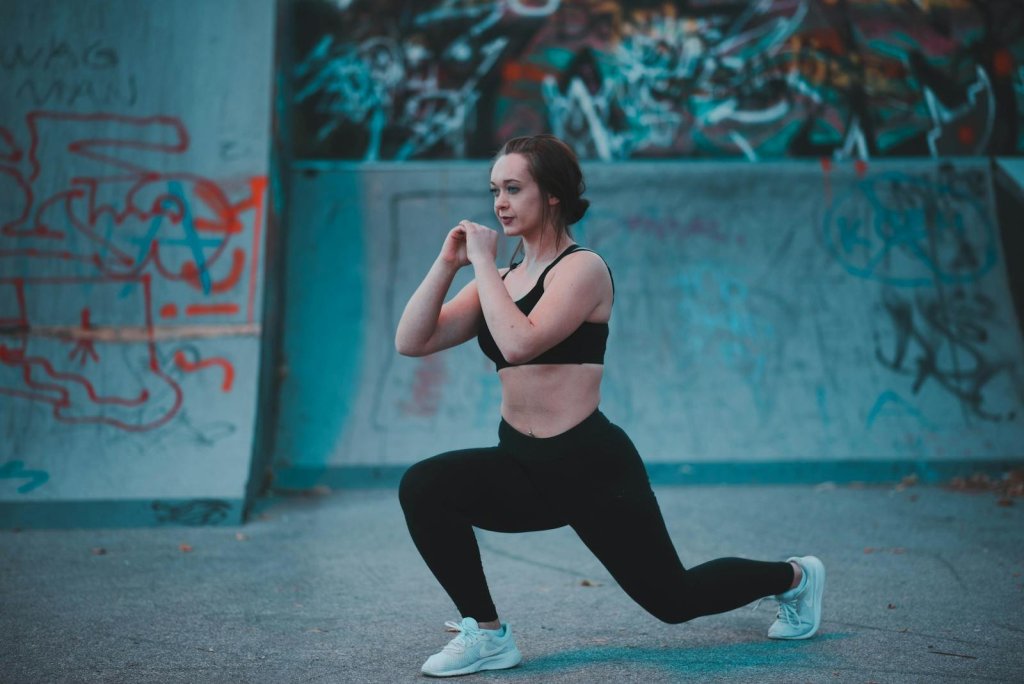
Understanding how to train your quads at home matters because these muscles help straighten your knees, support walking and standing, and make many daily tasks easier. The good news is that you do not need a full gym to get started. Most people can begin with bodyweight, a sturdy chair, a wall, or a step, then progress by adding reps, slowing the tempo, or using light resistance.
What Are Quad Exercises at Home?
Quad exercises at home are lower-body strength exercises that mainly target the quadriceps, the muscle group at the front of your thighs. These muscles are heavily involved in knee extension and help with standing up, climbing stairs, walking, and many squat- and lunge-based movements.
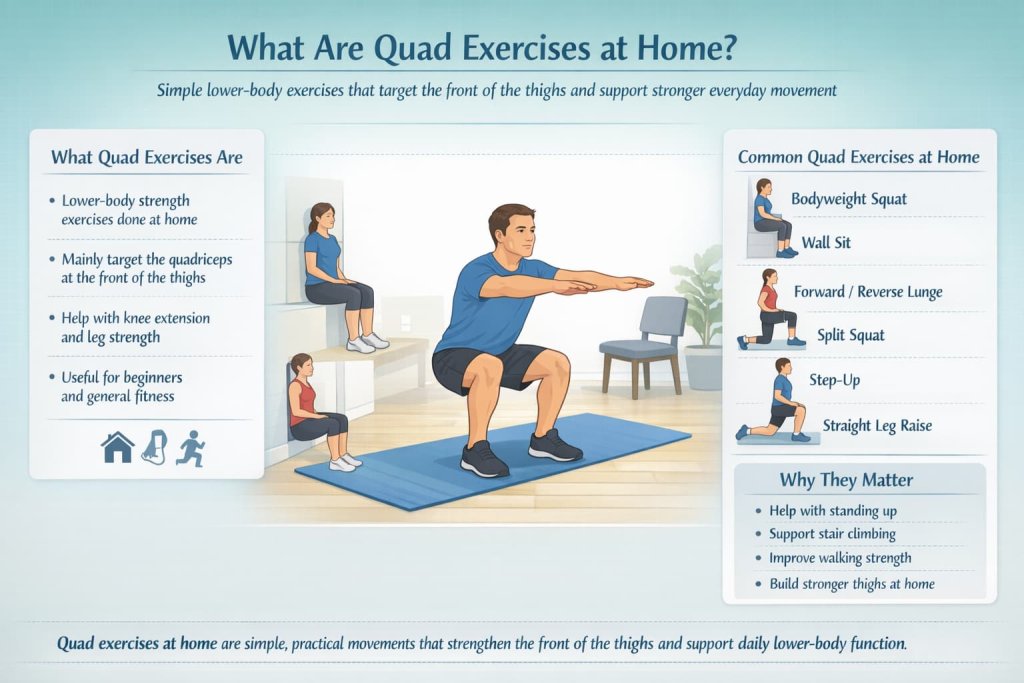
At-home quad exercises usually include bodyweight patterns such as squats, wall sits, lunges, split squats, step-ups, and straight-leg raises.
Why Quad Exercises at Home Matter
Strong quads do more than improve leg appearance. They help support the knee, improve lower-body control, and make basic activities like sitting down, standing up, and going up stairs feel easier. Public-health guidance from the CDC recommends muscle-strengthening activity at least 2 days per week, which makes quad-focused home workouts a practical way to meet that goal.
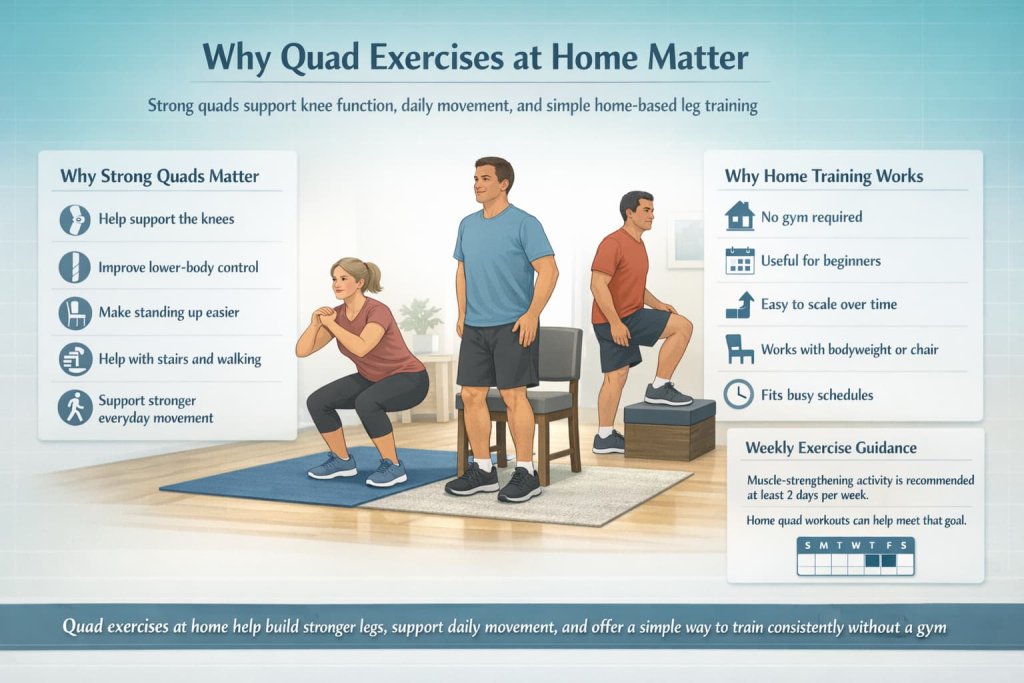
Home quad training can also be a smart option for beginners, busy adults, and people who want a simple leg routine without joining a gym. Rehab and hospital exercise guides frequently use sit-to-stands, squats, and supported lower-body drills because they are functional and easy to scale.
10 Best Quad Exercises at Home for Stronger Legs
Build stronger legs at home with these simple quad exercises that target the front of your thighs and support better daily movement. From squats and lunges to wall sits and step-ups, these moves are beginner-friendly, effective, and easy to do with little or no equipment.
1. Bodyweight Squat
How to do it:
- Stand with your feet about shoulder-width apart.
- Keep your chest up and your core braced.
- Bend your hips and knees to sit down and back.
- Lower to a comfortable depth.
- Push through your feet to stand tall again.
Why it works:
The bodyweight squat is one of the best all-around home quad exercises because it directly trains knee flexion and extension while also building coordination. It is simple, easy to scale, and useful for most fitness levels.
Muscles worked:
Quadriceps, glutes, adductors, hamstrings, and core.
Trainer Tip:
Do not force depth. A shallower squat with good control is better than dropping too low and losing balance or knee tracking.
2. Wall Sit
How to do it:
- Stand with your back against a wall.
- Walk your feet forward slightly.
- Slide down until your knees are bent to a comfortable angle.
- Hold the position while keeping your back against the wall.
- Stand back up and rest before the next round.
Why it works:
The wall sit keeps constant tension on the quads without requiring much space or equipment. It is especially useful for building endurance and teaching control in a knee-bent position.
Muscles worked:
Quadriceps mainly, with support from the glutes and core.
Trainer Tip:
Start with short holds. Even 15 to 20 seconds can be challenging when done with good form.
3. Forward Lunge
How to do it:
- Stand tall with your feet hip-width apart.
- Step one foot forward.
- Bend both knees to lower under control.
- Keep your front foot planted and your torso upright.
- Push back to the starting position and repeat on the other side.
Why it works:
The forward lunge adds unilateral work, which means each leg has to do its share of the job. It can build quad strength, balance, and lower-body control at the same time.
Muscles worked:
Quadriceps, glutes, hamstrings, calves, and core stabilizers.
Trainer Tip:
If stepping forward bothers your knees, try reverse lunges first. Many people find them smoother and easier to control.
4. Reverse Lunge
How to do it:
- Stand upright with your feet under your hips.
- Step one foot back.
- Lower until both knees bend comfortably.
- Keep your front knee aligned with your toes.
- Push through the front foot to return to standing.
Why it works:
The reverse lunge is often more beginner-friendly than the forward lunge because the backward step can reduce braking stress and make the movement feel more stable.
Muscles worked:
Quadriceps, glutes, hamstrings, and core.
Trainer Tip:
Hold onto a chair or wall at first if balance is the main challenge.
5. Split Squat
How to do it:
- Set one foot forward and one foot back in a split stance.
- Stay in place rather than stepping.
- Bend both knees to lower straight down.
- Keep your torso upright.
- Push through the front leg to rise.
Why it works:
Because your feet stay planted, the split squat removes some of the balance demand and lets you focus more on leg loading. That makes it one of the best home options for targeted quad work.
Muscles worked:
Quadriceps, glutes, adductors, and core.
Trainer Tip:
To emphasize the front leg more, keep most of your weight centered over that side and move slowly.
6. Step-Up
How to do it:
- Stand in front of a sturdy step, stair, or low platform.
- Place one foot fully on the step.
- Push through that foot to step up.
- Bring the other foot up if needed.
- Step back down with control and repeat.
Why it works:
Step-ups are highly functional because they mimic climbing stairs. They can help build quad strength and everyday lower-body ability with minimal equipment.
Muscles worked:
Quadriceps, glutes, calves, and core.
Trainer Tip:
Use a low step first. A higher step is not automatically better if it changes your posture or makes you push off too hard from the floor.
7. Sit-to-Stand
How to do it:
- Sit on a sturdy chair near the front edge.
- Place your feet flat under you.
- Lean forward slightly from the hips.
- Push through your feet to stand up.
- Lower back down slowly and repeat.
Why it works:
This is one of the most practical quad exercises at home because it directly trains a daily-life movement. It is especially useful for beginners, older adults, or anyone rebuilding lower-body strength.
Muscles worked:
Quadriceps, glutes, and core.
Trainer Tip:
Do not drop back into the chair. Control the lowering phase to get more strength benefit.
8. Heel-Elevated Squat
How to do it:
- Place your heels on a small wedge, books, or a folded mat.
- Stand with your feet about shoulder-width apart.
- Squat down while keeping your chest lifted.
- Lower as far as you can control well.
- Stand back up smoothly.
Why it works:
Elevating the heels can make it easier to stay upright and shift more emphasis toward the quads. It can be a great option for people whose ankle mobility limits their squat pattern.
Muscles worked:
Quadriceps mainly, with support from the glutes and adductors.
Trainer Tip:
Keep the heel lift modest and stable. Do not use anything slippery or uneven.
9. Straight-Leg Raise
How to do it:
- Lie on your back with one leg bent and one leg straight.
- Tighten the thigh of the straight leg.
- Lift that leg slowly to about the height of the opposite knee.
- Lower it back down with control.
- Repeat, then switch sides.
Why it works:
The straight-leg raise is a simple way to train the front of the thigh with low knee movement. Rehab resources commonly include it when building or rebuilding quad strength.
Muscles worked:
Quadriceps and hip flexors.
Trainer Tip:
Move slowly and keep the leg straight rather than swinging it up.
10. Half Squat
How to do it:
- Stand with your feet shoulder-width apart.
- Bend your hips and knees to a partial squat depth.
- Pause briefly if you can maintain control.
- Push through your feet to stand tall.
- Repeat for smooth, even reps.
Why it works:
A half squat is a good option when full-depth squats are uncomfortable or not yet practical. AAOS includes half squats in its knee conditioning material and notes that resistance can be increased gradually as the exercise becomes easier.
Muscles worked:
Quadriceps, glutes, and hamstrings.
Trainer Tip:
Think about sitting slightly back and keeping your knees in line with your toes.
How to Choose the Right Quad Exercises at Home
The best home quad exercises depend on your current strength, balance, and joint comfort. If you are a beginner, start with sit-to-stands, wall sits, half squats, and straight-leg raises. These are easier to control and usually require less balance.
If you want a greater challenge, use split squats, lunges, step-ups, and heel-elevated squats. You can also progress by slowing the lowering phase, adding pauses, increasing reps, or holding light resistance. AAOS notes that resistance can be increased gradually as exercises become easier, which is a useful approach for home training.
Sample Home Quad Workout
Here is a simple beginner-friendly session you can use 2 to 3 times per week:
- Sit-to-Stand: 2 to 3 sets of 8 to 12 reps
- Bodyweight Squat: 2 to 3 sets of 8 to 12 reps
- Wall Sit: 2 to 3 rounds of 15 to 30 seconds
- Reverse Lunge: 2 sets of 6 to 10 reps per side
- Step-Up: 2 sets of 8 reps per side
- Straight-Leg Raise: 2 sets of 10 to 15 reps per side
Rest as needed between sets. Focus on smooth reps, steady breathing, and form you can control.
Common Mistakes to Avoid
A few simple mistakes can make quad exercises less effective or less comfortable.
The first is rushing through reps. Slower movement usually improves control and helps you feel the target muscles more clearly. The second is choosing a depth or step height that is too aggressive. Start with a range you can manage cleanly. The third is letting the knees collapse inward during squats or lunges. Aim to keep them tracking in the same general direction as your toes, which is consistent with NHS guidance.
Another mistake is progressing too quickly. More reps, more depth, and more resistance all count as progression, so you do not need to increase everything at once.
Safety Tips for Quad Exercises at Home
Most healthy adults can do home quad exercises safely, but form and progression matter.
Use a sturdy chair, wall, or countertop for support when needed. Warm up first with a few minutes of light movement. Stop if you feel sharp pain, dizziness, or loss of control. Cleveland Clinic advises not pushing through hip, leg, or knee pain, and AAOS explains that exercise programs should match your goals and, when needed, be supervised by a clinician.
If you have a recent knee injury, major joint swelling, recent surgery, or ongoing pain that limits normal movement, get medical guidance before starting a new lower-body routine.
Can You Build Stronger Legs With Quad Exercises at Home?
Yes. For many people, consistent home training is enough to build stronger legs, especially in the beginner and intermediate stages. Bodyweight squats, lunges, step-ups, and wall sits can all become effective when you increase time under tension, range of motion, control, or training volume over time.
That said, results depend on consistency. The CDC recommends regular muscle-strengthening work each week, so the biggest factor is not owning fancy equipment. It is doing your training often enough to create progress.
Frequently Asked Questions
Are quad exercises at home effective without equipment?
Yes. Bodyweight squats, wall sits, lunges, step-ups, and sit-to-stands can all train the quads effectively. You can make them harder later by slowing reps, adding pauses, or holding light household weight.
What is the best quad exercise at home for beginners?
Sit-to-stands and bodyweight squats are two of the best starting points because they are simple, functional, and easy to scale.
How often should I train quads at home?
For general strength, 2 to 3 sessions per week works well for most people. The CDC recommends muscle-strengthening activity at least 2 days per week.
Are wall sits good for quads?
Yes. Wall sits place steady tension on the quadriceps and can help build endurance and control in a knee-bent position.
What if lunges hurt my knees?
Reduce the range of motion, use support, or swap to reverse lunges, half squats, or sit-to-stands. If pain continues, get guidance from a qualified clinician.
Can older adults do quad exercises at home?
Many can, especially with supported exercises like sit-to-stands, step-ups, and controlled squats. The right choice depends on balance, joint comfort, and current fitness level. Older adults should also include balance work as appropriate, as noted by the CDC.
Do quad exercises help with stairs?
They can. Step-ups, squats, and sit-to-stands are especially relevant because they train patterns similar to standing up and climbing stairs.
Conclusion
Quad exercises at home can be simple, effective, and realistic for almost any schedule. Start with a few foundational movements, focus on control, and build gradually. A consistent routine of squats, lunges, wall sits, step-ups, and sit-to-stands can go a long way toward stronger legs and better daily movement.
Choose 4 to 6 of the exercises above, do them regularly, and progress slowly as they become easier.
References
- PubMed — Quadriceps Strengthening Exercises Are Effective in Improving Pain, Function and Quality of Life in Patients With Osteoarthritis of the Knee
- PubMed — The Effects of Therapeutic Exercises on Pain, Muscle Strength, Functional Capacity and Balance in Patients With Knee Osteoarthritis: Home Versus Supervised Exercise
- CDC — Physical Activity Guidelines Overview