
A medium banana has about 105 calories. According to USDA FoodData Central, a raw banana also provides carbohydrate, fiber, potassium, and vitamin B6, which is why it is often used as a quick snack, breakfast add-in, or pre-workout fruit.
Knowing the calorie count matters because banana size can change the numbers more than most people realize. A small banana has fewer calories, while a large banana can add noticeably more. Once you know the serving size, bananas are easy to fit into weight loss, maintenance, or balanced eating plans.
Banana Calories at a Glance
Here is the quick answer most people want.
| Banana serving | Approximate weight | Calories |
|---|---|---|
| Extra small banana | less than 6 inches | 72 |
| Small banana | 6 to 6 7/8 inches | 90 |
| Medium banana | 7 to 7 7/8 inches | 105 |
| Large banana | 8 to 8 7/8 inches | 121 |
| 100 grams banana | 100 g | 89 |
These calorie figures are based on standard raw banana values from USDA FoodData Central.
Nutrition Profile of a Medium Banana
A medium raw banana, about 118 grams, provides roughly:
| Nutrient | Amount per medium banana |
|---|---|
| Calories | 105 |
| Carbohydrates | 27 g |
| Fiber | 3.1 g |
| Total sugars | 14.4 g |
| Protein | 1.3 g |
| Total fat | 0.4 g |
| Potassium | 422 mg |
| Vitamin C | 10.3 mg |
| Vitamin B6 | about 0.4 mg |
| Sodium | about 1 mg |
These values come from USDA FoodData Central, which is the main official U.S. food composition database.
How Many Calories Are in a Banana by Size?
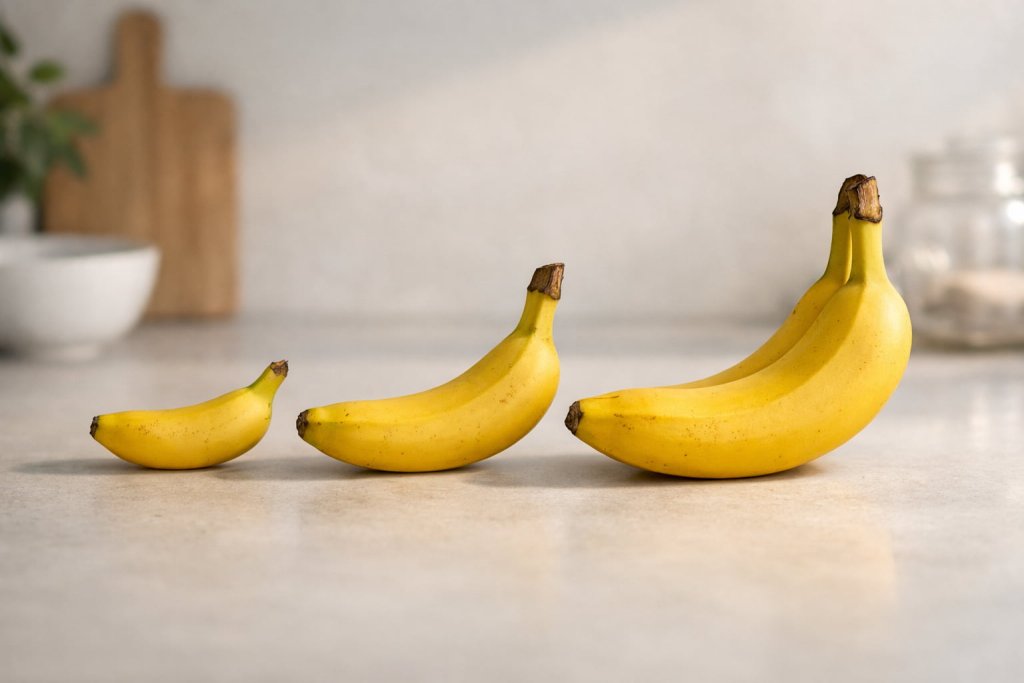
The biggest reason banana calories vary is size. A banana is not always one standard serving in real life.
Small banana
A small banana has about 90 calories. This can be a good portion if you want fruit with fewer calories or want to pair it with another food like yogurt or eggs.
Medium banana
A medium banana has about 105 calories. This is the most commonly quoted amount because it matches the standard reference serving used in many nutrition databases.
Large banana
A large banana has about 121 calories. If you are tracking calories closely, this difference matters more than most people expect.
Extra-large or mashed banana portions
If you use banana in oatmeal, smoothies, pancakes, or baking, measuring by weight can be more accurate than counting “one banana.” Using the USDA reference of 89 calories per 100 grams makes portion math easier.
Are Banana Calories High?
Not really. For most people, banana calories are moderate, not high. What makes bananas feel more filling than some snacks is that they come as a whole fruit with fiber and water, not as a sugary processed food.
The Dietary Guidelines for Americans recommend eating more fruits as part of a healthy dietary pattern, and MyPlate encourages people to focus on whole fruits. A banana fits that advice well because it is portable, naturally sweet, and easy to eat without preparation.
Banana Carbs, Sugar, and Fiber
Bananas are mostly known for carbohydrates. In a medium banana, most of the calories come from carbs.
Carbohydrates
A medium banana has about 27 grams of carbohydrate from naturally occurring fruit starches and sugars.
Natural sugar
A medium banana has about 14.4 grams of total sugars. That sugar is naturally present in fruit, not added sugar.
Fiber
A medium banana has about 3.1 grams of fiber. The FDA lists the Daily Value for fiber as 28 grams per day, so one medium banana gives you about 11% of that daily target.
Vitamins and Minerals in Bananas
Bananas are not just about calories. They also provide a few nutrients many people are trying to get more of.
Potassium
A medium banana provides about 422 mg of potassium. The National Institutes of Health Office of Dietary Supplements notes that bananas are one of many foods that contain potassium, and the FDA highlights potassium as a nutrient people are encouraged to get more of.
Vitamin B6
Bananas also provide vitamin B6. The National Institutes of Health Office of Dietary Supplements explains that vitamin B6 is involved in more than 100 enzyme reactions related to metabolism.
Vitamin C
A medium banana provides a modest amount of vitamin C as well, which adds to its overall nutrition value.
Are Bananas Good for Weight Loss?
Bananas can fit into a weight loss plan. They are not a “special fat-burning food,” but they can be a practical choice because they are portion-friendly, naturally sweet, and easy to pair with protein or healthy fats.
A banana may help with weight management when you use it in smart ways:
- eat one instead of a pastry or candy bar
- pair it with Greek yogurt, cottage cheese, or peanut butter for more staying power
- slice half into oatmeal instead of adding sugar
- use it as a quick snack before or after activity
What matters most is your overall calorie intake and food pattern across the day. A banana is usually a better everyday choice than many packaged snacks because it is a whole fruit and has no added sugar.
Is a Banana Good for Blood Sugar?
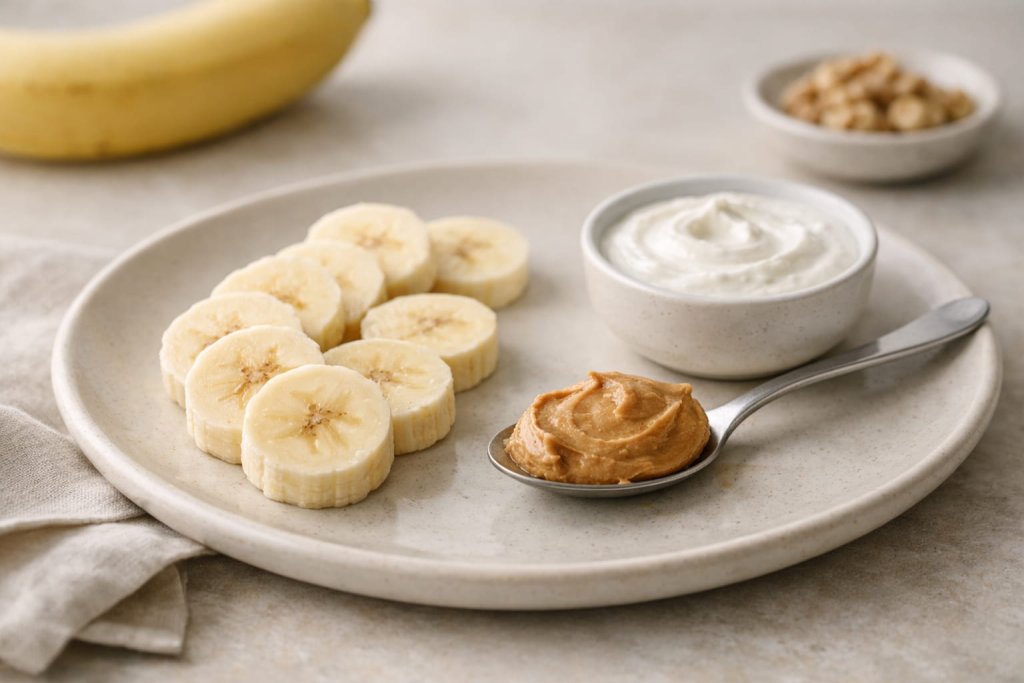
Bananas contain carbohydrates, so they can raise blood sugar. But the effect depends on the portion size, what else you eat with it, and how ripe the banana is.
A practical approach is to pair a banana with protein, fat, or both. For example:
- banana with plain Greek yogurt
- banana with peanut butter
- banana with a handful of nuts
This can make the snack more balanced and more filling.
Does Banana Ripeness Change the Calories?
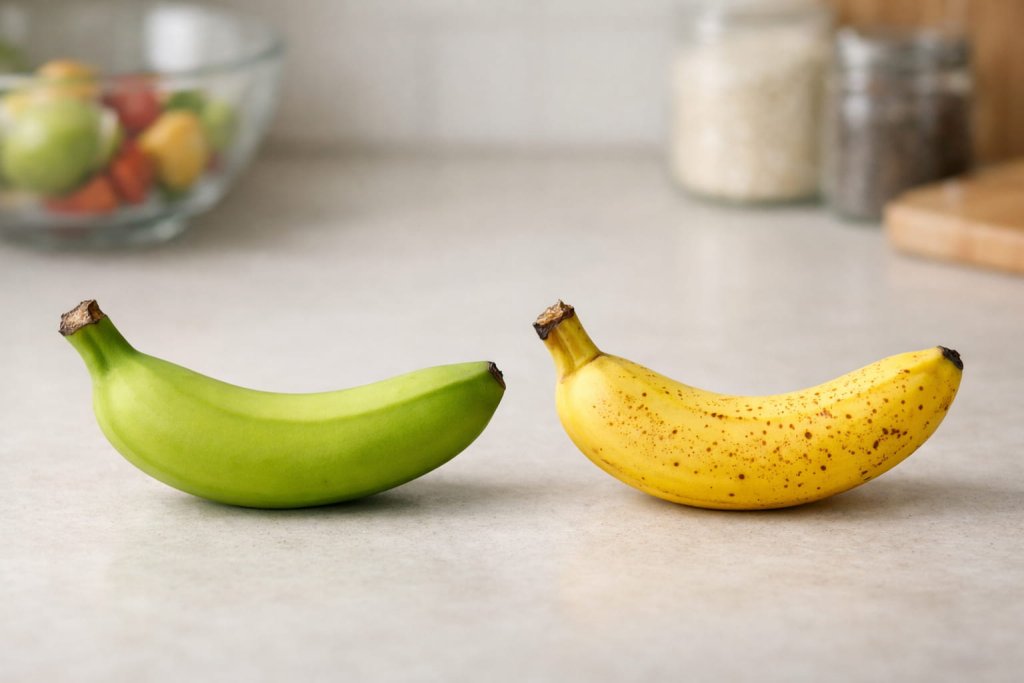
Ripeness can change the taste and texture of a banana, but it does not dramatically change the calorie count of the same portion. A ripe banana tastes sweeter because some starch changes as it matures, but the overall energy content for the same weight stays fairly similar.
What changes calorie intake more is:
- banana size
- how much of it you eat
- what you add to it in smoothies, cereal, toast, or desserts
Banana Calories Compared With Other Common Fruits
Bananas are not the lowest-calorie fruit, but they are still moderate.
| Fruit | Typical serving | Approximate calories |
|---|---|---|
| Banana | 1 medium | 105 |
| Apple | 1 medium | around 95 |
| Orange | 1 medium | around 60 to 70 |
| Strawberries | 1 cup | around 50 |
| Grapes | 1 cup | around 100 |
Fruit calorie counts vary by size and variety, but this gives you a useful comparison point. Bananas are a little higher than some watery fruits, yet they are often more filling and convenient.
Easy Ways to Eat Bananas Without Adding Too Many Calories
If you want the benefits of bananas without turning them into a high-calorie snack, keep the add-ons simple.
Lower-calorie ideas
- sliced banana on plain oatmeal
- banana with plain yogurt
- half a banana in a smoothie with milk and ice
- banana with a boiled egg for breakfast
Higher-calorie add-ons to watch
- large spoonfuls of nut butter
- sweetened yogurt
- granola-heavy bowls
- banana bread, muffins, and desserts
- milkshakes and sweet coffee drinks with banana
The banana itself is usually not the problem. Extras are what raise calories fast.
Who Should Be More Careful With Bananas?
Bananas are healthy for many people, but some people may need to watch portion size or potassium intake.
You may want personalized advice if you:
- have diabetes and need help balancing carbohydrate intake
- have kidney disease and have been told to limit potassium
- are following a very low-carb eating plan
The National Institutes of Health Office of Dietary Supplements notes that people at risk of high potassium should ask a healthcare professional how much potassium is safe for them.
Practical Serving Tips
A banana is easy to fit into different goals.
For weight loss
Choose a small or medium banana and pair it with protein.
For a quick snack
A medium banana works well on its own when you need something simple and portable.
For exercise
A banana can be a useful pre-workout or post-workout carb source because it is easy to digest and convenient.
For portion control
If the banana is very large, eat half now and save the rest for later.
FAQs
Is one banana a day too much?
For most healthy adults, one banana a day is a normal amount. It is a whole fruit and can be part of a balanced diet.
How many calories are in a small banana?
A small banana has about 90 calories.
How many calories are in half a banana?
Half of a medium banana has roughly 52 to 53 calories, depending on the exact size.
Are bananas fattening?
No single food is automatically fattening. Bananas contain calories like any food, but they can fit well into a balanced eating plan.
Is banana good for weight loss at night?
A banana at night can still be a reasonable snack if it fits your daily calories and hunger needs. Pairing it with protein may help you stay fuller.
Do ripe bananas have more sugar than green bananas?
Riper bananas taste sweeter because more starch has changed during ripening. The taste changes more noticeably than the total calorie count.
Are bananas healthier than snack bars?
Often yes. A banana is a whole fruit with no added sugar and no long ingredient list, while many snack bars are more processed and calorie-dense.
Conclusion
A medium banana has about 105 calories, while 100 grams of banana has about 89 calories. Beyond calories, bananas also provide fiber, potassium, vitamin B6, and natural sweetness in a convenient whole-fruit package.
If you want a simple takeaway, use this: a banana is usually a smart, moderate-calorie snack, and size matters more than people think. For the most accurate tracking, weigh your portion or choose a small, medium, or large banana based on your goals.