
Posture exercises may help you improve alignment, reduce slouching, and build better muscular support for daily movement. The most effective approach is usually a mix of mobility, stretching, and strengthening rather than trying to hold a rigid “perfect posture” all day. Understanding posture exercises matters because long hours of sitting, screen time, and low movement can contribute to forward head posture, rounded shoulders, and upper-back stiffness. A 2024 meta-analysis in PubMed supports training the upper back, core, hips, and thoracic spine as part of a structured exercise approach for common posture-related patterns.
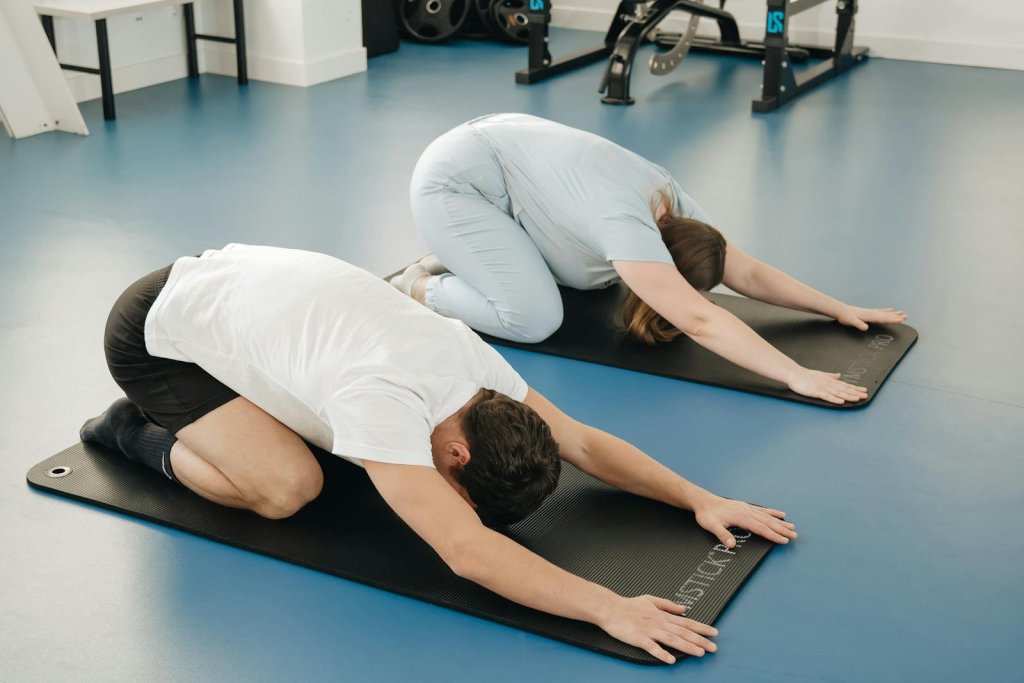
A practical posture plan usually includes chest-opening stretches, upper-back strengthening, neck-position drills, and core stability work. Sources such as MedlinePlus, Mayo Clinic, and AAOS also emphasize that posture is not only about exercise. Your chair setup, screen height, movement breaks, and lifting habits matter too.
What are posture exercises?
Posture exercises are movements that help improve the way you hold your body while sitting, standing, and moving. They usually target muscles that support the head, neck, shoulders, upper back, trunk, and hips. Good posture is less about looking stiff and more about keeping your body in a balanced position that reduces unnecessary strain.
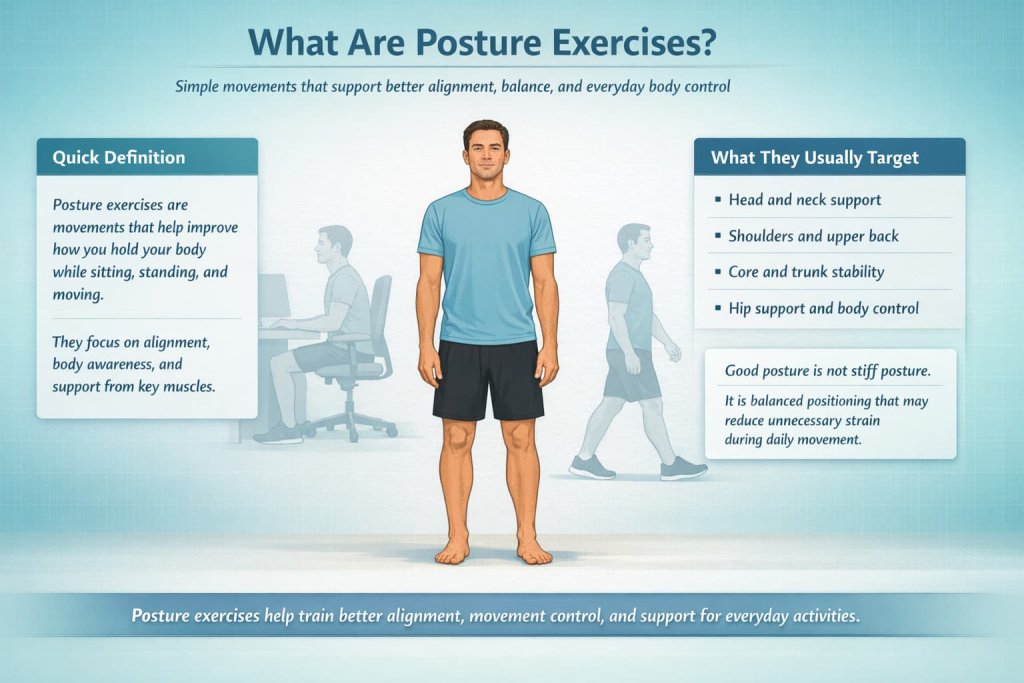
Cleveland Clinic notes that posture is the natural way you hold your body, and better posture can support your spine and help prevent common aches and pains.
Why posture exercises work
Posture problems often involve a mix of tight muscles and weaker muscles. For example, someone who sits for long periods may develop a tighter chest, stiffer thoracic spine, and weaker upper-back support. The 2024 meta-analysis in PubMed found that therapeutic exercise improved forward head posture, rounded shoulders, and thoracic kyphosis angles, which supports using a structured exercise plan for common posture-related patterns.
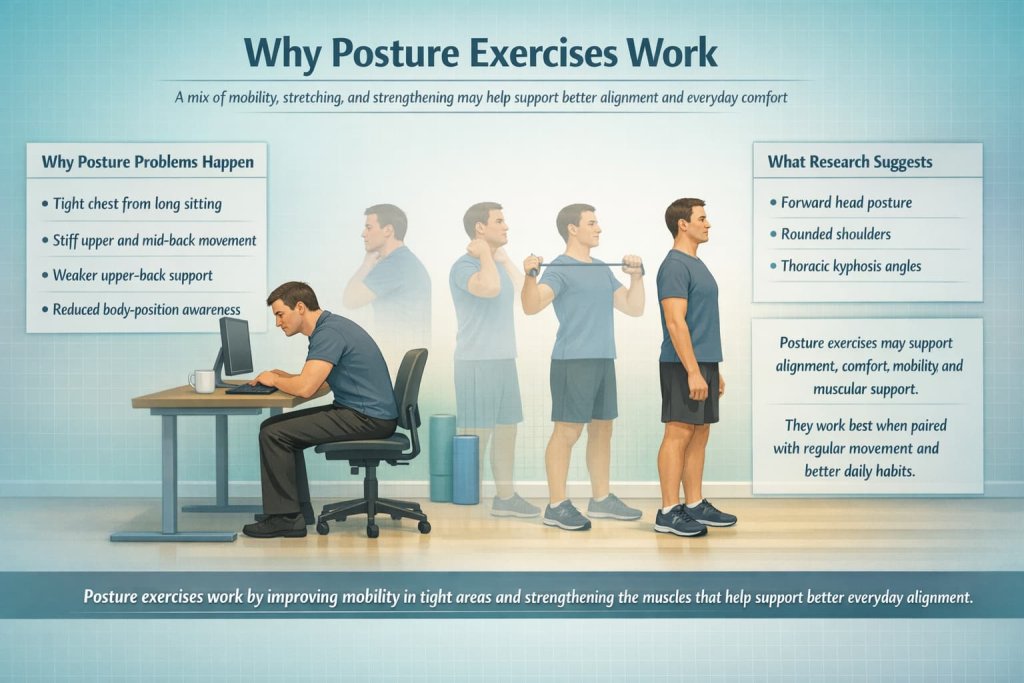
That does not mean posture exercises “fix” every cause of pain or spinal curvature. A safer conclusion is that they may help improve alignment, comfort, mobility, and muscular support, especially when paired with regular movement and better workstation habits, which aligns with guidance from AAOS.
13 best posture exercises
Improve alignment, build strength, and reduce everyday slouching with these 13 best posture exercises for your neck, shoulders, back, core, and hips. This list combines mobility and strengthening moves to help you stand taller, move better, and support healthier daily posture habits.
1. Chin Tuck
How to do it:
- Sit or stand tall with your eyes looking straight ahead.
- Gently draw your head backward as if making a double chin.
- Keep your chin level rather than tipping it up or down.
- Hold for 3 to 5 seconds.
- Repeat for 8 to 12 controlled reps.
Why it works:
Chin tucks help train a better head-over-shoulders position. They are commonly used when forward head posture is part of the problem.
Muscles worked:
Deep neck flexors and postural support muscles around the cervical spine.
Trainer Tip:
Think “slide the head back,” not “look down.” The movement should feel small and controlled.
2. Wall Angels
How to do it:
- Stand with your back near a wall and soften your knees.
- Gently brace your core and keep your ribs from flaring.
- Place your arms against the wall in a goalpost shape if comfortable.
- Slide the arms upward and downward slowly.
- Perform 8 to 10 slow reps.
Why it works:
Wall angels combine upper-back activation with shoulder mobility. They can help counter the rounded-shoulder position that often comes with long hours of sitting.
Muscles worked:
Upper back, rear shoulders, mid-trapezius, lower trapezius, and shoulder stabilizers.
Trainer Tip:
Only use the range you can control without arching your low back.
3. Doorway Chest Stretch
How to do it:
- Stand in a doorway and place your forearms or hands on the frame.
- Step one foot forward gently.
- Lean until you feel a stretch across the front of the chest.
- Hold for 15 to 30 seconds.
- Repeat 2 to 4 times.
Why it works:
A tight chest can pull the shoulders forward. This stretch helps open the front of the body and may make upright positioning easier.
Muscles worked:
Pectoral muscles and the front of the shoulders.
Trainer Tip:
Keep the stretch mild to moderate. Do not force the shoulders into discomfort.
4. Cat-Cow
How to do it:
- Start on your hands and knees.
- Inhale as you gently lift the chest and allow the spine to extend.
- Exhale as you round the spine and draw the ribs inward.
- Move slowly between the two positions.
- Perform 8 to 12 reps.
Why it works:
Cat-cow improves spinal movement awareness and helps reduce stiffness, especially after sitting.
Muscles worked:
Spinal stabilizers, trunk muscles, and mobility through the thoracic and lumbar spine.
Trainer Tip:
Move segment by segment instead of rushing through the motion.
5. Thoracic Extension Over Support
How to do it:
- Sit in a chair with a supportive back or place a foam roller across the mid-back.
- Support your head if needed.
- Gently extend through the upper back.
- Pause briefly, then return to neutral.
- Repeat 6 to 10 reps.
Why it works:
Many posture issues involve stiffness in the thoracic spine. This drill encourages upper-back extension instead of doing all the movement through the neck or low back.
Muscles worked:
Thoracic spinal extensors and supporting postural muscles.
Trainer Tip:
Keep the motion centered in the upper back. Avoid cranking the neck backward.
6. Scapular Retraction
How to do it:
- Sit or stand tall with arms relaxed by your sides.
- Gently pull the shoulder blades back and slightly down.
- Hold for 3 to 5 seconds.
- Relax and repeat for 10 to 15 reps.
Why it works:
This teaches better shoulder-blade control, which is important for countering a slouched upper-body position.
Muscles worked:
Mid-trapezius, rhomboids, and lower trapezius.
Trainer Tip:
Do not shrug. Think “wide collarbones” and “shoulder blades into back pockets.”
7. Band Pull-Apart
How to do it:
- Hold a light resistance band at shoulder height.
- Keep elbows soft and shoulders down.
- Pull the band apart until the arms open wide.
- Return slowly with control.
- Perform 10 to 15 reps.
Why it works:
Band pull-aparts strengthen the upper back and rear shoulder muscles that help support better shoulder positioning.
Muscles worked:
Rear deltoids, rhomboids, mid-trapezius, and lower trapezius.
Trainer Tip:
Use a light band first. Quality matters more than tension.
8. Face Pull
How to do it:
- Set a band or cable around upper-chest to face height.
- Pull the handles or band toward your face with elbows flared slightly out.
- Squeeze the shoulder blades together.
- Return slowly.
- Perform 8 to 12 reps.
Why it works:
Face pulls build upper-back strength and shoulder control, which makes them a strong choice for posture-focused training.
Muscles worked:
Rear deltoids, rotator cuff, rhomboids, and trapezius.
Trainer Tip:
Keep your neck relaxed and avoid leaning backward to cheat the rep.
9. Bird Dog
How to do it:
- Start on hands and knees with a neutral spine.
- Extend one arm forward and the opposite leg backward.
- Pause briefly without twisting.
- Return and switch sides.
- Perform 6 to 10 reps per side.
Why it works:
Bird dog helps train trunk stability and body control. It teaches you to move the limbs while keeping the torso steady.
Muscles worked:
Core, lower back, glutes, shoulders, and hip stabilizers.
Trainer Tip:
Imagine balancing a glass of water on your back.
10. Dead Bug
How to do it:
- Lie on your back with arms up and knees bent to 90 degrees.
- Gently brace your core.
- Lower one arm and the opposite leg slowly.
- Return and switch sides.
- Perform 6 to 10 reps per side.
Why it works:
Dead bugs build core control without requiring heavy spinal loading. A stronger trunk can support better posture during daily movement.
Muscles worked:
Deep core muscles, hip flexors, and trunk stabilizers.
Trainer Tip:
Stop the rep before your low back lifts off the floor.
11. Glute Bridge
How to do it:
- Lie on your back with knees bent and feet flat.
- Press through the feet and lift the hips.
- Squeeze the glutes at the top.
- Lower with control.
- Perform 10 to 15 reps.
Why it works:
Posture is not only an upper-body issue. Hip strength matters too. Glute bridges help support pelvic control and can balance long hours of sitting.
Muscles worked:
Glutes, hamstrings, and core.
Trainer Tip:
Lift by driving through the hips, not by arching the low back.
12. Plank
How to do it:
- Set up on forearms or hands with your body in a straight line.
- Brace your abdomen and squeeze your glutes lightly.
- Keep your head in line with your body.
- Hold for 15 to 30 seconds to start.
- Repeat 2 to 4 rounds.
Why it works:
Planks train whole-body stiffness and trunk control. That can support a more stable posture during standing, walking, and lifting.
Muscles worked:
Abdominals, shoulders, glutes, and trunk stabilizers.
Trainer Tip:
A shorter hold with strong form is better than a long hold with sagging hips.
13. Child’s Pose With Reach
How to do it:
- Start on hands and knees.
- Sit the hips back toward the heels.
- Reach the arms forward and relax the chest downward.
- Breathe slowly and hold for 20 to 30 seconds.
- Repeat 2 to 3 times.
Why it works:
This movement can help reduce upper-back and shoulder tension while promoting gentle spinal mobility.
Muscles worked:
Lats, shoulders, trunk, and the muscles around the thoracic spine.
Trainer Tip:
Breathe into the upper back and rib cage rather than forcing the stretch deeper.
Who may benefit from posture exercises
Posture exercises are often useful for people who:
- Sit at a desk for long hours
- Feel stiff through the chest, neck, or upper back
- Notice rounded shoulders or a forward head position
- Want better trunk control for training and daily life
- Need a simple routine to break up sedentary time
Older adults or people returning to exercise may also benefit from gentler versions that focus on balance, mobility, and controlled strength.
Who should be careful or get medical guidance first
Get guidance from a qualified clinician before starting if you have severe or worsening pain, numbness, tingling, unexplained weakness, a recent injury, or a known spinal condition. This is especially important if posture changes are linked to structural issues, persistent pain, or neurological symptoms. AAOS notes that some causes of kyphosis and back pain may need professional evaluation rather than self-treatment alone.
A simple weekly posture exercises routine
A beginner-friendly routine can be done 3 to 5 days per week:
- Chin tucks: 8 to 12 reps
- Doorway chest stretch: 2 to 4 holds of 15 to 30 seconds
- Scapular retraction: 10 to 15 reps
- Band pull-aparts or face pulls: 2 sets of 10 to 15 reps
- Bird dog or dead bug: 2 sets of 6 to 10 reps per side
- Glute bridge: 2 sets of 10 to 15 reps
- Plank: 2 to 4 holds of 15 to 30 seconds
The general spine-conditioning guidance from AAOS supports pairing stretching with strengthening work and using regular practice to maintain strength and range of motion.
Common mistakes to avoid with posture exercises
Many people make posture work harder than it needs to be. Common mistakes include:
- Forcing the body into a stiff “military” posture
- Moving too fast and losing control
- Overusing the low back instead of the upper back
- Shrugging the shoulders during pulling drills
- Holding the breath
- Ignoring workstation setup and daily habits
The ergonomics guidance from Mayo Clinic makes an important point: even a well-designed exercise plan cannot fully offset long periods in the same position. Regular movement breaks still matter.
Daily habits that support better posture
Exercise works better when your daily setup supports it. Helpful posture habits include:
- Keep the top of your screen near eye level
- Keep feet flat on the floor or on a footrest
- Relax the shoulders instead of shrugging
- Change position regularly
- Stand up and walk through the day
- Keep loads close to the body when lifting
These basic ergonomics and back-care habits are consistently recommended by Mayo Clinic and MedlinePlus.
Do posture exercises really help you stand taller?
Posture exercises may help you appear taller by improving alignment and reducing slouching. They do not usually increase your actual bone length or permanently change your height. What they can do is help you use your available height better by improving trunk support, shoulder position, and head position, as explained by Cleveland Clinic.
FAQ
How often should I do posture exercises?
Most people do well with short sessions 3 to 5 times per week. Strength-focused posture work can also fit into a broader routine 2 to 3 times per week, which fits the general spine-conditioning guidance from AAOS.
How long does it take to notice results from posture exercises?
Some people notice less stiffness and better body awareness within a few weeks. Visible changes in posture usually take longer and depend on consistency, daily habits, and the reason for the posture problem. This is an evidence-based expectation rather than a guaranteed timeline, which is consistent with the research summarized in PubMed.
Can posture exercises help neck and upper-back discomfort?
They may help some people by improving muscular support, movement variety, and alignment. But persistent or worsening pain should be assessed by a clinician, which is consistent with guidance from AAOS.
Are posture exercises enough if I sit all day?
Usually not by themselves. They work best when combined with movement breaks, a better desk setup, and less time in one fixed position, which matches the ergonomics advice from Mayo Clinic.
Which muscles matter most for posture?
The answer depends on the person, but common targets include the deep neck flexors, upper-back muscles, core, glutes, and shoulder stabilizers. Tight chest muscles and a stiff thoracic spine are also common issues, which aligns with the exercise evidence reviewed in PubMed.
Can posture exercises fix rounded shoulders?
They may help improve the muscular and mobility factors that contribute to rounded shoulders, especially when paired with habit changes. They are less likely to fully change posture if the cause is structural or medical, which is consistent with the evidence discussed in PubMed.
Should beginners start with strength or stretching?
A mix is usually best. Stretching tight areas and strengthening the muscles that support alignment often works better than doing only one, which matches the overall therapeutic exercise findings in PubMed.
Conclusion
Posture exercises can be a smart, low-cost way to improve alignment, build support, and move with better control. The key is consistency. Focus on a few effective drills, clean technique, and better daily habits rather than chasing a perfect posture position. Build a simple weekly routine, progress gradually, and get professional guidance if pain, numbness, or significant spinal issues are part of the picture. Start with 4 to 6 of the exercises above and practice them regularly.