
The best lower back dumbbell exercises build strength and stability by training your hips, glutes, core, and spinal-support muscles together, not by forcing a lot of loaded low-back bending. That matters because major medical and exercise organizations consistently emphasize strengthening the muscles that support the spine, progressing gradually, and using controlled exercise as part of a broader strength routine. Mayo Clinic, AAOS, and the CDC all support that general approach.
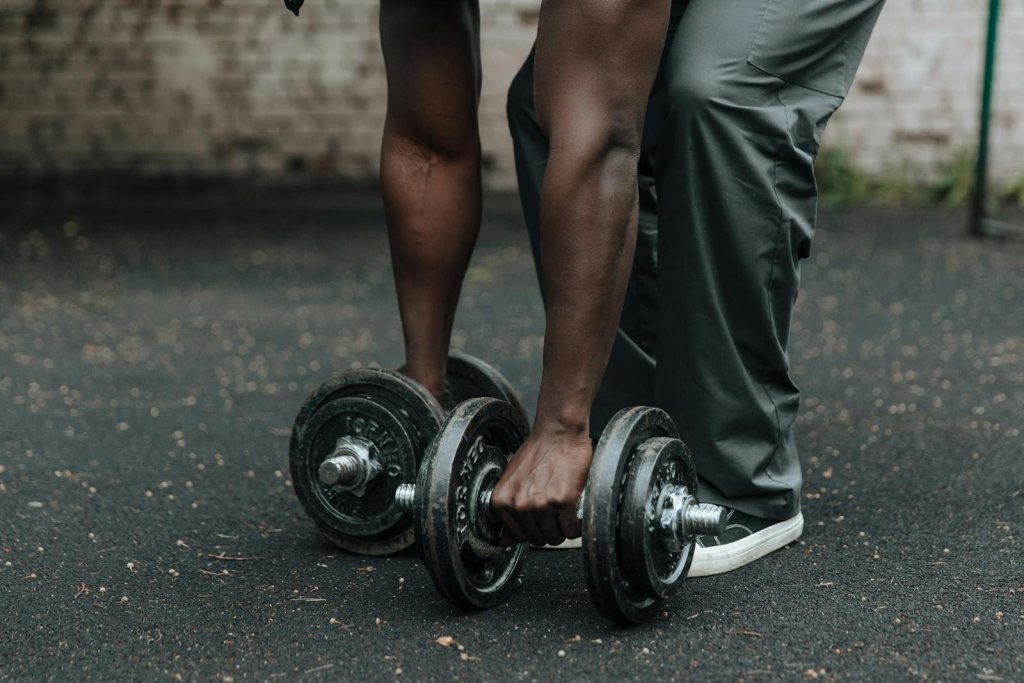
If you want stronger, more resilient lower-back support, the goal is usually to improve hip hinging, trunk control, and overall posterior-chain strength. That is why the best lower back dumbbell exercises often include Romanian deadlift variations, loaded carries, glute work, and rows rather than aggressive twisting or high-speed spinal movements. ACE also highlights hinge-based dumbbell patterns and loaded carries that reinforce posture, balance, and control.
Why Lower Back Dumbbell Exercises Can Work
A stronger lower back usually comes from better support around the spine. That includes the erector spinae, deep trunk muscles, glutes, hamstrings, and even grip and shoulder stabilizers during carries and rows. The AAOS spine conditioning program says strengthening the muscles that support your spine helps keep your back and upper body stable, while Mayo Clinic notes that exercise can help strengthen the back and the muscles that support it.
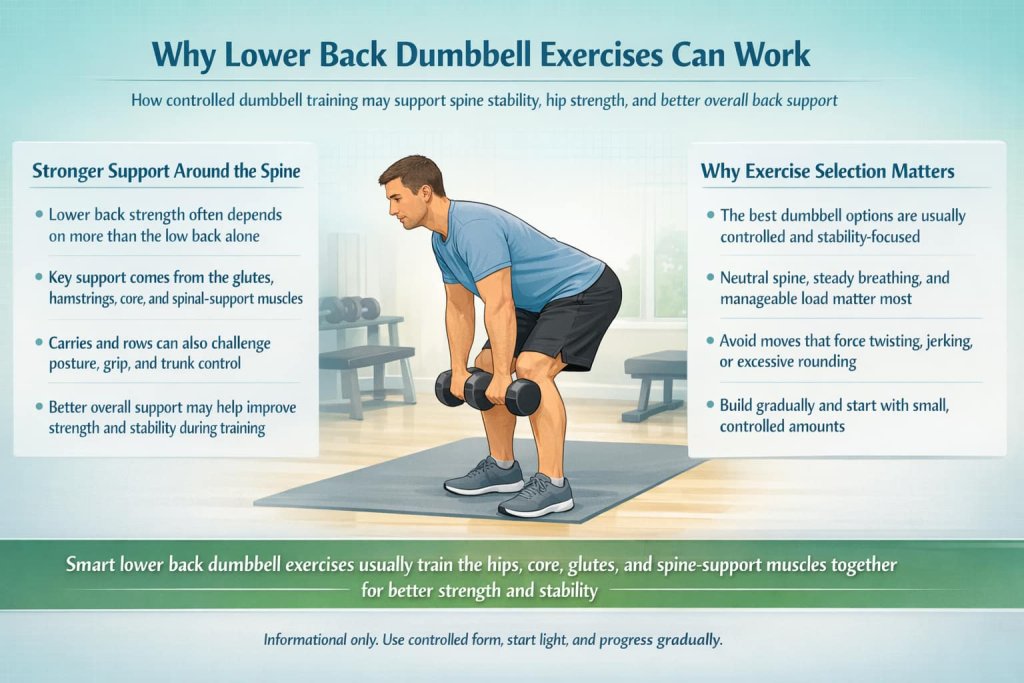
This does not mean every dumbbell move is a good choice. The best options are usually the ones you can control with a neutral spine, steady breathing, and a load that does not force you to twist, jerk, or round hard through the lower back. NHS Inform also advises building back exercise gradually and starting with small amounts.
8 Best Lower Back Dumbbell Exercises
Build lower-back strength with these 8 dumbbell exercises that also train your glutes, core, and posterior chain. Each move is chosen to improve stability, control, and safer strength development.
1. Dumbbell Romanian Deadlift
Why it works: This is one of the best lower back dumbbell exercises because it strengthens the entire hip-hinge pattern. Your lower back works mainly as a stabilizer while your glutes and hamstrings do much of the movement work, which is usually a safer and more useful way to build back support. ACE specifically uses Romanian deadlift patterns to teach hip hinging with a straight back.
Muscles worked: Hamstrings, glutes, erector spinae, core, upper-back stabilizers, and grip.
How to do it:
- Stand tall with a dumbbell in each hand in front of your thighs.
- Keep a soft bend in your knees.
- Brace your core and keep your chest open.
- Push your hips back as the dumbbells slide down your thighs.
- Lower only as far as you can while keeping your back flat.
- Pause briefly when you feel tension in the hamstrings.
- Drive through your feet and squeeze your glutes to return to standing.
- Repeat for controlled reps.
Trainer Tip: Think “hips back” instead of “bend down.” That cue usually helps keep the movement in the hips instead of dumping stress into the lower back.
2. Single-Leg Dumbbell Romanian Deadlift
Why it works: This variation adds balance and anti-rotation demand, which makes your trunk and hip stabilizers work harder. ACE highlights the single-arm, single-leg Romanian deadlift as a movement that uses a straight back while hinging from the hip, making it highly relevant for strength and stability.
Muscles worked: Glutes, hamstrings, erector spinae, obliques, foot and ankle stabilizers, and grip.
How to do it:
- Hold one dumbbell in the hand opposite your standing leg.
- Stand tall with a slight bend in the standing knee.
- Brace your core and keep your hips square.
- Hinge forward at the hip while the free leg extends behind you.
- Lower the dumbbell toward the floor without rounding your back.
- Stop when your torso is near parallel or your balance starts to go.
- Push through the standing foot to return to standing.
- Complete reps, then switch sides.
Trainer Tip: Reach the lifted heel back as you hinge. That often makes balance easier and helps keep the movement controlled.
3. Dumbbell Deadlift From Blocks or an Elevated Start
Why it works: Starting with the dumbbells on blocks, yoga blocks, or a low platform shortens the range of motion. That makes it easier for beginners to practice a solid hinge and build lower-back confidence without having to reach as low as a full deadlift from the floor.
Muscles worked: Glutes, hamstrings, erector spinae, quads, core, upper back, and grip.
How to do it:
- Place dumbbells on blocks or another stable raised surface.
- Stand with feet about hip-width apart.
- Hinge back and grip the dumbbells with a neutral spine.
- Brace your core and keep your chest from collapsing.
- Push through the floor and stand up with the weights.
- Finish tall without leaning backward.
- Lower the weights back to the blocks under control.
- Repeat with steady reps.
Trainer Tip: This is a smart regression if regular deadlifts make you lose position near the bottom.
4. Bent-Over Dumbbell Row
Why it works: A bent-over row is mainly an upper-back exercise, but your lower back also works isometrically to hold position. That can help build strength endurance around the spine when the load and body position are controlled.
Muscles worked: Lats, rhomboids, mid traps, rear delts, biceps, erector spinae, and core.
How to do it:
- Hold a dumbbell in each hand and hinge forward.
- Keep your knees softly bent and your back flat.
- Let the dumbbells hang below your shoulders.
- Brace your core and keep your neck neutral.
- Row the dumbbells toward your lower ribs.
- Pause briefly at the top without shrugging.
- Lower the weights slowly.
- Maintain the same torso angle throughout the set.
Trainer Tip: If your lower back tires before your upper back, reduce the weight or shorten the set. The goal is controlled support, not sloppy fatigue.
5. Dumbbell Suitcase Carry
Why it works: This is one of the most underrated lower back dumbbell exercises. Holding weight on one side forces your trunk to resist side-bending, which trains lateral core stability and helps the muscles around the spine work together. ACE includes the suitcase carry in its exercise library, and NSCA notes that loaded carries can develop strength while reinforcing proper movement patterns.
Muscles worked: Obliques, quadratus lumborum, erector spinae, glutes, grip, shoulders, and deep core stabilizers.
How to do it:
- Hold one dumbbell at your side.
- Stand tall with shoulders level.
- Brace your core and avoid leaning toward or away from the weight.
- Walk slowly with short, controlled steps.
- Keep your ribs stacked over your pelvis.
- Turn carefully if needed.
- Walk for time or distance.
- Switch hands and repeat evenly on the other side.
Trainer Tip: Do not let the weight drag you sideways. Staying tall is the whole point of the exercise.
6. Dumbbell Farmer’s Carry
Why it works: Farmer’s carries train full-body tension, posture, and trunk stiffness while you walk under load. ACE includes the dumbbell farmer’s carry, and ACE coaching material notes that the farmer’s walk can improve core strength and work capacity.
Muscles worked: Forearms, grip, traps, upper back, erector spinae, core, glutes, and legs.
How to do it:
- Hold one dumbbell in each hand at your sides.
- Stand tall and tighten your grip.
- Keep your shoulders down and back gently.
- Brace your core.
- Walk with smooth, controlled steps.
- Keep your torso upright and avoid swaying.
- Walk for a set distance or time.
- Set the weights down with control.
Trainer Tip: Go lighter than you think at first. Good posture matters more than using the heaviest pair in the gym.
7. Goblet Dumbbell Good Morning
Why it works: A goblet good morning can teach hip hinging with a front-loaded dumbbell that encourages body awareness and control. It is usually friendlier than more advanced barbell versions because the load is lighter and easier to manage.
Muscles worked: Glutes, hamstrings, erector spinae, core, and upper-back stabilizers.
How to do it:
- Hold one dumbbell vertically at chest height.
- Stand with feet about hip-width apart.
- Keep your elbows close and brace your core.
- Push your hips back while keeping your spine neutral.
- Hinge until your torso lowers to a comfortable angle.
- Pause briefly.
- Squeeze your glutes and return to standing.
- Repeat with smooth, controlled reps.
Trainer Tip: This should feel like a hip hinge, not a forward fold. Keep the dumbbell close and your ribs stacked.
8. Dumbbell Glute Bridge
Why it works: Glute strength matters for lower-back support. A dumbbell glute bridge trains hip extension without placing much technical demand on the spine, which makes it a useful addition for people who want stronger support muscles around the lower back. AAOS emphasizes strengthening the muscles that support the spine, and glute work is part of that bigger picture.
Muscles worked: Glutes, hamstrings, posterior core, and spinal stabilizers.
How to do it:
- Lie on your back with knees bent and feet flat.
- Rest a dumbbell across your hips and hold it in place.
- Brace your core gently.
- Press through your heels.
- Lift your hips until your body forms a straight line from shoulders to knees.
- Pause and squeeze your glutes at the top.
- Lower slowly.
- Repeat without over-arching your lower back.
Trainer Tip: Think about driving the floor away with your feet instead of flaring your ribs to get higher.
How to Program Lower Back Dumbbell Exercises
For most people, 2 to 3 lower-body or full-body strength sessions per week is a practical place to start. The CDC says adults should do muscle-strengthening activity at least 2 days per week, and NHS Inform supports adding exercise gradually rather than doing too much at once.
A simple starting plan could look like this:
- Pick 1 main hinge exercise.
- Add 1 carry variation.
- Add 1 support exercise like a row or glute bridge.
- Start with 2 to 3 sets.
- Use about 6 to 12 controlled reps for most lifts.
- Use 20 to 45 seconds for carries.
- Rest 45 to 90 seconds between easier sets and longer after heavier sets.
The goal is clean form and steady progress. Add reps, load, or time only when your technique stays solid.
Common Mistakes to Avoid
Using Too Much Weight Too Soon
Heavy dumbbells can make you round, twist, or rush. That usually turns a helpful exercise into a messy one. Build gradually instead. NHS Inform specifically recommends small amounts at first and adding more as you get comfortable.
Chasing Lower-Back Fatigue Instead of Good Form
Your lower back does not need to feel destroyed after every set. In many of the best lower back dumbbell exercises, the back works as a stabilizer while the hips and trunk control the motion. AAOS supports this broader spine-support approach.
Moving Through Pain That Is Sharp or Spreading
Mild training fatigue is one thing. Sharp, radiating, worsening, or unusual pain is different. Mayo Clinic advises getting medical care for back pain with symptoms like leg weakness, numbness, tingling, or pain that spreads below the knee.
Are Lower Back Dumbbell Exercises Safe?
They can be, when you choose appropriate movements, use manageable loads, and keep your technique controlled. Exercise is commonly recommended as part of back-health support, but that does not mean every exercise fits every person. NCCIH notes that nondrug approaches, including exercise-based care, are part of guideline-supported management for low back pain, while Mayo Clinic and NHS Inform both stress sensible progression and stopping if symptoms worsen.
People with a recent injury, recent surgery, severe osteoporosis, major balance issues, or ongoing nerve-related symptoms should get individualized guidance before loading the lower back with dumbbells.
Frequently Asked Questions About Lower Back Dumbbell Exercises
Are dumbbells good for lower back strength?
Yes, dumbbells can be very useful for lower back strength when you use controlled exercises like hinges, carries, rows, and bridges. These movements can help strengthen the muscles that support the spine rather than forcing aggressive isolated low-back motion. AAOS supports this kind of spine-supporting strength work.
What is the best dumbbell exercise for lower back stability?
The suitcase carry is one of the best options for stability because it trains your trunk to resist side-bending while you stay tall and walk under load. Romanian deadlift variations are also strong choices because they teach controlled hip hinging. ACE supports the suitcase carry as a useful stability-focused movement.
Can I train my lower back with dumbbells at home?
Yes. Most of these lower back dumbbell exercises can be done at home with one or two dumbbells and a little walking space for carries. Glute bridges, good mornings, Romanian deadlifts, and elevated deadlifts all work well in home workouts. Mayo Clinic supports exercise as part of a practical back-strengthening routine.
How often should I do lower back dumbbell exercises?
Most people do well with 2 to 3 strength sessions per week, depending on recovery and total training volume. The CDC guideline minimum for muscle-strengthening activity is 2 days per week.
Should lower back exercises hurt?
No. Muscles may feel challenged, but the exercises should not cause sharp, worsening, or spreading pain. If they do, stop and get medical guidance. Mayo Clinic explains when back symptoms need medical attention.
Are carries really lower back exercises?
Yes, in a stability-focused way. Carries train the trunk, spinal-support muscles, and posture under load, especially the suitcase carry and farmer’s carry. ACE supports loaded carries as useful trunk-stability exercises.
Conclusion
The best lower back dumbbell exercises are the ones that help you build strength and stability without sacrificing control. For most people, that means focusing on hip hinges, carries, rows, and glute work rather than chasing extreme low-back motion. Start light, move well, and progress gradually. That approach is more sustainable, more beginner-friendly, and more in line with current guidance from trusted health and exercise sources like Mayo Clinic.