
The good morning exercise is a hip-hinge strength move that primarily trains your hamstrings and glutes while teaching your torso to stay braced and stable. If you want stronger posterior-chain muscles for lifting, athletics, or daily movement, learning a clean good morning pattern can be a smart addition to your program.
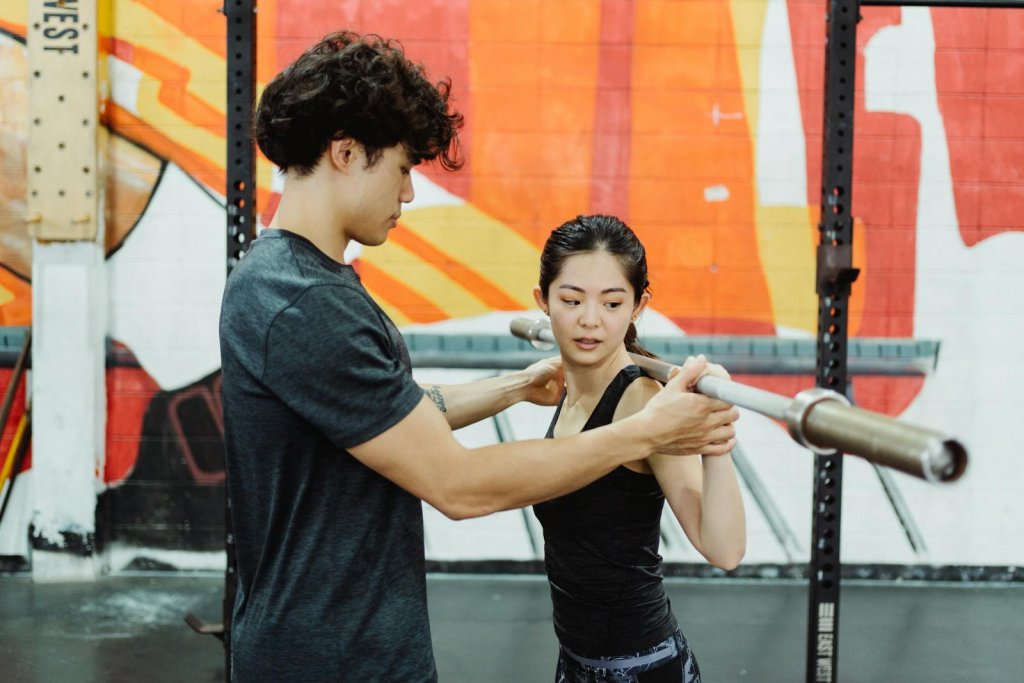
The most important thing to understand is that a good morning is a hip hinge, not a “bend at the waist.” That technique difference is what helps you load the right muscles and reduce unnecessary stress.
What Is the Good Morning Exercise
The good morning is typically performed with a barbell resting across the upper back (similar to a back squat position) while you push your hips back, keep a neutral spine, and then stand back up.
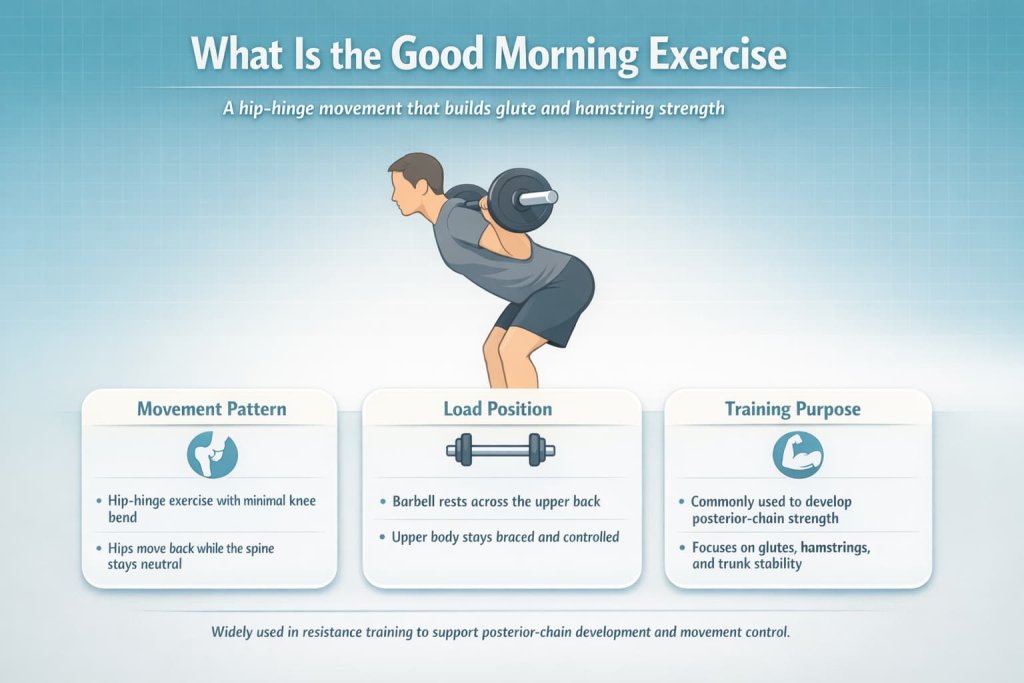
The National Strength and Conditioning Association describes the good morning as a barbell exercise commonly used to develop strength and hypertrophy in the posterior chain within resistance training programs.
How to Do the Good Morning Exercise With Proper Form
Setup and execution cues
How to do it:
- Set your feet about hip- to shoulder-width apart.
- Place the bar across the upper back in a comfortable squat-style position.
- Take a breath and brace your trunk before moving.
- Keep a slight knee bend without squatting down.
- Push the hips back until you feel hamstring tension.
- Maintain a neutral spine throughout the movement.
- Drive the hips forward to return to standing.
Trainer Tip: Learning the hip-hinge pattern with a dowel is widely recommended in movement education resources from ACE to help prevent spinal rounding.
Good Morning Exercise Variations and Progressions
These good morning exercise variations progress from basic hinge patterning to loaded strength work, helping you build skill, control, and confidence step by step. They allow you to match the exercise to your experience level while prioritizing safe glute and hamstring development.
1. Bodyweight Good Morning
Why it works:
This variation reinforces proper hip-hinge mechanics without external load, making it ideal for learning control and positioning before progressing.
How to do it:
- Place hands on hips or cross arms over the chest.
- Stand tall with feet hip-width apart and knees slightly soft.
- Push the hips back while keeping ribs stacked over the pelvis.
- Stop when you feel hamstring tension without losing spinal neutrality.
- Drive the hips forward to return to standing.
Trainer Tip:
Record a side-view video. The hips should move backward while the spine stays neutral—no rounding or excessive forward bend.
2. Dowel Hip-Hinge Good Morning
Why it works:
The dowel provides instant feedback for spinal alignment, helping you maintain a neutral spine throughout the hinge.
How to do it:
- Hold a dowel along your spine so it touches the head, upper back, and pelvis.
- Stand with feet hip-width apart and brace lightly.
- Hinge at the hips while keeping all three contact points on the dowel.
- Return to standing without losing contact.
Trainer Tip:
This drill is widely recommended by the American Council on Exercise to teach proper hip-hinge mechanics before adding load.
3. Barbell Good Morning
Why it works:
This is the primary strength variation, adding progressive load while demanding strong trunk bracing and posterior-chain control.
How to do it:
- Position the bar comfortably across the upper back.
- Set feet hip- to shoulder-width apart and brace the core.
- Push hips back with minimal knee bend, maintaining a neutral spine.
- Pause briefly at your controlled end range.
- Drive hips forward to stand tall.
Trainer Tip:
Treat this as a technical lift. If bracing, bar path, or spinal position changes, reduce the load.
4. Seated Good Morning
Why it works:
By removing most lower-body assistance, this variation increases the demand on trunk control and hip extensors.
How to do it:
- Sit upright on a bench with feet planted firmly on the floor.
- Brace the core before moving.
- Hinge forward from the hips under control.
- Return to an upright position without collapsing the torso.
Trainer Tip:
Keep this variation light and controlled. It works best as an accessory exercise rather than a heavy strength lift.
Good Morning Exercise Muscles Worked
The good morning emphasizes the posterior chain.
Primary muscles:
- Hamstrings
- Glutes (gluteus maximus)
- Spinal erectors (back extensors that help stabilize the spine)
A biomechanical and muscle-activity analysis published and indexed through PubMed found that hamstring and spinal erector activity generally increase as external load rises, reinforcing the importance of controlled progression and bracing.
Good Morning Exercise Benefits
Builds posterior-chain strength with a clear hip-hinge pattern
If you’re working to improve hinge mechanics—the same “hips back” pattern used in deadlifts and Romanian deadlifts—the good morning offers focused practice under manageable loads. Strength-training guidance from the National Strength and Conditioning Association highlights good mornings as a valuable alternative posterior-chain movement when programmed with proper technique.
Reinforces trunk bracing and posture under load
Because the bar position challenges the upper back and trunk to remain rigid, good mornings can support better posture control during other compound lifts when performed with appropriate loading and form.
Range of motion guidelines
- Stop descending when spinal position or bracing begins to change.
- Depth varies based on flexibility, anatomy, and control.
- Controlled range is more important than maximum depth.
Common Mistakes in the Good Morning Exercise
Turning it into a squat
Excessive knee bend reduces hinge emphasis and shifts the load away from the posterior chain.
Rounding the back to increase depth
Loss of spinal neutrality compromises the purpose of the exercise and increases unnecessary stress.
Using too much weight too early
Research indexed by PubMed shows that technique demands increase with load, making gradual progression essential.
Who Should Be Careful With the Good Morning Exercise
Extra caution is advised if you have:
- Persistent low-back discomfort aggravated by hinging
- Recent spinal or hamstring injuries
- Difficulty maintaining a neutral spine during unloaded hinges
Discontinue the exercise if sharp pain, radiating symptoms, or neurological signs appear, and seek professional guidance.
How to Program the Good Morning Exercise
The good morning exercise works best as a light-to-moderate accessory lift focused on technique and control rather than heavy loading.
General guidelines:
- Perform 1–2 times per week
- Use 2–3 sets of 6–10 reps
- Keep the load light enough to maintain a neutral spine
- Stop sets before form or bracing breaks down
Strength-training guidance from the National Strength and Conditioning Association emphasizes prioritizing movement quality over load when programming hinge-based accessory exercises.
Good Morning Exercise vs Other Hip-Hinge Exercises
Good mornings train the hip hinge similarly to deadlifts and Romanian deadlifts but place greater emphasis on trunk control and posture.
- Compared with RDLs: Good mornings use lighter loads and challenge upper-back and core stability more.
- Compared with deadlifts: Deadlifts allow heavier loading and more total-body involvement.
- Compared with back extensions: Good mornings require more coordination between the hips and trunk.
Good mornings are best used as a supporting hinge exercise, not a replacement for primary lifts.
People Also Ask About the Good Morning Exercise
Is the good morning exercise better than Romanian deadlifts
They serve similar purposes. Training resources from the National Strength and Conditioning Association frame good mornings as an alternative or accessory hinge rather than a direct replacement.
Are good mornings safe
They can be safe when performed with proper technique, controlled range, and gradual loading progression.
FAQ
What muscles does the good morning exercise target most
The hamstrings and glutes are the primary movers, with the spinal erectors stabilizing the torso.
Should beginners use a barbell
Most beginners benefit from mastering bodyweight or dowel hinges before adding external load.
How deep should I go
Only as deep as you can maintain neutral spine control and tension.
Can good mornings be done at home
Yes, bodyweight and light dumbbell versions can be effective.
How often should I do good mornings
Typically 1–2 times per week as part of a balanced training plan.
Are seated good mornings for everyone
They are generally considered an advanced accessory and should be approached cautiously.
Conclusion
The good morning exercise is a simple yet powerful hinge movement that supports glute and hamstring strength while reinforcing trunk control. When programmed thoughtfully and performed with strict technique, it can be a valuable addition to a well-rounded strength routine.
References
- PubMed Central (PMC): Effects of Load on Good Morning Kinematics and EMG Activity (Vigotsky et al., 2015)
- ACE Fitness Exercise Library: Hip Hinge (teaching hinge mechanics)
- PubMed: ACSM Position Stand—Progression Models in Resistance Training for Healthy Adults (2009)
- NSCA: Basics of Strength and Conditioning Manual (PDF)
- NSCA Coach: Implementing Core Training Concepts Into Strength Training for Sport
- NSCA Coach: Exercise Progressions for Resuming Strength Training Following Posterior-Chain Muscle Injury
- NSCA Strength & Conditioning Journal: Kinesiology Corner—The Good Morning Exercise (1982)