
A 3 day water fast is a 72-hour fast where you consume no calories and drink water only. It may lead to short-term weight loss and temporary metabolic changes, but it is not safe for everyone and should not be treated as a quick “detox” or guaranteed fat-loss method.
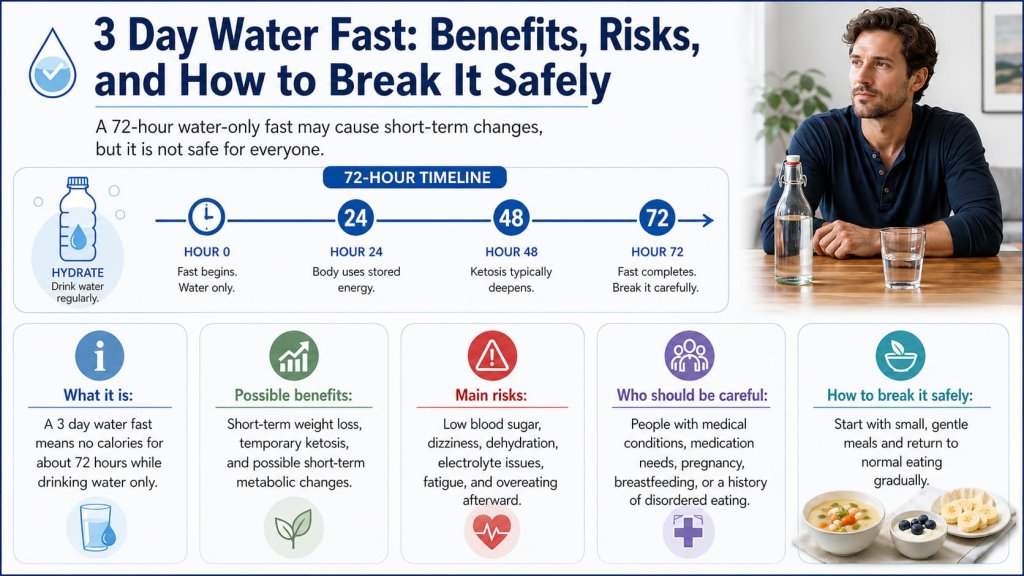
If you are considering a 3 day water fast, the most important things are knowing whether you should avoid it, preparing carefully, watching for warning signs, and breaking the fast gradually. The NIH News in Health advises higher-risk groups to talk with a healthcare provider before fasting, especially people who are pregnant or breastfeeding, under 25, taking certain medications, have a seizure disorder, work night shifts, or operate heavy machinery.
What Is a 3 Day Water Fast?
A 3 day water fast means you do not eat food or drink calorie-containing beverages for about 72 hours. During the fast, you drink water only.
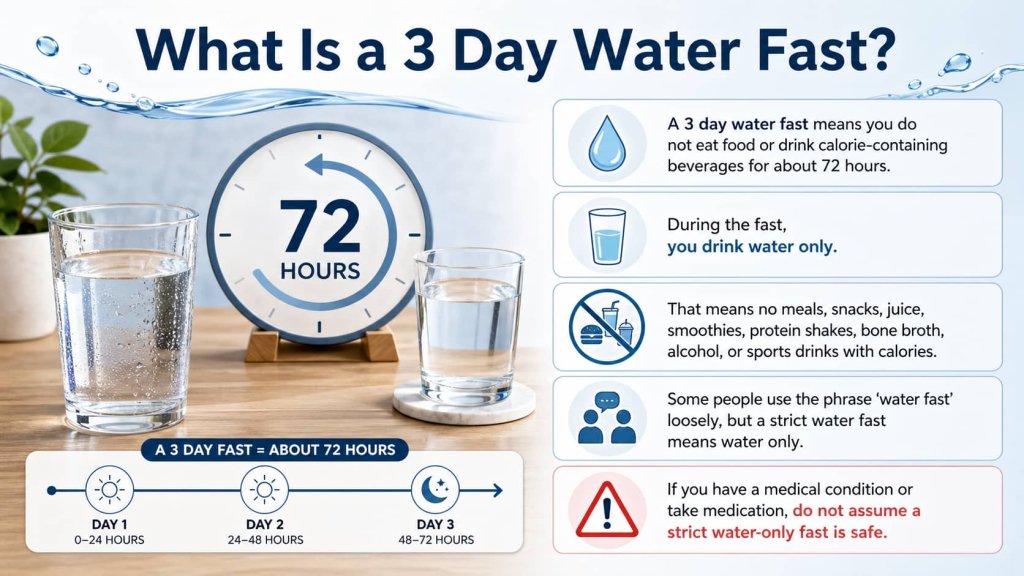
That means no:
- Meals
- Snacks
- Coffee with cream or sugar
- Juice
- Smoothies
- Protein shakes
- Bone broth
- Alcohol
- Sports drinks with calories
Some people use the phrase “water fast” loosely and include electrolytes, herbal tea, or black coffee. But a strict water fast means water only. If you have a medical condition or take medication, do not assume a strict water-only fast is safe.
What Happens During a 3 Day Water Fast?
During the first day, your body uses stored carbohydrate, called glycogen, for energy. Glycogen holds water, so early weight loss during a fast is often partly water weight.
As the fast continues, insulin levels tend to fall and the body begins using more stored fat for fuel. Ketones may rise as your liver produces them from fat. This is a normal fasting response, but ketosis does not automatically mean the fast is healthy, necessary, or safe.
By days two and three, some people feel mentally clear and less hungry. Others feel weak, irritable, dizzy, cold, nauseated, or unable to concentrate. Your response depends on your health, sleep, hydration, medications, activity level, previous diet, and fasting experience.
Potential Benefits of a 3 Day Water Fast
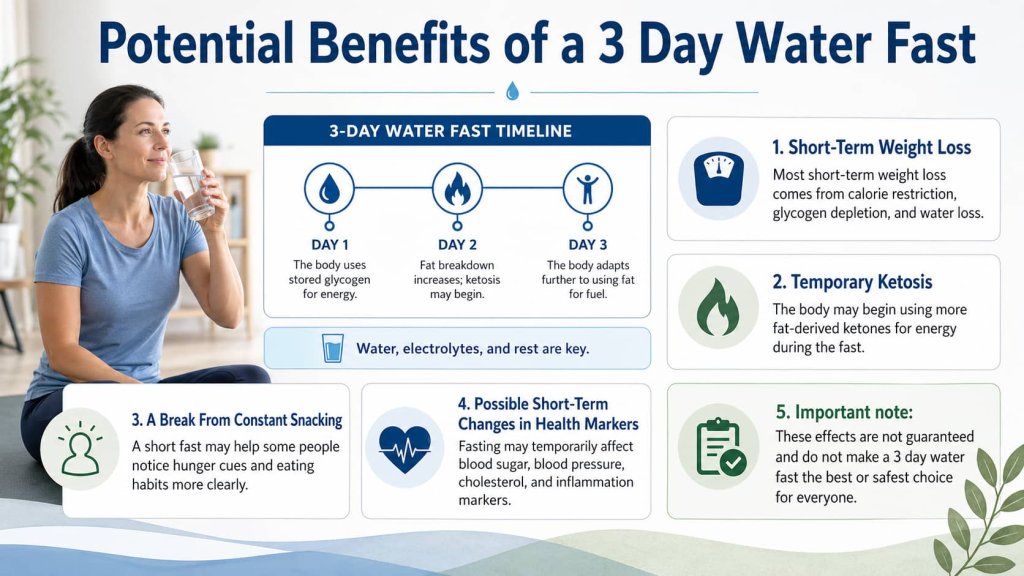
A 3 day water fast may have some short-term effects, but the evidence should be interpreted carefully. Many studies look at intermittent fasting, alternate-day fasting, time-restricted eating, or medically supervised longer fasts—not unsupervised 72-hour water fasting.
Short-Term Weight Loss
Most people lose weight during a 3 day water fast because they stop eating calories. However, the first drop on the scale is not all body fat. Much of it can come from lower food volume, glycogen depletion, and water loss.
A review published in Nutrition Reviews found that medically supervised prolonged water fasts lasting 5 to 20 days produced increased ketones and about 2% to 10% weight loss, but those studies involved longer fasts and were not the same as a typical at-home 3 day water fast.
Temporary Ketosis
A 3 day water fast can push the body toward ketosis because carbohydrate intake drops to zero. Ketones are an alternative fuel source produced when the body relies more on fat.
This does not mean a water fast is required to reach ketosis. Some people reach ketosis through lower-carbohydrate eating, longer overnight fasting, or structured fasting plans with medical guidance.
A Break From Constant Snacking
For some people, a short fast may reveal how often they eat from habit, stress, boredom, or convenience rather than hunger. This can be useful if it leads to better meal planning after the fast.
But fasting can also backfire. For some people, long restriction increases cravings and leads to overeating after the fast.
Possible Short-Term Changes in Health Markers
Fasting may temporarily affect blood sugar, blood pressure, cholesterol, and inflammation markers. Mayo Clinic notes that intermittent fasting may be linked with improvements in some of these areas, but long-term effects are still unclear, and calorie restriction may lead to similar results.
The key point: possible short-term changes do not make a 3 day water fast the best or safest choice for everyone.
3 Day Water Fast Risks and Side Effects
A 3 day water fast can feel simple, but it places real stress on the body. Side effects may be mild for some people and serious for others.
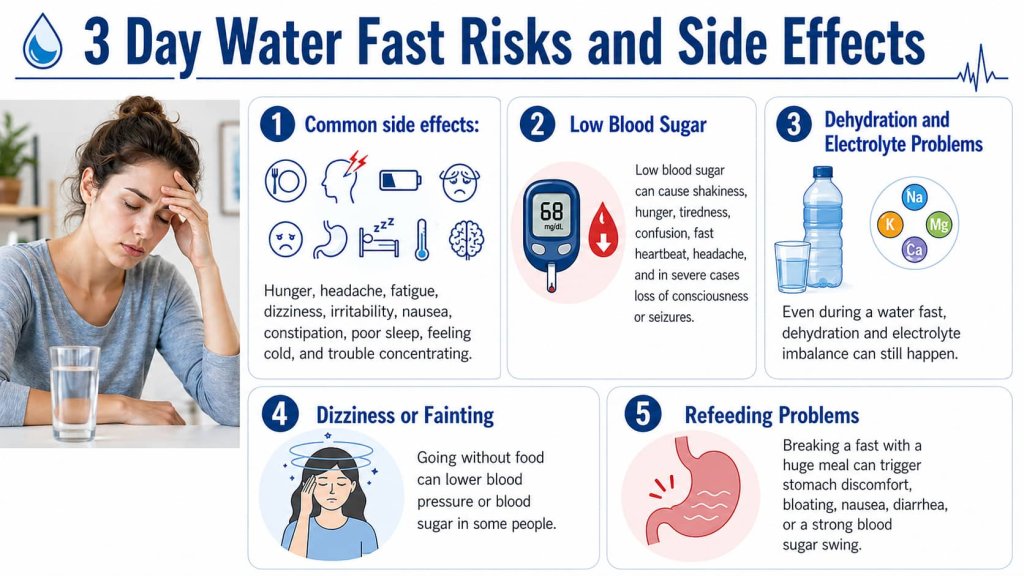
Common side effects may include:
- Hunger
- Headache
- Fatigue
- Dizziness
- Lightheadedness
- Irritability
- Nausea
- Constipation
- Poor sleep
- Feeling cold
- Low energy during workouts
- Trouble concentrating
Cleveland Clinic warns that fasting can cause problems such as dehydration, sleep disruption, and mental stress, especially when fasting is too long, too strict, or not planned well.
Low Blood Sugar
Low blood sugar is one of the most important safety concerns, especially for people with diabetes or anyone taking blood-sugar-lowering medication.
The NIDDK explains that low blood glucose can cause shakiness, hunger, tiredness, dizziness, confusion, irritability, fast heartbeat, headache, and trouble seeing or speaking clearly. Severe low blood glucose can cause loss of consciousness or seizures and needs immediate treatment.
Dehydration and Electrolyte Problems
Even though you drink water during a water fast, dehydration can still happen. You may lose more fluid and sodium if you sweat, exercise, drink too much caffeine before fasting, or start the fast already underhydrated.
Electrolytes such as sodium, potassium, magnesium, and phosphate help your nerves, muscles, heart rhythm, and fluid balance work properly. A 3 day fast is shorter than many medically supervised prolonged fasts, but electrolyte issues are still a reason to be cautious, especially if you are medically vulnerable.
Dizziness or Fainting
Going without food can lower blood pressure or blood sugar in some people. That can make standing up quickly feel risky.
During a fast, avoid intense workouts, saunas, long hot showers, and physically demanding work. If you feel faint, confused, weak, or unsteady, stop fasting and get help if symptoms are severe.
Refeeding Problems
Breaking a fast with a huge meal can cause stomach discomfort, nausea, diarrhea, bloating, or a strong blood sugar swing.
In medically vulnerable or malnourished people, aggressive refeeding after starvation can contribute to refeeding syndrome, a potentially serious condition involving fluid and electrolyte shifts. NCBI Bookshelf’s StatPearls describes refeeding syndrome as complications from electrolyte and fluid changes after aggressive nutritional rehabilitation, with phosphate, potassium, magnesium, and thiamine issues being especially important.
A healthy person doing one 3 day fast is not in the same risk category as someone with severe malnutrition. Still, the principle matters: restart food slowly and sensibly.
Who Should Not Do a 3 Day Water Fast?
A 3 day water fast is not appropriate for everyone. Some people should avoid it unless a qualified healthcare professional specifically says it is safe for them.
Avoid a 3 day water fast if you are:
- Pregnant
- Breastfeeding
- Under 18
- Underweight
- Recovering from an eating disorder
- Struggling with binge eating, purging, or restrictive eating patterns
- Recovering from surgery or serious illness
- Managing diabetes, especially with insulin or glucose-lowering medication
- Living with chronic kidney disease
- Living with heart rhythm problems or unstable heart disease
- Taking medications that must be taken with food
- Taking blood pressure medication, diuretics, or medications that affect electrolytes
- Prone to fainting, seizures, or severe migraines
- Doing heavy physical labor
- Planning to drive long distances or operate machinery while fasting
The Academy of Nutrition and Dietetics states that intermittent fasting is not currently a recommended treatment for weight loss or any other health condition and may pose risks for people with diabetes, pregnancy or breastfeeding, or a history of eating disorders or disordered eating.
How to Prepare for a 3 Day Water Fast Safely
If you are healthy, not in a high-risk group, and still choose to try a 3 day water fast, preparation matters.
Talk to a Healthcare Professional First
This is especially important if you take medication, have a medical condition, have a history of disordered eating, or have never fasted before.
A clinician can help you understand whether fasting could interfere with blood sugar, blood pressure, kidney function, medications, or your overall health.
Review Your Medications Before Fasting
Do not stop, skip, or change the timing of medication just because you are fasting unless your healthcare provider tells you to. Some medicines must be taken with food. Others can affect blood sugar, blood pressure, fluid balance, or electrolytes.
This matters most if you take insulin, diabetes pills, blood pressure medication, diuretics, seizure medication, lithium, blood thinners, or anti-inflammatory pain relievers. A 3 day water fast can change how your body responds to these medications, so medical guidance is important.
Do Not Start After a Big Junk-Food Meal
Starting a fast after a heavy, salty, greasy, or sugary meal can make the transition harder. The day before, eat simple balanced meals with:
- Lean protein
- Vegetables
- Fruit
- Whole grains or starchy vegetables
- Healthy fats
- Enough fluids
Reduce Caffeine Slowly
If you normally drink a lot of coffee or energy drinks, suddenly stopping can cause headaches, fatigue, and irritability. Consider reducing caffeine before the fast instead of quitting abruptly on day one.
Plan Low-Stress Days
Do not schedule a 3 day water fast during a physically demanding week, travel, exams, intense training, or a high-pressure work period.
Keep activity light. Walking is usually more realistic than heavy lifting, hard running, or high-intensity workouts.
What Can You Drink During a 3 Day Water Fast?
During a strict 3 day water fast, you drink water only.
A practical approach is to drink enough water to stay comfortably hydrated without forcing excessive amounts. Pale yellow urine can be a general sign of hydration for many people, but urine color can also be affected by supplements, medication, and health conditions.
Do Not Force Excessive Water
More water is not always better. Drinking very large amounts of water in a short time can dilute blood sodium and contribute to hyponatremia, especially if you are sweating, exercising, or already at risk for electrolyte problems. MedlinePlus explains that low blood sodium can cause symptoms such as nausea, headache, confusion, fatigue, muscle weakness, and in severe cases, seizures or coma.
Drink steadily, but do not try to “flush” your body by forcing water beyond thirst and comfort.
Avoid alcohol during a fast. It can worsen dehydration, impair judgment, irritate the stomach, and increase the chance of unsafe decisions around food and activity.
If a healthcare professional recommends electrolytes for your situation, follow that medical guidance. But once you add electrolyte drinks, broth, or supplements, the fast may no longer be a strict water-only fast.
How to Break a 3 Day Water Fast Safely
Breaking the fast is just as important as the fast itself.
Do not end a 3 day water fast with a large restaurant meal, fried food, alcohol, pizza, a huge dessert, or an intense workout followed by a big meal. Your digestive system may be more sensitive after 72 hours without food.
Cleveland Clinic advises easing out of a fast and gradually replenishing calories instead of eating a huge meal right away.
First Meal After a 3 Day Water Fast
Start small. A good first meal may include:
- Soup with soft vegetables
- Greek yogurt with fruit
- Eggs with cooked vegetables
- Oatmeal with banana
- Rice with a small portion of fish or chicken
- A smoothie with fruit and yogurt
- Cooked potatoes with a small protein portion
Eat slowly. Stop before you feel stuffed. Give your body time to respond.
Foods to Avoid Right After the Fast
Right after a 3 day water fast, avoid:
- Alcohol
- Very large meals
- Fried foods
- Very spicy meals
- Large amounts of sugar
- Huge portions of meat
- Heavy cream-based meals
- Large amounts of raw cruciferous vegetables if they cause gas
- Intense exercise immediately after eating
You do not need a complicated “refeed protocol” for every short fast, but you do need common sense: small meals, gentle foods, and gradual return to normal eating.
A Simple 48-Hour Refeeding Plan
For the first 24 hours, keep meals small and gentle. Eat slowly, pause between portions, and stop before you feel overly full. Good choices include soup, yogurt, oatmeal, eggs, rice, cooked vegetables, potatoes, or a small serving of lean protein.
During the next 24 hours, gradually return to normal balanced meals. Add more protein, fiber, and healthy fats as tolerated. If your stomach feels upset, stay with smaller meals for another day instead of forcing a large meal.
What to Eat After a 3 Day Water Fast
For the first 24 hours after the fast, focus on easy-to-digest meals that include protein, carbohydrates, fluids, and minerals.
Simple Post-Fast Meal Ideas
Meal 1: Vegetable soup with a small serving of rice or potatoes
Meal 2: Scrambled eggs with cooked spinach and toast
Meal 3: Greek yogurt with berries and a small handful of oats
Meal 4: Baked fish, rice, and cooked carrots
Meal 5: Chicken soup with noodles or potatoes
The next day, gradually return to balanced meals. Include:
- Protein at each meal
- Fruits and vegetables
- Fiber-rich carbohydrates
- Healthy fats
- Enough fluids
- Normal sodium intake unless your clinician tells you otherwise
Do not use the post-fast period as a binge window. That can erase any short-term calorie deficit and may create a restrict-overeat cycle.
When to Stop a 3 Day Water Fast
Stop fasting if you feel unwell in a way that feels unsafe or unusual.
Stop the fast and consider urgent medical help if you have:
- Fainting
- Chest pain
- Confusion
- Severe weakness
- Severe dizziness
- Trouble speaking
- Trouble seeing clearly
- Repeated vomiting
- Severe abdominal pain
- Irregular heartbeat
- Seizure
- Signs of severe low blood sugar
- Symptoms that do not improve after eating and drinking
Do not try to “push through” serious symptoms. A fast is optional. Your safety is not.
Is a 3 Day Water Fast Good for Weight Loss?
A 3 day water fast can lower the number on the scale quickly, but that does not mean it is the best weight-loss plan.
Some of the weight lost during a 3 day fast is water, glycogen, and food volume in the digestive tract. Some may be fat, but long-term results depend on what you do after the fast.
A Cochrane review on intermittent fasting for adults with overweight or obesity found that intermittent fasting made little to no difference in weight loss compared with traditional dietary advice, based on evidence current to November 5, 2024.
For lasting weight management, most people do better with consistent habits:
- A realistic calorie deficit
- Enough protein
- High-fiber foods
- Strength training
- Regular walking or cardio
- Sleep consistency
- Less liquid sugar and alcohol
- A plan they can repeat for months, not just 3 days
Safer Alternatives to a 3 Day Water Fast
If your goal is fat loss, better eating habits, or improved metabolic health, you may not need a 72-hour fast.
Safer options may include:
12-Hour Overnight Fast
Example: Finish dinner at 7 p.m. and eat breakfast at 7 a.m. This is simple, moderate, and easier to maintain.
14:10 Time-Restricted Eating
Example: Eat during a 10-hour window and fast for 14 hours overnight. This may help reduce late-night snacking without extreme restriction.
Protein-and-Fiber Meal Plan
Build meals around lean protein, vegetables, fruit, beans, lentils, whole grains, and healthy fats. This supports fullness while still providing nutrients.
Lower-Calorie Days Without Full Fasting
Instead of eating nothing, some people prefer lighter days with soups, salads, lean proteins, and fruit. This can reduce calories without the same intensity as a water-only fast.
Medical Nutrition Guidance
If you have diabetes, kidney disease, heart disease, obesity-related complications, or a history of disordered eating, personalized guidance is safer than self-directed fasting.
3 Day Water Fast FAQs
Can you exercise during a 3 day water fast?
Light walking may be fine for some healthy people, but intense exercise is not a good idea during a water-only fast. Without food, your energy, coordination, blood sugar, and recovery may be reduced. Keep movement gentle and stop if you feel dizzy or weak.
Will a 3 day water fast burn belly fat?
A 3 day water fast may create a calorie deficit, but it cannot target belly fat specifically. Fat loss happens across the body over time. For lasting results, focus on sustainable eating, strength training, sleep, and regular movement.
Is a 3 day water fast a detox?
No. Your liver, kidneys, lungs, digestive system, and skin already help process and remove waste products. A water fast should not be described as a detox cure. It is a period of calorie deprivation, not a required cleansing method.
Can I drink coffee during a 3 day water fast?
A strict water fast includes water only. Some fasting plans allow black coffee, but that is no longer a pure water-only fast. Coffee can also worsen jitters, reflux, dehydration feelings, or sleep problems in some people.
How much weight can you lose on a 3 day water fast?
It varies. Some people may see several pounds drop on the scale, but much of that can be water weight and lower food volume. The weight can return quickly when you resume eating carbohydrates and normal meals.
Is a 3 day water fast safe for beginners?
It is usually too aggressive for many beginners. A shorter overnight fast, such as 12 hours, is a more moderate starting point. If you have medical conditions, take medication, or have a history of disordered eating, talk with a healthcare professional before fasting.
How often can you do a 3 day water fast?
There is no one-size-fits-all safe frequency for 3 day water fasting. Repeating long fasts often can increase the risk of nutrient gaps, fatigue, binge-restrict cycles, poor training recovery, menstrual changes, and medication-related problems.
If you feel like you need repeated 3 day fasts to control your weight, appetite, or guilt around food, a less extreme plan may be safer. For most people, sustainable nutrition habits work better than repeated cycles of severe restriction.
What is the safest way to break a 3 day water fast?
Start with a small, gentle meal. Choose foods such as soup, yogurt, eggs, oatmeal, rice, cooked vegetables, or a small portion of lean protein. Eat slowly and avoid alcohol, fried foods, huge meals, and intense exercise right away.
Conclusion
A 3 day water fast may cause short-term weight loss and temporary metabolic changes, but it is not necessary for good health and is not safe for everyone. The biggest risks include low blood sugar, dizziness, dehydration, electrolyte problems, overeating afterward, and complications in people with medical conditions or medication needs.
If you choose to try a 3 day water fast, treat it seriously. Prepare well, keep activity light, listen to warning signs, and break the fast with small, gentle meals. For most people, a balanced nutrition plan, regular movement, and consistent sleep are safer and more sustainable than extreme short-term fasting.
This content is for informational purposes only and not medical advice.
References
- NIH News in Health — To Fast or Not to Fast
- Cleveland Clinic — 6 Tips for Fasting Safely
- Mayo Clinic — Intermittent fasting: What are the benefits?
- Academy of Nutrition and Dietetics — What is Intermittent Fasting?
- NIDDK — Low Blood Glucose Hypoglycemia
- MedlinePlus — Low Blood Sodium
- NCBI Bookshelf — Refeeding Syndrome
- Cochrane — Intermittent fasting for adults with overweight or obesity
- Nutrition Reviews — Efficacy and safety of prolonged water fasting