
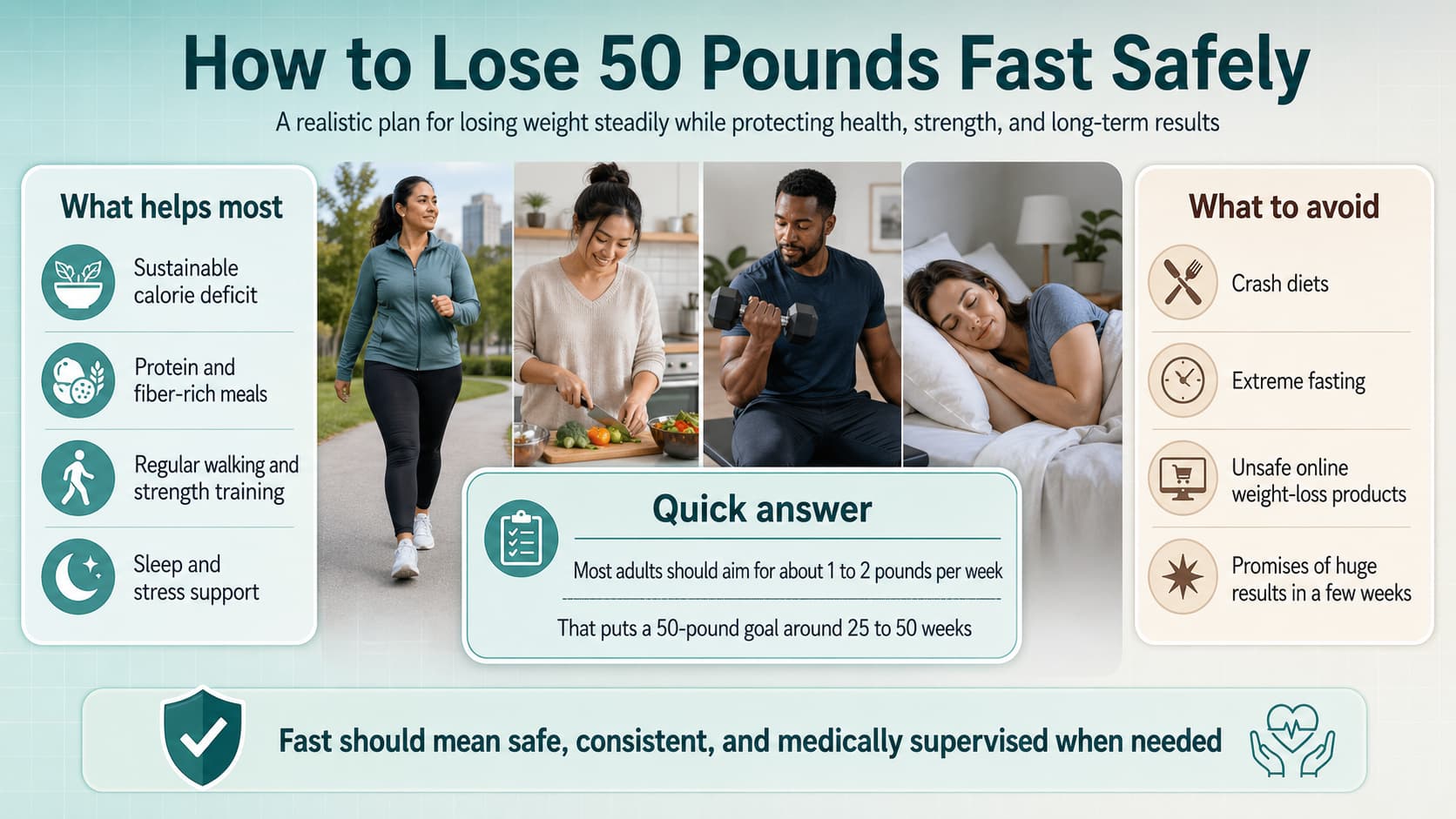
For most adults, the fastest safe way to lose 50 pounds is to lose about 1 to 2 pounds per week through a sustainable calorie deficit, regular physical activity, sleep, stress management, and medical support when needed. That means losing 50 pounds usually takes about 25 to 50 weeks, not a few weeks.
“How to lose 50 pounds fast” is important because many quick-fix diets promise extreme results. But safe weight loss is not about starving yourself, skipping meals, or chasing shortcuts. It is about building a plan you can actually follow long enough to lose the weight and keep it off.
According to the CDC, people who lose weight gradually and steadily, about 1 to 2 pounds per week, are more likely to keep it off than people who lose weight quickly.
How Fast Can You Safely Lose 50 Pounds?
A realistic 50-pound weight loss timeline depends on your starting weight, health status, activity level, diet, sleep, medications, and consistency.
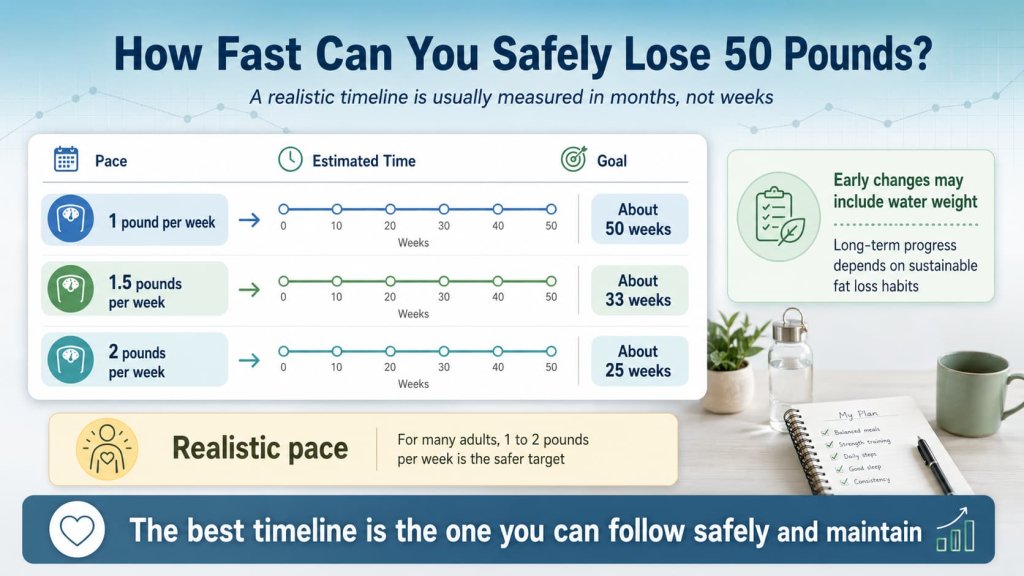
Here is a simple timeline:
| Weight Loss Pace | Time to Lose 50 Pounds |
|---|---|
| 1 pound per week | About 50 weeks |
| 1.5 pounds per week | About 33 weeks |
| 2 pounds per week | About 25 weeks |
Some people lose more quickly in the first few weeks because of water weight. That does not always mean the same pace will continue. Fat loss usually slows as your body weight goes down because your calorie needs change.
Is It Safe to Lose 50 Pounds Fast?
It depends on what “fast” means.
If fast means building a serious, consistent, health-focused plan, then yes, you can make strong progress. If fast means trying to lose 50 pounds in a month or two, that is not safe or realistic for most people.
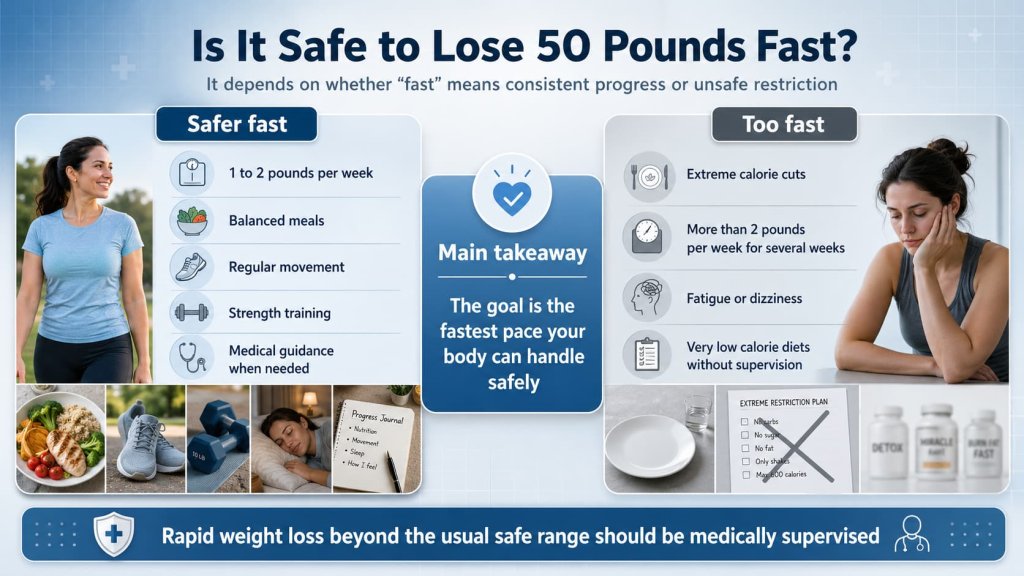
MedlinePlus defines rapid weight loss as losing more than 2 pounds, or about 1 kilogram, per week over several weeks. It also notes that losing weight this quickly usually requires very low calorie intake and should be followed closely by a health care provider.
Losing weight too quickly may increase the risk of:
- Muscle loss
- Water loss instead of fat loss
- Gallstones
- Fatigue
- Digestive issues
- Nutrient gaps
- Regain after the diet ends
The safer goal is not the fastest possible weight loss. It is the fastest pace your body can handle while still supporting energy, strength, nutrition, and long-term health.
Before You Start: When to Talk to a Doctor
Talk with a health care professional before trying to lose 50 pounds if you:
- Have diabetes, heart disease, kidney disease, high blood pressure, or sleep apnea
- Take medications that affect appetite, blood sugar, blood pressure, or mood
- Are pregnant, breastfeeding, an older adult, or a teen
- Have a history of disordered eating
- Plan to lose more than 2 pounds per week
- Are considering prescription weight-loss medication or bariatric surgery
This matters because weight loss can change medication needs, blood sugar levels, blood pressure, hunger, energy, and nutrient intake.
Step 1: Set a Safe 50-Pound Weight Loss Timeline
The first step is to stop treating 50 pounds as one giant goal.
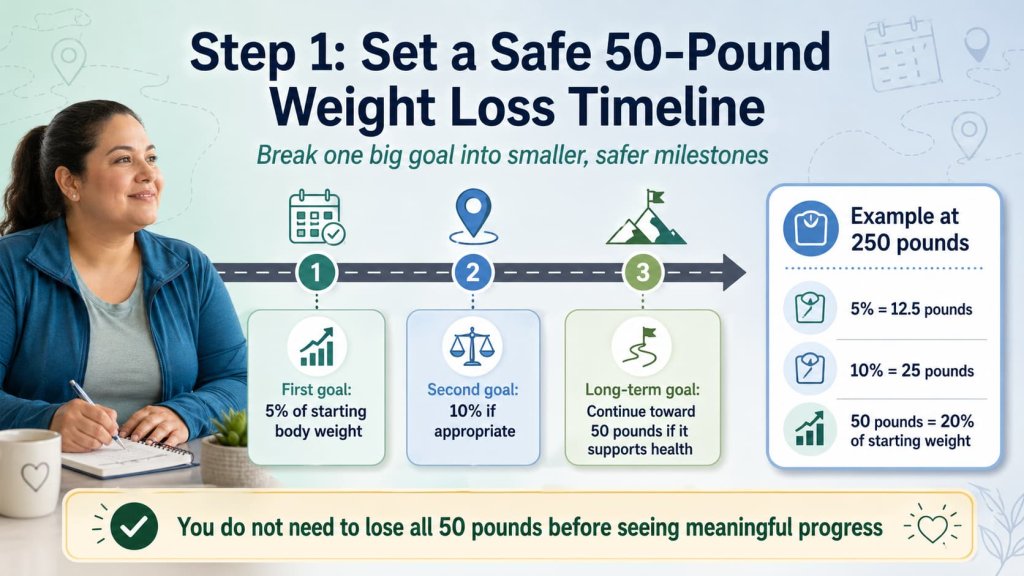
Break it into smaller targets:
- First goal: lose 5% of your starting body weight
- Second goal: reach 10% if appropriate
- Long-term goal: continue toward 50 pounds if it still supports your health
The NHLBI states that losing 5% to 10% of body weight can significantly improve health and quality of life. That means you do not have to wait until all 50 pounds are gone to see benefits.
For example, if someone weighs 250 pounds:
- 5% weight loss = 12.5 pounds
- 10% weight loss = 25 pounds
- 50 pounds = 20% of starting body weight
That makes the journey feel more realistic and easier to track.
Is Losing 50 Pounds the Right Goal for You?
Losing 50 pounds can be a meaningful goal for some people, but it is not automatically the right target for everyone. Your best goal depends on your starting weight, body composition, medical history, lab results, waist measurement, fitness level, and how you feel day to day.
For some people, losing 15 to 25 pounds may already improve blood pressure, blood sugar, joint comfort, sleep, or energy. For others, losing 50 pounds may be part of a longer medical weight-management plan.
A good goal should be:
- Safe for your age and health status
- Realistic enough to maintain
- Based on health, not just appearance
- Flexible if your body, lifestyle, or medical needs change
If you are unsure whether 50 pounds is the right target, ask a health care professional for a personalized goal instead of choosing a number only because it sounds motivating.
Step 2: Create a Sustainable Calorie Deficit
To lose weight, you need a calorie deficit. That means your body uses more energy than you take in over time.
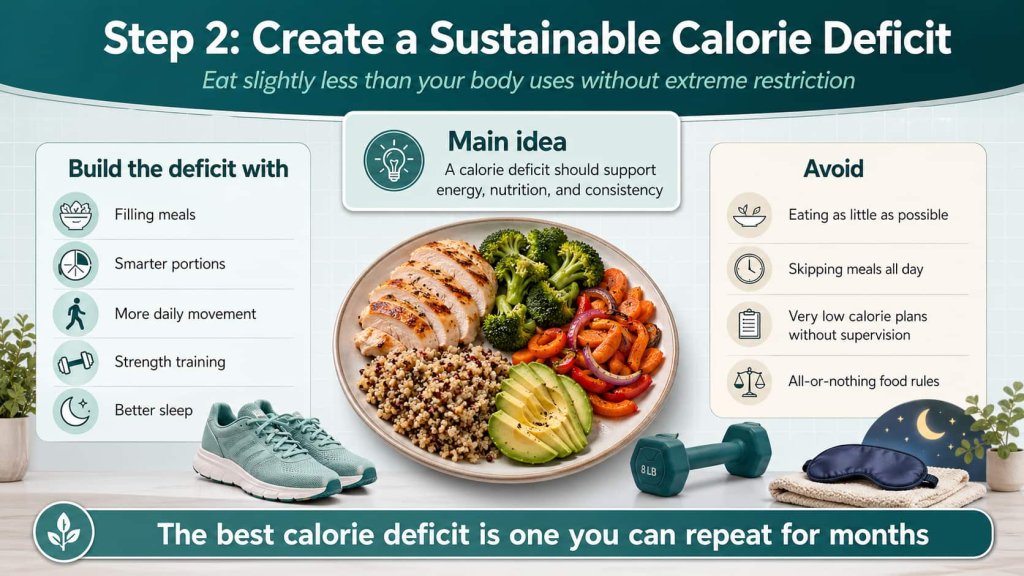
But the goal is not to eat as little as possible. Very low calorie diets can be risky without medical supervision. A better approach is to create a steady deficit through food choices, daily movement, and structured exercise.
A sustainable calorie deficit usually comes from:
- Eating more filling meals
- Reducing high-calorie drinks and snacks
- Managing portions without extreme restriction
- Increasing daily steps and movement
- Strength training to support muscle
- Getting enough sleep to support appetite regulation
The NIDDK Body Weight Planner can help adults estimate a personalized calorie and activity plan for reaching and maintaining a goal weight.
Step 3: Build Meals Around Protein, Fiber, and Whole Foods
The easiest eating plan to follow is one that keeps you full, gives you energy, and fits your daily life.
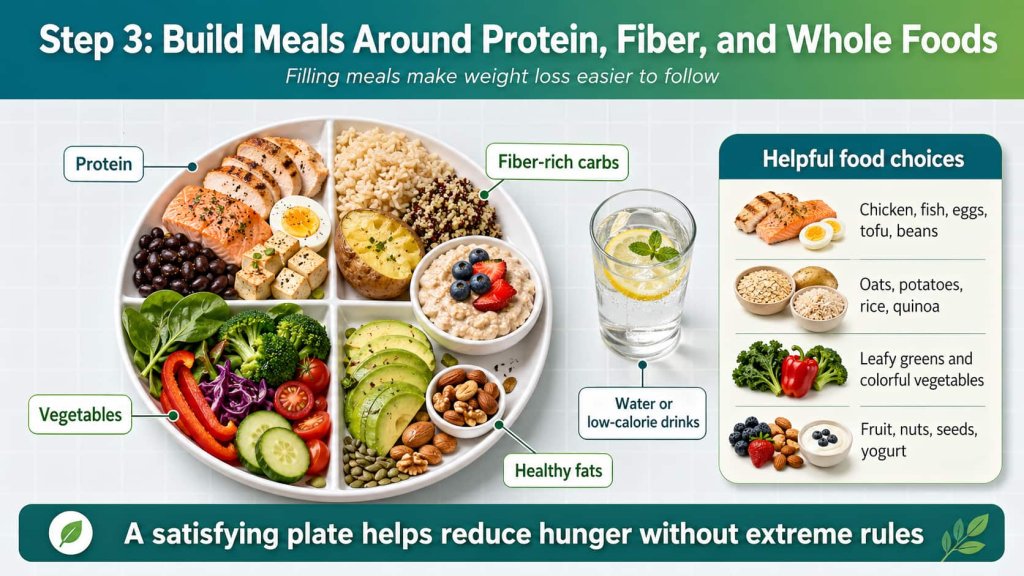
A helpful plate structure is:
- Protein: chicken, fish, eggs, Greek yogurt, tofu, beans, lentils, lean meat, or cottage cheese
- High-fiber carbohydrates: oats, potatoes, brown rice, quinoa, beans, fruit, and whole grains
- Vegetables: leafy greens, broccoli, carrots, peppers, cucumbers, tomatoes, or mixed vegetables
- Healthy fats: avocado, olive oil, nuts, seeds, or fatty fish
- Water or low-calorie drinks instead of sugary drinks
The USDA MyPlate approach encourages building meals with fruits, vegetables, grains, protein foods, and dairy or fortified alternatives. For weight loss, this structure can make meals feel bigger and more satisfying without relying on extreme rules.
Step 4: Use Exercise to Support Fat Loss and Muscle Retention
Exercise helps you burn calories, protect muscle, improve fitness, and feel better during weight loss. But exercise does not need to be extreme.
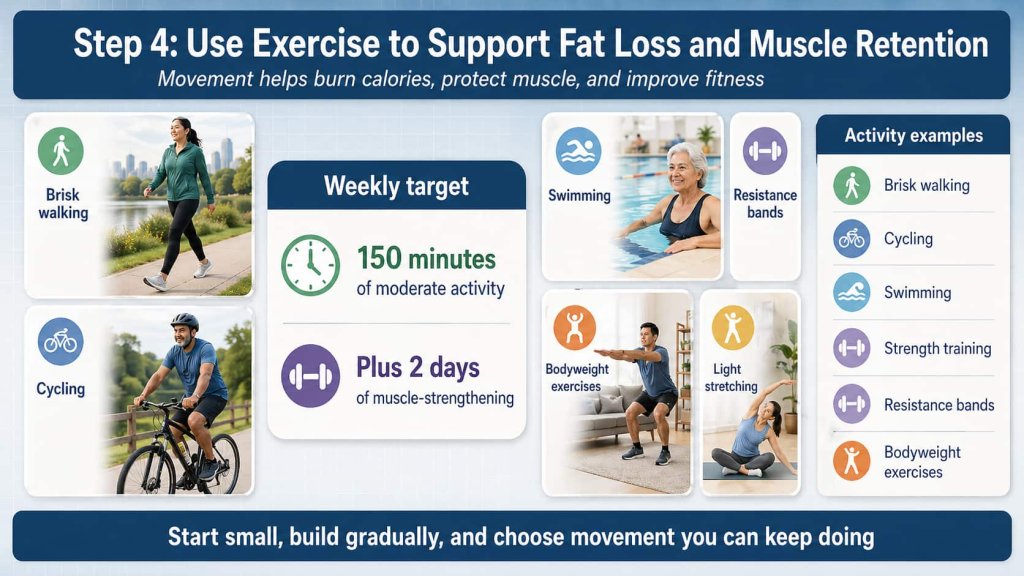
The CDC physical activity guidelines recommend that adults get at least 150 minutes of moderate-intensity aerobic activity per week and 2 days of muscle-strengthening activity.
A realistic weekly plan could look like this:
| Day | Activity |
|---|---|
| Monday | 30-minute brisk walk plus basic strength training |
| Tuesday | 30-minute walk |
| Wednesday | Strength training |
| Thursday | 30-minute walk or cycling |
| Friday | Rest or light movement |
| Saturday | Longer walk, hike, swim, or gym session |
| Sunday | Rest, stretching, or easy movement |
Good exercise choices include:
- Brisk walking
- Cycling
- Swimming
- Strength training
- Resistance bands
- Bodyweight exercises
- Low-impact cardio machines
- Beginner-friendly fitness classes
Start where you are. If 30 minutes feels too much, begin with 10 minutes and build up.
Step 5: Strength Train While Losing Weight
Strength training is important when you want to lose 50 pounds because it helps support muscle while your body weight goes down.
A simple beginner strength plan can include:
- Squats or sit-to-stands
- Hip hinges or Romanian deadlifts
- Push-ups or chest presses
- Rows
- Shoulder presses
- Planks or dead bugs
Aim for 2 to 3 sessions per week. Keep the weight manageable and focus on good form. You do not need to train to exhaustion to get results.
Strength training also helps your body look and feel stronger as you lose weight. The goal is not just a lower number on the scale. The goal is better health, fitness, and daily function.
Step 6: Track Progress Without Obsessing Over the Scale
The scale is useful, but it should not be the only measure of progress.
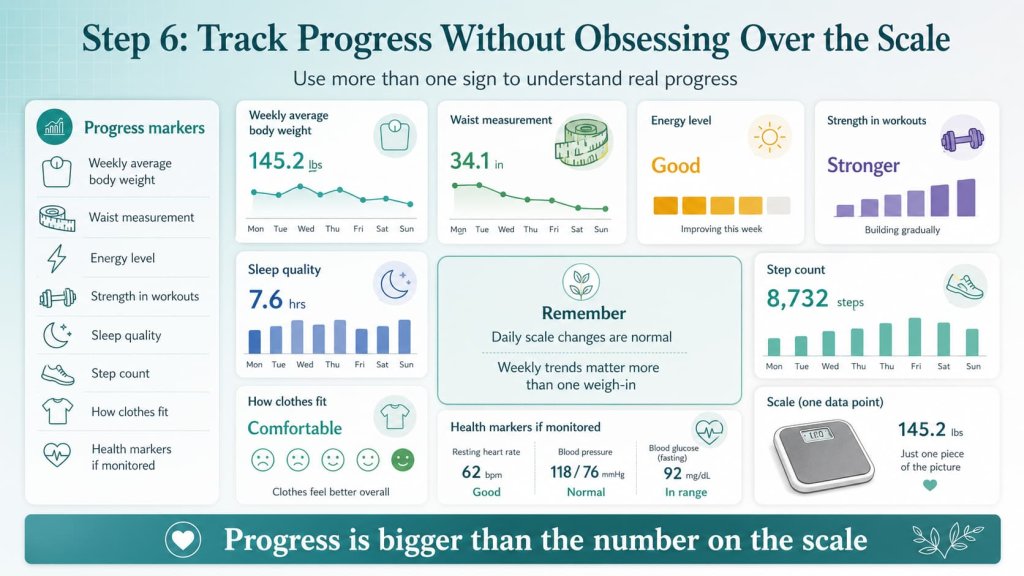
Track a few signs at the same time:
- Weekly average body weight
- Waist measurement
- Progress photos if they feel helpful
- Energy level
- Strength in workouts
- Sleep quality
- Step count
- How clothes fit
- Blood pressure, blood sugar, or cholesterol if your doctor monitors them
Daily weight changes are normal. Sodium, hydration, digestion, hormones, and hard workouts can all affect the scale.
A better method is to compare your weekly average over several weeks.
What to Do When Weight Loss Slows Down
Weight loss often slows after the first few weeks. This does not always mean you are doing something wrong. As your body gets lighter, it usually burns fewer calories than it did at your starting weight.
If progress stalls for 2 to 4 weeks, review your habits before making drastic changes.
Check these first:
- Are portion sizes slowly increasing?
- Are weekends much higher in calories than weekdays?
- Are drinks, sauces, oils, or snacks adding more than you realize?
- Has your daily movement dropped?
- Are you sleeping less?
- Are you strength training consistently?
- Are you tracking weekly averages instead of one weigh-in?
A plateau is usually a signal to adjust, not quit. Small changes, such as adding daily steps, tightening portions, or recalculating your calorie needs, may be enough to restart progress.
Step 7: Improve Sleep, Stress, and Daily Movement
Weight loss is harder when sleep is poor and stress is high. Hunger, cravings, energy, and food decisions are all affected by daily habits.
Focus on simple improvements:
- Keep a regular sleep schedule when possible
- Reduce late-night snacking triggers
- Plan meals before you get overly hungry
- Take short walks after meals
- Keep high-calorie snack foods less visible
- Add more non-exercise movement during the day
- Use stress tools like walking, journaling, breathing, or talking to someone you trust
The NIDDK explains that a healthy eating plan should be something you can maintain over time, while physical activity can help you use more calories and maintain weight loss.
What to Eat to Lose 50 Pounds Fast Safely
There is no single perfect diet for losing 50 pounds. The best plan is the one you can follow consistently while meeting your nutrition needs.
A good daily pattern may include:
- A protein-rich breakfast
- A balanced lunch with protein, vegetables, and fiber-rich carbs
- A planned snack if needed
- A satisfying dinner with mostly whole foods
- Water throughout the day
- Flexible portions instead of strict food bans
Helpful food swaps include:
| Instead of | Try |
|---|---|
| Sugary coffee drinks | Coffee with milk, unsweetened latte, or lower-sugar option |
| Chips every night | Popcorn, fruit, yogurt, or planned portion |
| Fried fast food meal | Grilled option with vegetables or a smaller portion |
| Sugary soda | Sparkling water, diet drink, or water with lemon |
| Large dessert daily | Smaller dessert portion a few times per week |
You do not have to remove every food you enjoy. Overly strict diets often backfire. A flexible plan is usually easier to maintain.
How Many Calories Should You Eat to Lose 50 Pounds?
There is no single calorie number that works for everyone.
Your calorie needs depend on:
- Age
- Sex
- Height
- Current weight
- Activity level
- Muscle mass
- Health conditions
- Medications
- Weight-loss goal and timeline
A larger person may lose weight on more calories than a smaller person. Someone who walks daily may need more food than someone who is sedentary. This is why personalized planning is safer than copying a random low-calorie diet online.
A registered dietitian or health care professional can help you set a realistic target, especially if you have a medical condition or want to lose a large amount of weight.
Avoid Going Too Low With Calories
Eating less can help create a calorie deficit, but eating too little can work against you. Very low calorie diets may increase the risk of fatigue, nutrient gaps, muscle loss, binge-restrict cycles, and poor workout recovery.
Be careful with plans that leave you feeling weak, dizzy, constantly cold, unusually irritable, or unable to function normally. Those are signs that the plan may be too aggressive.
Instead of chasing the lowest possible calorie number, focus on a calorie target that allows you to:
- Eat enough protein and fiber
- Include fruits, vegetables, and whole foods
- Maintain energy for daily life
- Exercise safely
- Sleep well
- Stay consistent for months, not days
A slower plan that you can follow is usually more effective than an extreme plan you quit after two weeks.
Medical Options for Losing 50 Pounds
Some adults may need more than lifestyle changes alone. That does not mean they failed. Obesity is complex, and medical support can be appropriate for some people.
Prescription weight-loss medication
The NIDDK prescription medication guide explains that some FDA-approved medications may be used for chronic weight management. These medicines can have side effects and are not right for everyone, so they should only be used with a licensed health care professional.
Avoid buying weight-loss injections, pills, or “research” products online without a prescription. The FDA warns consumers not to purchase unapproved products containing semaglutide, tirzepatide, or retatrutide sold directly to consumers because their quality is unknown and they may be harmful.
Bariatric surgery
For some adults with severe obesity or serious obesity-related health problems, bariatric surgery may be an option. The NIDDK bariatric surgery resource says weight-loss surgery may be considered for adults with a BMI of 40 or more, or a BMI of 35 or more with a serious health problem linked to obesity.
Surgery is not a quick fix. It requires screening, medical care, nutrition changes, follow-up, and long-term habit support.
Who Should Be Careful With Fast Weight Loss?
Fast weight loss is not safe for everyone.
Be extra careful if you are:
- Under 18
- Pregnant or breastfeeding
- An older adult
- Managing diabetes, heart disease, kidney disease, or an eating disorder
- Taking medications affected by food intake or body weight
- Trying a very low calorie diet
- Losing more than 2 pounds per week for several weeks
Children and teens should not follow rapid weight-loss diets unless a qualified health professional specifically recommends and supervises them.
Stop and Get Help If These Symptoms Appear
Weight loss should not make you feel seriously unwell. Stop the plan and speak with a health care professional if you notice concerning symptoms.
Get support if you experience:
- Dizziness, fainting, or feeling weak often
- Chest pain, shortness of breath, or irregular heartbeat
- Severe fatigue that does not improve with rest
- Ongoing nausea, vomiting, diarrhea, or constipation
- Hair loss, missed periods, or feeling unusually cold
- Obsessive food rules, guilt after eating, or fear of normal meals
- Rapid weight loss that you did not intend
These symptoms do not mean you failed. They mean your plan may need to be safer, more balanced, or medically supervised.
Common Mistakes That Slow Weight Loss
Many people struggle not because they lack willpower, but because their plan is too hard to maintain.
Common mistakes include:
- Trying to lose 50 pounds too quickly
- Eating too little during the day and overeating at night
- Skipping protein
- Drinking calories without noticing
- Doing only cardio and no strength training
- Relying on motivation instead of routines
- Weighing daily and panicking over normal fluctuations
- Cutting out favorite foods completely
- Ignoring sleep and stress
- Quitting after one imperfect day
Progress does not require perfection. It requires returning to your plan repeatedly.
Red Flags to Avoid When Trying to Lose 50 Pounds Fast
Be cautious with programs that sound too good to be true. The NIDDK safe weight-loss program guide warns against programs that promise weight loss without diet or exercise, unlimited eating, spot reduction, or extreme claims like losing 30 pounds in 30 days.
Avoid plans that:
- Promise huge results in a very short time
- Require extreme fasting without medical support
- Ban entire food groups without a medical reason
- Sell expensive supplements as the main solution
- Use dramatic before-and-after photos as proof
- Tell you not to talk to your doctor
- Claim you can target fat loss from one body part
A trustworthy plan should include realistic goals, healthy eating, physical activity, behavior support, and a plan for maintaining weight loss.
Sample Day of Eating for Safe Weight Loss
This is only an example, not a required meal plan.
Breakfast
Greek yogurt with berries, oats, and chia seeds.
Lunch
Grilled chicken or tofu bowl with rice, vegetables, beans, salsa, and avocado.
Snack
Apple with peanut butter or cottage cheese with fruit.
Dinner
Salmon, turkey, beans, or lentils with potatoes or whole grains and a large serving of vegetables.
Drink choices
Water, sparkling water, unsweetened tea, coffee with minimal added sugar, or other low-calorie drinks.
The best meal plan is one that fits your culture, food budget, schedule, and preferences.
How to Stay Motivated While Losing 50 Pounds
Motivation will come and go. Systems matter more.
Try this:
- Plan 2 to 3 easy breakfasts you can repeat
- Keep protein-rich foods ready
- Walk after one meal per day
- Strength train on the same days each week
- Track weekly averages, not daily emotions
- Keep a backup meal for busy days
- Celebrate non-scale wins
- Adjust instead of quitting when progress slows
A 50-pound goal is a long-term project. The people who succeed are usually the ones who make the plan easier to repeat.
How to Keep the Weight Off After Losing 50 Pounds
The hardest part is not always losing the weight. For many people, the bigger challenge is maintaining the result.
Before you reach your goal, start building habits you can continue after the diet phase ends.
A good maintenance plan includes:
- Keeping regular meal routines
- Continuing strength training
- Staying active most days
- Monitoring weight trends without obsessing
- Planning for holidays, travel, and busy weeks
- Eating enough to support energy and recovery
- Getting help early if weight regain starts
When you reach your goal, you may need to slowly increase calories to a maintenance level instead of jumping back to old habits. This helps you protect your progress while giving your body enough fuel for normal life.
FAQ
Can I lose 50 pounds in 2 months?
For most people, losing 50 pounds in 2 months is not a safe or realistic goal. That would require an extreme pace of weight loss. A safer pace is usually about 1 to 2 pounds per week, unless a health care provider recommends and supervises a different plan.
How long does it really take to lose 50 pounds?
Most adults should expect about 25 to 50 weeks, depending on their starting weight, calorie deficit, activity level, health status, and consistency.
What is the fastest healthy way to lose 50 pounds?
The fastest healthy method is a consistent plan that combines a moderate calorie deficit, protein-rich meals, high-fiber foods, regular walking or cardio, strength training, sleep, stress management, and medical guidance when needed.
Do I need to exercise to lose 50 pounds?
You can lose weight through diet changes alone, but exercise helps support fat loss, muscle retention, fitness, and long-term maintenance. A mix of cardio, strength training, and daily movement is usually best.
Should I try weight-loss medication?
Only a licensed health care professional can help decide that. Prescription weight-loss medications may be appropriate for some adults, but they can have side effects and should not be bought from unapproved online sellers.
Is losing 50 pounds worth it if I cannot do it fast?
Yes. Even losing 5% to 10% of your starting body weight may support better health and quality of life. You do not need extreme speed to make meaningful progress.
Conclusion
Losing 50 pounds fast should mean losing it as safely and consistently as possible, not forcing your body through a crash diet. For most adults, a realistic pace is about 1 to 2 pounds per week, which puts a 50-pound goal in the range of 25 to 50 weeks.
Start with a clear timeline, build meals around protein and fiber, move more, strength train, sleep well, and get medical support if you need it. The best plan is not the harshest one. It is the one you can keep doing long enough to change your health for good.
This content is for informational purposes only and not medical advice.
References
- CDC — Steps for Losing Weight
- CDC — Adult Activity: An Overview
- MedlinePlus — Diet for Rapid Weight Loss
- NIDDK — Choosing a Safe and Successful Weight-loss Program
- NIDDK — Eating and Physical Activity to Lose or Maintain Weight
- NIDDK — Weight-loss Surgery
- NHLBI — Overweight and Obesity Treatment
- FDA — Concerns With Unapproved GLP-1 Drugs Used for Weight Loss