
Paleo vs keto comes down to one simple difference: paleo focuses on eating whole, minimally processed foods, while keto focuses on keeping carbohydrates very low to reach ketosis. Paleo is usually less strict with carbs, while keto is more structured around fat, protein, and carb targets.
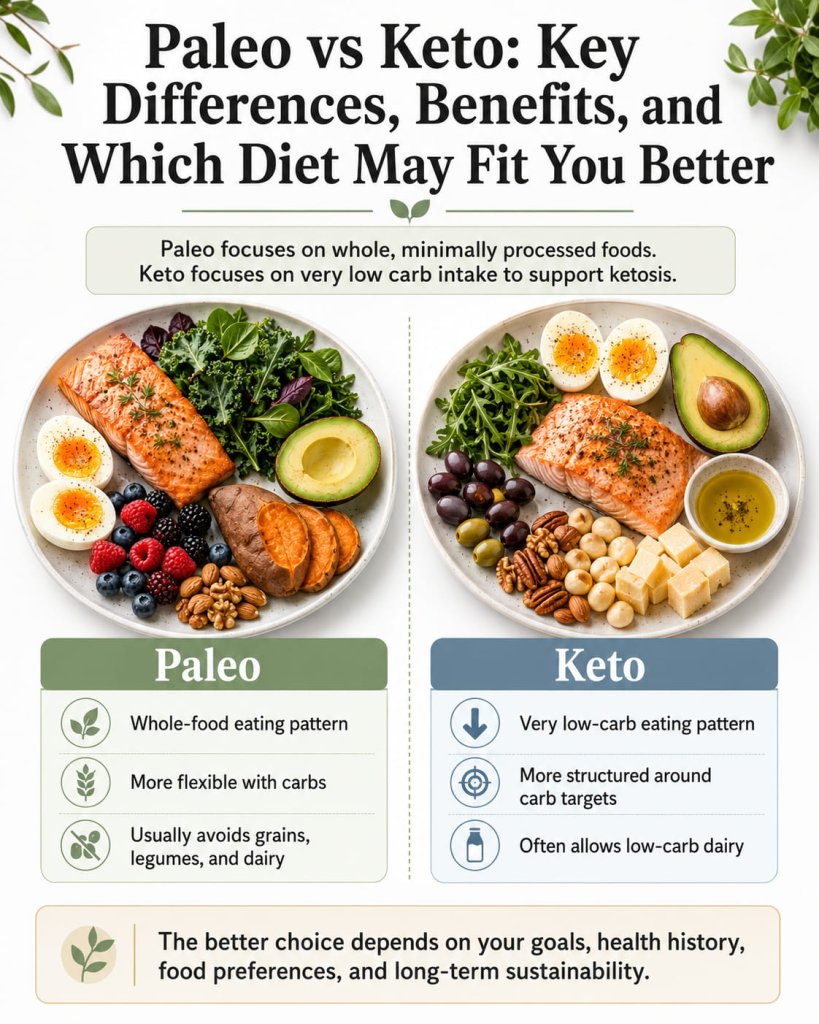
Both diets can reduce highly processed foods and added sugars when planned well. But neither one is automatically the healthiest choice for everyone. The better option depends on your goals, medical history, food preferences, budget, and whether you can follow the plan long term.
Paleo vs Keto: The Quick Answer
Paleo may be a better fit if you want a whole-food eating style without tracking macros. Keto may be a better fit if you need a very low-carb approach and can follow it safely, especially with medical guidance if you have diabetes or take glucose-lowering medication.
A healthy eating pattern should still include enough nutrients, fiber, protein, and a variety of whole foods. The 2025–2030 Dietary Guidelines for Americans, summarized by MedlinePlus, encourage minimally processed whole foods such as vegetables, fruits, nuts, seeds, meats, eggs, whole grains, beans, dairy, and seafood.
| Category | Paleo | Keto |
|---|---|---|
| Main focus | Food quality and avoiding many modern processed foods | Very low carb intake to support ketosis |
| Carb level | Can be low, moderate, or higher depending on food choices | Usually very low |
| Fat level | Flexible | High-fat by design |
| Dairy | Usually avoided | Often allowed if low-carb |
| Grains | Avoided | Usually avoided or heavily restricted |
| Legumes | Avoided | Usually limited because of carbs |
| Fruit | Usually allowed | Most fruit is limited |
| Tracking | Less macro-focused | Often requires carb tracking |
| Best for | Whole-food eaters who want flexibility | People who need strict carb control and can follow it safely |
What Is the Paleo Diet?
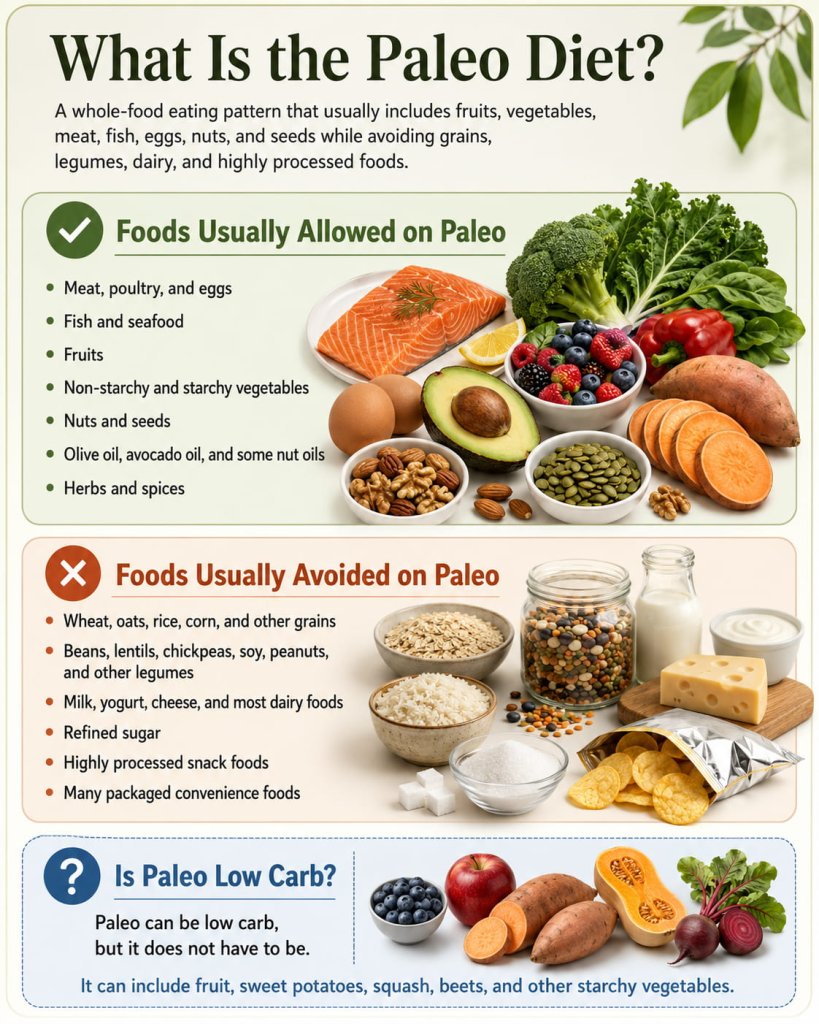
The paleo diet is an eating pattern based on foods that may have been available during the Paleolithic era. A modern paleo diet usually includes fruits, vegetables, lean meats, fish, eggs, nuts, and seeds. It usually avoids grains, legumes, dairy products, refined sugar, added salt, and highly processed foods, according to the Mayo Clinic.
The main idea is simple: eat more whole foods and fewer highly processed foods. That can be helpful for many people because it naturally pushes meals toward protein, produce, nuts, seeds, and simple ingredients.
Foods Usually Allowed on Paleo
A paleo-style diet often includes:
- Meat, poultry, and eggs
- Fish and seafood
- Fruits
- Non-starchy and starchy vegetables
- Nuts and seeds
- Olive oil, avocado oil, and some nut oils
- Herbs and spices
Foods Usually Avoided on Paleo
Most paleo plans avoid:
- Wheat, oats, rice, corn, and other grains
- Beans, lentils, chickpeas, soy, peanuts, and other legumes
- Milk, yogurt, cheese, and most dairy foods
- Refined sugar
- Highly processed snack foods
- Many packaged convenience foods
Is Paleo Low Carb?
Paleo can be low carb, but it does not have to be. A paleo diet can include higher-carb whole foods such as fruit, sweet potatoes, squash, beets, and other starchy vegetables.
This is one of the biggest differences in the paleo vs keto debate. Paleo is about food categories. Keto is about carbohydrate restriction.
What Is the Keto Diet?
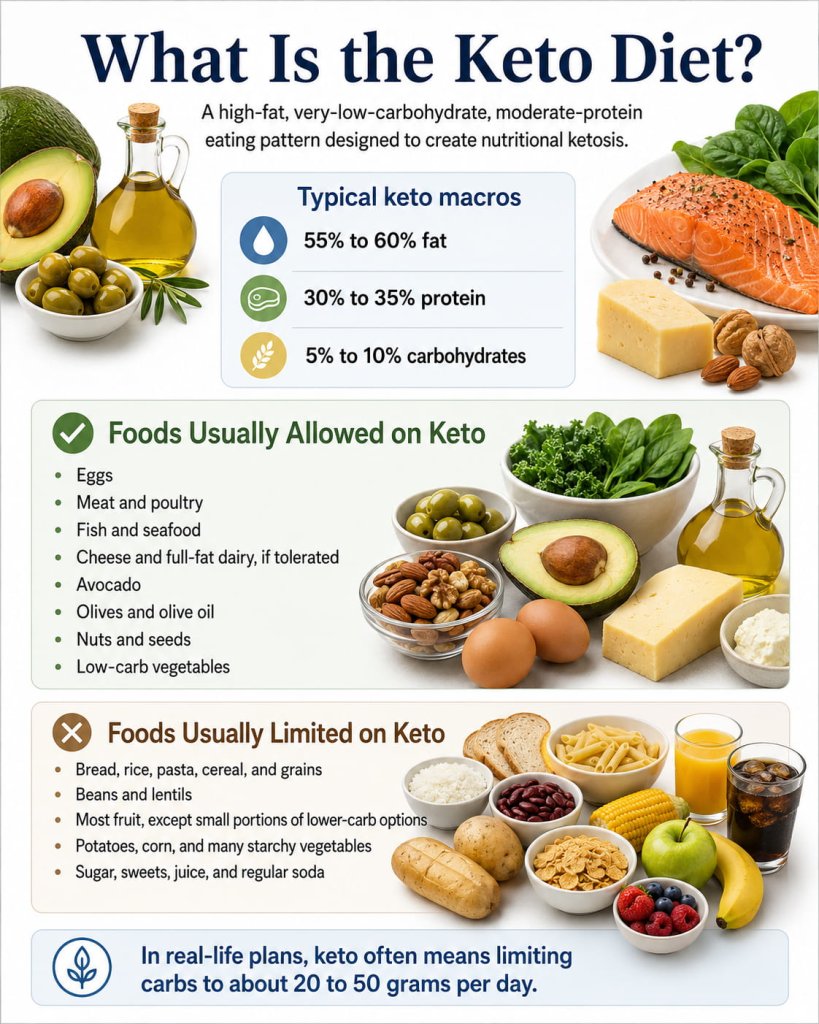
The keto diet is a high-fat, very-low-carbohydrate, moderate-protein eating pattern designed to create nutritional ketosis. In ketosis, the body shifts toward using ketones as a major fuel source. StatPearls, available through NCBI Bookshelf, describes typical keto macros as about 55% to 60% fat, 30% to 35% protein, and 5% to 10% carbohydrates.
In real-life weight-loss plans, keto often means limiting carbs to about 20 to 50 grams per day, though exact targets vary. The American Diabetes Association describes a very low-carbohydrate pattern as one that often aims for 20–50 grams of non-fiber carbohydrate per day and usually gets more than half of calories from fat.
Foods Usually Allowed on Keto
A keto-style diet often includes:
- Eggs
- Meat and poultry
- Fish and seafood
- Cheese and full-fat dairy, if tolerated
- Avocado
- Olives and olive oil
- Nuts and seeds
- Low-carb vegetables
- Butter, cream, and other high-fat foods, depending on the plan
Foods Usually Limited on Keto
Most keto plans limit or avoid:
- Bread, rice, pasta, cereal, and grains
- Beans and lentils
- Most fruit, except small portions of lower-carb options
- Potatoes, corn, and many starchy vegetables
- Sugar, sweets, juice, and regular soda
- Many packaged foods with added starches or sugars
Paleo vs Keto: The Biggest Difference
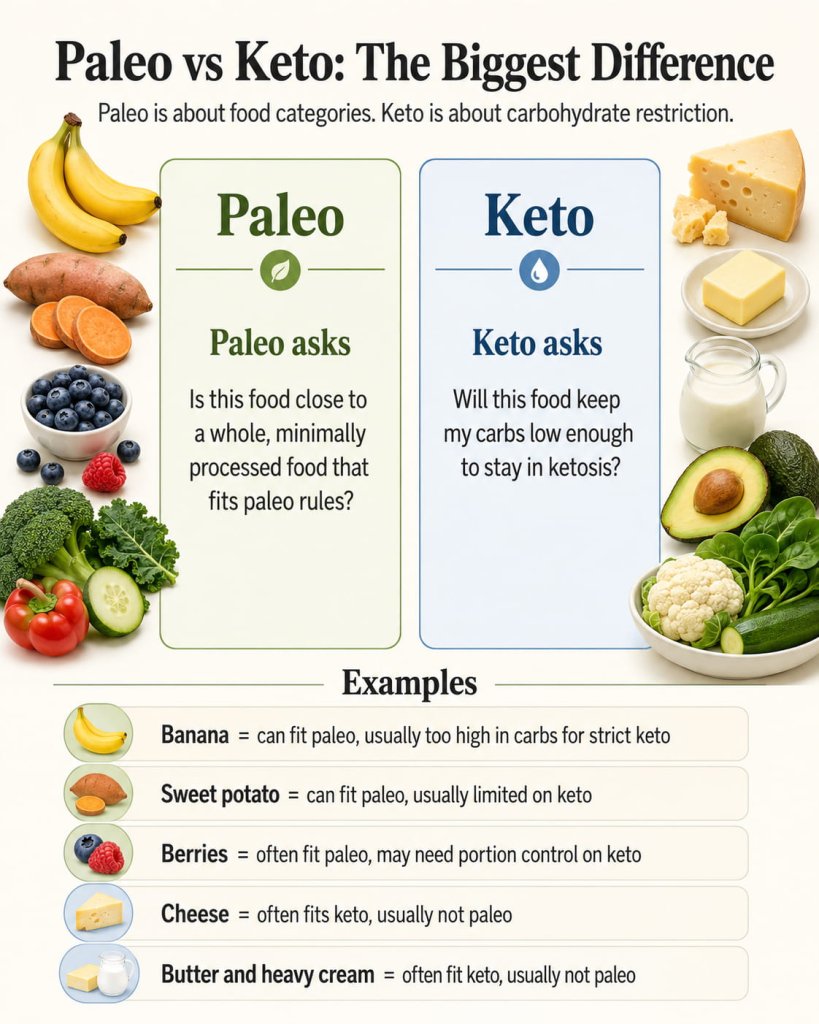
The biggest difference between paleo and keto is the goal.
Paleo asks, “Is this food close to a whole, minimally processed food that fits paleo rules?”
Keto asks, “Will this food keep my carbs low enough to stay in ketosis?”
That means a banana, sweet potato, or bowl of berries can fit into many paleo plans but may be too high in carbs for strict keto. On the other hand, cheese, heavy cream, and butter can fit keto, but they are usually not considered paleo.
Paleo vs Keto for Weight Loss
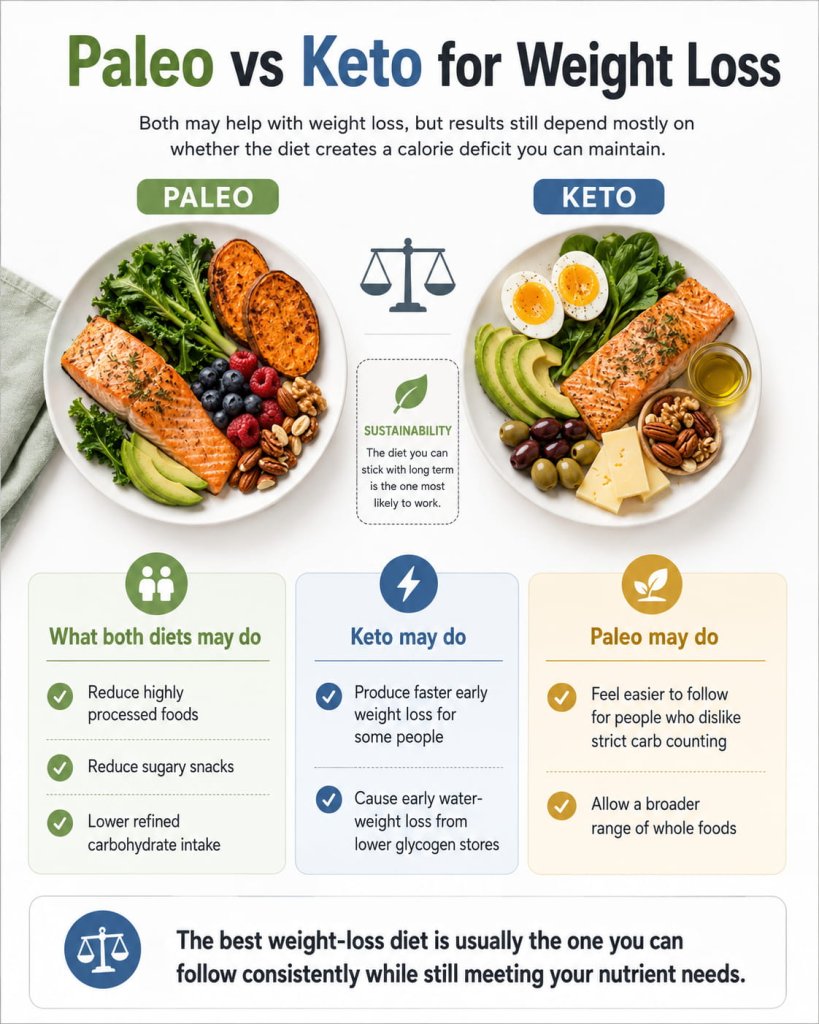
Both paleo and keto may help some people lose weight because both can reduce highly processed foods, sugary snacks, and frequent refined carbohydrates. But weight loss still depends mostly on whether the overall diet creates a calorie deficit that a person can maintain.
For keto and other low-carb diets, the Academy of Nutrition and Dietetics Evidence Analysis Library says low-carbohydrate diets may lead to greater weight and fat loss than traditional reduced-calorie diets during the first 6 months, but those differences are not significant after 1 year. It also notes that long-term safety has not been evaluated for extreme carbohydrate restriction.
For paleo, Mayo Clinic notes that small, short-term studies suggest paleo may help with weight loss and some cardiovascular risk markers, but longer and larger trials are needed to understand long-term benefits and risks.
Which Is Better for Weight Loss?
Keto may produce faster early weight loss for some people, partly because very low-carb diets reduce glycogen and water weight. Paleo may feel easier for people who dislike strict carb counting and prefer a broader range of whole foods.
The best weight-loss diet is usually the one you can follow consistently while still meeting your nutrient needs, supporting your energy, and not creating an unhealthy relationship with food.
Paleo vs Keto for Blood Sugar and Diabetes
Keto is usually more powerful than paleo for reducing carbohydrate intake because carb restriction is the core rule. That may help some people with blood sugar management, but it also makes medical guidance more important.
The American Diabetes Association lists low-carbohydrate and very low-carbohydrate eating patterns as options that may help some people reduce A1C, lose weight, lower blood pressure, lower triglycerides, or increase HDL cholesterol. ADA also emphasizes working with a health care team to find the best meal pattern for diabetes management.
This matters because people who use insulin, sulfonylureas, or SGLT2 inhibitors should be especially careful. StatPearls notes that insulin and some oral diabetes medications may require close monitoring and dose adjustment when starting keto, and people using SGLT2 inhibitors should avoid keto because of increased risk of euglycemic diabetic ketoacidosis.
Paleo vs Keto for Heart Health
Both diets can be heart-friendlier or less heart-friendly depending on food choices.
A paleo pattern that emphasizes vegetables, fruit, fish, lean proteins, nuts, seeds, and unsaturated fats may be more balanced than one built around large portions of red meat and few fiber-rich foods.
A keto pattern that emphasizes olive oil, avocado, nuts, seeds, fish, eggs, low-carb vegetables, and mostly unsaturated fats may be more supportive than one built heavily around butter, processed meats, and very little fiber.
The World Health Organization says carbohydrates should mainly come from whole grains, vegetables, fruits, and pulses, and that most people should get a significant share of energy from unrefined carbohydrates. WHO also advises limiting saturated fat to no more than 10% of total energy intake.
That does not mean everyone must eat a high-carb diet. It means that if you choose keto or paleo, you should be thoughtful about fiber, fat quality, fruits and vegetables, and overall nutrient balance.
Paleo vs Keto for Food Quality
Paleo often has an advantage for food quality because it directly discourages highly processed foods, refined sugar, and many packaged snacks. But paleo can still become unbalanced if it removes grains, legumes, and dairy without replacing the nutrients those foods provide.
Keto can be made with high-quality whole foods, but keto does not automatically guarantee food quality. A person can technically eat low-carb processed foods and still stay within keto macros.
A better version of either diet should include:
- Plenty of vegetables
- Adequate protein
- Mostly unsaturated fats
- Enough fiber
- Minimal added sugar
- Limited highly processed foods
- Nutrient-rich meals, not just “allowed” foods
Paleo vs Keto Food List
| Food | Paleo | Keto |
|---|---|---|
| Chicken | Yes | Yes |
| Salmon | Yes | Yes |
| Eggs | Yes | Yes |
| Leafy greens | Yes | Yes |
| Avocado | Yes | Yes |
| Olive oil | Yes | Yes |
| Sweet potatoes | Usually yes | Usually limited |
| Berries | Yes | Small portions |
| Bananas | Yes | Usually limited |
| Beans | No | Usually limited |
| Lentils | No | Usually limited |
| Brown rice | No | No or very limited |
| Oats | No | No or very limited |
| Cheese | Usually no | Usually yes |
| Greek yogurt | Usually no | Sometimes, if low-carb |
| Butter | Usually no | Often yes |
Can You Do Paleo and Keto Together?
Yes, some people follow a paleo-keto diet. This means they keep carbs very low while also avoiding dairy, grains, legumes, refined sugar, and processed foods.
A paleo-keto plate might include salmon, avocado, olive oil dressing, leafy greens, cucumber, and walnuts. It would usually avoid cheese, cream, beans, grains, and high-carb fruit.
This approach is more restrictive than either diet alone. It may work for some people short term, but it can be harder to follow and may require more planning to get enough fiber, calcium, vitamin D, magnesium, potassium, and overall calories.
Benefits of Paleo
Paleo may help some people:
- Eat more whole foods
- Reduce added sugar
- Reduce highly processed snacks
- Eat more fruits and vegetables
- Focus on protein at meals
- Feel less dependent on packaged convenience foods
The biggest strength of paleo is that it encourages simple, whole-food meals. For someone who currently eats a lot of ultra-processed foods, switching to a balanced paleo-style pattern may improve overall diet quality.
Downsides of Paleo
Paleo can also have drawbacks.
The biggest concern is that it removes several nutrient-rich food groups. Mayo Clinic notes that whole grains and legumes provide fiber, vitamins, protein, and other nutrients, while low-fat dairy provides protein, calcium, vitamins, and other nutrients. Removing these foods may make it harder to meet nutrient needs if the diet is not carefully planned.
Paleo can also be expensive if it relies heavily on specialty meats, wild-caught seafood, nuts, and premium ingredients. It may be less practical for people who depend on affordable staples like beans, lentils, oats, rice, yogurt, or whole-grain bread.
Benefits of Keto
Keto may help some people:
- Reduce carbohydrate intake
- Reduce blood sugar swings
- Feel more structured with clear carb targets
- Lose weight in the short term
- Reduce cravings for sugary foods
- Improve some metabolic markers under the right conditions
Keto also has a well-established medical role in specific neurological conditions, especially drug-resistant epilepsy. However, for weight loss, type 2 diabetes, fatty liver disease, and other metabolic goals, it should be personalized and monitored when medical conditions or medications are involved.
Downsides of Keto
Keto is more restrictive than paleo for most people. It limits many common nutritious foods, including most fruits, legumes, whole grains, and starchy vegetables.
StatPearls lists possible short-term keto side effects such as nausea, constipation, diarrhea, headache, fatigue, dizziness, bad breath, and transient hypoglycemia. Longer-term concerns can include dyslipidemia, kidney stones, reduced bone mineral density, micronutrient deficiencies, and low fiber intake, especially if the diet is poorly planned.
Keto can also be socially difficult. Restaurant meals, family meals, travel, holidays, and cultural foods often become harder to manage when carbohydrate limits are very strict.
Nutrients to Watch on Paleo and Keto
Both paleo and keto remove or limit common food groups, so nutrient planning matters. Paleo usually removes dairy, grains, and legumes. Keto usually limits fruit, starchy vegetables, grains, and legumes. These restrictions can make it harder to get enough fiber, calcium, vitamin D, magnesium, potassium, and certain B vitamins.
| Nutrient to Watch | Why It Matters | Paleo-Friendly Options | Keto-Friendly Options |
|---|---|---|---|
| Fiber | Supports digestion, fullness, and heart health | Vegetables, fruit, nuts, seeds, sweet potatoes | Low-carb vegetables, chia seeds, flaxseed, avocado, nuts |
| Calcium | Supports bone health, muscle function, and nerve signaling | Sardines with bones, leafy greens, fortified foods if allowed | Cheese, Greek yogurt if included, sardines with bones, leafy greens |
| Vitamin D | Helps the body absorb calcium and supports bone health | Fatty fish, eggs, sunlight exposure, supplements if needed | Fatty fish, eggs, fortified dairy if included, supplements if needed |
| Magnesium | Supports muscle and nerve function | Pumpkin seeds, almonds, spinach, avocado | Pumpkin seeds, almonds, spinach, avocado |
| Potassium | Supports fluid balance, muscles, and blood pressure | Potatoes, sweet potatoes, bananas, avocado, greens | Avocado, spinach, mushrooms, zucchini, salmon |
The NIH Office of Dietary Supplements provides fact sheets on vitamins and minerals such as calcium, vitamin D, magnesium, and potassium. If your diet removes several major food groups, it may be worth reviewing your intake with a registered dietitian.
Safety Box: Who Should Be Careful With Keto or Paleo?
Talk with a qualified healthcare professional before starting keto, paleo, or any restrictive diet if you:
- Have diabetes or take glucose-lowering medication
- Use insulin, sulfonylureas, or SGLT2 inhibitors
- Are pregnant or trying to become pregnant
- Have kidney disease, liver disease, pancreatitis, or gallbladder concerns
- Have high LDL cholesterol
- Have osteoporosis or high fracture risk
- Have a history of eating disorders
- Are underweight or have trouble eating enough
- Are feeding children or teens
- Have a medical condition that requires a prescribed diet
Keto needs extra caution because very low carbohydrate intake can change blood sugar, fluid balance, electrolytes, and medication needs. Paleo also needs planning because removing grains, legumes, and dairy may reduce intake of fiber, calcium, vitamin D, and other nutrients.
What to Check Before Starting a Strict Keto Diet
If you plan to follow strict keto for more than a short trial, consider checking in with a healthcare professional first. This is especially important if you have diabetes, high cholesterol, kidney concerns, high blood pressure, or take prescription medication.
Useful things to review may include:
- Current medications and whether carb reduction could affect dosing
- A1C or fasting blood glucose, if blood sugar is a concern
- Fasting lipid panel, especially LDL cholesterol
- Kidney function markers, if you have kidney disease risk
- Blood pressure, especially if weight loss or fluid changes occur quickly
- Symptoms such as dizziness, constipation, fatigue, or unusual weakness
Keto can change fluid balance, blood sugar, and appetite quickly. Monitoring helps you know whether the diet is helping, causing side effects, or needs adjustment.
Which Diet Is Easier to Follow?
For many people, paleo is easier than keto because it does not require staying under a strict carb limit. You can usually eat fruit, starchy vegetables, and larger portions of produce without worrying about ketosis.
Keto may feel easier for people who like strict rules and do better with clear carb targets. But it can feel too restrictive for people who enjoy fruit, beans, whole grains, or flexible meals.
A good question to ask is: “Can I eat this way on a busy week, at a restaurant, while traveling, and during social events?”
If the answer is no, the diet may not be sustainable.
Paleo vs Keto: Which One Is Healthier?
Paleo may be healthier if it helps you eat more vegetables, fruit, fish, lean protein, nuts, seeds, and minimally processed foods while still meeting your nutrient needs.
Keto may be healthier for certain people who benefit from strict carb control and can follow it with appropriate food quality, fiber planning, and medical supervision when needed.
Neither diet is healthy by default. A poorly planned paleo diet can be low in calcium and fiber. A poorly planned keto diet can be low in fiber and high in saturated fat. The quality of the foods matters as much as the label.
You Do Not Have to Choose Either Diet
Paleo and keto are popular, but they are not the only healthy options. Many people do better with a less restrictive whole-food approach that includes vegetables, fruit, lean protein, whole grains, beans, lentils, nuts, seeds, dairy or fortified alternatives, and healthy fats.
This middle-ground approach may be easier to follow long term because it keeps more food groups available. It can also make fiber, calcium, vitamin D, and potassium easier to get from everyday meals.
A practical option is to borrow the best parts of both diets without following every rule. For example, you might reduce added sugar and ultra-processed snacks like paleo encourages, while also moderating refined carbs like keto encourages, without going fully low-carb or fully grain-free.
Best Choice by Goal
| Your Goal | Better Fit |
|---|---|
| Eat fewer processed foods | Paleo |
| Avoid strict macro tracking | Paleo |
| Keep carbs very low | Keto |
| Reach nutritional ketosis | Keto |
| Include fruit and starchy vegetables | Paleo |
| Include cheese and full-fat dairy | Keto |
| Improve food quality without counting carbs | Paleo |
| Follow a structured low-carb plan | Keto |
| Manage diabetes with medication | Only with healthcare guidance |
| Long-term flexibility | Usually paleo or a less restrictive whole-food approach |
How to Start Without Overcomplicating It
If you are comparing paleo vs keto, start with the simplest change first: improve food quality before making the diet more restrictive.
A practical first step could be:
- Build meals around protein, vegetables, and healthy fats.
- Reduce sugary drinks, desserts, and heavily processed snacks.
- Choose whole-food carbs such as fruit, potatoes, beans, or whole grains if your plan allows them.
- Track energy, hunger, digestion, sleep, workouts, and cravings for two to four weeks.
- Only consider stricter carb reduction if you have a clear reason and can do it safely.
This approach helps you avoid making too many changes at once. It also makes it easier to see whether the benefits are coming from better food quality, lower calories, fewer refined carbs, or true ketosis.
Simple Paleo Meal Example
A balanced paleo-style day might look like this:
Breakfast: Eggs with spinach, mushrooms, avocado, and berries
Lunch: Grilled chicken salad with olive oil dressing, walnuts, cucumber, carrots, and fruit
Snack: Apple slices with almond butter
Dinner: Salmon with roasted sweet potato, broccoli, and a side salad
This version includes protein, fiber-rich produce, healthy fats, and satisfying whole foods.
Simple Keto Meal Example
A balanced keto-style day might look like this:
Breakfast: Eggs cooked with spinach, avocado, and unsweetened coffee
Lunch: Salmon salad with olive oil dressing, olives, cucumber, and leafy greens
Snack: Walnuts or cheese, depending on the plan
Dinner: Chicken thighs with roasted low-carb vegetables and olive oil
This version keeps carbs low while still including vegetables, protein, and unsaturated fats.
How to Make Either Diet Healthier
Whether you choose paleo, keto, or neither, these habits make the biggest difference:
Prioritize Vegetables
Choose a variety of non-starchy vegetables such as leafy greens, broccoli, zucchini, peppers, mushrooms, cucumber, asparagus, and cauliflower.
Choose Better Fats
Use more unsaturated fats from olive oil, avocado, nuts, seeds, and fatty fish. Limit heavy reliance on butter, processed meats, and high-saturated-fat foods.
Get Enough Protein
Include protein at each meal from foods such as eggs, poultry, fish, seafood, lean meats, tofu if your plan allows it, or dairy if your plan includes it.
Watch Fiber Intake
Paleo and keto can both become low in fiber if you remove grains and legumes without adding enough vegetables, nuts, seeds, and allowed fruits.
Avoid Turning the Diet Into Junk Food
“Paleo cookies” and “keto snacks” can still be calorie-dense and highly processed. Use them occasionally, not as the foundation of the diet.
Track How You Feel
Energy, digestion, sleep, workouts, hunger, cravings, lab markers, and mood all matter. A diet that looks good on paper may not be the best fit if it makes daily life harder.
FAQs About Paleo vs Keto
Is paleo better than keto?
Paleo is better for people who want a whole-food diet without strict carb tracking. Keto is better for people who specifically need or prefer very low carbohydrate intake. The healthier choice depends on food quality, nutrient balance, medical history, and long-term consistency.
Is keto better than paleo for weight loss?
Keto may lead to faster early weight loss for some people, but low-carb diet advantages often become less clear after one year. Paleo may be easier to maintain because it allows more whole-food carbohydrates.
Can paleo put you in ketosis?
Sometimes, but not always. Paleo can become ketogenic if you keep carbs very low, but many paleo foods—such as fruit, sweet potatoes, and squash—can prevent ketosis if eaten in larger amounts.
Can you eat dairy on paleo?
Most paleo plans avoid dairy. Keto often allows dairy if it is low in carbs, such as cheese, butter, cream, or plain full-fat Greek yogurt in controlled portions.
Can you eat fruit on keto?
You can eat small portions of some lower-carb fruits, such as berries, depending on your carb target. Higher-carb fruits like bananas, mangoes, grapes, and large servings of apples are usually limited.
Is paleo good for diabetes?
Paleo may help some people reduce processed foods and improve meal quality, but diabetes meal planning should be individualized. People with diabetes should work with their healthcare team, especially if changing carbohydrate intake.
Is keto safe for diabetes?
Keto may help some people with diabetes improve blood sugar markers, but it can be risky with certain medications. People using insulin, sulfonylureas, or SGLT2 inhibitors need medical guidance before making major carb reductions.
Which diet is better for athletes?
It depends on the sport, training volume, and personal response. Paleo may be easier for athletes who need more carbohydrates from fruit and starchy vegetables. Keto may be harder for high-intensity training, especially during adaptation.
What is the biggest downside of paleo?
The biggest downside is removing whole grains, legumes, and dairy, which can make it harder to get enough fiber, calcium, vitamin D, and other nutrients if the diet is not planned well.
What is the biggest downside of keto?
The biggest downside is strict carb restriction. It can be hard to sustain and may cause constipation, fatigue, low fiber intake, nutrient gaps, and medication-related risks for some people.
Conclusion
Paleo and keto are different tools. Paleo focuses on whole-food choices and avoiding many modern processed foods. Keto focuses on very low carb intake to support ketosis.
If you want flexibility, fruit, starchy vegetables, and less tracking, paleo may feel easier. If you need strict carbohydrate control and can follow it safely, keto may be useful with the right planning.
The best choice is the one that helps you eat mostly whole foods, feel satisfied, meet your nutrient needs, and stay consistent without ignoring your health history. When in doubt, work with a registered dietitian or healthcare professional before starting a restrictive diet.
This content is for informational purposes only and not medical advice.
References
- Mayo Clinic — Paleo diet: What is it and why is it so popular?
- NCBI Bookshelf — The Ketogenic Diet: Clinical Applications, Evidence-based Indications, and Implementation
- American Diabetes Association — Eating for Diabetes Management
- Academy of Nutrition and Dietetics Evidence Analysis Library — Adult Weight Management: Low Carbohydrate Diet
- World Health Organization — Healthy Diet
- MedlinePlus — Dietary Guidelines for Americans 2025–2030
- NIH Office of Dietary Supplements — Vitamin and Mineral Fact Sheets