
An intermittent fasting meal plan is a structured way to eat balanced meals within a set eating window while fasting during the remaining hours of the day. For beginners, the safest approach is usually a gentle schedule, such as 12:12 or 14:10, paired with nutrient-rich meals that include protein, fiber, healthy fats, fruits, vegetables, and whole grains.
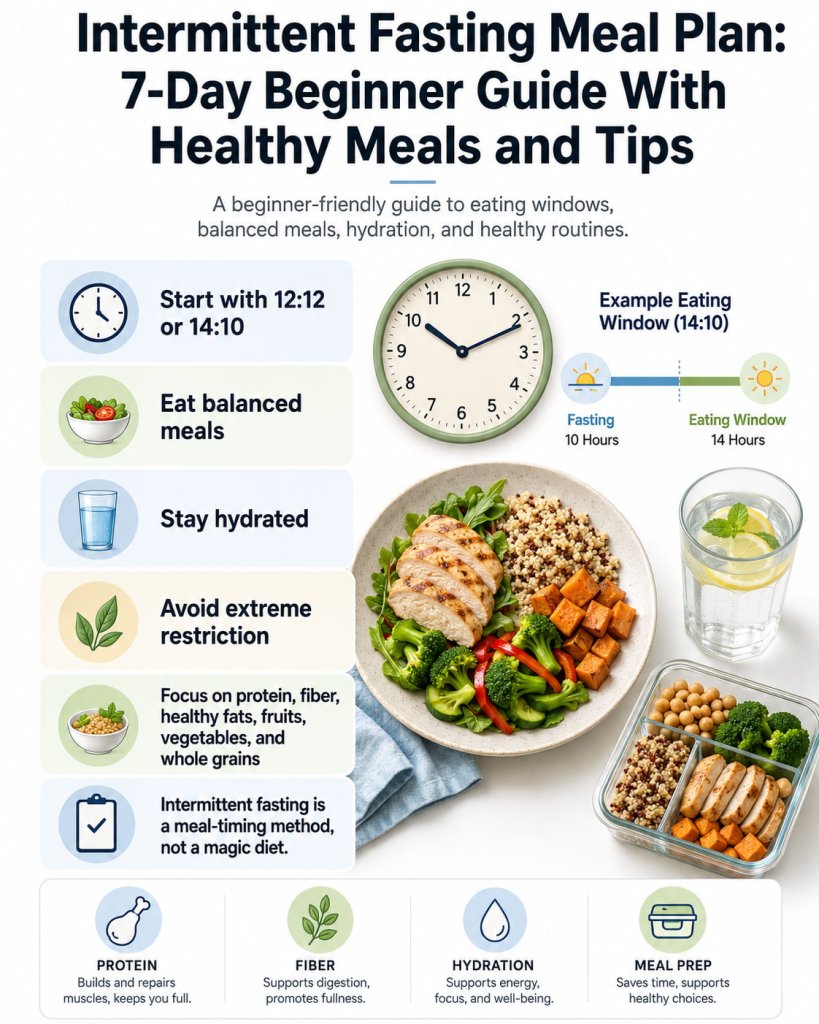
Intermittent fasting is not a magic diet. It is a meal-timing method. According to Johns Hopkins Medicine, intermittent fasting means switching between fasting and eating on a regular schedule. The meals you choose during your eating window still matter for energy, hunger control, digestion, and overall health.
This 7-day beginner intermittent fasting meal plan uses a simple, realistic approach. You will start with an easy fasting window, eat satisfying meals, stay hydrated, and avoid extreme restriction.
What Is an Intermittent Fasting Meal Plan?
An intermittent fasting meal plan helps you decide when to eat and what to eat during your eating window.
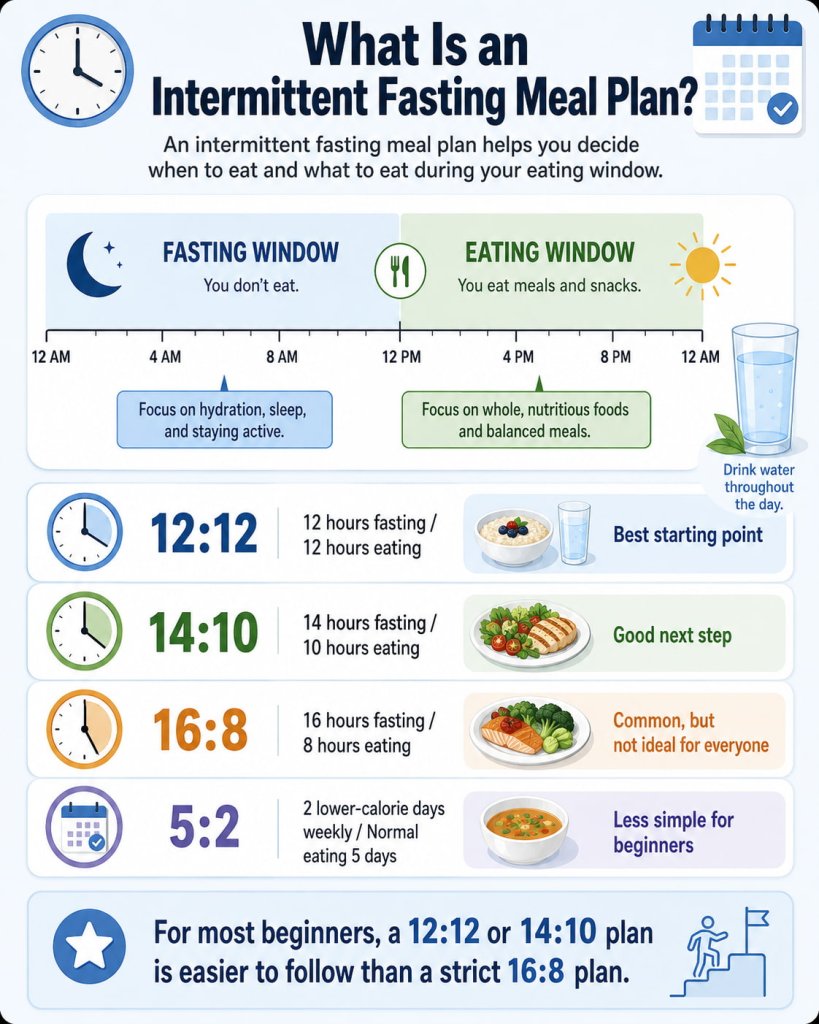
For example, instead of eating from early morning until late at night, you may eat within a 10- to 12-hour window and fast the rest of the time. A beginner may use a schedule like:
| Fasting Style | Fasting Window | Eating Window | Beginner-Friendly? |
|---|---|---|---|
| 12:12 | 12 hours | 12 hours | Best starting point |
| 14:10 | 14 hours | 10 hours | Good next step |
| 16:8 | 16 hours | 8 hours | Common, but not ideal for everyone |
| 5:2 | 2 lower-calorie days weekly | Normal eating 5 days | Less simple for beginners |
For most beginners, a 12:12 or 14:10 plan is easier to follow than a strict 16:8 plan. It gives you enough time to eat balanced meals without feeling rushed.
How This 7-Day Intermittent Fasting Meal Plan Works
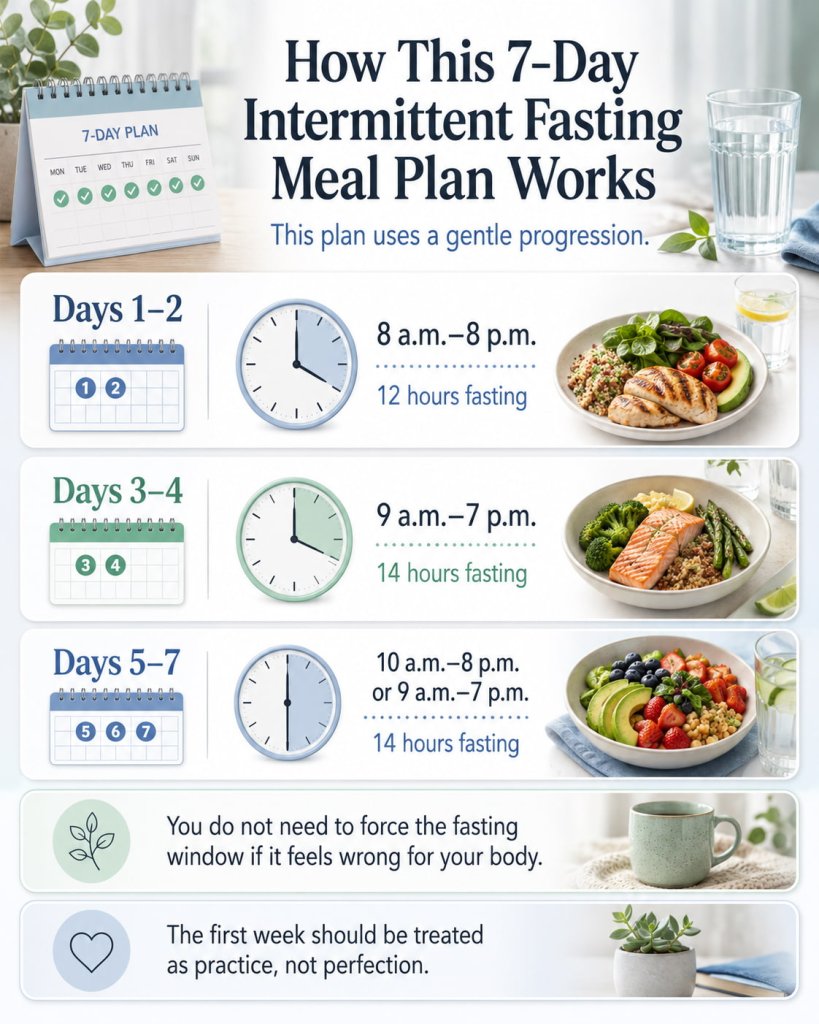
This plan uses a gentle progression:
| Days | Suggested Eating Window | Fasting Window |
|---|---|---|
| Days 1–2 | 8 a.m.–8 p.m. | 12 hours |
| Days 3–4 | 9 a.m.–7 p.m. | 14 hours |
| Days 5–7 | 10 a.m.–8 p.m. or 9 a.m.–7 p.m. | 14 hours |
You do not need to force the fasting window if it feels wrong for your body. Johns Hopkins notes that it may take 2 to 4 weeks for the body to adjust to intermittent fasting, so the first week should be treated as practice, not perfection.
Who This Beginner Intermittent Fasting Meal Plan Is For
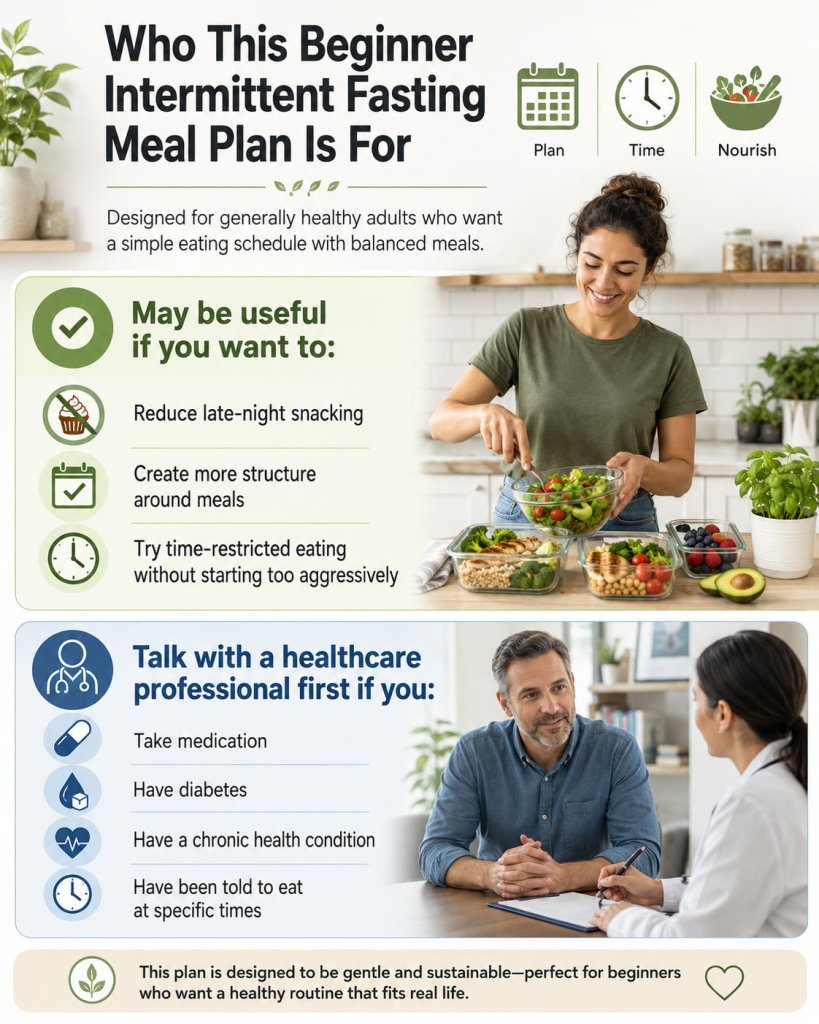
This beginner intermittent fasting meal plan is designed for generally healthy adults who want a simple eating schedule with balanced meals. It may be useful if you want to reduce late-night snacking, create more structure around meals, or try time-restricted eating without starting too aggressively.
This plan is not designed for children, teens, pregnant or breastfeeding people, anyone with a history of eating disorders, or people who need medical nutrition guidance. If you take medication, have diabetes, have a chronic health condition, or have been told to eat at specific times, talk with a healthcare professional before changing your eating schedule.
Best Beginner Fasting Window for an Intermittent Fasting Meal Plan
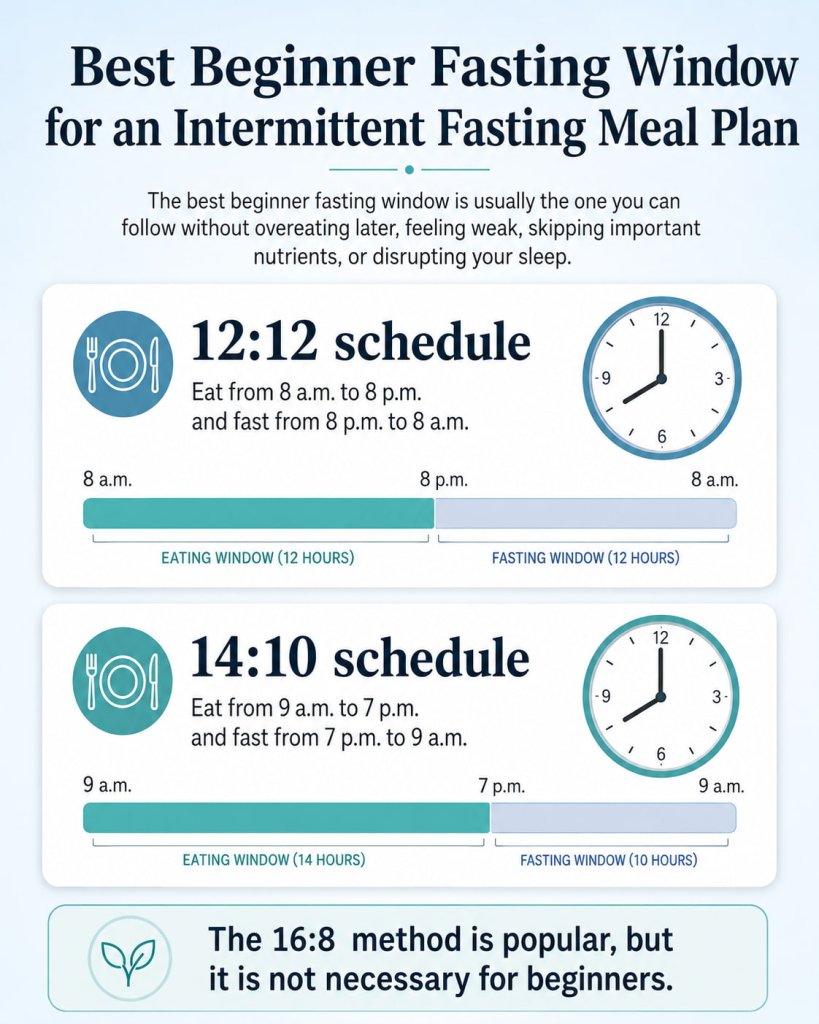
The best beginner fasting window is usually the one you can follow without overeating later, feeling weak, skipping important nutrients, or disrupting your sleep.
A good starting option is:
12:12 schedule:
Eat from 8 a.m. to 8 p.m. and fast from 8 p.m. to 8 a.m.
A slightly more structured option is:
14:10 schedule:
Eat from 9 a.m. to 7 p.m. and fast from 7 p.m. to 9 a.m.
The 16:8 method is popular, but it is not necessary for beginners. Mayo Clinic notes that the long-term health effects of intermittent fasting are still unclear, and some benefits may come from reducing overall calorie intake rather than fasting itself.
What to Eat During Your Eating Window
Your eating window should not become a time to eat anything without structure. The goal is to build meals that keep you full, support steady energy, and help you meet nutrient needs.
The CDC recommends healthy eating patterns that emphasize vegetables, fruits, protein foods, dairy without added sugars, healthy fats, and whole grains while limiting added sugars, sodium, saturated fat, trans fat, and cholesterol.
A simple meal-building formula is:
| Meal Part | Examples |
|---|---|
| Protein | Eggs, Greek yogurt, chicken, fish, turkey, tofu, beans, lentils |
| High-fiber carbs | Oats, brown rice, quinoa, whole-grain bread, sweet potato, beans |
| Vegetables | Spinach, broccoli, peppers, carrots, cucumbers, salad greens |
| Healthy fats | Avocado, olive oil, nuts, seeds, peanut butter |
| Fruit | Berries, apples, oranges, bananas, grapes |
For most meals, try to include a clear protein source instead of relying mostly on carbohydrates. Protein helps make meals more filling and supports muscle maintenance, especially if you are eating fewer total meals during the day. Good beginner targets are simple: include eggs, Greek yogurt, fish, chicken, tofu, beans, lentils, cottage cheese, or another protein-rich food at each main meal.
You do not need a perfect macro plan to start. A practical goal is to make every meal balanced enough that you feel satisfied for several hours, not stuffed or deprived.
You can also use the USDA MyPlate model as a simple visual guide for balanced meals, using fruits, vegetables, grains, protein foods, and dairy or fortified alternatives.
What Can You Drink While Fasting?
During the fasting window, choose calorie-free drinks.
Good options include:
- Water
- Sparkling water with no sugar
- Plain black coffee
- Plain unsweetened tea
- Electrolyte drinks with no calories, if needed
Avoid drinks with calories during the fasting window, including sweetened coffee, juice, milk, smoothies, alcohol, and sugary energy drinks. These break the fast and may also make hunger harder to manage.
What Breaks a Fast?
In most intermittent fasting plans, anything with meaningful calories breaks the fast. That includes meals, snacks, smoothies, milk, cream, sugar, juice, alcohol, protein shakes, and sweetened drinks.
Small amounts of plain black coffee or unsweetened tea are usually considered acceptable during a fasting window because they contain very few calories. However, if adding cream, sugar, honey, flavored syrup, or milk helps you stay consistent and prevents overeating later, it may still be better than forcing a strict fast that does not fit your lifestyle.
The goal for beginners is consistency and good nutrition, not perfection.
7-Day Intermittent Fasting Meal Plan for Beginners
This plan is flexible. Adjust portions based on your hunger, body size, activity level, and health goals. If you exercise, have a physically demanding job, are trying to build muscle, or feel overly hungry, you may need more food.
Day 1: Easy 12:12 Start
Eating window: 8 a.m.–8 p.m.
| Meal | What to Eat |
|---|---|
| Breakfast | Greek yogurt bowl with berries, chia seeds, and a small handful of walnuts |
| Lunch | Grilled chicken salad with mixed greens, quinoa, cucumber, tomatoes, olive oil, and lemon |
| Snack | Apple slices with peanut butter |
| Dinner | Baked salmon, roasted sweet potato, and steamed broccoli |
Beginner tip: Keep the first day simple. Do not try to cut calories too aggressively.
Day 2: Balanced and Filling
Eating window: 8 a.m.–8 p.m.
| Meal | What to Eat |
|---|---|
| Breakfast | Oatmeal with banana, cinnamon, and a spoonful of nut butter |
| Lunch | Turkey or hummus whole-grain wrap with lettuce, tomato, cucumber, and avocado |
| Snack | Cottage cheese or unsweetened Greek yogurt with fruit |
| Dinner | Chicken or tofu stir-fry with brown rice and mixed vegetables |
Beginner tip: Include protein at each meal. It helps meals feel more satisfying.
Day 3: Move to a 14:10 Schedule
Eating window: 9 a.m.–7 p.m.
| Meal | What to Eat |
|---|---|
| First meal | Scrambled eggs with spinach, whole-grain toast, and fruit |
| Lunch | Lentil soup with a side salad and olive oil vinaigrette |
| Snack | Carrots and cucumbers with hummus |
| Dinner | Turkey meatballs or bean patties with whole-grain pasta and vegetables |
Beginner tip: If you are hungry before 9 a.m., drink water or tea first. If hunger feels intense, eat earlier and try again tomorrow.
Day 4: High-Fiber Meal Day
Eating window: 9 a.m.–7 p.m.
| Meal | What to Eat |
|---|---|
| First meal | Smoothie with unsweetened Greek yogurt, berries, spinach, and ground flaxseed |
| Lunch | Tuna, salmon, chickpea, or tofu bowl with brown rice, greens, and avocado |
| Snack | Orange with a handful of almonds |
| Dinner | Lean beef, chicken, tempeh, or beans with roasted vegetables and quinoa |
Beginner tip: Fiber helps with fullness, but increase it gradually if your stomach is sensitive.
Day 5: Simple 14:10 Routine
Eating window: 10 a.m.–8 p.m. or 9 a.m.–7 p.m.
| Meal | What to Eat |
|---|---|
| First meal | Egg and vegetable omelet with fruit |
| Lunch | Chicken, tofu, or bean burrito bowl with rice, lettuce, salsa, avocado, and vegetables |
| Snack | Protein-rich yogurt, boiled eggs, or roasted chickpeas |
| Dinner | Shrimp, fish, chicken, or tofu tacos with cabbage slaw and beans |
Beginner tip: Avoid making your first meal too small. Undereating early can lead to overeating at night.
Day 6: Meal Prep-Friendly Day
Eating window: 10 a.m.–8 p.m. or 9 a.m.–7 p.m.
| Meal | What to Eat |
|---|---|
| First meal | Overnight oats with berries, Greek yogurt, and pumpkin seeds |
| Lunch | Meal-prep chicken, tofu, or lentil bowl with roasted vegetables and sweet potato |
| Snack | Banana with peanut butter or trail mix |
| Dinner | Turkey chili, bean chili, or lentil chili with side salad |
Beginner tip: Batch-cooked meals make fasting easier because you do not have to make food decisions when hungry.
Day 7: Flexible Family-Style Day
Eating window: 10 a.m.–8 p.m. or 9 a.m.–7 p.m.
| Meal | What to Eat |
|---|---|
| First meal | Whole-grain toast with avocado, eggs or tofu scramble, and fruit |
| Lunch | Mediterranean plate with grilled chicken, fish, falafel, hummus, salad, and whole-grain pita |
| Snack | Greek yogurt, fruit, nuts, or vegetables with hummus |
| Dinner | Baked chicken, fish, tofu, or beans with vegetables and brown rice |
Beginner tip: Think of Day 7 as a reset day. Notice which meals kept you full and which fasting window felt most natural.
Beginner Grocery List
Use this grocery list to build your 7-day intermittent fasting meal plan.
| Category | Foods to Buy |
|---|---|
| Protein | Eggs, Greek yogurt, chicken breast, salmon, tuna, turkey, tofu, lentils, beans |
| Carbs | Oats, quinoa, brown rice, whole-grain bread, whole-grain wraps, sweet potatoes |
| Vegetables | Spinach, broccoli, peppers, cucumbers, carrots, tomatoes, salad greens |
| Fruits | Berries, bananas, apples, oranges, grapes |
| Healthy fats | Avocado, olive oil, walnuts, almonds, chia seeds, flaxseed, peanut butter |
| Extras | Hummus, salsa, herbs, spices, lemon, low-sodium broth |
Meal Prep Tips for Intermittent Fasting
Meal prep makes intermittent fasting easier because your eating window is shorter. You do not want to spend half of it deciding what to eat.
Prep Protein First
Cook two or three protein options for the week, such as grilled chicken, boiled eggs, baked tofu, lentils, or turkey meatballs.
Cook One or Two Carbs
Make a batch of brown rice, quinoa, roasted sweet potatoes, or oats. These help meals feel complete and reduce the urge to snack constantly.
Wash and Cut Vegetables
Keep salad greens, cucumbers, carrots, peppers, and broccoli ready to use. This makes it easier to add volume and fiber to meals.
Keep Emergency Snacks Ready
Good options include Greek yogurt, fruit, nuts, hummus, boiled eggs, roasted chickpeas, or cottage cheese.
Common Mistakes to Avoid
Mistake 1: Eating Too Little
A shorter eating window does not mean you should starve yourself. Eating too little can lead to fatigue, headaches, irritability, cravings, and overeating later.
Mistake 2: Skipping Protein
Protein helps with fullness and supports muscle maintenance. Include a protein source in each meal, especially if you are trying to lose weight or exercise regularly.
Mistake 3: Eating Mostly Ultra-Processed Foods
Intermittent fasting does not cancel out poor nutrition. If most meals are low in fiber, low in protein, and high in added sugar, you may feel hungry and low-energy.
Mistake 4: Choosing an Eating Window That Hurts Your Sleep
Late-night eating may not work well for everyone. If eating close to bedtime affects your sleep or digestion, choose an earlier window.
Mistake 5: Ignoring Warning Signs
Stop or adjust your plan if you feel dizzy, weak, shaky, unusually anxious, nauseated, or unable to focus. Johns Hopkins recommends speaking with a doctor if you experience unusual symptoms while fasting.
What to Do If You Feel Hungry, Tired, or Headachy
Some hunger is normal when you change your eating schedule, but fasting should not make you feel unwell. If you feel weak, dizzy, shaky, nauseated, unusually anxious, or unable to focus, shorten your fasting window or eat a balanced meal.
Try these simple fixes first:
- Drink water earlier in the day.
- Add more protein to your first meal.
- Include fiber-rich foods such as oats, beans, lentils, vegetables, berries, or whole grains.
- Do not cut calories too aggressively.
- Move from 14:10 back to 12:12 if needed.
- Avoid hard workouts deep into a fast until your body adjusts.
If symptoms continue, stop fasting and speak with a healthcare professional.
Does Intermittent Fasting Help With Weight Loss?
Intermittent fasting may help some people lose weight because it can reduce late-night snacking and make calorie intake easier to manage. But it is not automatically better than a regular reduced-calorie eating plan.
A 2026 Cochrane review found that intermittent fasting did not appear to produce a clinically meaningful weight-loss advantage compared with standard dietary advice or no intervention. The review also noted that side-effect reporting was inconsistent, so the evidence is still limited.
The best approach is the one you can follow consistently while still eating enough protein, fiber, vitamins, minerals, and total calories for your needs.
Who Should Not Try Intermittent Fasting?
Intermittent fasting is not appropriate for everyone.
Johns Hopkins says intermittent fasting should be avoided by children and teens under 18, people who are pregnant or breastfeeding, people with type 1 diabetes who take insulin, and people with a history of eating disorders.
You should talk with a healthcare professional before trying intermittent fasting if you:
- Have diabetes or blood sugar problems
- Take insulin, sulfonylureas, or other glucose-lowering medication
- Have a history of an eating disorder
- Are pregnant, trying to become pregnant, or breastfeeding
- Are under 18
- Have heart disease, cancer, kidney disease, liver disease, or another chronic condition
- Have low blood pressure or a history of fainting
- Take medication that must be taken with food
- Are older, frail, underweight, or recovering from illness
For people with diabetes, the NIDDK explains that fasting may require medication adjustments and closer blood glucose monitoring. Another NIDDK resource notes that insulin and certain diabetes medications, including sulfonylureas and meglitinides, are associated with hypoglycemia risk during fasting.
Heart Health Caution With Strict Fasting Windows
Be careful with very short eating windows, especially if you have heart disease or other medical conditions.
The American Heart Association reported preliminary research in 2024 that linked eating within less than 8 hours per day with a higher risk of cardiovascular death compared with eating across 12–16 hours per day. This finding does not prove that fasting caused the increased risk, but it does support a cautious approach.
For beginners, a 12:12 or 14:10 schedule is usually more realistic than a strict, narrow eating window.
Exercise Tips While Following an Intermittent Fasting Meal Plan
You can exercise while following intermittent fasting, but timing matters.
If you are new to fasting, try these tips:
- Start with light to moderate workouts.
- Avoid intense exercise deep into a fast at first.
- Eat a balanced meal with protein and carbs after training.
- Stay hydrated.
- Stop if you feel dizzy, shaky, weak, or unusually tired.
The CDC recommends that adults get at least 150 minutes of moderate-intensity aerobic activity weekly and do muscle-strengthening activity at least 2 days per week.
How to Break Your Fast the Right Way
Break your fast with a balanced meal, not a huge, rushed meal.
Good first meals include:
- Greek yogurt with berries, oats, and chia seeds
- Eggs with vegetables and whole-grain toast
- Chicken or tofu bowl with rice, vegetables, and avocado
- Lentil soup with salad
- Oatmeal with fruit and nuts
Avoid breaking your fast with a large amount of fried food, sweets, or alcohol. These may leave you feeling sluggish, bloated, or hungry again soon after.
If you notice that fasting makes you feel out of control around food, the fasting window may be too long. Try a shorter 12:12 schedule, add a balanced snack, or use a regular meal pattern instead. A plan that triggers overeating, guilt, or anxiety around food is not the right plan for you.
Simple Portion Guide
You do not need to count every calorie to follow this plan. A simple plate method works well for most beginners.
For lunch and dinner, aim for:
| Plate Section | What to Add |
|---|---|
| ½ plate | Non-starchy vegetables or salad |
| ¼ plate | Protein |
| ¼ plate | Whole grains, beans, lentils, potato, or fruit |
| Small add-on | Healthy fat, such as olive oil, avocado, nuts, or seeds |
This structure helps you avoid the biggest fasting mistake: eating too little early, then feeling out of control later.
How to Customize This Intermittent Fasting Meal Plan
Use this 7-day plan as a template, not a strict rulebook. You can swap foods based on your preferences, budget, culture, and schedule.
Simple swaps include:
| Instead Of | Try |
|---|---|
| Chicken | Fish, turkey, eggs, tofu, tempeh, beans, or lentils |
| Greek yogurt | Cottage cheese, kefir, or unsweetened fortified soy yogurt |
| Brown rice | Quinoa, oats, potatoes, whole-grain bread, or whole-grain pasta |
| Salmon | Tuna, sardines, trout, tofu, or beans |
| Peanut butter | Almond butter, hummus, avocado, nuts, or seeds |
If you are very active, have a physically demanding job, or are trying to build muscle, you may need larger portions or an extra snack during your eating window. If your goal is weight loss, avoid making portions so small that you feel deprived and overeat later.
FAQs About an Intermittent Fasting Meal Plan
What is the best intermittent fasting meal plan for beginners?
The best beginner intermittent fasting meal plan usually starts with a 12:12 or 14:10 schedule. Eat balanced meals during your eating window and focus on protein, fiber, vegetables, fruit, whole grains, and healthy fats.
Can I drink coffee while fasting?
Yes, plain black coffee is usually allowed during the fasting window because it contains very few calories. Avoid sugar, cream, milk, flavored syrups, and sweetened creamers if your goal is to keep the fast calorie-free.
Is 16:8 fasting better than 12:12?
Not always. A 16:8 schedule is popular, but a 12:12 or 14:10 schedule may be safer and easier for beginners. A stricter fasting window is not automatically healthier.
What should I eat first after fasting?
Choose a balanced meal with protein, fiber-rich carbs, and healthy fats. Examples include eggs with whole-grain toast and fruit, Greek yogurt with berries and oats, or a chicken and vegetable rice bowl.
Can intermittent fasting cause headaches?
Yes, some people experience headaches, hunger, fatigue, nausea, irritability, constipation, or trouble concentrating when starting intermittent fasting. Mayo Clinic Health System notes that many side effects may improve within a month, but symptoms should not be ignored.
Can I follow this meal plan every week?
Yes, you can repeat the structure if it feels good and you are eating enough. Change the proteins, vegetables, fruits, and grains each week to keep your diet varied.
Is intermittent fasting safe for people with diabetes?
People with diabetes should not start intermittent fasting without medical guidance. Fasting can affect blood sugar and may require medication adjustments, especially for people who take insulin or medications linked with hypoglycemia.
Conclusion
An intermittent fasting meal plan works best when it is simple, balanced, and realistic. Start with a gentle fasting window, eat enough nutritious food during your eating window, drink plenty of water, and pay attention to how your body responds.
For most beginners, the goal is not to fast as long as possible. The goal is to build a routine you can follow while still getting enough protein, fiber, vitamins, minerals, and energy. Start with 12:12 or 14:10, use the 7-day plan as a guide, and adjust it to fit your schedule, hunger, activity level, and health needs.
Safety disclaimer: This content is for informational purposes only and not medical advice. Talk with a qualified healthcare professional before starting intermittent fasting if you have a medical condition, take medication, are pregnant or breastfeeding, have a history of an eating disorder, or are unsure whether fasting is safe for you.
References
- Johns Hopkins Medicine — Intermittent Fasting: What Is It, And How Does It Work?
- Mayo Clinic — Intermittent Fasting: What Are the Benefits?
- CDC — Tips for Healthy Eating for a Healthy Weight
- Cochrane — Evidence Behind Intermittent Fasting for Weight Loss Fails to Match the Hype
- NIDDK — What Can You Tell Your Patients About Intermittent Fasting and Type 2 Diabetes?
- NIDDK — Fasting Safely With Diabetes
- American Heart Association — 8-Hour Time-Restricted Eating Linked to a 91% Higher Risk of Cardiovascular Death
- Mayo Clinic Health System — Intermittent Fasting: Fad or Valid Weight-Loss Solution?