
Meal prep for weight loss works best when it helps you eat balanced, portion-aware meals consistently—not when it makes your diet extreme or restrictive. A good meal-prep plan includes protein, fiber-rich carbs, plenty of vegetables, measured healthy fats, and foods you actually enjoy.
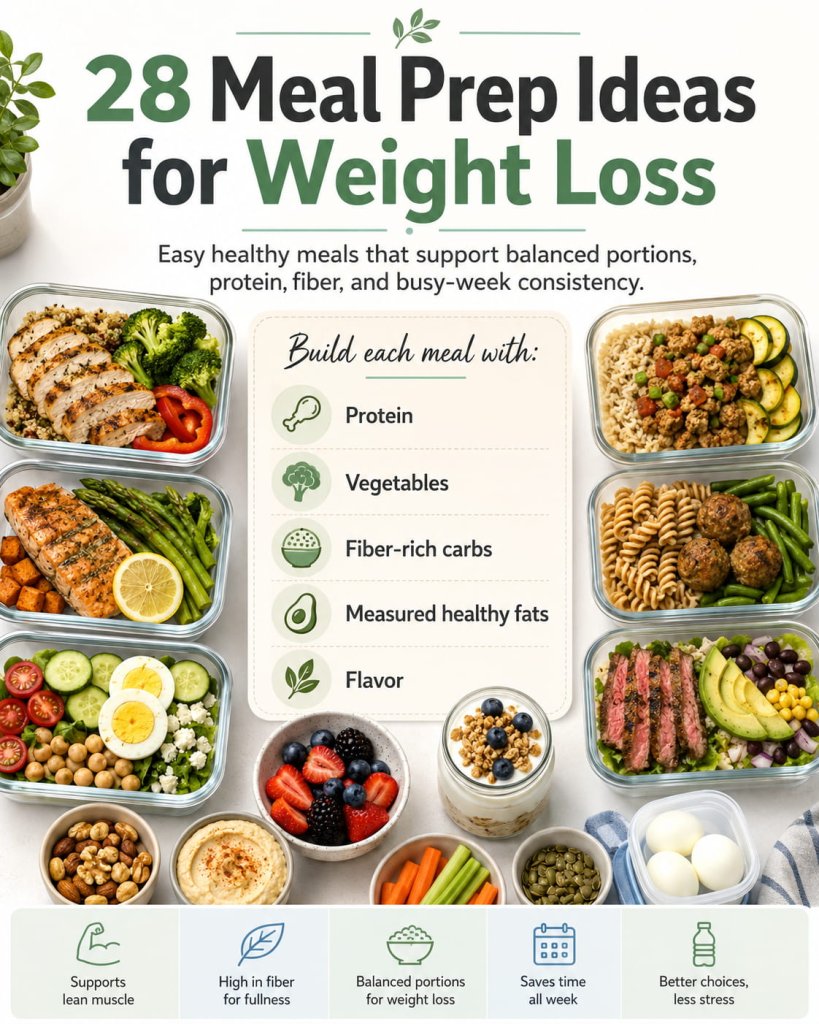
The goal is simple: make healthy eating easier before you are hungry, busy, tired, or tempted to order takeout. According to the CDC’s healthy weight guidance, gradual weight loss of about 1 to 2 pounds per week is more sustainable than rapid weight loss, and healthy weight management also depends on activity, sleep, stress, health conditions, medications, and personal needs.
What Makes Meal Prep for Weight Loss Effective?
Meal prep helps with weight loss because it gives you structure. Instead of deciding what to eat at the last minute, you already have meals ready that fit your goals.
A weight-loss meal prep should usually include:
- Protein to help meals feel filling
- High-fiber carbohydrates for energy and fullness
- Vegetables or fruit for volume, nutrients, and fiber
- Healthy fats in measured portions
- Flavor from herbs, spices, salsa, lemon juice, vinegar, hot sauce, or light dressings
The CDC’s healthy eating tips recommend choosing balanced meals and snacks built around foods such as protein foods, vegetables, fruits, whole grains, dairy, and healthy fats.
Meal Prep Safety Basics Before You Start
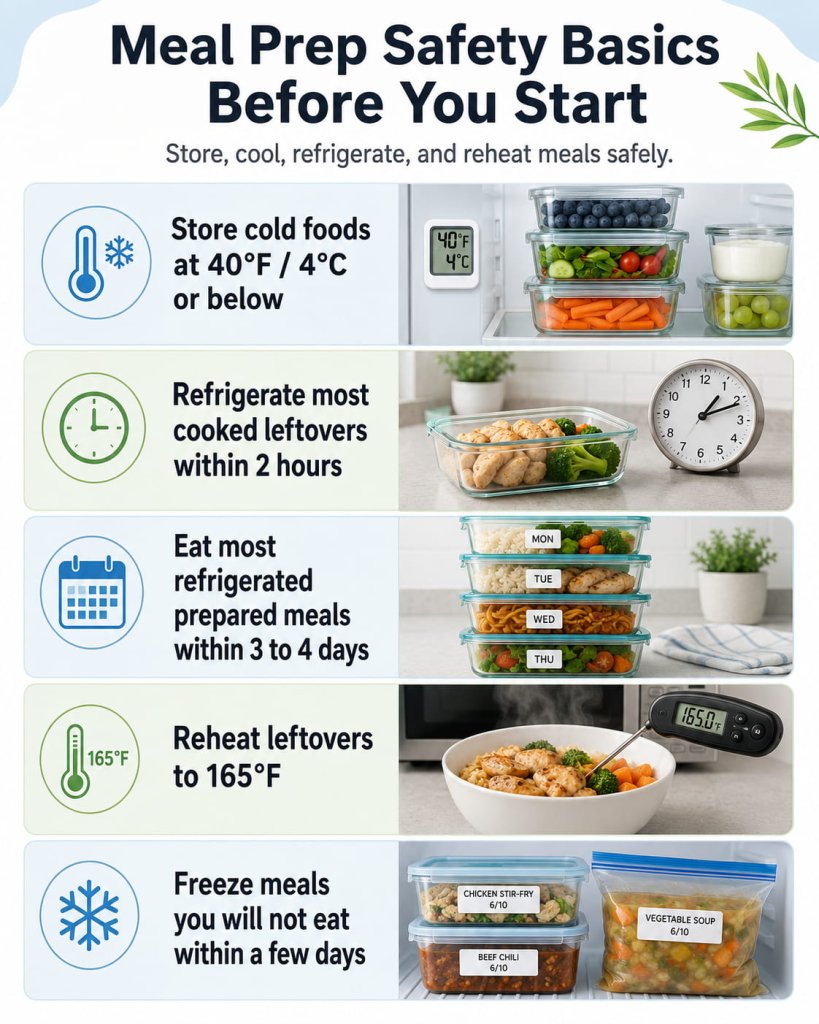
Food safety matters when you cook meals ahead.
Use these simple rules:
- Store cold foods at 40°F / 4°C or below.
- Refrigerate most cooked leftovers within 2 hours.
- Keep cooked meals in shallow containers so they cool faster.
- Eat most refrigerated prepared meals within 3 to 4 days.
- Reheat leftovers to 165°F before eating.
- Freeze meals you will not eat within a few days.
FoodSafety.gov’s cold food storage chart lists many prepared foods, including chicken, tuna, egg, ham, and macaroni salads, as safe in the refrigerator for 3 to 4 days at 40°F or below. USDA FSIS also warns that bacteria grow quickly in the 40°F to 140°F “danger zone,” so leftovers should be refrigerated quickly.
Freezer-Friendly Meal Prep Tips
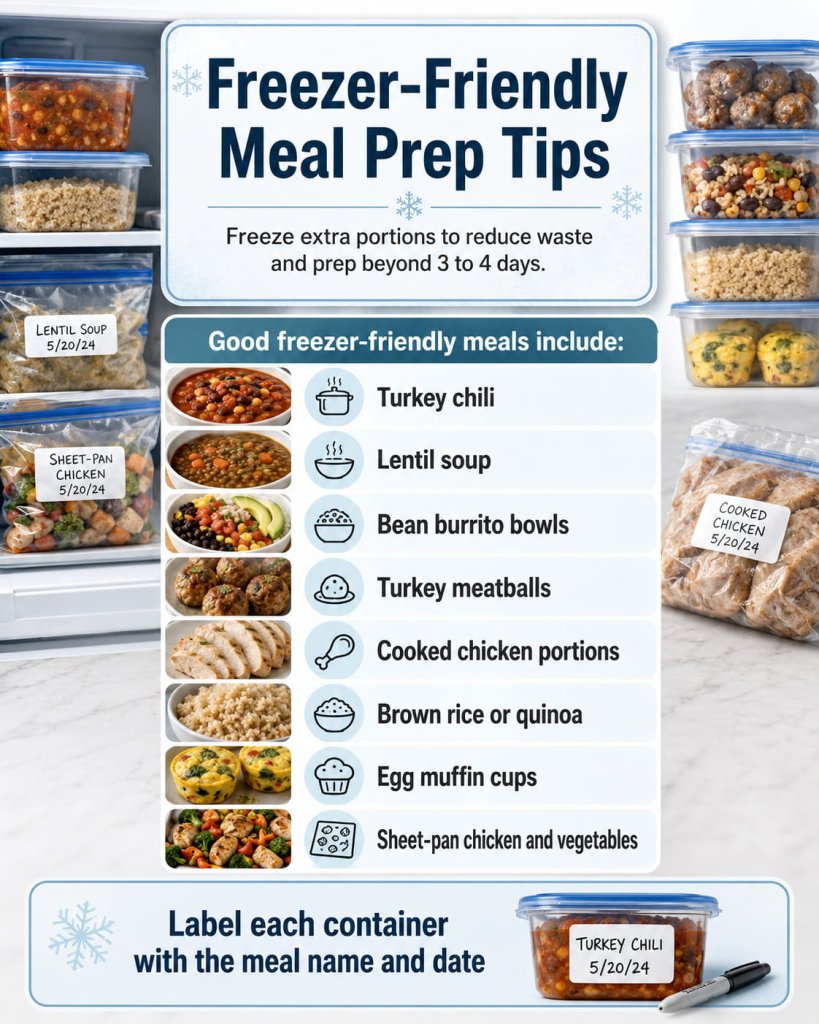
Freezing is useful when you want to prep more than 3 to 4 days of food. It also helps reduce food waste.
Good freezer-friendly meals include:
- Turkey chili
- Lentil soup
- Bean burrito bowls
- Turkey meatballs
- Cooked chicken portions
- Brown rice or quinoa
- Egg muffin cups
- Sheet-pan chicken and vegetables
Let cooked foods cool in shallow containers before freezing. Label each container with the meal name and date. For best texture, keep fresh ingredients like lettuce, cucumber, avocado, fresh herbs, and yogurt-based sauces separate until serving.
When reheating frozen meals, thaw them safely in the refrigerator when possible and reheat leftovers until steaming hot. Avoid leaving frozen meals on the counter for long periods.
How to Build a Weight-Loss Meal Prep Plate
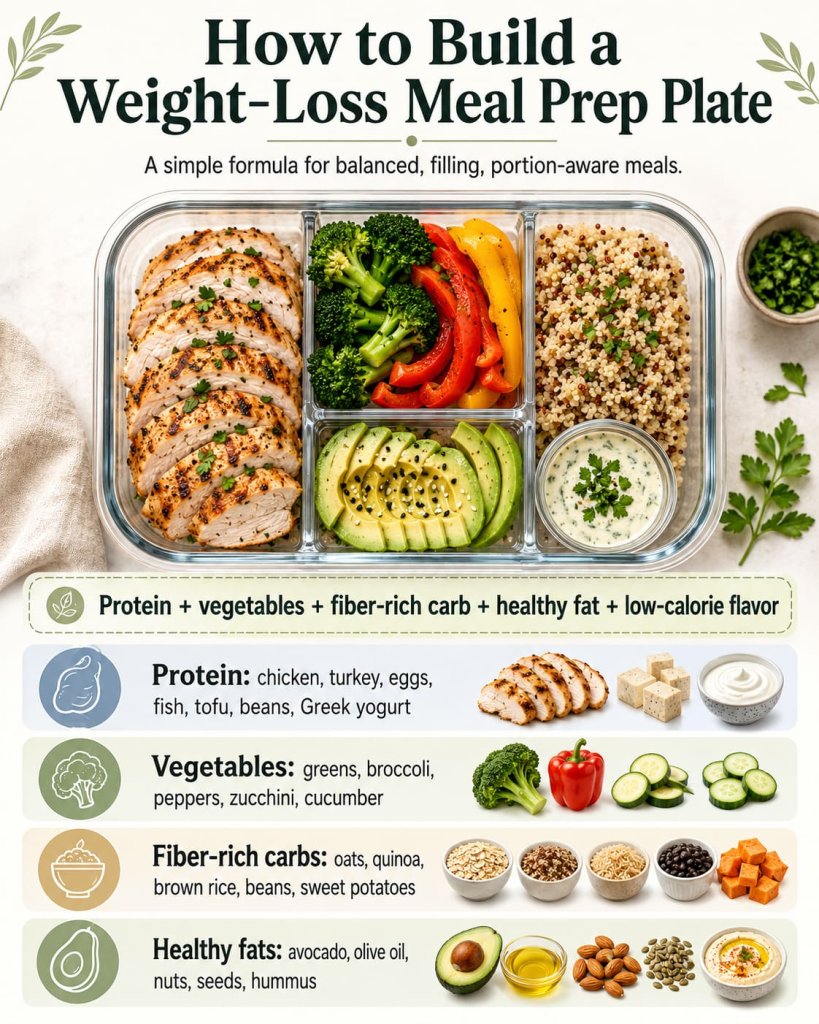
A simple meal-prep formula is:
Protein + vegetables + fiber-rich carb + healthy fat + low-calorie flavor
For example:
| Meal Part | Good Options |
|---|---|
| Protein | Chicken breast, turkey, eggs, tuna, salmon, shrimp, tofu, Greek yogurt, cottage cheese, beans, lentils |
| Vegetables | Broccoli, spinach, peppers, zucchini, cucumber, cauliflower rice, cabbage, green beans, salad greens |
| Fiber-rich carbs | Oats, quinoa, brown rice, beans, lentils, sweet potatoes, berries, whole-grain wraps |
| Healthy fats | Avocado, olive oil, nuts, seeds, hummus, tahini |
| Flavor | Salsa, lemon juice, vinegar, herbs, spices, hot sauce, low-sugar marinades |
The FDA Nutrition Facts Label guide can help you compare packaged ingredients. On a 2,000-calorie reference diet, the FDA lists Daily Values of 28 grams fiber, 2,300 mg sodium, 50 grams added sugars, and 20 grams saturated fat.
Easy Portion Guide for Weight-Loss Meal Prep
You do not need perfect portions, but having a simple guide can prevent meals from becoming too small or too calorie-dense.
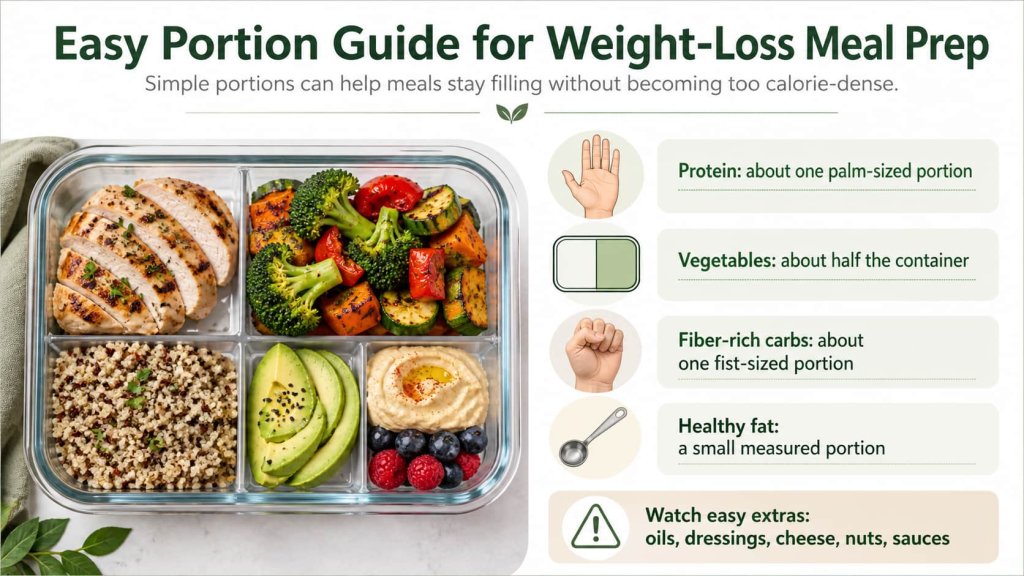
A balanced meal-prep container can include:
- Protein: about one palm-sized portion, such as chicken, fish, tofu, eggs, Greek yogurt, beans, or lentils
- Vegetables: about half the container, especially non-starchy vegetables like greens, broccoli, peppers, cucumber, zucchini, or cauliflower rice
- Fiber-rich carbs: about one fist-sized portion, such as oats, quinoa, brown rice, beans, lentils, fruit, or sweet potatoes
- Healthy fat: a small measured portion, such as 1 tablespoon olive oil, 1 to 2 tablespoons hummus, ¼ avocado, or a small handful of nuts
If weight loss has stalled, check the easiest calories to overdo first: oils, dressings, cheese, nuts, nut butter, sauces, large rice portions, and oversized snack packs.
How to Start Meal Prepping for Weight Loss Without Getting Overwhelmed
If you are new to meal prep, do not try to cook every meal for the entire week at once. Start with a simple 3-day plan.
Choose:
- 1 breakfast you can repeat
- 2 lunch or dinner recipes
- 1 high-protein snack
- 2 vegetables you can use in different meals
- 1 fiber-rich carb, such as quinoa, brown rice, oats, beans, or sweet potatoes
The USDA MyPlate meal planning guide recommends checking what foods you already have, planning meals before shopping, and prepping ingredients ahead to make healthy choices easier during the week.
A simple beginner setup could be grilled chicken, roasted vegetables, brown rice, Greek yogurt, berries, boiled eggs, and chopped salad ingredients. From there, you can build bowls, wraps, salads, snack boxes, and quick dinners without cooking from scratch every day.
28 Meal Prep Ideas for Weight Loss
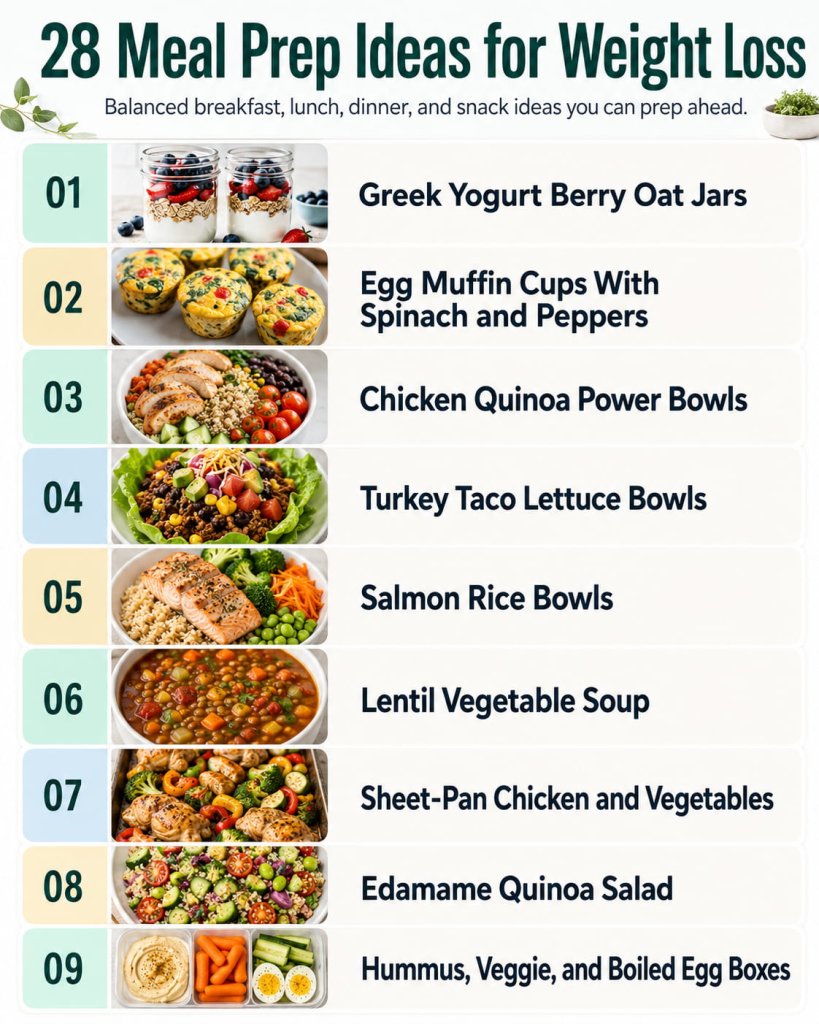
These ideas are flexible. Adjust portions based on your calorie needs, activity level, hunger, health goals, and preferences.
1. Greek Yogurt Berry Oat Jars
Layer plain Greek yogurt, berries, oats, and chia seeds in small jars. This is a high-protein breakfast that feels like a parfait but is more balanced than many sugary store-bought yogurts.
Meal prep tip: Use plain yogurt and add fruit for sweetness.
2. Egg Muffin Cups With Spinach and Peppers
Whisk eggs with chopped spinach, bell peppers, onions, and a little cheese if desired. Bake in a muffin tin and store in the refrigerator.
Why it works: They are portion-controlled, high in protein, and easy to pair with fruit or whole-grain toast.
3. Overnight Oats With Chia and Berries
Combine oats, milk or fortified soy milk, chia seeds, cinnamon, and berries. Refrigerate overnight.
Weight-loss tip: Keep add-ins like nut butter, honey, and chocolate chips measured because calories can add up quickly.
4. Cottage Cheese Protein Bowls
Use cottage cheese as the base, then add berries, cinnamon, cucumber, tomatoes, or avocado depending on whether you want sweet or savory.
Why it works: Cottage cheese is quick, high in protein, and requires no cooking.
5. Turkey Sausage Breakfast Bowls
Prep lean turkey sausage or ground turkey with roasted potatoes, peppers, onions, and eggs or egg whites.
Meal prep tip: Use a smaller amount of potato and add extra vegetables for more volume.
6. Chicken Quinoa Power Bowls
Build bowls with grilled chicken, quinoa, cucumber, tomatoes, greens, and a light lemon-yogurt sauce.
Why it works: You get protein, fiber, and fresh texture in one balanced meal.
7. Turkey Taco Lettuce Bowls
Cook lean ground turkey with taco seasoning. Serve with lettuce, salsa, black beans, corn, tomatoes, and a small portion of avocado.
Weight-loss tip: Use salsa or Greek yogurt instead of heavy sour cream.
8. Salmon Rice Bowls
Prep baked salmon with brown rice, cucumber, shredded carrots, edamame, and a light soy-ginger sauce.
Why it works: Salmon provides protein and healthy fats, while rice and vegetables make the bowl satisfying.
9. Tuna Chickpea Salad Boxes
Mix tuna with chickpeas, celery, cucumber, herbs, lemon juice, and a little olive oil or Greek yogurt. Serve with greens or whole-grain crackers.
Meal prep tip: Keep crackers separate so they stay crisp.
10. Shrimp Cauliflower Rice Bowls
Cook shrimp with garlic, lime, and spices. Serve over cauliflower rice with peppers, zucchini, and a small scoop of brown rice if you need more carbs.
Why it works: This is a high-protein, high-volume meal that can stay lower in calories.
11. Turkey Meatball Veggie Bowls
Make baked turkey meatballs and pair them with roasted vegetables, marinara sauce, and a small serving of whole-grain pasta or zucchini noodles.
Weight-loss tip: Choose marinara with lower added sugar when possible.
12. Chicken Fajita Bowls
Bake or sauté chicken strips with peppers and onions. Serve with brown rice, lettuce, salsa, and black beans.
Why it works: It tastes like takeout but gives you better control over portions and ingredients.
13. Lentil Vegetable Soup
Cook lentils with carrots, celery, onions, tomatoes, spinach, broth, and spices.
Meal prep tip: Soup freezes well, so make extra portions for busy weeks.
14. Turkey Chili
Make chili with lean turkey, beans, tomatoes, onions, peppers, and chili spices.
Why it works: Beans add fiber, turkey adds protein, and the meal reheats well.
15. Bean and Veggie Burrito Bowls
Use black beans or pinto beans, brown rice, lettuce, salsa, peppers, onions, and a measured amount of cheese or avocado.
Vegetarian option: Add tofu, tempeh, or extra beans for more protein.
16. Tofu Stir-Fry Boxes
Stir-fry tofu with broccoli, carrots, snap peas, peppers, and a light sauce. Serve with brown rice or cauliflower rice.
Weight-loss tip: Press tofu before cooking so it gets crisp with less oil.
17. Sheet-Pan Chicken and Vegetables
Roast chicken breast or thighs with broccoli, zucchini, peppers, onions, and sweet potato.
Why it works: Sheet-pan meals are simple, filling, and easy to portion into containers.
18. Sweet Potato and Black Bean Bowls
Prep roasted sweet potatoes, black beans, lettuce, salsa, corn, and a little avocado.
Why it works: This is a fiber-rich meal that works well for vegetarian meal prep.
19. Greek Chicken Salad Jars
Layer dressing on the bottom, then chicken, chickpeas, cucumber, tomatoes, peppers, olives, and greens on top.
Meal prep tip: Put greens at the top of the jar so they do not get soggy.
20. Chicken Hummus Veggie Boxes
Add grilled chicken, hummus, cucumber, carrots, cherry tomatoes, and a small whole-grain pita.
Why it works: It is easy to eat cold, so it works well for work lunches.
21. High-Protein Pasta Salad
Use whole-grain or chickpea pasta with chicken, tuna, or tofu, plus cucumbers, tomatoes, spinach, and a light vinaigrette.
Weight-loss tip: Make the vegetables the largest part of the bowl.
22. Egg Salad Lettuce Cups
Make egg salad with boiled eggs, Greek yogurt, mustard, celery, and herbs. Serve in lettuce leaves or with whole-grain crackers.
Why it works: It gives you protein and crunch without needing a heavy sandwich.
23. Turkey Wrap Boxes
Prep turkey slices, whole-grain wraps, lettuce, tomato, cucumber, mustard, and fruit on the side.
Meal prep tip: Store wrap ingredients separately and assemble before eating.
24. Baked Cod With Roasted Vegetables
Bake cod with lemon, garlic, and herbs. Pair it with roasted green beans, carrots, and a small serving of quinoa or potatoes.
Why it works: Cod is lean, quick to cook, and easy to season.
25. Edamame Quinoa Salad
Mix quinoa, edamame, cucumber, cabbage, carrots, green onions, and a light sesame-lime dressing.
Why it works: It is plant-based, colorful, and rich in protein and fiber.
26. Cottage Cheese Snack Boxes
Pack cottage cheese with berries, cucumber slices, cherry tomatoes, or whole-grain crackers.
Weight-loss tip: Choose plain cottage cheese and add your own fruit or vegetables.
27. Apple Peanut Butter Snack Packs
Slice apples and pair them with 1 tablespoon of peanut butter.
Why it works: The apple provides fiber and volume, while peanut butter adds fat and satisfaction.
28. Hummus, Veggie, and Boiled Egg Boxes
Pack hummus, carrots, cucumber, bell peppers, and boiled eggs.
Meal prep tip: This works as a snack box or a light lunch when paired with fruit or a whole-grain pita.
Mix-and-Match Meal Prep Formula
You do not have to follow exact recipes every week. A mix-and-match system can make meal prep easier and less boring.
Choose one item from each group:
| Protein | Vegetable | Carb or Fiber Base | Flavor Add-On |
|---|---|---|---|
| Chicken | Broccoli | Brown rice | Salsa |
| Turkey | Peppers and onions | Quinoa | Greek yogurt sauce |
| Salmon | Cucumber and greens | Sweet potato | Lemon herb dressing |
| Tofu | Cabbage and carrots | Cauliflower rice | Soy-ginger sauce |
| Lentils | Spinach | Whole-grain wrap | Hummus |
| Eggs | Tomatoes and lettuce | Beans | Mustard or hot sauce |
This method lets you prep a few basic ingredients and turn them into different meals. For example, chicken, brown rice, lettuce, salsa, and beans can become a burrito bowl one day and a wrap the next.
Easy Meal Prep Plan for One Week
You do not need to cook 28 different meals. Pick a few and repeat them.
Here is a simple example:
| Day | Breakfast | Lunch | Dinner | Snack |
|---|---|---|---|---|
| Monday | Greek yogurt berry oat jar | Chicken quinoa bowl | Turkey chili | Apple with peanut butter |
| Tuesday | Egg muffin cups | Tuna chickpea salad box | Salmon rice bowl | Cottage cheese box |
| Wednesday | Overnight oats | Turkey taco lettuce bowl | Sheet-pan chicken | Hummus veggie egg box |
| Thursday | Cottage cheese bowl | Greek chicken salad jar | Lentil vegetable soup | Fruit and yogurt |
| Friday | Turkey sausage breakfast bowl | Chicken hummus veggie box | Tofu stir-fry box | Boiled eggs and vegetables |
Best Foods for Weight-Loss Meal Prep
The best foods are not “diet foods.” They are foods that help you feel full, fit your routine, and support balanced nutrition.
Good options include:
- Chicken breast or thighs
- Turkey
- Eggs
- Greek yogurt
- Cottage cheese
- Tuna
- Salmon
- Shrimp
- Cod
- Tofu
- Edamame
- Beans
- Lentils
- Oats
- Quinoa
- Brown rice
- Sweet potatoes
- Berries
- Apples
- Leafy greens
- Broccoli
- Cauliflower rice
- Peppers
- Cucumber
- Hummus
- Avocado
- Nuts and seeds
The current Dietary Guidelines for Americans emphasize nutrient-dense foods and limiting added sugars, saturated fat, sodium, and highly processed choices.
Common Meal Prep Mistakes That Can Slow Weight Loss
Using Too Much Oil
Olive oil, avocado oil, and nuts can fit into a healthy diet, but they are calorie-dense. Measure oil instead of pouring freely.
Skipping Protein
A bowl of vegetables and rice may look healthy, but it may not keep you full for long. Add chicken, fish, eggs, tofu, Greek yogurt, beans, lentils, or cottage cheese.
Forgetting Fiber
Fiber helps meals feel more satisfying. Use vegetables, fruit, oats, beans, lentils, and whole grains often.
Making Portions Too Large
Meal prep can still lead to weight gain if portions are bigger than your needs. Use containers, measuring cups, or a food scale if you struggle with portions.
Relying on Sugary Sauces
Sauces, marinades, and dressings can add extra sugar, sodium, and calories. Use salsa, mustard, vinegar, lemon juice, herbs, spices, or lighter homemade sauces.
Prepping Too Many Days at Once
Most cooked meals are best within 3 to 4 days in the refrigerator. Freeze extra portions instead of keeping a full week of cooked meals in the fridge.
How Many Calories Should a Weight-Loss Meal Prep Have?
There is no single calorie target that works for everyone. Your needs depend on your age, sex, height, weight, activity level, health conditions, and goals.
A practical approach is to build balanced meals first, then adjust portions if your weight, hunger, energy, or workouts are not moving in the right direction.
The NIDDK’s safe weight-loss program guidance recommends realistic goals, such as losing 5% to 10% of starting body weight within 6 months.
Who Should Be Careful With Weight-Loss Meal Prep?
Meal prep is safe for most people, but some readers should avoid aggressive calorie cuts.
Be more careful if you:
- Are pregnant or breastfeeding
- Have diabetes or use blood sugar medication
- Have a history of disordered eating
- Have kidney disease, heart disease, or another medical condition
- Are underweight
- Are an athlete with high energy needs
- Are a teen or preparing meals for a child
In these cases, it is better to work with a registered dietitian or healthcare professional instead of following a generic weight-loss plan.
Meal prep should support your health, not push you into under-eating. If you feel constantly weak, dizzy, unusually tired, overly hungry, or preoccupied with food, your plan may be too restrictive. Increase meal size, add more balanced snacks, or seek personalized guidance from a qualified healthcare professional.
FAQ: Meal Prep for Weight Loss
Is meal prep good for weight loss?
Yes, meal prep can help with weight loss because it makes healthy meals easier to choose. It can support portion control, reduce impulse eating, and help you include more protein, vegetables, and fiber.
What is the best meal prep for losing belly fat?
No meal can target belly fat directly. The best approach is a consistent calorie-aware eating pattern, strength training, physical activity, enough sleep, and stress management. Meal prep can support that by making balanced meals easier to repeat.
How many days can meal prep last?
Most cooked meal-prep foods last about 3 to 4 days in the refrigerator when stored safely at 40°F or below. Freeze extra portions if you want meals for later in the week.
Should I count calories when meal prepping?
You do not have to count calories, but it can help some people understand portions. Another option is to use a plate method: protein, vegetables, fiber-rich carbs, and a measured healthy fat.
What should I avoid when meal prepping for weight loss?
Avoid building every meal around refined carbs, creamy sauces, sugary drinks, oversized portions, and low-protein meals. Also avoid keeping cooked meals in the refrigerator longer than food safety guidance recommends.
Can I meal prep without eating the same food every day?
Yes. Prep flexible ingredients instead of full meals. For example, cook chicken, quinoa, roasted vegetables, boiled eggs, and chopped salad ingredients. Then mix them into bowls, wraps, salads, and snack boxes during the week.
Conclusion
Meal prep for weight loss is not about eating bland food or following a strict diet. It is about making balanced meals easier to choose when life gets busy.
Start with two breakfasts, two lunches, two dinners, and two snacks from this list. Keep your meals high in protein, rich in fiber, colorful with fruits and vegetables, and realistic for your schedule. Small, repeatable choices are what make meal prep work long term.