
Fermented foods may support gut health and digestion by adding live dietary microbes, fermentation byproducts, and helpful nutrients to your diet. The best fermented foods include yogurt, kefir, kimchi, sauerkraut, miso, tempeh, natto, kombucha, fermented cottage cheese, cultured buttermilk, fermented pickles, aged cheeses, fermented vegetables, fermented salsa, and sourdough bread.
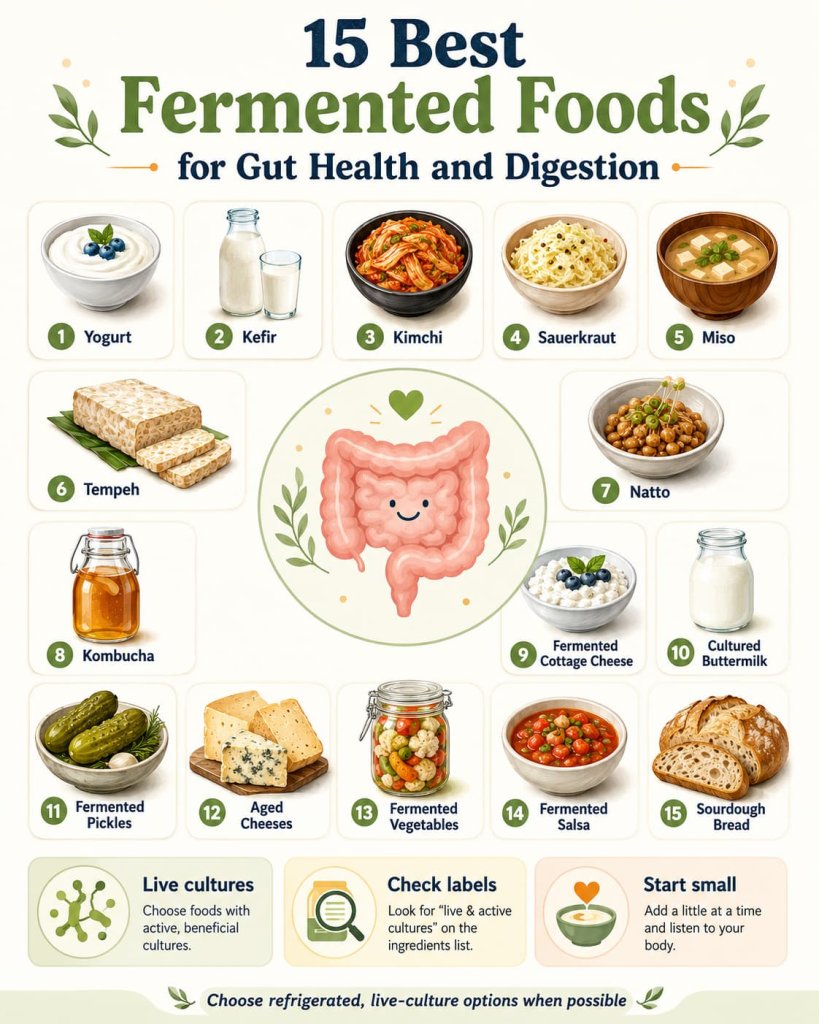
The key is choosing the right products. Not every fermented food contains live microbes by the time you eat it. Some are pasteurized, baked, shelf-stable, or vinegar-pickled instead of naturally fermented. According to the International Scientific Association for Probiotics and Prebiotics, all fermented foods are made with microbes, but not all fermented foods still contain live microorganisms at consumption.
In this guide, you’ll learn the best fermented foods for gut health and digestion, how to choose live-culture options, how much to eat, and who should be careful with certain fermented foods.
What Are Fermented Foods?
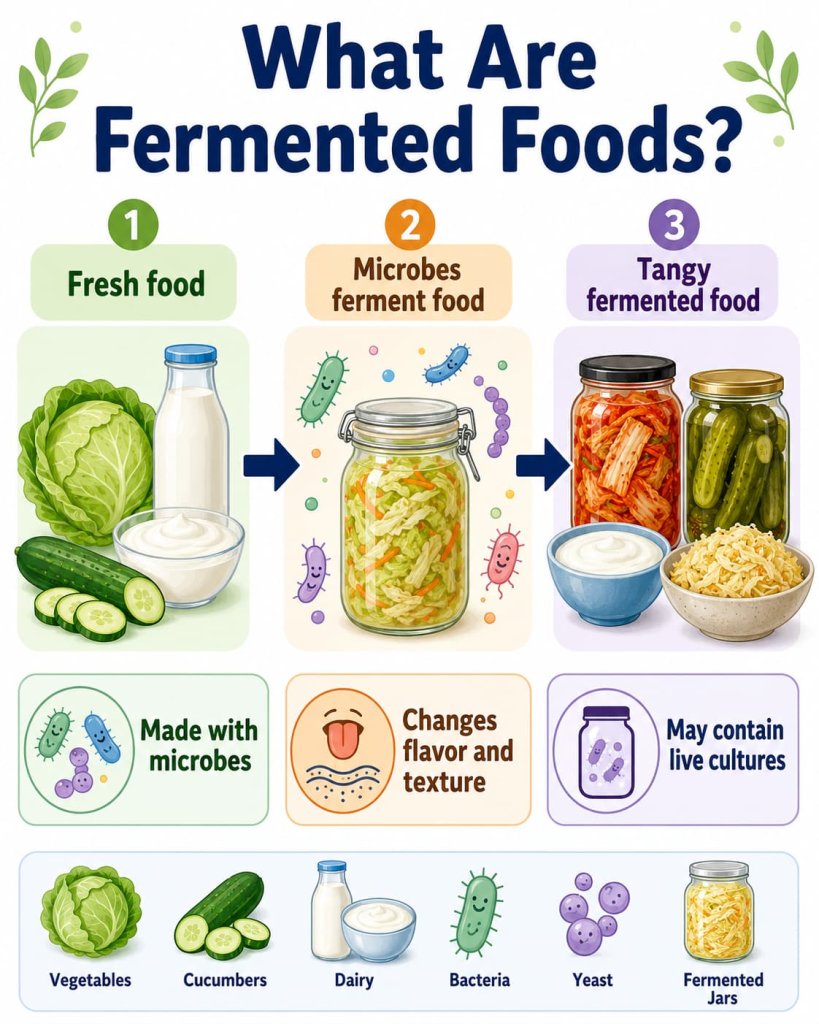
Fermented foods are foods or drinks made when bacteria, yeasts, or molds transform food components. This process can change the food’s flavor, texture, shelf life, and nutrient profile. Common examples include yogurt, kefir, kimchi, sauerkraut, miso, tempeh, and kombucha.
Fermented foods are often linked with gut health because some contain live microbes. However, “fermented” and “probiotic” are not always the same thing. The NIH National Center for Complementary and Integrative Health defines probiotics as live microorganisms intended to provide health benefits, and it notes that different probiotic types may have different effects.
That means a food can be fermented without being probiotic. For example, sourdough bread is fermented, but baking usually kills the live microbes. Shelf-stable pickles may be vinegar-pickled instead of naturally fermented.
Are Fermented Foods Good for Gut Health and Digestion?
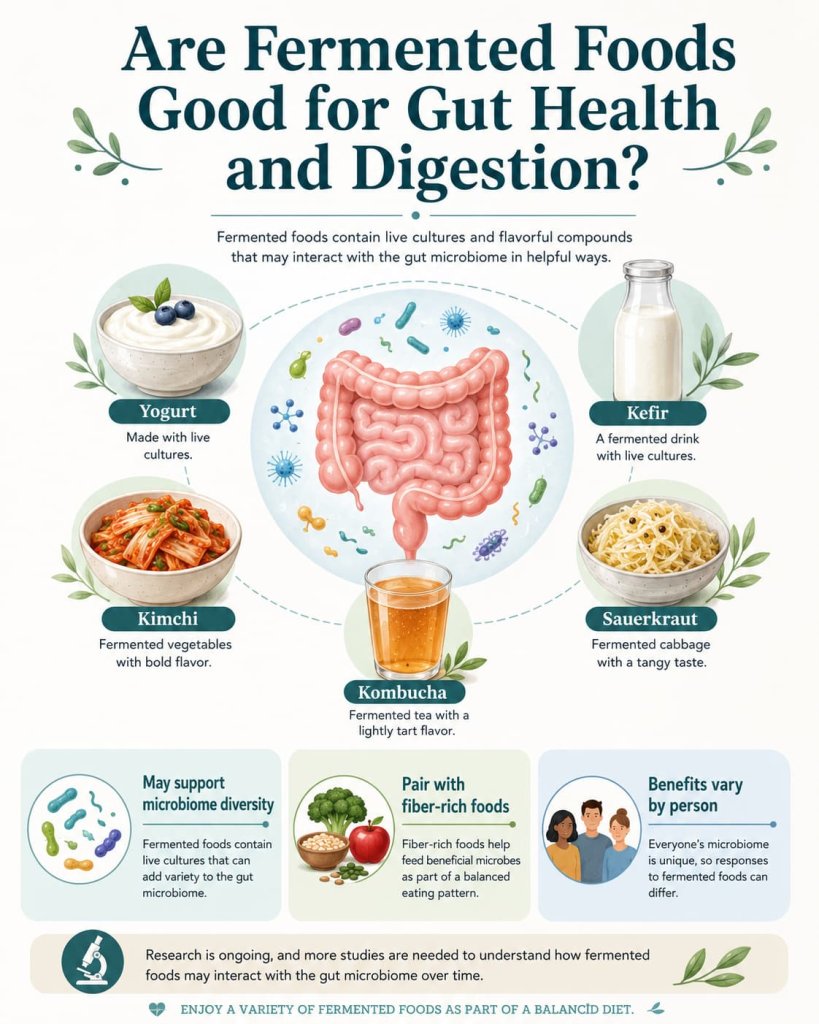
Fermented foods may support gut health when they are part of an overall balanced diet. In a Stanford Medicine clinical trial, 36 healthy adults followed either a high-fermented-food diet or a high-fiber diet for 10 weeks. The fermented-food group ate foods such as yogurt, kefir, fermented cottage cheese, kimchi, fermented vegetables, vegetable brine drinks, and kombucha. Researchers reported increased gut microbial diversity and lower markers of inflammation in the fermented-food group.
This is promising, but it does not mean fermented foods work the same way for everyone. A 2025 review in Advances in Nutrition noted that fermented foods may contribute to microbiome diversity and immune modulation, but more clinical validation, standardized serving sizes, and clearer definitions are still needed.
The safest takeaway is simple: fermented foods may be helpful, especially when they replace ultra-processed foods and are paired with fiber-rich foods like fruits, vegetables, beans, oats, nuts, and seeds.
How to Choose the Best Fermented Foods
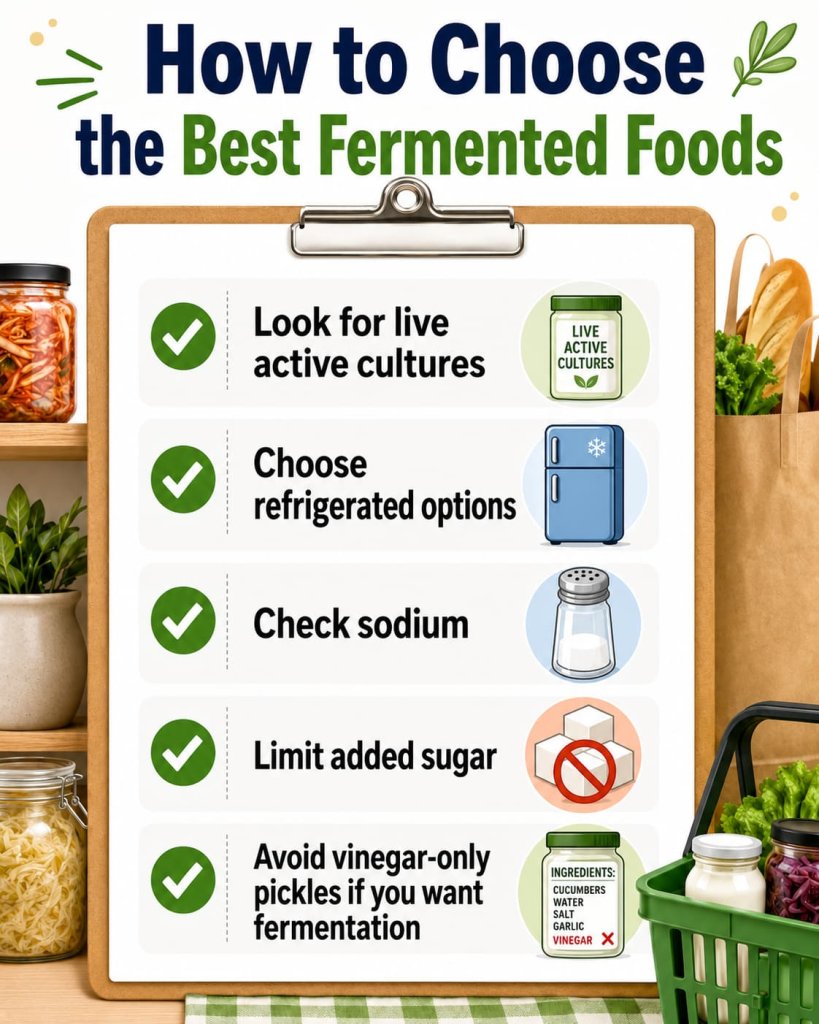
When buying fermented foods, look beyond the front label. Stanford Medicine recommends checking for terms such as “fermented,” “cultured,” or “live active cultures.” Refrigerated products are more likely to preserve live microbes, while vinegar-based shelf-stable products may be acidified rather than truly fermented.
Use this quick checklist:
| What to check | Best choice |
|---|---|
| Storage | Refrigerated when live microbes are desired |
| Label terms | “Live active cultures,” “cultured,” “fermented,” “raw,” or “unpasteurized” |
| Ingredients | Salt-brined vegetables instead of vinegar-only pickles |
| Sugar | Plain or unsweetened options when possible |
| Sodium | Lower-sodium options, especially for kimchi, sauerkraut, miso, and pickles |
| Safety | Pasteurized dairy products, especially for high-risk groups |
The FDA requires yogurt treated after culturing to inactivate microbes to state “does not contain live and active cultures” on the label. Yogurt that uses “contains live and active cultures” must meet minimum culture requirements under the yogurt standard.
15 Best Fermented Foods for Gut Health and Digestion
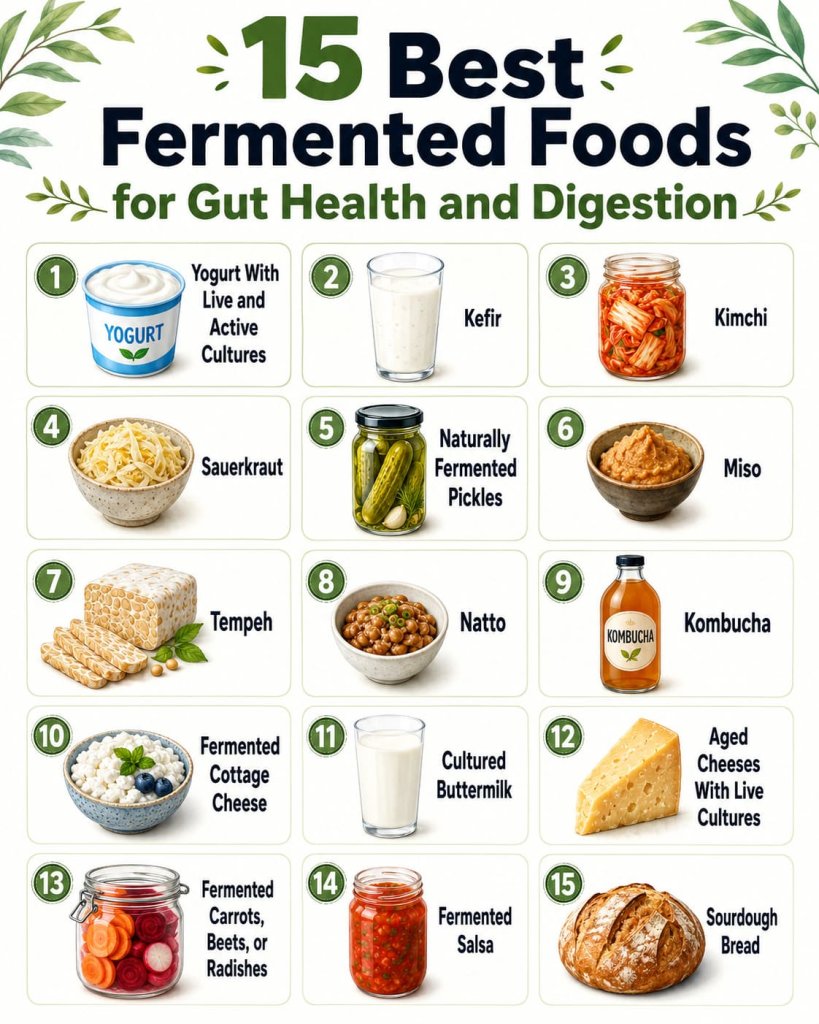
1. Yogurt With Live and Active Cultures
Yogurt is one of the easiest fermented foods to add to your routine. It is made when milk is fermented with bacteria, commonly Lactobacillus bulgaricus and Streptococcus thermophilus. Harvard’s Nutrition Source notes that yogurt provides protein, calcium, phosphorus, riboflavin, and vitamin B12 in animal-based yogurt.
Yogurt may also be easier to digest for some people with lactose intolerance because fermentation breaks down some lactose into lactic acid. Choose plain yogurt with live and active cultures, and limit options with high added sugar.
Best ways to eat it:
- Add berries, oats, and chia seeds.
- Use plain yogurt as a base for dips.
- Mix it into smoothies.
- Choose Greek yogurt if you want more protein.
2. Kefir
Kefir is a tangy fermented milk drink. It is usually thinner than yogurt and often contains a wider mix of bacteria and yeasts. It was one of the fermented dairy foods included in Stanford’s fermented-food diet study.
Kefir can be a good option for people who want a drinkable fermented food. Choose unsweetened kefir made with pasteurized milk. If you are sensitive to dairy, start with a small serving and see how your body responds.
Best ways to eat it:
- Drink it plain.
- Blend it into a smoothie.
- Pour it over oats.
- Use it in cold sauces or dressings.
3. Kimchi
Kimchi is a Korean fermented vegetable dish commonly made with napa cabbage, radish, garlic, ginger, chili, and salt. It is flavorful, spicy, and often rich in fermentation-associated microbes when refrigerated and not heat-treated.
Kimchi is also a helpful way to eat more vegetables. Cleveland Clinic lists kimchi among probiotic foods and notes that fermented foods such as yogurt, sauerkraut, miso, and kimchi can provide beneficial microbes.
The main caution is sodium. Many kimchi products are salty, so check the Nutrition Facts label and keep portions moderate.
Best ways to eat it:
- Add a small spoonful to rice bowls.
- Serve it with eggs.
- Use it in wraps or grain bowls.
- Add it after cooking to help preserve live microbes.
4. Sauerkraut
Sauerkraut is fermented cabbage. It is simple, tangy, and easy to use as a condiment. For gut-health purposes, choose refrigerated sauerkraut labeled raw, unpasteurized, or naturally fermented.
Pasteurized sauerkraut can still provide flavor and some fermentation byproducts, but it may not contain live microbes. Cleveland Clinic recommends looking for unpasteurized sauerkraut because pasteurization kills live bacteria.
Best ways to eat it:
- Add it to sandwiches.
- Serve it with roasted potatoes.
- Mix it into salads.
- Use it as a topping for grain bowls.
5. Naturally Fermented Pickles
Not all pickles are fermented. Many shelf-stable pickles are preserved in vinegar, which gives a sour flavor but does not make them probiotic. For naturally fermented pickles, look for refrigerated products made with salt brine and lactic acid fermentation.
Stanford Medicine notes that vinegar-containing products are often acidified for stability rather than truly fermented.
Best ways to eat them:
- Slice into sandwiches.
- Chop into salads.
- Serve with hummus or bean dips.
- Add to burgers or veggie burgers.
6. Miso
Miso is a fermented soybean paste used in Japanese cooking. It has a deep savory flavor and works well in soups, marinades, sauces, and dressings.
Miso can be high in sodium, so a little goes a long way. Stanford’s serving guide lists 1 tablespoon of miso as a fermented-food serving example.
To preserve more live microbes, avoid boiling miso for long periods. Stir it into warm soup after removing the pot from direct heat.
Best ways to eat it:
- Stir into warm broth.
- Add to salad dressing.
- Mix into marinades.
- Blend with tahini or yogurt for a savory sauce.
7. Tempeh
Tempeh is a fermented soybean cake. It has a firm texture and a nutty flavor, making it useful as a plant-based protein.
Unlike yogurt or sauerkraut, tempeh is usually cooked before eating. Cooking reduces live microbes, but tempeh is still a fermented food that can add protein, fiber, and variety to your diet.
Best ways to eat it:
- Pan-sear slices.
- Add cubes to stir-fries.
- Crumble into tacos.
- Use in grain bowls.
8. Natto
Natto is a traditional Japanese fermented soybean food. It has a strong smell, sticky texture, and bold flavor. It may not be a beginner-friendly food for everyone, but it is one of the most distinctive fermented soy foods.
Natto is often served with rice, scallions, mustard, or soy sauce. Because it has a strong taste, start with a small portion.
Best ways to eat it:
- Serve with warm rice.
- Add scallions or sesame seeds.
- Pair with vegetables.
- Use small amounts until you adjust to the texture.
9. Kombucha
Kombucha is a fermented tea made with tea, sugar, bacteria, and yeast. It is fizzy, tangy, and widely available.
Kombucha needs careful wording in a health article because the evidence is limited. Mayo Clinic states that there are few valid medical studies on kombucha’s role in human health and that reported harms include stomach upset, infections, and allergic reactions in some people. Mayo Clinic also advises people who are pregnant, breastfeeding, or immunocompromised to avoid kombucha.
Choose commercial kombucha from trusted brands, check the added sugar, and avoid unsafe home-brewed products.
Best ways to drink it:
- Start with a small serving.
- Choose lower-sugar options.
- Drink it with meals if carbonation bothers you.
- Avoid it if your healthcare professional has advised you to avoid live-culture or acidic fermented drinks.
10. Fermented Cottage Cheese
Some cottage cheese products contain live and active cultures. Fermented cottage cheese was included in the Stanford fermented-food diet study, making it a practical option for people who want a mild, high-protein fermented food.
Check the label carefully. Not all cottage cheese contains live cultures.
Best ways to eat it:
- Pair with fruit.
- Add to toast.
- Use in savory bowls.
- Mix with herbs and black pepper.
11. Cultured Buttermilk
Cultured buttermilk is a fermented dairy drink with a tangy flavor. It can be used in smoothies, dressings, pancakes, and baked goods.
If you want live cultures, check the label and choose refrigerated cultured buttermilk. Baking with buttermilk adds flavor and texture, but heat reduces live microbes.
Best ways to use it:
- Blend into smoothies.
- Make cold salad dressing.
- Use in dips.
- Add to overnight oats.
12. Aged Cheeses With Live Cultures
Some cheeses, including cheddar, gouda, mozzarella, and other aged cheeses, may contain live microbes depending on how they are made and processed. Cleveland Clinic lists cheeses such as cheddar, mozzarella, and gouda among foods that may contain probiotics.
Cheese can also be high in sodium and saturated fat, so use it as a flavorful addition rather than the main part of the meal.
Best ways to eat it:
- Add small amounts to salads.
- Pair with fruit and nuts.
- Use as a topping for vegetables.
- Choose pasteurized-milk cheese if food safety is a concern.
13. Fermented Carrots, Beets, or Radishes
Fermented vegetables are a great way to add variety beyond cabbage. Carrots, beets, radishes, cauliflower, green beans, and peppers can all be fermented.
Look for refrigerated products in brine. Avoid assuming that every pickled vegetable is fermented, especially if vinegar is the main ingredient.
Best ways to eat them:
- Add to salads.
- Serve as a side with lunch.
- Chop into grain bowls.
- Use as a crunchy topping.
14. Fermented Salsa
Fermented salsa is a flavorful condiment made from fermented tomatoes, peppers, onions, herbs, and spices. It can be an easy way to add fermented foods to everyday meals.
Stanford’s serving guide lists 2 tablespoons of fermented salsa as a serving example.
Best ways to eat it:
- Spoon onto tacos.
- Add to eggs.
- Serve with beans.
- Use as a topping for bowls.
15. Sourdough Bread
Sourdough bread is made through fermentation, but it is usually not a probiotic food because baking kills the live microbes. Stanford Medicine explains that sourdough fermentation produces metabolites, but baking kills the microbes, leaving postbiotic compounds rather than live organisms.
Sourdough can still be part of a balanced diet, especially when made with whole grains. Just avoid calling it a live-culture food after baking.
Best ways to eat it:
- Choose whole-grain sourdough when possible.
- Pair with avocado, eggs, or nut butter.
- Use it with soups or salads.
- Watch portions if you are managing blood sugar.
How Much Fermented Food Should You Eat Per Day?
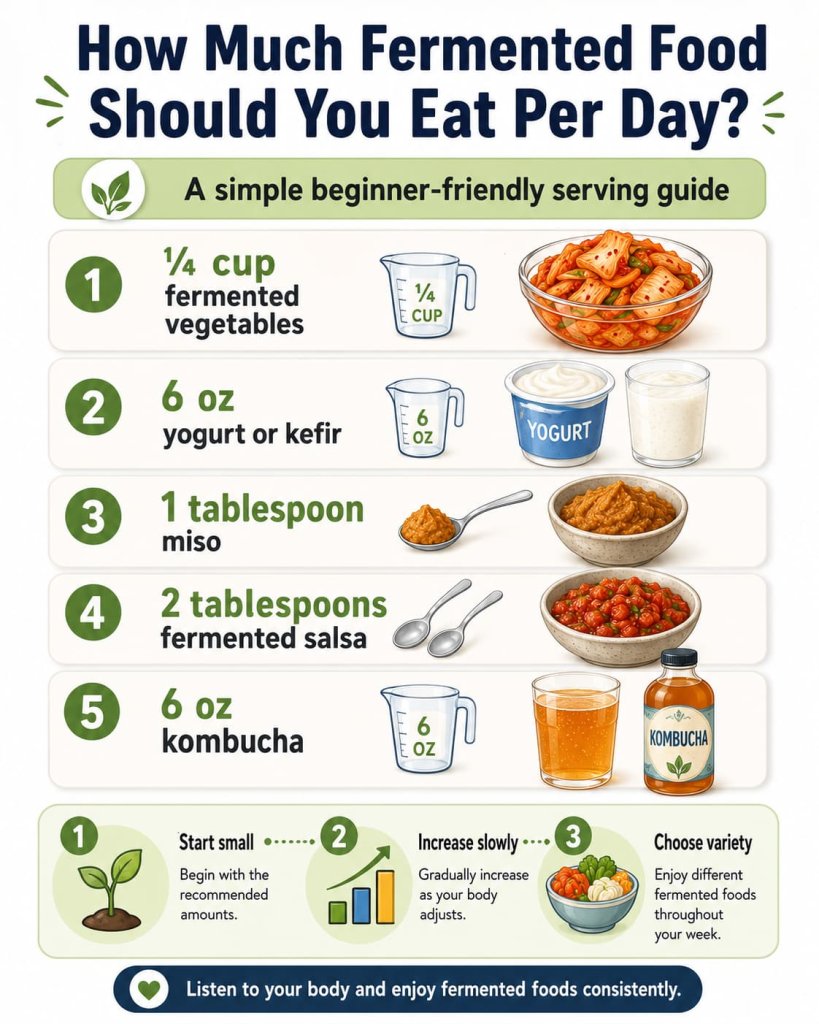
There are no official U.S. guidelines for fermented-food servings. Stanford Medicine notes that scientists are still studying the best way to measure fermented foods, but it gives practical serving examples: ¼ cup fermented vegetables, 6 ounces yogurt, cottage cheese, or kefir, 6 ounces kombucha or water kefir, 2 tablespoons fermented salsa, and 1 tablespoon miso.
A simple approach is to start with one small serving per day. Increase slowly if you tolerate it well.
Beginner plan:
| Week | Goal |
|---|---|
| Week 1 | 1–2 tablespoons sauerkraut, kimchi, or fermented vegetables daily |
| Week 2 | Add ½ cup yogurt or kefir a few times per week |
| Week 3 | Try a second fermented food, such as miso, tempeh, or fermented salsa |
| Week 4 | Aim for variety, not huge portions |
If fermented foods cause gas, bloating, loose stools, reflux, or discomfort, reduce the portion or stop and ask a healthcare professional for guidance.
Fermented Foods vs. Probiotics: What’s the Difference?
Fermented foods are made through microbial activity. Probiotics are specific live microorganisms that have been studied and shown to provide a health benefit when consumed in adequate amounts.
ISAPP explains that few microorganisms in fermented foods meet the criteria for probiotics because they are often not specifically named, measured, and tested for health benefits.
Here is the easy difference:
| Term | Meaning |
|---|---|
| Fermented food | Made using bacteria, yeast, or molds |
| Live-culture food | Contains living microbes when eaten |
| Probiotic food | Contains specific live microbes with documented health benefits |
| Postbiotic | Contains non-living microbial cells or fermentation byproducts |
| Pickled food | Preserved in acid or vinegar; may or may not be fermented |
This distinction matters because a shelf-stable pickle, baked sourdough loaf, or pasteurized sauerkraut may be fermented or sour-tasting without offering live cultures.
Who Should Be Careful With Fermented Foods?
Most people can enjoy fermented foods in normal food amounts. However, some people should be more cautious.
CDC says people with weakened immune systems are at higher risk from foodborne germs and should choose safer food options, including pasteurized milk and dairy products instead of raw milk or dairy made from raw milk.
Use extra caution if you are:
- Pregnant or breastfeeding
- Immunocompromised
- Over age 65
- Feeding young children
- Managing kidney disease, liver disease, or severe digestive symptoms
- Sensitive to high-sodium foods
- Advised to avoid alcohol, live cultures, or unpasteurized foods
CDC also warns that raw milk and products made from raw milk can expose people to germs such as Campylobacter, E. coli, Listeria, Brucella, and Salmonella.
Sodium, Sugar, and Food Safety Tips
Fermented foods can be healthy choices, but labels matter.
Kimchi, sauerkraut, miso, pickles, and some cheeses can be high in sodium. The FDA says Americans eat about 3,400 mg of sodium per day on average, while the Dietary Guidelines for Americans recommend adults limit sodium to less than 2,300 mg per day.
Kombucha, flavored yogurt, and sweetened kefir can contain added sugar. Choose plain or lower-sugar options when possible.
Food safety tips:
- Choose pasteurized dairy products.
- Keep refrigerated fermented foods cold.
- Do not eat fermented foods that smell rotten, show mold growth, or have damaged packaging.
- Be cautious with homemade fermented foods unless you understand safe fermentation methods.
- Add live-culture foods after cooking instead of boiling them.
- Start small to reduce digestive discomfort.
Best Ways to Add Fermented Foods to Meals
You do not need a complicated plan. Small, consistent servings work better than eating a large amount at once.
Try these simple combinations:
- Breakfast: Plain yogurt with berries, oats, and chia seeds
- Lunch: Grain bowl with kimchi or fermented carrots
- Snack: Kefir smoothie
- Dinner: Soup with miso stirred in after cooking
- Side dish: Sauerkraut with roasted vegetables
- Plant-based meal: Tempeh with brown rice and greens
- Condiment: Fermented salsa on beans or tacos
For better gut support, pair fermented foods with fiber-rich foods. Fiber helps nourish gut microbes, while fermented foods may add live dietary microbes and fermentation-derived compounds.
Common Mistakes to Avoid
Mistake 1: Thinking All Fermented Foods Are Probiotic
Not all fermented foods contain live microbes. Some are pasteurized, baked, or shelf-stable.
Mistake 2: Buying Vinegar Pickles Instead of Fermented Pickles
Vinegar pickles can be tasty, but they are not the same as salt-brined fermented pickles.
Mistake 3: Eating Too Much Too Fast
A sudden increase may cause gas, bloating, or loose stools. Start small.
Mistake 4: Ignoring Sodium
Fermented vegetables and miso can be salty. Check labels and use smaller portions.
Mistake 5: Assuming Kombucha Is Right for Everyone
Kombucha is not recommended for everyone, especially people who are pregnant, breastfeeding, or immunocompromised. Mayo Clinic advises these groups to avoid kombucha.
FAQ About Fermented Foods
1. What are the best fermented foods for gut health?
The best fermented foods for gut health include yogurt with live cultures, kefir, kimchi, sauerkraut, miso, tempeh, natto, kombucha, fermented cottage cheese, cultured buttermilk, naturally fermented pickles, aged cheeses, fermented vegetables, fermented salsa, and sourdough bread.
2. Are all fermented foods probiotics?
No. All fermented foods are made with microbes, but not all contain live microorganisms when eaten. ISAPP explains that many fermented foods do not meet the strict criteria for probiotics.
3. Is yogurt or kefir better for digestion?
Both can be useful options. Yogurt is thicker and widely available, while kefir is drinkable and often contains a broader mix of microbes. Choose plain, unsweetened versions with live cultures.
4. Is sauerkraut better raw or pasteurized?
If your goal is live microbes, choose refrigerated raw or unpasteurized sauerkraut. Pasteurized sauerkraut may still provide flavor, but pasteurization reduces or removes live bacteria.
5. Are pickles fermented foods?
Some pickles are fermented, but many are vinegar-pickled. Look for refrigerated, salt-brined pickles labeled fermented, raw, or naturally fermented.
6. Can you eat fermented foods every day?
Many people can eat small servings of fermented foods daily. Stanford Medicine suggests starting with one serving per day and increasing slowly as tolerated.
7. Who should avoid fermented foods?
Some people should be careful with certain fermented foods, especially unpasteurized products and kombucha. This includes pregnant people, young children, older adults, people with weakened immune systems, and anyone with a medical condition requiring food-safety precautions.
Conclusion
Fermented foods can be a simple, flavorful way to support a gut-friendly eating pattern. The best choices are live-culture, refrigerated, minimally sweetened, and eaten in realistic portions.
Start with one food you already enjoy, such as yogurt, kefir, kimchi, or sauerkraut. Then build variety over time. For the best results, pair fermented foods with fiber-rich whole foods and choose products carefully.
If you have a medical condition, are pregnant, are immunocompromised, or have ongoing digestive symptoms, speak with a qualified healthcare professional before making major diet changes.
This content is for informational purposes only and not medical advice.
References
- NIH NCCIH: Probiotics — Usefulness and Safety
- Stanford Medicine: Fermented-Food Diet Increases Microbiome Diversity
- Stanford Medicine: How to Recognize Fermented Foods
- Stanford Medicine: What Counts as a Serving of Fermented Foods?
- FDA: Yogurt Standard and Live Active Cultures
- FDA: Sodium in Your Diet
- CDC: Raw Milk Food Safety
- CDC: Safer Food Choices for People With Weakened Immune Systems
- Harvard T.H. Chan School of Public Health: Yogurt