
Probiotic foods are live-culture fermented foods that may help support a healthy gut microbiome when eaten as part of a balanced, fiber-rich diet. The best probiotic foods include yogurt, kefir, kimchi, sauerkraut, miso, tempeh, natto, kombucha, and other fermented foods that still contain live microorganisms.
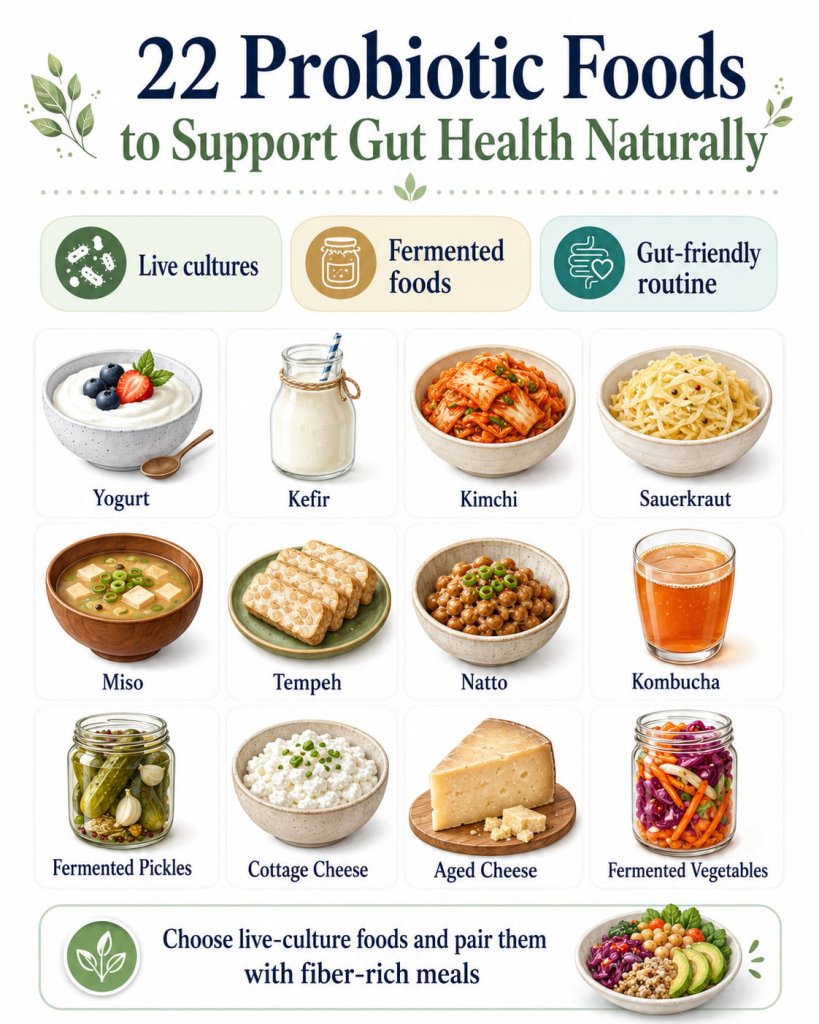
Understanding probiotic foods matters because not every fermented food actually contains live cultures by the time you eat it. Heat, pasteurization, shelf-stable processing, and long storage can reduce or remove live microbes. According to the NIH Office of Dietary Supplements, probiotics are live microorganisms that may provide a health benefit when consumed in adequate amounts.
In this guide, you’ll learn what probiotic foods are, which foods to try, how to choose live-culture products, and what safety cautions to keep in mind.
What Are Probiotic Foods?
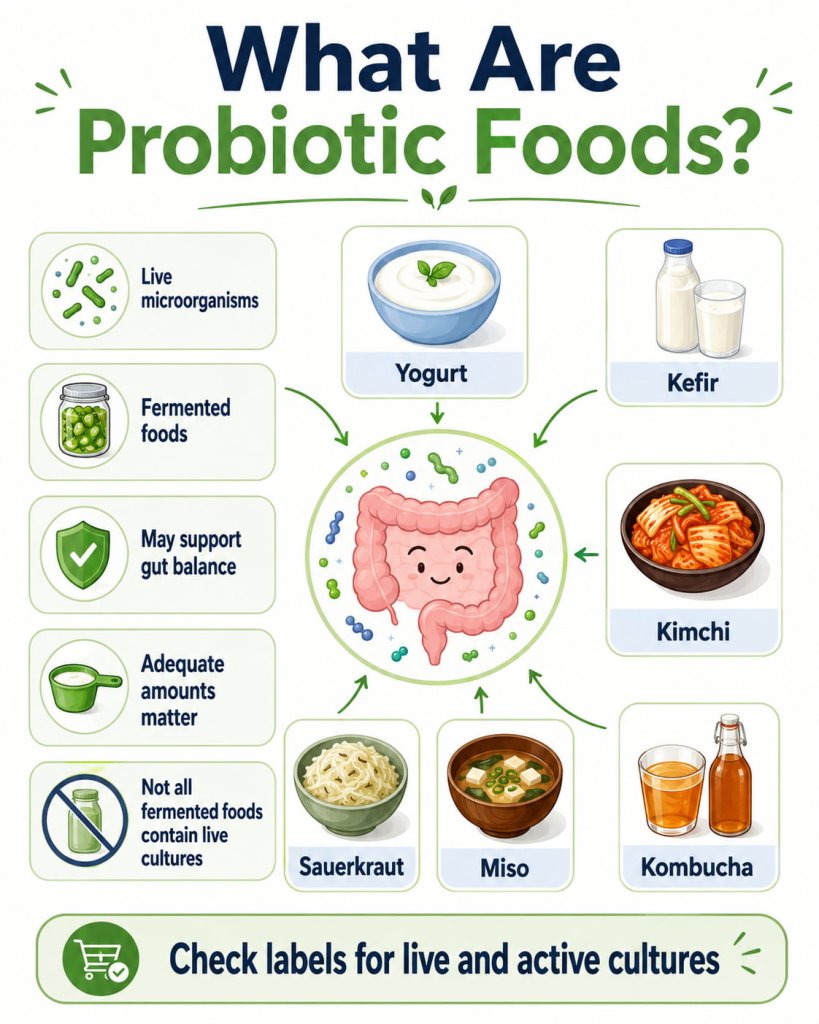
Probiotic foods are foods that contain live microorganisms, such as certain bacteria or yeasts, that may support digestive health and overall gut balance. Many probiotic foods are fermented, meaning helpful microbes are used to transform the food’s flavor, texture, acidity, or shelf life.
Common examples include:
- Yogurt with live and active cultures
- Kefir
- Raw sauerkraut
- Kimchi
- Miso
- Tempeh
- Natto
- Kombucha
However, there is an important distinction: fermented food does not always mean probiotic food.
The International Scientific Association for Probiotics and Prebiotics explains that all fermented foods require microbes during production, but not all fermented foods contain live microorganisms at the time of eating.
Probiotic Foods vs. Fermented Foods
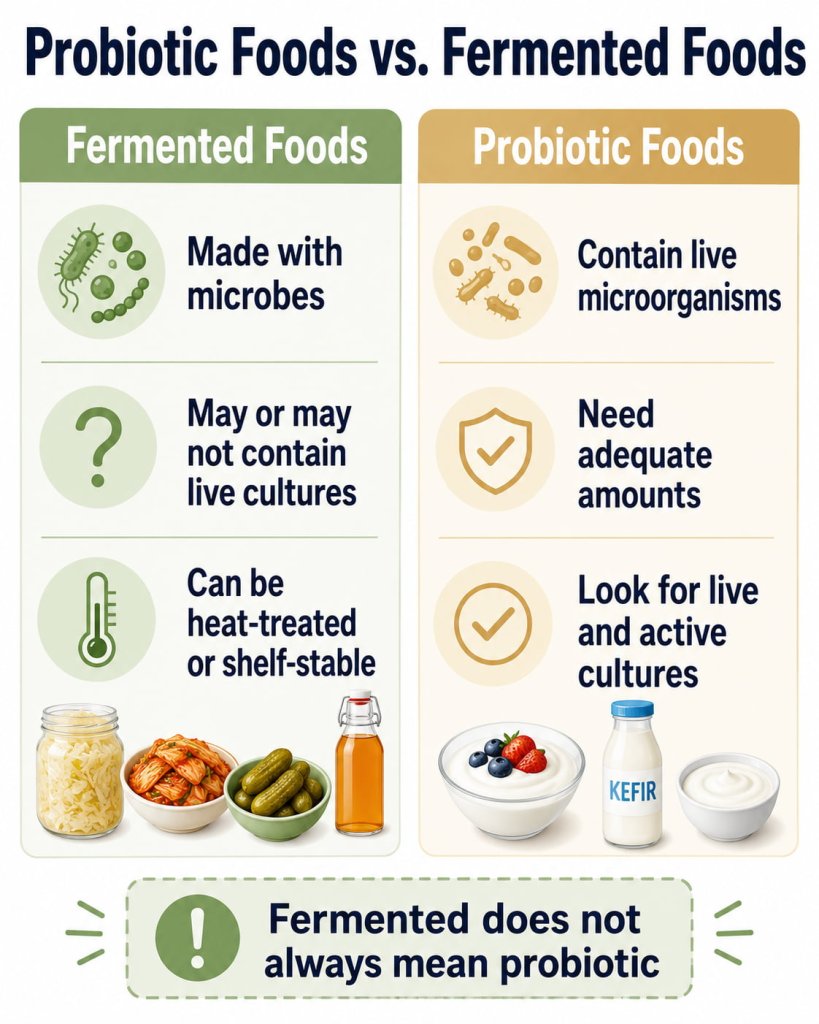
Many people use the terms “probiotic foods” and “fermented foods” interchangeably, but they are not exactly the same.
A fermented food is made with microorganisms. A probiotic food should contain live microorganisms that have a documented benefit when consumed in adequate amounts.
For everyday eating, the practical takeaway is simple: choose fermented foods that still contain live cultures when your goal is to add probiotic-rich foods to your diet.
Look for label terms such as:
- “Live and active cultures”
- “Contains live cultures”
- “Raw”
- “Unpasteurized”
- “Naturally fermented”
- “Refrigerated”
For yogurt, U.S. labeling rules require heat-treated yogurt that no longer contains viable microorganisms to say “does not contain live and active cultures,” according to the federal yogurt standard in the Electronic Code of Federal Regulations.
Best Probiotic Foods to Add to Your Diet
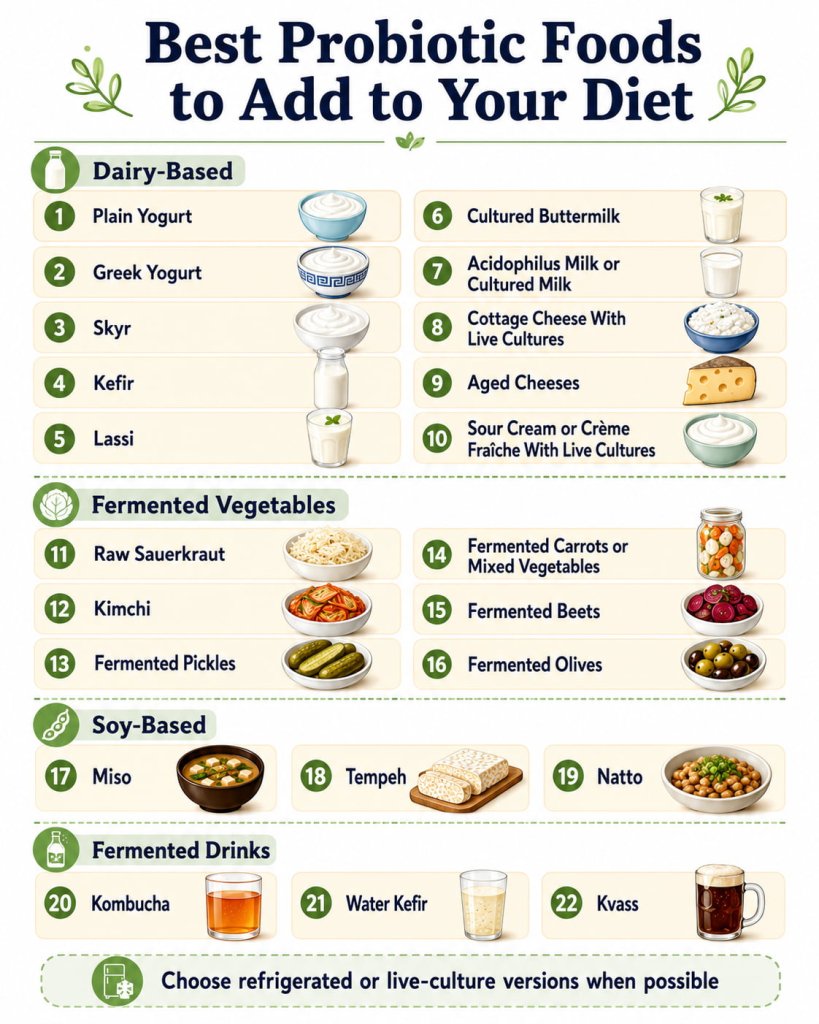
Below are 22 probiotic foods to consider. For each one, the key is choosing versions that still contain live cultures whenever possible.
1. Plain Yogurt
Plain yogurt is one of the most common and accessible probiotic foods. It is made by fermenting milk with bacterial cultures.
Choose yogurt that says “live and active cultures” on the label. Plain yogurt is usually a better choice than heavily sweetened yogurt because many flavored options contain added sugar.
How to eat it
Try plain yogurt with berries, oats, chia seeds, cinnamon, or a small drizzle of honey. You can also use it as a base for smoothies, breakfast bowls, dips, or sauces.
2. Greek Yogurt
Greek yogurt is strained to make it thicker and higher in protein than regular yogurt. It can be a good option if you want a creamy, filling probiotic-rich food.
Not all Greek yogurt is equal, so check the label for live and active cultures.
How to eat it
Use Greek yogurt in parfaits, smoothie bowls, salad dressings, tzatziki, or as a higher-protein replacement for sour cream.
3. Skyr
Skyr is an Icelandic-style cultured dairy product. It is thick, tangy, and often high in protein.
Like yogurt, skyr may contain live cultures, but you still need to check the label. Choose plain skyr when possible to reduce added sugar.
How to eat it
Serve skyr with fruit, nuts, seeds, or whole-grain granola. It also works well in smoothies and creamy dips.
4. Kefir
Kefir is a fermented milk drink made with bacteria and yeasts. It has a tangy flavor and thinner texture than yogurt.
Kefir is often considered one of the best probiotic foods because many products contain multiple live cultures. Choose plain kefir when possible because flavored versions may be high in added sugar.
How to eat it
Drink kefir on its own, blend it into smoothies, pour it over oats, or use it in overnight oats.
5. Lassi
Lassi is a yogurt-based drink commonly enjoyed in South Asian cuisine. It can be sweet or savory.
For probiotic benefits, make it with yogurt that contains live and active cultures. Traditional homemade lassi can be a simple way to enjoy live-culture yogurt in drink form.
How to eat it
Blend plain yogurt with water, fruit, or spices. For a savory version, try cumin, mint, and a pinch of salt.
6. Cultured Buttermilk
Cultured buttermilk is made by adding bacterial cultures to milk. It has a tangy flavor and is often used in cooking and baking.
Because heat can reduce live cultures, buttermilk used in baked goods should not be your main source of live probiotics. If you want live cultures, check the label and use it cold in dressings or drinks.
How to eat it
Use cultured buttermilk in smoothies, cold dressings, or dips. It also adds tangy flavor to pancakes and baked goods, although baking reduces live microbes.
7. Acidophilus Milk or Cultured Milk
Acidophilus milk is milk that has been cultured with beneficial bacteria, often Lactobacillus acidophilus.
It can be an easy option for people who like milk but want a cultured dairy choice. As always, check the label for live cultures.
How to eat it
Drink it chilled or use it in smoothies, oatmeal, or cereal.
8. Cottage Cheese With Live Cultures
Cottage cheese can be a good protein-rich food, but not all cottage cheese contains live cultures.
Look specifically for cottage cheese labeled with “live and active cultures” or listed bacterial cultures in the ingredients.
How to eat it
Try cottage cheese with fruit, tomatoes, cucumber, avocado, cracked pepper, or whole-grain toast.
9. Aged Cheeses
Some aged cheeses may contain beneficial bacteria that survive the aging process. Examples may include cheddar, gouda, Swiss, mozzarella, and some traditional cheeses.
Cheese is not always marketed as a probiotic food, so it should not be your only source of live cultures. It can still be part of a varied fermented-food routine.
How to eat it
Add small portions of aged cheese to salads, omelets, whole-grain crackers, or vegetable plates.
10. Sour Cream or Crème Fraîche With Live Cultures
Some sour cream and crème fraîche products contain live cultures, while others are heat-treated.
Choose products that clearly state live cultures on the label. Because these foods can be high in saturated fat, use them in moderate portions.
How to eat it
Use a spoonful on tacos, baked potatoes, grain bowls, soups, or homemade dips.
11. Raw Sauerkraut
Sauerkraut is fermented cabbage. Raw, refrigerated sauerkraut may contain live microbes, while canned or shelf-stable sauerkraut is often heat-treated.
Choose raw, unpasteurized sauerkraut from the refrigerated section when your goal is live cultures.
How to eat it
Add sauerkraut to sandwiches, grain bowls, salads, eggs, potatoes, or veggie plates.
12. Kimchi
Kimchi is a traditional Korean fermented vegetable dish, often made with napa cabbage, radish, garlic, ginger, chili, and salt.
It can be a flavorful probiotic food when it is raw and refrigerated. It may also be high in sodium, so portion size matters, especially for people watching salt intake. The American Medical Association notes that some fermented foods, including kimchi, pickles, and miso, can be high in sodium.
How to eat it
Serve kimchi with rice bowls, eggs, noodles, tofu, grilled vegetables, or wraps.
13. Fermented Pickles
Fermented pickles are cucumbers preserved in a saltwater brine through lactic acid fermentation. These are different from vinegar pickles.
For live cultures, look for refrigerated pickles labeled “fermented,” “raw,” or “contains live cultures.” Shelf-stable vinegar pickles usually do not provide live probiotics.
How to eat it
Enjoy fermented pickles with sandwiches, salads, burgers, grain bowls, or snack plates.
14. Fermented Carrots or Mixed Vegetables
Fermented carrots, cauliflower, radishes, peppers, and mixed vegetables can add crunch, flavor, and live cultures to meals.
Choose refrigerated versions, or make them safely at home using tested fermentation instructions.
How to eat it
Add fermented vegetables to lunch bowls, wraps, tacos, salads, or charcuterie-style snack plates.
15. Fermented Beets
Fermented beets are earthy, tangy, and colorful. Beet kvass, a fermented beet drink, is another traditional option.
As with other fermented vegetables, choose refrigerated, raw, or unpasteurized versions if you want live cultures.
How to eat it
Use fermented beets in salads, grain bowls, sandwiches, or as a small side dish.
16. Fermented Olives
Some traditionally brined olives may contain live microbes, depending on how they are processed and stored.
Not every olive product is probiotic, especially if it has been heat-treated or heavily processed. Check labels and choose traditionally fermented or brine-cured olives when possible.
How to eat it
Add olives to salads, Mediterranean bowls, hummus plates, pasta salads, or snack boards.
17. Miso
Miso is a fermented soybean paste used in Japanese cooking. It adds deep savory flavor to soups, marinades, sauces, and dressings.
Because high heat may reduce live microbes, avoid boiling miso if your goal is to preserve live cultures. Stir it into warm, not boiling, liquid near the end of cooking.
How to eat it
Use miso in soup, salad dressing, tofu marinades, roasted vegetable glaze, or noodle bowls.
18. Tempeh
Tempeh is a fermented soybean cake with a firm texture and nutty flavor. It is a useful plant-based protein option.
Tempeh is usually cooked before eating, which can reduce live microbes. Even so, it is still a fermented food and can be part of a gut-friendly, plant-forward diet.
How to eat it
Slice and pan-sear tempeh for bowls, sandwiches, stir-fries, tacos, or salads.
19. Natto
Natto is a traditional Japanese fermented soybean food. It has a strong flavor, sticky texture, and distinctive aroma.
Natto is made with Bacillus subtilis and is one of the more unique probiotic foods. It may take time to enjoy if you are new to it.
How to eat it
Serve natto with rice, green onions, mustard, soy sauce, or a soft-cooked egg.
20. Kombucha
Kombucha is fermented tea made with bacteria and yeasts. It is fizzy, tangy, and often sold as a bottled drink.
Choose kombucha with live cultures, but check the sugar content. Some products can contain more sugar than expected. Fermented drinks may also contain small amounts of alcohol, so people avoiding alcohol, pregnant people, and children should choose carefully.
How to drink it
Start with a small serving, such as 4 ounces, to see how your body responds. Choose lower-sugar options when possible.
21. Water Kefir
Water kefir is a non-dairy fermented drink made from water kefir grains, sugar water, and sometimes fruit.
It can contain live bacteria and yeasts, making it a dairy-free alternative to milk kefir. Sugar content varies depending on fermentation time and added flavorings.
How to drink it
Enjoy chilled water kefir in small servings. Look for refrigerated products with live cultures.
22. Kvass
Kvass is a traditional fermented drink. Some versions are made from rye bread, while others are made from beets or other ingredients.
Because recipes and commercial products vary widely, check labels for live cultures, sugar, and alcohol content.
How to drink it
Try a small serving with meals. Choose refrigerated, traditionally fermented versions when available.
How to Choose the Best Probiotic Foods
Choosing probiotic foods is not complicated, but labels matter.
Use this quick checklist:
- Choose products that say “live and active cultures.”
- Pick refrigerated fermented vegetables when possible.
- Choose raw or unpasteurized sauerkraut and kimchi when appropriate.
- Avoid assuming shelf-stable products contain live microbes.
- Choose plain yogurt or kefir to reduce added sugar.
- Add miso after cooking instead of boiling it.
- Check sodium on kimchi, pickles, miso, and sauerkraut.
- Start with small portions if you are new to fermented foods.
Why Probiotic Foods May Support Gut Health
Your gut contains trillions of microorganisms. This community is often called the gut microbiome. Diet, fiber intake, medications, stress, sleep, and overall health can all influence it.
Probiotic foods may support gut health by adding live dietary microbes and fermentation byproducts to your meals. Some fermented foods may also help improve microbial diversity when eaten regularly as part of a balanced diet.
A Stanford Medicine report on a 10-week fermented-food diet study found that higher fermented food intake increased gut microbiome diversity and decreased several inflammatory proteins in healthy adults. This does not mean fermented foods cure disease, but it does support the idea that fermented foods can be part of a gut-friendly eating pattern.
Probiotic Foods and Prebiotics: Why You Need Both
Probiotic foods add live microbes to your diet. Prebiotic foods feed beneficial gut bacteria.
Prebiotics are usually types of fiber found in plant foods. A gut-friendly diet works best when you include both probiotic-rich foods and fiber-rich prebiotic foods.
Good prebiotic foods include:
A simple example would be plain yogurt with oats, berries, and chia seeds. The yogurt provides live cultures, while the oats, fruit, and seeds provide fiber.
How Often Should You Eat Probiotic Foods?
There is no single perfect amount of probiotic foods for everyone. A practical goal is to include a small serving of live-culture fermented food several times per week, then adjust based on your preferences and tolerance.
For many people, that could look like:
- Yogurt at breakfast
- Kefir in a smoothie
- Kimchi with rice or eggs
- Sauerkraut on a sandwich
- Miso dressing on vegetables
- Kombucha as an occasional drink
Start slowly if you do not usually eat fermented foods. Large portions may cause temporary gas, bloating, or digestive discomfort for some people.
Simple Ways to Add Probiotic Foods to Meals
You do not need complicated recipes to eat more probiotic foods. Small additions can make meals more flavorful and gut-friendly.
Breakfast Ideas
- Greek yogurt with berries and oats
- Kefir smoothie with banana and chia seeds
- Cottage cheese with fruit and walnuts
- Skyr with granola and cinnamon
- Lassi made with live-culture yogurt
Lunch Ideas
- Turkey sandwich with raw sauerkraut
- Grain bowl with kimchi and avocado
- Chickpea salad with yogurt dressing
- Rice bowl with fermented pickles
- Mediterranean plate with olives and yogurt dip
Dinner Ideas
- Miso soup added after cooking
- Tempeh bowl with vegetables and rice
- Tacos topped with fermented cabbage
- Stir-fry served with kimchi on the side
- Baked potato with live-culture sour cream
Snack Ideas
- Fermented pickles with hummus
- Cottage cheese with cucumber
- Kefir drink
- Yogurt dip with vegetables
- Small serving of kombucha
Are Probiotic Foods Safe for Everyone?
Probiotic foods are generally safe for many healthy adults, but they are not risk-free for everyone. The Mayo Clinic notes that most adults without health concerns can safely add foods with prebiotics and probiotics, but safety has not been proven for every person or situation.
People with serious illness, weakened immune systems, recent surgery, central venous catheters, or complex medical conditions should speak with a healthcare professional before using probiotic supplements or making major changes. The National Center for Complementary and Integrative Health warns that the risk of harmful effects from probiotics is greater in people with severe illnesses or compromised immune systems.
Food Safety Tips for Probiotic Foods
Food safety matters, especially with fermented foods.
Follow these tips:
- Keep refrigerated fermented foods cold.
- Do not eat products with mold, foul odor, slime, or unusual discoloration.
- Follow expiration dates.
- Use clean utensils instead of eating directly from the jar.
- Avoid raw milk and raw milk products.
- Use tested recipes if fermenting foods at home.
The CDC warns that raw milk and products made from raw milk can expose people to germs such as Campylobacter, E. coli, Listeria, Brucella, and Salmonella.
If you ferment vegetables at home, use trusted food-safety guidance. The University of Minnesota Extension recommends a low-oxygen environment, enough time for acid production, and an ideal fermentation temperature of 68°F to 72°F; temperatures above 78°F can lead to over-fermentation and spoilage.
Common Mistakes to Avoid With Probiotic Foods
Assuming all fermented foods contain probiotics
Shelf-stable sauerkraut, canned pickles, baked sourdough bread, and heat-treated yogurt may not contain live cultures.
Choosing high-sugar products
Flavored yogurt, kefir, and kombucha can contain added sugar. Choose plain or lower-sugar versions when possible.
Eating too much too quickly
If you are new to fermented foods, start with small servings. This helps your digestive system adjust.
Ignoring sodium
Kimchi, miso, pickles, and sauerkraut can be salty. Use small portions and balance them with fresh foods.
Treating probiotic foods like medicine
Probiotic foods can support a healthy eating pattern, but they should not be used as a substitute for medical care.
Quick Probiotic Foods Table
| Probiotic Food | Best Choice | Easy Use |
|---|---|---|
| Yogurt | Plain with live cultures | Breakfast bowls, smoothies |
| Greek yogurt | Plain, unsweetened | Dips, sauces, parfaits |
| Kefir | Plain, refrigerated | Smoothies, oats |
| Sauerkraut | Raw, refrigerated | Sandwiches, bowls |
| Kimchi | Raw, refrigerated | Rice bowls, eggs |
| Fermented pickles | Brine-fermented | Snacks, sandwiches |
| Miso | Unpasteurized if available | Soups, dressings |
| Tempeh | Traditional fermented | Bowls, stir-fries |
| Natto | Traditional natto | Rice bowls |
| Kombucha | Lower sugar | Small drink serving |
FAQ About Probiotic Foods
What foods are highest in probiotics?
Some of the best-known probiotic foods include yogurt with live cultures, kefir, kimchi, raw sauerkraut, fermented pickles, miso, natto, tempeh, and kombucha. The exact amount and type of live microbes vary by product.
Are all fermented foods probiotic?
No. All fermented foods are made with microbes, but not all fermented foods still contain live microorganisms when eaten. Pasteurization, heat treatment, baking, and shelf-stable processing can reduce or remove live cultures.
Is yogurt or kefir better for probiotics?
Both can be good options. Kefir often contains a wider mix of bacteria and yeasts, while yogurt is widely available and easy to use. The best choice is the one you enjoy and can eat regularly. Check the label for live and active cultures.
Do pasteurized fermented foods still have probiotics?
Pasteurization uses heat, which can kill live microbes. Pasteurized fermented foods may still have flavor and nutritional value, but they may not provide live probiotic cultures.
How often should I eat probiotic foods?
There is no exact rule. Many people can start with small servings a few times per week and build from there. If you are new to fermented foods, increase slowly to reduce the chance of gas or bloating.
Can probiotic foods help with bloating?
Some people feel better when they include fermented foods as part of a balanced diet, but responses vary. Bloating can have many causes, so ongoing or severe symptoms should be discussed with a healthcare professional.
Who should be careful with probiotic foods?
People with weakened immune systems, serious illness, recent surgery, or complex medical conditions should ask a healthcare professional before using probiotic supplements or making major diet changes. Pregnant people, children, and anyone avoiding alcohol should also be cautious with fermented drinks such as kombucha and water kefir.
Conclusion
Probiotic foods can be a simple, natural way to support a gut-friendly eating pattern. Start with familiar options like yogurt, kefir, sauerkraut, kimchi, miso, and fermented pickles, then add variety as you find foods you enjoy.
For the best results, choose live-culture products, pair them with fiber-rich prebiotic foods, watch added sugar and sodium, and introduce them gradually.
This content is for informational purposes only and not medical advice.
References
- International Scientific Association for Probiotics and Prebiotics: Fermented Foods
- Electronic Code of Federal Regulations: 21 CFR 131.200 Yogurt
- Mayo Clinic: Probiotics and Prebiotics—What You Should Know
- Stanford Medicine: Fermented-Food Diet Increases Microbiome Diversity
- University of Minnesota Extension: Preserving Food at Home—Fermentation
- NC State Extension: Fermentation Food Safety