
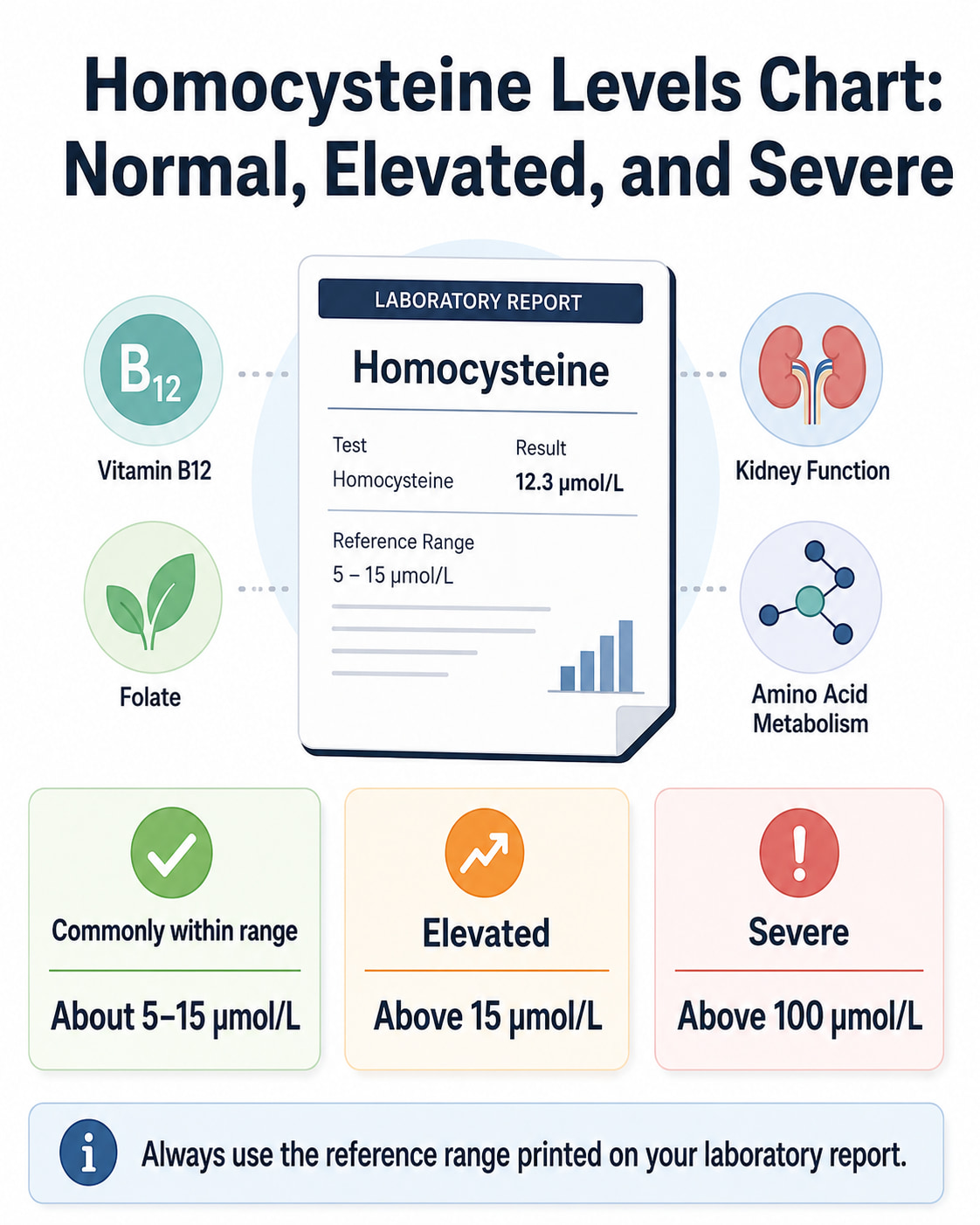
A homocysteine level within your laboratory’s reference range—often about 5 to 15 µmol/L—is generally considered normal, while a result above 15 µmol/L is commonly classified as elevated. Levels above 100 µmol/L are considered severe and require prompt medical evaluation.
This homocysteine levels chart can help you understand your result, but it cannot identify the cause by itself. Reference ranges vary by laboratory, age, sex, testing method, kidney function, medications, and vitamin status. Always compare your number with the range printed on your report.
Homocysteine Levels Chart
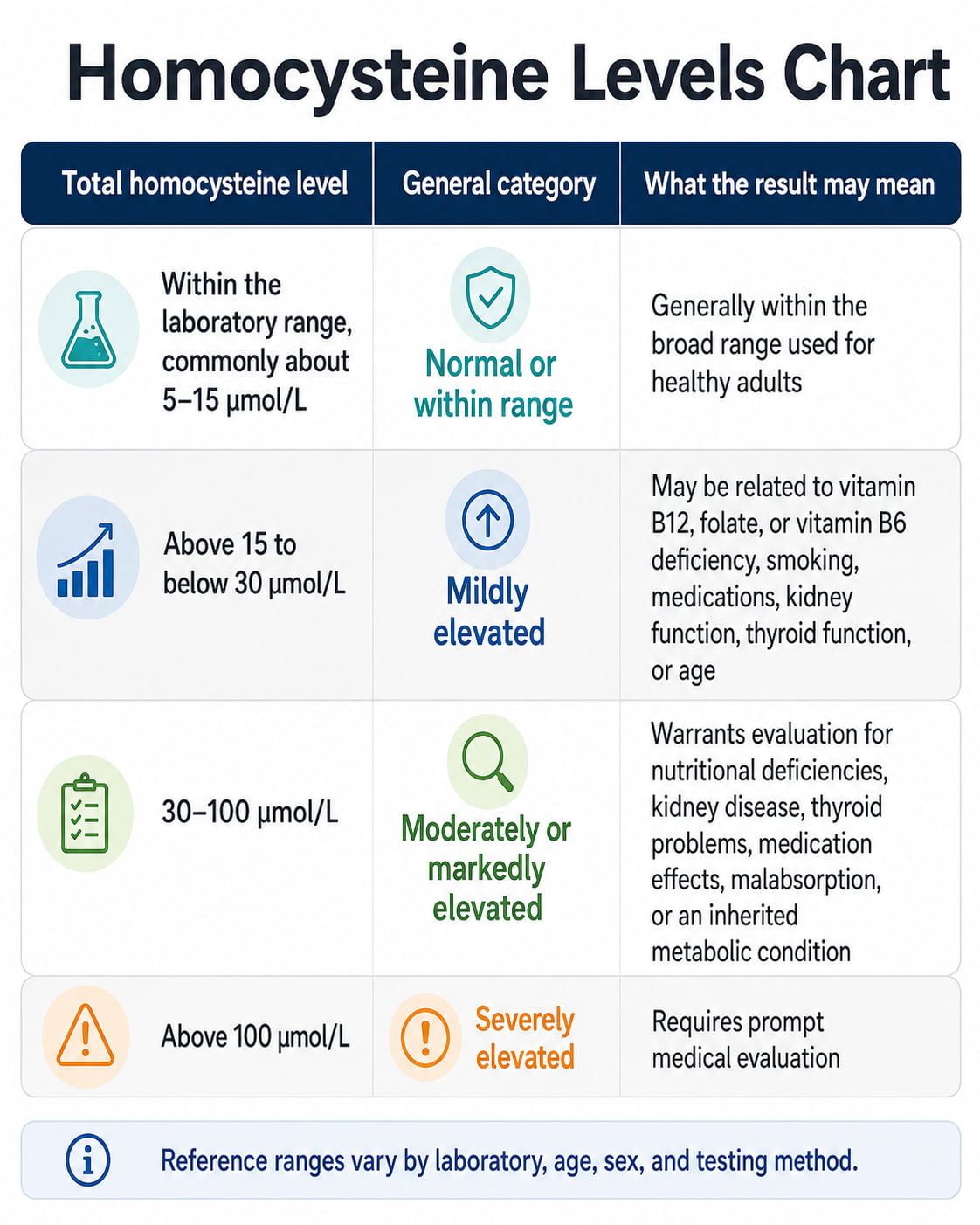
| Total homocysteine level | General category | What the result may mean |
|---|---|---|
| Within the laboratory range, commonly about 5–15 µmol/L | Normal or within range | Generally within the broad range used for healthy adults |
| Above 15 to below 30 µmol/L | Mildly elevated | May be related to vitamin B12, folate, or vitamin B6 deficiency, smoking, medications, kidney function, thyroid function, or age |
| 30–100 µmol/L | Moderately or markedly elevated | Warrants a more detailed evaluation for nutritional deficiencies, kidney disease, thyroid problems, medication effects, malabsorption, or an inherited metabolic condition |
| Above 100 µmol/L | Severely elevated | Requires prompt medical evaluation; severe vitamin deficiency and rare inherited disorders such as homocystinuria may need to be investigated |
These categories are general interpretation ranges, not universal diagnostic cutoffs. For example, ARUP Laboratories uses a reference interval of 0–15 µmol/L, while other laboratories provide age- and sex-specific limits.
What Is Homocysteine?
Homocysteine is an amino acid produced when your body processes methionine, an amino acid found in protein-containing foods.
Your body normally converts homocysteine into other useful substances. This process depends mainly on:
- Vitamin B12
- Folate, also called vitamin B9
- Vitamin B6
- Several enzymes involved in amino acid metabolism
When one of these vitamins is deficient—or when kidney function, certain enzymes, medications, or other health factors interfere with the process—homocysteine can accumulate in the blood.
A homocysteine blood test may help evaluate suspected vitamin B12 or folate deficiency, investigate a possible inherited metabolic disorder, or provide additional information in selected people with cardiovascular risk factors. Routine screening is not recommended for every healthy adult, according to the National Library of Medicine’s MedlinePlus homocysteine test guidance.
What Is a Normal Homocysteine Level?
A commonly quoted normal homocysteine level is approximately 5–15 µmol/L. However, your laboratory may use a narrower, wider, or age-adjusted range.
There is no single universally accepted “optimal” homocysteine number. A result should be interpreted using:
- The reference interval on the laboratory report
- Your age and sex
- Whether you fasted
- Vitamin B12 and folate levels
- Kidney and thyroid function
- Medications and supplements
- Your medical and family history
- The reason the test was ordered
A result slightly above 15 µmol/L may be considered elevated under a general cutoff but could remain within the age-adjusted interval used by another laboratory.
Why Homocysteine Reference Ranges Vary
Laboratories establish reference intervals using their own equipment, testing methods, and patient populations. Some use one adult cutoff, while others account for age and sex.
| Laboratory example | Published reference interval |
|---|---|
| ARUP Laboratories | 0–15 µmol/L for males and females |
| Labcorp, ages 18–60 | 0–14.5 µmol/L |
| Labcorp, ages 61–70 | 0–17.2 µmol/L |
| Labcorp, ages 71–80 | 0–19.2 µmol/L |
| Labcorp, older than 80 | 0–21.3 µmol/L |
| Mayo Clinic Laboratories | Individual age- and sex-specific intervals |
The current Labcorp homocysteine reference table allows progressively higher upper limits after age 60. Mayo Clinic Laboratories also publishes detailed ranges that change with age and sex.
This variation is why the range on your own report matters more than a cutoff found online.
Homocysteine Units
Homocysteine is commonly reported in:
- µmol/L: micromoles per liter
- nmol/mL: nanomoles per milliliter
The values are numerically equivalent:
1 µmol/L = 1 nmol/mL
A result of 15 nmol/mL is therefore the same numerical concentration as 15 µmol/L.
What Causes Elevated Homocysteine Levels?
An elevated homocysteine result does not reveal the cause. Several nutritional, medical, lifestyle, and genetic factors may contribute.
Vitamin B12 Deficiency
Vitamin B12 is required to convert homocysteine back into methionine. Homocysteine may rise when B12 intake or absorption is inadequate.
Possible reasons include:
- Pernicious anemia
- Autoimmune gastritis
- Stomach or intestinal surgery
- Crohn’s disease or celiac disease
- Long-term use of certain medications
- A vegan diet without reliable B12 sources
- Reduced absorption in older adults
A methylmalonic acid test may be ordered when vitamin B12 deficiency remains possible despite a borderline or unclear B12 result.
Folate Deficiency
Folate also participates in homocysteine metabolism. Low folate may result from:
- Poor dietary intake
- Malabsorption
- Alcohol misuse
- Increased requirements during pregnancy
- Certain medications
- Conditions affecting the digestive system
Vitamin B6 Deficiency
Vitamin B6 helps convert homocysteine into cystathionine. Deficiency is less commonly the sole cause but may contribute, especially alongside other nutritional problems.
Reduced Kidney Function
The kidneys help remove and metabolize homocysteine. Chronic kidney disease can therefore cause the level to rise, sometimes substantially.
A healthcare professional may review creatinine and estimated glomerular filtration rate, or eGFR, when evaluating an abnormal result.
Hypothyroidism
An underactive thyroid is another recognized contributor. Thyroid-stimulating hormone, or TSH, may be checked when symptoms or medical history suggest a thyroid problem.
Medications and Other Exposures
Certain medicines may affect B-vitamin metabolism or homocysteine levels. Examples reported by clinical laboratories include:
- Methotrexate
- Phenytoin
- Carbamazepine
- Levodopa
- Nicotinic acid
- Theophylline
- Repeated nitrous oxide exposure
Do not stop a prescribed medicine because of an abnormal test result. Ask the prescriber whether it could be affecting the number.
Lifestyle and Personal Factors
Homocysteine levels may also be influenced by:
- Smoking
- Older age
- Male sex
- Menopause
- Poor nutrition
- Heavy alcohol use
- Low physical activity
These factors do not prove that a disease is present, but they may help explain a mild elevation.
What Does a Severe Homocysteine Level Mean?
A total homocysteine level above 100 µmol/L is considered severely elevated. This is not a diagnosis by itself, but it raises concern for a major disruption in homocysteine metabolism.
Possible causes include:
- Severe vitamin B12 or folate deficiency
- Advanced kidney dysfunction
- Significant medication or nitrous oxide effects
- Rare inherited disorders of methionine metabolism
- Classic homocystinuria caused by cystathionine beta-synthase deficiency
The updated GeneReviews chapter on homocystinuria states that total homocysteine is often above 100 µmol/L in childhood-onset cystathionine beta-synthase deficiency. Some people with adult-onset disease may have levels between 50 and more than 100 µmol/L. High homocysteine combined with high or borderline-high methionine makes this disorder more likely, but genetic or specialized biochemical testing is needed for diagnosis.
A severe result should be reviewed promptly, but it does not automatically mean that a person has an inherited disorder.
Does High Homocysteine Cause Symptoms?
High homocysteine itself often causes no noticeable symptoms. Symptoms are more likely to come from the underlying vitamin deficiency or medical condition.
Possible vitamin B12 or folate deficiency symptoms include:
- Fatigue or weakness
- Dizziness
- Headaches
- Shortness of breath
- Heart palpitations
- Pale skin
- A sore or red tongue
- Mouth sores
- Numbness or tingling
- Balance problems
- Memory or concentration changes
Symptoms such as numbness, tingling, walking difficulty, or cognitive changes should not be ignored, even when a complete blood count does not show anemia.
How Is a Homocysteine Test Performed?
A healthcare professional collects a small blood sample from a vein. The test is usually reported as total plasma or serum homocysteine.
You may be asked to fast for 8–12 hours before the test. Follow the instructions from the ordering clinician or laboratory, because preparation requirements can differ.
Tell the healthcare professional about all medicines and supplements you take, particularly:
- Vitamin B12
- Folic acid or folate
- Vitamin B6
- Multivitamins
- Prescription medicines that affect vitamin metabolism
Do not discontinue medicine or supplements unless instructed.
Sample Handling Can Affect the Result
Blood cells can continue releasing homocysteine after collection. If the plasma or serum is not separated from the cells promptly, the result may be falsely elevated.
Clinical laboratories generally instruct collection sites to centrifuge and separate the sample quickly or keep it chilled until processing. This possibility may be considered when an unexpected result does not fit the rest of the clinical picture.
What Tests May Be Ordered After a High Result?
Follow-up testing depends on the homocysteine level, symptoms, medical history, and suspected cause.
| Possible follow-up test | What it helps evaluate |
|---|---|
| Vitamin B12 | B12 deficiency or reduced absorption |
| Folate | Folate deficiency |
| Methylmalonic acid | Supports the evaluation of vitamin B12 deficiency |
| Complete blood count | Anemia and abnormal red blood cell size |
| Creatinine and eGFR | Kidney function |
| TSH and free T4 | Thyroid function |
| Liver tests | Liver or nutritional conditions |
| Plasma amino acids and methionine | Inherited metabolic disorders |
| Urine organic acids | Certain metabolic disorders |
| Genetic testing | A suspected inherited condition after appropriate clinical evaluation |
A borderline result may sometimes be repeated, particularly if the person was not fasting, was taking supplements, was acutely ill, or if sample handling may have affected the result.
How Are Elevated Homocysteine Levels Managed?
Management should focus on the cause rather than simply trying to lower the laboratory number.
A healthcare professional may recommend:
Correcting a Confirmed Deficiency
Vitamin B12, folate, or vitamin B6 may be recommended when testing or clinical findings show a deficiency.
The dose and form depend on the cause. For example, a person with poor B12 absorption may need a different approach than someone whose intake is simply low.
Avoid taking high-dose folic acid alone to manage an unexplained result without medical guidance. Vitamin B12 status may need to be assessed first.
Improving Dietary Intake
Helpful food sources include:
Vitamin B12
- Fish and shellfish
- Meat and poultry
- Eggs
- Dairy products
- Fortified cereals or nutritional yeast
Folate
Vitamin B6
Diet may support adequate vitamin intake, but it may not correct a deficiency caused by malabsorption, medication effects, or an inherited disorder.
Addressing the Underlying Condition
Treatment may include managing:
- Chronic kidney disease
- Hypothyroidism
- Digestive or absorption disorders
- Alcohol-related nutritional problems
- Medication effects
- An inherited metabolic disorder
People with confirmed homocystinuria require specialist-directed treatment and long-term monitoring.
Homocysteine and Cardiovascular Risk
Elevated homocysteine has been associated with blood clots, stroke, coronary disease, and other vascular conditions. However, an association does not necessarily prove that homocysteine directly causes these conditions.
Mayo Clinic Laboratories describes homocysteine as a weak cardiovascular risk factor and notes that a direct causal relationship remains uncertain. Studies have generally not shown that lowering homocysteine with B vitamins prevents heart attacks or strokes in most people.
This means a homocysteine result should not replace established cardiovascular assessments such as:
- Blood pressure
- Cholesterol testing
- Diabetes screening
- Smoking history
- Family history
- Weight and physical activity
- Overall cardiovascular risk calculation
Correcting a confirmed vitamin deficiency is still important, but taking supplements solely to lower homocysteine does not guarantee protection from cardiovascular disease.
Does MTHFR Cause High Homocysteine?
The MTHFR gene provides instructions for an enzyme involved in processing folate. Common MTHFR variants can modestly affect homocysteine in some people, especially when folate intake is inadequate.
However, a high homocysteine level does not automatically mean you have an MTHFR variant. Vitamin deficiency, kidney disease, thyroid problems, medications, smoking, and age are often more clinically useful factors to evaluate first.
The Centers for Disease Control and Prevention’s MTHFR guidance, updated July, 2026, states that people with common MTHFR variants can process folic acid. People should not avoid folic acid solely because they have one of these variants.
Testing for common MTHFR variants is not routinely needed for every elevated homocysteine result. Genetic testing is more appropriate when the medical and family history suggests a specific inherited disorder and the result would change care.
When Should You Contact a Healthcare Professional?
Arrange a medical review when:
- Your result is above your laboratory’s reference range
- The level is 30 µmol/L or higher
- The level is above 100 µmol/L
- You have numbness, tingling, weakness, balance problems, or memory changes
- You have known kidney or thyroid disease
- You have a history of malabsorption or digestive surgery
- A child has a markedly elevated result
- There is a family history of homocystinuria or unexplained early blood clots
- The result remains elevated after a vitamin deficiency has been addressed
An elevated result without symptoms is not usually an emergency. Seek emergency care for possible symptoms of a stroke, heart attack, or serious blood clot rather than waiting for a routine appointment.
Frequently Asked Questions
What is a good homocysteine level?
A result within your laboratory’s range is generally considered acceptable. Many sources use approximately 5–15 µmol/L as a broad adult reference range, but some laboratories use lower or age-adjusted upper limits.
Is a homocysteine level of 15 high?
A level of 15 µmol/L may be at the upper boundary of a common reference range. Whether it is flagged as high depends on the laboratory, your age, sex, and other clinical factors.
Is a homocysteine level of 20 dangerous?
A result of 20 µmol/L is mildly elevated under commonly used categories. It does not usually indicate an immediate emergency, but it should be evaluated for vitamin deficiency, kidney function, thyroid function, smoking, medications, and other possible causes.
What homocysteine level is considered severe?
A total homocysteine level above 100 µmol/L is generally considered severe. It requires prompt medical evaluation for major vitamin deficiencies, kidney dysfunction, medication effects, and inherited metabolic disorders.
Does homocysteine increase with age?
Homocysteine often rises with age. This may partly reflect changes in kidney function, vitamin absorption, nutrition, and other health conditions. Some laboratories therefore use higher upper reference limits for older adults.
Can vitamin B12 lower homocysteine?
Vitamin B12 may lower homocysteine when B12 deficiency is contributing to the elevation. Folate and vitamin B6 may also be involved. Supplements should address a confirmed or strongly suspected cause rather than being taken only to change the number.
Do you need to fast for a homocysteine test?
You may be asked to fast for 8–12 hours. Some laboratories prefer fasting when establishing a baseline or monitoring treatment. Follow the instructions given for your specific test.
Conclusion
A homocysteine level of approximately 5–15 µmol/L is commonly considered within the general range, while results above 15 µmol/L are often classified as elevated. Levels above 100 µmol/L are severe and need prompt investigation.
The most useful next step is not to focus on the number alone. Compare it with your laboratory’s range and review possible causes such as vitamin B12 or folate deficiency, kidney function, thyroid health, medications, smoking, and inherited conditions with a healthcare professional.
This content is for informational purposes only and not medical advice.