
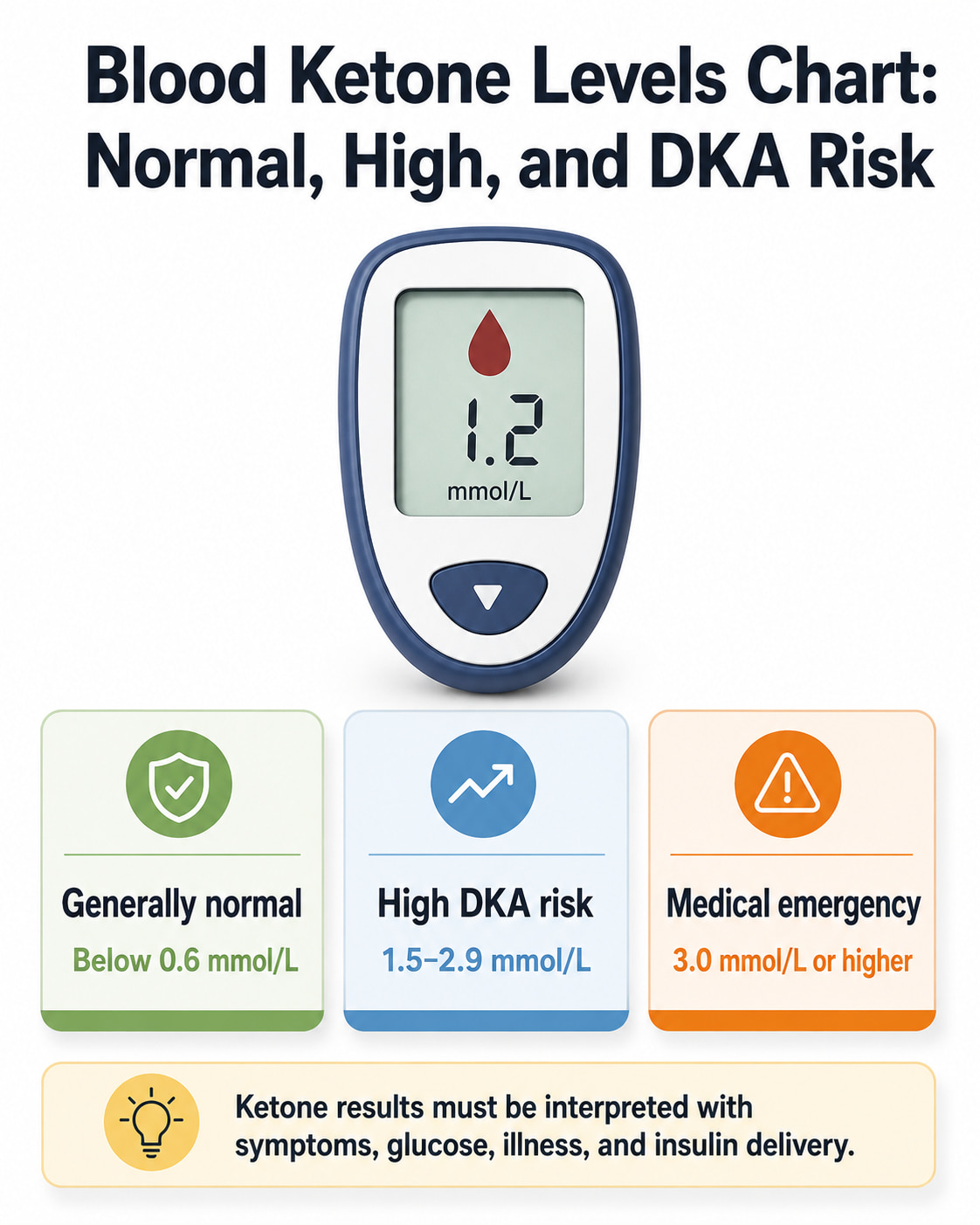
For diabetes monitoring, blood ketones below 0.6 mmol/L are generally considered normal, while 1.5 mmol/L or higher indicates a meaningful risk of diabetic ketoacidosis (DKA). A result of 3.0 mmol/L or higher is a medical emergency.
These ranges mainly apply to people with diabetes or another known risk of DKA. A ketone number must be interpreted alongside blood glucose, symptoms, medications, illness, and acid-base blood tests. The current American Diabetes Association guidance on DKA recommends immediate emergency care when blood ketones reach 1.6 mmol/L or higher.
Blood Ketone Levels Chart
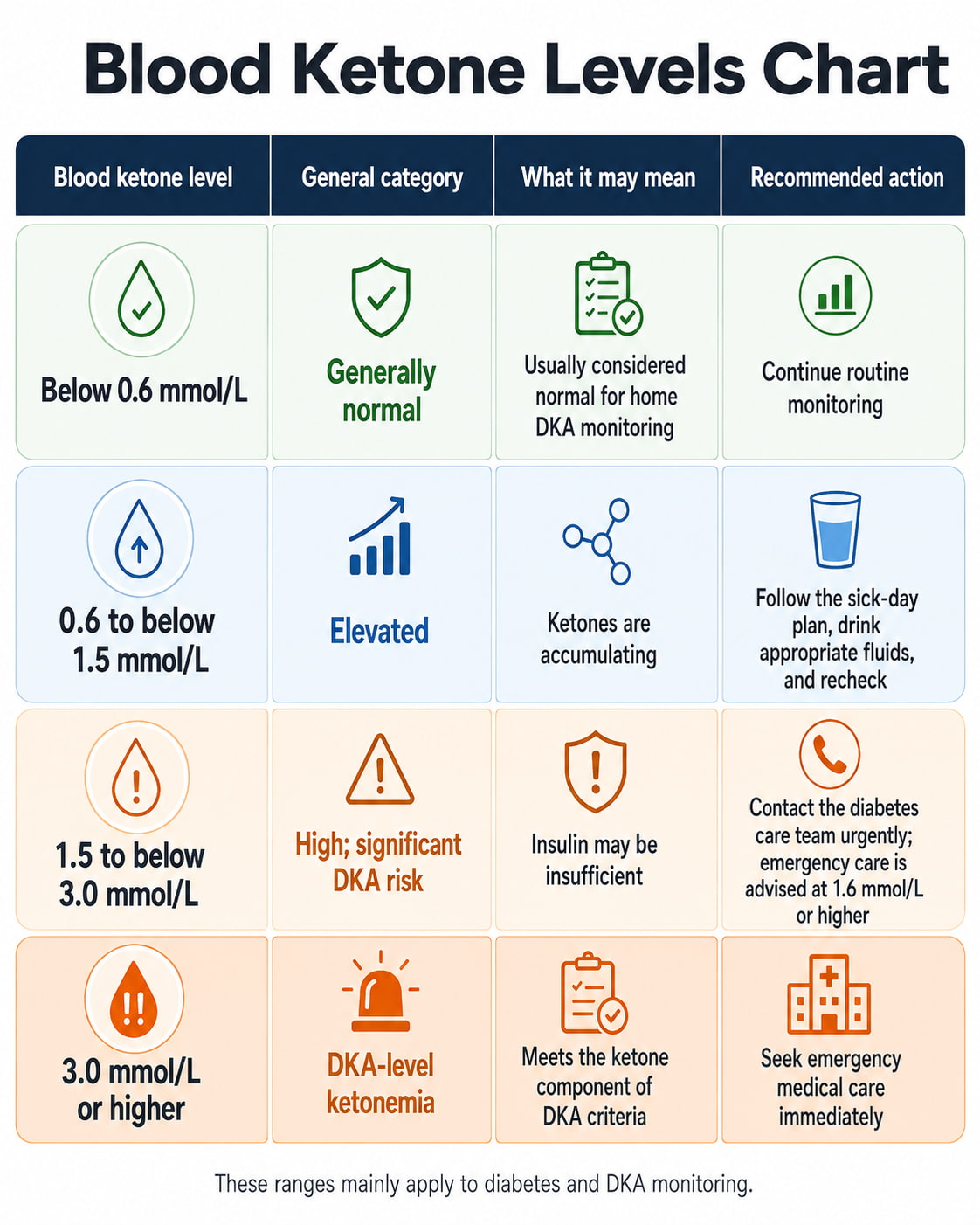
Most blood ketone meters measure beta-hydroxybutyrate, abbreviated as BHB or β-hydroxybutyrate. Results are usually reported in millimoles per liter, or mmol/L.
| Blood ketone level | General category | What it may mean | Recommended action |
|---|---|---|---|
| Below 0.6 mmol/L | Generally normal | Usually considered normal for home DKA monitoring in people with type 1 diabetes | Continue routine monitoring. Symptoms still matter even when the number is low. |
| 0.6 to below 1.5 mmol/L | Elevated | Ketones are accumulating and may continue to rise during illness or insulin shortage | Follow your written ketone or sick-day plan, continue insulin as prescribed, drink appropriate fluids, and recheck within the interval recommended by your care team. |
| 1.5 to below 3.0 mmol/L | High; significant DKA risk | Insulin may be insufficient, particularly when glucose is high or the person is ill | Contact the diabetes care team urgently. The ADA advises emergency medical care at 1.6 mmol/L or higher. |
| 3.0 mmol/L or higher | DKA-level ketonemia | Meets the ketone portion of the clinical criteria for DKA | Seek emergency medical care immediately. Do not try to manage this level without professional help. |
These categories reflect commonly used type 1 diabetes action ranges from Breakthrough T1D, published June, 2025. Because guidance differs slightly around 1.5 to 1.6 mmol/L, a reading of exactly 1.5 mmol/L should not be treated as reassuring—especially during illness or when symptoms are present.
Emergency warning: Go to an emergency department or call 911 for high ketones with repeated vomiting, trouble breathing, confusion, severe weakness, abdominal pain, fruity-smelling breath, or an inability to keep fluids down.
What Is a Normal Blood Ketone Level?
A blood ketone level below 0.6 mmol/L is commonly treated as normal in home DKA-monitoring plans for people with type 1 diabetes. However, some clinical laboratories use a lower fasting reference value.
For example, Mayo Clinic Laboratories lists a serum BHB reference value of below 0.4 mmol/L and notes that BHB should generally remain below this level after an overnight fast lasting up to 12 hours.
The two values serve different purposes:
| Testing situation | Common reference point |
|---|---|
| Fasting laboratory serum BHB test | Below 0.4 mmol/L |
| Home DKA-risk monitoring | Below 0.6 mmol/L |
A result between 0.4 and 0.6 mmol/L is not automatically dangerous. The laboratory range describes an expected fasting result, while the home-monitoring threshold is an action category designed to identify developing ketosis.
Always compare a laboratory result with the reference interval printed on that specific report.
What Does a High Blood Ketone Level Mean?
High blood ketones mean the body is producing ketones faster than it can use or remove them. Ketones form when the body breaks down fat for energy because glucose is unavailable or cannot enter cells effectively.
Possible causes include:
- Too little insulin
- A missed insulin dose
- An interrupted insulin-pump delivery
- Infection, fever, surgery, or another physical stress
- Prolonged vomiting or reduced food intake
- Fasting or significant carbohydrate restriction
- Pregnancy
- Heavy alcohol use
- Certain medications, particularly SGLT2 inhibitors
In diabetes, the most concerning cause is insulin deficiency. Without enough insulin, ketone production can accelerate and make the blood dangerously acidic. The Centers for Disease Control and Prevention explains that illness and missed or interrupted insulin are two of the most common DKA triggers.
What Blood Ketone Level Is Dangerous?
For a person at risk of DKA, 1.5 mmol/L or higher is concerning, and the situation becomes more urgent as the level rises.
The American Diabetes Association currently advises seeking emergency medical care immediately when a blood ketone meter shows 1.6 mmol/L or higher. A result of 3.0 mmol/L or higher is particularly serious because it meets the ketone component of the clinical DKA criteria.
A lower result can also be dangerous when accompanied by symptoms. Do not wait for ketones to reach 3.0 mmol/L when someone has:
- Repeated vomiting
- Rapid, deep, or labored breathing
- Severe abdominal pain
- Confusion or difficulty staying awake
- Fruity-smelling breath
- Extreme thirst and frequent urination
- Severe weakness or dehydration
- Inability to keep liquids down
The CDC advises emergency care when high ketones or multiple DKA symptoms are present. It also recommends immediate help when glucose remains at 300 mg/dL or higher, vomiting prevents fluid intake, or breathing becomes difficult.
At What Ketone Level Does DKA Occur?
A blood BHB result of 3.0 mmol/L or higher meets the ketosis requirement used in the ADA’s clinical criteria for DKA. However, ketones alone do not establish the full diagnosis.
According to the American Diabetes Association’s Standards of Care in Diabetes—2026 clinical guide, DKA requires findings from all three categories below.
| DKA component | Clinical criterion |
|---|---|
| Diabetes or hyperglycemia | Blood glucose of at least 200 mg/dL, or a known history of diabetes |
| Ketosis | Blood BHB of at least 3.0 mmol/L, or urine ketones of 2+ or greater |
| Metabolic acidosis | Blood pH below 7.3 and/or bicarbonate below 18 mmol/L |
This distinction matters. Someone may have elevated ketones from fasting or carbohydrate restriction without having metabolic acidosis. Conversely, someone at high risk of DKA should not wait for laboratory confirmation when symptoms and home ketone results indicate an emergency.
Can DKA Occur With Normal Blood Sugar?
DKA can sometimes occur when blood glucose is below the level people normally associate with a diabetic emergency. This is known as euglycemic DKA.
The 2024 international consensus report endorsed by the ADA and other major diabetes organizations defines euglycemic DKA as DKA with glucose below 200 mg/dL. It may occur with pregnancy, reduced food intake, alcohol-related illness, insulin use, liver problems, or SGLT2 inhibitor therapy.
SGLT2 inhibitors include medications such as:
- Canagliflozin
- Dapagliflozin
- Empagliflozin
- Ertugliflozin
People taking these medicines should not dismiss nausea, vomiting, abdominal pain, unusual tiredness, or difficult breathing simply because their glucose is not very high. They should follow their prescriber’s sick-day instructions and seek urgent medical advice when ketoacidosis is suspected.
When Should You Test Blood Ketones?
People with diabetes should follow their individualized ketone-testing plan. Testing is particularly important when:
- You feel sick, feverish, nauseated, or unusually tired.
- You are vomiting or have abdominal pain.
- Blood glucose is rising or remains above your personal testing threshold.
- You missed an insulin dose.
- You suspect a blocked, disconnected, leaking, or failed insulin-pump system.
- You have symptoms of DKA.
- You take an SGLT2 inhibitor and feel unwell.
- Your healthcare team has advised additional testing during pregnancy.
The CDC recommends checking ketones when a person with diabetes is sick or when blood glucose reaches 250 mg/dL or higher. It also advises checking every four to six hours during these situations. A personal diabetes plan may use a different glucose threshold or more frequent testing.
Do not use a glucose number as the only reason to test. Symptoms can justify ketone testing even when glucose is below 250 mg/dL.
Blood Ketones vs. Urine Ketones
Blood and urine ketone tests do not measure exactly the same thing.
Blood ketone testing
A blood ketone meter measures BHB, which is the main ketone circulating during DKA. It provides a numerical result showing the current blood ketone concentration.
The ADA identifies a blood ketone meter as the preferred home-testing method for people at risk of DKA.
Urine ketone testing
Urine strips mainly detect acetoacetate rather than BHB. Because urine collects in the bladder over time, the result may reflect ketone production from several hours earlier.
Urine ketones may therefore:
- Rise later than blood ketones
- Remain positive after blood ketones begin improving
- Be affected by dehydration and urine concentration
- Provide categories rather than an exact blood ketone number
Mayo Clinic Laboratories notes that common nitroprusside ketone tests do not measure BHB, even though BHB is the most abundant ketone in severe ketotic states.
There is no reliable one-to-one conversion between a blood ketone number and a urine-strip category.
| Urine ketone result | General interpretation for diabetes monitoring |
|---|---|
| Negative or trace | Usually considered normal |
| Small | Monitor closely and follow the sick-day plan |
| Moderate | DKA risk; contact the diabetes team urgently |
| Large | Medical emergency, especially with symptoms |
Nutritional Ketosis vs. Diabetic Ketoacidosis
Nutritional ketosis and DKA both involve ketone production, but they are not the same condition.
Nutritional ketosis
Nutritional ketosis can develop during fasting or a low-carbohydrate diet. The body still has enough insulin to control ketone production, and blood acidity generally remains regulated.
Diabetic ketoacidosis
DKA develops when insulin is severely insufficient. Ketones accumulate rapidly, blood becomes acidic, and dehydration and electrolyte disturbances can follow. Hospital treatment typically involves intravenous fluids, insulin, electrolyte monitoring, and treatment of the underlying trigger.
The ranges can overlap. A ketone result that may occur during fasting in one person could signal an emerging emergency in someone with type 1 diabetes, a failed insulin pump, pregnancy, illness, or SGLT2 inhibitor use.
People with diabetes should not assume that elevated ketones are harmless “diet ketosis” without considering glucose, insulin delivery, symptoms, and their medical plan.
What to Do When Blood Ketones Are Elevated
Below 0.6 mmol/L
Continue normal monitoring. If you feel unwell or have DKA symptoms, repeat the test and contact your healthcare team even when the reading is below 0.6 mmol/L.
From 0.6 to below 1.5 mmol/L
Follow your written sick-day or ketone-management plan.
This commonly includes:
- Checking blood glucose
- Continuing prescribed insulin
- Drinking fluids as directed
- Checking an insulin pump and infusion site
- Using correction insulin only according to your prescribed plan
- Rechecking glucose and ketones within the recommended interval
Do not stop basal insulin unless a healthcare professional specifically tells you to do so.
From 1.5 to below 3.0 mmol/L
Contact your diabetes team urgently. The ADA recommends emergency medical care once blood ketones reach 1.6 mmol/L.
Seek emergency care sooner when the person is vomiting, becoming dehydrated, having difficulty breathing, or showing confusion or severe fatigue.
At or above 3.0 mmol/L
Seek emergency medical care immediately. Do not delay care to take another reading, exercise, eat, or attempt an unprescribed insulin correction.
Frequently Asked Questions
Is a blood ketone level of 0.6 mmol/L high?
A result of 0.6 mmol/L is slightly elevated according to commonly used diabetes action ranges. It is not automatically an emergency, but it should prompt closer monitoring and the steps in your individualized ketone plan.
Is 1.5 mmol/L a dangerous ketone level?
A result of 1.5 mmol/L indicates meaningful DKA risk in common type 1 diabetes guidance. Contact your diabetes care team urgently, particularly when you are sick, glucose is high, or ketones are rising. The ADA recommends emergency care at 1.6 mmol/L or higher.
Does a ketone level of 3.0 mmol/L confirm DKA?
It meets the ketosis component of the DKA criteria but does not independently confirm the diagnosis. Healthcare professionals also assess glucose or diabetes history and evidence of metabolic acidosis. However, a reading of 3.0 mmol/L or higher still requires immediate emergency evaluation.
Can you have DKA with a blood sugar below 200 mg/dL?
Yes. Euglycemic DKA can occur with glucose below 200 mg/dL. It is particularly associated with SGLT2 inhibitors but may also occur during pregnancy, prolonged reduced food intake, alcohol-related illness, or after insulin has already been taken.
How often should you recheck elevated ketones?
Follow your personal care plan. During illness, ketones are commonly checked every two to four hours, while the CDC recommends checking glucose and urine ketones every four to six hours when sick or when glucose is 250 mg/dL or higher. Do not wait to retest when emergency symptoms are present.
Are blood ketone tests more accurate than urine strips?
Blood testing is generally preferred for DKA monitoring because it directly measures current BHB levels. Urine strips detect different ketones and may lag behind changes occurring in the blood.
Can people without diabetes have measurable ketones?
Yes. Fasting, prolonged exercise, vomiting, and carbohydrate restriction can raise ketones. However, persistent or unexpectedly high ketones—especially with vomiting, abdominal pain, confusion, breathing changes, or elevated glucose—should be medically evaluated.
Conclusion
A useful blood ketone levels chart must distinguish between a fasting laboratory reference value, an elevated home reading, and the clinical criteria used to diagnose DKA.
For diabetes monitoring, below 0.6 mmol/L is generally normal, 0.6 to below 1.5 mmol/L requires closer monitoring, 1.5 to below 3.0 mmol/L indicates significant DKA risk, and 3.0 mmol/L or higher is an emergency. Symptoms, illness, insulin delivery, medications, glucose, and changes over time are just as important as the number itself.
Create a written sick-day and ketone-management plan with your diabetes care team before an illness or insulin-delivery problem occurs.
This content is for informational purposes only and not medical advice.
References
- American Diabetes Association: DKA Signs, Symptoms, and Treatment
- American Diabetes Association: Understanding Diabetic Ketoacidosis in Clinical Practice
- Centers for Disease Control and Prevention: Diabetic Ketoacidosis
- Mayo Clinic Laboratories: Beta-Hydroxybutyrate, Serum
- Breakthrough T1D: Ketones, Diabetic Ketoacidosis, and Type 1 Diabetes