
A plasma vitamin B6 level below 20 nmol/L is generally considered low, while normal and high results depend on the reference range used by the testing laboratory. Most blood tests measure pyridoxal 5′-phosphate, or PLP, the biologically active form of vitamin B6.
A vitamin B6 levels chart can help you understand where your result falls. However, your number cannot confirm a deficiency or vitamin B6 toxicity by itself. Recent supplement use, fasting status, medications, inflammation, and certain health conditions can all affect the result.
Vitamin B6 Levels Chart
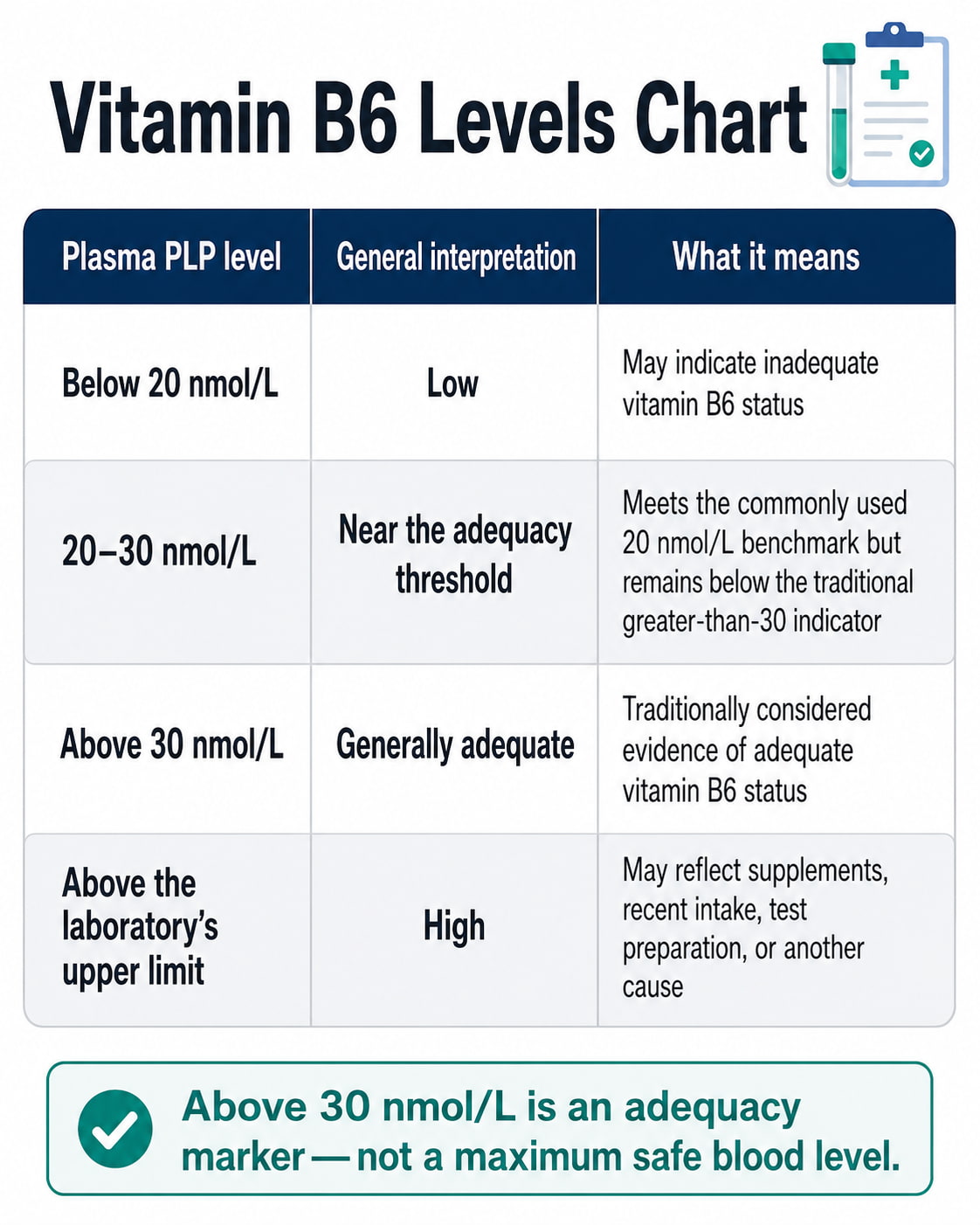
The National Institutes of Health Office of Dietary Supplements identifies plasma PLP as the most commonly used measure of vitamin B6 status. A concentration of 20 nmol/L was used as the main adequacy benchmark when adult dietary recommendations were established, while levels above 30 nmol/L have traditionally indicated adequate status.
| Plasma PLP level | General interpretation | What it means |
|---|---|---|
| Below 20 nmol/L | Low | May indicate inadequate vitamin B6 status |
| 20–30 nmol/L | Near the adequacy threshold | Meets the commonly used 20 nmol/L benchmark but remains below the traditional greater-than-30 indicator |
| Above 30 nmol/L | Generally adequate | Traditionally considered evidence of adequate vitamin B6 status |
| Above the laboratory’s upper limit | High | May reflect supplements, recent intake, test preparation, or another cause |
This chart offers general guidance rather than universal diagnostic cutoffs. In particular, above 30 nmol/L is an adequacy marker—not a maximum safe blood level.
Why Vitamin B6 Normal Ranges Vary by Laboratory
There is no single vitamin B6 reference range used by every laboratory. Testing methods, specimen requirements, units, and the population used to establish the interval can differ.
Here are several examples of published adult laboratory ranges:
| Laboratory | Sample reference interval | Units |
|---|---|---|
| ARUP Laboratories | 20–125 | nmol/L |
| Mayo Clinic Laboratories | 5–50 | mcg/L |
| Labcorp | 3.4–65.2 | µg/L |
ARUP Laboratories uses a PLP reference interval of 20–125 nmol/L and notes that a fasting sample better reflects vitamin B6 nutritional status.
Mayo Clinic Laboratories uses 5–50 mcg/L for fasting PLP results, while LabCorp publishes a 3.4–65.2 µg/L interval. These examples show why you should interpret your result using the reference range printed beside it—not a range taken from a different laboratory.
Do not compare different units directly
Vitamin B6 results may appear in:
- nmol/L
- mcg/L
- µg/L
- ng/mL
The abbreviations mcg/L and µg/L mean the same thing, and their numerical values are equal. However, you should not directly compare a result reported in nmol/L with one reported in mcg/L without using the correct conversion for the specific form of vitamin B6 measured.
What Does a Low Vitamin B6 Level Mean?
A vitamin B6 result below the laboratory’s lower limit may indicate inadequate vitamin status. A PLP concentration below 20 nmol/L is also widely used as a low-status threshold.
However, one low result does not reveal the cause. Your healthcare professional may consider your diet, symptoms, medical history, medications, kidney function, inflammation markers, and levels of other nutrients.
Common reasons for a low result
Possible explanations include:
- Low vitamin B6 intake
- Celiac disease, Crohn’s disease, ulcerative colitis, or another malabsorption disorder
- Chronic kidney disease or kidney failure
- Alcohol dependence
- Chronic inflammation or an autoimmune condition
- Pregnancy-related changes
- Certain antiseizure medicines and other medications
- Deficiencies in other B vitamins
Isolated vitamin B6 deficiency is uncommon. According to the NIH, inadequate B6 status often occurs alongside low folate, vitamin B12, or other B-complex vitamin levels.
Possible symptoms of vitamin B6 deficiency
Mildly low levels may cause no obvious symptoms. More significant deficiency may be associated with:
- Cracks at the corners of the mouth
- Scaly lips or an itchy rash
- A swollen or inflamed tongue
- Fatigue or weakness
- Microcytic anemia
- Irritability, depression, or confusion
- Reduced immune function
- Numbness or tingling
These symptoms are not unique to vitamin B6 deficiency. For example, anemia, skin changes, and tingling may also occur with other nutritional deficiencies or medical conditions.
The MedlinePlus vitamin B test guide advises that additional testing may be needed when symptoms continue despite a normal vitamin result or when a deficiency is found without a clear cause.
What Does a High Vitamin B6 Level Mean?
A high result means your level exceeded the upper reference limit established by your laboratory. It does not automatically mean that you have vitamin B6 toxicity.
The most common explanation is recent or ongoing exposure to vitamin B6 from supplements. B6 may be included in products that are not marketed primarily as vitamin supplements.
Check the labels of:
- Multivitamins
- B-complex supplements
- Standalone vitamin B6 products
- Magnesium supplements
- Zinc supplements
- Energy or “stress support” products
- Workout and recovery supplements
- Fortified drinks and nutrition powders
Add the vitamin B6 amounts from every product you use. Taking several products with modest amounts can produce a much larger combined dose than expected.
Recent food or supplement intake can raise the result
Mayo Clinic Laboratories states that nonfasting and vitamin supplementation before collection may raise plasma concentrations. Its reference intervals were established using fasting volunteers who avoided vitamin supplements for 24 hours before testing.
A clinician may recommend repeating an unexpectedly high test under standardized conditions. Do not stop a prescribed medication or medically recommended supplement unless the ordering professional tells you to do so.
Less common causes of elevated PLP
Markedly elevated PLP can occur with hypophosphatasia, a rare inherited condition associated with low alkaline phosphatase activity. A high B6 result alone does not diagnose this disorder.
The clinician may review alkaline phosphatase and other findings when the B6 elevation is substantial, persistent, or not explained by supplement use.
What Vitamin B6 Level Is Dangerous?
There is no universal blood vitamin B6 level that proves toxicity or predicts nerve damage in every person.
The laboratory’s upper limit can identify an elevated result, but clinical interpretation also depends on:
- The amount of B6 taken each day
- How long supplements have been used
- Whether several B6-containing products are combined
- The timing of the last dose
- Fasting status
- Symptoms of nerve irritation or damage
- Kidney, liver, inflammatory, and metabolic conditions
For this reason, a result above 125 nmol/L at a laboratory using a 20–125 nmol/L range is considered high for that test, but it should not be described as a universal toxicity threshold.
Can Too Much Vitamin B6 Cause Neuropathy?
Excessive vitamin B6 from supplements can damage peripheral nerves. Symptoms may include:
- Tingling
- Burning sensations
- Numbness
- Unusual sensitivity to touch
- Changes in coordination
- Symptoms affecting the hands or feet
Vitamin B6 deficiency and excess can both produce nerve-related symptoms. Taking additional B6 without checking your total intake may therefore worsen a supplement-related problem.
In guidance updated in April 2026, Australia’s Therapeutic Goods Administration stated that neuropathy risk cannot be excluded at supplemental doses below 50 mg per day. It also emphasized that consumers may unintentionally combine B6 from multiple products. This is an Australian safety update, not a U.S. blood-test cutoff or supplement limit.
Contact a healthcare professional promptly if you develop new or worsening tingling, burning, numbness, weakness, balance problems, or difficulty walking while taking B6-containing products.
How to Prepare for a Vitamin B6 Blood Test
Preparation rules vary, so follow the instructions from your clinician and testing laboratory.
Some laboratories recommend:
- Fasting for 8–12 hours
- Drinking water as permitted
- Avoiding vitamin supplements for 24 hours before collection
- Collecting the sample before the next supplement dose
- Reporting all medications and supplements
ARUP notes that an eight-hour or overnight fasting specimen more accurately reflects vitamin B6 nutritional status, while a nonfasting result may reflect recent intake. Mayo requires a 12-hour fast for its B6 profile and asks patients to avoid multivitamins and vitamin supplements for 24 hours.
Do not discontinue prescription medicines or clinician-recommended supplements without medical guidance.
What to Do After Receiving Your Result
If your vitamin B6 level is low
Review the result with your healthcare professional, especially when you have symptoms, anemia, kidney disease, digestive disease, or possible malabsorption.
Your clinician may:
- Review your typical food intake
- Check folate, vitamin B12, iron, or other nutrient levels
- Review medications that affect B6 metabolism
- Evaluate kidney function or inflammation
- Recommend an appropriate diet or supplement plan
- Repeat the test after addressing the likely cause
Avoid taking a high-dose supplement simply because your result is below an online range. The correct dose depends on the laboratory result, cause, symptoms, diet, and medical history.
If your vitamin B6 level is high
Write down every supplement, powder, fortified drink, and energy product you use. Record:
- Product name
- Serving size
- Vitamin B6 per serving
- Number of servings per day
- Length of use
- Date and time of the last dose before testing
Share this list with the ordering clinician. They can decide whether you should adjust a supplement, repeat the test, or investigate another explanation.
If your result is within range but symptoms continue
A normal B6 result does not rule out every cause of fatigue, skin changes, numbness, or tingling. Depending on your symptoms, a healthcare professional may evaluate vitamin B12, folate, blood sugar, thyroid function, iron status, nerve conditions, medications, or other possible causes.
Vitamin B6 Intake Recommendations
Blood concentrations and dietary intake are different measurements. Blood PLP is reported in concentration units, while food and supplement intake is measured in milligrams per day.
Current U.S. recommended dietary allowances include:
| Group | Recommended vitamin B6 intake |
|---|---|
| Adults ages 19–50 | 1.3 mg/day |
| Men ages 51 and older | 1.7 mg/day |
| Women ages 51 and older | 1.5 mg/day |
| Pregnancy | 1.9 mg/day |
| Breastfeeding | 2.0 mg/day |
The current U.S. tolerable upper intake level for adults is 100 mg per day from food and supplements. However, an upper limit is not a recommended dose or a treatment target. It represents a population-level ceiling established to reduce the likelihood of adverse effects, and individual susceptibility may differ.
Food Sources of Vitamin B6
Many people can meet their vitamin B6 needs through a varied diet. Useful sources include:
- Chickpeas
- Tuna and salmon
- Chicken and turkey
- Beef liver
- Potatoes and other starchy vegetables
- Bananas and other noncitrus fruits
- Fortified breakfast cereals
Vitamin B6 from ordinary food is not generally associated with the neuropathy seen with excessive supplemental intake. People with confirmed deficiency or absorption problems may still require clinician-guided supplementation.
Frequently Asked Questions
What is a normal vitamin B6 blood level?
A normal result is one that falls within the reference interval on your laboratory report. Examples include 20–125 nmol/L at ARUP and 5–50 mcg/L at Mayo Clinic Laboratories. These ranges should not be applied to results from a different laboratory.
Is a vitamin B6 level below 20 nmol/L low?
Yes. A plasma PLP concentration below 20 nmol/L is commonly classified as low vitamin B6 status. Your clinician will interpret it alongside symptoms, diet, medications, and health conditions.
Is a vitamin B6 level above 30 nmol/L normal?
A level above 30 nmol/L has traditionally been used as an indicator of adequate status. However, 30 nmol/L is not the upper end of the normal range and is not a toxicity threshold.
Can high vitamin B6 come from food?
A high result is more commonly linked to supplements, fortified products, or recent intake before testing than to ordinary foods. Check all product labels because B6 may be included in magnesium, zinc, energy, and stress-support formulas.
Should I fast before a vitamin B6 blood test?
Some laboratories require or recommend fasting for 8–12 hours. Others may provide different instructions. Follow the preparation guidance from the laboratory performing your test.
Can both low and high vitamin B6 cause tingling?
Yes. Inadequate vitamin B6 and excessive supplemental B6 may both be associated with nerve symptoms. Tingling should not be treated by automatically taking more B6 without reviewing your current intake and test results.
Does a high vitamin B6 result mean I have toxicity?
Not necessarily. The result may reflect supplements, nonfasting collection, recent intake, or another medical factor. Toxicity is assessed using the result, symptoms, supplement dose, duration of use, and other clinical information.
Conclusion
A vitamin B6 levels chart provides useful context, but your laboratory’s own reference interval should guide interpretation. A result below 20 nmol/L commonly suggests low status, while a high result means the level exceeded that laboratory’s upper limit—not that toxicity has been proven.
Review all supplements and fortified products before discussing the result with your healthcare professional. Prompt evaluation is particularly important when an abnormal result occurs with tingling, burning, numbness, weakness, or coordination problems.
This content is for informational purposes only and not medical advice.
References
- National Institutes of Health Office of Dietary Supplements: Vitamin B6 Fact Sheet for Health Professionals
- ARUP Laboratories: Vitamin B6, Pyridoxal 5′-Phosphate
- Mayo Clinic Laboratories: Vitamin B6 Profile
- MedlinePlus: Vitamin B Test
- Labcorp: Vitamin B6, Plasma
- Therapeutic Goods Administration: Medicines Containing Vitamin B6