

Most seniors need about 7 to 9 hours of sleep each night. Adults age 65 and older are more specifically advised to get approximately 7 to 8 hours per day.
The recommendations may look slightly different because the National Institute on Aging uses the broader 7-to-9-hour range, while the CDC and National Sleep Foundation list 7 to 8 hours for adults 65 and older. Individual needs can vary, so sleep quality and daytime alertness matter along with the number of hours slept.
How Much Sleep Do Seniors Need by Age?
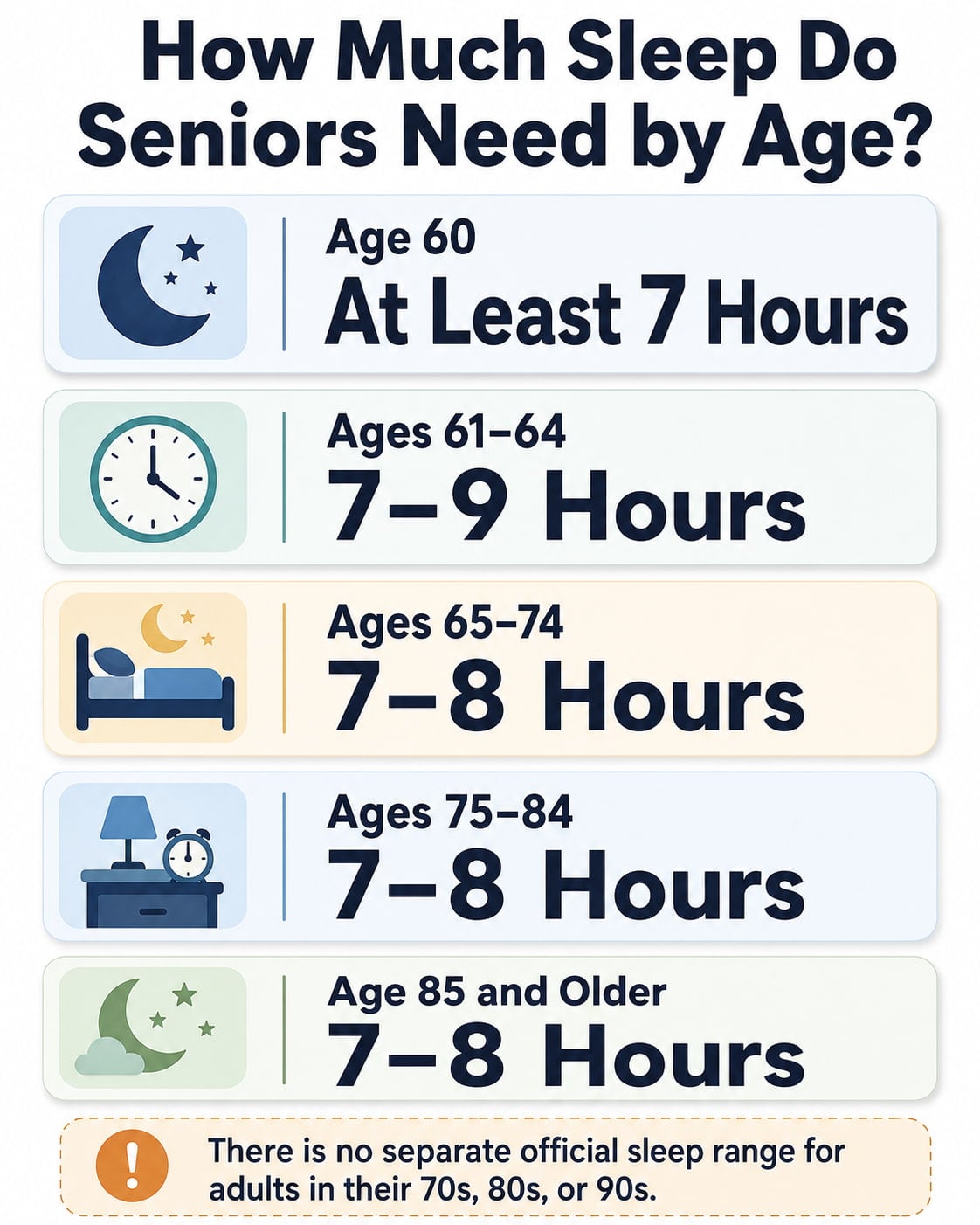
The Centers for Disease Control and Prevention provides different recommendations for adults ages 60, 61–64, and 65 or older.
| Age | Recommended Sleep per Day | Practical Guidance |
|---|---|---|
| Age 60 | At least 7 hours | Many adults feel best with approximately 7–9 hours |
| Ages 61–64 | 7–9 hours | Consider both nighttime sleep and daytime naps |
| Ages 65–74 | 7–8 hours | Some people may need closer to 9 hours |
| Ages 75–84 | 7–8 hours | Sleep quality may become more important than time in bed |
| Age 85 and older | 7–8 hours | There is no separate official range for adults over 85 |
Major sleep guidelines do not provide separate recommendations for adults in their 70s, 80s, or 90s. Everyone age 65 and older is generally placed in the same category.
These numbers are targets rather than strict limits. A healthy 70-year-old may feel rested after seven hours, while another person may need eight or nine hours to function well. Health conditions, medications, physical activity, stress, sleep disorders, and sleep quality can all affect individual needs.
Why Some Sources Recommend 7–8 Hours and Others Recommend 7–9
The two ranges are not necessarily contradictory.
The CDC and National Sleep Foundation recommend 7 to 8 hours for adults age 65 and older. The National Institute on Aging, part of the National Institutes of Health, says older adults generally need about 7 to 9 hours each night.
A practical way to interpret this guidance is:
- Aim for at least seven hours.
- Expect seven to eight hours to be sufficient for many older adults.
- Understand that some people may naturally need closer to nine hours.
- Pay attention to how refreshed and alert you feel during the day.
The goal is not to force yourself to sleep for an exact number of hours. It is to get enough consistent, refreshing sleep to function safely and comfortably.
2026 Update to Senior Sleep Recommendations
In June 2026, the National Sleep Foundation published the results of a 10-year review of its sleep-duration guidance. The review examined 133 meta-analyses covering as many as 3,222 individual studies.
The foundation reaffirmed its recommendation of 7 to 8 hours for adults age 65 and older. It also emphasized that healthy sleep includes more than duration. Sleep quality, regularity, timing, satisfaction, sleep habits, and daytime functioning are also important.
The review found no scientific basis for recommending different sleep durations for older men and women.
What Current Sleep Statistics Show
An April 2026 report from the National Center for Health Statistics analyzed information from the 2024 National Health Interview Survey.
Among U.S. adults age 65 and older:
| Sleep Measure | Percentage |
|---|---|
| Slept fewer than 7 hours per day | 27.2% |
| Felt well-rested most days or every day | 63.5% |
| Had trouble falling asleep most days or every day | 12.8% |
| Had trouble staying asleep most days or every day | 21.7% |
The figures show an important difference between falling asleep and staying asleep. Older adults were less likely than younger adults to report frequent difficulty falling asleep, but more than one in five had frequent trouble remaining asleep.
These statistics are based on self-reported sleep, so they describe what participants remembered and reported rather than results from sleep-monitoring equipment.
Do Seniors Need Less Sleep as They Get Older?
Older adults do not suddenly stop needing adequate sleep. What often changes is the way sleep is organized.
With age, people may:
- Become sleepy earlier in the evening
- Wake earlier in the morning
- Sleep more lightly
- Spend less time in deep sleep
- Wake more frequently during the night
- Find it harder to return to sleep after waking
These changes can make sleep feel shorter or less refreshing, even when total sleep time has not changed dramatically. Waking briefly during the night can be common, but prolonged or repeated awakenings that cause daytime fatigue should not automatically be dismissed as normal aging.
Sleep Quality Matters, Not Just Time in Bed
Spending eight hours in bed does not always mean getting eight hours of restorative sleep. Someone who wakes repeatedly, struggles to breathe, experiences pain, or remains awake for long periods may still feel exhausted in the morning.
Signs of reasonably good sleep include:
- Falling asleep without prolonged difficulty
- Sleeping through most of the night
- Returning to sleep after brief awakenings
- Waking feeling reasonably refreshed
- Remaining alert during normal daytime activities
- Not needing frequent long naps
- Being able to concentrate and complete routine tasks safely
Signs of poor sleep quality include repeated nighttime awakenings, persistent difficulty falling asleep, or feeling tired after allowing enough time for sleep.
Is Six Hours of Sleep Enough for a Senior?
For most seniors, six hours is less than the recommended amount. An occasional six-hour night is unlikely to be a reason for alarm, but regularly sleeping six hours or less falls below current recommendations for older adults.
A person who consistently sleeps for only six hours should consider:
- Whether they feel sleepy or unfocused during the day
- Whether pain, medications, stress, or nighttime urination is interrupting sleep
- Whether they unintentionally fall asleep while reading, watching television, or sitting quietly
- Whether a bed partner has noticed loud snoring or pauses in breathing
- Whether the short sleep pattern is new or worsening
Getting enough sleep supports attention, memory, mood, heart health, metabolism, and safe performance of daily activities.
Can a Senior Sleep Too Much?
Occasionally sleeping nine or ten hours may be understandable after illness, travel, physical exertion, or several nights of insufficient sleep. Some people also naturally function best near the upper end of the recommended range.
However, it is worth speaking with a healthcare professional when an older adult:
- Regularly sleeps longer than usual
- Needs more than nine hours and still feels tired
- Has a sudden increase in sleep time
- Struggles to stay awake during the day
- Has new confusion, weakness, mood changes, or reduced activity
- Sleeps for long periods but wakes feeling unrefreshed
Long sleep does not automatically indicate a medical problem. It can sometimes be a sign that nighttime sleep is fragmented or that another factor—such as medication effects, depression, sleep apnea, pain, or illness—is affecting energy and alertness.
Why Do Seniors Wake Up During the Night?
Several factors can interrupt sleep in older adults.
Normal Changes in Sleep Patterns
Sleep may become lighter with age, making a person more likely to wake because of noise, light, temperature changes, or movement from a bed partner.
Pain or Physical Discomfort
Arthritis, back pain, muscle discomfort, reflux, breathing difficulties, and other health concerns can make it difficult to remain comfortable throughout the night.
Frequent Nighttime Urination
Some older adults wake several times to use the bathroom. This may relate to fluid timing, medications, urinary conditions, diabetes, sleep apnea, or other health factors. Do not sharply reduce daily fluid intake without medical guidance, especially if dehydration is a concern.
Medications
Certain prescription and nonprescription medicines can cause wakefulness, daytime sleepiness, frequent urination, unusual dreams, or changes in sleep timing. A doctor or pharmacist can review whether the timing or combination of medications may be affecting sleep.
Sleep Disorders
Insomnia, obstructive sleep apnea, restless legs syndrome, and other sleep disorders can interfere with restorative sleep. These conditions require proper evaluation rather than simply spending more time in bed.
Stress, Grief, Anxiety, or Depression
Emotional health can affect the ability to fall asleep, stay asleep, or feel refreshed. Depression is not an unavoidable part of aging, and persistent mood or sleep changes deserve attention.
Are Naps Good for Seniors?
A brief nap can help improve alertness, especially after a poor night’s sleep. The timing and length of the nap are important.
The National Heart, Lung, and Blood Institute advises adults who nap to keep naps to about 20 minutes. Longer or late-afternoon naps may reduce sleep pressure and make it more difficult to fall asleep at night. The National Institute on Aging also recommends avoiding naps late in the afternoon or evening.
For a sleep-friendly nap:
- Nap in the early afternoon.
- Set an alarm for approximately 20 minutes.
- Avoid making long naps a daily replacement for poor nighttime sleep.
- Discuss persistent daytime sleepiness with a healthcare professional.
A person who frequently falls asleep unintentionally or cannot stay awake during routine activities needs medical evaluation rather than additional scheduled naps.
How Seniors Can Improve Sleep
Small, consistent changes are usually more helpful than trying many new sleep strategies at once.
1. Keep a Regular Sleep Schedule
Go to bed and get up at approximately the same time every day, including weekends. A consistent schedule helps reinforce the body’s sleep-wake rhythm.
2. Build a Calming Bedtime Routine
Use the final 30 to 60 minutes before bed for quiet activities such as reading, listening to calm music, gentle breathing, or preparing for the next day.
3. Make the Bedroom Sleep-Friendly
Keep the room quiet, dark, uncluttered, and at a comfortable temperature. Use a night-light when needed for safe bathroom trips, but avoid bright light directed toward the bed.
4. Reduce Evening Screen Use
Turn off televisions, phones, tablets, and computers before bedtime. The CDC recommends shutting down electronic devices at least 30 minutes before bed.
5. Watch Caffeine Timing
Coffee, tea, energy drinks, cola, and chocolate can interfere with sleep. Avoid caffeine during the afternoon or evening when it affects your ability to sleep.
6. Avoid Alcohol as a Sleep Aid
Alcohol may make someone feel sleepy initially, but it can contribute to fragmented sleep later in the night. It may also interact with medications and worsen some breathing-related sleep problems.
7. Be Active During the Day
Regular physical activity may support better sleep. Schedule exercise at a time that feels comfortable and does not leave you overly alert at bedtime.
8. Limit Large Late Meals
Avoid very large meals close to bedtime. If hunger interferes with sleep, a small, appropriate snack may be more comfortable.
9. Keep Naps Brief and Early
A short early-afternoon nap is less likely to disrupt nighttime sleep than a long nap taken in the late afternoon or evening.
10. Track Your Sleep for One to Two Weeks
Record:
- Bedtime and wake time
- Estimated time spent asleep
- Nighttime awakenings
- Naps
- Caffeine and alcohol use
- Exercise
- Medications
- Morning energy and daytime sleepiness
A sleep diary can help you and your healthcare professional identify patterns that are difficult to notice from memory alone.
When Should a Senior Talk to a Doctor About Sleep?
Contact a healthcare professional when sleep problems happen regularly, continue for several weeks, or interfere with daily activities.
Seek evaluation for:
- Loud, frequent snoring
- Breathing that stops and restarts during sleep
- Gasping or choking during the night
- Severe daytime sleepiness
- Morning headaches or persistent dry mouth
- Repeated difficulty falling or staying asleep
- Uncomfortable leg sensations that improve with movement
- New confusion, memory problems, or mood changes
- Falling asleep while driving, eating, or talking
- Falls or unsteadiness associated with nighttime or morning drowsiness
- A sudden major change in sleep duration
According to the National Heart, Lung, and Blood Institute, loud snoring, gasping, interrupted breathing, daytime tiredness, dry mouth, headaches, insomnia, and frequent nighttime urination can occur with sleep apnea. Snoring alone does not prove that someone has sleep apnea, but snoring combined with breathing pauses or daytime sleepiness should be evaluated.
Be Careful With Sleep Medicines and Supplements
Older adults should speak with a doctor or pharmacist before starting prescription sleep medicine, over-the-counter sleep aids, antihistamines, melatonin, or herbal supplements.
Age-related changes can affect how the body processes medicines. Older adults are also more likely to take several medications, increasing the possibility of side effects and interactions. Some sleep medicines may cause next-day drowsiness, dizziness, confusion, dependence, or falls.
Do not stop a prescribed medicine suddenly. Ask the prescribing clinician whether the medicine, dose, combination, or time of day could be affecting sleep.
For long-term insomnia, cognitive behavioral therapy for insomnia, commonly called CBT-I, is usually recommended as a first treatment option. It teaches practical methods for improving sleep habits and reducing anxiety about sleep without relying solely on medication.
Frequently Asked Questions
How much sleep does a 70-year-old need?
A 70-year-old generally needs about 7 to 8 hours of sleep per day. Some healthy adults may feel best with closer to nine hours, particularly if they remain active and wake feeling refreshed.
How much sleep does an 80-year-old need?
An 80-year-old has the same general recommendation as other adults age 65 and older: approximately 7 to 8 hours. There is no separate official recommendation that tells people in their 80s to sleep less.
Is five or six hours of sleep enough for an older adult?
Five or six hours is below the recommended range for most older adults. Someone who regularly gets this amount should pay attention to daytime sleepiness, concentration, mood, balance, and possible causes of interrupted sleep.
Why do seniors go to bed and wake up earlier?
The body’s internal sleep-wake rhythm can shift earlier with age. Older adults may naturally become sleepy earlier in the evening and wake earlier in the morning. This pattern is not necessarily a problem when the person gets enough total sleep and feels alert during the day.
Should seniors take a nap every day?
A daily nap is not required. A short nap of about 20 minutes in the early afternoon may help some people, but long or late naps can interfere with nighttime sleep.
Is it normal for seniors to wake several times during the night?
Brief awakenings can become more common with age. However, frequent or prolonged awakenings accompanied by fatigue, pain, breathing problems, or difficulty functioning should be discussed with a healthcare professional.
Do older men and women need different amounts of sleep?
Current evidence does not support separate sleep-duration recommendations for men and women. The 2026 National Sleep Foundation review reaffirmed the same age-based guidance for both.
Conclusion
Most seniors should aim for 7 to 9 hours of sleep, with 7 to 8 hours serving as the standard recommendation for adults age 65 and older. The ideal amount is the sleep that allows you to wake reasonably refreshed and remain alert throughout the day.
Start by keeping a consistent schedule, making your bedroom comfortable, limiting late caffeine and long naps, and tracking your sleep for one to two weeks. Speak with a healthcare professional when poor sleep, excessive sleepiness, snoring, breathing pauses, or sudden changes continue.
This content is for informational purposes only and not medical advice.
References
- CDC — About Sleep
- National Institute on Aging — Healthy Sleep Habits for Older Adults
- National Sleep Foundation — Sleep Duration Recommendations
- National Center for Health Statistics — Short Sleep Duration and Sleep Difficulties Among Adults: United States, 2024
- NHLBI — Sleep Apnea Symptoms
- NHLBI — Insomnia Treatment