
Protein before bed may help muscle recovery by giving your body amino acids overnight, especially if you exercise regularly or struggle to meet your daily protein needs. The biggest factor is still your total protein intake for the day, but a small high-protein bedtime snack can be useful when it fits your routine.
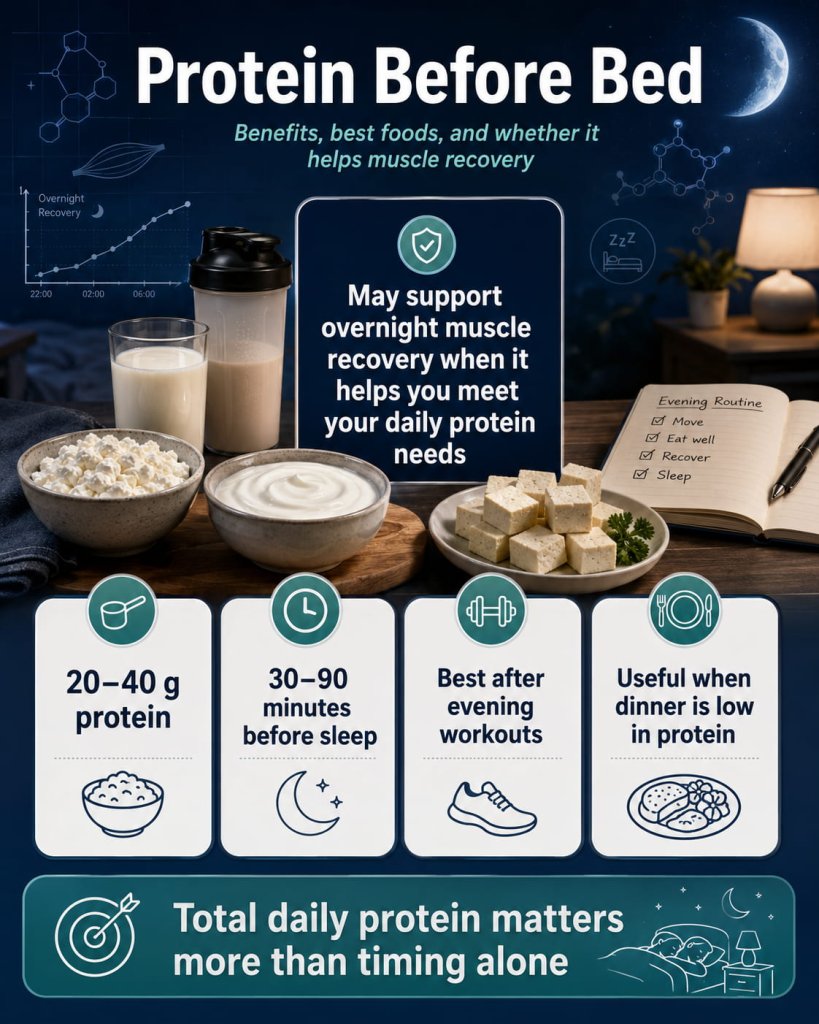
For most active adults, a practical target is 20–40 grams of protein about 30–60 minutes before bed, depending on your body size, training, appetite, and digestion. Research summarized in the International Society of Sports Nutrition position stand notes that pre-sleep casein protein in the 30–40 gram range can increase overnight muscle protein synthesis without reducing fat breakdown.
What Does Protein Before Bed Do?
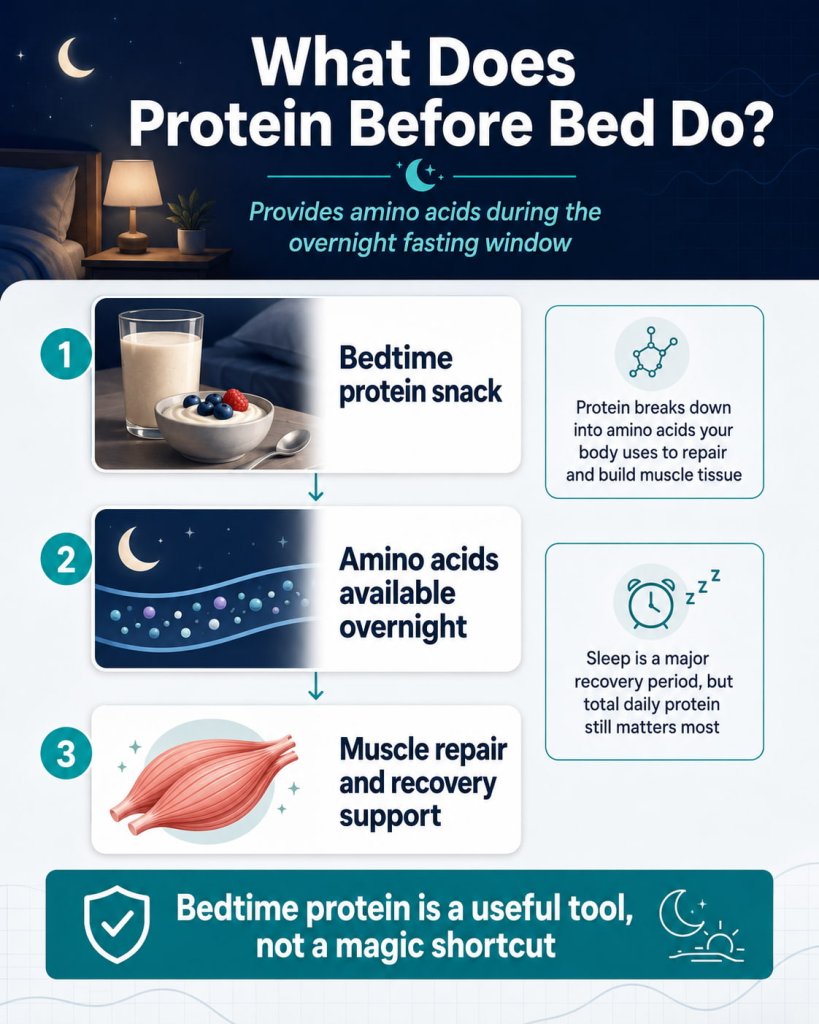
Protein before bed gives your body amino acids during the overnight fasting period. Amino acids are the building blocks your body uses to repair and build muscle tissue.
This matters because sleep is a major recovery window. Your body is resting, but muscle repair and adaptation are still happening. If you had a hard workout, lifted weights, played sports, or did endurance training, a bedtime protein snack may help support the recovery process.
A 2021 review published in the Journal of Science and Medicine in Sport found that 20–40 grams of casein about 30 minutes before sleep improved the overnight muscle protein synthetic response in healthy young men, especially after evening resistance exercise. The review also noted that evidence in older adults is still limited for long-term strength and muscle outcomes.
Does Protein Before Bed Help Muscle Recovery?
Protein before bed can help muscle recovery, but it is not a magic shortcut. It works best when four things are already in place:
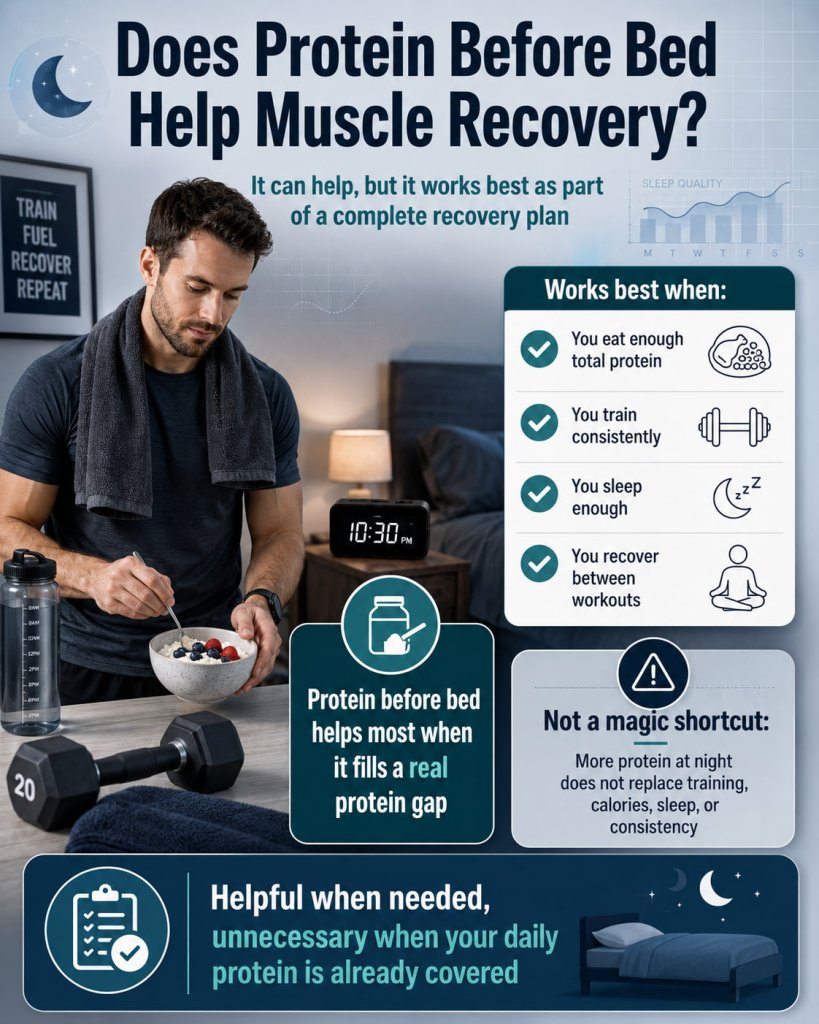
- You eat enough total protein across the full day
- You train consistently
- You sleep enough
- You recover well between workouts
Think of bedtime protein as a helpful tool, not the whole strategy.
If you already hit your protein goal earlier in the day, adding extra protein before bed may not lead to noticeably better results. But if dinner was light, your workout was late, or your daily protein intake is low, a bedtime snack can help fill the gap.
A 2023 study in British Army recruits found that pre-sleep protein increased protein intake but did not improve performance, body composition, or recovery outcomes during basic training. That supports a balanced takeaway: protein before bed is most helpful when it solves a real nutrition gap, not when it simply adds unnecessary calories.
Should You Eat Protein Before Bed?
Protein before bed is most useful when it solves a specific problem in your routine. It is not something everyone needs.
You may benefit from bedtime protein if:
- You train in the evening
- You often miss your daily protein target
- Your dinner is low in protein
- You wake up hungry at night
- You are trying to build or maintain muscle
- You prefer a small snack instead of a large dinner
You may not need it if:
- You already eat enough protein during the day
- You sleep better without food close to bedtime
- You have reflux or digestive discomfort at night
- It pushes your daily calories too high
- You are adding it only because you think timing matters more than total intake
For most people, the best question is not “Do I need protein before bed?” It is “Would this help me meet my daily protein goal comfortably?”
Main Benefits of Protein Before Bed
Protein before bed can be useful for recovery, appetite control, and daily protein consistency. The benefits are most likely when the snack fits your total nutrition plan instead of adding unnecessary calories.
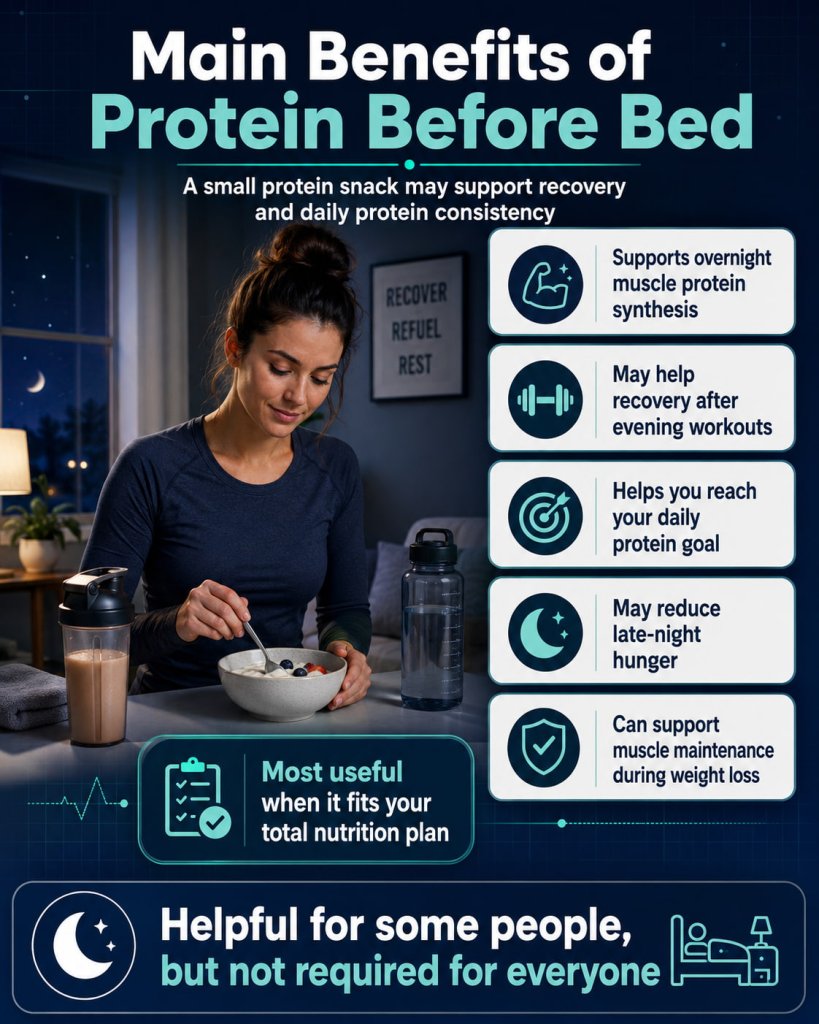
1. Supports Overnight Muscle Protein Synthesis
Muscle protein synthesis is the process your body uses to repair and build muscle proteins. Protein before bed can raise amino acid availability overnight, which may support this process.
This is one reason casein protein is often discussed for nighttime use. Casein digests more slowly than whey, so it may provide a steadier release of amino acids during sleep.
2. May Help Recovery After Evening Workouts
If you train at night, protein before bed can be a convenient recovery option. It may help you avoid going to sleep after training with very little protein in your system.
A 2023 randomized trial published in Sports Medicine found that both whey and casein before sleep increased overnight muscle protein synthesis after evening endurance exercise, with no major difference between the two protein types.
3. Helps You Reach Your Daily Protein Goal
Many people eat most of their protein at dinner and very little at breakfast or snacks. Others simply fall short by the end of the day.
A planned bedtime snack can make daily protein intake easier without needing a huge dinner. This is especially useful for active adults, athletes, people doing resistance training, and anyone trying to preserve muscle during fat loss.
4. May Reduce Late-Night Hunger
A protein-rich bedtime snack may help you feel more satisfied than a snack made mostly from refined carbs or sugar.
Good options include Greek yogurt, cottage cheese, milk, kefir, tofu, or a simple protein shake. The goal is not to eat a huge meal before sleeping. A small, comfortable portion is usually enough.
5. Can Support Muscle Maintenance During Weight Loss
When someone is in a calorie deficit, protein becomes especially important for helping preserve lean mass. Protein before bed may help if it improves daily protein consistency.
It should still fit within the overall eating plan. A large high-calorie snack every night can make fat loss harder if it pushes total calories too high.
How Much Protein Before Bed Is Best?
A good starting point is 20–40 grams of protein before bed.
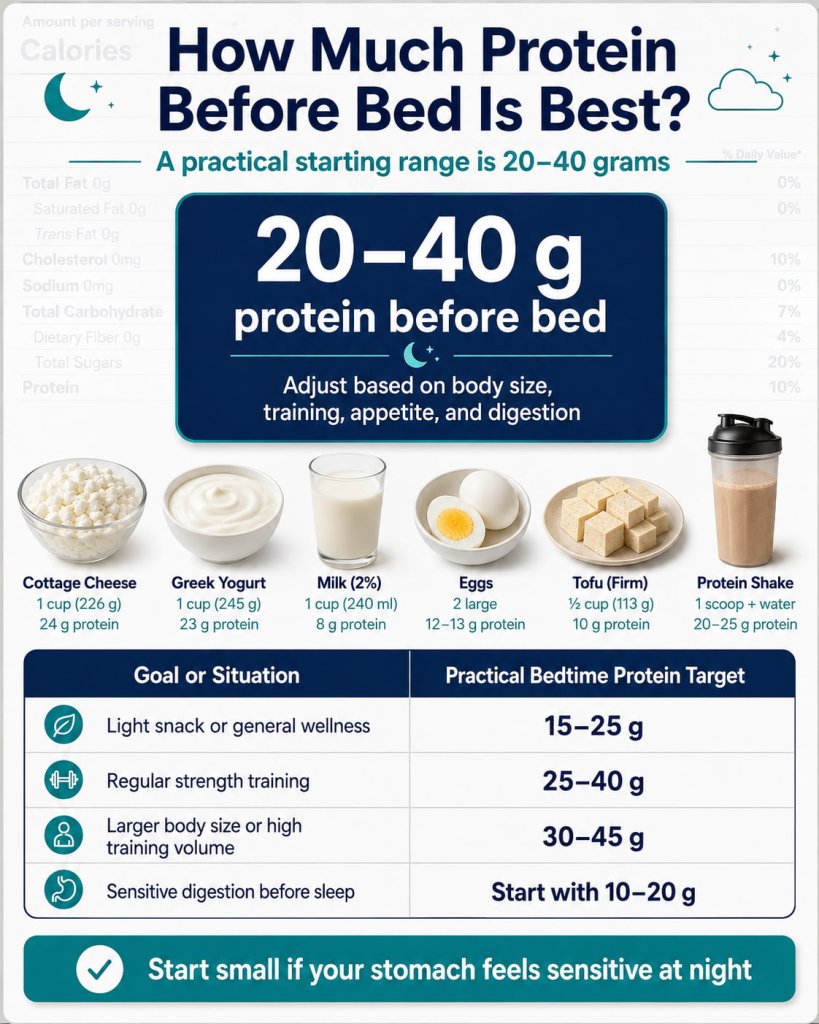
For many people, that looks like:
| Goal or Situation | Practical Bedtime Protein Target |
|---|---|
| Light snack or general wellness | 15–25 grams |
| Regular strength training | 25–40 grams |
| Larger body size or high training volume | 30–45 grams |
| Sensitive digestion before sleep | Start with 10–20 grams |
The National Academies Dietary Reference Intakes list the general adult protein RDA at 0.8 grams per kilogram of body weight per day, while sports nutrition guidance often uses higher ranges for active people.
For active adults, the International Society of Sports Nutrition commonly recommends about 1.4–2.0 grams of protein per kilogram of body weight per day to support exercise adaptation and muscle protein balance.
When Should You Eat Protein Before Bed?
A practical window is 30–90 minutes before sleep, depending on how your stomach feels.
If you eat dinner early, a small protein snack closer to bedtime may help you avoid a long overnight gap without protein. If you eat dinner late and already get enough protein, you may not need another snack.
| Situation | Best Approach |
|---|---|
| Dinner was 3–4 hours ago | Add a small protein snack before bed |
| You trained in the evening | Include protein after training or before sleep |
| Dinner already had 30–40 g protein | Extra bedtime protein may not be needed |
| You get reflux or bloating | Eat protein 60–90 minutes before bed |
| You feel too full at night | Use a smaller portion or skip it |
The right timing is the one that supports recovery without disturbing sleep.
Protein Before Bed Examples by Body Weight
These examples use the active-person range of about 1.4–2.0 g/kg/day. They are not medical prescriptions, but they can help readers understand the math.
| Body Weight | Approximate Daily Protein Range for Active Adults |
|---|---|
| 130 lb | 83–118 g/day |
| 150 lb | 95–136 g/day |
| 170 lb | 108–154 g/day |
| 180 lb | 115–164 g/day |
| 200 lb | 127–181 g/day |
A bedtime protein snack might provide 20–40 grams of that daily total. It does not need to be extra protein on top of an already complete day.
Does Protein Quality Matter Before Bed?
Protein quality matters because your body needs essential amino acids to repair and build muscle. Complete proteins contain all essential amino acids in useful amounts.
High-quality bedtime protein options include:
- Milk
- Greek yogurt
- Cottage cheese
- Skyr
- Eggs
- Whey protein
- Casein protein
- Soy milk
- Tofu
- Tempeh
Plant-based eaters can still get enough protein before bed. Soy foods are complete proteins, and blended plant protein powders often combine sources such as pea and rice to improve amino acid balance.
You do not need to overthink every amino acid at bedtime. The main goal is to choose a protein source that helps you reach your total daily intake and feels comfortable before sleep.
Best Protein Before Bed Foods
The best bedtime protein foods are high in protein, easy to digest, and simple to portion.
| Food | Approximate Protein | Why It Works Before Bed |
|---|---|---|
| Cottage cheese, 1 cup | 25–30 g | Casein-rich dairy protein; popular nighttime option |
| Greek yogurt, 1 cup | 18–25 g | Easy, filling, and versatile |
| Skyr, 1 cup | 20–25 g | High-protein cultured dairy |
| Milk, 1–2 cups | 8–16 g | Contains both casein and whey |
| Kefir, 1 cup | 8–12 g | Cultured dairy option with protein |
| Casein protein shake | 20–40 g | Convenient slow-digesting option |
| Whey protein shake | 20–30 g | Faster-digesting but still useful |
| Eggs, 2–3 large | 12–18 g | Whole-food protein option |
| Tofu, 4–6 oz | 10–18 g | Plant-based option |
| Soy milk, 1–2 cups | 7–16 g | Useful dairy-free option |
| Edamame, 1 cup | 17–18 g | Plant-based protein with fiber |
The Dietary Guidelines for Americans encourage eating a variety of protein foods from animal and plant sources, including eggs, poultry, seafood, meat, beans, peas, lentils, nuts, seeds, and soy.
Best Bedtime Protein Snack Ideas
Here are simple combinations that can work well before bed:
- Cottage cheese with berries
- Plain Greek yogurt with cinnamon
- Skyr with sliced banana
- Milk or kefir with a small handful of nuts
- Casein shake mixed with milk or water
- Whey protein shake after an evening workout
- Tofu cubes with a light savory seasoning
- Soy milk smoothie with fruit
- Boiled eggs with whole-grain toast
- Greek yogurt with peanut butter, using a small portion
Keep the snack comfortable. If a full bowl of cottage cheese or a large shake feels too heavy, use a smaller portion or eat it earlier in the evening.
Easy Bedtime Protein Formulas by Goal
Use these simple formulas to choose a snack that matches your goal.
| Goal | Bedtime Protein Formula | Example |
|---|---|---|
| Muscle recovery | Protein + slow-digesting carb | Greek yogurt with berries |
| Fat loss | Lean protein + low-calorie add-on | Low-fat cottage cheese with cinnamon |
| Muscle gain | Protein + carb + healthy fat | Skyr with banana and peanut butter |
| Light snack | Protein only or protein + fruit | Milk, kefir, or a small shake |
| Dairy-free | Plant protein + fruit or soy food | Soy milk smoothie or tofu snack |
Keep the portion aligned with your full day of eating. A bedtime snack should support your goal, not turn into an extra meal you did not need.
Casein vs Whey Before Bed
Casein is often called the classic bedtime protein because it digests slowly. This slower digestion may help provide amino acids through more of the night.
Whey digests faster. It is often used after workouts because it is rich in essential amino acids and is convenient.
For bedtime, both can work. Casein may be slightly more practical if your goal is a slow-release protein snack, but whey is not “wrong.” Research comparing whey and casein before sleep found both increased overnight protein synthesis after exercise, with no meaningful difference between them in that study.
Is Cottage Cheese Before Bed Good?
Cottage cheese is one of the best whole-food options for protein before bed. It is rich in dairy protein, especially casein, and it is easy to portion.
It also works well because it does not require cooking. A small bowl can provide a meaningful amount of protein without feeling like a full meal.
Choose plain cottage cheese if you want to limit added sugar. If sodium is a concern, compare labels and choose a lower-sodium option when available.
Is Greek Yogurt Before Bed Good?
Greek yogurt is another strong choice. It provides protein, is easy to pair with fruit, and can feel lighter than cottage cheese for some people.
Plain Greek yogurt is usually the best base. You can add berries, cinnamon, oats, or a small amount of nut butter depending on your goals and calorie needs.
Is a Protein Shake Before Bed Good?
A protein shake before bed can be helpful when whole foods are inconvenient. Casein powder is commonly used at night, but whey can also work.
However, supplements are not required. Whole foods are often enough.
If using protein powder, choose a reputable brand and look for third-party testing when possible. The U.S. Food and Drug Administration explains that dietary supplements are not approved by FDA before they are marketed, so product quality can vary.
Will Protein Before Bed Make You Gain Weight?
Protein before bed does not automatically cause weight gain. Weight change depends mostly on your overall calorie intake, activity, and consistency over time.
A bedtime protein snack may fit well if it replaces less filling snacks or helps you recover from training. But it may contribute to weight gain if it adds extra calories beyond what your body needs.
The simplest approach is to count bedtime protein as part of your normal daily intake, not as a bonus meal.
Is Protein Before Bed Good for Fat Loss?
Protein before bed can fit into a fat-loss plan if the portion is controlled. It may help with fullness and muscle maintenance, especially when combined with strength training.
Good fat-loss-friendly options include:
- Plain Greek yogurt
- Low-fat cottage cheese
- A small casein or whey shake
- Tofu or soy milk
- Eggs with vegetables
Avoid turning bedtime protein into a high-calorie dessert every night. A protein snack can still contain a lot of calories if it includes large portions of nut butter, granola, chocolate, or added sugar.
Can Protein Before Bed Affect Sleep?
Protein before bed is usually fine for many people, but digestion is personal. Some people sleep better with a small snack. Others feel uncomfortable if they eat too close to bedtime.
You may want to eat protein earlier in the evening if you notice:
- Reflux
- Bloating
- Stomach discomfort
- Trouble falling asleep
- Waking up feeling too full
A good adjustment is to eat your protein snack 60–90 minutes before bed instead of right before lying down.
Who Should Be Careful With Protein Before Bed?
Most healthy active adults can include a moderate protein snack before bed if it fits their diet. But some people should be more cautious.
Be careful or ask a healthcare professional first if you:
- Have chronic kidney disease
- Are on dialysis
- Have been told to limit protein
- Have a dairy allergy
- Have lactose intolerance
- Have reflux or nighttime digestive issues
- Are pregnant and unsure about supplements
- Are a teen athlete considering protein powders
The National Kidney Foundation explains that people with chronic kidney disease may need different protein targets depending on their condition and whether they are on dialysis.
Safety Box
Protein before bed is not a treatment for soreness, injury, poor sleep, or under-eating. It is simply one nutrition strategy that may support recovery when your total diet and training plan are appropriate.
If you have kidney disease, a medical condition, a history of disordered eating, or specific dietary restrictions, ask a doctor or registered dietitian before increasing protein intake or using supplements.
Protein Before Bed for Muscle Gain
For muscle gain, protein before bed can be useful if you are training hard and eating enough overall calories.
A good muscle-building bedtime snack might include:
- 1 cup cottage cheese
- 1 cup Greek yogurt plus fruit
- 1 casein shake
- Milk plus a protein-rich snack
- Tofu or soy-based snack for plant-based eaters
For best results, pair bedtime protein with a complete training plan that includes progressive resistance training, enough calories, and adequate sleep.
Common Mistakes to Avoid
These mistakes can make protein before bed less useful or less comfortable.
Eating Protein Before Bed but Missing Protein All Day
A bedtime snack cannot make up for a poorly structured day every time. Spread protein across meals when possible.
Choosing a Snack That Is Too Heavy
A huge shake or oversized meal can make sleep worse. Start smaller and adjust.
Assuming Casein Is Required
Casein is useful, but it is not the only option. Whey, Greek yogurt, cottage cheese, milk, eggs, tofu, and soy foods can all fit.
Ignoring Calories
Protein foods still contain calories. This matters if your goal is fat loss or weight maintenance.
Relying Only on Supplements
Protein powder is convenient, but whole foods provide other nutrients too. Use supplements as a backup, not the foundation.
Frequently Asked Questions
Is it good to take protein before bed?
Yes, protein before bed can be helpful if it helps you meet your daily protein needs. It may support overnight muscle protein synthesis, especially after exercise.
What is the best protein before bed?
Casein is the most common bedtime protein because it digests slowly. Cottage cheese, Greek yogurt, skyr, milk, and casein powder are strong options. Whey can also work.
How much protein should I eat before bed?
Most active adults can aim for about 20–40 grams. Start lower if you have a sensitive stomach.
Is whey protein before bed okay?
Yes. Whey digests faster than casein, but research shows it can still increase overnight protein synthesis after exercise.
Is casein better than whey before bed?
Casein is slower-digesting, which makes it practical for nighttime. But whey is still useful, and one study found both whey and casein increased overnight protein synthesis after exercise.
Can I eat protein before bed every night?
Yes, if it fits your total protein and calorie needs and does not bother your sleep or digestion.
Does protein before bed burn fat?
No food burns fat while you sleep in a direct or magical way. Protein may support fullness and muscle maintenance, but fat loss still depends on overall calorie balance and habits.
Should I eat protein before bed if I do not work out?
You can, but it may not be necessary. For non-active people, the main goal is meeting daily protein needs through balanced meals.
Conclusion
Protein before bed can be a smart recovery habit, especially if you train regularly, work out in the evening, or struggle to meet your daily protein target. The best approach is simple: choose an easy-to-digest protein food, aim for about 20–40 grams, and make sure it fits your total daily intake.
For most people, bedtime protein is not required, but it can be useful. Start with a small snack like Greek yogurt, cottage cheese, milk, tofu, or a protein shake, then adjust based on your sleep, digestion, training, and goals.
This content is for informational purposes only and not medical advice.
References
- Journal of Science and Medicine in Sport — Effects of Pre-Sleep Protein Consumption on Muscle-Related Outcomes
- Sports Medicine — Pre-Sleep Protein Ingestion and Overnight Recovery from Exercise
- Frontiers in Nutrition — Pre-Sleep Protein Supplementation in British Army Recruits
- Dietary Guidelines for Americans — Official Guidance
- National Kidney Foundation — CKD Diet: How Much Protein Is the Right Amount?
- U.S. Food and Drug Administration — Questions and Answers on Dietary Supplements