
A green juice cleanse is not necessary to “detox” your body, and there is no strong evidence that a juice-only cleanse provides lasting weight-loss or health benefits. Green juice itself can still be a nutritious beverage because vegetables and fruits provide vitamins, minerals, water, and plant compounds.
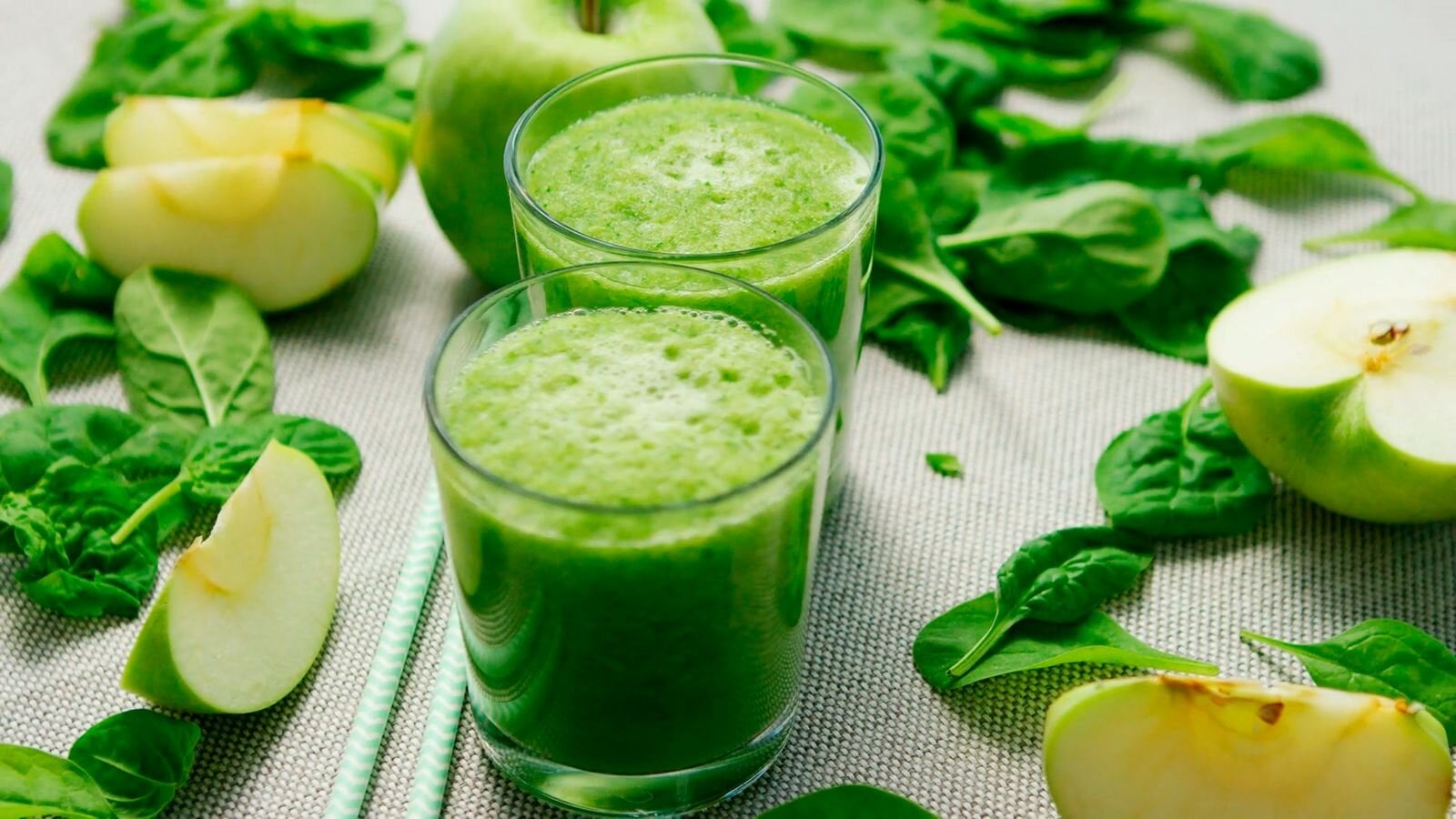
The key is how you use it. Replacing all meals with juice can leave you short on fiber, protein, healthy fats, and total energy. A safer approach is to enjoy green juice in a modest portion alongside balanced meals rather than treating it as your only source of nutrition.
The National Center for Complementary and Integrative Health evidence review reports that research on detox and cleansing programs is limited and generally low quality, with no compelling evidence that detox diets eliminate toxins or provide lasting weight-management benefits.
What Is a Green Juice Cleanse?
A green juice cleanse is a short-term eating plan centered on juices made primarily from green vegetables and sometimes fruit.
Common green juice ingredients include:
Some cleanses allow several juices plus a small meal, while stricter versions replace nearly all solid food with juice for one or more days.
The term “cleanse” usually implies that the diet removes toxins or gives the digestive system a reset. That is where the scientific evidence becomes much weaker.
Juice and a juice cleanse should therefore be considered separately. Green juice can supply nutrients. That does not mean a juice-only cleanse provides additional detoxification benefits.
Does a Green Juice Cleanse Really Detox Your Body?
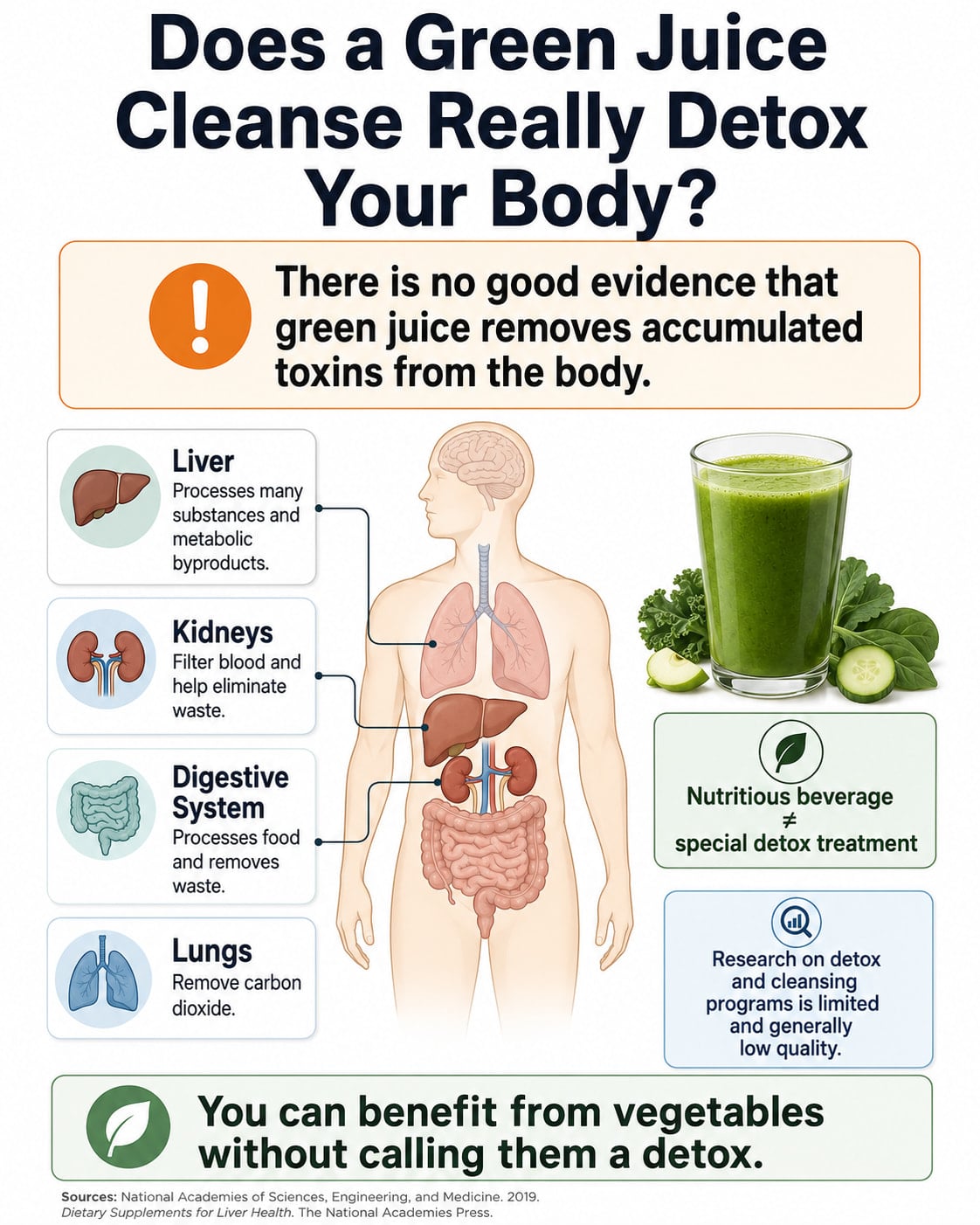
There is no good evidence that drinking green juice removes accumulated toxins from the body.
Your body already has systems responsible for processing and eliminating waste products. The liver and kidneys play major roles, while the digestive system, lungs, skin, and other organs also contribute to normal metabolic processes.
The NCCIH reports that only a small number of human studies have examined detoxification programs. Although some studies have reported changes in weight, blood pressure, or other measures, many have involved small samples or other methodological limitations.
Its evidence review concluded that there is no compelling research supporting detox diets for eliminating toxins or managing weight long term.
That does not make vegetables or vegetable juice unhealthy. It simply means you do not need to label nutritious foods as a “detox” to benefit from them.
Green Juice Cleanse Benefits: What Can It Actually Do?
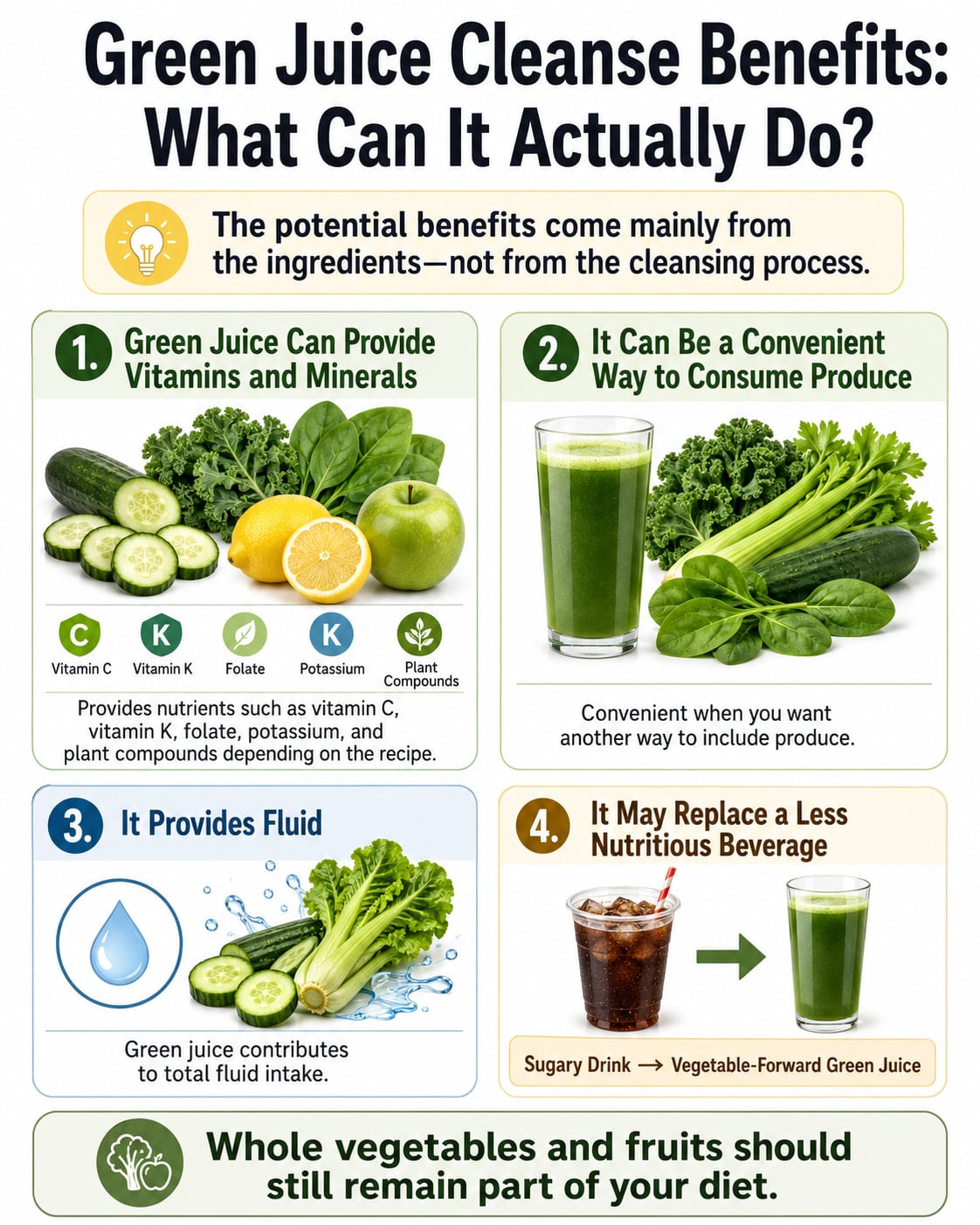
The possible benefits mainly come from the ingredients in green juice, not from the cleansing process itself.
1. Green Juice Can Provide Vitamins and Minerals
Vegetables and fruits naturally contain micronutrients such as vitamin C, vitamin K, folate, potassium, and other compounds. Exactly what your juice provides depends on its ingredients and serving size.
For someone who has difficulty eating enough vegetables, a vegetable-heavy juice may be a convenient way to include some additional produce.
However, juice should complement rather than routinely replace whole vegetables and fruits.
The current Dietary Guidelines for Americans, 2025–2030, released in January 2026, recommends eating whole vegetables and fruits in their original form. It specifically states that 100% fruit or vegetable juice should be consumed in limited portions or diluted with water.
2. It Can Be a Convenient Way to Consume Produce
A glass of green juice may be easier to consume when you are short on time or do not feel like eating vegetables at a particular meal.
That convenience can be useful, but it should not create the impression that juice is nutritionally identical to eating the original ingredients.
Juicing commonly separates liquid from much of the pulp, reducing the amount of fiber that reaches your glass.
3. It Provides Fluid
Vegetables and fruits naturally contain substantial amounts of water, so green juice contributes to total fluid intake.
However, you do not need juice to stay hydrated. Water remains a simple everyday beverage choice, and green juice should not replace normal hydration.
4. It May Replace a Less Nutritious Beverage
Green juice can be a reasonable choice when it replaces beverages high in added sugar.
The benefit depends on the recipe. A juice containing large amounts of apple, pineapple, mango, or other fruit can still contain substantial naturally occurring sugar even without added sugar.
For everyday use, a vegetable-forward recipe generally makes more sense than turning green juice into mostly fruit juice.
Green Juice Is Not the Same as Eating Whole Vegetables
One of the biggest disadvantages of juicing is fiber loss.
Fiber contributes to digestive health and helps make foods more filling. Whole vegetables and fruits also require more chewing and generally take longer to consume.
Traditional juicers remove much of the fibrous pulp. Smoothies are different because a blender typically keeps the entire edible portion of the food in the drink.
| Green Juice | Green Smoothie |
|---|---|
| Much of the pulp is removed | Most or all edible pulp remains |
| Usually lower in fiber | Usually retains more fiber |
| Easier to drink quickly | Often more filling |
| Can contain concentrated fruit sugars | Can include whole fruit plus fiber |
| Usually lacks enough protein or fat for a meal | Can include yogurt, milk, nuts, seeds, or other foods |
If your main goal is to increase whole-food intake rather than simply enjoy juice, a smoothie containing whole vegetables or fruit may often be the more filling option.
Green Juice Cleanse Risks and Side Effects
A small amount of green juice is very different from consuming nothing but juice for several days.
The more restrictive the cleanse becomes, the more important the potential downsides are.
Low Fiber Intake
Juicing removes much of the pulp where dietary fiber is found.
If juice replaces vegetables, fruit, beans, whole grains, and other fiber-rich foods for several days, total fiber intake may decline considerably.
Fiber supports normal digestion and is one reason whole produce remains important even when you drink juice.
Too Little Protein and Healthy Fat
Typical green juices contain very little protein or fat.
Protein is needed for numerous functions throughout the body and helps maintain lean tissue, while dietary fats provide energy and help supply essential fatty acids.
A diet consisting entirely of vegetable and fruit juice is unlikely to provide a balanced combination of these nutrients.
Hunger, Weakness, Headache, or Dizziness
Restrictive juice cleanses may provide substantially fewer calories than a person’s usual diet.
NCCIH notes that fasting and restrictive cleansing programs can be associated with symptoms including weakness, headache, fainting, and dehydration. Severely restrictive diets may also fail to supply all required nutrients.
Feeling miserable is not evidence that a cleanse is “working” or that toxins are leaving your body.
Blood Sugar Concerns
Juice is consumed quickly and contains less fiber than the whole foods from which it was made.
This may be especially relevant when a recipe contains large amounts of fruit.
People with diabetes should not make major dietary changes or begin a restrictive juice fast without discussing the plan with their healthcare team. NCCIH specifically advises people with diabetes to consult their healthcare providers before making major eating changes.
High-Oxalate Ingredients May Be a Problem for Some People
Certain vegetables frequently used in green juices can contain substantial amounts of oxalate.
NCCIH specifically warns that some detox juices contain high-oxalate foods, including certain leafy greens and beets, and advises people susceptible to kidney stones to limit high-oxalate foods as appropriate.
This does not mean everyone needs to avoid leafy greens. The concern is more relevant when someone repeatedly concentrates large quantities of certain ingredients into juices, especially if they already have kidney disease, a history of kidney stones, or another condition affecting oxalate handling.
Unpasteurized Juice Can Cause Foodborne Illness
Fresh juice is not automatically safer simply because it is homemade, organic, or sold at a juice bar.
The FDA’s juice safety guidance explains that bacteria on raw produce can enter fresh-squeezed juice. Unless juice is pasteurized or otherwise treated to destroy harmful bacteria, contamination is possible.
The consequences can be particularly serious for:
- Pregnant women
- Young children
- Older adults
- People with weakened immune systems
People in these higher-risk groups should avoid untreated or unpasteurized juice.
Some Juice Ingredients Can Interact With Medications
Do not assume that every natural ingredient is compatible with every medication.
Grapefruit is a particularly important example. Some green juice recipes include grapefruit for sweetness or acidity.
The FDA reports that grapefruit juice can interact with certain medications, including some cholesterol-lowering statins, blood-pressure medicines, transplant medications, anti-anxiety drugs, corticosteroids, heart-rhythm medications, and antihistamines.
If your medication label warns against grapefruit or other fruit juices, changing the amount or timing on your own is not necessarily enough to prevent an interaction. Ask your pharmacist or healthcare professional what applies to your specific medication.
A Juice-Only Diet May Affect the Microbiome
Claims that juice cleanses automatically “reset” or improve gut bacteria are not established.
A small 2025 study reported on 14 adults who followed juice-only, juice-plus-food, or plant-based-food diets for three days. Juice-based interventions were associated with changes in oral bacterial populations and increases in some bacterial groups associated with inflammatory processes. The researchers did not find significant overall changes in gut microbiome composition.
Because the study involved only 14 participants and lasted just three days, it cannot prove that juice cleanses cause long-term microbiome harm. It does, however, challenge the idea that a short juice fast has a proven gut-cleansing effect.
Can a Green Juice Cleanse Help You Lose Weight?
You may see the number on the scale decrease during a restrictive green juice cleanse, but that does not mean the cleanse has a special fat-burning effect.
Juice-only plans can dramatically reduce calorie intake compared with someone’s normal diet. Short-term body weight may consequently fall.
NCCIH reports that juicing and detox diets may produce initial weight loss because calorie intake is low, but weight can return when normal eating resumes. It also notes that long-term effects of detoxification programs have not been established.
For lasting weight management, a dietary pattern that you can maintain is more useful than repeatedly cycling between restrictive cleanses and normal eating.
Green juice can fit into such a pattern, but it is not necessary for weight loss.
How to Do a Green Juice Cleanse Safely
There is no evidence-based juice-only cleanse protocol that has been proven safe or beneficial for everyone.
If you want to try green juice because you enjoy it or want another way to include vegetables, the safer approach is to skip the juice fast and use green juice as one component of a nutritionally complete diet.
1. Keep Eating Normal Balanced Meals
Do not rely on green juice for all of your nutrition.
Continue eating foods that provide:
- Protein
- Fiber-rich carbohydrates
- Vegetables and whole fruits
- Healthy fats
- Other nutrient-dense foods
Think of green juice as a beverage or addition—not a meal-replacement program.
2. Make Vegetables the Main Ingredients
You do not need several apples or cups of tropical fruit to make green juice palatable.
Build the drink primarily around vegetables and use a smaller amount of fruit when you want sweetness.
Possible ingredients include:
- Cucumber
- Celery
- Romaine lettuce
- Parsley
- Mint
- Lemon
- Ginger
- A small amount of apple or another fruit
Ingredient choices may need to be modified for people with kidney problems or other medical conditions.
3. Do Not Add Sugar
Fruit already contributes naturally occurring sugar.
There is usually no reason to add:
- Table sugar
- Syrups
- Agave
- Honey
- Sweetened juice concentrates
If the juice tastes too strong, consider diluting it with water rather than adding more sweetener.
4. Continue Eating Whole Produce
Drinking green juice does not mean you have met all your vegetable and fruit needs for the day.
The current Dietary Guidelines prioritize whole fruits and vegetables and recommend limiting portions of 100% juice.
Include vegetables and fruit in their whole form throughout your normal meals whenever possible.
5. Use Good Food-Safety Practices
Before juicing:
- Wash your hands.
- Rinse produce thoroughly under running water.
- Keep the juicer, cutting board, knife, and containers clean.
- Remove damaged or spoiled portions of produce.
- Keep fresh juice refrigerated.
- Avoid leaving fresh juice sitting at room temperature for extended periods.
If you are pregnant, immunocompromised, an older adult, or preparing juice for a young child, choose pasteurized or otherwise safely treated juice rather than untreated juice.
6. Avoid Laxatives and “Detox” Supplements
A juice cleanse sometimes comes bundled with herbal products, teas, colon-cleansing products, or laxatives.
These additions are not necessary.
NCCIH notes that laxative-containing cleansing programs can cause diarrhea, which can contribute to dehydration and impaired nutrient absorption. Extremely restrictive regimens involving excessive fluid and little or no food can also disturb electrolyte balance.
7. Stop If You Feel Unwell
Do not interpret significant weakness, fainting, persistent dizziness, vomiting, severe diarrhea, or other concerning symptoms as evidence of successful detoxification.
Stop the restrictive plan and seek appropriate medical guidance when symptoms are severe, persistent, or concerning.
A Simple Green Juice Recipe
If you want green juice without turning it into a restrictive cleanse, try a simple vegetable-forward recipe.
Easy Green Juice
Ingredients:
- 1 cucumber
- 2 celery stalks
- A few romaine leaves
- ½ green apple
- A small piece of fresh ginger
- Lemon to taste
Wash all produce thoroughly, process it through your juicer, and drink it as part of your normal eating pattern.
For additional fiber, eat the remaining half of the apple or another whole fruit instead of adding more fruit to the juicer.
You can also dilute the juice with water if you prefer a lighter flavor.
A Safer Alternative to a 3-Day Green Juice Cleanse
Instead of spending three days consuming juice alone, use the desire for a “reset” as an opportunity to simplify your normal diet.
For several days, you might:
- Drink water as your primary beverage.
- Include vegetables at your main meals.
- Eat whole fruit.
- Choose minimally processed protein foods.
- Include fiber-rich foods.
- Limit foods and beverages high in added sugar.
- Prepare more meals at home.
- Enjoy a small green juice if you like it.
- Maintain your normal meals instead of fasting.
This approach provides the benefits of eating nutritious foods without deliberately removing the nutrients that a juice-only plan often lacks.
Who Should Be Especially Careful With a Green Juice Cleanse?
Talk with a healthcare professional before beginning a restrictive cleanse if you:
- Have diabetes or take glucose-lowering medication
- Have kidney disease
- Have a history of kidney stones
- Have undergone bariatric or significant gastrointestinal surgery
- Take prescription medications that may interact with juice ingredients
- Have significant nutritional deficiencies
- Are pregnant or breastfeeding
- Are an older adult with increased nutritional needs
- Have another chronic medical condition that affects your dietary requirements
Children should not be placed on restrictive juice cleanses.
Green Juice vs. Green Juice Cleanse: The Bottom Line
The distinction is important.
- Green juice: Can be one way to consume some vegetables and nutrients.
- Green juice cleanse: Usually involves restricting normal foods and making unsupported claims about detoxification.
You do not have to choose between never drinking green juice and surviving on juice for several days.
For most people, the practical middle ground is better: eat whole, nutrient-dense foods, keep whole vegetables and fruits in your diet, and enjoy green juice in moderation if you like it.
Frequently Asked Questions
Is a 3-day green juice cleanse safe?
A three-day juice-only cleanse is not necessary for detoxification, and there is no established three-day protocol proven safe for everyone.
Because juice-only diets can provide inadequate protein, fat, fiber, calories, and some essential nutrients, people with medical conditions or increased nutritional needs may face additional risks.
A safer option is to continue eating balanced meals and use green juice as an additional beverage.
How much green juice should I drink per day?
There is no scientifically established amount of green juice that everyone needs to drink each day.
The 2025–2030 Dietary Guidelines recommend eating whole vegetables and fruits in their original form and consuming 100% fruit or vegetable juice only in limited portions or diluted with water.
Your appropriate intake also depends on your total diet, energy needs, ingredients, medications, and health conditions.
Does green juice cleanse your liver?
There is no convincing evidence that green juice performs a special liver cleanse.
Your liver already carries out complex metabolic and detoxification functions. Eating a nutritious overall diet is more evidence-based than relying on a temporary juice cleanse.
Can a green juice cleanse reduce belly fat?
A green juice cleanse cannot selectively reduce abdominal fat.
A restrictive cleanse may cause short-term scale weight loss because calorie intake is reduced, but there is no evidence that green juice specifically targets belly fat or produces superior long-term weight loss.
Can I drink green juice every day?
Green juice can fit into a healthy diet for many people, but it should not routinely replace whole vegetables, whole fruits, balanced meals, or water.
Keep the recipe vegetable-forward, avoid added sugars, continue eating fiber-rich whole foods, and consider any medication or medical-condition restrictions that apply to you.
Is a green smoothie healthier than green juice?
Neither option is automatically healthier, because ingredients matter.
However, a smoothie made from whole vegetables and fruits generally retains more fiber than juice because the pulp remains in the drink. A smoothie can also contain protein and healthy fats when ingredients such as yogurt, milk, nuts, or seeds are included.
What is the best time to drink green juice?
There is no proven special time of day when green juice detoxifies the body or provides substantially greater health benefits.
Choose a time that fits comfortably into your normal eating pattern. There is generally no need to drink it on an empty stomach or use it in place of breakfast.
Conclusion
A green juice cleanse is not required to detox your body, and juice-only diets offer no established advantage for lasting weight loss or overall health.
Green juice itself can still have a place in a nutritious diet. The safest and most practical approach is to keep eating balanced meals, prioritize whole vegetables and fruits, choose vegetable-forward juice without added sugar, and pay attention to food safety, medical conditions, and medication interactions.
If you enjoy green juice, use it as an addition to healthy eating—not as a replacement for it.
This content is for informational purposes only and not medical advice.
References
- National Center for Complementary and Integrative Health — “Detoxes” and “Cleanses”: What You Need To Know
- U.S. Department of Agriculture and U.S. Department of Health and Human Services — Dietary Guidelines for Americans, 2025–2030
- U.S. Food and Drug Administration — What You Need to Know About Juice Safety
- U.S. Food and Drug Administration — Grapefruit Juice and Some Drugs Don’t Mix
- PubMed — Effects of Vegetable and Fruit Juicing on Gut and Oral Microbiome Composition, 2025