
MCT oil is a concentrated source of medium-chain triglycerides—fats that are absorbed relatively quickly and transported mainly to the liver, where they can be used for energy or converted into ketones. Most commercial MCT oils are made from coconut or palm-kernel oil and contain primarily caprylic acid, or C8, and capric acid, or C10.
MCT oil may be useful in certain medically supervised nutrition plans and may produce modest weight-management or cognitive benefits in specific situations. However, it is not a proven fat-burning shortcut, dementia preventive, or exercise-performance enhancer. Diarrhea, abdominal discomfort, nausea, and other digestive symptoms are its most consistently documented side effects.
MCT Oil at a Glance
| Question | Key fact |
|---|---|
| What does MCT stand for? | Medium-chain triglycerides |
| What is MCT oil made from? | Usually fractionated coconut oil, palm-kernel oil, or both |
| Which MCTs are commonly included? | C8, C10, or a blend of the two |
| What does MCT oil do? | Provides rapidly absorbed fatty acids and can increase ketone production |
| Does it cause weight loss? | It may produce a small benefit when used in place of other dietary fats |
| What are the main side effects? | Diarrhea, cramps, abdominal discomfort, nausea, bloating, and vomiting |
| Is there an official daily dose? | No universal or officially established dose exists |
What Is MCT Oil?
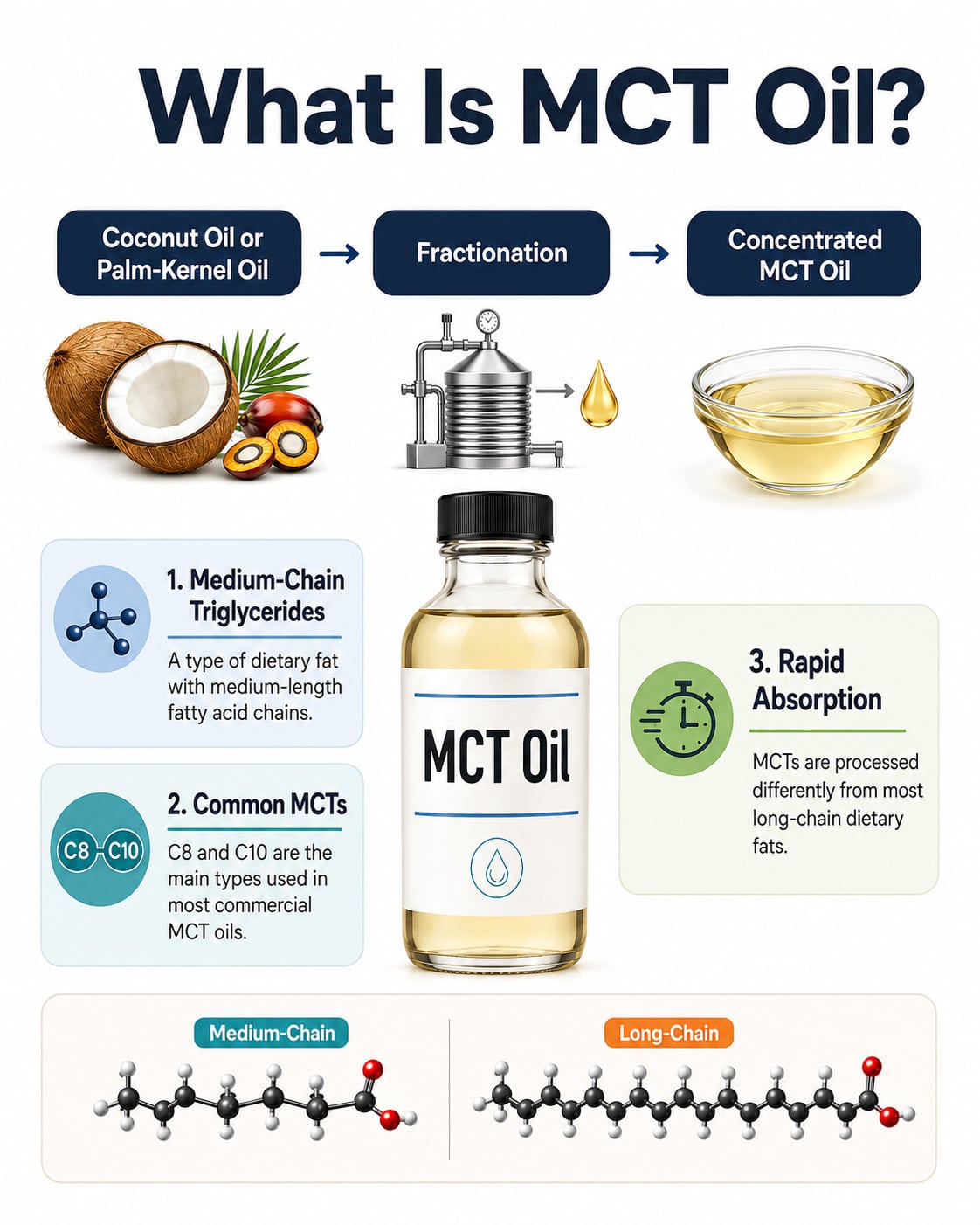
MCT oil is an edible oil containing medium-chain triglycerides. A triglyceride is a type of fat made from three fatty acids attached to a glycerol molecule.
Fatty acids are often classified according to the length of their carbon chains. Medium-chain fatty acids generally contain between 6 and 12 carbon atoms, while long-chain fatty acids contain longer carbon chains.
The shorter structure of MCTs affects how they are digested, transported, and metabolized. Compared with most long-chain fats, MCTs are more likely to travel directly from the digestive tract to the liver through the portal circulation.
What Is MCT Oil Made From?
Manufacturers usually make MCT oil by extracting and separating specific fatty acids from coconut oil or palm-kernel oil. This separation process is known as fractionation.
Although coconut oil naturally contains some medium-chain fatty acids, commercial MCT oil is much more concentrated. Most products contain almost entirely C8, C10, or a combination of both, with little C12.
MCT powder is made by combining MCT oil with a carrier. Depending on the product, that carrier may include:
- Milk proteins
- Soluble fiber
- Starch
- Sweeteners
- Flavorings
- Emulsifiers
For that reason, MCT powder and pure MCT oil may have different calorie, carbohydrate, protein, and allergen information.
The Four Types of Medium-Chain Fatty Acids
| Type | Common name | Carbon length | Key characteristic |
|---|---|---|---|
| C6 | Caproic acid | 6 | Technically an MCT but uncommon in most commercial products |
| C8 | Caprylic acid | 8 | Produces the strongest and fastest ketogenic response |
| C10 | Capric acid | 10 | Can increase ketones, but generally less strongly than C8 |
| C12 | Lauric acid | 12 | Abundant in coconut oil but produces a weaker ketogenic response |
C12 is included in the scientific definition of medium-chain fatty acids, but it is metabolized less like C8 and C10. A smaller proportion travels directly through the portal circulation, and its effect on ketone production is weaker.
How Does MCT Oil Work?
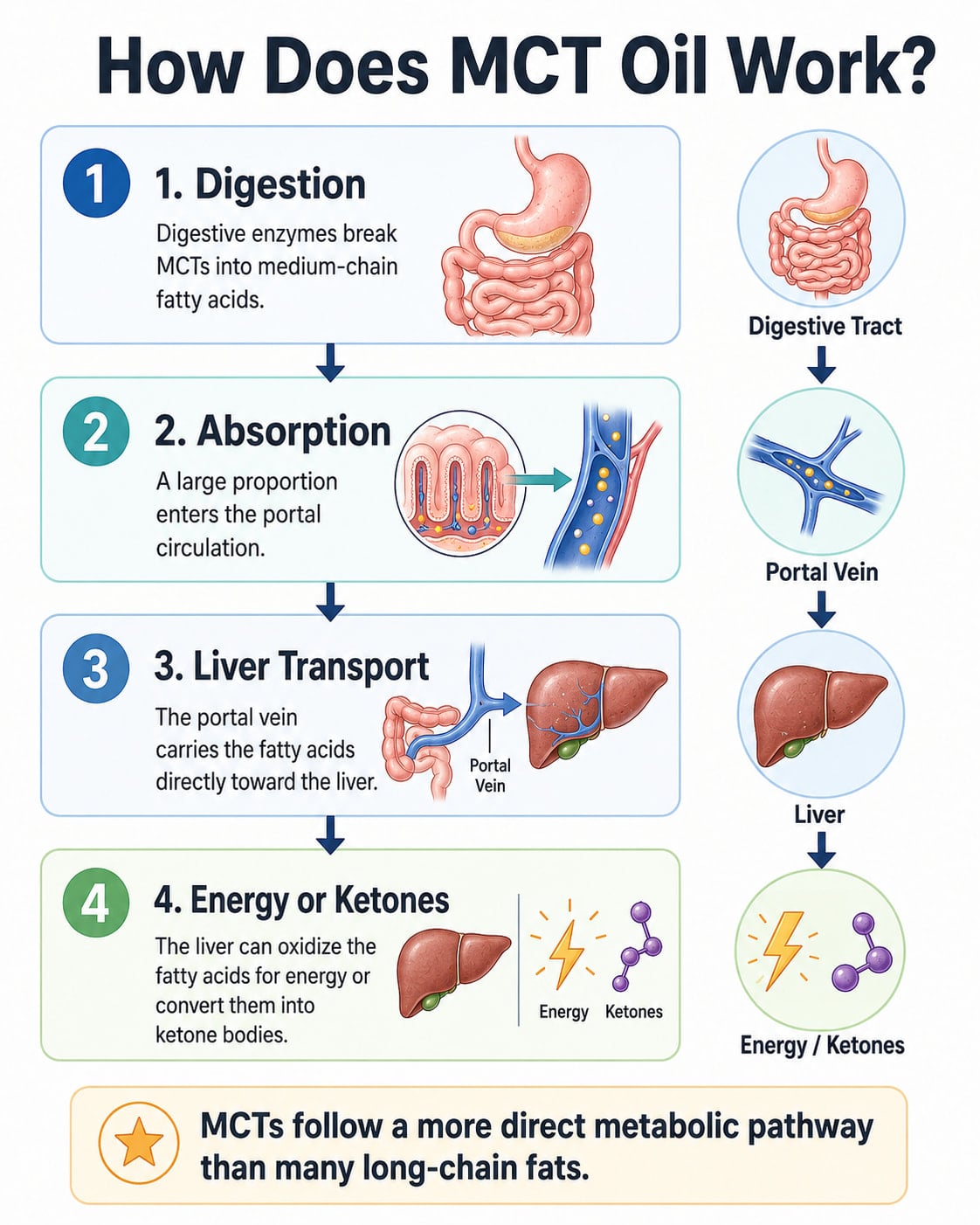
MCT oil follows a relatively direct path through the body:
- Digestive enzymes break the triglycerides into medium-chain fatty acids.
- A large proportion of those fatty acids enters the portal circulation.
- The portal vein transports them to the liver.
- The liver can oxidize them for energy or convert them into ketone bodies.
Unlike most long-chain fats, C8- and C10-rich MCTs do not depend as heavily on bile-mediated digestion or transport through the lymphatic system. This is one reason MCTs can be useful in certain clinical nutrition plans involving impaired fat absorption.
MCT Oil and Ketone Production
Ketones are compounds the liver produces from fatty acids. They can be used as an alternative energy source by tissues including the muscles, heart, kidneys, and brain.
C8 has the strongest ketogenic effect, followed by C10. However, taking MCT oil does not necessarily mean that you have entered nutritional ketosis.
Your ketone response can depend on:
- The type and amount of MCT consumed
- Your carbohydrate intake
- Whether you recently ate
- Your activity level
- Your metabolic health
- Individual biological differences
Does MCT Oil Provide Instant Energy?
MCTs are processed quickly and can provide a rapidly available source of dietary fat. However, “rapidly available” does not guarantee a noticeable burst of physical or mental energy.
Energy levels are affected by many factors, including sleep, overall calorie intake, hydration, blood sugar regulation, fitness, illness, and medication use. MCT oil should not be used to cover up persistent fatigue that may have another cause.
MCT Oil vs. Coconut Oil
MCT oil and coconut oil are related, but they are not interchangeable.
| Feature | MCT oil | Coconut oil |
|---|---|---|
| Form | Concentrated, fractionated oil | Whole culinary oil |
| Main relevant fatty acids | Usually C8 and C10 | Primarily C12, plus C8, C10, and longer-chain fats |
| Ketone response | Generally faster and stronger | Usually weaker |
| Flavor | Often neutral | May have a coconut flavor |
| Common use | Supplementation and specialized nutrition | Cooking and food preparation |
| Research relevance | Studies often use concentrated C8/C10 | Results from MCT oil studies may not apply |
Coconut oil contains multiple fatty acids, including a large amount of lauric acid. MCT oil usually removes most of the lauric acid and concentrates C8 and C10.
Potential MCT Oil Benefits
1. Increases Ketone Production
The clearest immediate effect of MCT oil is its ability to increase ketone production. C8-rich oils generally produce a greater rise than C10-rich or C12-rich fats.
This may be useful in carefully designed ketogenic diets or clinical nutrition programs. However, higher ketone levels do not automatically translate into better weight loss, sharper thinking, or improved athletic performance.
2. May Support Nutrition in People With Fat Malabsorption
MCTs have been used in clinical nutrition because they are easier to absorb than many long-chain dietary fats.
A healthcare professional or registered dietitian may recommend MCT oil when someone has a condition that interferes with normal fat digestion, absorption, or lymphatic transport. It may help provide additional calories without relying as heavily on the usual long-chain fat absorption pathway.
According to Memorial Sloan Kettering’s patient guidance, MCT oil may be used for malabsorption or as part of a ketogenic diet. These uses should be supervised because the appropriate amount depends on the person’s condition, nutritional requirements, medications, and tolerance.
MCT oil should not be used to self-manage unexplained weight loss, chronic diarrhea, pancreatic problems, or another digestive condition.
3. May Produce Modest Weight-Loss Benefits
MCTs may slightly increase diet-induced thermogenesis and may affect short-term food intake. However, the average effect on body weight appears small.
A 2024 systematic review and meta-analysis involving adults with overweight or obesity reported that MCT-enriched diets produced greater weight reduction than comparison diets. The pooled difference was approximately 1.53 percentage points, which represents a modest—not dramatic—average effect.
These findings do not mean that adding MCT oil to an unchanged diet will automatically cause weight loss. MCT oil still provides calories. In many studies, MCTs replaced other dietary fats rather than being added on top of the participants’ normal intake.
For practical weight management, MCT oil is far less important than:
- Maintaining a manageable calorie deficit
- Eating sufficient protein and fiber
- Choosing mostly nutrient-dense foods
- Exercising regularly
- Sleeping consistently
- Following habits that are sustainable
MCT oil cannot target belly fat or cause meaningful fat loss without an appropriate overall energy balance.
4. May Support Certain Cognitive Outcomes
The brain can use ketones as an alternative energy source. This has led researchers to study MCT supplements in people with subjective cognitive decline, mild cognitive impairment, and Alzheimer’s disease.
A 2023 systematic review and meta-analysis found that studies measuring ketones consistently reported an increase after medium-chain fatty acid supplementation. Cognitive findings were much less consistent: some studies reported improvements, some found no meaningful change, and some suggested that responses could vary according to APOE-e4 genetic status.
The evidence does not currently establish that MCT oil:
- Prevents dementia
- Prevents Alzheimer’s disease
- Reverses cognitive decline
- Reliably improves memory in healthy adults
- Replaces medical evaluation or prescribed care
Anyone experiencing new or worsening memory problems should seek a medical assessment rather than relying on a supplement.
5. May Be Included in a Medically Supervised Ketogenic Diet
MCT oil can be included in certain ketogenic dietary therapies for drug-resistant epilepsy. Because MCTs produce ketones efficiently, an MCT-based ketogenic diet may allow a different balance of fat, protein, and carbohydrates than a classic ketogenic diet.
This is a specialized medical use. MCT oil alone is not a seizure medication, and a person should never discontinue or change antiseizure medicine without their prescribing clinician. Ketogenic therapy for epilepsy requires monitoring by an experienced medical and nutrition team.
Benefits That Are Not Yet Proven
MCT Oil Is Not a Proven Exercise Enhancer
Increasing ketones does not necessarily improve exercise performance.
A 2022 systematic review found that most studies did not show meaningful improvements in endurance, glucose levels, lactate, carbohydrate oxidation, fat oxidation, or overall performance among healthy participants. Large amounts may also cause gastrointestinal symptoms that interfere with exercise.
MCT oil should not replace proven performance strategies such as adequate training, hydration, carbohydrates when appropriate, sufficient protein, and recovery.
MCT Oil Does Not Guarantee Ketosis
MCT oil can increase ketone production, but nutritional ketosis depends on the person’s overall diet and metabolism. Someone eating a high-carbohydrate diet may experience a small temporary rise in ketones without entering sustained ketosis.
MCT Oil Does Not Burn Fat From a Specific Area
No food or supplement can selectively remove fat from the abdomen, hips, thighs, or another body part. Changes in body fat require a sustained energy deficit, and the areas that change first are strongly influenced by genetics and hormones.
MCT Oil Is Not a Detox Product
The liver and kidneys continuously process and remove metabolic waste. There is no good evidence that MCT oil “cleanses” the liver, removes toxins, or eliminates the need for medical care.
MCT Oil Side Effects
Digestive Side Effects Are the Main Concern
The most common MCT oil side effects involve the digestive system:
- Diarrhea or loose stools
- Abdominal cramps
- Stomach pain or discomfort
- Nausea
- Vomiting
- Bloating
- Gas
- Sudden bowel urgency
- Constipation in some people
A 2026 systematic review of MCT side effects included 33 studies and approximately 1,100 participants. Among the 29 studies that reported side effects quantitatively, diarrhea was reported in 22 studies, abdominal pain or discomfort in 18, nausea in 11, and constipation in 10.
These numbers describe how many studies reported each symptom. They do not mean that 22 out of every 29 people will develop diarrhea. Participant-level rates varied widely because the studies used different doses, products, populations, and reporting methods.
When timing was reported, symptoms often began within two hours of consuming MCTs and generally resolved within 30 minutes to six hours. Long-term studies did not consistently document the timing or duration of adverse effects.
Larger Amounts May Be Harder to Tolerate
Several studies found that side effects became more common or more severe as the amount of MCT increased. However, the 2026 review could not establish a dependable dose-response relationship because the studies were too different from one another.
Digestive symptoms also occurred at relatively low amounts in some participants. This means that staying below a particular number does not guarantee that an individual will tolerate the oil.
Taking MCT oil with food may feel easier for some people, but existing research does not show that food consistently prevents side effects.
MCT Oil and Cholesterol
MCT oil is predominantly saturated fat, but its effect on blood lipids is not identical to that of every other saturated fat.
A 2021 systematic review and meta-analysis of randomized trials found no significant overall effect on total cholesterol, LDL cholesterol, or HDL cholesterol. However, it found a small average increase in blood triglycerides.
That does not make MCT oil a heart-health supplement. People with high triglycerides, elevated LDL cholesterol, cardiovascular disease, fatty liver disease, or related risk factors should discuss regular use with a qualified healthcare professional.
MCT oil also should not routinely replace established sources of unsaturated fat, such as olive oil, nuts, seeds, avocado, or fish, solely because it is marketed as a wellness product.
What Is Known About Long-Term Safety?
The 2026 review found inconsistent adverse-event reporting, substantial variation between studies, frequent industry involvement, and limited information about extended use.
The absence of a reported side effect in a short study does not prove that high daily amounts are safe indefinitely.
How Much MCT Oil Should You Take?
There is no Recommended Dietary Allowance or universal medically established dose for routine MCT oil supplementation.
Study amounts vary widely, and the appropriate intake depends on:
- Why the oil is being used
- Its C8 and C10 composition
- The person’s diet
- Digestive tolerance
- Medical conditions
- Medications
- Total calorie and fat intake
A cautious approach is to begin below the product’s full labeled serving rather than immediately using a large amount. Increase only gradually if the oil is well tolerated. This is a tolerance strategy, not a standardized medical dosing recommendation.
Stop or reduce the amount if you experience diarrhea, cramps, nausea, or another persistent symptom. Repeated vomiting, severe abdominal pain, dehydration, trouble breathing, or swelling requires prompt medical attention.
How to Use MCT Oil
MCT oil can be mixed into foods and beverages such as:
- Smoothies
- Yogurt
- Oatmeal
- Salad dressing
- Soups
- Sauces
- Coffee or tea
Follow the product’s instructions regarding heating and cooking. Formulations differ, so do not assume every MCT oil is suitable for high-temperature frying.
Can You Put MCT Oil in Coffee?
Yes, MCT oil can be mixed into coffee. However, adding oil increases the drink’s calorie and fat content.
Coffee containing MCT oil is not automatically a balanced breakfast. It may provide fat but little protein, fiber, or essential micronutrients unless those are supplied by other foods.
People who try MCT coffee should begin conservatively. Drinking a large serving on an empty stomach may be particularly uncomfortable for someone who is sensitive to digestive side effects.
Who Should Talk With a Healthcare Professional First?
Get individualized guidance before using MCT oil regularly if you:
- Have liver disease or fatty liver disease
- Have high triglycerides or elevated LDL cholesterol
- Have cardiovascular disease
- Have chronic diarrhea or another gastrointestinal disorder
- Have a condition affecting fat digestion or absorption
- Are pregnant or breastfeeding
- Are giving the product to a child
- Take prescription medications
- Plan to use it for epilepsy, diabetes, cognitive decline, or another medical condition
- Need MCT oil to meet significant calorie or nutrition requirements
MCT oil should not replace prescribed medications, clinical nutrition products, or a medically designed ketogenic diet.
How to Choose an MCT Oil Product
Check the MCT Composition
Look for a label that clearly identifies the amounts or percentages of:
- C8
- C10
- Other included fatty acids
A C8-only product may raise ketones more strongly than a C8/C10 blend. That does not prove it will be better for weight loss, cognition, or general health.
Review the Full Ingredient List
A plain liquid oil may contain only MCTs, while flavored oils and powders can contain additional ingredients. Check for:
- Added sugar or sweeteners
- Starches and carbohydrates
- Milk proteins
- Flavorings
- Emulsifiers
- Allergens
Check the Serving Size and Calories
Serving sizes are not standardized across all supplements. Compare products based on the amount of actual MCT oil per serving rather than bottle size or marketing terms.
When MCT oil is marketed as a dietary supplement, the FDA’s dietary supplement guidance explains that the agency does not approve it for safety or effectiveness before it reaches the market. Manufacturers are responsible for product safety, labeling, identity, purity, and compliance with manufacturing requirements.
Independent quality testing may provide additional assurance about ingredient identity and contaminants, but a testing seal does not prove that the product produces its advertised health benefits.
Avoid Exaggerated Claims
Be cautious of products promising to:
- Melt belly fat
- Prevent Alzheimer’s disease
- Control diabetes
- Detoxify the body
- Guarantee ketosis
- Replace meals
- Dramatically improve exercise performance
According to the FDA’s dietary supplement guidance, dietary supplements cannot legally be marketed as products that diagnose, prevent, or cure a disease unless they meet drug requirements.
Frequently Asked Questions
Is MCT Oil the Same as Coconut Oil?
No. MCT oil is usually a concentrated, fractionated source of C8 and C10. Coconut oil is a whole culinary oil containing a larger proportion of C12 and several other fatty acids. MCT oil generally produces a stronger ketone response.
Does MCT Oil Help You Lose Weight?
It may provide a small advantage when it replaces certain other dietary fats within a controlled eating plan. It will not overcome an excessive calorie intake, and simply adding it to your current diet can add more calories without producing weight loss.
Does MCT Oil Put You Into Ketosis?
MCT oil can increase blood ketones, especially when it contains a high proportion of C8. However, it does not guarantee sustained nutritional ketosis. Your total carbohydrate intake, meal timing, metabolic health, activity, and dose all matter.
Is C8 or C10 MCT Oil Better?
C8 produces ketones more efficiently, so it may be preferred when increasing ketones is the specific goal. A C8/C10 blend may be suitable for general use and may be tolerated differently. There is not enough evidence to declare one formulation best for everyone or for every health goal.
Is It Safe to Take MCT Oil Every Day?
Some healthy adults tolerate small daily amounts, but long-term safety data remain limited. Daily use is not necessary for most people. Stop or reduce intake if digestive symptoms develop, and seek professional advice if you have a medical condition.
Can You Cook With MCT Oil?
Some products can be used in dressings, sauces, soups, and low- or moderate-temperature food preparation. Suitability for higher-temperature cooking depends on the formulation, so follow the manufacturer’s heating instructions.
Who Should Not Take MCT Oil?
People with liver disease, high triglycerides, cardiovascular disease, persistent digestive problems, or medical conditions requiring specialized nutrition should speak with a healthcare professional first. Pregnant or breastfeeding people, children, and anyone using MCT oil for a diagnosed condition also need individualized guidance.
The Bottom Line
MCT oil is a concentrated source of rapidly absorbed medium-chain fats, usually C8 and C10. Its most reliable physiological effect is increasing ketone production. It also has legitimate roles in certain medically supervised nutrition programs.
Research suggests a possible modest weight-management benefit and mixed cognitive effects, but MCT oil has not been proven to burn belly fat, prevent dementia, improve endurance, or deliver broad health benefits. Digestive problems—particularly diarrhea, abdominal discomfort, and nausea—are its main documented drawbacks.
Read the complete label, begin conservatively, account for the added calories, and stop using it if symptoms persist. Consult a healthcare professional before using MCT oil for a medical purpose or if you have liver, cardiovascular, lipid, or gastrointestinal concerns.
This content is for informational purposes only and not medical advice.
References
- Gastrointestinal issues predominate among side effects of medium-chain triglyceride consumption in humans — Frontiers in Nutrition, 2026
- The impact of medium-chain triglycerides on weight loss and metabolic health — Clinical Nutrition, 2024
- Medium-chain fatty acids for the prevention or treatment of Alzheimer’s disease — Nutrition Reviews, 2023
- Medium-Chain Triglyceride Oil and Blood Lipids — The Journal of Nutrition, 2021
- The Effects of Medium-Chain Triglyceride Oil on Exercise Performance — International Journal of Sport Nutrition and Exercise Metabolism, 2022
- Applications of Medium-Chain Triglycerides in Foods — Frontiers in Nutrition, 2022