
The potential benefits of colostrum include effects on the gut barrier and fewer self-reported respiratory illnesses in some groups, but research has not established consistent benefits for most adults. Much depends on the product, the people studied, and whether researchers measured actual symptoms or changes in laboratory tests.
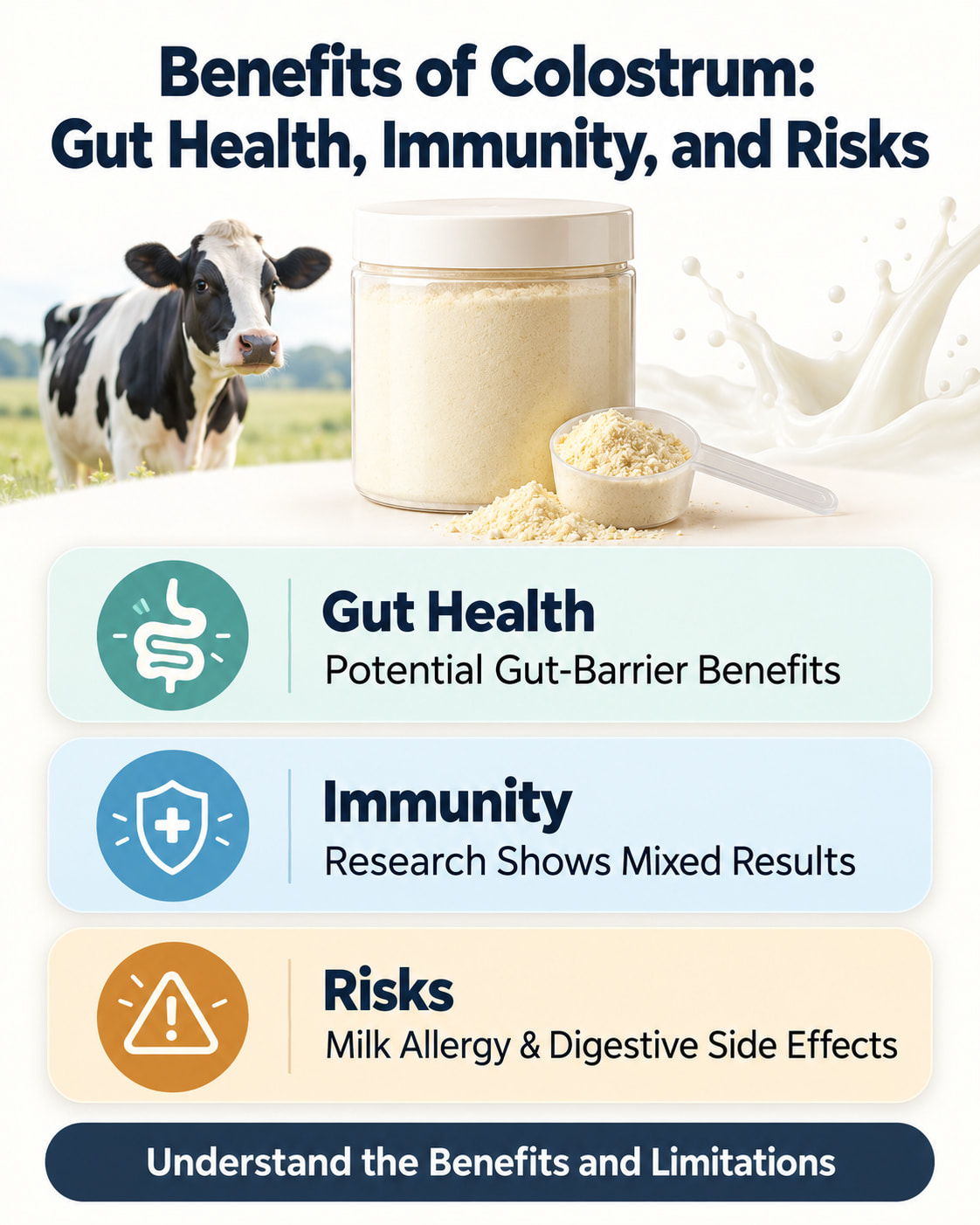
If you are considering a supplement for digestion or immunity, understanding those differences can help you decide whether it is worth trying. Milk allergy, digestive side effects, and product quality also deserve attention.
This guide focuses on bovine colostrum powders and capsules for adults.
What Is Colostrum?
Colostrum is the first milk produced by mammals, including humans and cows. It supplies newborns with nutrients and protective substances during the first days of life.
Most colostrum supplements come from cows. Manufacturers collect this bovine colostrum after calving and process it into products intended for human consumption. Human colostrum’s role in newborn feeding does not establish that a cow-derived supplement provides equivalent benefits to an adult.
Bovine colostrum contains several components that interest researchers:
- Immunoglobulins: Antibodies, including IgG, that recognize and bind particular targets.
- Lactoferrin: A protein studied for antimicrobial and immune-related activity.
- Growth factors: Compounds involved in cellular growth and tissue maintenance.
- Oligosaccharides and other bioactive compounds: Substances being studied for their interactions with the intestinal environment.
These ingredients help explain why colostrum is being investigated. Their presence alone does not prove that a particular supplement improves your health.
Potential Benefits of Colostrum for Gut Health
Gut health is one of the main areas of colostrum research. However, gut-barrier function, bowel symptoms, and diagnosed digestive conditions are different outcomes.
It May Affect Gut-Barrier Function
The intestinal barrier helps control what passes through the gut lining. Researchers sometimes evaluate its permeability using tests that measure how certain sugars move through the intestine and appear in urine.
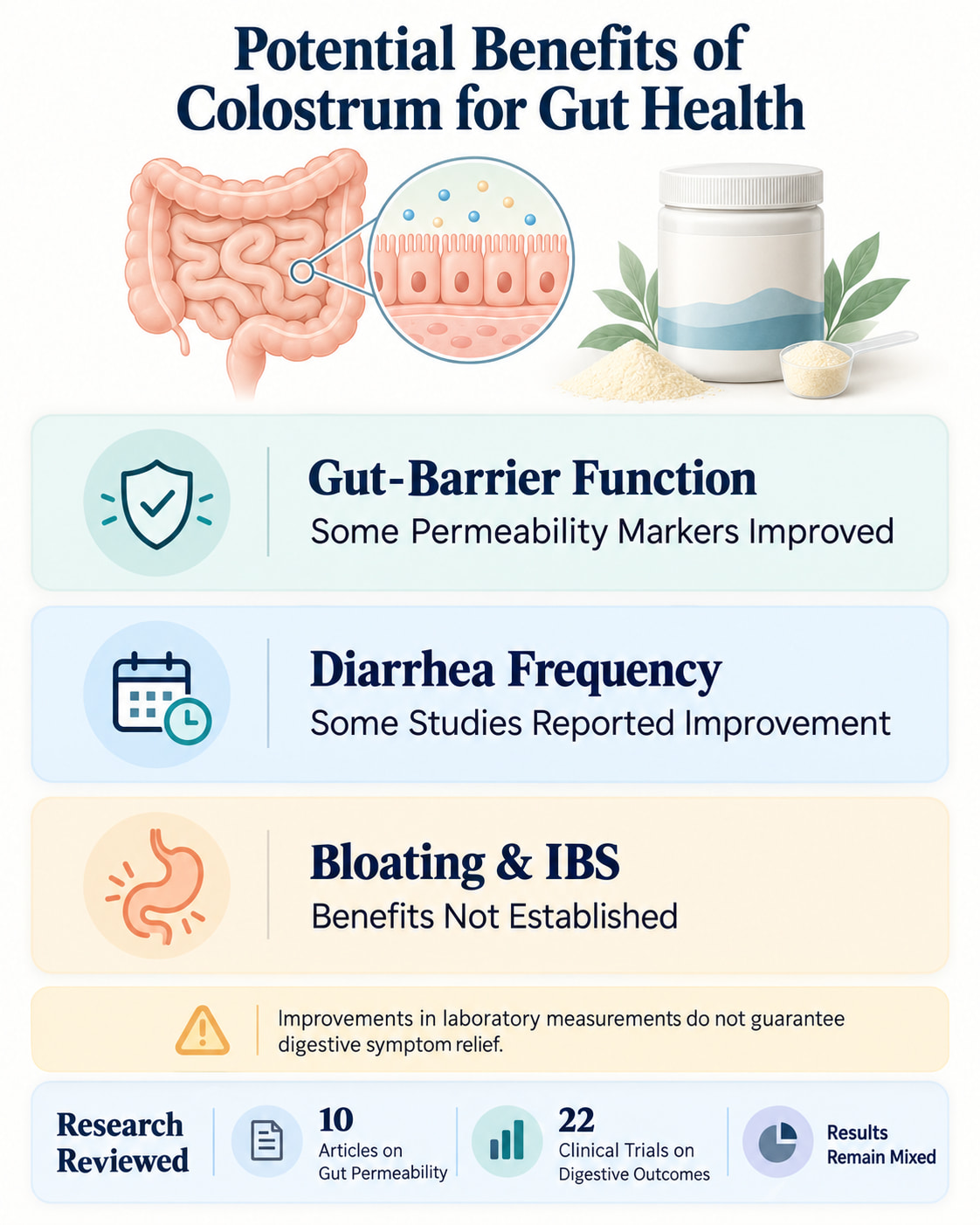
A 2024 meta-analysis included 10 research articles and found improvements in two urine-based measures of intestinal permeability. Another marker of intestinal cell injury did not significantly improve. Results also varied substantially between studies.
These findings suggest a possible effect on particular gut-barrier measurements. They do not establish that taking colostrum will make your digestion feel better. The review’s literature search ended in March 2022, despite its later publication.
More recent guidance remains cautious. A 2025 joint position statement from Sports Dietitians Australia and the Ultra Sports Science Foundation found insufficient strong, consistent evidence to recommend colostrum for exercise-related disturbances in gut integrity or systemic inflammation.
Some Studies Report Improvements in Diarrhea Frequency
A separate 2024 systematic review examined 22 clinical trials involving 1,427 participants. Many study groups experienced reduced diarrhea frequency, but most studies found no change in how long diarrhea lasted. Results for abdominal pain were mixed.
The studies included different age groups, medical conditions, and preparations. Some used specialized hyperimmune colostrum or products containing other ingredients.
That matters because a specialized preparation used in a clinical study may differ substantially from the powder on a store shelf. The findings do not establish that an ordinary supplement reliably helps with IBS, constipation, or everyday bloating.
Practical takeaway: Persistent digestive symptoms deserve an assessment of their cause. Changes in a gut-permeability test are not enough to show that a supplement will address your particular symptoms.
Does Colostrum Support Immunity?
Colostrum contains antibodies and other compounds involved in immune activity, but the effects of swallowing it as an adult remain an active research question.
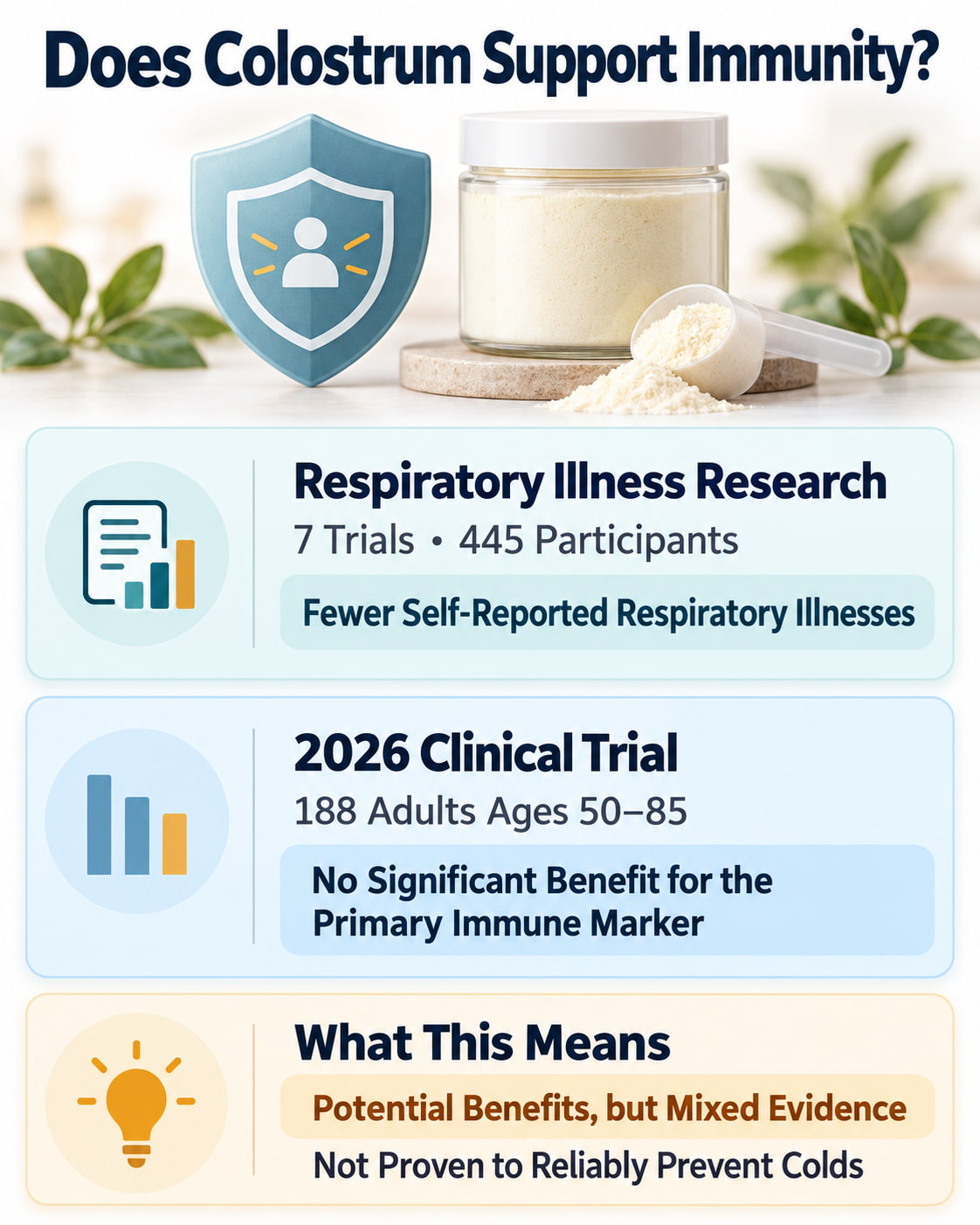
A review of seven trials, involving 445 randomized participants, found fewer self-reported upper respiratory illnesses with supplementation. This is an encouraging finding, but the outcome depended on participants’ reports. It does not establish broad protection against laboratory-confirmed infections or a predictable benefit for every reader.
Newer research also illustrates the uncertainty. An August 2026 trial enrolled 188 adults ages 50–85 and compared a colostrum-containing supplement with regular milk powder over 90 days.
The supplement did not outperform the comparison product for the study’s main outcome, a saliva-based immune marker called secretory IgA. Some other findings were favorable, but they were exploratory. The product also contained ingredients such as whey protein and a probiotic, so any effects could not be assigned to colostrum alone.
For someone hoping to experience fewer colds, the evidence supports cautious expectations. It does not justify relying on colostrum as dependable infection protection.
Colostrum Side Effects and Risks
Possible side effects include nausea and gas. If a new supplement causes symptoms, stop using it and discuss the reaction with a healthcare professional. New discomfort is not evidence that the product is working.
Milk Allergy and Lactose Intolerance
These conditions require different considerations:
| Condition | What it involves | What it means for colostrum |
|---|---|---|
| Cow’s-milk allergy | An immune reaction to milk proteins | Avoid bovine colostrum |
| Lactose intolerance | Difficulty digesting lactose, the sugar in milk | A product containing lactose may cause digestive symptoms; tolerance varies |
A low-lactose or lactose-free claim does not make a milk-derived product appropriate for someone with a milk-protein allergy. Check the allergen statement as well as the ingredient list.
Raw or Unpasteurized Products
Raw dairy can contain harmful microorganisms. CDC recommends choosing pasteurized dairy products, which supports avoiding raw or unpasteurized colostrum.
People who are pregnant, older, or immunocompromised face a greater risk of serious illness from contaminated raw dairy. A product’s natural image does not establish that it is microbiologically safe.
Questions About Long-Term Use
The available research does not establish long-term safety for everyone. Health Canada’s colostrum guidance advises consulting a healthcare professional for use beyond 12 weeks. That precaution should not be interpreted as a guarantee that shorter use is appropriate for every person.
Who Should Get Medical Advice Before Taking Colostrum?
In addition to avoiding it with a cow’s-milk allergy, discuss colostrum with a healthcare professional if you have circumstances that could affect its suitability.
Health Canada’s bovine colostrum monograph advises getting professional guidance before use if you:
- Are pregnant or breastfeeding.
- Have diabetes.
- Have a history of cancer.
- Have an immune-system disorder.
- Take medication that suppresses the immune system.
This is Canadian product-labeling guidance. It identifies situations requiring individual consideration rather than proving that colostrum harms everyone in these groups.
Ask a pediatric healthcare professional before giving supplements to a child. NIH notes that many supplements have not been adequately tested for safety in children or during pregnancy and nursing.
A Note for Competitive Athletes
WADA does not recommend ingesting colostrum because it may contain prohibited growth factors that could affect anti-doping tests. Colostrum itself is not specifically prohibited, but athletes subject to testing should take this guidance seriously.
Colostrum Dosage: How Much Should You Take?
There is no universally established dose proven to improve gut health or general wellness across adults. Studies use different preparations, amounts, and durations, which makes it difficult to turn their findings into one practical recommendation.
There is also no dependable timeline for when you should notice a benefit. Claims that everyone needs a particular scoop size or will feel a difference within a set number of days go beyond what the research establishes.
If you decide to consider a product, bring its label to your clinician or registered dietitian. Discuss your goal, the ingredients, the proposed duration, and what would count as a meaningful improvement.
A dose used in an athlete study is not automatically the right dose for you.
How to Evaluate a Colostrum Supplement
Product quality matters because formulations can differ.
The FDA regulates dietary supplements, but does not approve them for safety and effectiveness before they are marketed. Manufacturers must follow applicable manufacturing and labeling requirements. Describing supplements as completely “unregulated” is inaccurate.
Before buying, review these details:
| What to check | Why it matters |
|---|---|
| Amount per serving | The amount of colostrum matters more than the size of the scoop or container |
| Complete ingredient list | Added probiotics, proteins, vitamins, or sweeteners make it a different product |
| Milk-allergen labeling | Low lactose does not remove milk-protein allergy concerns |
| Pasteurization information | Raw dairy introduces avoidable food-safety risks |
| Independent quality testing | Testing can help assess labeled ingredients and contaminants |
Independent quality seals can provide useful information about manufacturing and contents. NIH cautions that they do not guarantee a supplement is safe or effective. A product can pass quality checks while still having uncertain benefits for your goal.
Is Taking Colostrum Worth Considering?
For a generally healthy adult, colostrum is an optional supplement with uncertain benefits. Current research does not establish that routine use is necessary, and health-system dietitians advise caution about recommending it broadly.
A useful starting point is to define what you want to improve. “Less bloating” or “fewer days with respiratory symptoms” is more specific than “better health.” That makes it easier to discuss whether the evidence applies to you and whether a different approach deserves attention first.
Consider the cost per serving and the recurring expense. A varied eating pattern remains important, and supplements cannot replace the range of nutrients supplied by food.
When to Seek Medical Help
Do not let a supplement trial delay evaluation of concerning digestive symptoms.
NIDDK advises adults to seek medical advice promptly for diarrhea lasting more than two days, severe abdominal pain, black or bloody stools, high fever, or signs of dehydration such as very little urine or marked dizziness.
After taking a supplement, sudden throat or tongue swelling, trouble breathing, or fainting can signal a severe allergic reaction. Seek emergency help immediately.
Frequently Asked Questions
Can Colostrum Help With Bloating or IBS?
It has not been established as a reliable option for either. Research on intestinal permeability does not directly prove relief from bloating or IBS symptoms, and clinical findings for digestive symptoms remain mixed.
Does Colostrum Prevent Colds?
Some studies report fewer self-reported respiratory illnesses. However, the evidence does not show that a particular supplement will reliably prevent colds for an individual.
Is Colostrum Safe to Take Every Day?
Daily use is not automatically appropriate. Milk allergy, medical conditions, medications, product quality, and the intended duration all matter. Get individualized advice before committing to ongoing use.
How Long Does Colostrum Take to Work?
There is no established timeline. Study durations vary, and taking it longer does not guarantee a noticeable benefit. Avoid treating a manufacturer’s suggested schedule as proof that results will occur.
Can You Take Colostrum if You Have Lactose Intolerance?
It depends on the product’s lactose content and your tolerance. Lactose-containing products may cause symptoms. A cow’s-milk allergy is different and requires avoiding bovine colostrum.
Are Colostrum Powders Better Than Capsules?
Compare the actual colostrum amount, other ingredients, allergen information, and quality testing. Neither format guarantees better results simply because it is a powder or capsule.
Conclusion
The potential benefits of colostrum are most relevant to research on gut-barrier function and self-reported respiratory illness. Findings remain mixed, and important questions about everyday benefits, dose, and long-term use remain unanswered.
Before buying, identify the result you want and discuss whether the evidence fits your situation. If digestive symptoms persist, getting appropriate medical guidance is a more useful next step than repeatedly changing supplements.
This content is for informational purposes only and not medical advice.
References
- Colostrum and newborn nutrition — American Academy of Pediatrics
- Bovine colostrum benefits and side effects — Cleveland Clinic
- Bovine colostrum components and gastrointestinal research — International Journal of Molecular Sciences
- Gut-permeability meta-analysis — Digestive Diseases and Sciences
- Gastrointestinal clinical-trial review — Systematic Reviews
- Exercise-related gastrointestinal position statement — Sports Medicine
- Respiratory-illness meta-analysis — Journal of Functional Foods
- Colostrum-containing supplement trial in older adults — International Journal for Vitamin and Nutrition Research
- Bovine colostrum precautions — Memorial Sloan Kettering Cancer Center
- Lactose intolerance — NIDDK