
You can eat protein before or after a workout. For most healthy adults who exercise regularly, getting enough protein throughout the day matters more than choosing one exact time. Both approaches can fit a routine that supports muscle recovery and growth.
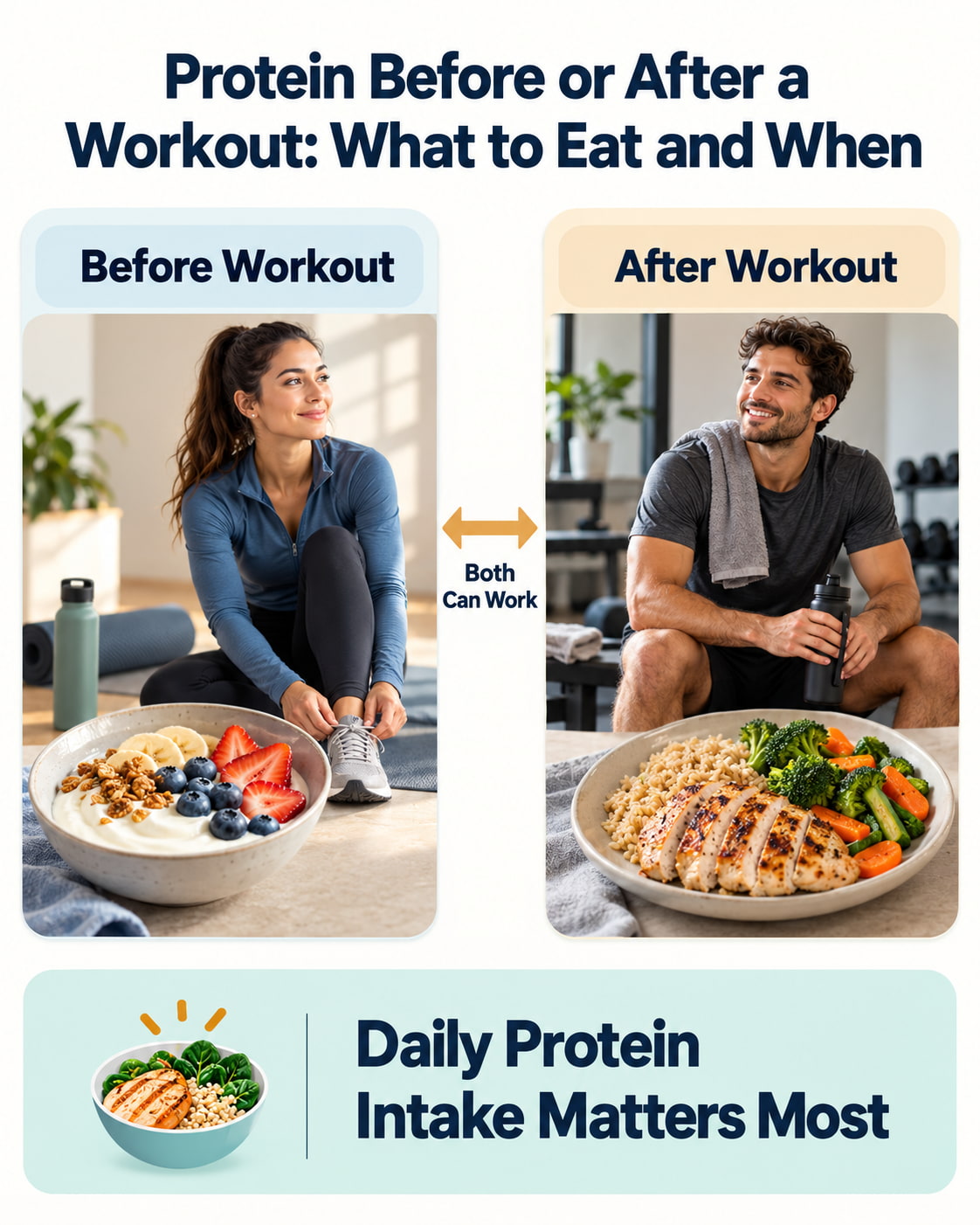
Your best timing depends on when you last ate, when your next meal will be, and how comfortably you digest food during exercise. Start with an appropriate daily protein intake, then plan meals and snacks around your training schedule.
Should You Eat Protein Before or After a Workout?
There is no universal winner. Protein before exercise supplies amino acids that can remain available during recovery. Eating protein afterward provides another opportunity to support muscle repair and meet your daily needs.
The most useful question is: How long will you go without a protein-containing meal?
| Your situation | A practical approach |
|---|---|
| You ate a protein-containing meal 1–2 hours before training | Have your next normal meal afterward. An immediate shake is generally unnecessary. |
| Several hours have passed since your last meal | Consider a protein-containing snack before training or plan a meal soon afterward. |
| You exercise before breakfast | Make a protein-containing breakfast or snack a priority after training. |
| Your next meal is more than two hours away | A snack with protein and carbohydrates can help bridge the gap. |
| Eating before exercise makes you uncomfortable | Choose a smaller portion or leave more time to digest, then eat afterward. |
These are flexible planning options. You do not need a separate protein supplement on both sides of every workout.
What the Research Shows
A systematic review published in Nutrients in 2025 analyzed five studies directly comparing protein before and after exercise. It found no clear difference in lean body mass or chest-press strength. A possible leg-press advantage favored pre-workout protein, but that result came from only two studies and had very low certainty.
A small study published in Biomedicines in 2026 also found no statistically significant muscle-mass difference between taking whey protein plus carbohydrate immediately after training and taking it three hours later. It involved just 20 trained young men over five weeks and did not include a pre-workout group.
These findings support flexibility, while leaving uncertainty about whether particular groups or training situations benefit from more precise timing.
How Much Protein Do You Need?
Start With Your Daily Protein Intake
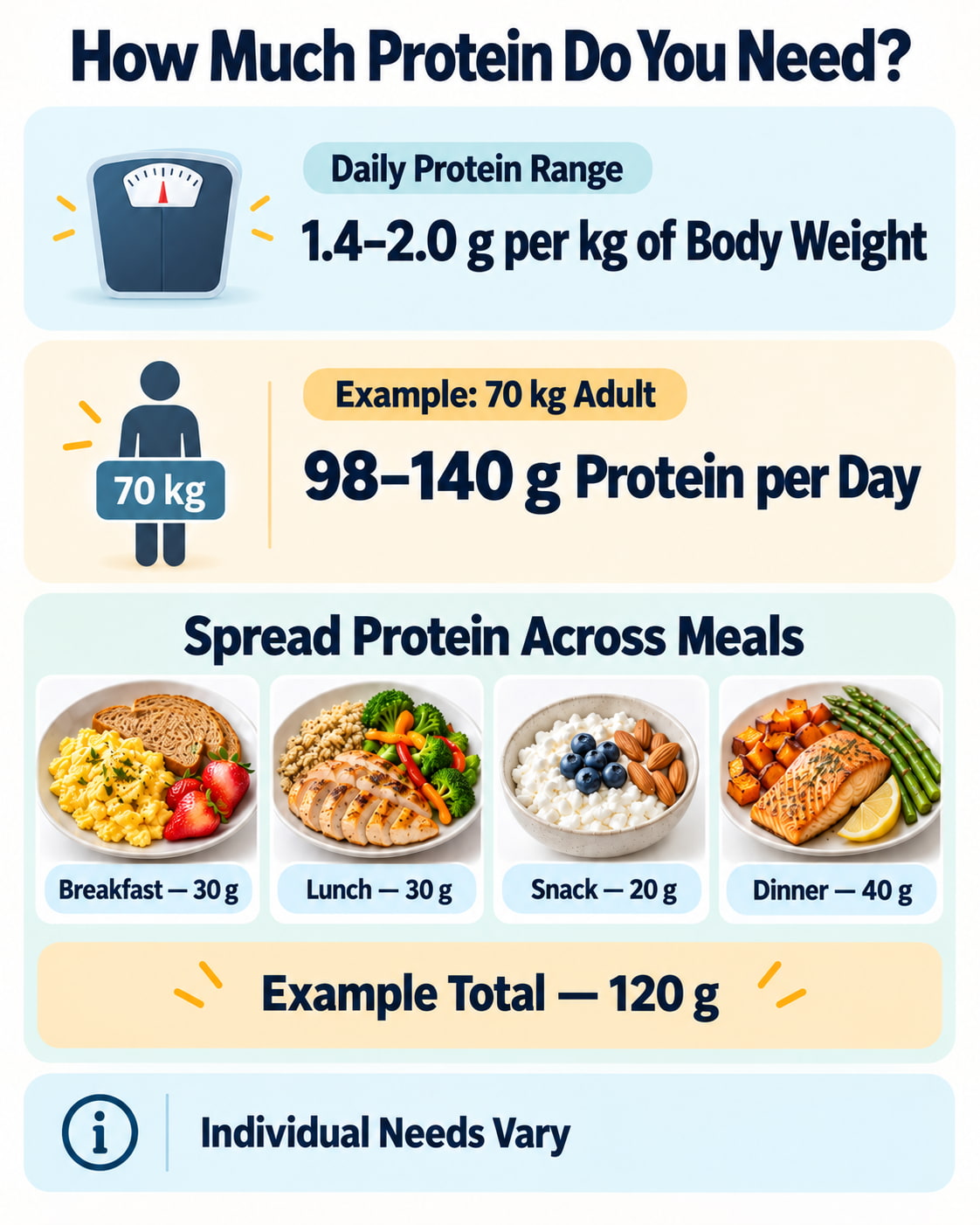
The International Society of Sports Nutrition’s protein guidance recommends approximately 1.4–2.0 grams per kilogram of body weight daily for most healthy exercising adults seeking to build or maintain muscle. That is about 0.64–0.91 grams per pound.
For example, someone weighing 154 pounds, or 70 kilograms, would calculate:
- 70 × 1.4 = 98 grams per day
- 70 × 2.0 = 140 grams per day
This is an exercise-focused range, not a universal requirement. Your training, food intake, goals, and health affect the amount that fits you.
Spread Protein Across Meals
A common sports-nutrition recommendation is 20–40 grams of protein per eating occasion, distributed through the day approximately every 3–4 hours. Treat this as a planning framework rather than a rigid schedule.
For illustration, a 120-gram daily target could include 30 grams at breakfast, 30 at lunch, 20 in a snack, and 40 at dinner. The appropriate portions depend on your own target.
Protein in regular meals, snacks, and shakes all counts. A post-workout serving is part of your daily total.
Protein Before a Workout: When and What to Eat
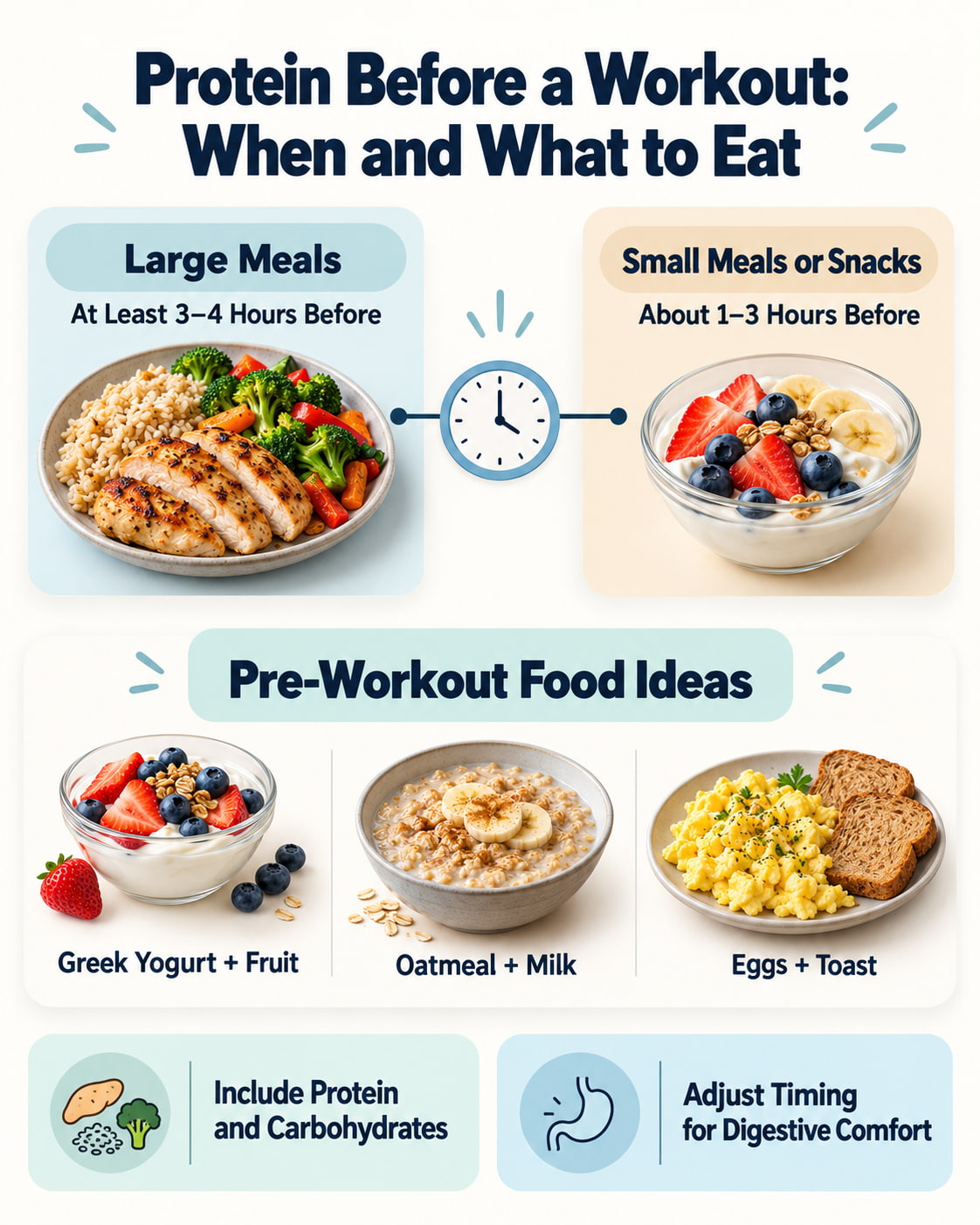
Pre-workout food should provide useful nutrition without making exercise uncomfortable. The amount you eat and the time available for digestion both matter.
Allow More Time for Larger Meals
Mayo Clinic’s meal-timing guidance suggests eating:
- Large meals: At least 3–4 hours before exercise.
- Small meals or snacks: About 1–3 hours before exercise.
These are starting points. You may tolerate a small snack closer to training, while a larger meal may require more time.
Pair Protein With Carbohydrates
Protein provides amino acids used to maintain and rebuild muscle. Carbohydrates provide important exercise fuel. A pre-workout meal can include both.
Practical options include:
- Greek yogurt with fruit.
- Oatmeal made with milk.
- A small turkey sandwich.
- Eggs with toast.
- Rice with chicken or tofu when you have several hours to digest.
If you are heading into a workout soon, choose a smaller portion of a familiar food. You do not need to force down a large protein serving immediately before you start.
Example: If you train at 6 p.m. and last ate lunch at noon, a snack around 4 p.m. may fit your schedule. If you already ate a balanced meal at 4 p.m., another pre-workout protein snack may be unnecessary.
Protein After a Workout: When and What to Eat
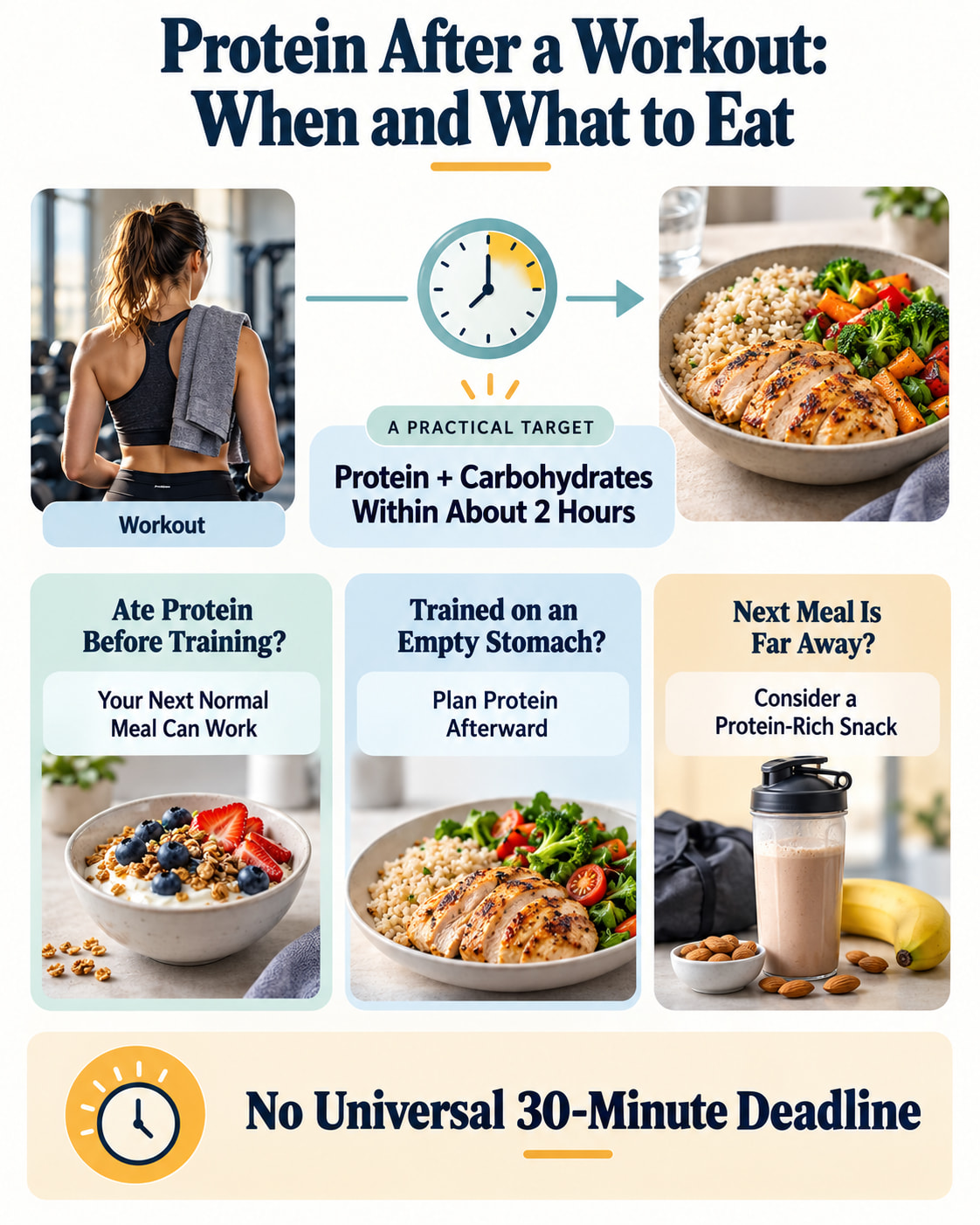
A meal containing protein and carbohydrates within about two hours after exercise is a practical recovery target. Protein supports muscle repair, while carbohydrates help replenish stored fuel.
If you recently ate a protein-containing meal before training, your next normal meal can usually cover this need. If that meal is several hours away, a snack may be more convenient.
Is There a 30-Minute Anabolic Window?
The “anabolic window” refers to the period after exercise when nutrition can support muscle-building processes. Research does not establish a universal 30-minute cutoff after which protein stops being useful.
The size and timing of your pre-workout meal influence how urgently you need to eat afterward. Missing an exact minute on the clock does not mean your workout was wasted.
What if You Exercise on an Empty Stomach?
After an overnight fast, you have gone longer without food. Planning breakfast or a snack reasonably soon after training is sensible, especially if building or maintaining muscle is your goal.
For example, if you finish a morning workout at 7 a.m., you could have eggs, toast, and milk or a Greek yogurt bowl when you get home. If breakfast will be delayed, pack something convenient.
The two-hour target is useful for planning. It should not become a reason to worry if an occasional meal happens later.
Protein-Rich Foods for Before and After a Workout
Many everyday foods can supply workout-related protein. Portions matter: a food can contain protein without providing a full meal’s worth by itself.
| Food | Serving | Approximate protein |
|---|---|---|
| Plain nonfat Greek yogurt | 6 oz / 170 g | 17 g |
| Whole hard-boiled eggs | 2 large | 13 g |
| Roasted chicken breast, meat only | 3 oz / 85 g cooked | 26 g |
| Cooked lentils | 1 cup | 18 g |
| Dairy milk | 1 cup | 8 g |
Amounts are rounded estimates from USDA food-composition records and VA nutrition guidance. Check product labels because portions, brands, and preparation methods vary.
Two large eggs plus one cup of milk provide approximately 21 grams of protein, before counting toast or other foods. A 6-ounce serving of Greek yogurt plus one cup of milk provides about 25 grams.
Simple Meal Combinations
Choose a protein source, then add foods that fit your appetite and activity:
- Chicken, rice, and vegetables.
- Eggs, toast, and milk.
- Greek yogurt, oats, and fruit.
- A turkey wrap with fruit.
- Lentils or tofu with rice and vegetables.
Plant-based meals can also contribute to your protein target. Include a variety of protein-containing foods across the day. Check labels on plant-based milks and yogurts rather than assuming they contain the same protein as dairy versions.
Do You Need a Protein Shake?
No. A protein shake is a convenience, not a requirement. The NIH Office of Dietary Supplements notes that athletes can often meet their protein needs through foods.
A shake may be useful when you cannot prepare a meal, have little appetite after training, or find it difficult to reach your daily target. It can be used before or after exercise according to your schedule and tolerance.
When comparing products, check the protein per serving and the serving size. The weight of one scoop of powder is not necessarily the amount of protein it provides. Also review ingredients for allergens and other substances you want to avoid.
The FDA does not approve dietary supplements for safety and effectiveness before they are sold. Do not assume that a product’s availability proves its claims.
If your regular meals already provide enough protein, adding a shake before and another after every workout may simply add food you do not need.
When to Get Individual Protein Advice
If you have chronic kidney disease or have been prescribed a protein restriction, get an individualized target before adopting a sports-nutrition range. The NIDDK’s guidance on kidney disease and nutrition explains that protein needs vary and may change with disease progression or dialysis.
A registered dietitian can also help you plan meals when your training schedule, food restrictions, or digestive problems make it difficult to eat enough comfortably.
Frequently Asked Questions
Is It Better to Drink a Protein Shake Before or After Lifting Weights?
Either can work. If you have not eaten for several hours, a pre-workout shake may be convenient if you tolerate it. If you recently ate or prefer to train without a drink in your stomach, having protein afterward may fit better. Your daily intake remains the priority.
Do You Need Protein Both Before and After a Workout?
You can eat protein at meals on both sides of training, but you do not automatically need two dedicated snacks or shakes. For example, a protein-containing lunch before an afternoon workout and dinner afterward can fit your routine.
How Long Can You Wait to Eat Protein After Exercise?
There is no single deadline for everyone. Eating within about two hours is a useful target, particularly if you trained after a long period without food. A recent protein-containing meal makes an immediate post-workout serving less urgent.
Should You Eat Protein on Rest Days?
Yes. Your body still needs protein between workouts, and recovery continues after the exercise session ends. Keep including protein in regular meals on rest days. Whether you need a shake depends on what your meals provide.
Is a Banana Enough After a Workout?
A banana supplies carbohydrates but little protein. If you are using it as a recovery snack and your next meal is far away, pair it with a protein source such as Greek yogurt or milk. If a balanced meal is coming soon, it can simply be a snack until then.
Can Plant-Based Foods Replace a Whey Protein Shake?
Yes. Foods such as tofu, lentils, beans, and soy products can contribute to your daily protein needs. Plan adequate portions and include variety across the day. Protein powder remains optional; check serving amounts rather than assuming every plant-based product is high in protein.
Conclusion
Protein before or after a workout can fit an effective eating routine. Focus on your daily intake, include protein across meals, and consider how long it has been since you last ate.
For your next workout, plan one familiar meal or snack that supplies protein and fits your schedule. Pair it with carbohydrates as needed for fueling and recovery, then adjust the timing for comfort.
This content is for informational purposes only and not medical advice.
References
- Nutrients: Does Protein Ingestion Timing Affect Exercise-Induced Adaptations? A Systematic Review With Meta-Analysis
- Biomedicines: Chronic Resistance Exercise Combined With Nutrient Timing
- International Society of Sports Nutrition Position Stand: Protein and Exercise
- International Society of Sports Nutrition Position Stand: Nutrient Timing
- Journal of the ISSN: Nutrient Timing Revisited—Is There a Post-Exercise Anabolic Window?
- Mayo Clinic: Eating and Exercise