
The benefits of mushrooms include B vitamins, minerals, and antioxidant compounds with relatively few calories. Mushrooms exposed to ultraviolet light can also provide substantial vitamin D. Their possible effects on gut bacteria, heart health, and memory are still being studied, so some popular claims need more qualification.
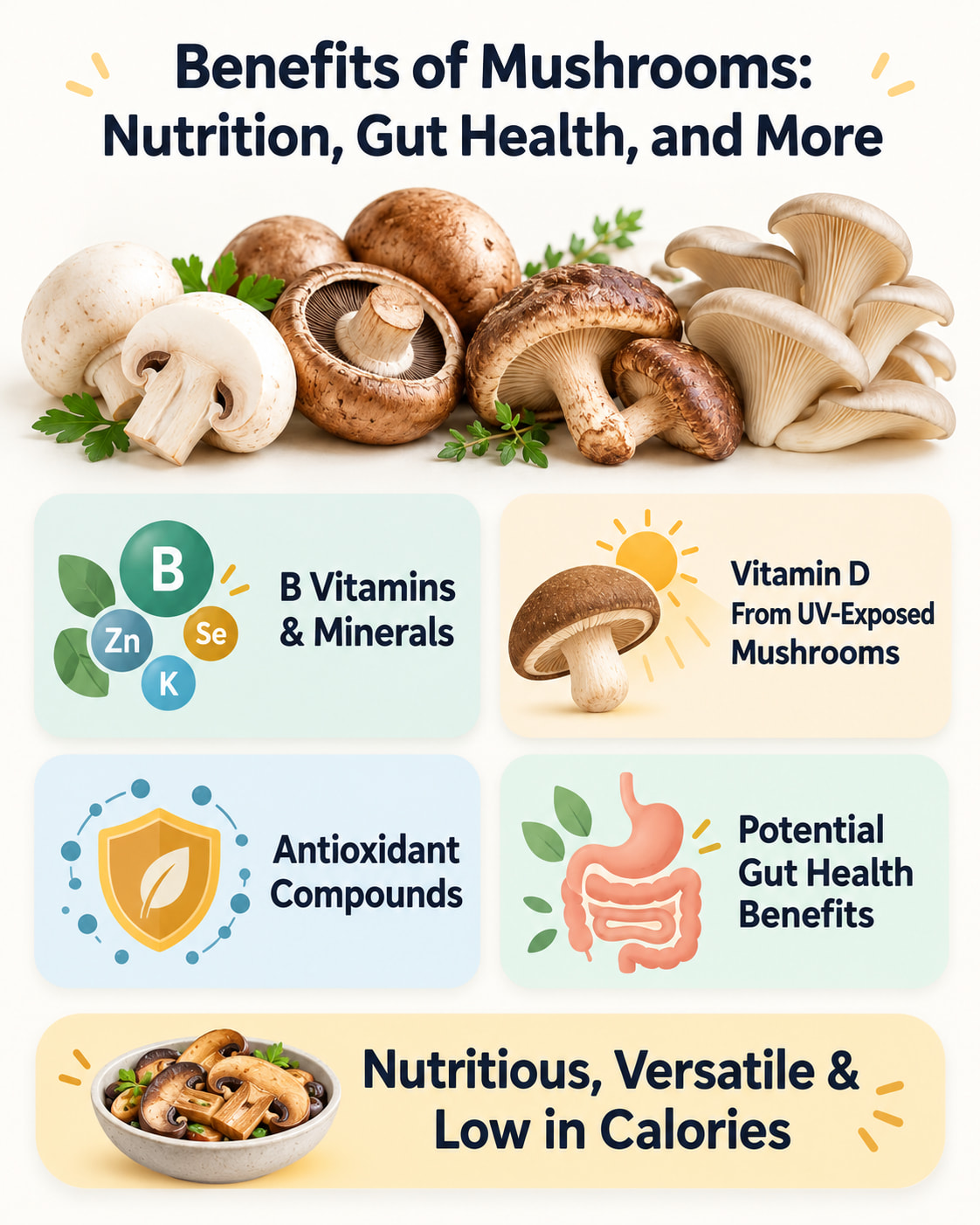
For everyday eating, mushrooms offer a practical way to add flavor, texture, and variety to meals. Understanding their nutritional strengths can help you choose the right type, prepare them safely, and build a balanced plate.
Mushroom Nutrition at a Glance
One cup of raw white mushroom pieces or slices weighs about 70 grams. USDA reference data provide the following approximate amounts:
| Nutrient | Amount per 1 cup |
|---|---|
| Calories | 15 |
| Protein | 2.2 g |
| Carbohydrates | 2.3 g |
| Dietary fiber | 0.7 g |
| Total fat | 0.2 g |
| Riboflavin, or vitamin B2 | 0.28 mg |
| Copper | 0.22 mg |
| Selenium | 6.5 mcg |
| Potassium | 223 mg |
Source: USDA FoodData Central, SR Legacy record for raw white mushrooms. Values are rounded.
These numbers describe plain, raw white mushrooms. Other varieties have different nutrient profiles, and cooking changes their weight and volume. Added oil, butter, cheese, and sauces also change a dish’s calories and fat.
Mushrooms provide modest amounts of protein and fiber in an ordinary serving. Pair them with foods such as beans, lentils, tofu, eggs, fish, or poultry when building a meal.
5 Benefits of Mushrooms and What the Evidence Shows
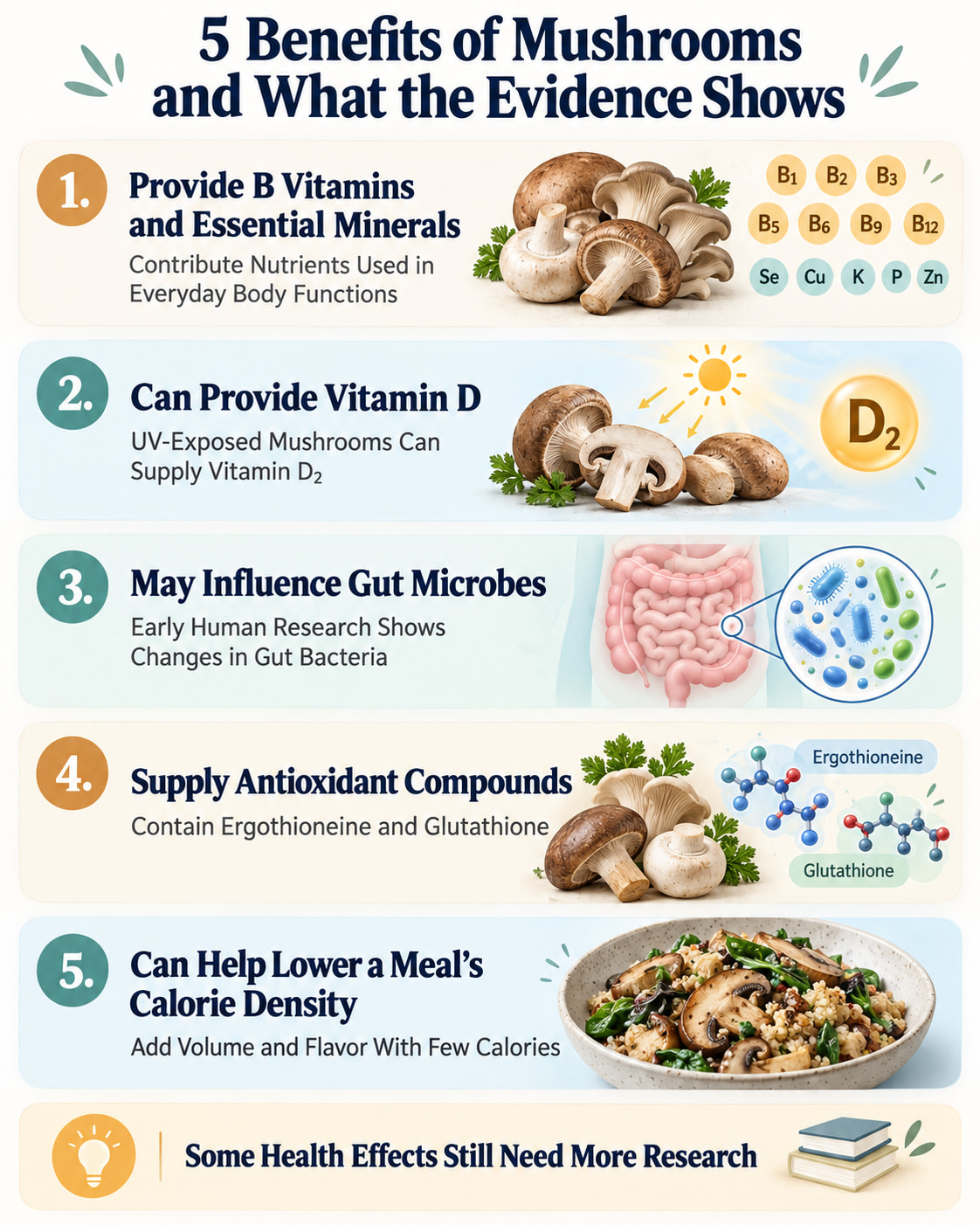
1. Provide B Vitamins and Essential Minerals
Mushrooms contribute nutrients your body uses every day. Riboflavin helps with energy production and normal cell function. Copper supports iron metabolism and the formation of connective tissue, among other roles.
Their value comes from helping you meet nutritional needs as part of a varied diet.
You can add sliced mushrooms to eggs, soups, grain bowls, or pasta. Using them alongside other vegetables gives you more variety than relying on one food for every nutrient.
2. Can Provide Vitamin D
Vitamin D helps your body absorb calcium and supports normal bone health. Mushrooms can produce vitamin D₂ when exposed to ultraviolet light, but the amount varies considerably.
According to the NIH’s vitamin D guidance, ½ cup of sliced, raw, UV-exposed white mushrooms provides about 9.2 micrograms, or 366 IU, of vitamin D. That is approximately 46% of the Daily Value.
This is a reference value for UV-exposed mushrooms, not a promise about every package. When vitamin D is your priority:
- Look for a vitamin D amount on the Nutrition Facts label.
- Check whether the package identifies the mushrooms as UV-exposed.
- Compare the serving size with the amount you plan to eat.
Mushrooms can contribute to vitamin D intake, but a food serving should not be assumed to correct a diagnosed deficiency.
3. May Influence Gut Microbes
Mushrooms contain fiber and other carbohydrates that may serve as food for gut bacteria. Researchers are exploring whether these interactions produce useful prebiotic effects.
However, human research remains limited. In a randomized crossover study published in 2018, 32 healthy adults ate mushroom meals and protein-matched meat meals during separate 10-day periods.
The mushroom diet increased stool weight and changed the types of bacteria found in stool. It did not significantly change stool frequency, stool consistency, or fecal short-chain fatty acid concentrations. Participants also reported more digestive symptoms during the first two days.
This small, short trial used a large daily mushroom intake and received Mushroom Council funding. It suggests that mushrooms can influence the gut environment, but it does not establish consistent relief from constipation, bloating, or other digestive problems. A change in gut bacteria alone is not enough to show a health benefit.
Include mushrooms as one part of a varied diet, and pay attention to your own tolerance.
4. Supply Antioxidant Compounds
Mushrooms contain ergothioneine and glutathione, compounds studied for their antioxidant activity.
A 2017 study in Food Chemistry measured these compounds in mushrooms and found substantial variation between species. This supports their role as dietary sources of antioxidant compounds, although it does not show that eating them prevents cancer or slows aging.
Choose varieties you enjoy and can use regularly within your budget. Antioxidant content is one feature of a food, and the overall quality of your diet matters too.
5. Can Help Lower a Meal’s Calorie Density
Mushrooms add volume and a savory flavor while contributing relatively few calories. They can be useful when replacing some higher-calorie ingredients.
Practical ways to use this approach include:
- Mixing chopped mushrooms into ground-meat fillings.
- Adding mushrooms and lentils to a pasta sauce.
- Using mushrooms to add volume to an omelet.
- Building a grain bowl with mushrooms, vegetables, and a protein source.
Keep the whole recipe in mind. A mushroom dish prepared with generous butter, cream, or cheese can still be calorie-dense.
What About Heart Health, Blood Sugar, and Memory?
These areas attract attention, but the evidence is less established than the basic nutritional benefits.
Heart Health and Blood Sugar
A 2024 controlled-feeding trial studied 60 adults following a Mediterranean-style diet, with or without 84 grams of mushrooms daily, for eight weeks. Adding mushrooms produced a small improvement in fasting glucose but did not provide additional improvements in the other measured cardiometabolic risk factors.
More recently, a randomized trial published in 2026 found that consuming oyster mushroom powder for four weeks did not significantly lower LDL cholesterol compared with a placebo.
Mushrooms can fit into a balanced eating pattern. However, these studies do not establish that they independently prevent heart disease or manage diabetes.
Brain Health
The same 60-person trial also examined cognitive outcomes. Adding white button and oyster mushrooms did not produce a clear additional cognitive benefit beyond the Mediterranean-style dietary pattern.
An April 2026 trial involving 47 Japanese adults age 60 or older found improved cognitive test scores with one specific maitake strain over 18 weeks. Another maitake strain did not show the same benefit. This small, strain-specific finding needs confirmation and does not establish dementia prevention.
For now, enjoy mushrooms for their food value without expecting a reliable memory improvement.
Which Mushrooms Should You Choose?
Choose mushrooms based on the dish you want to make, their availability, and your preferences. You do not need a specialty variety to include them in a nutritious meal.
| Mushroom type | Simple ways to use it |
|---|---|
| White button or cremini | Omelets, pasta sauces, soups, and mixed fillings |
| Portobello | Roasted slices, sandwiches, or stuffed mushroom dishes |
| Shiitake | Broths, noodle dishes, and stir-fries |
| Oyster | Roasting, sautéing, or adding to grain bowls |
| Enoki | Soups and hot pots, with thorough cooking |
If vitamin D is the goal, check the package label rather than choosing by appearance or name alone. If digestive tolerance is the concern, the mushroom type and portion may matter.
How to Prepare Mushrooms for Everyday Meals
Keep Preparation Simple
Unless the package says they are prewashed and ready to eat, rinse mushrooms under running water before preparation, then pat them dry. Do not use soap or household cleaners on produce. Keep fresh mushrooms refrigerated at 40°F or below and follow package storage directions.
For a simple side dish, cook sliced mushrooms in a pan with a small amount of oil. Add herbs, pepper, or lemon juice to suit your taste. Leave room in the pan so you can cook them to the texture you prefer.
Keep the Meal Balanced
Mushrooms work well alongside a substantial protein source, vegetables, and a grain or other starchy food. For example, combine sautéed mushrooms with tofu and rice, or add them to eggs and whole-grain toast.
If you replace part of a meat portion with mushrooms, remember that mushrooms provide much less protein in a typical serving. Make sure the rest of the meal meets your needs.
Who Should Be Cautious With Mushrooms?
People With IBS or a Sensitive Gut
Some mushrooms contain substantial amounts of mannitol, a fermentable carbohydrate. Monash University explains that mannitol and related carbohydrates can contribute to gas, bloating, pain, and altered bowel habits in sensitive people.
If mushrooms repeatedly trigger symptoms, pay attention to the type and amount you eat. A registered dietitian can help you assess tolerance without unnecessarily removing many foods from your diet.
People Eating Enoki Mushrooms
Follow the CDC’s enoki preparation advice: cook enoki thoroughly, keep raw enoki separate from foods that will not be cooked, and clean hands, utensils, and surfaces after handling.
Avoiding raw enoki is especially important during pregnancy, at age 65 or older, and for people with weakened immune systems. Adding raw enoki as a garnish to hot soup may not heat it enough.
Anyone Considering Wild Mushrooms
Poisonous mushrooms can closely resemble edible varieties. Cooking does not destroy the dangerous amatoxins found in some wild mushrooms. Choose commercially grown edible mushrooms, and avoid eating mushrooms whose identity is uncertain.
If you suspect someone has eaten a poisonous mushroom, seek expert help immediately rather than waiting for symptoms. In the United States, call Poison Control at 1-800-222-1222. Call 911 for a collapse, seizure, difficulty breathing, or inability to wake the person.
Frequently Asked Questions
Is It OK to Eat Mushrooms Every Day?
For someone who tolerates them, mushrooms can be a regular part of a varied diet. There is no single daily mushroom amount established by the studies discussed here that guarantees a health benefit. Let appetite, meal balance, and digestive comfort guide how you use them.
Are Mushrooms a Good Source of Protein?
A cup of raw white mushroom pieces provides about 2.2 grams of protein. That is a modest contribution. In a mushroom-based meal, include a more substantial protein source, such as beans, lentils, tofu, eggs, fish, or poultry.
Which Mushrooms Have the Most Vitamin D?
Vitamin D content depends on the variety and exposure to ultraviolet light. UV-exposed products may contain much more vitamin D than ordinary mushrooms. Check the Nutrition Facts label to compare the amount per serving.
Are Mushrooms Better Raw or Cooked?
There is no single answer for every variety and nutrient. Cooking changes texture, water content, and the finished dish’s nutritional profile. It is a practical way to prepare mushrooms, and enoki should be cooked thoroughly. Avoid assuming that raw mushrooms are always the healthier choice.
Are Canned Mushrooms a Healthy Option?
Canned mushrooms can be a convenient ingredient. Compare labels for sodium and serving size, especially if the mushrooms are packed in brine or sauce. Choose a lower-sodium option when that suits your dietary needs, and use them in the same balanced meals as fresh mushrooms.
Do Mushroom Supplements Offer the Same Benefits as Whole Mushrooms?
They are different products. A capsule, extract, or powder may have a different composition and dose from a serving of food. Results from a specific supplement study cannot automatically be applied to ordinary mushrooms, or to another supplement.
Conclusion
The most dependable benefits of mushrooms come from the nutrients they provide and the variety they add to meals. UV-exposed mushrooms can also contribute vitamin D, while gut, heart, and brain health effects remain areas of developing research.
Try adding a mushroom variety you enjoy to one familiar meal this week. Pair it with other nutritious foods, prepare it safely, and choose portions that feel comfortable for your digestion.
This content is for informational purposes only and not medical advice.
References
- USDA FoodData Central: Raw white mushroom nutrient record
- NIH Office of Dietary Supplements: Riboflavin
- NIH Office of Dietary Supplements: Copper
- NIH Office of Dietary Supplements: Vitamin D
- The Journal of Nutrition: Mushrooms and cardiometabolic risk factors
- Nutrition & Metabolism: Oyster mushroom powder and cholesterol
- Monash University: FODMAP food guidance