
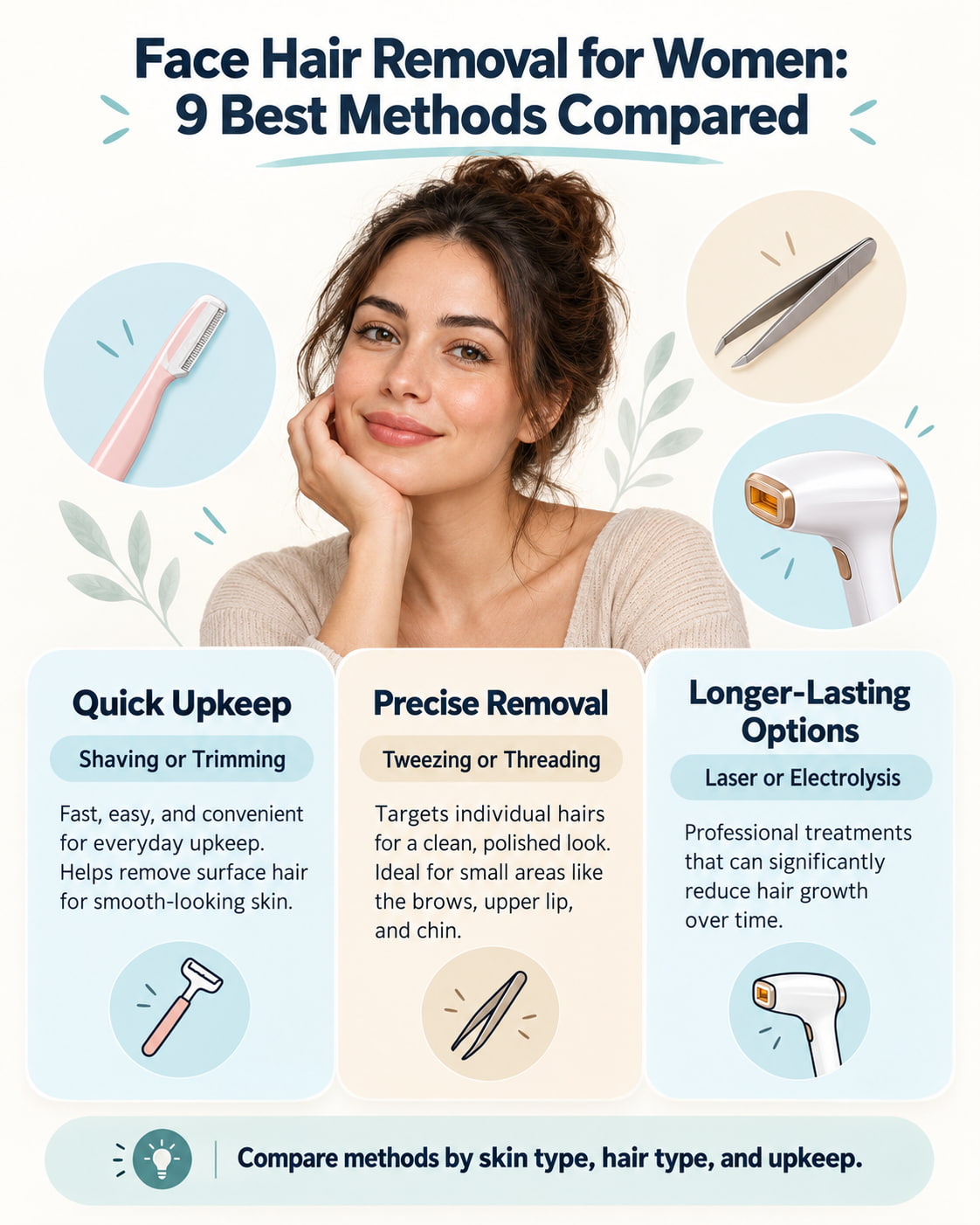
The best approach to face hair removal for women depends on your hair, skin, and preferred upkeep. Shaving suits quick maintenance, tweezing handles a few stray hairs, and professional laser or electrolysis offers longer-lasting options.
Choosing a suitable method can help you avoid unnecessary irritation, expense, and repeated appointments. The main things to compare are how the method works, how long results last, and whether it fits your skin-care routine.
Facial hair is normal, including fine “peach fuzz.” Removing it is a personal choice, and normal facial hair does not need to be removed for health reasons.
Face Hair Removal for Women: Quick Comparison
These are general expectations. Your hair growth cycle, the area involved, and the technique used can affect results.
| Method | Best suited to | Results and upkeep | Main tradeoff |
|---|---|---|---|
| Shaving or trimming | Quick maintenance at home | Shaving often gives about 1–3 days of smoothness | Frequent upkeep; possible irritation. |
| Tweezing | A few individual hairs | Temporary root removal; repeat as hairs return | Slow for larger areas. |
| Threading | Eyebrows and small facial areas | Results can last up to 4–5 weeks | Can sting and requires skilled technique. |
| Waxing | Removing several hairs at once | Usually several weeks | Pain and possible skin injury. |
| Facial depilatory creams | Removing hair without pulling or shaving | Usually lasts longer than shaving | Possible chemical irritation or burns. |
| Facial epilators | Reusable removal from the root | Temporary results; regrowth varies | Can be uncomfortable. |
| Professional laser | Longer-term reduction of dark, coarse hair | Multiple sessions; maintenance may be needed | Hair color and provider expertise matter. |
| IPL | Gradual reduction in compatible hair and skin types | Repeated use and maintenance | Device-specific restrictions. |
| Electrolysis | Permanent removal of individual hairs | Multiple appointments to complete an area | Time and cost can accumulate. |
The American Academy of Dermatology and Cleveland Clinic describe these differences between temporary removal and professional procedures. Exact hair-free intervals are not guaranteed.
9 Face Hair Removal Methods Compared
1. Shaving or Facial Trimming
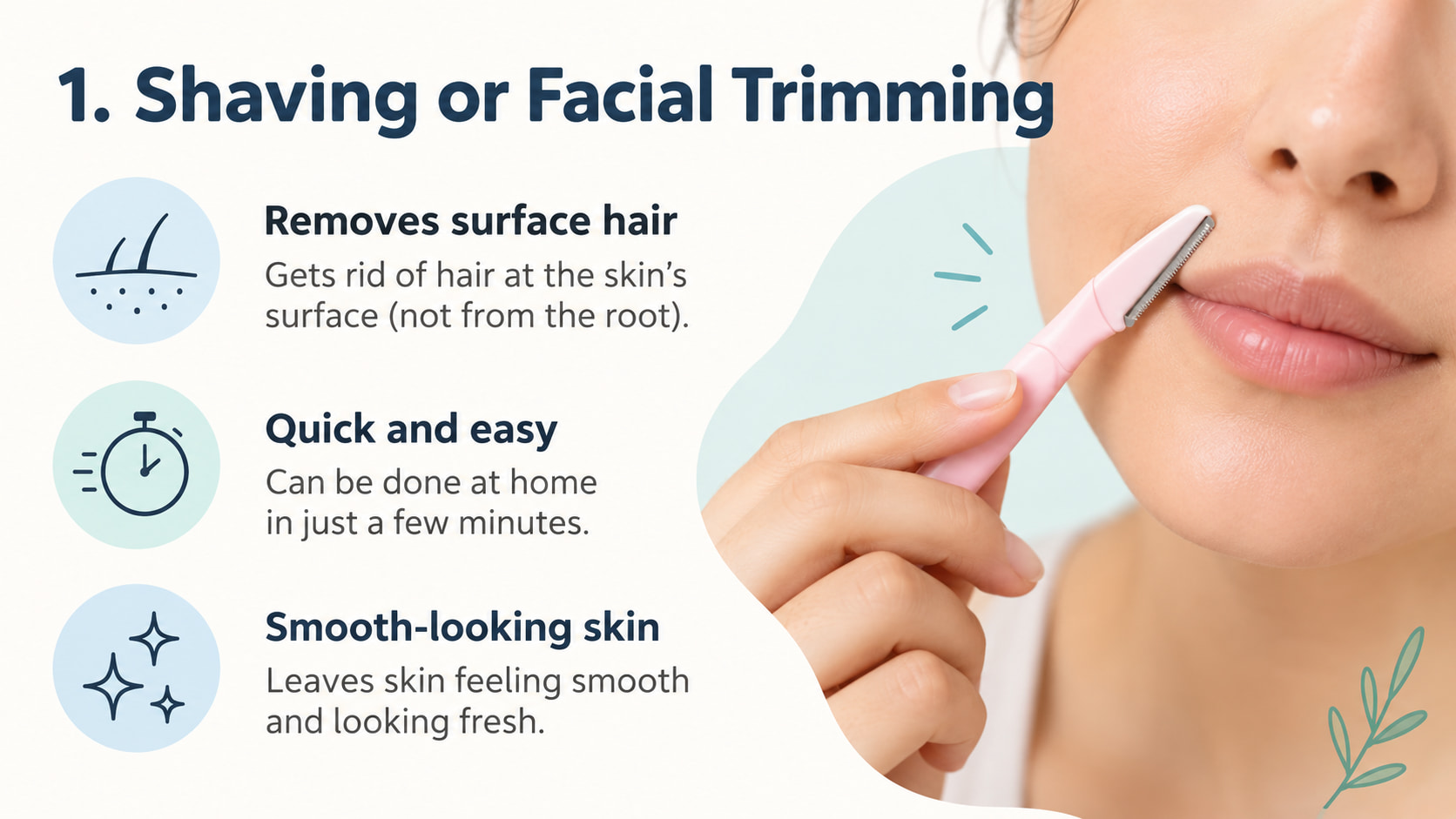
Shaving cuts hair at the skin’s surface. A facial trimmer shortens it, sometimes leaving a little more stubble depending on the device. Both are practical when you want quick results without pulling hair from the root.
For a conventional wet shave:
- Soften the skin and hair with water.
- Apply a suitable shaving cream or gel.
- Use light pressure and shave with the direction of growth.
- Rinse the blade frequently and store it somewhere dry.
Electric devices may require different preparation, so follow their instructions. Avoid repeatedly scraping the same spot or shaving directly over inflamed pimples.
Shaving does not make facial hair grow thicker, darker, or faster. As Mayo Clinic explains, the blunt cut end can temporarily feel coarse or look more noticeable as it grows out.
Small facial razors are sometimes marketed as dermaplaning tools. Professional dermaplaning also exfoliates the skin, so it deserves additional care. Avoid exfoliating dermaplaning during active acne or eczema flares.
2. Tweezing
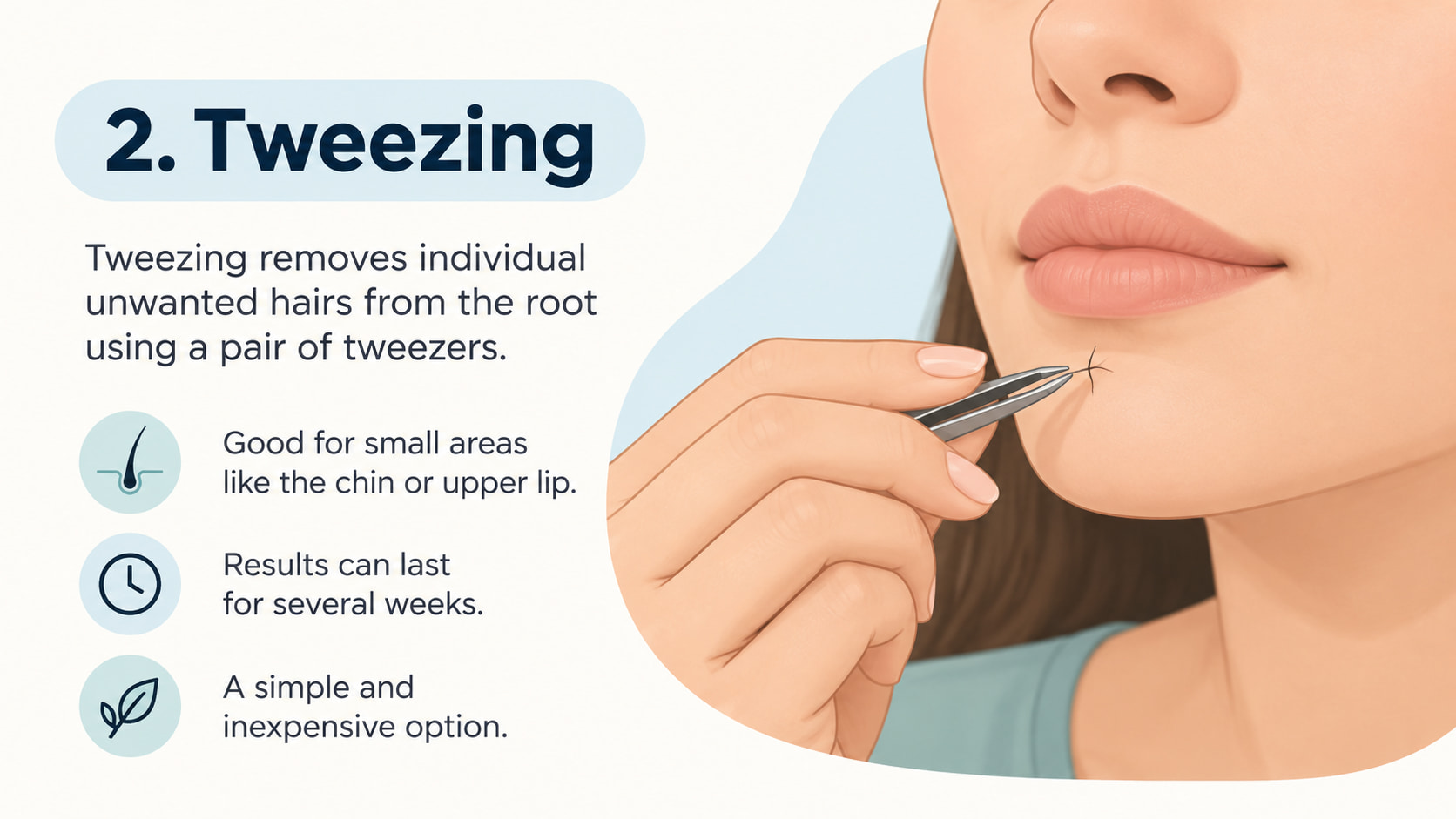
Tweezing makes sense when you have a few coarse chin hairs or stray eyebrow hairs. It removes each hair individually from the root and gives you precise control.
Use clean tweezers and good lighting. Work on visible hairs without digging into the skin to reach hairs trapped underneath.
The main limitation is time: tweezing a few hairs is manageable, while clearing a larger area can become uncomfortable. Root removal can also lead to ingrown hairs, inflamed follicles, or dark marks after irritation.
3. Threading
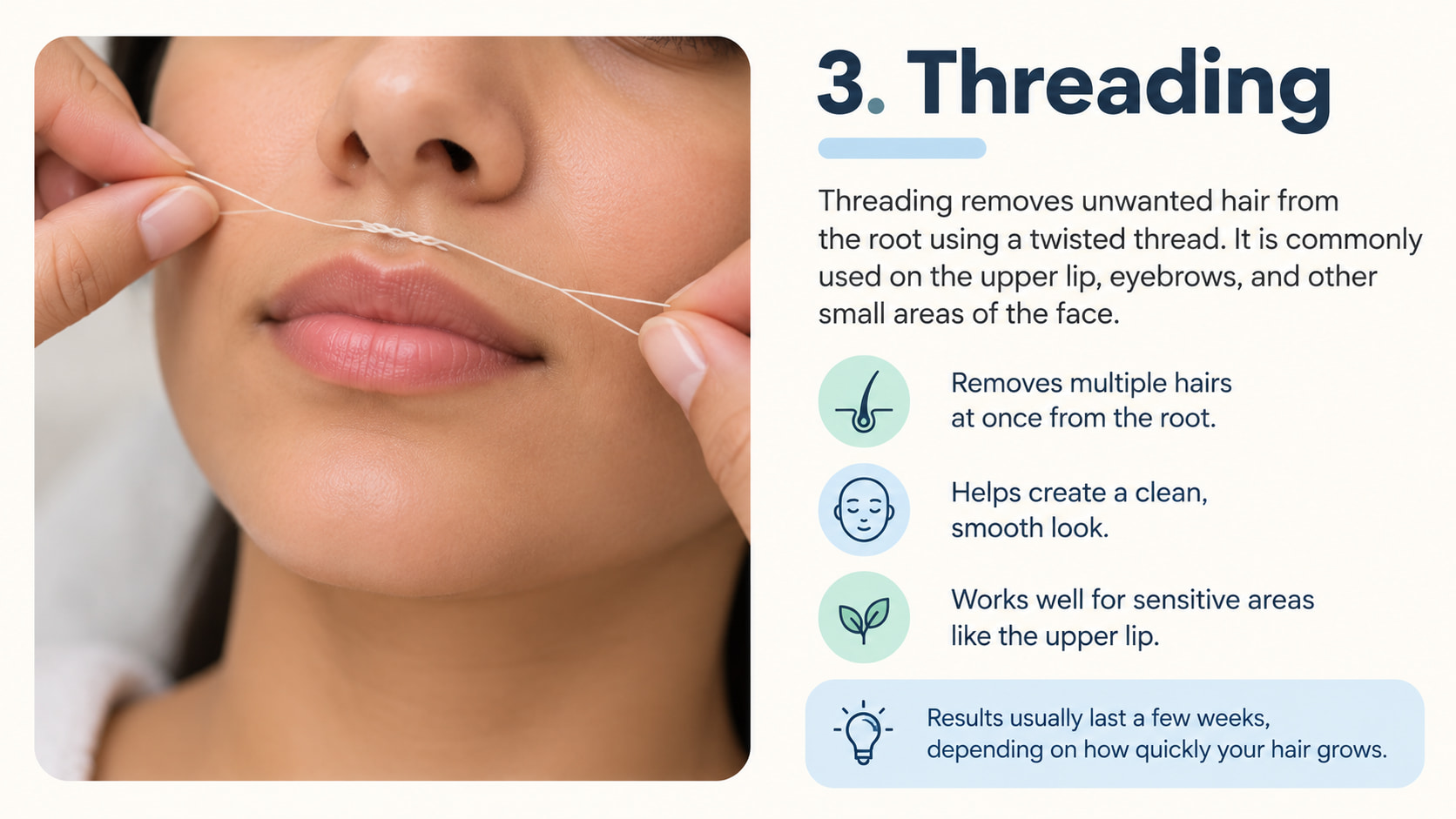
Threading uses twisted thread to catch and pull out hairs. It is commonly used to shape eyebrows and remove upper-lip hair.
Because it can catch several hairs at once, threading offers more speed than individual tweezing while retaining precision. It may appeal to people who want to avoid wax or depilatory chemicals.
However, sensitive skin can still become irritated. Tell the practitioner about retinoids, recent skin procedures, and any active skin problems before starting. Threading should not automatically be considered safe just because waxing is unsuitable for you.
Cleveland Clinic notes that many people schedule threading every three to four weeks, depending on regrowth and preference.
4. Waxing
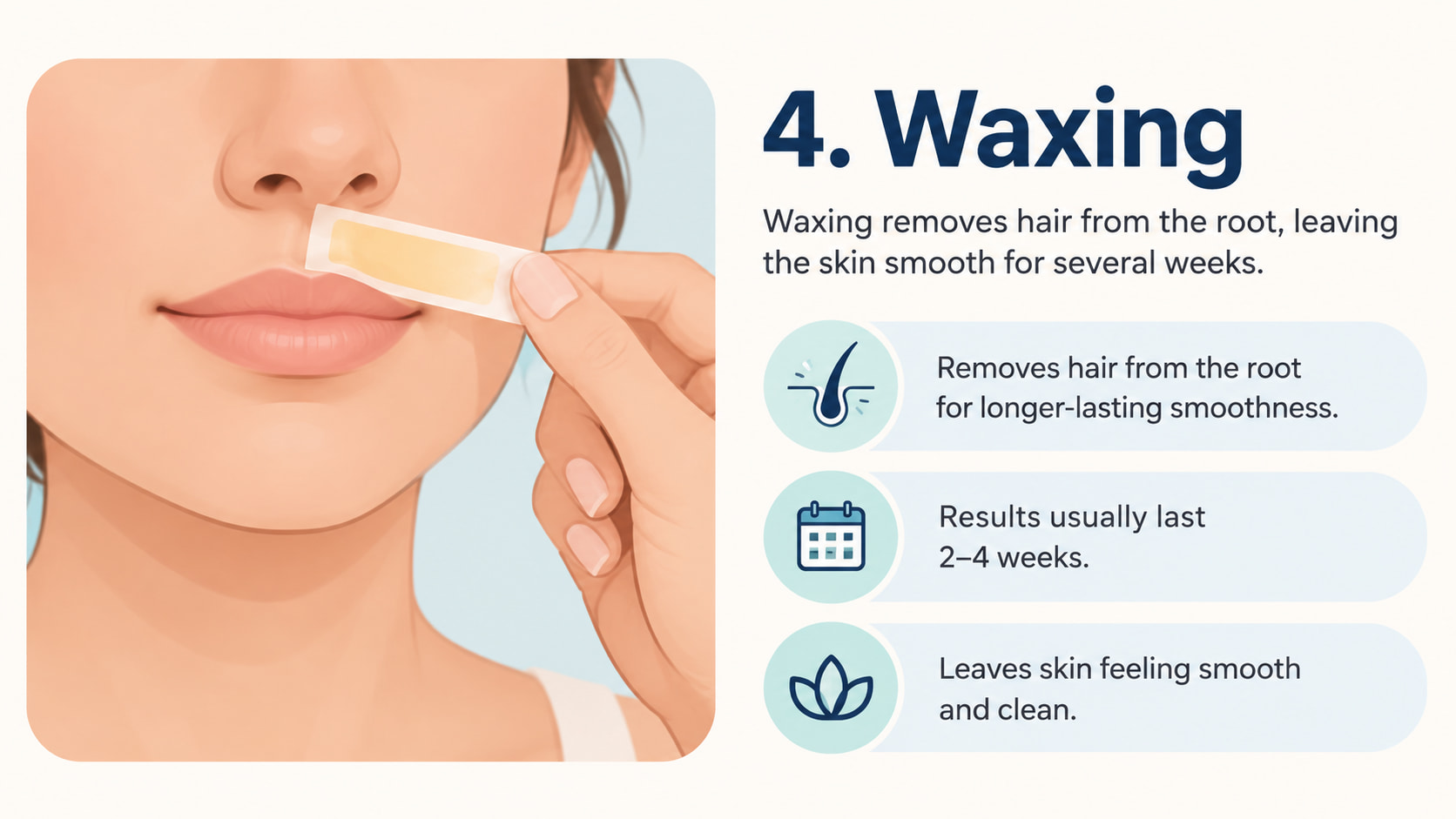
Waxing pulls multiple hairs from the root, making it useful for areas such as the upper lip or chin. Results often last several weeks, although some hairs may become visible sooner.
The tradeoffs include pain, redness, ingrown hairs, and burns if hot wax is applied incorrectly. Wax can also pull away a layer of skin when the skin is particularly vulnerable.
Before facial waxing, check your skin-care routine. The American Academy of Dermatology’s waxing guidance warns about retinol and prescription retinoids. Ask your prescriber how to manage prescribed products around an appointment. Never wax sunburned or very sensitive skin.
Do not wax while taking oral isotretinoin or for six months afterward, according to AAD guidance. This applies to both hot and cold wax.
Sugaring is a related option that uses a sticky sugar-based paste. It may feel gentler for some people, but it can still cause irritation and is not automatically suitable for sensitive or retinoid-affected skin.
5. Facial Depilatory Creams
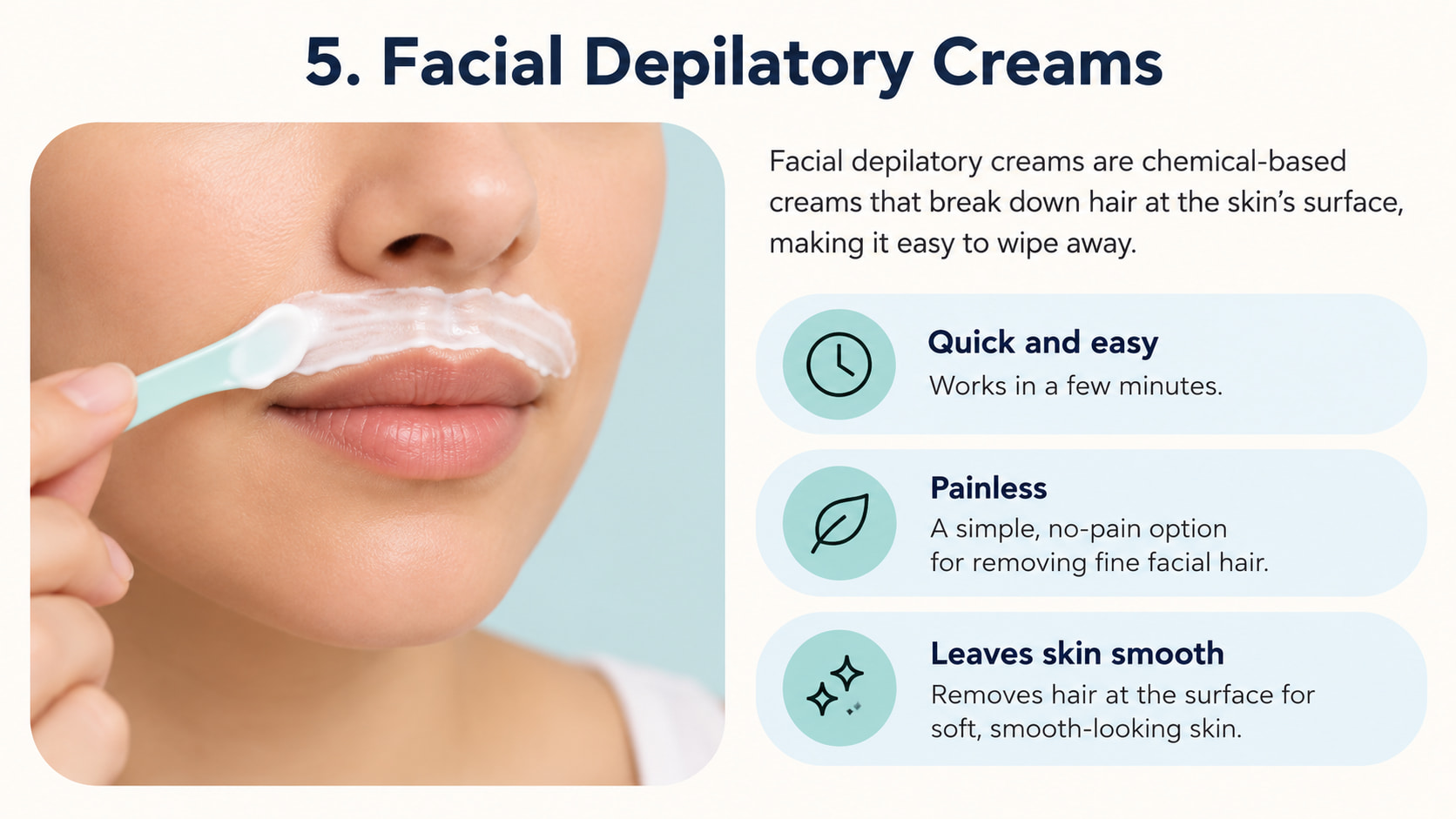
Depilatory creams use chemicals to break down the hair so it can be rinsed away. They can be convenient if you prefer to avoid blades or pulling.
Choose a product specifically labeled for the facial area you want to use it on. A cream intended for the legs is not interchangeable with one designed for the upper lip.
Follow these precautions:
- Perform the skin test described on the label.
- Follow the application time exactly.
- Rinse immediately if burning or stinging starts.
- Never leave the product on longer to remove stubborn hairs.
- Follow the stated waiting period before another application.
Cleveland Clinic’s guidance on depilatory creams explains that incorrect use can cause chemical burns. People with damaged, inflamed, or very sensitive skin should be particularly cautious.
A successful skin test does not guarantee that future applications will always be tolerated.
6. Mechanical Facial Epilators
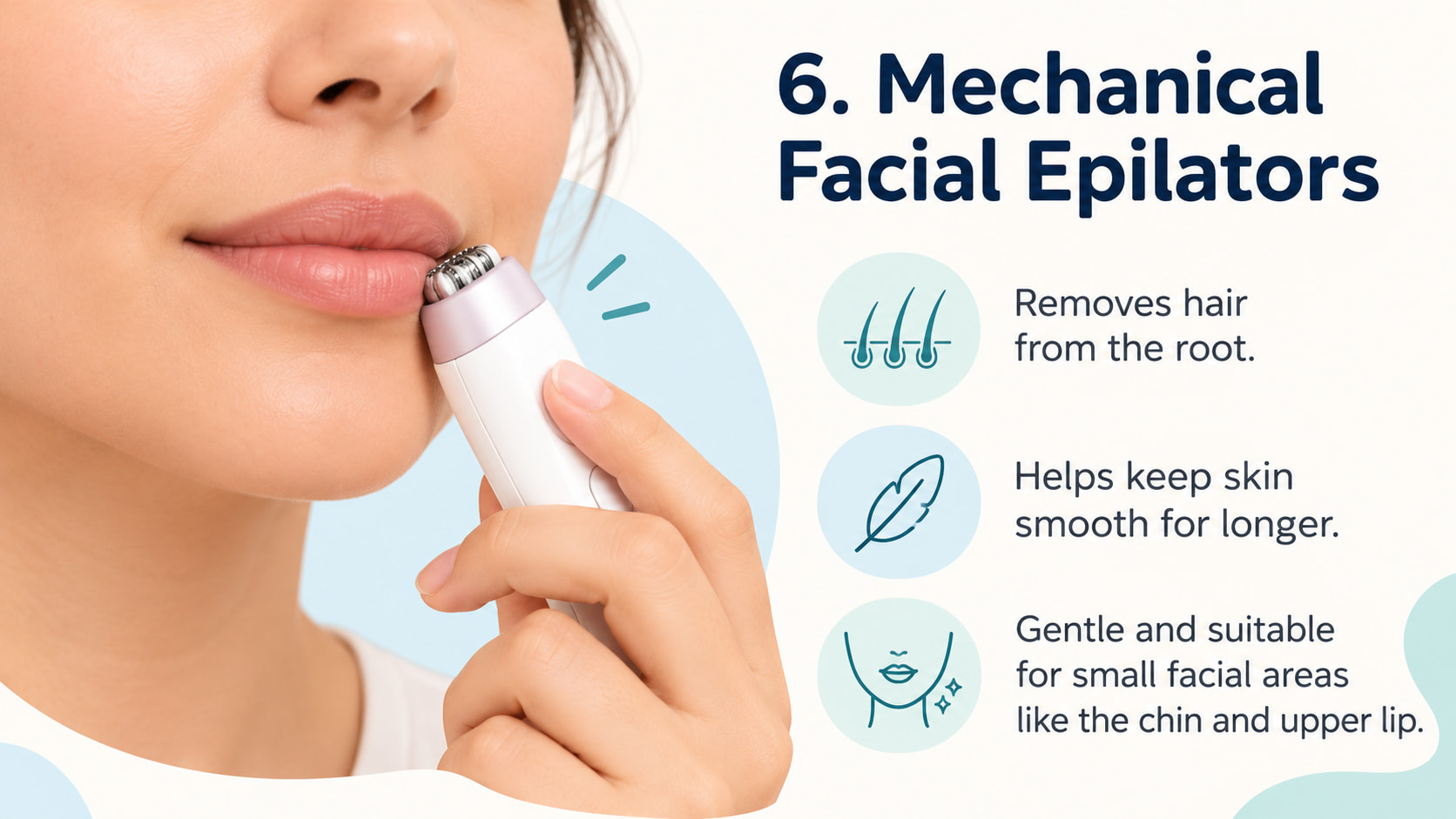
A mechanical epilator uses moving components, often small tweezers, to pull out multiple hairs. Unlike an electric shaver, it removes hair from the root.
Choose a device intended for facial use and follow its instructions for preparation, cleaning, and permitted areas. A large body epilator may be difficult to control on a small facial area.
This option may appeal if you want a reusable tool for root removal. The main drawbacks are discomfort, irritation, and possible ingrown hairs. There is no reliable hair-free interval that applies to every device and every person.
7. Professional Laser Hair Removal
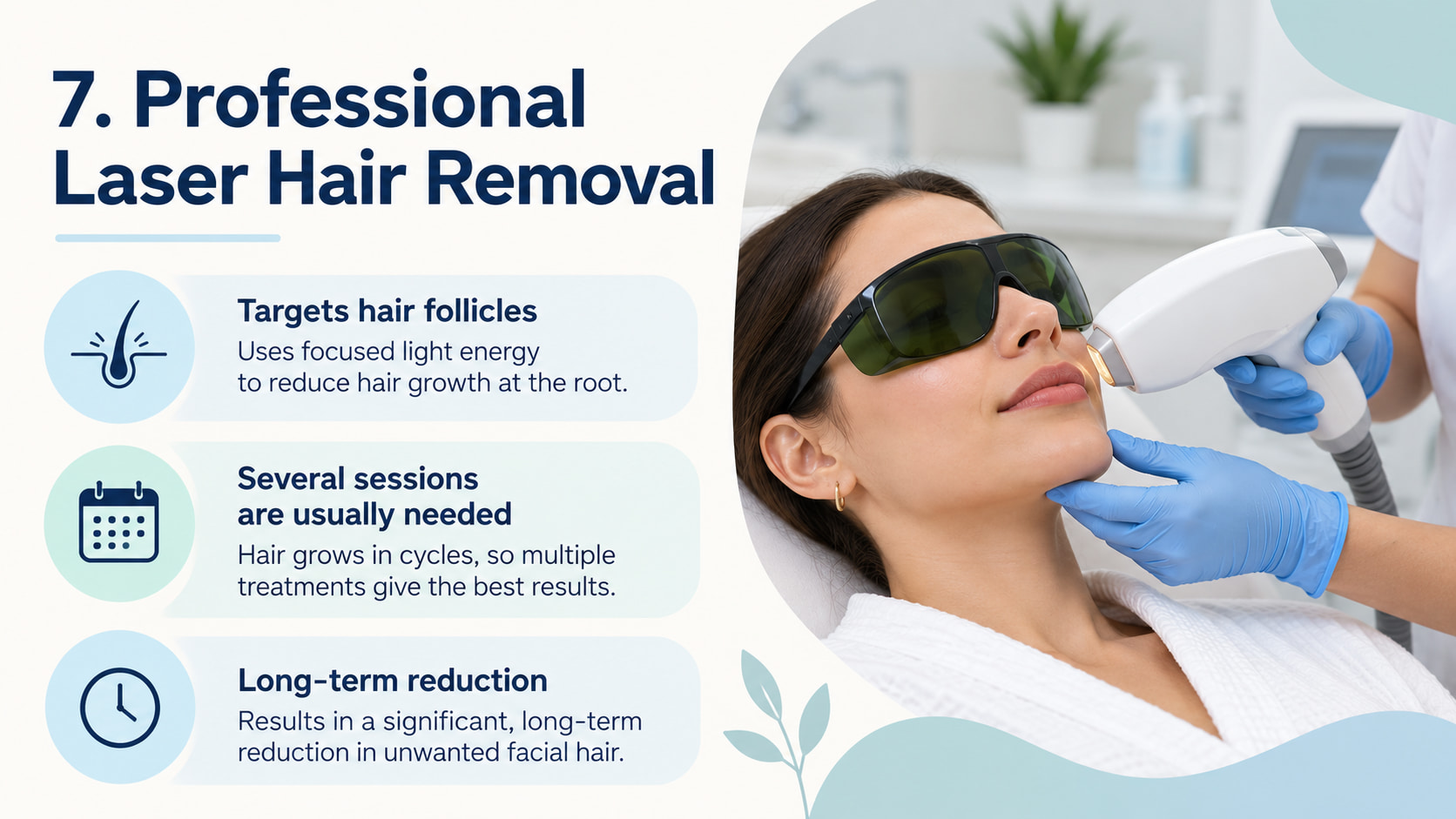
Laser hair removal uses concentrated light to damage hair follicles and reduce future growth. Dark, coarse hair generally responds better than very light, white, gray, or red hair.
Mayo Clinic’s laser guidance, updated in July 2026, gives a general estimate of 4–8 sessions, usually several weeks apart. Your facial hair pattern may require a different schedule. Maintenance sessions can be necessary, especially when hormones continue to influence growth.
People with darker skin can also be candidates. The provider needs appropriate equipment, settings, and experience with your skin tone. Possible complications include burns, pigment changes, and scarring. Ask about expected results, preparation, and the likely cost of the full course.
Both laser and IPL can occasionally cause increased hair growth, called paradoxical hypertrichosis. A systematic review associated this complication particularly with facial and neck procedures. Discuss this risk before starting, especially when considering broad areas of fine facial hair.
8. Intense Pulsed Light, or IPL
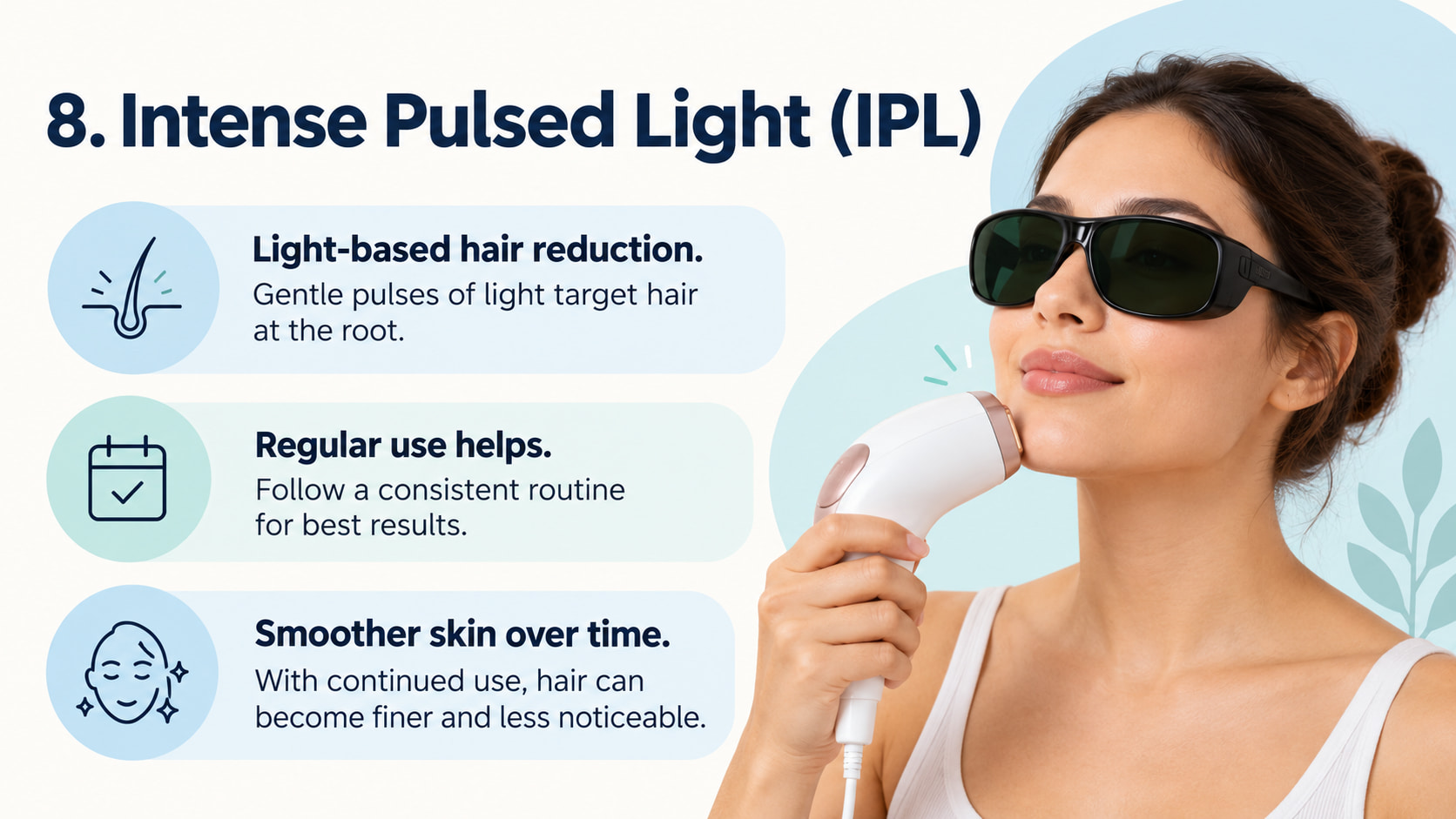
IPL uses multiple wavelengths of light to reduce hair growth. It differs from laser technology, although both depend largely on pigment absorbing light energy.
IPL is available through professional services and home devices. It generally works poorly on very light-colored hair, and suitability varies with skin tone and equipment.
Before buying a home device, check its:
- Hair-color and skin-tone compatibility charts.
- Permitted facial areas.
- Medication and skin-condition warnings.
- Initial schedule and maintenance requirements.
Facial use is device-specific. For example, Braun’s instructions allow use on women’s faces below the cheekbones and prohibit use near the eyes and eyebrows.
Follow the schedule for your exact model. Extra sessions or repeated flashes beyond the instructions should not be used to try to accelerate results.
9. Professional Electrolysis
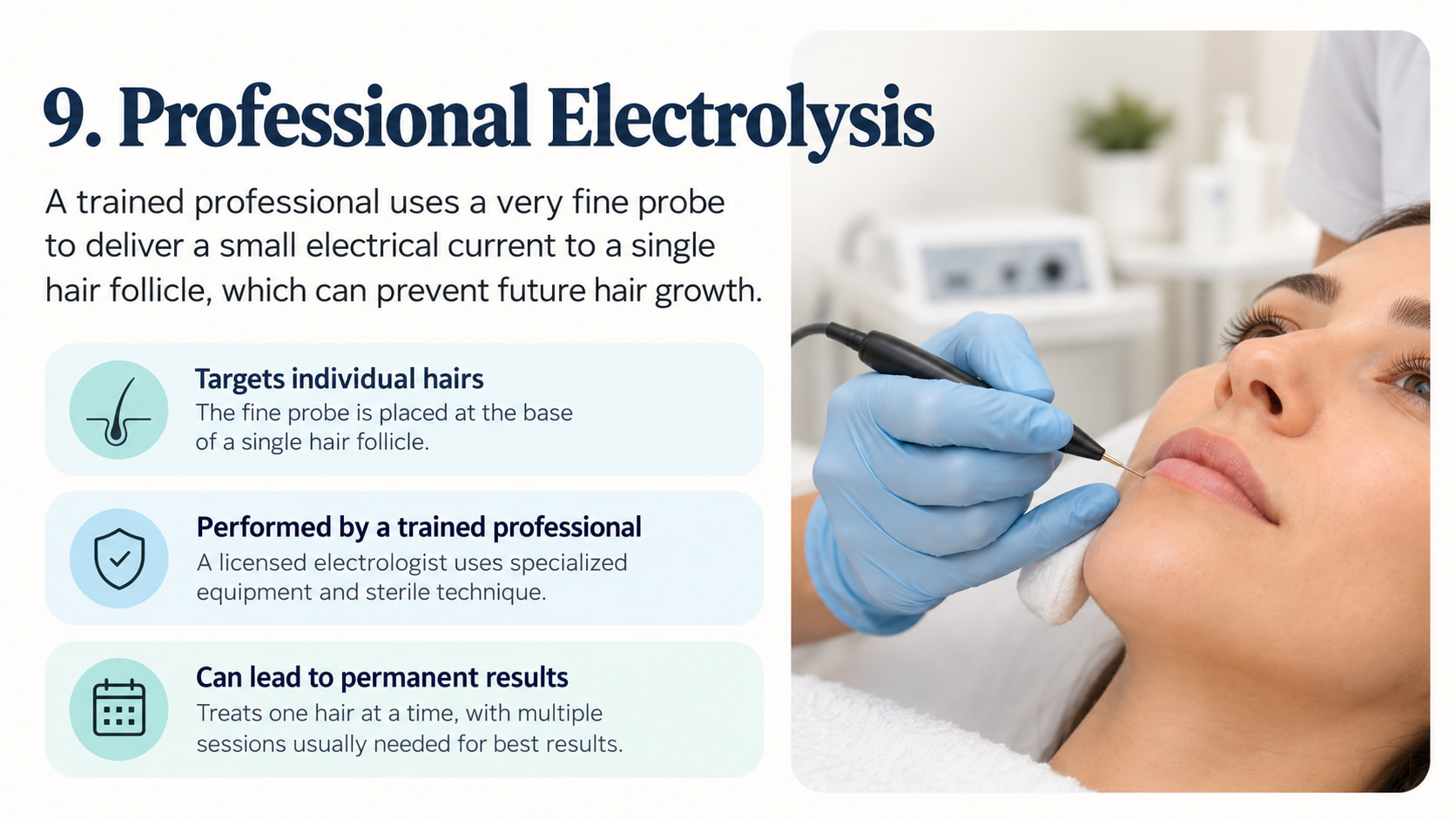
Electrolysis uses a fine probe and electrical current to disable individual hair follicles. It can work with all hair colors and skin tones, including light-colored hairs that respond poorly to laser or IPL.
Electrolysis can permanently remove successfully treated hairs. Completing an area requires multiple appointments because hairs grow in different cycles and follicles are addressed individually.
It may be particularly worth discussing for persistent individual chin hairs or light-colored facial hair. The tradeoff is the time involved.
Choose a qualified professional and ask about training, hygiene, session length, and the likely total commitment. Poor technique or unsterile equipment can lead to infection, burns, or scarring.
How to Choose a Method for Your Skin and Hair
Start with the area and the amount of hair you want to remove. A few visible hairs may only require tweezing, while a larger area may make another method more practical.
Then consider what matters most to you:
- Convenience: Can you comfortably maintain the result at home?
- Skin tolerance: Have previous methods caused irritation, ingrown hairs, or lingering dark marks?
- Comfort: Are you comfortable with pulling hairs from the root?
- Commitment: Do you want immediate removal or a series of professional appointments?
- Total expense: Include replacement products, repeat visits, and maintenance when comparing options.
You can use different approaches for different areas. The same method does not need to handle fine cheek hair, coarse chin hairs, and eyebrow shaping.
How to Reduce Irritation Before and After Hair Removal
Before Hair Removal
Check the skin first. Postpone waxing or exfoliating dermaplaning over sunburn, broken skin, or active inflammation. Tell a practitioner about prescription skin products and recent procedures before your appointment.
Keep reusable tools clean and follow the cleaning instructions for electrical devices. For salon waxing, look for hygienic practices, including a fresh applicator each time wax is taken from the container.
After Hair Removal
Keep your routine gentle:
- Use a mild cleanser and a suitable fragrance-free moisturizer.
- Avoid scrubbing or applying products that sting the area.
- Follow the provider’s instructions about makeup, heat, and other activities.
- Use broad-spectrum sunscreen with SPF 30 or higher on exposed skin.
After laser or IPL, follow the specific sun-exposure and aftercare instructions you receive.
If redness or swelling after waxing lasts longer than two days, AAD recommends seeing a dermatologist. Seek medical advice sooner for a significant burn or a worsening skin reaction.
When to See a Doctor About Facial Hair Growth
A few unwanted hairs do not automatically indicate a hormonal condition. However, a noticeable change in growth can deserve medical attention.
Arrange an appointment if you develop:
- Heavy or rapidly increasing coarse facial hair over a few months.
- New facial hair together with irregular or absent periods.
- Increased hair growth alongside new acne or scalp hair thinning.
Contact a healthcare professional promptly if sudden coarse hair growth comes with a deeper voice or increased muscle mass.
Mayo Clinic’s guidance on hirsutism explains that excess hair can have several causes, including hormonal conditions and certain medications. Cosmetic hair removal does not address an underlying cause.
Frequently Asked Questions
Does Shaving a Woman’s Face Make Hair Grow Back Thicker?
No. Shaving does not change hair thickness, color, or growth rate. The cut end can feel stubbly as it grows out, which can make the hair seem coarser temporarily.
What Is the Best Way to Remove Peach Fuzz?
Shaving can be a practical option for fine facial hair. Threading and other methods are also available. Professional dermaplaning adds exfoliation, so consider your skin’s condition before choosing it. Leaving normal peach fuzz alone is equally reasonable.
Is Shaving or Waxing Better for Facial Hair?
Shaving is quick and usually less painful, but results are shorter-lived. Waxing removes hair from the root and usually lasts longer, with more discomfort and potential skin irritation. Your skin-care products may also make waxing unsuitable.
Can Facial Hair Be Removed Permanently?
Electrolysis can permanently remove successfully treated hairs. Laser and IPL can provide lasting reduction, but women’s facial hair may require ongoing maintenance. None of these options guarantees that new hair will never develop in other follicles.
Can Women Use IPL on the Upper Lip and Chin?
Some home IPL devices permit these areas when the user’s skin tone and hair color are compatible. Check the instructions for the exact model, follow its schedule, and keep it away from the eyes and eyebrows.
Which Facial Hair Removal Method Is Best for Sensitive Skin?
There is no guaranteed irritation-free choice. Some people tolerate gentle shaving or threading, while others develop irritation. Active eczema, acne, damaged skin, and retinoid use can change what is suitable. A dermatologist can help if several methods cause problems.
Why Am I Suddenly Growing More Chin Hair?
Hair growth can change with hormone levels, age, medications, and certain health conditions. Rapidly increasing coarse hair, especially with menstrual changes or other symptoms, deserves assessment. Hair growth alone cannot identify the cause.
Conclusion
Choose facial hair removal based on the hair you want to remove, what your skin tolerates, and the upkeep you can manage. Start with an approach suited to your goal, follow its instructions carefully, and seek professional advice before committing to laser, IPL, or electrolysis if you are unsure about suitability.
This content is for informational purposes only and not medical advice.
References
- American Academy of Dermatology: Ways to remove unwanted hair
- American Academy of Dermatology: How to shave
- American Academy of Dermatology: How to wax
- American Academy of Dermatology: Isotretinoin FAQs
- Mayo Clinic: Shaving and hair regrowth
- Mayo Clinic: Laser hair removal
- Mayo Clinic: Hirsutism symptoms and causes
- Cleveland Clinic: Shaving versus waxing