
A medium peach has about 58 to 60 calories, while 100 grams of raw peach has about 39 calories. That makes peaches a relatively low-calorie fruit that can fit easily into many eating patterns. Knowing the calories in a peach also helps you compare serving sizes, choose better snacks, and keep portions realistic without overthinking food. According to the USDA SNAP-Ed Connection, one medium peach weighs about 150 grams and provides 58 calories, while Rutgers New Jersey Agricultural Experiment Station notes that 100 grams of peach provides 39 calories.
How many calories in a peach?
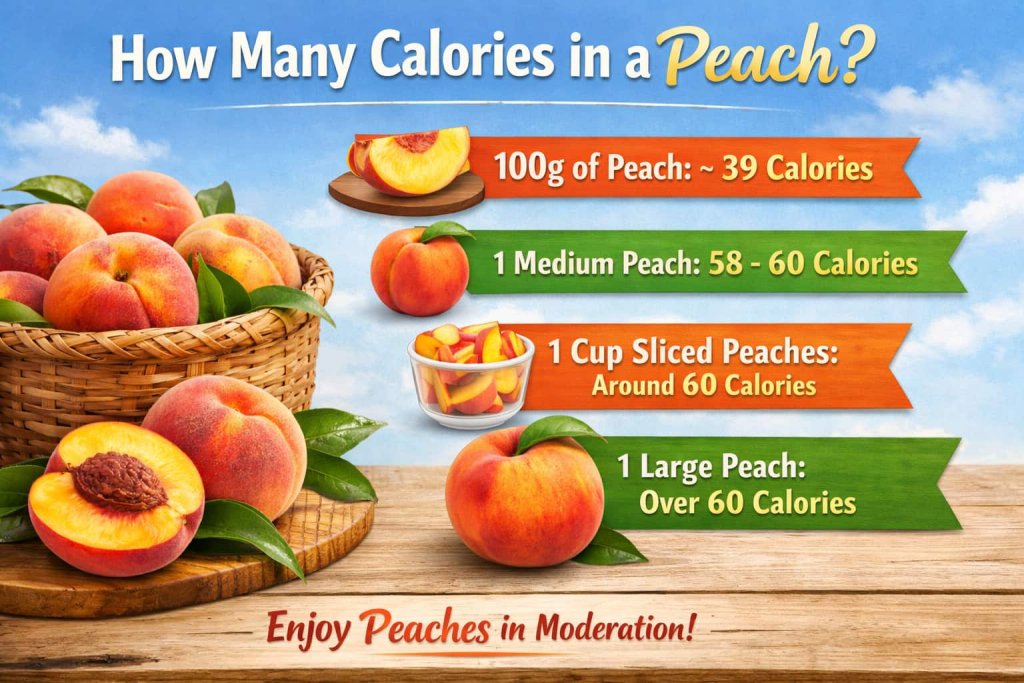
Here is the most practical calorie guide for plain raw peach:
- 100 grams of peach: about 39 calories
- 1 medium peach: about 58 to 60 calories
- 1 cup sliced peaches: usually around 60 calories, depending on how tightly the slices are packed
- 1 large peach: typically more than 60 calories because the fruit weighs more
The most important reason calorie counts vary is serving size. A peach sold as “medium” in one database may weigh slightly more or less in another. The official numbers are still very close: USDA SNAP-Ed lists 58 calories for a 150 g medium peach, and the U.S. Food and Drug Administration lists 60 calories for a 147 g medium peach.
How peach size changes the calorie count
Peach calories mostly change based on size and weight. A bigger peach naturally has more calories than a smaller one, even though the fruit itself is still relatively light.
Here is a simple practical guide:
- 100 grams of peach: about 39 calories
- 1 small peach: usually around 50 calories
- 1 medium peach: about 58 to 60 calories
- 1 large peach: usually around 65 to 80 calories
The most accurate way to estimate calories is by weight. If you want a more precise number, use the 39 calories per 100 grams reference and scale up or down based on the peach you actually have.
Nutrition profile of a peach
Here is a practical nutrition profile for 1 medium peach (about 150 g):
| Nutrient | Typical amount |
|---|---|
| Calories | 58 |
| Carbohydrates | 14 g |
| Fiber | 2 g |
| Total sugars | 13 g |
| Protein | 1 g |
| Total fat | 0 g |
| Added sugar | 0 g |
| Vitamin C | 11 mg |
These numbers describe a plain raw peach, not peach pie, canned peaches in syrup, or sweetened peach products. A peach is mostly water and carbohydrate, with a small amount of fiber and very little fat. USDA SNAP-Ed also lists 0 grams of added sugar for a medium peach.
Is peach good for weight management?
Yes, peaches can work well for weight management because they are relatively low in calories, naturally sweet, and provide fiber. Whole fruit is often more satisfying than juice because the fiber stays in the fruit. The Centers for Disease Control and Prevention advises choosing whole fruits over juices and also recommends choosing canned fruit without added sugar or syrup when possible.
A peach can be a smart snack when you want something sweet without the calorie load of many desserts or packaged snack foods. It may help with appetite control best when you eat it whole and pair it with a more filling food, such as plain Greek yogurt, cottage cheese, or a handful of nuts. That keeps the snack more balanced and can help it last longer between meals. The evidence-based point here is that whole fruit supports fullness better than fruit juice because fiber remains intact.
Key nutrients in a peach
Peaches are not just about calories. They also provide a few useful nutrients.
Vitamin C
Vitamin C supports normal immune function and helps the body make collagen. A medium peach provides about 11 mg of vitamin C according to USDA SNAP-Ed.
Fiber
A medium peach provides about 2 grams of fiber. That is not extremely high, but it still adds to your daily total and is one reason whole peach is more satisfying than peach juice.
Eating the peach with the skin on can help you keep the full fiber content of the fruit. Peeling it does not dramatically change the calorie count, but it may reduce some of the fiber you would otherwise get from the whole peach.
Vitamin A compounds
Peaches contain vitamin A-related compounds, including carotenoids. Rutgers notes that peaches provide vitamin A and other antioxidant compounds along with vitamin C.
Potassium
Peaches also provide potassium in a modest amount. The FDA raw fruit reference lists 230 mg of potassium for a medium peach.
Fresh peach vs canned peach calories
Fresh peach is usually the simplest option when you want a straightforward calorie count. Canned peaches can still fit into a healthy diet, but the packing liquid matters.
- Peaches packed in water or 100% juice: usually the better choice
- Peaches packed in heavy syrup: usually higher in sugar and calories
- Sweetened peach cups or desserts: often much higher in calories than plain fruit
The CDC specifically recommends choosing canned fruit without added sugar or syrup when possible. That matters for anyone trying to manage calories, blood sugar, or overall added sugar intake.
It is also worth separating plain peaches from peach products. Dried peaches, peach snacks, peach yogurt, peach cobbler, and peach-flavored desserts usually have much more sugar and many more calories per serving than a fresh peach. If your goal is lighter snacking or weight management, plain fresh peach is usually the simplest choice.
Do yellow peaches and white peaches have different calories?
Usually, the calorie difference between yellow peaches and white peaches is small. In practical terms, both are still low-calorie fruits, and the total calories depend much more on the fruit’s size than on the variety.
For most readers, the better takeaway is simple: choose the peach you enjoy and pay more attention to portion size, toppings, and whether the fruit is fresh, canned in juice, or packed in syrup.
Who should be a little more careful
Most people can enjoy peaches without any issue, but a few groups may need more caution.
People with pollen-food allergy syndrome
The American Academy of Allergy, Asthma & Immunology notes that some people with pollen allergies can react to certain raw fruits, including peaches. Symptoms may include itching or mild swelling in the mouth, lips, or throat after eating raw peach.
People buying canned peaches
If you are choosing canned peaches for convenience, check the label. Syrup-packed peaches can raise the calorie and sugar content noticeably compared with plain fresh peach or peaches packed in juice or water. The CDC’s guidance to choose options without added sugar is especially useful here.
People tracking carbohydrates carefully
A peach is not extremely high in carbohydrate, but it still counts. USDA SNAP-Ed lists 14 grams of carbohydrate per medium peach, so people closely monitoring carb intake may want to count the portion accurately.
Simple ways to enjoy peaches without adding too many calories
Here are a few practical ways to keep peach snacks light and useful:
- Eat a fresh peach on its own
- Slice peach into plain yogurt
- Add peach slices to oatmeal
- Pair peach with cottage cheese
- Freeze peach slices for a cold snack
- Add chopped peach to a simple fruit bowl instead of using syrup-packed fruit
These ideas help preserve the main benefit of the fruit: a naturally sweet taste with a fairly modest calorie total.
FAQs
How many calories are in one medium peach?
A medium peach has about 58 to 60 calories, depending on the source and exact weight of the fruit. USDA SNAP-Ed lists 58 calories for a 150 g peach, while the FDA lists 60 calories for a 147 g peach.
How many calories are in 100 grams of peach?
Raw peach has about 39 calories per 100 grams, according to Rutgers nutrition guidance.
Are peaches low in calories?
Yes. Peaches are generally considered a relatively low-calorie fruit, especially compared with many desserts, pastries, or sweet packaged snacks. A medium peach is around 60 calories.
Is peach good for weight loss?
A peach can fit into a weight-loss eating pattern because it is low in calories and provides fiber. Whole fruit is generally more filling than juice, which is why the CDC recommends choosing whole fruit more often.
Final thoughts
Peaches are a simple, useful fruit to keep in your routine. A medium peach has about 58 to 60 calories, provides 2 grams of fiber, and offers nutrients like vitamin C and potassium. For most people, peaches are an easy fit for healthy snacking, especially when eaten fresh and whole. When buying canned peaches, choose versions packed in water or juice instead of syrup to keep the nutrition profile closer to fresh fruit.
Sources and References
- USDA SNAP-Ed Connection — Peaches
- Rutgers New Jersey Agricultural Experiment Station — Health Benefits of Peaches: A Delicious Summer Fruit
- Centers for Disease Control and Prevention — Healthy Habits: Fruits and Vegetables to Manage Weight
- National Institute of Diabetes and Digestive and Kidney Diseases — Take Charge of Your Health: A Guide for Teenagers
- U.S. Food and Drug Administration — Raw Fruits Poster, Text Version
- American Academy of Allergy, Asthma & Immunology — Oral Allergy Syndrome (OAS)