
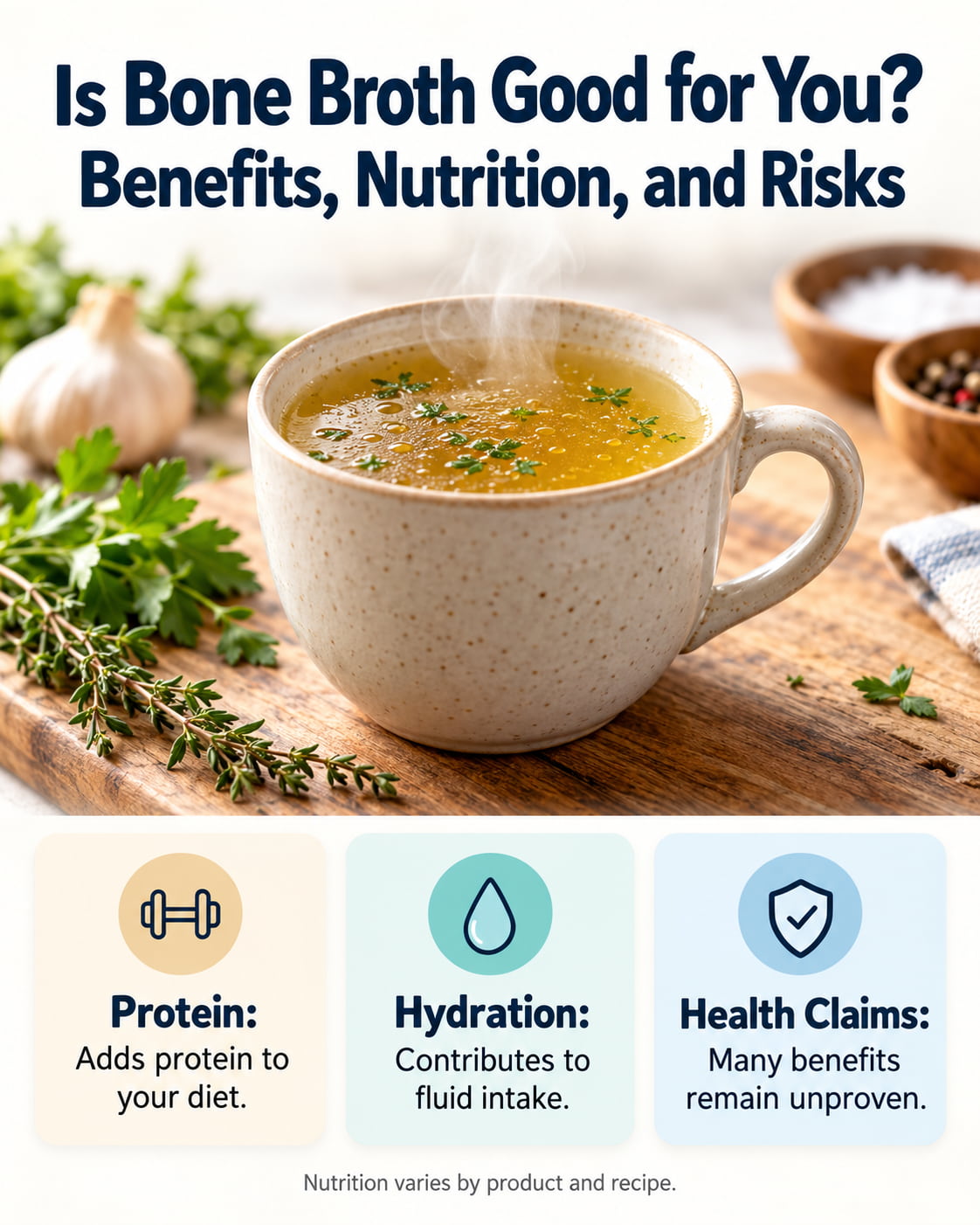
Yes, bone broth can be good for you as part of a balanced diet. It provides fluid and some protein, but its nutritional value varies, and many advertised benefits for gut health, joints, and skin remain unproven.
Deciding whether bone broth is good for you comes down to what is in your cup and how it fits your meals. Check the protein and sodium, consider any dietary restrictions, and keep expectations realistic.
What Is Bone Broth?
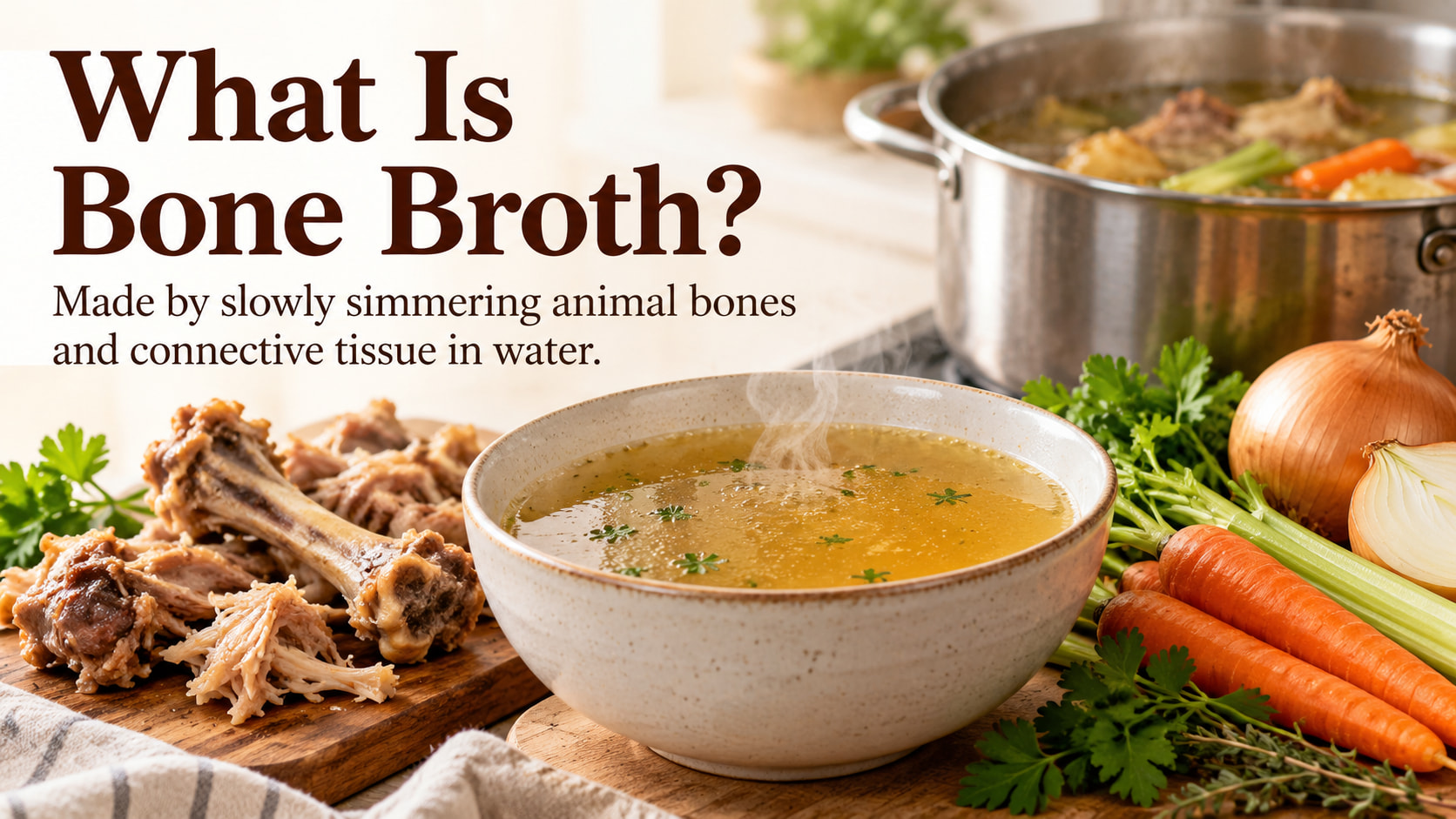
Bone broth is a savory liquid made by simmering animal bones and connective tissue in water, often with meat, vegetables, herbs, or seasonings. Cooking breaks down some of the collagen in connective tissue into gelatin, which can give cooled broth a jelly-like texture.
It overlaps with traditional stock. Stock commonly uses bones, while regular broth often relies more on meat and seasonings. Bone broth is generally cooked for longer, although recipes and product names vary.
Chicken, beef, turkey, pork, and fish can all be used. The ingredients, amount of water, cooking method, and concentration affect the final nutrition.
Bone Broth Nutrition
There is no single nutrition profile for bone broth. A homemade batch may differ substantially from a ready-to-drink carton or a concentrated powder.
For a specific example, the Pacific Foods nutrition label lists the following amounts for its Organic Unsalted Chicken Bone Broth.
Nutrition per 1 Cup, or 240 mL
| Nutrient | Amount |
|---|---|
| Calories | 50 |
| Protein | 10 g |
| Total fat | 1 g |
| Carbohydrate | Less than 1 g |
| Sodium | 210 mg |
| Potassium | 460 mg |
These figures describe this product, not all bone broths. Check your package because recipes and labels can change.
Is Bone Broth High in Calcium?
Being made from bones does not guarantee a high calcium content.
A 2025 study in the Journal of Elementology examined 36 commercial beef-bone broth products sold in South Korea. They contained an average of just 7.6 milligrams of calcium per 250-gram serving.
That result is specific to the products tested. It illustrates why you should check measured nutrient amounts rather than assume that bone broth is a substantial calcium source. If calcium is your priority, compare calcium values on food labels.
When Is Bone Broth Good for You?
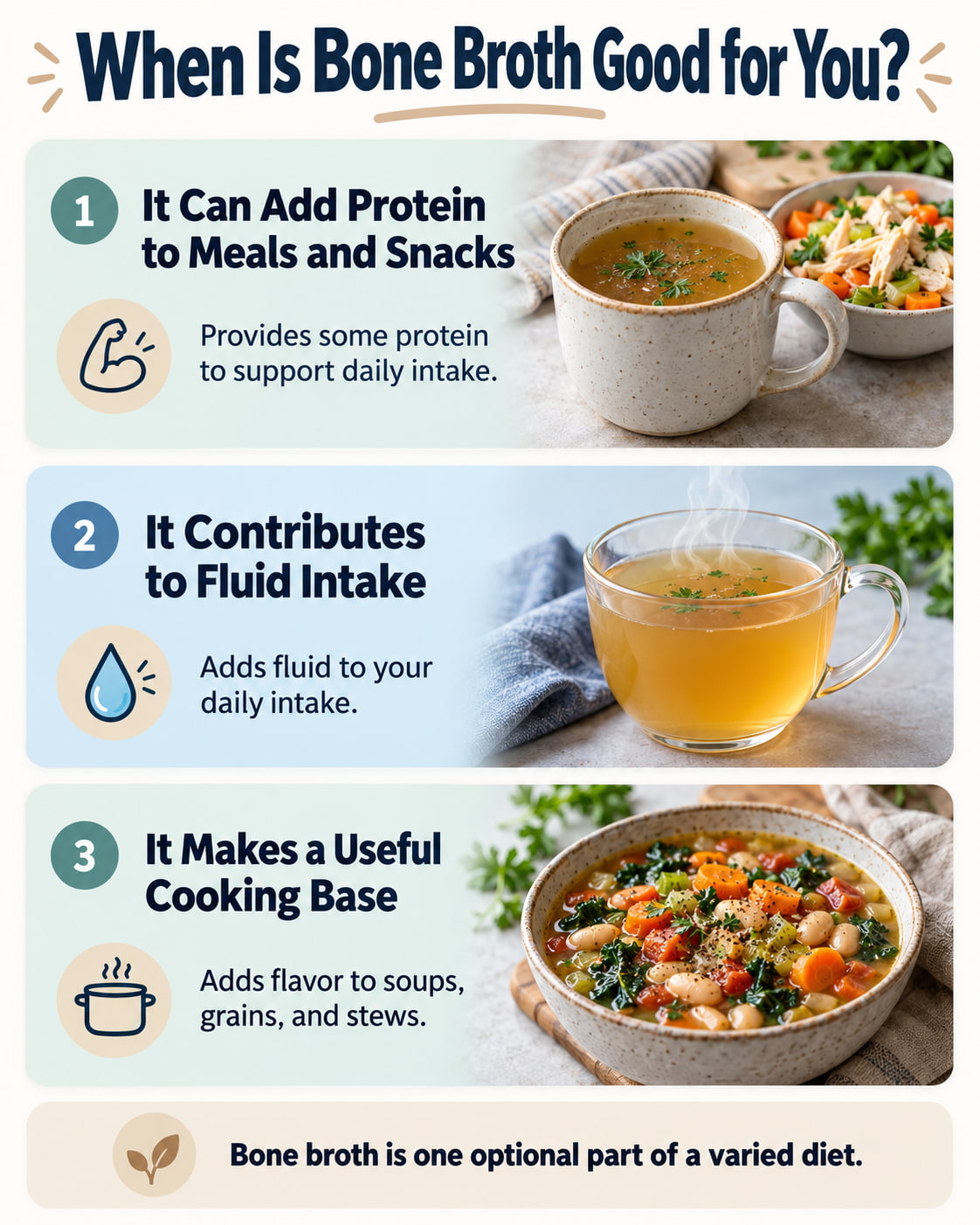
Bone broth is most useful when it adds something you want to your diet, such as protein, fluid, or flavor.
It Can Add Protein to Meals and Snacks
A cup containing 10 grams of protein can contribute to your daily intake. You might sip it with a snack or use it in a soup that also contains beans, chicken, or tofu.
However, broth’s protein concentration and amino acid profile vary. Include a variety of protein-containing foods instead of relying on broth as your main source.
It Contributes to Fluid Intake
Bone broth supplies fluid, which can make it an appealing option if you enjoy a warm, savory drink. Its sodium content matters, especially if you drink several servings or have a prescribed sodium or fluid limit.
You do not need bone broth to stay hydrated. It is one possible beverage choice.
It Makes a Useful Cooking Base
Broth can add flavor to meals built around vegetables, grains, and protein-rich foods.
Practical options include:
- Using it as the base for a vegetable and bean soup.
- Cooking rice or barley in it.
- Adding it to a chicken or tofu stew.
- Using a small amount to loosen a sauce.
The other ingredients help determine the nutritional value of the finished meal.
What Research Shows About Bone Broth
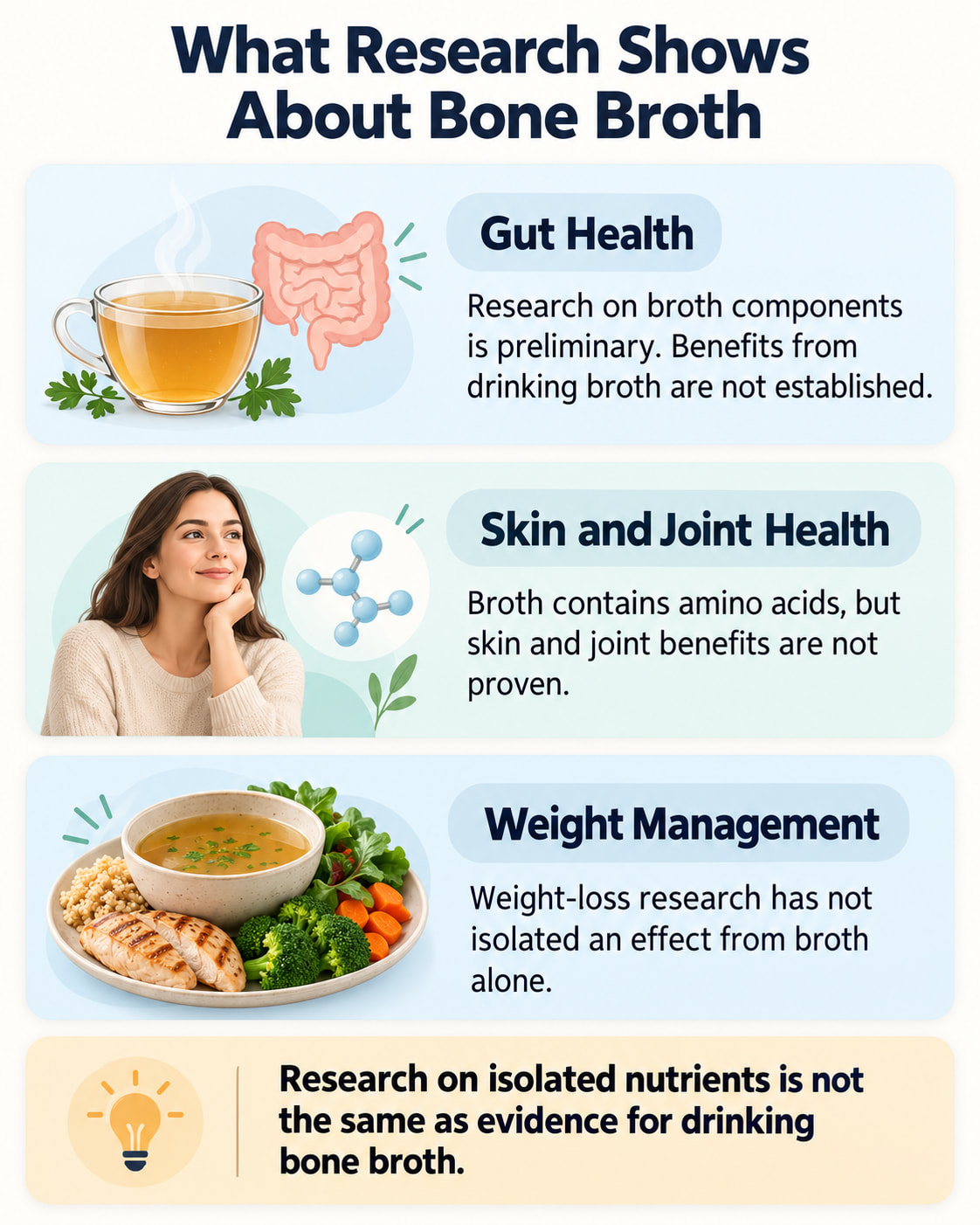
Bone broth contains nutrients that researchers study for various health effects. Evidence about an isolated nutrient or a collagen supplement, however, does not automatically establish the effects of drinking broth.
Gut Health
A 2025 narrative review in Digestive Diseases and Sciences discussed amino acids and minerals found in bone broth and their possible roles in intestinal barrier function.
The review brought together existing research on nutrients and biological mechanisms. It did not present a new clinical trial showing that drinking bone broth improves a digestive condition.
This is a reason for further research, but it does not establish that an ordinary cup repairs the intestinal lining or reliably relieves digestive symptoms.
Skin and Joint Health
Many claims about bone broth come from research involving collagen supplements. Those studies use particular products and doses, while broth’s composition is less predictable.
A 2019 study in the International Journal of Sport Nutrition and Exercise Metabolism found substantial variation in the collagen-related amino acids supplied by different broths.
Broth can provide amino acids, but its effects on skin appearance or joint pain are not established by that finding. A serving of broth should not be assumed to match the products used in collagen research.
Weight Management
A 2025 study of a bone broth diet followed 100 adults with obesity through an eight-week program. It combined broth with portion-controlled meals, lower-carbohydrate and higher-protein eating, intermittent fasting, and exercise.
Participants lost weight, but the study had no comparison group. Because several behaviors changed together, it could not isolate bone broth’s contribution. The researchers disclosed funding from Veyl Ventures LLC.
Any effect on your weight will depend on your overall eating pattern. The study does not establish a special weight-loss benefit from adding broth to your usual diet.
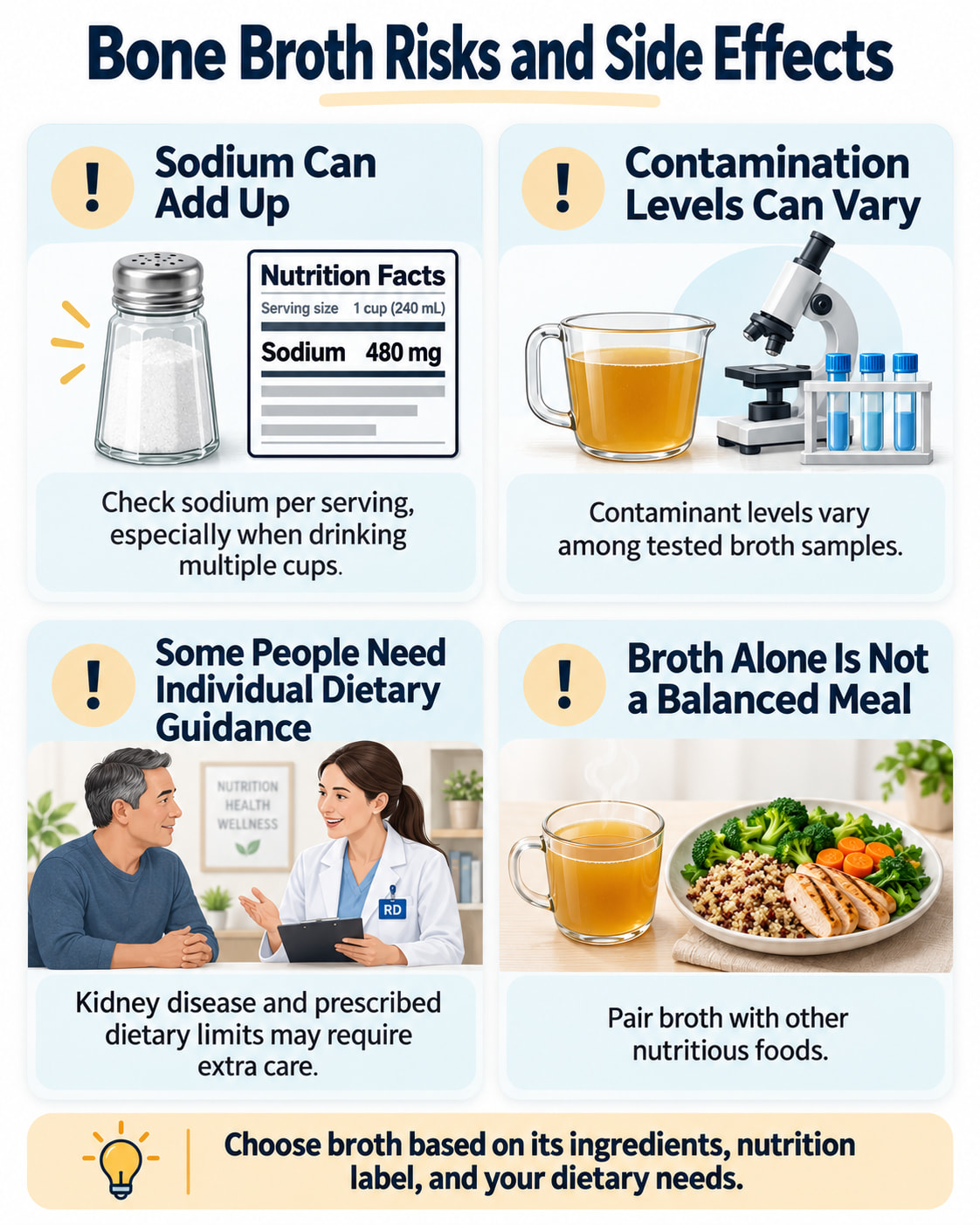
Bone Broth Risks and Side Effects
Sodium Can Add Up
Some broths contain substantial sodium. A larger mug or several daily servings can contribute more than you expect.
The FDA’s sodium guidance advises adults generally to keep sodium below 2,300 milligrams per day. Your clinician may recommend a different limit.
Pay attention to these label terms:
- Low sodium: 140 milligrams or less per serving.
- Reduced sodium: At least 25% less than the regular version.
- Unsalted or no salt added: Salt was not added during processing, but sodium can still be present.
For example, the unsalted broth in the nutrition table contains 210 milligrams per cup. Two cups would provide 420 milligrams.
Contamination Levels Can Vary
Small studies have detected lead in some broth preparations. Other testing, including a 2024 analysis of 30 different broths, generally found low lead and cadmium concentrations.
These findings apply to the samples tested. They cannot establish the contamination level of every product or homemade batch.
The FDA states that there is no known safe level of lead exposure. At the same time, the available broth studies do not establish that ordinary consumption universally causes harm. Labels such as “organic” should not be treated as proof that a broth is free of contaminants.
Some People Need Individual Dietary Guidance
People with chronic kidney disease may have individualized limits for sodium, fluid, protein, potassium, or phosphorus. NIDDK notes that requirements vary, including between people who receive dialysis and those who do not.
If you have kidney disease or prescribed dietary limits, ask your clinician or registered dietitian how broth fits your plan.
Also check ingredients for any foods you need to avoid because of allergies or intolerances.
Broth Alone Is Not a Balanced Meal
A cup with 50 calories and 10 grams of protein provides limited energy and does not supply the variety of nutrients in a complete meal.
If you enjoy broth for lunch or dinner, build it into something more substantial. For example, combine it with chicken or beans, vegetables, and rice or another grain.
How to Choose and Use Bone Broth
Compare Protein and Sodium per Serving
Check the serving size first. Then compare protein and sodium across products using the same prepared volume.
For powders and concentrates, follow the mixing directions. The nutrition for one scoop may not match the amount in your finished mug.
Choose a Portion That Fits Your Diet
One cup is a common labeled serving, but it is not a clinically established dose for a particular health benefit.
If you enjoy broth, use a portion that fits your appetite, meals, and sodium needs. Drinking more has not been shown to produce greater benefits.
Use Taste and Nutrition to Guide Your Choice
Chicken and beef broth can both fit a varied diet. The recipe and label are more useful than assuming one animal source is always healthier.
Homemade broth lets you control added salt and ingredients. Packaged broth offers a convenient option with labeled nutrient amounts. Neither choice guarantees a particular collagen content or health result.
How to Store Bone Broth Safely
Long cooking does not remove the need for careful handling afterward. Follow USDA food-safety guidance:
- Cool and refrigerate promptly. Refrigerate perishable broth within two hours, or one hour when the surrounding temperature is above 90°F.
- Divide large batches. Small, shallow containers help broth cool faster than one large pot.
- Keep it cold. Your refrigerator should be at 40°F or below.
- Freeze portions you will not use soon. Label containers with the preparation date.
- Reheat thoroughly. Reheat leftovers to 165°F; USDA also advises bringing soups to a rolling boil.
USDA’s specific storage charts give these time frames:
| Broth type | Refrigerator | Freezer, for best quality |
|---|---|---|
| Chicken broth | 3–4 days | 2–3 months |
| Cooked beef broth | 1–2 days | 2–3 months |
Use the guidance for the broth you made and follow package instructions for opened commercial products.
Frequently Asked Questions
Is It OK to Drink Bone Broth Every Day?
Daily use can fit a balanced diet if the ingredients suit you and the serving fits your sodium and nutritional needs. It is optional, and you do not need to drink it every day to eat well.
How Much Bone Broth Should You Drink?
There is no established daily amount for obtaining a specific health benefit. One cup is a common serving. Consider the nutrition label and your overall diet when deciding how much to have.
Is Bone Broth Better Than Regular Broth or Stock?
Bone broth may provide more protein, but the amounts vary. Regular broth or stock can also work well in cooking. Compare protein, sodium, serving size, and taste to choose what suits you.
Is Chicken or Beef Bone Broth Healthier?
Neither is automatically healthier. Ingredients, concentration, and added salt can make a bigger difference than the animal source. Compare individual products rather than relying on the name.
Is Bone Broth Good for Gut Health?
Research on some of its nutrients is promising, but strong human evidence has not established that drinking bone broth improves gut disorders or digestive symptoms. It can still be enjoyed as a food if you tolerate it.
Can Bone Broth Help You Lose Weight?
It can fit into an eating pattern designed for weight management, but it has no established special weight-loss effect. A study of a combined bone broth diet could not separate broth’s role from fasting, meal changes, and exercise.
Does Bone Broth Provide the Same Benefits as Collagen Supplements?
You should not assume so. Collagen studies use specific formulations and amounts, while broth’s collagen-related amino acid content varies. Findings from supplements cannot be directly applied to a cup of broth.
Conclusion
Bone broth can add fluid, protein, and flavor to your diet. Its usefulness depends on its ingredients, nutrient content, and how you include it in meals.
Start by comparing protein and sodium on the label. If you enjoy it, try it in a balanced soup or alongside a meal, and follow safe storage practices. Keep expectations focused on its nutritional contribution while research on broader health benefits continues.
This content is for informational purposes only and not medical advice.
References
- MD Anderson: Is Bone Broth Good for You?
- Pacific Foods: Organic Unsalted Chicken Bone Broth
- Journal of Elementology: Nutritional Evaluation of Beef-Bone Broth Products
- Digestive Diseases and Sciences: Bone Broth Components and Gut Barrier Function
- International Journal of Sport Nutrition and Exercise Metabolism: Bone Broth and Collagen Precursors
- Medical Hypotheses: Lead Contamination in Bone Broth Diets
- European Food Research and Technology: Elemental Composition of Broths
- FDA: Sodium in Your Diet
- USDA: Leftovers and Food Safety