
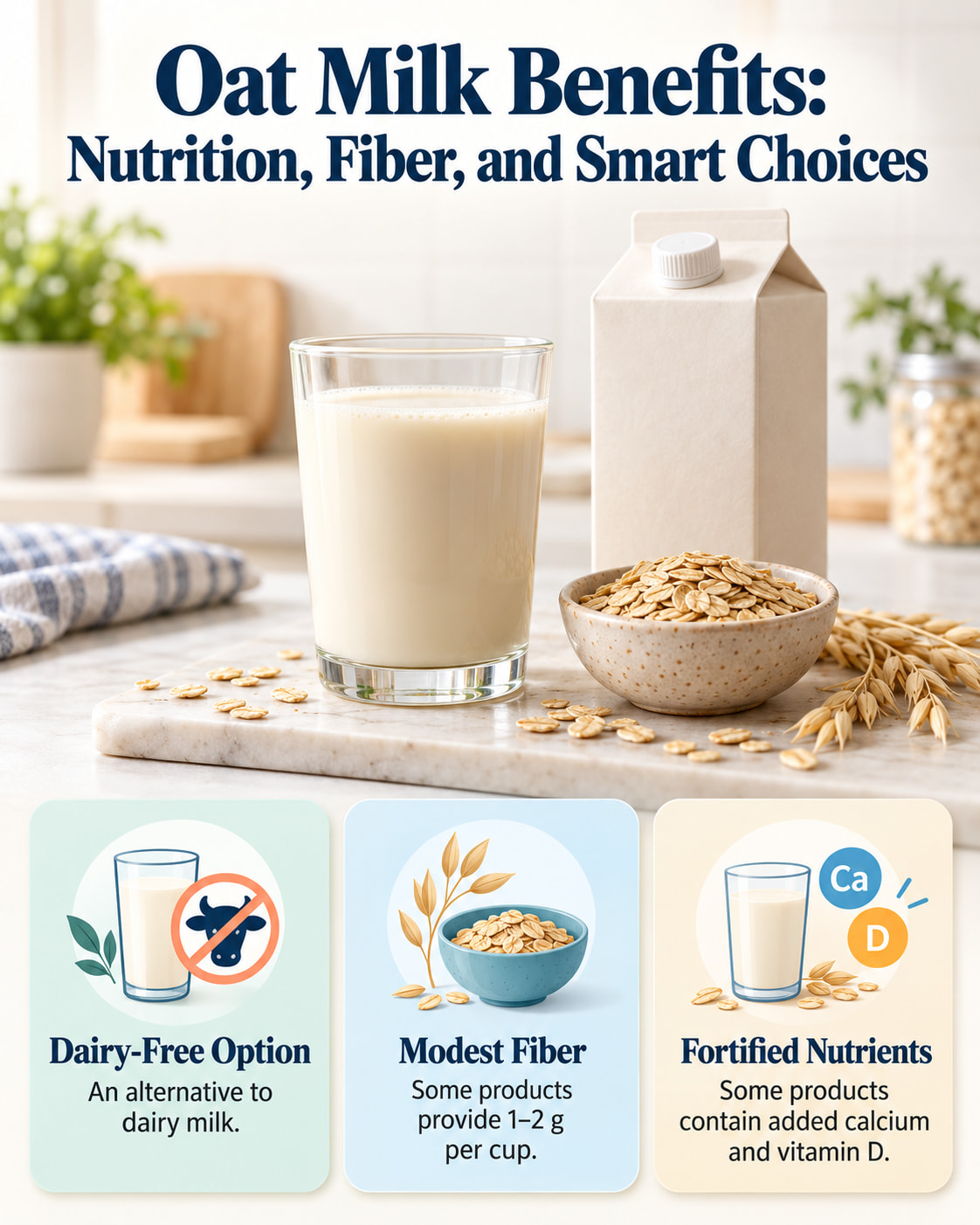
Oat milk benefits include a dairy-free option, a modest fiber contribution from some products, and calcium and vitamin D when the drink is fortified. It can fit a balanced diet, but its protein, sugar, and nutrient content depend on the carton you choose.
That distinction matters whether you add a splash to coffee or use oat milk as your main milk alternative. A useful starting point is to compare protein, added sugar, fiber, and fortification on the Nutrition Facts label.
What Is Oat Milk?
Oat milk is a plant-based beverage made from oats and water. Commercial versions may also contain vegetable oil, salt, stabilizers, and added vitamins and minerals.
Processing changes how much of the original oat remains in the finished drink. Some manufacturers use enzymes to break down oat starch, creating a smoother texture and some sweetness.
Although oat milk starts with oats, a glass does not necessarily provide the same nutrition as a serving of oatmeal. The amount of oats, processing method, and added ingredients all affect the result.
Oat Milk Nutrition: What Is in One Cup?
There is no single nutrition profile for oat milk. Even products from the same brand can differ.
The table below compares specific US products using the same 1-cup serving size of 240 mL.
| Nutrient | Planet Oat Unsweetened Original | Oatly Original | Silk Organic Unsweet Soymilk | Horizon Organic 2% Milk |
|---|---|---|---|---|
| Calories | 40 | 120 | 80 | 130 |
| Protein | Less than 1 g | 3 g | 8 g | 8 g |
| Total carbohydrate | 9 g | 16 g | 5 g | 13 g |
| Dietary fiber | 1 g | 2 g | 2 g | 0 g |
| Total sugars | 0 g | 7 g | 1 g | 12 g |
| Added sugars | 0 g | 7 g | 0 g | 0 g |
| Saturated fat | 0 g | 0.5 g | 0.5 g | 3 g |
| Calcium | 350 mg | 350 mg | 280 mg | 300 mg |
| Vitamin D | 4 mcg | 3.6 mcg | 3 mcg | 2.5 mcg |
Sources: manufacturers’ US Nutrition Facts labels. The oat products shown are Planet Oat’s refrigerated Unsweetened Original and Oatly’s 32-ounce shelf-stable Original. These are product examples, not category averages. Check your carton because formulations can change.
The comparison shows why calcium alone does not tell the whole story. Both oat products provide substantial calcium through fortification, but considerably less protein than the soy and dairy examples.
Also, the dairy milk’s 12 grams of total sugar is naturally occurring milk sugar. Its label lists zero added sugar.
Oat Milk Benefits: What the Evidence Supports
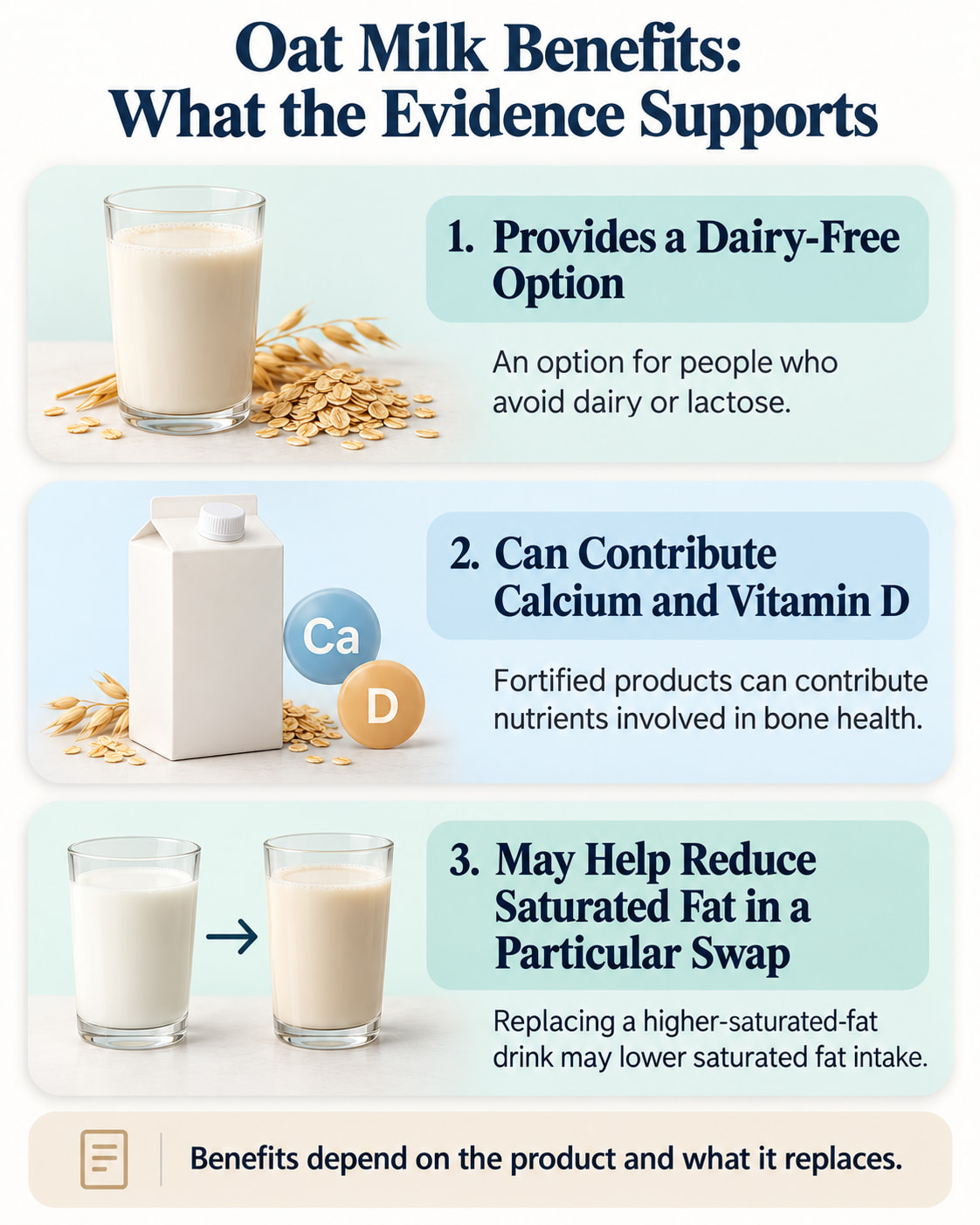
1. Provides a Dairy-Free Option
Oat milk can be useful if you avoid dairy because of lactose intolerance or personal preference. It offers another way to prepare drinks, cereal, and recipes without conventional milk.
For someone with a milk allergy, the exact product matters. Check ingredients and allergen information rather than assuming every oat-based beverage is suitable.
Lactose intolerance and milk allergy are different conditions. A drink being lactose-free does not, by itself, establish that it is safe for someone with a milk-protein allergy.
2. Can Contribute Calcium and Vitamin D
Fortified oat milk can contribute nutrients involved in normal bone health. Calcium is an important component of bones, while vitamin D helps the body absorb calcium.
The NIH Office of Dietary Supplements notes that plant-based milk alternatives are often fortified with vitamin D. However, fortification is not universal, and amounts differ.
Choose a product that lists calcium and vitamin D if you want it to supply those nutrients. A homemade oats-and-water drink should not be assumed to match a fortified commercial product.
3. May Help Reduce Saturated Fat in a Particular Swap
If you replace a higher-saturated-fat beverage with an oat milk containing less saturated fat, that substitution can lower the saturated fat in that portion of your diet.
In the examples above, the oat milks contain 0–0.5 grams of saturated fat per cup, compared with 3 grams in the 2% dairy milk.
The benefit depends on what you replace. Switching from skim milk, for example, would not provide the same saturated-fat reduction.
How Much Fiber Does Oat Milk Have?
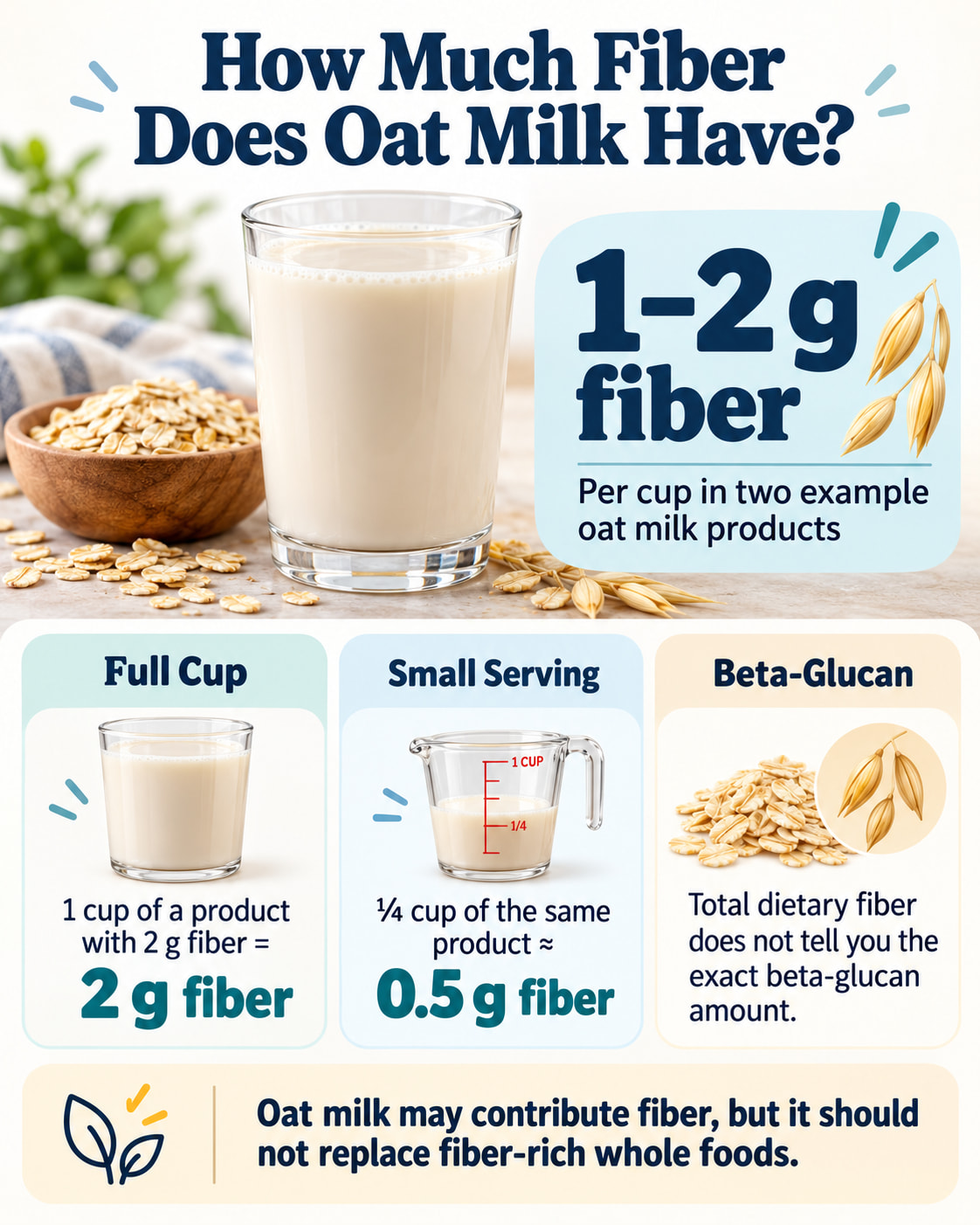
The oat milks in the comparison provide 1–2 grams of fiber per cup. That is a modest contribution, so oat milk should not automatically be described as a high-fiber drink.
A splash in coffee provides proportionally less. If a product contains 2 grams of fiber per cup, a quarter-cup contributes about 0.5 gram.
Oat milk can add to your fiber intake, but continue including foods such as beans, vegetables, fruit, and whole grains.
Total Fiber and Beta-Glucan Are Different
Oats contain beta-glucan, a type of soluble fiber associated with cholesterol benefits. However, the total dietary fiber listed on a carton does not tell you exactly how much beta-glucan it contains.
The FDA’s health-claim regulation identifies at least 3 grams of beta-glucan daily from eligible oat or barley sources, within a diet low in saturated fat and cholesterol. This is a benchmark for qualifying dietary fiber sources across the diet, not a recommendation to drink a certain number of glasses of oat milk.
Can Oat Milk Help Lower Cholesterol?
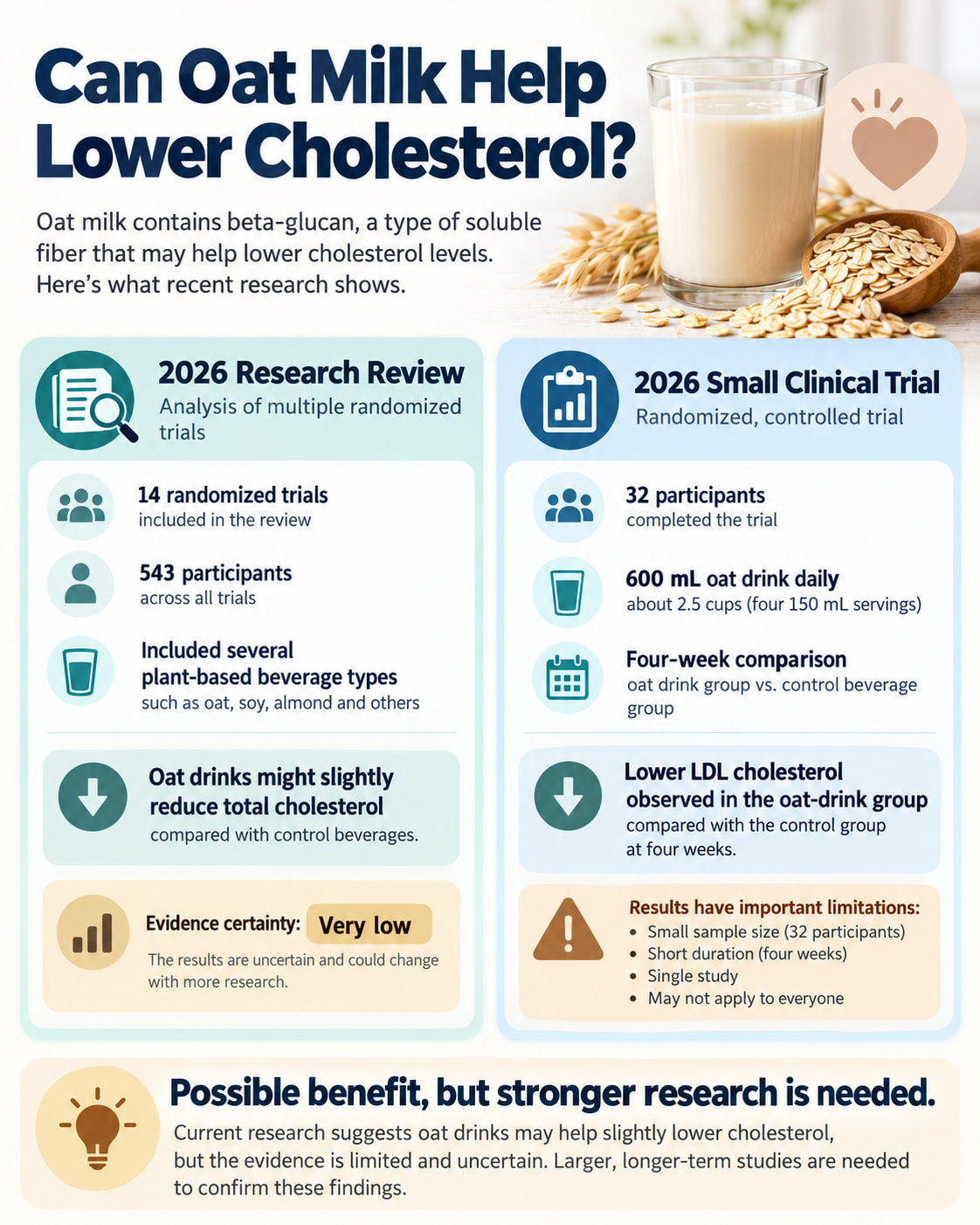
There is some direct research, but the findings need careful interpretation.
A February 2026 research review combined 14 randomized trials involving 543 participants across several types of plant-based drinks and cow’s milk. Oat drinks might slightly reduce total cholesterol, but the evidence for that finding was very uncertain.
A March 2026 small clinical trial compared 600 mL of oat drink with the same amount of semi-skimmed cow’s milk daily for four weeks. Among 32 young women who completed the study, the oat group had lower LDL cholesterol at the end.
However, the trial was small and short, and participants’ wider diets changed. It does not establish that oat fiber alone caused the difference or that every commercial oat milk has the same effect.
Oat milk may fit an eating pattern that supports heart health, but a particular cholesterol reduction is not guaranteed. The trial’s drinking amount is not a general daily recommendation.
Does Oat Milk Contain Added Sugar?
Some oat milks contain added sugar, while others list zero grams. “Original” does not necessarily mean “unsweetened.”
One confusing detail is that added sugar can appear on the Nutrition Facts label even when cane sugar or syrup is absent from the ingredient list.
During production, enzymes can break oat starch into smaller sugars. FDA guidance says sugars created through this controlled process in oat and rice beverages must be declared as added sugars. This can apply even when the processing step is intended to change texture.
Read the Nutrition Facts panel alongside the ingredient list.
What About Blood Sugar?
Unsweetened oat milk can still contain carbohydrate from oats. Zero added sugar does not mean zero carbohydrate.
The CDC explains that sugars and starches raise blood glucose. If you manage diabetes, compare the total carbohydrate for the amount you actually drink and consider it within your established eating plan.
A small amount in coffee contributes less carbohydrate than a large oat-milk drink. There is no single blood-sugar response that applies to every product, portion, and person.
How to Choose a Nutritious Oat Milk
Use the label to match the product to your needs.
- Compare the same serving size. Start with the same volume, then adjust for the amount you normally use.
- Check added sugar. An unsweetened option with zero added sugar can help you limit that source of sugar.
- Look for calcium and vitamin D. Confirm the amounts rather than relying on the word “fortified.”
- Check protein separately. If oat milk replaces a major protein source, include other protein-rich foods in your meals.
- Read the fiber amount. Products differ, and total fiber is not a measure of beta-glucan alone.
- Consider nutrients across your whole diet. This matters most when oat milk replaces much of your dairy intake.
The FDA recommends comparing nutrients such as protein, calcium, vitamin D, and potassium while considering added sugars and saturated fat.
Do Not Overlook Vitamin B12 and Iodine
Some oat milks contain added vitamin B12. Oats do not naturally provide a reliable source of it, so check the label if fortified foods are an important part of your B12 intake.
Iodine also deserves attention. Dairy can contribute iodine, while plant-based milk substitutes generally provide relatively small amounts unless fortified.
A product fortified with calcium is not necessarily fortified with iodine or B12. If you avoid all dairy or follow a vegan diet, consider these nutrients across your overall eating pattern.
Who Should Take Extra Care With Oat Milk?
People With Celiac Disease
Oats can come into contact with wheat, barley, or rye during growing and processing. That means oat milk is not automatically gluten-free.
NIDDK advises people with celiac disease to choose gluten-free oat products when oats are included and discuss their suitability with a doctor or registered dietitian.
People With Food Allergies
Oat milk may be an option for someone avoiding milk, soy, or nuts, but suitability depends on the product and the person’s allergy.
Check the full ingredient list and allergen information. If cross-contact is a concern, ask the manufacturer. Oat milk should not be treated as universally allergen-free.
Infants and Young Children
Oat milk must not replace breast milk or infant formula.
The CDC’s guidance on milk alternatives says they should not be introduced before 12 months. For older children, it advises choosing unflavored, unsweetened alternatives fortified with calcium and vitamin D and discussing the choice with the child’s clinician.
This is especially important when the beverage will become a child’s main milk drink, because protein, fat, and other nutrients need consideration too.
People Who Notice Repeated Symptoms
If a particular oat milk repeatedly causes digestive discomfort, avoid forcing yourself to keep drinking it. Discuss persistent symptoms with a healthcare professional, especially if you have an existing digestive condition or food allergy.
How to Include Oat Milk in a Balanced Diet
Use oat milk where you enjoy it and account for what the rest of the meal provides.
- In coffee or tea: A small amount contributes correspondingly small amounts of nutrients.
- With cereal or oatmeal: Consider whether the meal also supplies enough protein.
- In a smoothie: Add a suitable protein source, such as yogurt or silken tofu, if the smoothie is serving as a meal.
- In cooking: An unflavored, unsweetened variety can work in recipes where extra sweetness would be unwelcome.
You do not need a special daily dose to obtain oat milk benefits. A cup is a convenient nutrition-label comparison serving, not a requirement or universal upper limit.
For example, using oat milk in breakfast cereal and pairing it with eggs or a tofu scramble can provide protein elsewhere in the meal. Choose foods that fit your preferences and allergy needs.
Frequently Asked Questions
Is Oat Milk Good for You Every Day?
It can fit into an everyday eating pattern if you tolerate it and meet your nutritional needs overall. Pay attention to the product’s added sugar, fortification, and protein content, especially if it replaces most of your dairy.
Is Oat Milk Healthier Than Cow’s Milk?
Neither is automatically healthier for everyone. Oat milk offers a dairy-free option and may provide some fiber. Cow’s milk generally supplies more protein. Compare the specific products and choose according to your nutritional needs and preferences.
Is Oat Milk Good for Weight Loss?
Oat milk is not an established weight-loss aid. Its relevance depends on calories, portion size, and what it replaces. Choosing a lower-calorie product may reduce calories in a particular drink, but adding oat milk does not itself cause weight loss.
Is Homemade Oat Milk as Nutritious as Store-Bought?
Homemade oat milk gives you control over ingredients, but its nutrient content varies with the recipe and straining. A basic oats-and-water version does not contain the added calcium, vitamin D, or B12 found in fortified commercial products.
Does Oat Milk Have Enough Protein for a Post-Workout Drink?
Oat milk alone may provide little protein: the oat products compared here contain less than 1 to 3 grams per cup. If you want a protein-containing drink, check the label or include another protein source.
Is Barista Oat Milk a Healthier Choice?
“Barista” describes a product designed to perform well in coffee, such as when heated or frothed. It is not a health rating. Compare its calories, fat, sugar, protein, and fortification with other products.
Conclusion
Oat milk can be a practical dairy-free choice, especially when it provides useful amounts of added calcium and vitamin D. Its fiber contribution is usually modest, and its protein and sugar content deserve attention.
Before buying your next carton, compare the serving size, added sugar, protein, fiber, calcium, and vitamin D. Choose the option you enjoy that fits the nutritional needs of your overall diet.
This content is for informational purposes only and not medical advice.
References
- FDA: Milk and Plant-Based Milk Alternatives: Know the Nutrient Difference
- FDA: Using the Nutrition Facts Label to Choose Milk and Plant-Based Beverages
- FDA: Nutrition Facts Guidance on Added Sugars
- Electronic Code of Federal Regulations: Soluble Fiber and Coronary Heart Disease Health Claims
- Advances in Nutrition: Impact of Plant-Based Drinks on Cardiometabolic Outcomes
- Nutrition Journal: Cow’s Milk Compared to Oat Drink and Its Implications for Lipid Profile