
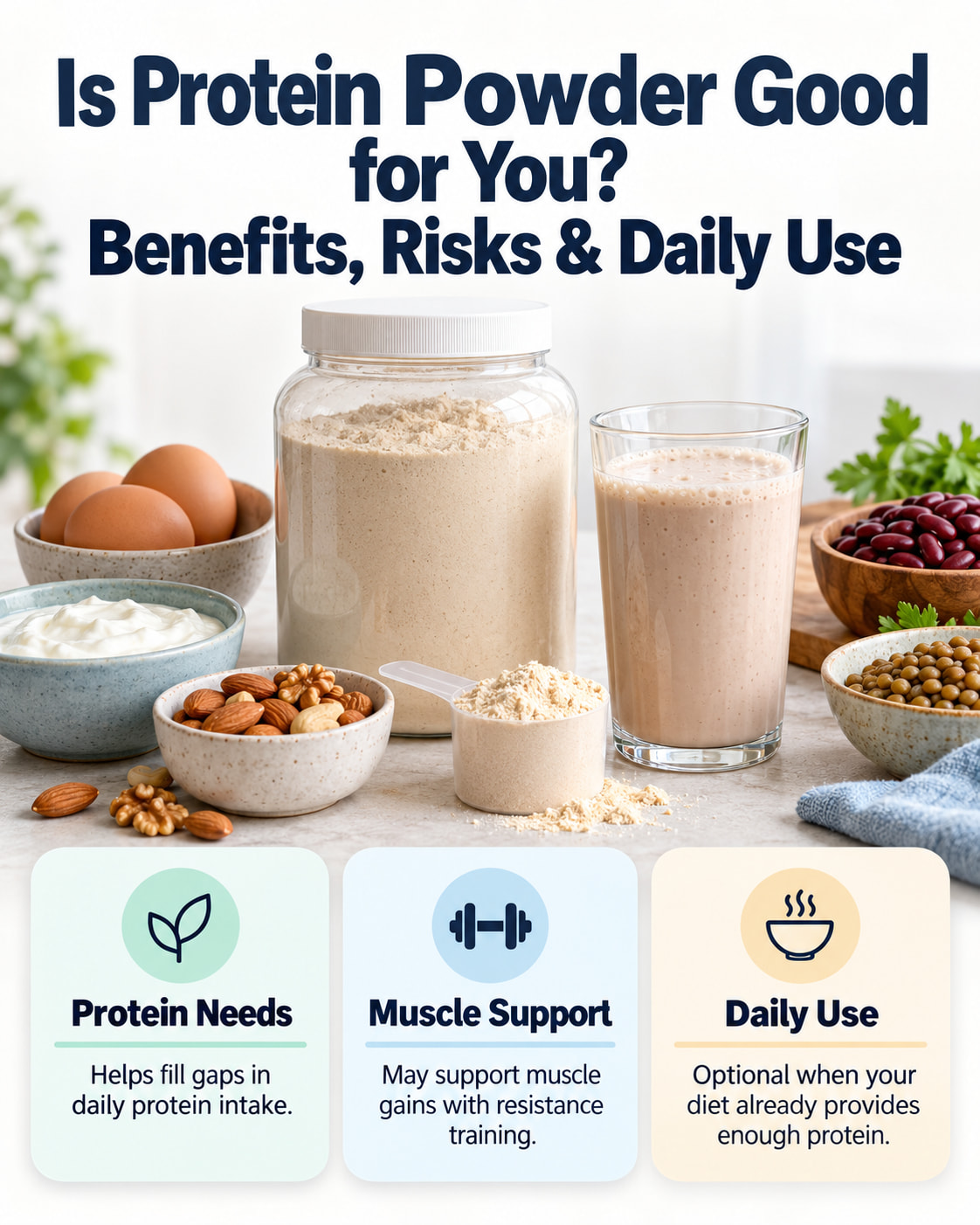
Protein powder can be good for you when it helps you meet your protein needs, but it is optional if your diet already provides enough. It can make adequate protein intake more convenient and support muscle-building efforts alongside resistance training.
Whether it belongs in your routine depends on your usual meals, activity, health, and the product you choose. Understanding the benefits, possible side effects, and quality differences can help you decide whether a daily shake is useful.
What Is Protein Powder?
Protein powder is a concentrated source of protein made from ingredients such as milk, soy, peas, rice, or eggs. You can mix it into drinks or add it to foods such as oatmeal and yogurt.
Whey and casein come from milk. Plant-based options may contain one protein source or a blend of several.
Products differ in more than their protein source. Some contain added sugars, sweeteners, flavorings, vitamins, or other ingredients. Check the label for the amount of protein per serving rather than assuming every scoop provides the same amount.
Potential Benefits of Protein Powder
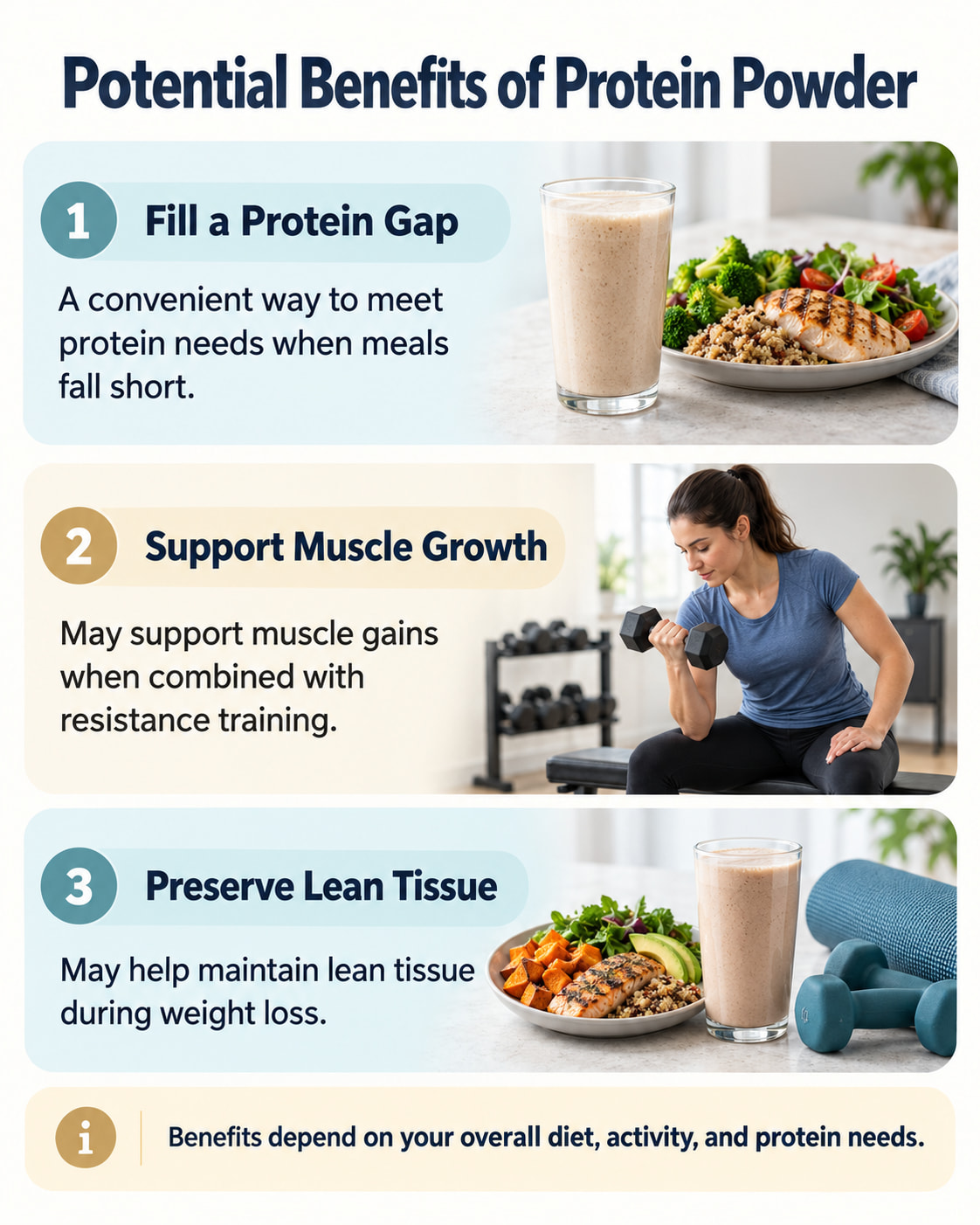
It Can Help You Fill a Protein Gap
The most practical benefit is convenience. A powder can help when your usual meals provide less protein than you need or when preparing a protein-rich meal is difficult.
For example, adding a measured amount to oatmeal can increase the protein in breakfast. You can also meet that need through foods such as eggs, yogurt, tofu, beans, fish, or poultry.
The useful question is how the product improves your overall eating pattern.
It May Support Muscle Growth With Resistance Training
Protein supplies amino acids that your body uses to maintain and rebuild muscle. Consuming enough protein supports the response to strength training.
In December 2025, a meta-analysis of 150 randomized trials found that milk-protein supplementation was associated with modest improvements in body composition, including an average increase of about 0.41 kg in lean body mass compared with control conditions.
Lean body mass includes more than muscle, and results varied across studies. The finding supports a possible additional benefit; it does not mean everyone who drinks a shake will gain that amount.
Regular training, sufficient food, and consistency remain central to muscle-building progress.
It May Help Preserve Lean Tissue During Weight Loss
Meeting protein needs can be useful during a weight-loss plan, especially when combined with resistance exercise.
A February 2026 systematic review of 14 randomized trials found that whey supplementation may help preserve fat-free mass in adults with obesity undergoing weight-loss interventions. Some studies found little or no additional benefit, and the evidence had important limitations.
A shake still contributes calories. Its effect on weight depends partly on what it replaces or adds to your diet. Simply adding protein powder does not guarantee weight loss.
Protein Powder Risks and Side Effects
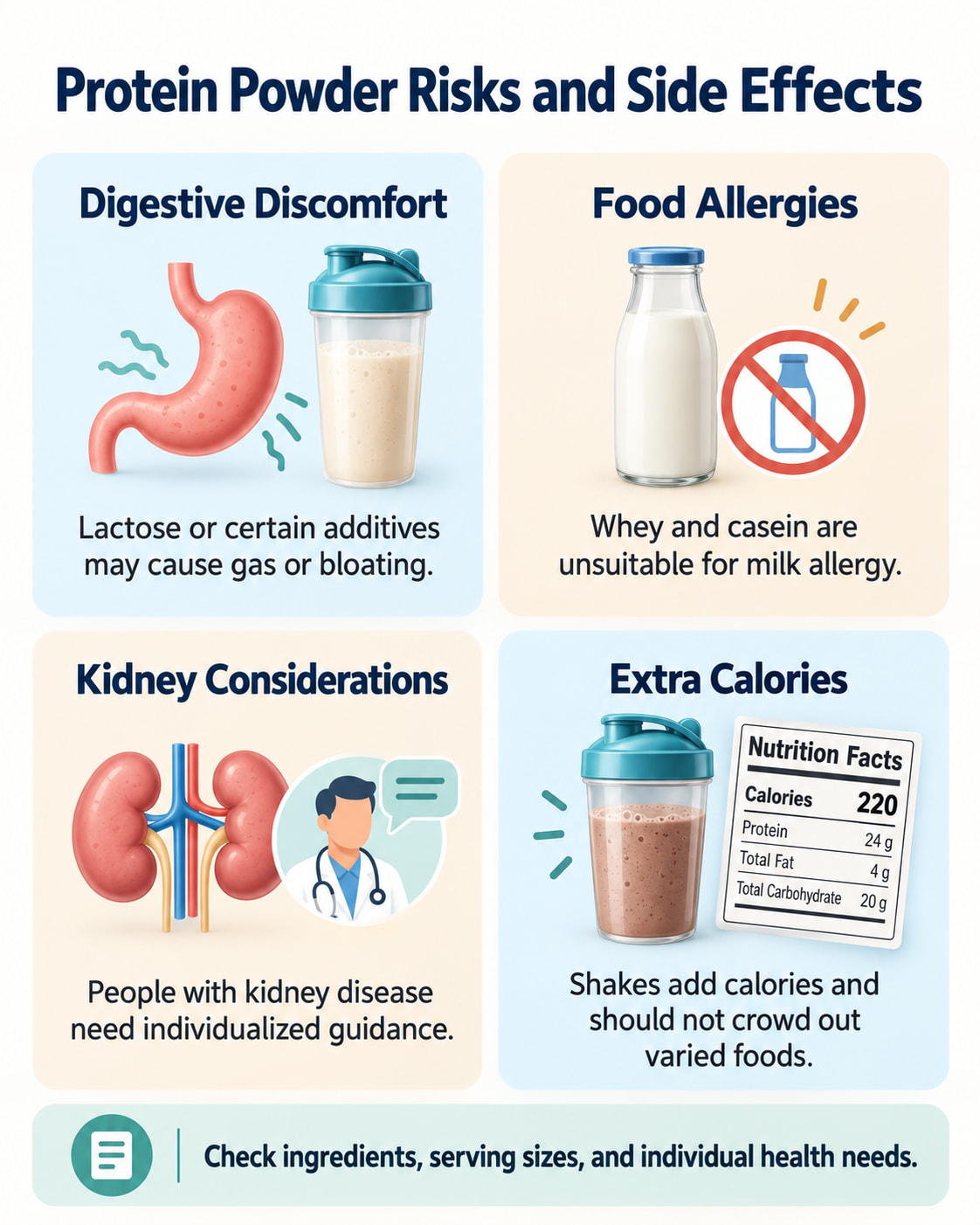
Digestive Discomfort
Some people develop gas, bloating, or diarrhea after using a protein powder. The cause may be lactose or another ingredient.
Whey concentrate can contain lactose. Whey isolate generally contains less, although the amount varies by product. People with lactose intolerance may tolerate some products better than others.
Sugar alcohols, including sorbitol and mannitol, can also cause digestive symptoms in some people. Check the ingredient list if a product repeatedly bothers your stomach.
A smaller serving may help you assess tolerance when there is no suspected allergy. Stop using a product and seek advice if symptoms persist or are severe.
Food Allergies
Milk allergy and lactose intolerance are different conditions.
Whey and casein contain milk proteins. A product labeled lactose-free can still be unsuitable for someone with a milk allergy. Soy, egg, and other ingredients may also trigger allergic reactions.
Read the full ingredient list and allergen information. Check again when buying a familiar product because formulations can change.
Difficulty breathing or swelling of the tongue or throat after consuming a product requires emergency medical attention.
Kidney Considerations
A 2026 meta-analysis of 22 randomized trials found no consistent biochemical evidence of kidney injury in adults without chronic kidney disease. However, most studies were relatively short, so long-term effects remain uncertain. These trials examined higher total protein intake, not the long-term safety of every commercial powder.
People with kidney disease need individualized advice. As NIDDK’s kidney-nutrition guidance explains, some people need to moderate protein, while too little can contribute to malnutrition.
Discuss a supplement with your clinician or renal dietitian if you have kidney disease or have been given a specific protein target.
Extra Calories and Less Dietary Variety
Consider the entire shake, including the powder, milk, fruit, nut butter, and other additions. These ingredients may fit your goals, but they can make the drink more substantial than expected.
Frequent shakes can also crowd out other foods. Keep room for meals that provide fiber, healthy fats, vitamins, and minerals along with protein.
Is Protein Powder Good for You Every Day?
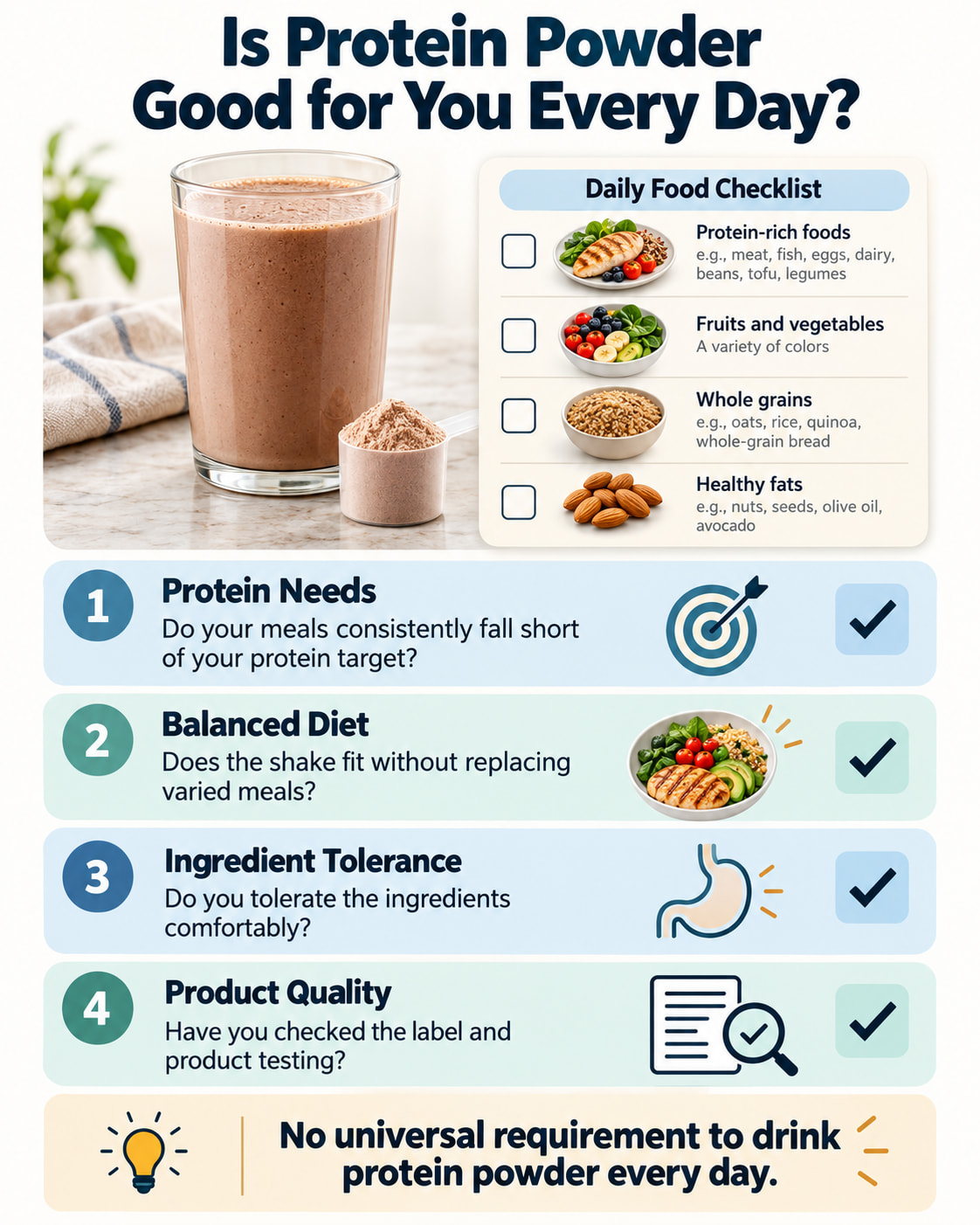
Daily use can be reasonable when it fills a protein gap, agrees with your digestion, and fits your health needs. There is no universal requirement to drink a shake every day.
A practical check is to ask:
- Do my meals consistently fall short of my protein target?
- Does this product help without regularly replacing balanced meals?
- Do I tolerate its ingredients?
- Have I checked its testing and certification?
- Does its serving size fit my needs?
NIH’s exercise and athletic performance guidance reports no identified safety concerns at commonly recommended athlete intakes of up to about 2.0 g/kg/day. That includes protein from all sources and does not establish a universal safe dose for every person or product.
No formal tolerable upper intake level has been established for protein. This reflects limited evidence for setting a limit; it does not mean unlimited intake is safe.
How Much Protein Powder Do You Need?
Start with your total protein needs, then account for what you already eat.
1. Understand the Different Protein Reference Values
The established adult Recommended Dietary Allowance, or RDA, is 0.8 grams of protein per kilogram of body weight per day.
The 2025–2030 Dietary Guidelines for Americans, released in January 2026, give a higher dietary goal of 1.2–1.6 g/kg/day, adjusted for calorie needs. This is a separate guideline goal; the RDA itself has not been replaced.
Sports-nutrition guidance commonly uses 1.4–2.0 g/kg/day for healthy exercising adults seeking to build or maintain muscle.
| Reference | Total protein per day | Example for a 70 kg adult, about 154 lb |
|---|---|---|
| Established adult RDA | 0.8 g/kg | 56 g |
| Current federal dietary guideline goal | 1.2–1.6 g/kg | 84–112 g |
| ISSN guidance for most healthy exercising adults | 1.4–2.0 g/kg | 98–140 g |
These ranges serve different purposes. Eating below the newer guideline goal does not automatically mean you are protein-deficient. Your appropriate intake depends on factors such as activity, age, health, and overall nutrition.
All amounts include protein from food and supplements combined.
2. Estimate What Your Meals Already Provide
Review a few typical days of meals and snacks. Use food labels or a reliable nutrition database to estimate protein intake.
Include every source, such as dairy or fortified alternatives, meat, fish, eggs, tofu, beans, lentils, nuts, and grains. A registered dietitian can help if choosing a target or estimating intake is difficult.
3. Fill the Remaining Gap
Consider this illustrative example:
| Calculation | Protein |
|---|---|
| Chosen daily target | 100 g |
| Average intake from food | 80 g |
| Remaining amount | 20 g |
That person could add food or use enough powder to provide approximately 20 g of protein.
This example is not a personal prescription. If meals already meet your needs, there may be no gap to fill.
Also distinguish grams of powder from grams of protein. A hypothetical 30 g serving of powder might supply 22 g of protein; the remainder comes from other ingredients. Follow the label rather than assuming one scoop equals a fixed protein dose.
Whey, Casein, or Plant Protein: Which Should You Choose?
Choose a source that fits your dietary preferences, allergies, digestion, and protein needs.
| Protein type | Key characteristics | Main consideration |
|---|---|---|
| Whey concentrate | Milk-derived protein containing all nine essential amino acids | May contain enough lactose to bother some people |
| Whey isolate | Further filtered; generally lower in lactose than concentrate | Still contains milk protein and is unsuitable for milk allergy |
| Casein | Complete milk protein that digests more slowly than whey | Also unsuitable for milk allergy |
| Soy protein | Complete plant protein | Avoid if you have soy allergy |
| Other plant proteins or blends | May use pea, rice, or complementary sources | Protein amount and amino-acid composition vary by formulation |
“Complete” means a protein provides all nine essential amino acids in sufficient proportions.
Plant protein can support muscle-related goals. An April 2026 meta-analysis of 18 trials involving 1,893 adults found no significant overall differences between plant and animal protein supplementation in lean body mass or strength.
Most plant-protein studies used soy, so those findings cannot establish identical results for every powder. A suitable product is one that meets your needs and is comfortable to use consistently.
How to Choose a Protein Powder
Read the Full Label
Check the protein per serving, serving size, calories, added sugars, and ingredient list. Consider what you need from the product before choosing one with additional herbs, stimulants, or a long list of active ingredients.
A straightforward protein product may be easier to assess when your goal is simply to increase protein intake.
Understand What FDA Oversight Means
For products marketed as dietary supplements, the FDA explains that it does not approve safety and effectiveness before sale. Manufacturers must meet applicable safety, labeling, and manufacturing requirements, and FDA can take enforcement action.
Some protein products are marketed as conventional foods. The rules differ by classification, so “protein powder is unregulated” is an inaccurate generalization.
Look for Verifiable Product Testing
Independent testing can provide information about label accuracy and contaminants.
NSF supplement certification checks product contents and contaminant levels against its standards. NSF Certified for Sport adds screening for substances banned in sport.
Verify the specific product in the certifier’s database. A statement that a manufacturing facility follows good manufacturing practices is different from certification of the powder itself. Certification also does not mean zero contaminants or guaranteed benefit.
Keep Heavy-Metal Findings in Perspective
Recent testing has found meaningful differences between products. After its initial protein-powder investigation, Consumer Reports tested five additional powders in January 2026; four were below its lead level of concern.
Those results apply to tested products and samples. Consumer Reports’ benchmark is not an FDA legal limit for protein powder.
The practical response is to prioritize credible product-level testing and avoid assuming that an entire protein category is uniformly safe or unsafe.
Who Should Get Professional Advice Before Using Protein Powder?
Discuss supplementation with an appropriate health professional if you:
- Have kidney disease or a prescribed protein restriction.
- Are pregnant or breastfeeding.
- Are considering a supplement for a child or teenager.
- Take medication and are considering a formula with additional active ingredients.
- Have significant food allergies or ongoing digestive symptoms.
- Are relying on shakes because of persistent poor appetite, swallowing difficulty, or unexplained weight loss.
A clinician or registered dietitian can help identify the right nutrition approach and assess the specific product.
Frequently Asked Questions
Can You Take Protein Powder Without Working Out?
Yes. Protein is needed regardless of whether you exercise, and powder can help fill a dietary gap. However, a shake alone does not provide the muscle-building stimulus of resistance training. If food already meets your needs, supplementation may offer little practical advantage.
Is Protein Powder Bad for Your Kidneys?
It is not accurate to say protein powder harms everyone’s kidneys. Studies of higher-protein diets in adults without chronic kidney disease have not consistently shown kidney injury, although long-term evidence is limited. People with kidney disease need individualized guidance about total protein intake.
Can Protein Powder Help With Weight Loss?
It may help you meet protein needs and preserve lean tissue during a structured weight-loss plan, particularly alongside resistance exercise. Results vary. The shake’s calories and how it fits into your overall diet still matter.
Is One Scoop of Protein Powder a Day Enough?
That depends on the protein gap you are trying to fill and how much protein the scoop provides. Scoop sizes vary between products. Check the label and count protein from your meals before deciding on an amount.
Is Plant-Based Protein Powder as Effective as Whey?
Plant protein can be an effective option. Longer-term research, largely comparing soy with dairy proteins, has not found significant overall differences in lean body mass or strength. Results depend on the amount consumed, formulation, training, and the rest of the diet.
Should You Drink a Protein Shake Before or After a Workout?
Either can work. A 2025 meta-analysis found no meaningful difference in lean-body-mass gains between protein taken before and after training, although the evidence was limited. Choose a time that fits your meals and digestion rather than rushing to meet a rigid deadline.
Can Protein Powder Replace a Meal?
Plain protein powder mixed with water usually does not provide the balance of energy, fiber, fats, and micronutrients expected from a meal. A smoothie containing protein, fruit, oats, and other suitable ingredients can be more substantial. Regularly replacing meals requires attention to overall nutrition.
Conclusion
Protein powder can be a useful addition when it fills a real protein gap, supports your training goals, or makes adequate nutrition easier. The best approach is to match the amount to your needs and choose a product that suits your health, digestion, and preferences.
Start by reviewing a few typical days of eating. If you find a shortfall, consider whether a food-based addition or a tested protein powder is the more practical choice.
This content is for informational purposes only and not medical advice.
References
- Dietary Guidelines for Americans
- Scientific Foundation for the Dietary Guidelines
- NIH Office of Dietary Supplements: Exercise and Athletic Performance
- International Society of Sports Nutrition: Protein and Exercise
- Milk-Protein Supplementation and Body Composition
- Whey Supplementation During Weight-Loss Interventions
- Higher-Protein Diets and Kidney Function
- NIDDK: Nutrition for Adults With Chronic Kidney Disease
- Plant Versus Animal Protein Supplementation