
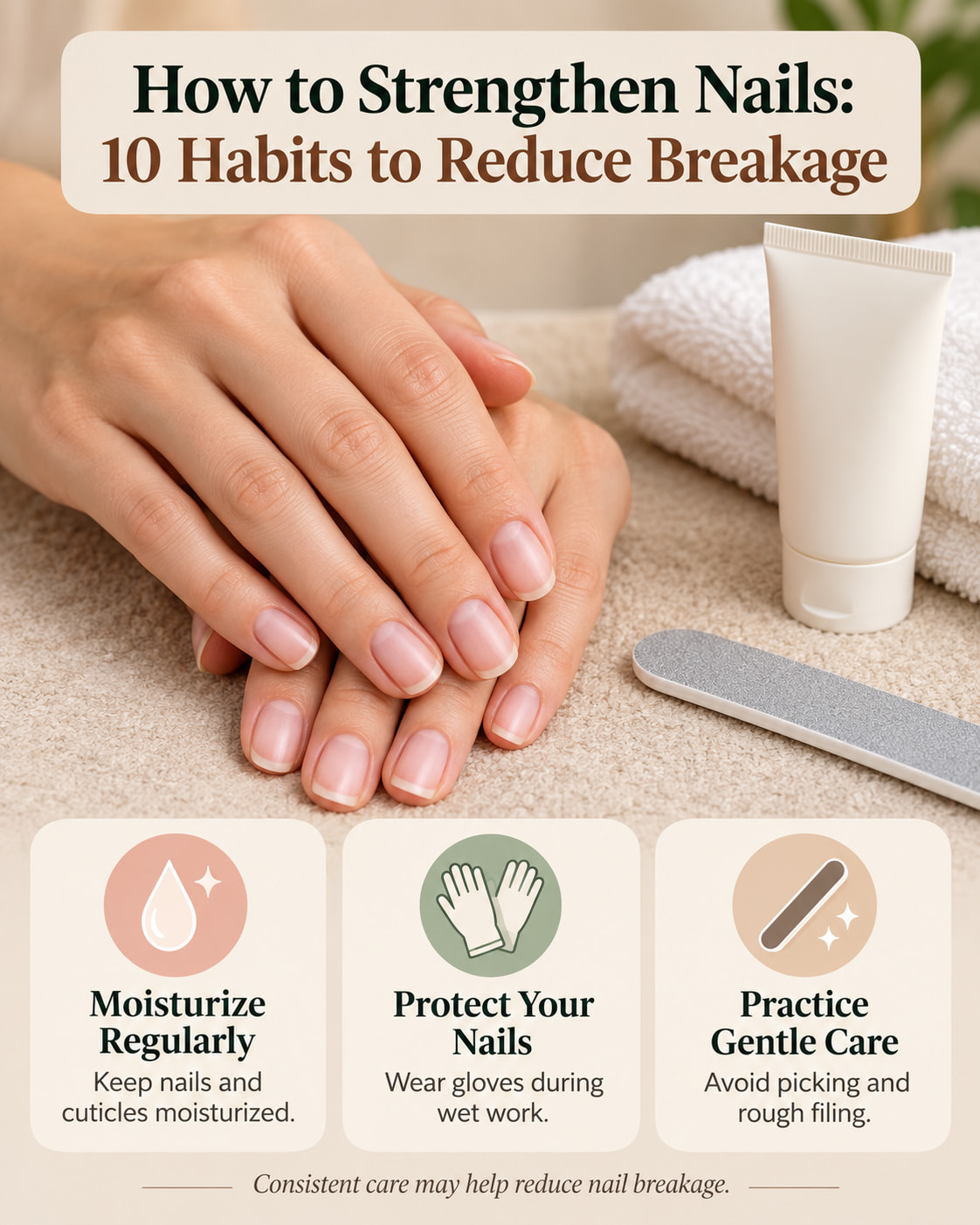
To strengthen nails and reduce breakage, moisturize regularly, protect your hands during wet work, keep nail edges smooth, and limit habits that damage the nail surface. Consistent care can help brittle nails become less prone to splitting and catching.
Learning how to strengthen nails starts with understanding what is weakening them. Frequent water exposure, picking, and repeated manicure removal can all contribute. The following habits offer practical ways to protect your nails, along with guidance on supplements, realistic timelines, and changes that deserve medical attention.
Why Do Nails Become Weak and Brittle?
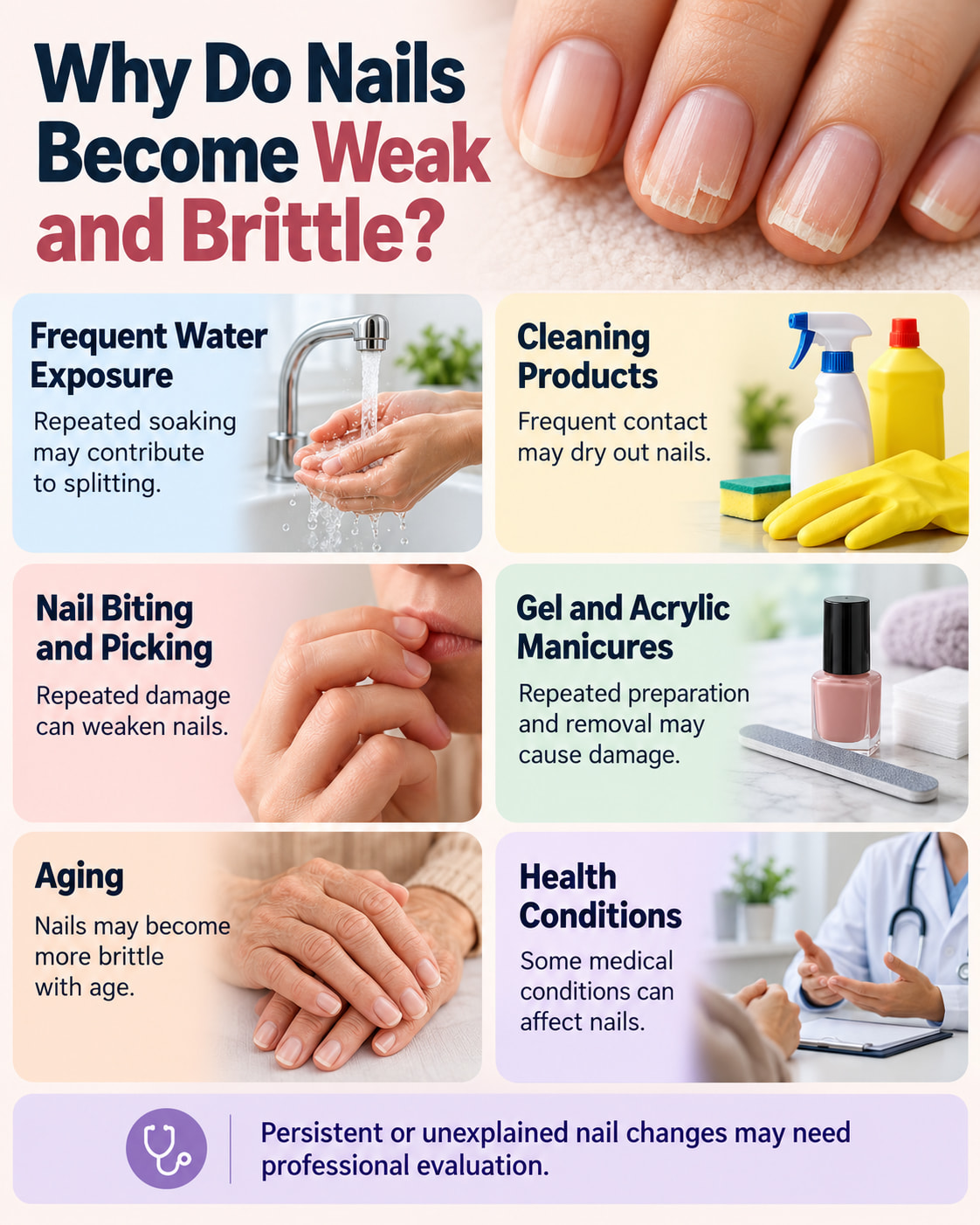
Nails can become brittle for several reasons. Common contributors include frequent contact with water or cleaning products, nail biting, injuries, and changes associated with aging. Fungal infections and some health conditions can also affect their appearance and strength.
Your manicure routine may play a role. Preparing nails for acrylics involves roughening the natural nail surface, which makes it thinner. Repeated application, touch-ups, and removal can contribute to further damage.
Weak nails do not automatically mean you have a vitamin deficiency. Consider your daily habits first, while paying attention to persistent or unexplained changes.
How to Strengthen Nails: 10 Practical Habits
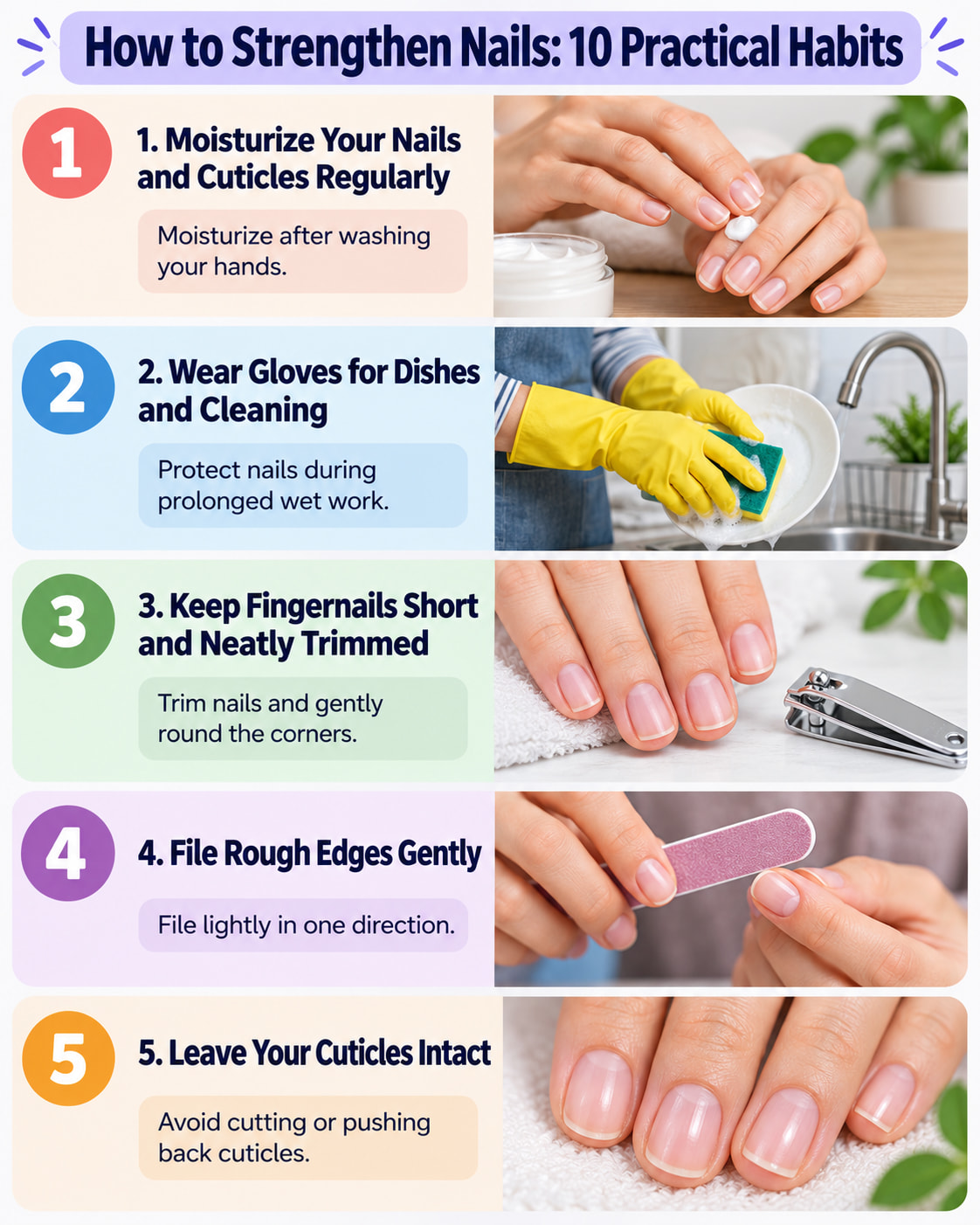
1. Moisturize Your Nails and Cuticles Regularly
When you apply hand cream, work a little into each nail and the skin around it. The American Academy of Dermatology (AAD) recommends an ointment moisturizer, such as petroleum jelly, after handwashing when hands and nails are dry. This may help limit dryness and brittleness.
Make the habit easy to remember:
- Keep moisturizer beside the sink.
- Apply it after washing and drying your hands.
- Include the nail surface, fingertips, and cuticles.
An additional application before bed can be convenient, especially if you prefer using a thicker ointment when you are finished handling objects.
2. Wear Gloves for Dishes and Cleaning
Repeated or prolonged contact with water can contribute to splitting. Cleaning products can add to the problem. Mayo Clinic recommends cotton-lined rubber gloves when washing dishes, cleaning, or handling harsh chemicals.
Keep gloves near the supplies you use most often. Putting them on before a sink full of dishes or a bathroom-cleaning session makes protection part of the task.
Continue normal handwashing. The goal is to limit unnecessary soaking and protect your nails during longer periods of wet work.
3. Keep Fingernails Short and Neatly Trimmed
If your nails repeatedly catch on clothing, keeping them shorter can make them easier to manage.
Use clean nail clippers or scissors. Trim fingernails nearly straight across, then gently round the corners with a file. Avoid cutting so close that the surrounding skin becomes sore.
The AAD suggests trimming after a bath or shower, when nails are softer. A brief softening before trimming is different from prolonged soaking throughout the day.
4. File Rough Edges Gently
A small snag is worth smoothing before it catches again. Keep an emery board somewhere convenient so you can address rough edges without biting or pulling at them.
Use light strokes in one direction. The AAD advises against repeatedly filing back and forth because this can weaken nails.
Focus on the free edge. Avoid aggressively sanding or buffing the nail surface to make it look smoother; removing nail material can leave an already thin nail more vulnerable.
5. Leave Your Cuticles Intact
Cuticles help protect the area where the nail grows. Cutting or pushing them back can disrupt that protection and make it easier for germs to enter.
Leave them alone during home care, and ask your nail technician to skip cuticle trimming. Moisturizing the surrounding skin can be part of your regular hand-care routine.
If you have a loose hangnail, do not pull it off. Carefully clip the loose piece with clean clippers, avoiding attached skin. Pulling can tear nearby tissue.
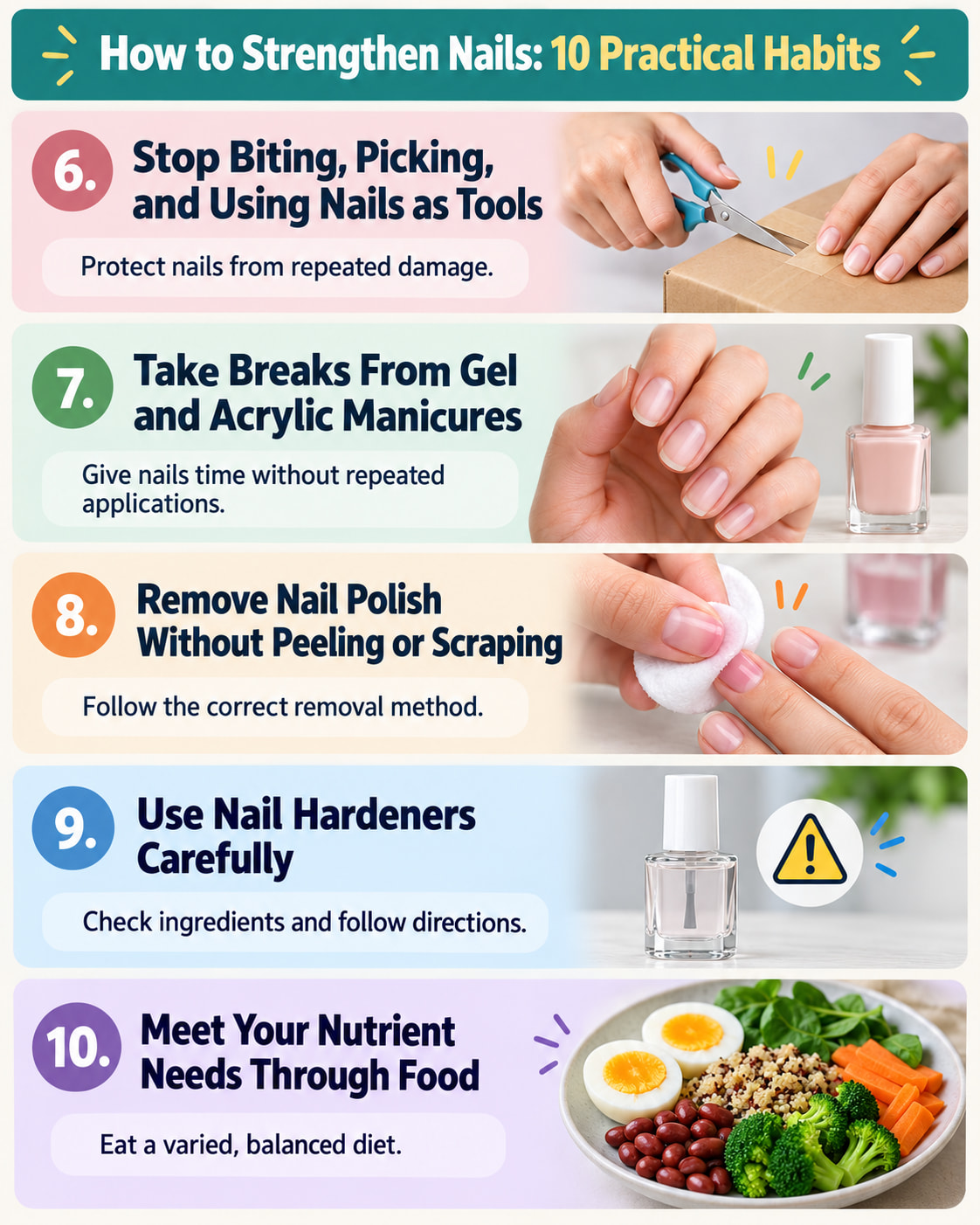
6. Stop Biting, Picking, and Using Nails as Tools
Biting and picking can damage the nail and nearby skin. Repeated biting may also injure the tissue involved in nail growth.
Notice when the habit happens. If you bite while reading, working, or feeling stressed, keeping a stress ball or fidget toy nearby may help you replace the action. The AAD recommends identifying triggers and practicing an alternative habit.
Also avoid using nail tips to pry open lids, lift can tabs, or scrape labels. Use an appropriate tool so the nail does not take the force.
7. Take Breaks From Gel and Acrylic Manicures
If your nails are peeling, thinning, or breaking, consider pausing gel and acrylic manicures. A break reduces repeated exposure to preparation and removal procedures.
The AAD suggests going without polish for one to two weeks or longer between gel manicures. It also recommends considering traditional polish when gel manicures cause recurring nail problems.
Avoid covering damaged nails with extensions simply to hide them. Artificial nails can worsen existing problems. Let the condition of your natural nails guide when you return to a manicure routine.
8. Remove Nail Polish Without Peeling or Scraping
Peeling off lifting gel can take nail material with it. Resist the urge to pick, pry, or force the coating away.
Removal advice depends on what is on your nails:
| Nail product | Practical removal approach |
|---|---|
| Regular nail polish | Limit unnecessary remover use. An acetone-free option may be suitable. |
| Soak-off gel polish | Follow the product’s removal instructions. Acetone may be needed; peeling or scraping is not a safer substitute. |
Mayo Clinic recommends limiting polish-remover exposure. For gel polish, the AAD’s removal guidance explains how to protect surrounding skin and reduce damage during acetone removal.
If you are unsure what product was applied, ask your nail technician about appropriate removal. Moisturize your nails and surrounding skin afterward.
9. Use Nail Hardeners Carefully
A product labeled “strengthening” is not automatically the right choice for brittle nails.
The FDA warns that frequent use of formaldehyde-containing nail hardeners may make nails more brittle and more likely to peel or break. These products can also cause irritation or allergic reactions. Formaldehyde may appear on ingredient lists as formalin or methylene glycol.
Follow label directions, and stop using a product that causes irritation or worsening nail problems. Different protective coatings and hardeners use different ingredients, so avoid assuming that every product has the same benefits or risks.
10. Meet Your Nutrient Needs Through Food
A varied diet provides the nutrients your body needs. Include regular meals with protein-containing foods, vegetables, fruit, whole grains, and other foods that fit your preferences and dietary needs.
For otherwise healthy adults, the AAD recommends meeting nutrient needs through food. Supplements may be useful when a healthcare professional identifies a deficiency or another specific nutritional need.
If you have a restrictive diet or persistent nail changes, discuss those concerns with a healthcare professional. Avoid choosing iron or high-dose vitamin supplements based only on the appearance of your nails.
Do Biotin and Other Nail Supplements Help?
Biotin is a B vitamin commonly included in hair, skin, and nail supplements. However, NIH guidance describes limited evidence supporting these products for nail improvement. Some small studies reported harder nails, but more research is needed before routine supplementation can be recommended. Biotin deficiency is also very rare in the United States.
A study published in February 2025 compared biotin, vitamin B6, and their combination in 61 people with longstanding fingernail splitting. The combination group showed greater improvement, but the research was retrospective and did not include a randomized placebo comparison. That limits how confidently its findings can be applied to other people.
Biotin Can Affect Blood Test Results
Biotin supplements can interfere with certain laboratory tests. The FDA warns about falsely low results on some troponin tests, which are used when evaluating possible heart attacks. NIH guidance also identifies interference with some thyroid hormone tests.
Tell your healthcare professional and laboratory if you take biotin, including a multivitamin or hair-and-nail supplement that contains it. Ask whether any changes are needed before testing; do not rely on a universal stopping interval.
How Long Does It Take to Strengthen Nails?
Nail improvement takes time, particularly when the nail plate has been damaged by repeated manicures or trauma.
The AAD notes that a fingernail takes about six months to grow out completely. This is a general growth estimate, not a guarantee that every nail problem will resolve within that period.
Protecting the nail can reduce opportunities for further damage while it grows. Look for practical changes, such as fewer snags and less repeated peeling, instead of expecting a split to disappear after a few applications of a product.
Persistent problems deserve assessment, especially if they continue despite gentler care.
When to See a Healthcare Professional About Weak Nails
Some changes need more than adjustments to your manicure routine. The AAD identifies several nail changes that deserve examination, including:
- A new or changing dark streak beneath a nail.
- A nail lifting away from the nail bed.
- Redness, swelling, or pain around a nail.
- New pits or deep grooves.
- Unexplained changes in color, thickness, or shape.
Arrange an assessment if breakage persists or several nails change without an obvious explanation. Nail problems can sometimes be associated with psoriasis, iron deficiency anemia, or thyroid conditions. A healthcare professional can assess whether further evaluation is appropriate.
Frequently Asked Questions
What Is the Fastest Way to Reduce Nail Breakage?
Start by smoothing snags, keeping nails at a manageable length, moisturizing, and wearing gloves during wet work. These steps help protect nails from additional damage. Growing out an already damaged nail takes longer.
Does Petroleum Jelly Help Brittle Nails?
Petroleum jelly can help limit dryness around the nails and cuticles. The AAD includes it among moisturizing options for brittle nails. Apply a small amount as part of regular hand care, especially after washing.
Is Cuticle Oil Necessary?
A separate cuticle oil is not essential to follow a moisturizing routine. A hand cream or an ointment such as petroleum jelly can be used on the nails and surrounding skin. Choose a product you tolerate and will use consistently.
How Can I Strengthen Nails After Gel or Acrylic Manicures?
Arrange appropriate removal, take a break from further applications, and protect the exposed nails with gentle trimming and moisturizing. Avoid aggressive buffing or covering damaged nails with new extensions. Seek advice if there is pain, lifting, or unusual discoloration.
Can I Wear Nail Polish While Improving Brittle Nails?
Traditional polish may be an option, particularly if gel causes recurring problems. However, consider a polish-free break if your nails are peeling or you are frequently removing and reapplying products. Stop using anything that causes irritation.
What Deficiency Can Cause Brittle Nails?
Iron deficiency can be associated with nail changes, and biotin deficiency can include brittle nails. However, nail breakage has many possible causes, and biotin deficiency is rare. Nail appearance alone cannot tell you which supplement, if any, you need.
Conclusion
Stronger nails start with consistent, gentle care. Keep moisturizer beside the sink, use gloves for cleaning, and address rough edges before they catch. Give damaged nails time to grow, and seek professional advice for persistent or unusual changes.
This content is for informational purposes only and not medical advice.
References
- American Academy of Dermatology: Tips for healthy nails
- American Academy of Dermatology: How to trim your nails
- American Academy of Dermatology: Gel manicures and nail health
- American Academy of Dermatology: Reducing damage from artificial nails
- American Academy of Dermatology: How to stop biting your nails
- American Academy of Dermatology: Vitamins and supplements for skin, hair, and nails
- Mayo Clinic: Fingernail care do’s and don’ts