
Vitamins to help with hair loss may be useful when a nutrient deficiency contributes to shedding, but extra vitamins are not a reliable solution for every type of hair loss. The American Academy of Dermatology recommends supplements such as biotin, iron, or zinc when testing identifies a deficiency—not simply because your hair is thinning.
Understanding that distinction helps you avoid unnecessary products and focus on the cause. The practical approach is to review your diet, consider whether targeted testing is appropriate, and address any confirmed nutritional gaps.
Below are seven nutrients worth knowing about. Iron and zinc are minerals, not vitamins, and the evidence for hair-related benefits differs across the list. This is not a recommendation to take seven supplements.
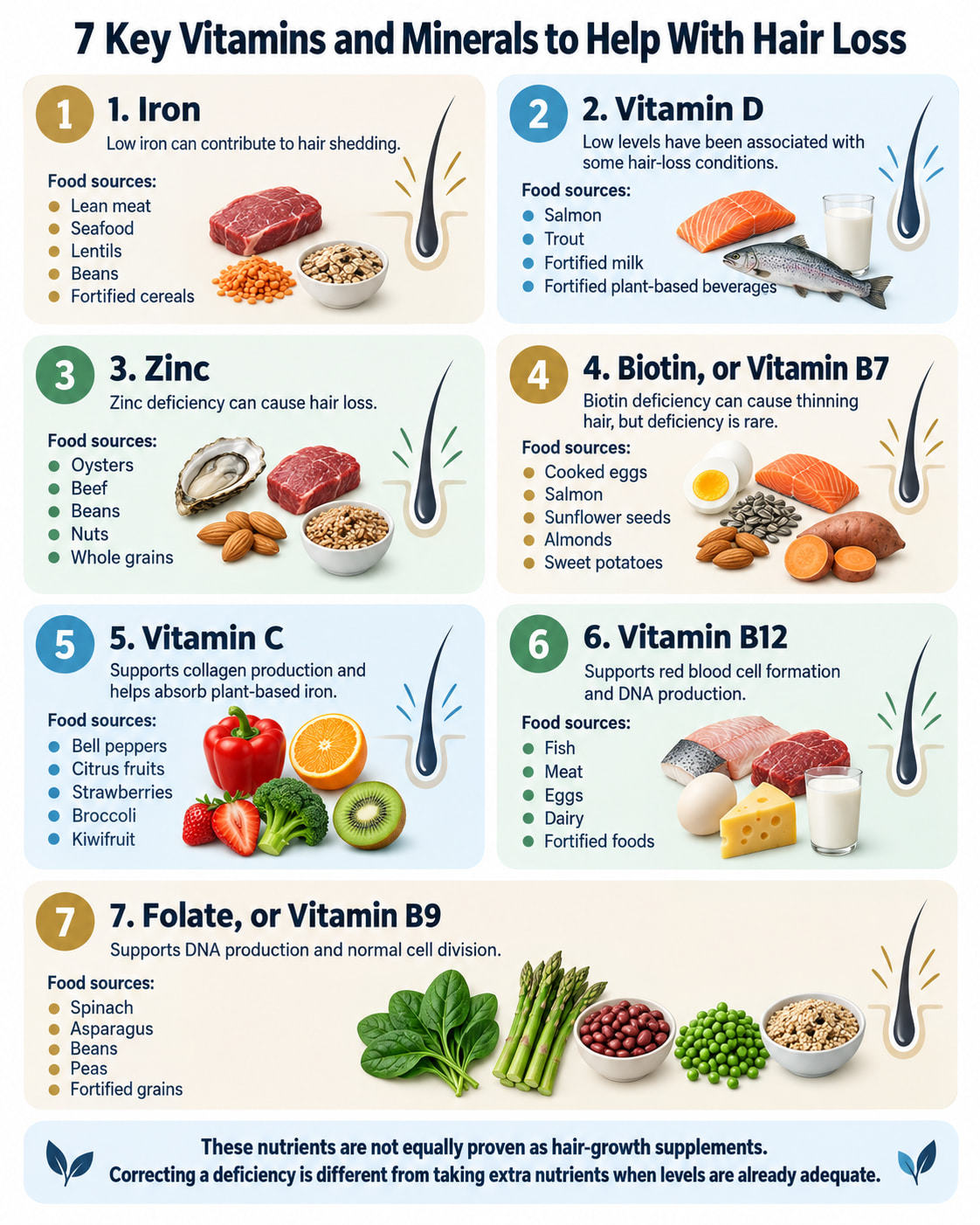
7 Key Vitamins and Minerals to Help With Hair Loss
1. Iron
Low iron can contribute to hair shedding. Iron deficiency deserves particular attention in people with heavy menstrual bleeding, limited dietary iron, or conditions that interfere with nutrient absorption. However, hair loss alone does not establish that your iron levels are low.
A clinician may assess ferritin, a marker of stored iron, alongside other findings. Ferritin can rise with inflammation, so it needs interpretation in context. There is also no universally agreed ferritin target specifically for hair regrowth.
Food sources: Lean meat, seafood, lentils, beans, and iron-fortified cereals. Pairing plant-based iron with vitamin C-rich foods can improve absorption. For example, add bell peppers to a lentil bowl.
The goal is to address an identified deficiency—not to push iron intake as high as possible.
2. Vitamin D
Vitamin D has attracted attention because low levels have been reported in several hair-loss conditions.
An October 2024 systematic review and meta-analysis found an association between vitamin D deficiency and both alopecia areata, an autoimmune form of hair loss, and female pattern hair loss. The researchers called for further studies on supplementation.
An association is not proof that vitamin D deficiency caused the hair loss—or that supplements will restore hair. Addressing a deficiency may be appropriate for overall health, but vitamin D is not an established universal hair-growth supplement.
Food sources: Salmon, trout, vitamin D-fortified milk, and fortified plant-based beverages. Check labels because fortification varies by product.
3. Zinc
Zinc supports protein production, DNA synthesis, and cell division. A deficiency can cause hair loss, but that does not mean everyone with thinning hair needs extra zinc.
Low zinc intake or poor absorption may make deficiency more likely. A clinician can assess whether your diet, health history, and symptoms justify testing or supplementation. Taking zinc without an identified need is not the default approach recommended by dermatologists.
Food sources: Oysters, beef, beans, nuts, and whole grains.
Zinc also illustrates why more is not always better: excessive supplemental intake can interfere with copper absorption.
4. Biotin, or Vitamin B7
Biotin deficiency can cause thinning hair, but true deficiency is rare in otherwise healthy people eating a varied diet. Its popularity in hair gummies is much greater than the evidence supporting routine use.
A 2026 systematic review found that biotin alone did not consistently improve objective hair-growth outcomes across the included interventions. The review included 10 studies and did not support routine supplementation for hair loss without documented deficiency.
Food sources: Cooked eggs, salmon, sunflower seeds, almonds, and sweet potatoes.
High-dose biotin also has an important safety drawback: it can interfere with certain laboratory tests, even when it does not cause obvious symptoms.
5. Vitamin C
Vitamin C supports collagen production and helps your body absorb nonheme iron—the form found in plant foods. Its clearest relevance here is supporting adequate nutrition and iron absorption, rather than acting as a stand-alone hair-growth supplement.
For example, eating beans with tomatoes or having an orange alongside an iron-fortified breakfast cereal can help you combine these nutrients.
Food sources: Bell peppers, citrus fruits, strawberries, broccoli, and kiwifruit. These foods can meet vitamin C needs without automatically adding another supplement.
6. Vitamin B12
Vitamin B12 supports red blood cell formation, nerve function, and DNA production. People eating vegan diets, some older adults, and people with certain digestive conditions have a greater risk of inadequate B12 intake or absorption.
A deficiency deserves attention for overall health. However, evidence that extra B12 improves common forms of hair loss is limited, particularly when B12 status is already adequate.
Food sources: Fish, meat, eggs, dairy products, and B12-fortified foods. Unfortified plant foods do not naturally provide reliable amounts of B12.
For someone eating a vegan diet, ensuring a reliable B12 source is important regardless of whether hair loss is present.
7. Folate, or Vitamin B9
Folate supports DNA production and normal cell division. Folic acid is a form used in many supplements and fortified foods.
Although these functions are important for normal tissue growth, evidence is insufficient to recommend folic acid specifically for common hair loss without an identified nutritional need. Nutritional importance should not be confused with proof that extra intake produces thicker hair.
Food sources: Spinach, asparagus, beans, peas, and enriched or fortified grains.
Avoid assuming that a high-dose B-complex or prenatal supplement is automatically appropriate for thinning hair.
Vitamins to Help With Hair Loss: Daily Intake Guide
The NIH Office of Dietary Supplements provides nutrient fact sheets outlining daily requirements. The amounts below are general US recommendations for nonpregnant, nonbreastfeeding adults.
These are total daily nutritional requirements—not recommended supplement doses for hair loss.
| Nutrient | General adult daily intake |
|---|---|
| Iron | Men: 8 mg. Women ages 19–50: 18 mg. Women ages 51 and older: 8 mg. |
| Vitamin D | Ages 19–70: 15 mcg, or 600 IU. Ages 71 and older: 20 mcg, or 800 IU. |
| Zinc | Men: 11 mg. Women: 8 mg. |
| Biotin | 30 mcg, established as an Adequate Intake. |
| Vitamin C | Men: 90 mg. Women: 75 mg. |
| Vitamin B12 | 2.4 mcg. |
| Folate | 400 mcg dietary folate equivalents, or DFE. |
DFE accounts for differences in absorption between naturally occurring folate and folic acid. People who smoke need an additional 35 mg of vitamin C daily, while vegetarian iron requirements are higher because plant-based iron is less readily absorbed. Pregnancy, breastfeeding, and medical conditions can also change nutritional needs.
How to Choose Vitamins to Help With Hair Loss Safely
Start With the Cause, Not the Supplement Label
Hair loss can result from hereditary thinning, thyroid disease, autoimmune conditions, illness-related shedding, or hairstyles that repeatedly pull on the hair. Inadequate protein or certain micronutrients can also contribute. More than one cause may be present.
Before an appointment, note when the change began, whether it is patchy or widespread, and any recent illness, weight change, medication change, or restrictive eating.
A clinician can use your history and scalp examination to decide whether targeted blood tests are useful. Not everyone needs a broad vitamin panel.
Review Your Diet and Existing Supplements
A hair supplement cannot compensate for consistently inadequate nutrition. Include varied protein sources and nutrient-rich foods rather than focusing on a single “hair vitamin.” Inadequate protein itself can contribute to hair loss.
Also review everything you already take. A multivitamin, hair gummy, and separate mineral supplement may contain overlapping ingredients. Bring the labels—or clear photos of them—to a clinician or pharmacist.
A useful question is: “What specific nutritional gap is this product supposed to address?”
Check Quality Without Mistaking It for Effectiveness
The FDA does not approve dietary supplements for safety and effectiveness before they are marketed. Being sold in a pharmacy does not establish that a product improves hair growth.
Independent quality seals, such as USP or NSF, can provide information about manufacturing quality and product contents. They do not guarantee that a supplement is effective or appropriate for you.
Pregnant or breastfeeding readers, people with chronic medical conditions, and anyone taking medication should discuss new supplements with their healthcare professional.
Important Side Effects and Supplement Risks
Biotin Can Interfere With Blood Tests
The FDA warns that biotin can produce falsely low results in certain troponin tests used to assess possible heart injury. It can also interfere with some thyroid-related tests.
Tell your clinician and laboratory about any biotin-containing product before testing. Follow their instructions about whether and when to pause it; there is no single stopping interval appropriate for every dose and laboratory test.
Excess Iron, Zinc, and Vitamin D Can Be Harmful
| Nutrient | General adult upper intake limit | Important risk |
|---|---|---|
| Iron | 45 mg daily | Excess supplemental iron can cause gastrointestinal problems; substantial overdoses can be dangerous. |
| Zinc | 40 mg daily | Taking 50 mg or more for weeks can interfere with copper absorption. |
| Vitamin D | 100 mcg, or 4,000 IU daily | Excessive supplementation can cause high blood calcium and kidney problems. |
These upper limits generally include intake from food and supplements. They are not targets to aim for, and clinician-supervised use may involve different amounts.
Some Supplements Can Hide Problems—or Contribute to Hair Loss
Large amounts of folic acid can correct the anemia associated with B12 deficiency without addressing the accompanying nerve damage, potentially making the deficiency harder to recognize.
Excessive vitamin A or selenium intake can itself cause hair loss. Check combined amounts across products rather than assuming that anything marketed for hair must be harmless.
When to See a Dermatologist
Arrange an assessment rather than relying on supplements when you notice:
- Sudden bald patches, rapidly increasing loss, or eyebrow or eyelash loss.
- Scalp pain, burning, marked itching, redness, or scaling.
- A progressively widening part, receding hairline, or persistent thinning.
These patterns can reflect conditions that a vitamin supplement will not identify. Scalp symptoms and the pattern of loss provide important diagnostic clues.
Frequently Asked Questions
What Is the Best Vitamin for Hair Loss?
There is no single best vitamin for everyone. An identified deficiency may make a particular nutrient relevant, while hereditary or other forms of hair loss may require a different approach. Choosing a supplement before understanding the cause can miss the actual problem.
Does Biotin Help Hair Loss Without a Deficiency?
Current evidence does not support routine biotin supplementation for hair loss without documented deficiency. A high dose is not evidence of greater effectiveness, and biotin can interfere with certain blood tests.
Should You Take Iron for Hair Loss Without a Blood Test?
Do not start iron solely because your hair is shedding. Testing and clinical assessment can establish whether iron deficiency is present and help determine the appropriate next step. Unnecessary iron supplementation can be harmful.
Can Too Many Vitamins Cause Hair Loss?
Yes. Excessive vitamin A or selenium intake can cause hair loss. Combining multiple supplements increases the chance of unintentionally taking too much of an ingredient. Review the full contents of your routine, not just products labeled for hair.
Do Commercial Hair Supplements Actually Work?
A 2026 review of 14 studies involving 967 participants found improvements in several hair-cycle and shedding measures, but no statistically significant difference in total hair count. These findings do not establish that every product—or an individual vitamin within a combination—will provide the same benefits.
How Long Does It Take to Notice Improvement?
Hair changes generally take months rather than days, and improvement depends on the cause. For some temporary stress-related shedding, AAD describes fullness returning within six to nine months as the body readjusts. That is not a guaranteed timeline for nutritional deficiencies or other forms of hair loss.
Conclusion
The most useful approach to vitamins to help with hair loss is to identify the cause, meet your nutritional needs, and use supplements selectively. Taking all seven nutrients—or choosing the highest-dose product—is not a substitute for that process.
Start by reviewing your diet and supplement labels. When shedding is persistent, sudden, or accompanied by scalp symptoms, arrange an evaluation and ask whether targeted nutritional testing is appropriate.
This content is for informational purposes only and not medical advice.
References
- American Academy of Dermatology. Hair loss: Diagnosis and treatment.
- American Academy of Dermatology. Hair loss: Who gets and causes.
- Moltó-Balado P, Simeó-Monzo A, del Barrio-Gonzalez A. Effectiveness of Biotin Supplementation for Hair Growth in Patients with Alopecia: A Systematic Review. Dermato. 2026;6(2):17.
- Yongpisarn T, Tejapira K, Thadanipon K, Suchonwanit P. Vitamin D Deficiency in Non-Scarring and Scarring Alopecias: A Systematic Review and Meta-Analysis. Frontiers in Nutrition. 2024;11:1479337.
- Alanazi R, et al. Evaluating the Effectiveness of Commercial Oral Supplements for Hair Growth: A Systematic Review and Meta-Analysis. Journal of Cosmetic Dermatology. 2026;25(4):e70817.
- Almohanna HM, Ahmed AA, Tsatalis JP, Tosti A. The Role of Vitamins and Minerals in Hair Loss: A Review. Dermatology and Therapy. 2019;9:51–70.
- NIH Office of Dietary Supplements. Nutrient fact sheets: Iron, Vitamin D, and Zinc.
- US Food and Drug Administration. Biotin Interference with Troponin Lab Tests.