
A drop set is a strength-training technique in which you perform a challenging set, reduce the weight, and immediately continue the same exercise with little or no rest. It extends an effort by making the resistance lighter as your muscles become fatigued.
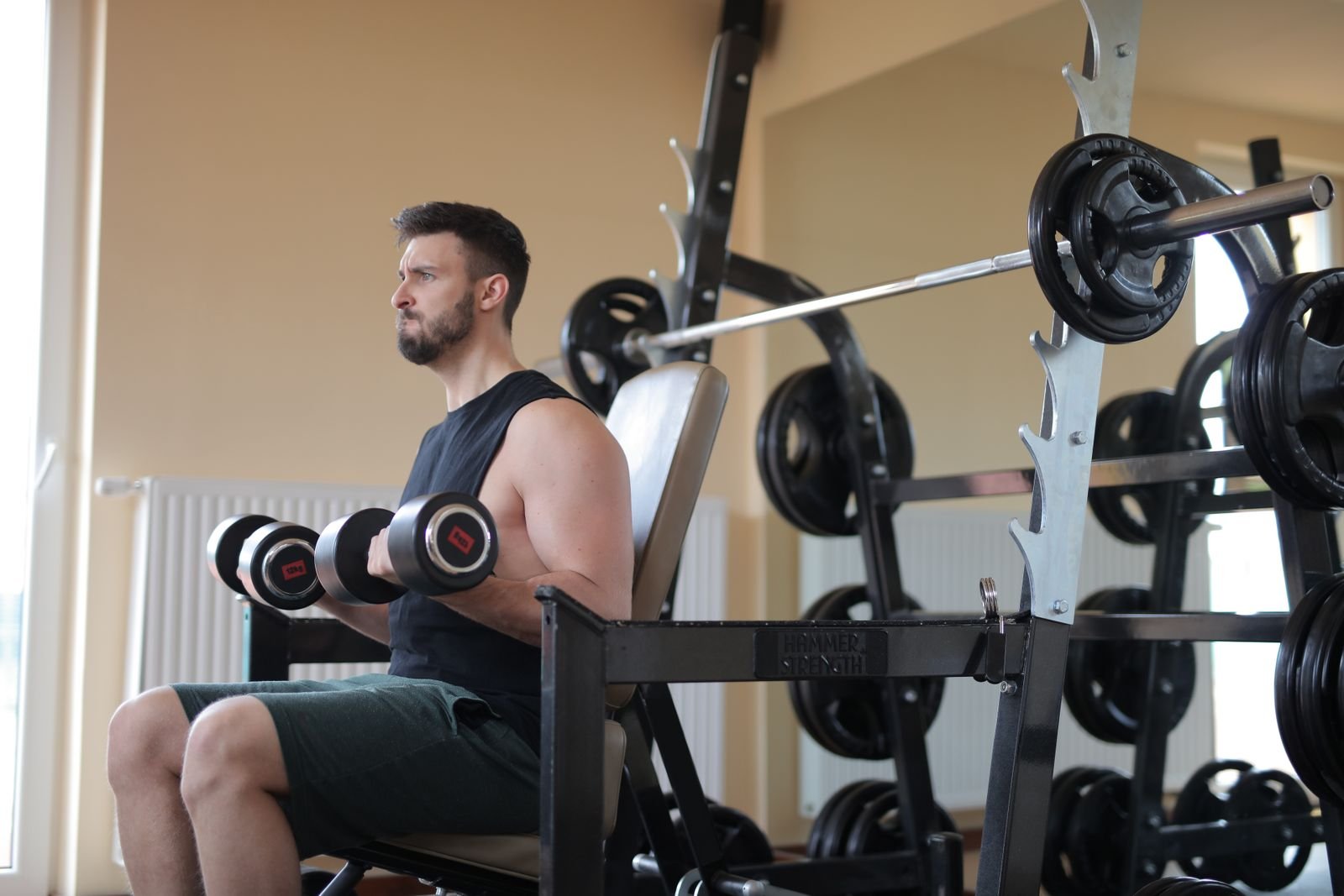
Understanding how drop sets work helps you choose appropriate weights and decide where they fit in your routine. The basic approach is straightforward: use a familiar exercise, prepare a lighter weight, and keep every repetition controlled.
What Is a Drop Set?
During a traditional set, you complete your repetitions, put the weight down, and rest. During a drop set, you lower the resistance and continue before taking that normal rest period.
Classic drop-set protocols usually take the initial effort to muscular failure. This means you cannot complete another full repetition with the required technique. You then reduce the load and perform additional repetitions.
For example, you might perform dumbbell curls with 25 pounds in each hand, switch to 20-pound dumbbells, and continue curling.
The word “drop” refers to reducing the weight. Always set equipment down under control.
Do You Have to Reach Complete Failure?
Many studies use failure-based protocols, but you should not keep lifting by swinging, twisting, or shortening the movement just to finish another repetition.
For general training, a practical stopping rule is to end an effort when another repetition would require a change in technique. Stopping just short of failure is a modification of the classic protocol.
How to Do a Drop Set
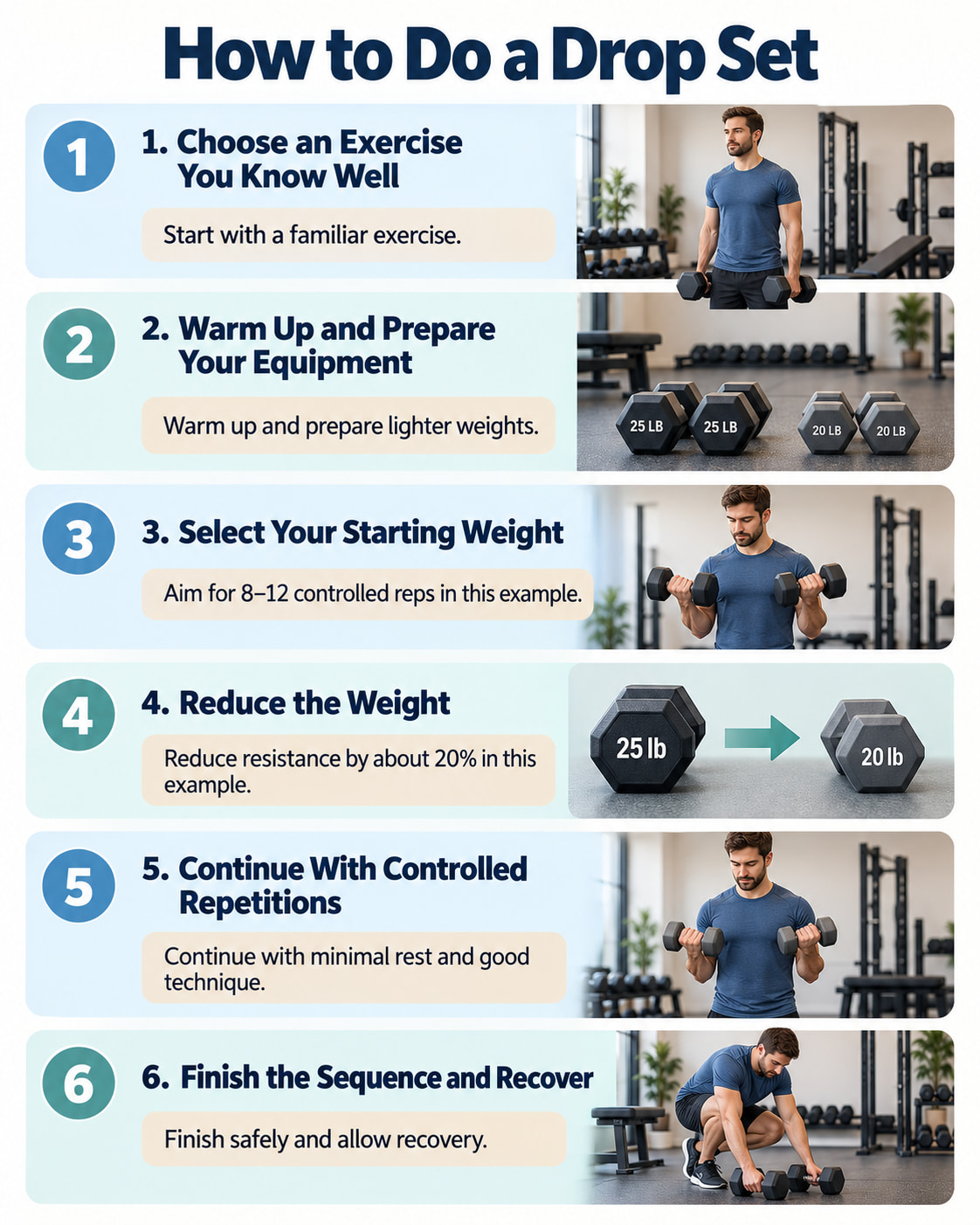
1. Choose an Exercise You Know Well
Select a movement you can perform confidently, such as a dumbbell curl or cable triceps pushdown.
You should be able to control the weight, maintain your position, and change resistance without a complicated setup.
2. Warm Up and Prepare Your Equipment
Begin with an easy warm-up and lighter practice repetitions of the exercise.
Place the lighter dumbbells within reach, leaving enough room to move safely. On a weight-stack machine, check that you can return the stack to its resting position before changing the pin.
Quick transitions should still be deliberate and controlled.
3. Select Your Starting Weight
For the example below, choose a weight that allows approximately 8–12 controlled repetitions, with the final repetitions feeling challenging.
This range is a practical way to select a load for the example. It is not a required repetition range for every drop set.
4. Reduce the Weight
A common starting approach is to reduce the current weight by approximately 20%–25%. The NSCA’s guidance on rest intervals and drop sets describes this range while noting that reductions should reflect individual tolerance and training volume.
For example:
- Going from 25 pounds to 20 pounds is a 20% reduction.
- Going from 20 pounds to 15 pounds is a 25% reduction.
Calculate each reduction from the weight you are currently using. Use the available equipment increments rather than chasing an exact percentage.
5. Continue With Controlled Repetitions
After changing weights, continue the same exercise. Take only the transition time needed to handle the equipment safely.
There is no required number of repetitions after the drop. Your remaining capacity depends on the initial effort, the size of the reduction, and your fatigue.
Stop when another repetition would require a change in technique.
6. Finish the Sequence and Recover
For your first attempt, keep the example simple: one initial effort followed by one weight reduction.
Then rest before continuing your workout. If your breathing or movement control has not recovered, take more time.
A Simple Drop Set Workout Example
This sample upper-body session shows how a single drop set can fit into a workout. It assumes you already know the listed exercises and can perform them comfortably.
The sets, repetitions, and rest periods are illustrative starting choices. Adjust them to your experience and existing program.
Sample Upper-Body Workout
| Exercise | Working sets and repetitions | Suggested rest |
|---|---|---|
| Machine chest press | 2 sets of 8–12 repetitions | About 2 minutes between sets |
| Seated cable row | 2 sets of 8–12 repetitions | About 2 minutes between sets |
| Cable triceps pushdown | 1 set of 10–15 repetitions | About 1–2 minutes before the next exercise |
| Dumbbell curl | 2 working sets of approximately 8–12 repetitions; add one weight reduction to the final set | About 1–2 minutes between the working sets; only transition time during the drop |
Keep the ordinary sets challenging while leaving a small margin before technique would deteriorate. Take longer rests when needed.
This session illustrates drop-set placement within an upper-body workout. Your overall weekly routine should also include the other major muscle groups.
How the Final Curl Set Works
The weights below are examples, listed per dumbbell.
| Stage | Example weight | What to do |
|---|---|---|
| Initial effort | 25 lb | Perform approximately 8–12 controlled curls, stopping when another repetition would require altered technique. |
| One weight reduction | 20 lb | Switch weights and perform additional controlled curls. |
| Finish | — | Put the dumbbells down carefully and recover. |
Keep your upper arms close to your sides and avoid using your hips or back to swing the dumbbells upward.
If 25 pounds is too heavy, choose a lighter pair. If it is too easy, select a more appropriate starting load. The sequence matters more than the example numbers.
Once you are familiar with the method, an additional reduction from 20 to 15 pounds is one possible variation. It also adds work, so consider whether it fits your training and recovery.
How to Record and Progress the Workout
Write down the weights and repetitions for each stage separately. An example entry might read:
Final curl set: 25 lb × 10 repetitions, then 20 lb × 6 repetitions.
Those repetition counts are an example of a completed session, not a target you must force yourself to reach.
When the upper end of your starting repetition range becomes consistently manageable with good technique, consider the smallest practical increase in the initial weight. Reassess the lighter weight afterward.
Change one variable at a time so you can judge how the adjustment affects performance.
What Are the Benefits of Drop Sets?
They Can Save Training Time
Drop sets reduce the rest taken between successive efforts. This can make them useful when you want to complete demanding work for a particular muscle within a shorter period.
The time saved depends on the exercise, equipment changes, and the traditional workout being used for comparison.
They Can Support Muscle Growth
Drop sets can provide a muscle-building stimulus. Their practical value is that they offer another way to organize resistance training around your available time and preferences.
They Offer an Optional Change in Training Structure
You can use a drop set to vary how you perform an exercise you already know. This may suit people who enjoy the format.
Whether you enjoy it matters: a demanding method is useful only if it fits a routine you can maintain.
Are Drop Sets Better Than Traditional Sets?
Current evidence does not establish that drop sets produce greater muscle growth or strength gains than traditional sets.
A 2026 systematic review in Sports Medicine – Open included 12 studies involving 274 participants, covering both immediate exercise responses and longer-term adaptations. The review found broadly similar muscle-growth and strength outcomes, with no statistically significant advantage for drop sets. Drop sets produced higher perceived exertion.
The longer-term studies generally lasted 6–12 weeks, and the protocols varied. The findings support drop sets as an option, while leaving uncertainty about how different approaches compare over longer periods.
For general fitness, the American College of Sports Medicine’s resistance-training guidance emphasizes consistent participation and an appropriate program. Advanced techniques and training to complete failure are optional.
Choose drop sets when their format helps you train effectively within your available time. Traditional sets remain a useful choice when you prefer more recovery between efforts.
Which Exercises Work Well for Drop Sets?
Exercises with straightforward resistance changes are usually easiest to organize.
| Exercise | Practical reason to consider it |
|---|---|
| Dumbbell curl | You can switch to a lighter pair prepared nearby. |
| Cable curl | A weight stack allows a relatively quick adjustment. |
| Cable triceps pushdown | You can reduce resistance while keeping the same movement. |
| Machine leg extension | The setup supports a clear change in resistance. |
| Machine leg curl | You can adjust the load without changing exercises. |
A review in Sports Medicine describes single-joint exercises as particularly practical for drop sets and advises caution with demanding free-weight exercises such as heavy squats and bench presses.
For an introductory attempt, choose an exercise you can end and reset easily. Equipment choice does not remove the need for suitable loading and controlled technique.
Drop Sets vs. Supersets and Rest-Pause Sets
These methods change different parts of a workout.
| Method | Main feature | Simple example |
|---|---|---|
| Traditional sets | Separate sets with planned rest | Curls, rest, then another curl set |
| Drop sets | Lower the weight and continue the same exercise | Curls with 25 lb, then curls with 20 lb |
| Supersets | Perform two exercises consecutively with little or no rest | Curls followed by triceps pushdowns |
| Rest-pause sets | Take short planned breaks within an extended effort, generally retaining the load | Curls, a brief rest, then more curls at the same weight |
For a drop set, the defining change is the reduction in resistance. For a superset, it is the move to another exercise.
Common Drop Set Mistakes to Avoid
Starting With Too Much Weight
Choose a starting load that lets you perform the exercise correctly. A planned reduction does not justify struggling through the initial repetitions with poor technique.
Forcing a Fixed Number of Repetitions
You may complete fewer repetitions than expected after reducing the weight. Let technique determine when to stop.
Rushing the Equipment Change
Return a machine’s weight stack fully before adjusting the pin. Set dumbbells down carefully and keep the area around you clear.
Adding Drops to Every Set
Begin with one sequence on one exercise so you can judge its demands. Adding several drops across several exercises makes the change harder to evaluate.
Ignoring Pain or Loss of Control
Fatigue should not become a reason to continue through pain. Mayo Clinic’s weight-training guidance recommends stopping an exercise that causes pain and reducing the weight or repetitions when proper form cannot be maintained.
Breathe throughout the movement. If you are uncertain about technique, ask a qualified fitness professional for help. Persistent or recurring pain warrants assessment by a healthcare professional.
Who Should Use Drop Sets?
Drop sets may suit people who already have a foundation in resistance training, can judge their technique under fatigue, and want another way to organize a workout.
If you are new to lifting, spend time learning ordinary sets, equipment setup, and controlled repetitions first. The NSCA notes that less-experienced trainees may struggle with the fatigue demands of drop sets.
There is no universally established ideal frequency for using them. A conservative introduction is one sequence on one exercise in a session, followed by an assessment of how well you recover.
If the extra work leaves you less able to perform your next planned workout, reduce it or return to traditional sets. People following rehabilitation advice or medical exercise restrictions should check whether the technique fits those instructions.
Frequently Asked Questions
How Much Weight Should You Reduce During a Drop Set?
About 20%–25% of the current weight is a common starting approach. Adjust for the exercise, available equipment, and your ability to continue with controlled technique.
How Many Repetitions Should You Do After Dropping the Weight?
There is no fixed requirement. Continue only while you can maintain the exercise’s normal technique. The number will vary with fatigue and the amount of weight removed.
How Many Times Should You Drop the Weight?
One reduction is enough to try the method. Some protocols use additional reductions, but each adds work. More drops are not automatically a better choice.
Do You Rest Between Drops?
Usually, you take only the time needed to change resistance safely. A longer recovery break changes the structure toward separate sets rather than one continuous drop-set sequence.
Does a Drop Set Count as One Set or Several?
For clear tracking, record it as one extended sequence and list each weight and repetition count. There is no universal conversion showing that it equals a particular number of traditional sets.
Can You Do Drop Sets at Home?
Yes, if you have suitable equipment and can change resistance safely. Two pairs of dumbbells can be enough. If your equipment takes a long time to adjust, traditional sets may be more practical.
Should You Do Drop Sets on Every Exercise?
There is no requirement to use them throughout a workout. Introducing them on one familiar exercise makes it easier to judge whether the additional effort fits your routine.
Conclusion
A drop set extends an exercise by reducing the weight and continuing with minimal rest. It can be a useful way to save training time, especially on a familiar exercise with an easy resistance change.
If you want to try it, start with one reduction on the final set of one exercise. Record what you do, keep your technique controlled, and let your recovery guide future adjustments.
References
- Sports Medicine – Open: Acute and Chronic Effects of Drop-Set Training: A Meta-Analysis and Systematic Review
- American College of Sports Medicine: Resistance Training Guidance
- National Strength and Conditioning Association: How to Manipulate Rest Intervals to Maximize Strength Training Effectiveness
- Sports Medicine: No Time to Lift? Designing Time-Efficient Training Programs for Strength and Hypertrophy
- Mayo Clinic: Weight Training: Do’s and Don’ts of Proper Technique