
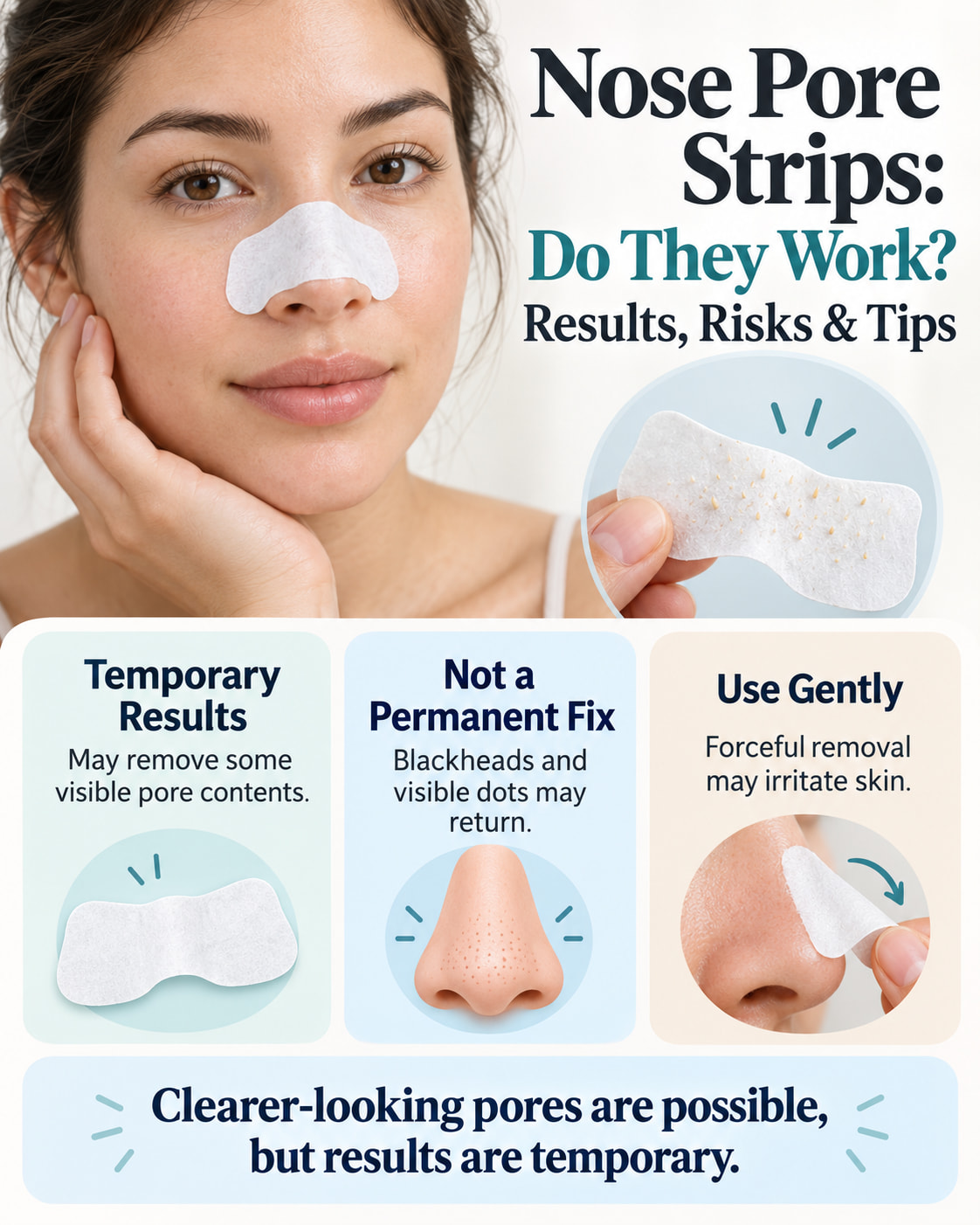
Nose pore strips can remove some blackhead material and make your nose look clearer temporarily, but they are not a lasting solution for clogged pores. They can also cause dryness or irritation, especially when used on sensitive skin or removed forcefully.
Before using one, it helps to understand what those visible dots on your nose actually are. Some are blackheads, while others are normal sebaceous filaments. Knowing the difference can help you set realistic expectations and avoid unnecessary irritation.
What Are Nose Pore Strips?
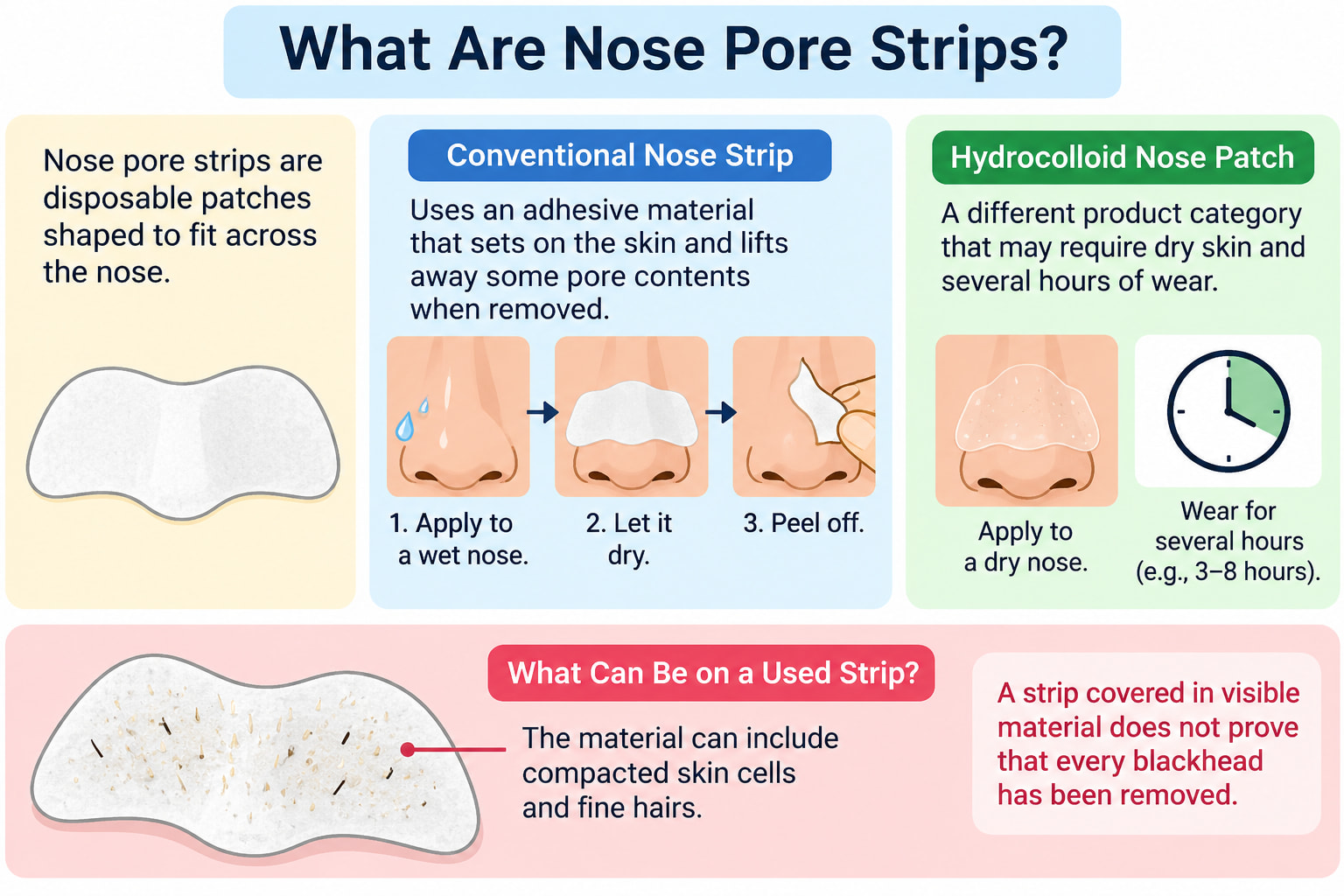
Nose pore strips are disposable patches shaped to fit across the nose. Conventional strips use an adhesive material that sets on the skin and lifts away some pore contents when removed.
Many traditional strips are applied to a wet nose, allowed to dry, and then peeled off. Hydrocolloid nose patches are a different product category and may require dry skin and several hours of wear. Always check which type you have.
The material on a used strip can include compacted skin cells and fine hairs. A strip covered in visible material does not prove that every blackhead has been removed.
Do Nose Pore Strips Work?
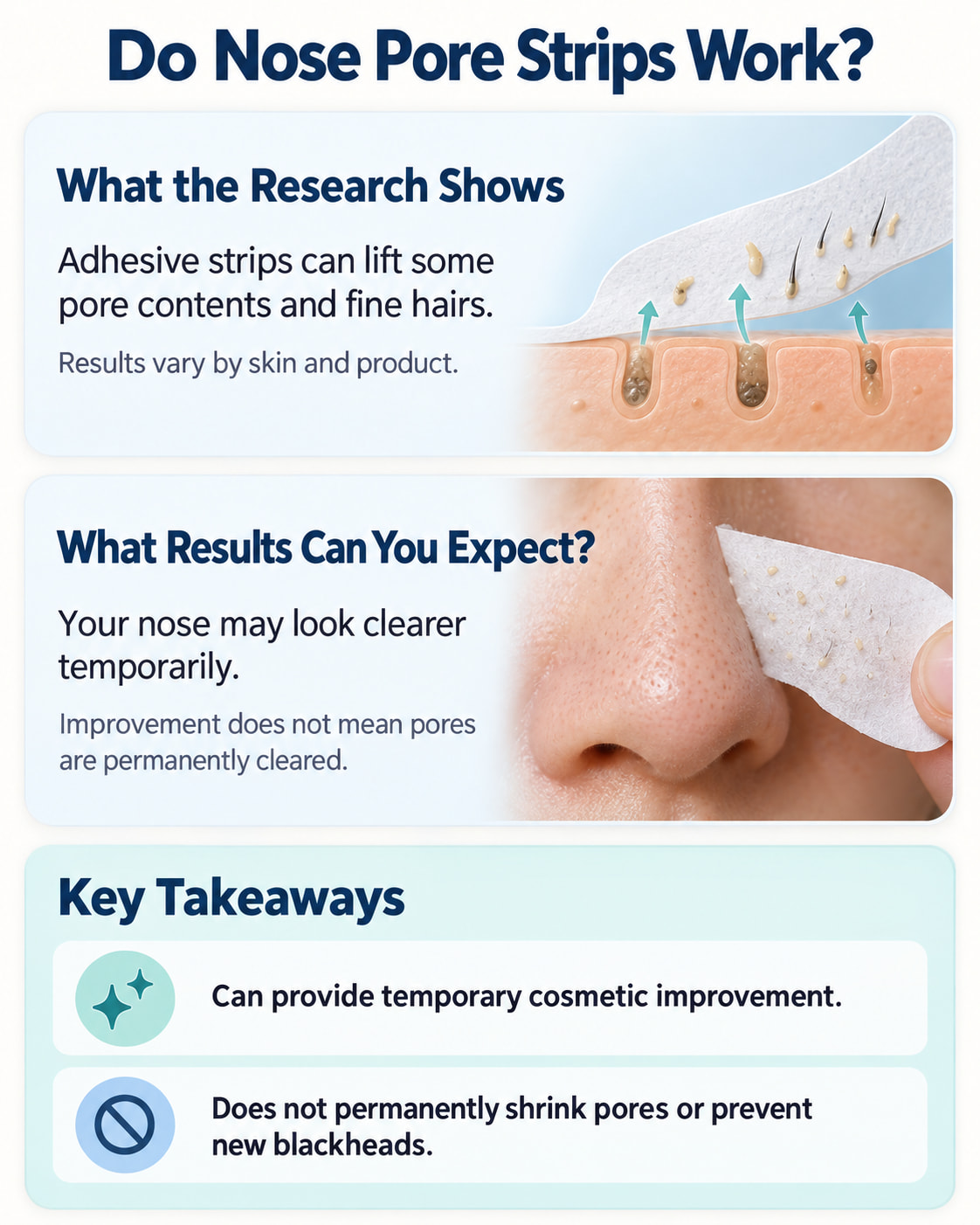
Yes, they can work for temporary cosmetic improvement. As Cleveland Clinic explains, adhesive strips can lift congestion from pores, but they do not resolve the underlying reasons it develops.
What the Research Shows
A 1999 study published in the Journal of Dermatological Treatment found that one Bioré strip formulation removed follicular plugs and bundles of fine hairs, particularly from the nose.
However, that older study does not establish how well every current product works, how long results last, or whether repeated use prevents future blackheads. Its findings should not be interpreted as a guarantee of irritation-free results.
What Results Can You Expect?
You may notice fewer visible plugs or a temporarily clearer appearance after using a strip. Results depend on what is present in your pores and how the product performs.
There is no dependable timeline that applies to everyone. Avoid expecting a strip to keep your nose clear for a specific number of days or permanently change pore size.
If blackheads keep returning, repeated extraction alone may not address the problem.
Blackheads vs. Sebaceous Filaments
Not every dot on your nose is a blackhead. Sebaceous filaments are normal structures that help carry oil from your sebaceous glands to the skin’s surface.
| Feature | Blackheads | Sebaceous filaments |
|---|---|---|
| What they are | A type of acne involving a plugged pore | A normal part of the skin’s oil system |
| Typical appearance | Dark, open bumps | Smaller, flatter dots that may look gray, light brown, or yellow |
| What happens inside | Oil and dead skin form a blockage | Oil can travel through the follicle |
| Whether they need removal | Persistent blackheads may benefit from appropriate acne care | Normal filaments do not need removal |
Pore strips can remove sebaceous filament material as well as material from clogged pores. That means the residue on a strip is not necessarily all blackheads or dirt.
Visible pores and some variation in skin texture are normal. Trying to remove every dot can turn an ordinary cosmetic concern into an uncomfortable skin-care routine.
Risks and Side Effects of Nose Pore Strips
Dryness and Irritation
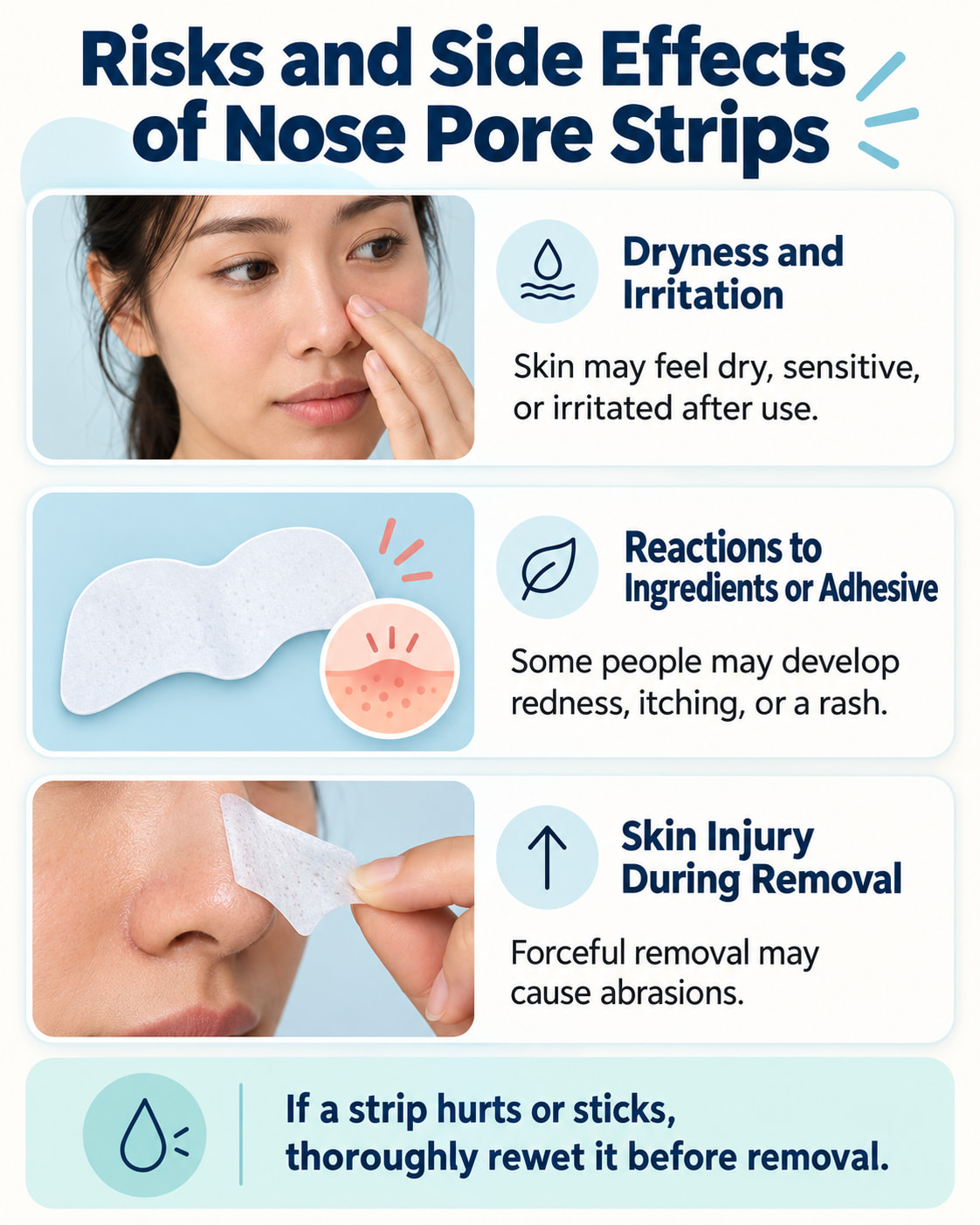
Pore strips can leave skin dry or irritated. A cleaner-looking nose is not a worthwhile result if the area feels persistently sore or uncomfortable afterward.
Reactions to Ingredients or Adhesive
Skin-care products can cause irritation or an allergic skin reaction. Contact dermatitis may involve itching, burning, swelling, a rash, or blisters.
These symptoms are reasons to stop using the product, not signs that it is providing a deeper clean. A persistent or recurring reaction deserves professional assessment.
Skin Injury During Removal
A strongly attached strip can injure the skin if you pull it off forcefully. Bioré’s manufacturer cautions specifically warn about abrasions and advise thoroughly wetting a painful or stuck strip until it releases easily.
Who Should Avoid Nose Pore Strips?
Avoid applying an adhesive strip over:
- Inflamed pimples or swollen skin.
- Sunburn.
- Excessively dry, peeling, or already irritated skin.
- Areas that have previously reacted to adhesive bandages or peel-off masks.
Manufacturer guidance also advises consulting a physician before using strips on skin receiving prescription acne medication.
If your skin is sensitive, ask a dermatologist whether a strip is suitable before trying one. Do not stop a prescribed skin medication simply to make room for a cosmetic product.
How to Use Nose Pore Strips
The following steps apply to conventional adhesive strips. Follow the instructions on your exact package, since preparation, wear time, and permitted frequency can differ.
1. Read the Directions and Check Your Skin
Confirm that the product is intended for the nose and review its warnings. Skip the application if the area is irritated or damaged.
For a specific example, Bioré’s US directions specify 10–15 minutes of drying time and recommend use no more than once a week. Weekly use is a maximum for that product guidance, not a target everyone needs to follow.
2. Cleanse and Prepare Your Nose
Wash gently. For a strip that requires wet skin, wet your nose as directed before applying it.
Position the correct side against your skin and smooth it into contact. Do not assume that instructions for an overnight patch also apply to an adhesive extraction strip.
3. Follow the Recommended Wear Time
Use a timer so you can remove the strip when instructed. Leaving it on longer is not a reliable way to improve the result.
Do not sleep in a conventional strip that is intended to be removed after several minutes.
4. Remove the Strip Gently
Peel slowly according to the package instructions. If removal hurts or the strip will not release, thoroughly rewet it and allow it to loosen.
Do not pull harder to overcome resistance. If removal causes an abrasion, discontinue use and seek medical advice.
5. Keep Aftercare Simple
Avoid scrubbing the area to remove anything left behind. Use gentle cleansing and an appropriate moisturizer if your skin feels dry.
The American Academy of Dermatology recommends mild cleansing and warns that scrubbing and deliberately drying out acne-prone skin can increase irritation.
Options for Recurring Blackheads
When blackheads repeatedly return, it helps to focus on a consistent routine that addresses pore congestion.
The American Academy of Dermatology’s acne guidelines, released in 2024, support topical retinoids and conditionally recommend salicylic acid for acne management. These recommendations are not based on a direct comparison with pore strips.
| Option | How it may help | What to keep in mind |
|---|---|---|
| Salicylic acid | Helps loosen accumulated skin cells and unclog pores | It can cause dryness or irritation |
| Topical retinoids | Help manage clogged pores and acne | Product suitability and consistent use matter |
| Gentle, noncomedogenic skin care | Helps limit irritation and pore-clogging products | Aggressive washing is unnecessary |
| Professional assessment | Helps identify persistent blackheads or another skin concern | Especially useful when acne is painful or leaves marks |
A practical foundation includes a gentle cleanser, moisturizer, and broad-spectrum sunscreen with SPF 30 or higher. AAD guidance also recommends noncomedogenic products and gentle handling of the skin to help make pores less noticeable.
Give Skin-Care Products Time
Acne products do not work immediately. AAD advises using an appropriate over-the-counter product as directed for 6–8 weeks before judging its effect, rather than repeatedly adding new products.
That does not mean you should continue through a significant reaction. Persistent discomfort or worsening symptoms warrant advice.
If you are pregnant or trying to conceive, consult a clinician before choosing acne products. Retinoids require particular caution and are generally avoided during pregnancy.
When to See a Dermatologist
Consider professional advice if:
- You cannot tell whether the dots are blackheads or normal skin structures.
- Blackheads or other breakouts persist despite consistent care.
- You develop deep, painful pimples, scarring, or lingering dark marks.
- A skin reaction keeps returning after product use.
Seek prompt medical attention for a painful or blistering rash, raw skin, rapidly spreading symptoms, or signs of infection such as discharge and increasing warmth or swelling. Breathing or swallowing difficulty with a reaction requires emergency care.
Frequently Asked Questions
How Often Can You Use Nose Pore Strips?
Follow your product’s directions. Bioré’s current US FAQ recommends no more than once weekly. That does not mean weekly use is necessary or suitable for your skin. Stop if the product causes irritation.
Why Do the Dots on My Nose Come Back?
Some may be normal sebaceous filaments, whose contents accumulate again. If they are blackheads, removing existing material does not eliminate the factors that allow new clogs to form.
Do Nose Pore Strips Make Pores Bigger?
It is not established that ordinary strip use inevitably causes permanent enlargement. However, irritation can make pores look more noticeable. Strips also should not be expected to permanently shrink pores.
Can You Use Nose Pore Strips With Retinol?
Be cautious if retinol has left your skin dry, peeling, or sensitive. If you use a prescription acne product, ask your prescriber whether adhesive strips are appropriate. Do not change a prescribed routine just to use a strip.
Are Hydrocolloid Nose Patches the Same as Pore Strips?
No. Traditional strips physically lift material as they are peeled away. Hydrocolloid patches absorb fluid and have different instructions. For example, Hero’s Mighty Patch Nose is applied to clean, dry skin for 6–8 hours. This schedule does not apply to conventional extraction strips.
What Should You Put on Your Nose After Using a Pore Strip?
Keep the routine gentle. An appropriate moisturizer can help with dryness; harsh scrubbing and drying products can add irritation. If your skin is raw, blistered, or painful, stop using the strip and seek advice.
Conclusion
Nose pore strips may offer a temporary cosmetic improvement, but they are optional. Start by understanding what you are seeing on your nose, and prioritize a gentle routine over repeated extraction.
If you choose to use a strip, check the directions, respect your skin’s response, and ask a dermatologist about persistent blackheads or irritation.
This content is for informational purposes only and not medical advice.
References
- Cleveland Clinic: How to Get Rid of Blackheads
- Cleveland Clinic: Sebaceous Filaments
- Journal of Dermatological Treatment: Study of a Cosmetic Pore-Cleansing Strip
- Bioré: US Product FAQ
- Bioré: Pore Strip Directions and Cautions
- American Academy of Dermatology: Acne Management Guidelines
- American Academy of Dermatology: Adult Acne Guidance
- American Academy of Dermatology: Care for Visible Facial Pores