
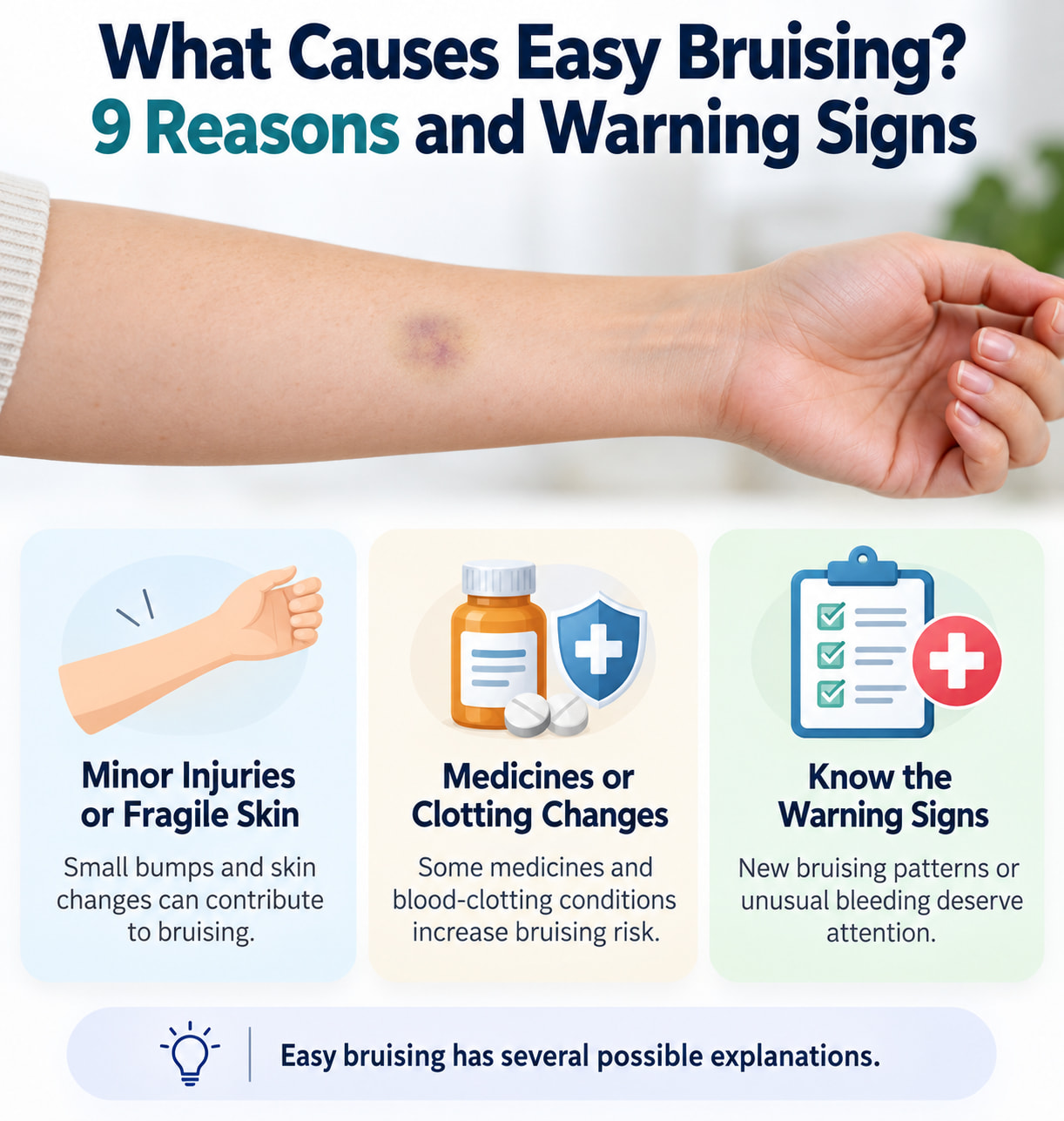
Easy bruising can result from minor injuries, fragile skin, certain medicines, or conditions that affect blood clotting. Less common explanations include vitamin deficiencies, platelet disorders, and liver disease. Understanding what causes easy bruising means looking at the overall pattern, other symptoms, and your medical history.
An occasional bruise after a small bump may have a straightforward explanation. Bruising that starts suddenly, becomes more frequent, or appears alongside unusual bleeding deserves medical attention.
Bleeding that will not stop with firm pressure needs emergency care.
What Does Easy Bruising Mean?
A bruise forms when small blood vessels break and blood leaks into surrounding tissue. Easy bruising generally means bruises appear after minor contact, seem larger than expected, or develop frequently without an obvious explanation.
It describes a symptom rather than a diagnosis. The useful question is whether something has changed: Are you getting more bruises than usual? Have you started a medicine? Are your gums bleeding, or are small cuts taking longer to stop bleeding?
What Causes Easy Bruising? 9 Possible Reasons
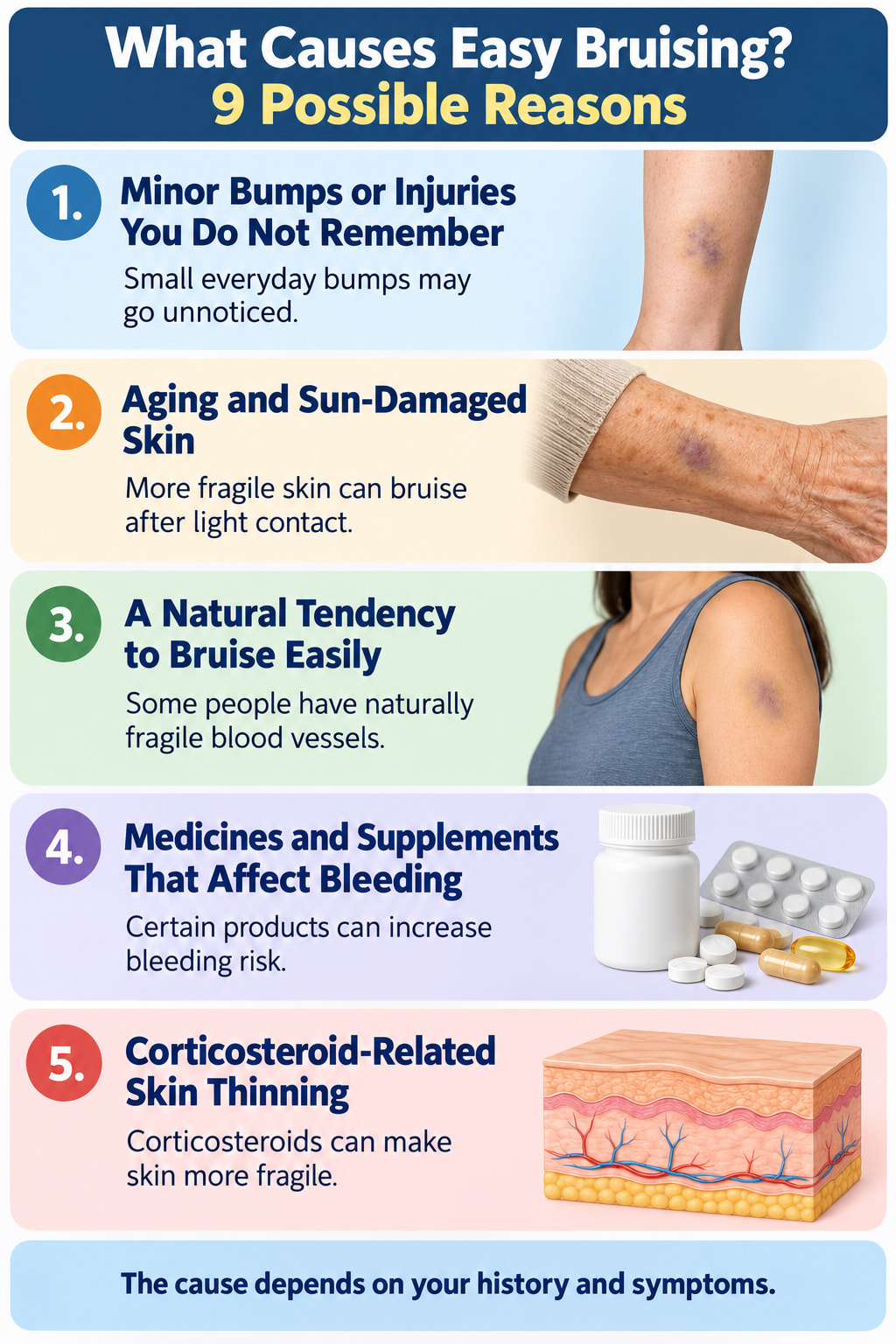
These reasons can overlap. For example, someone may have fragile skin and also take a medicine that increases bleeding.
1. Minor Bumps or Injuries You Do Not Remember
You may knock your shin against furniture or bump your arm while carrying something without paying much attention. Contact during sports, household tasks, or other activities can also damage small blood vessels.
Think back over recent activities when you notice a new bruise. An overlooked injury is one possible explanation, but repeated unexplained bruising should still be discussed with a healthcare professional.
2. Aging and Sun-Damaged Skin
As skin ages, its supporting tissues become more fragile. Long-term sun exposure can add to these changes, particularly on the backs of the hands and forearms. A relatively light bump may then leave a noticeable bruise.
One related condition is actinic purpura, also called senile purpura. It typically causes recurring purple patches on sun-exposed areas in older adults. Once this pattern has been identified, the condition itself is generally benign.
Age can help explain bruising, but it should not automatically explain away a sudden change or bleeding elsewhere.
3. A Natural Tendency to Bruise Easily
Some people develop easy bruising associated with fragile blood vessels, a condition called purpura simplex. It commonly affects women and may cause bruises on the thighs, buttocks, or upper arms without a recognized injury.
People with this condition generally have no other abnormal bleeding, and blood-clotting tests are normal. A clinician considers the history and examination before deciding whether this explains someone’s bruising.
A long-standing tendency to bruise can be reassuring once assessed. A new pattern still deserves attention.
4. Medicines and Supplements That Affect Bleeding
Several medicines can make bleeding last longer after small blood vessels are injured. Mayo Clinic identifies examples including:
- Anticoagulants, such as warfarin or apixaban.
- Antiplatelet medicines, such as aspirin or clopidogrel.
- NSAID pain relievers, such as ibuprofen or naproxen.
Certain supplements, including ginkgo biloba, can also increase bruising risk.
Do not stop a prescribed medicine on your own. Report new bruising to your clinician and provide a complete list of medicines, supplements, and nonprescription products you take.
5. Corticosteroid-Related Skin Thinning
Corticosteroid medicines can thin the skin, leaving it more vulnerable to bruising. This effect involves skin fragility rather than simply a change in how blood clots.
If bruising develops during corticosteroid use, ask the prescriber to review it. Do not change or stop the medicine independently.
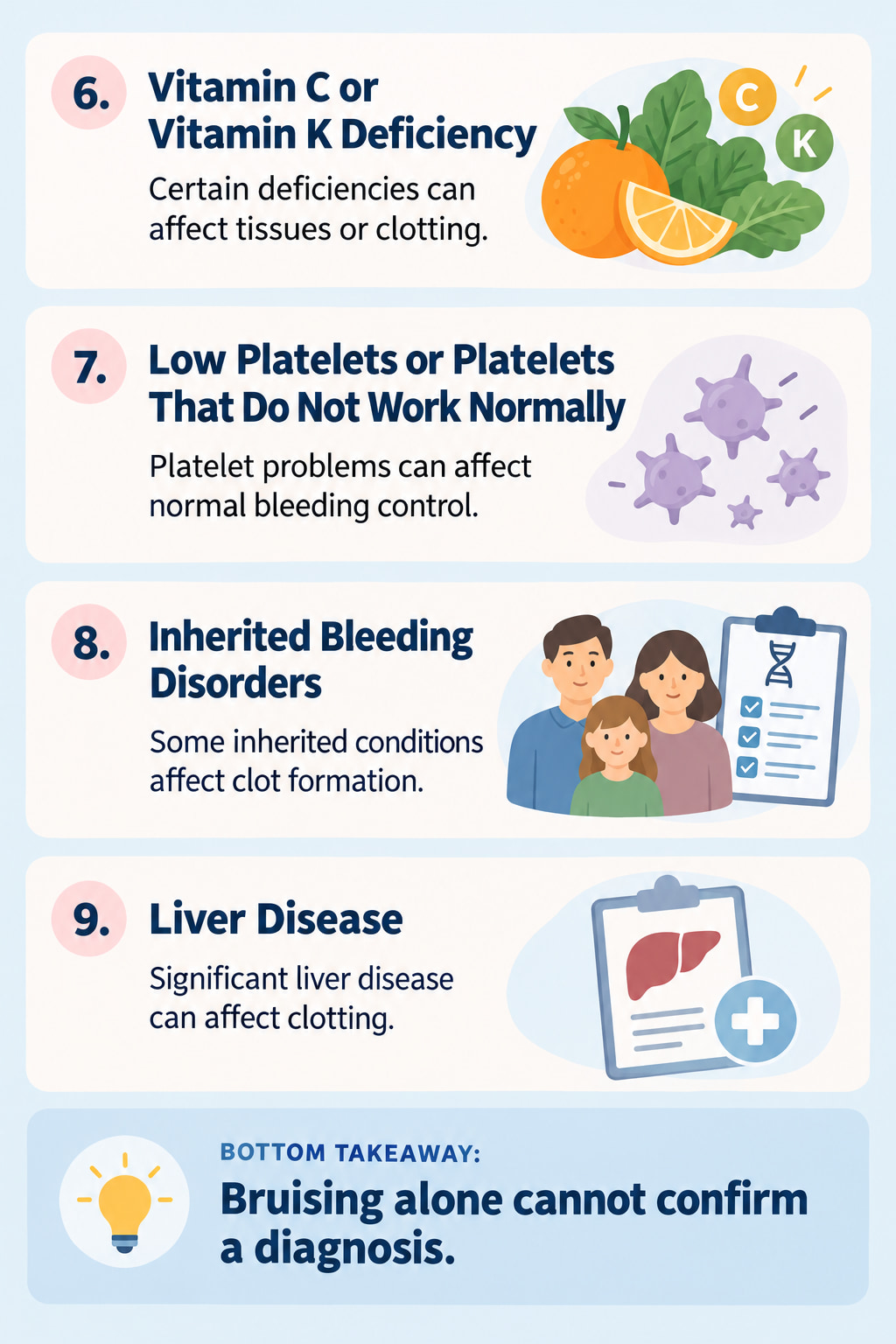
6. Vitamin C or Vitamin K Deficiency
Certain vitamin deficiencies can contribute to bruising, although they should not be assumed from a bruise alone.
Vitamin C supports collagen formation, which helps maintain connective tissues. Severe deficiency can weaken these tissues and cause bruising, bleeding gums, and poor wound repair. The NIH Office of Dietary Supplements notes that severe deficiency is uncommon in developed countries, though people with very limited diets or other risk factors can be affected.
Vitamin K is needed for normal clotting. According to NIH vitamin K guidance, clinically significant deficiency is very rare in adults and usually involves impaired absorption or medicines that interfere with vitamin K.
Avoid starting supplements simply to see whether bruising improves. Vitamin K deserves particular caution if you take warfarin, because sudden changes in intake can alter the medicine’s effect.
7. Low Platelets or Platelets That Do Not Work Normally
Platelets are blood components that help form a plug when a blood vessel is injured. Bruising can occur when there are too few platelets or they do not function properly.
Possible contributors include immune conditions, infections, medicines, and problems affecting bone marrow. Some marrow conditions, including leukemia, can affect platelet production, but bruise appearance cannot identify the underlying cause.
Other signs may include:
- Pinpoint red, purple, or brown spots called petechiae.
- Nose or gum bleeding.
- Bleeding from small cuts that lasts longer than usual.
- Unusually heavy menstrual bleeding.
Mildly reduced platelet counts may cause no symptoms. Testing helps determine whether a platelet problem is present.
8. Inherited Bleeding Disorders
Inherited conditions such as von Willebrand disease and hemophilia can affect the body’s ability to stop bleeding.
Von Willebrand disease involves a protein that helps platelets form a clot. Symptoms can include easy bruising, recurring nosebleeds, heavy periods, or prolonged bleeding after dental work, surgery, or childbirth.
Your past bleeding history matters. Tell a clinician if you have needed extra care to stop bleeding after a procedure or if relatives have similar problems.
A lack of known family history does not exclude a bleeding disorder. Some cases occur without an identified affected relative, and acquired forms of von Willebrand disease also exist.
9. Liver Disease
The liver makes many proteins involved in clotting. Significant liver dysfunction can therefore contribute to bruising and bleeding.
NIH liver-disease guidance lists easy bruising among symptoms that may occur as cirrhosis worsens. Other possible signs include yellowing of the eyes or skin and swelling in the abdomen or legs.
Bruising alone does not establish liver disease. Liver damage also has several possible causes, so it should not be associated only with heavy alcohol use.
When Should You Worry About Easy Bruising?
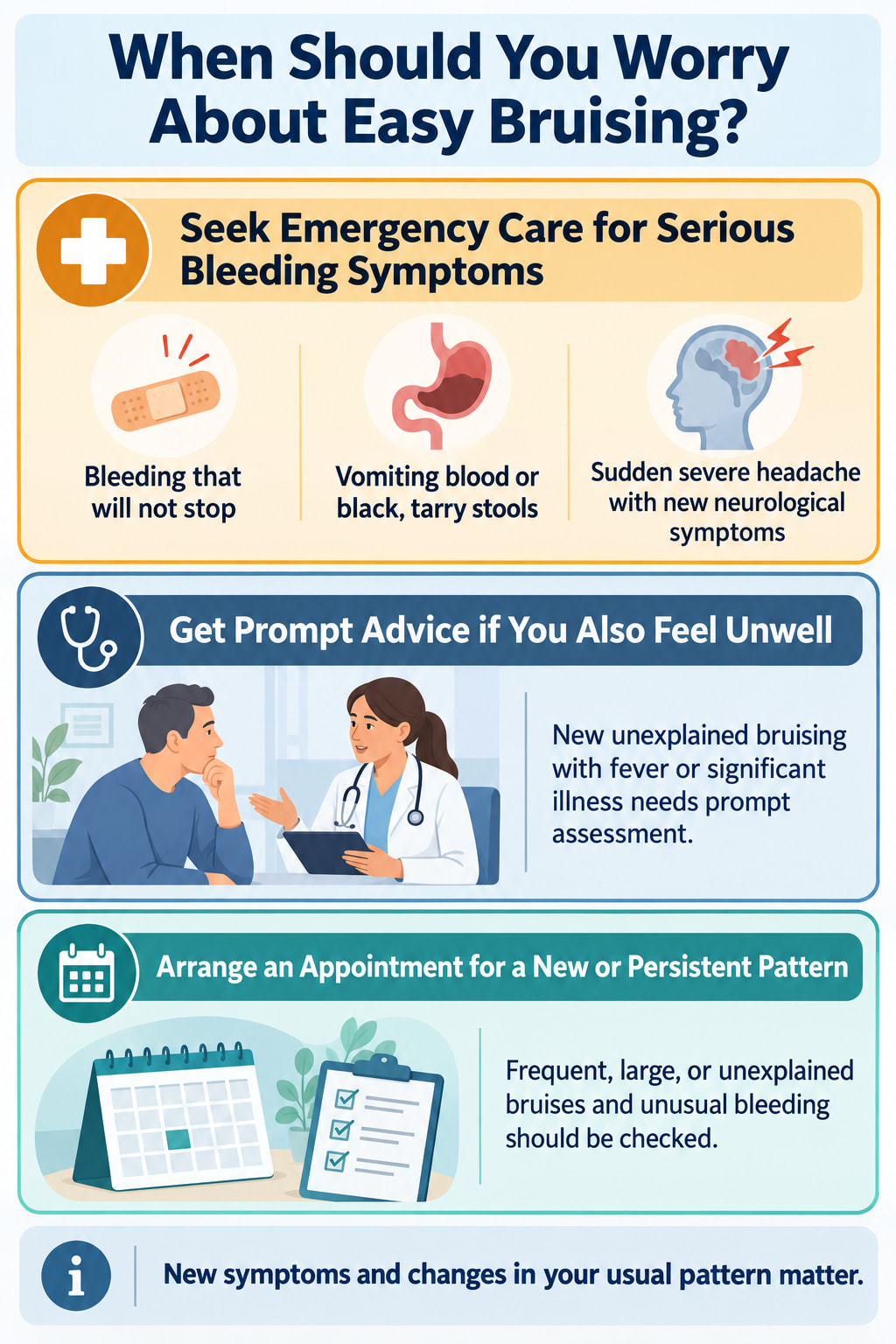
The urgency depends on the accompanying symptoms and how much the pattern has changed. Merck Manual guidance distinguishes concerning bleeding symptoms from bruising that can be assessed through a medical appointment.
Seek Emergency Care for Serious Bleeding Symptoms
Get immediate help for:
- Bleeding that does not stop with firm pressure.
- Vomiting blood or passing black, tarry stools.
- Fainting or marked weakness with suspected significant bleeding.
- A sudden severe headache accompanied by confusion, weakness, or other new neurological symptoms.
An extremely painful bruised area with a feeling of tightness or intense pressure also needs emergency assessment. Dangerous pressure can occasionally develop within injured tissues.
Get Prompt Advice if You Also Feel Unwell
New unexplained bruising or bleeding with fever or significant illness should be assessed promptly. New unexplained bruising or unusual bleeding during pregnancy or soon after delivery also warrants prompt medical advice. Severe associated symptoms require emergency care.
Arrange an Appointment for a New or Persistent Pattern
Contact a healthcare professional if you notice:
- Frequent, large, or painful bruises.
- Bruising that starts suddenly or repeatedly has no clear explanation.
- Unusual nose or gum bleeding.
- A personal or family history of abnormal bleeding.
- A bruise that remains painful or develops a noticeable lump.
Also mention heavy periods, prolonged bleeding after procedures, and any recent medicine changes.
How Is Frequent Bruising Evaluated?
A clinician will usually ask when the bruising began, where it occurs, whether other bleeding is present, and which medicines or supplements you use. They may also ask about previous surgery, dental work, menstrual bleeding, and family history.
Photos can help document bruises that fade before your appointment. Note when each appeared and whether an injury could explain it.
If the history suggests a bleeding problem, testing may include:
| Test | What it helps assess |
|---|---|
| Complete blood count, including platelets | The numbers of different blood cells |
| Peripheral blood smear | The appearance of blood cells |
| PT/INR and aPTT | Different parts of the clotting process |
| Fibrinogen | A protein involved in forming clots |
| Targeted tests | Specific bleeding disorders or possible liver problems |
The tests chosen depend on the findings. An ordinary small bruise does not automatically require this entire panel.
Normal screening results do not rule out every bleeding disorder. CDC guidance on diagnosing von Willebrand disease explains that initial results can be normal, and more specific or repeated testing may be needed.
What Can You Do for a Minor Bruise?
For a small bruise after a known minor injury:
- Rest the area. Pause activities that make it painful.
- Use a wrapped cold pack. Apply it for up to 20 minutes at a time, several times during the first day or two. Keep a cloth between the cold pack and your skin.
- Elevate the area when practical. Raising it above heart level may help limit swelling.
These measures can reduce discomfort and swelling, according to Mayo Clinic’s bruise first-aid guidance. They do not identify or resolve the cause of recurring unexplained bruising.
Seek advice if pain or swelling worsens, or if the area develops signs of infection such as drainage or fever.
Frequently Asked Questions
Does Easy Bruising Mean I Have Low Iron?
Bruising alone does not establish iron deficiency. Blood loss can cause iron-deficiency anemia, while bruising may also require assessment of platelets or clotting. If bruising occurs with ongoing fatigue, breathlessness, or unusual bleeding, discuss the combination with a clinician rather than starting iron on your own.
Should I Take Vitamins for Unexplained Bruising?
A supplement is appropriate only when there is a specific reason to use it. Vitamin C and K deficiencies are possible explanations, but unexplained bruising does not confirm either one. Vitamin K supplements can also interfere with warfarin.
Are Pinpoint Spots the Same as Bruises?
Pinpoint spots caused by bleeding under the skin are called petechiae. They are smaller than ordinary bruises and may look red, purple, or brown. New unexplained spots deserve medical advice, especially when they occur with other bleeding, fever, or feeling unwell.
How Long Should a Bruise Last?
There is no single timeline. Duration depends on the bruise’s depth and severity, and deeper injuries can take longer to resolve. An ordinary minor bruise should gradually improve. Persistent pain, worsening swelling, or repeated unexplained bruises should be checked.
Can I Have a Bleeding Disorder Without a Family History?
Yes. A relative may never have been diagnosed, and some conditions can occur without a known affected family member. Von Willebrand disease can also develop later because of another medical condition. Your own bleeding history remains important even when relatives have no known problems.
Pay Attention to Changes in Your Usual Pattern
Understanding easy bruising starts with noticing what has changed. Keep track of new marks, other bleeding symptoms, and recent changes to medicines or supplements.
If bruising becomes frequent, unexplained, or different from your usual pattern, arrange a medical assessment and bring that information with you. A clear history can help your healthcare professional decide what needs checking.
This content is for informational purposes only and not medical advice.