
Strength training at home can help you get stronger using bodyweight exercises, dumbbells, or resistance bands. Start with a manageable routine that works your major muscle groups, then increase the challenge as your strength improves.
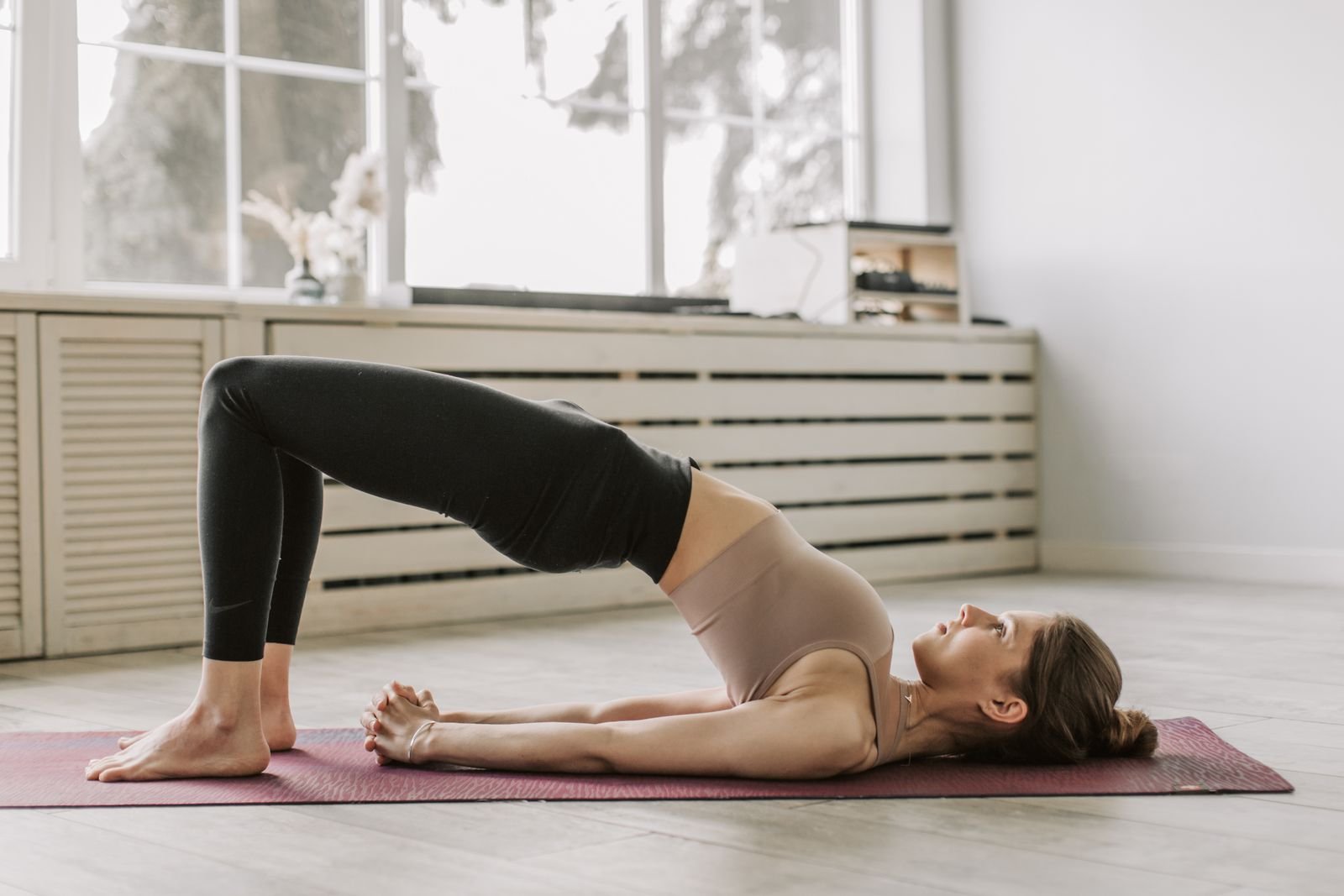
A clear plan helps you choose exercises, balance your workouts, and recognize when it is time to progress. The routine below combines eight movements with two weekly training sessions.
You will find instructions, easier options, and practical ways to make each exercise more challenging. This particular plan uses bodyweight and dumbbells, with a stable chair or fixed surface for support.
What Is Strength Training at Home?
Strength training means making your muscles work against resistance. At home, that resistance can come from your body weight, dumbbells, or exercise bands.
For example, a push-up uses your body weight, while a dumbbell row uses an external weight. Both can challenge your muscles when the exercise matches your current ability.
The 2026 ACSM position stand supports home-based resistance training and elastic bands as effective options for improving strength. Consistent practice and gradual progression are central to a useful routine.
Benefits of Strength Training at Home
Regular strength training can support:
- Muscle strength and endurance: Helping you handle physical tasks more comfortably.
- Bone strength: Providing resistance that challenges the muscles and skeleton.
- Everyday movement: Making activities such as carrying groceries and rising from a chair easier.
These benefits are described in the AAOS strength-training guidance.
Home training also gives you control over your schedule. You can keep your equipment ready, repeat a familiar routine, and adjust the session to your available time.
What Equipment Do You Need?
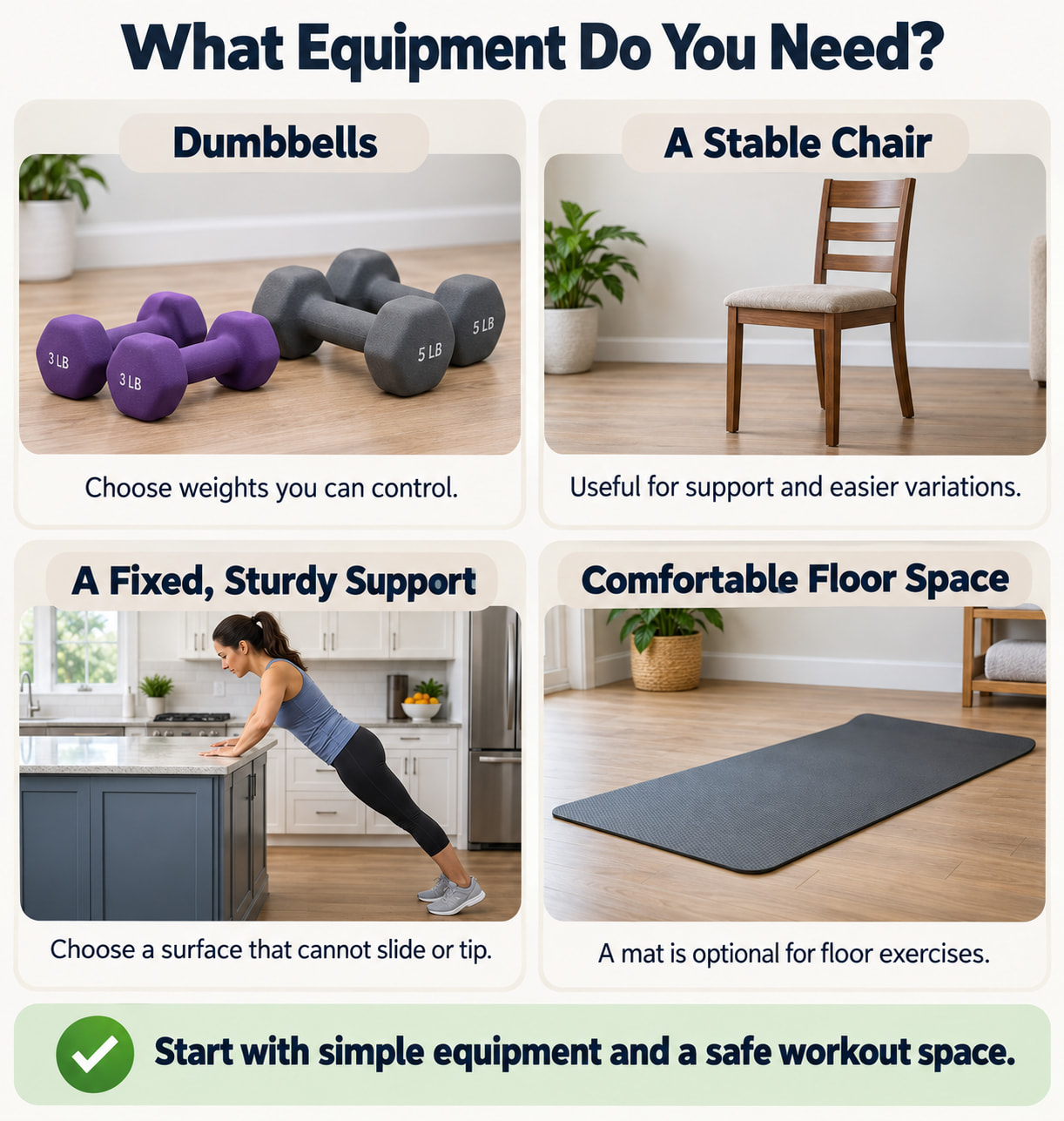
For the plan in this guide, gather:
- Dumbbells: Choose weights you can lift with control. Different exercises may require different weights.
- A stable chair: Useful for sit-to-stands and some seated variations.
- A fixed, sturdy support: Such as a secure countertop for incline push-ups or supported rows.
- Comfortable floor space: An exercise mat is optional for bridges and dead bugs.
Check that your support cannot slide or tip. Keep the floor clear of objects that could interfere with your feet or weights.
Several exercises start with bodyweight alone. The dumbbells provide adjustable resistance for the row, Romanian deadlift, and shoulder press.
8 Best Exercises for Strength Training at Home
These exercises were selected for their practicality, adjustable difficulty, and coverage of lower-body, pushing, pulling, and abdominal movements. The best variation for you is one you can perform comfortably and control throughout.
The repetition ranges below are starting targets for the sample plan. Use fewer repetitions or an easier variation if needed.
1. Bodyweight Squat
Main muscles worked: Quadriceps and glutes.
A squat practices bending and straightening your hips and knees. A chair can provide a clear starting point while you learn.
How to do it:
- Stand with your feet around shoulder-width apart.
- Bend your hips and knees, lowering as though you are sitting down.
- Keep your feet grounded and let your knees move in line with your toes.
- Lower to a comfortable depth, then push through your feet to stand.
Starting target: 8–12 repetitions.
Make it easier: Sit on a stable chair and stand up. Use your hands for assistance if needed.
Make it harder: Hold a dumbbell close to your chest.
Form tip: Choose a depth you can control. You do not need to reach a particular squat depth before the movement counts.
2. Reverse Lunge
Main muscles worked: Quadriceps and glutes.
Reverse lunges add single-leg work and require you to manage your balance as you step.
How to do it:
- Stand with your feet about hip-width apart.
- Step one foot backward, keeping some space between your feet.
- Bend both knees and lower within a comfortable range.
- Push through the front foot to return to standing.
- Repeat on the other side.
Starting target: 6–10 repetitions per leg.
Make it easier: Hold a stable support and use a stationary split squat. Keep your feet in the staggered position as you lower and rise.
Make it harder: Hold dumbbells at your sides.
Form tip: Use a shallow range initially if that helps you stay steady. Your back knee does not have to touch the floor.
3. Dumbbell Romanian Deadlift
Main muscles worked: Hamstrings and glutes.
This exercise uses a hip hinge: your hips move backward while your knees remain slightly bent.
How to do it:
- Stand with your feet about hip-width apart, holding dumbbells in front of your thighs.
- Soften your knees and gently brace your abdomen.
- Move your hips backward, keeping the weights close to your legs.
- Lower only as far as you can while maintaining a steady back position.
- Bring your hips forward to stand tall.
Starting target: 8–12 repetitions.
Make it easier: Practice the hip hinge without weights before introducing light dumbbells.
Make it harder: Increase the weight gradually.
Form tip: Stop the lowering movement before your back starts to round. The weights do not need to reach the floor.
4. Glute Bridge
Main muscles worked: Glutes, with assistance from the hamstrings.
The glute bridge provides a floor-based option for practicing hip extension.
How to do it:
- Lie on your back with your knees bent and feet flat.
- Place your feet about hip-width apart.
- Gently tighten your abdomen and press through your feet.
- Lift your hips while keeping your ribs and pelvis controlled.
- Lower slowly to the floor.
Starting target: 8–12 repetitions.
Make it easier: Lift your hips through a smaller, comfortable range.
Make it harder: Add a manageable dumbbell across your hips, using padding for comfort and holding it securely.
Form tip: Finish the lift before your lower back begins to arch excessively. Raising your hips higher is not the goal.
5. Incline Push-Up
Main muscles worked: Chest, triceps, and front shoulders.
Elevating your hands makes a push-up more manageable than performing it on the floor.
How to do it:
- Place your hands on a fixed, sturdy surface, slightly wider than shoulder-width.
- Step back until your body forms a straight line from head to heels.
- Bend your elbows and lower your chest toward the surface.
- Keep your abdomen engaged so your hips stay aligned.
- Press through your hands to return.
Starting target: 8–12 repetitions.
Make it easier: Perform the movement against a wall.
Make it harder: Gradually use a lower stable surface, eventually progressing to floor push-ups.
Form tip: Keep the whole body moving together. Avoid letting your hips sag or reaching forward with your head.
6. One-Arm Dumbbell Row
Main muscles worked: Back muscles, rear shoulder, and biceps.
Rows add pulling work to balance the pressing movements in your routine.
How to do it:
- Place one hand on a stable support and hold a dumbbell in the other.
- Step into a comfortable stance and hinge forward at your hips.
- Keep your trunk steady as the weighted arm hangs down.
- Pull the dumbbell toward the side of your ribs.
- Lower slowly, then complete the repetitions on the other side.
Starting target: 8–12 repetitions per arm.
Make it easier: Use a lighter dumbbell and adjust your support height.
Make it harder: Increase the weight while keeping the movement controlled.
Form tip: Avoid twisting your torso or swinging the weight upward.
7. Dumbbell Shoulder Press
Main muscles worked: Shoulders and triceps.
This movement adds overhead pressing. Begin with weights that feel manageable throughout the movement.
How to do it:
- Stand with your feet comfortably apart, or sit in a stable chair with back support.
- Hold the dumbbells around shoulder height with your wrists aligned over your forearms.
- Keep your abdomen gently braced.
- Press the weights upward through a comfortable range.
- Lower them slowly to shoulder height.
Starting target: 8–12 repetitions.
Make it easier: Use lighter weights and a supported seated position.
Make it harder: Increase the weight gradually.
Form tip: Keep your torso steady. Stop if pressing overhead causes pain, and get guidance on a suitable alternative.
8. Dead Bug
Main muscles worked: Abdominal muscles that help control your trunk.
The dead bug challenges you to maintain a steady torso while moving opposite limbs.
How to do it:
- Lie on your back with your arms pointing upward.
- Lift your legs so your hips and knees are bent.
- Gently brace your abdomen.
- Slowly reach one arm overhead while extending the opposite leg.
- Return to the starting position and switch sides.
Starting target: 5–8 controlled repetitions per side.
Make it easier: Move one limb at a time or shorten the reach.
Make it harder: Extend the opposite arm and leg farther while maintaining control.
Form tip: Keep breathing and stop the reach before your lower back arches away from its starting position.
A Beginner Strength Training at Home Plan
The CDC’s activity guidance recommends strengthening all major muscle groups at least twice weekly. It describes 8–12 repetitions as a common set, with one set offering benefits and two or three providing additional benefits.
The sample below uses two nonconsecutive days. It is a general starting routine, so adjust the exercise variations and workload to your ability.
Weekly Schedule
| Day | Activity |
|---|---|
| Monday | Workout A |
| Tuesday | Walking or another suitable aerobic activity |
| Wednesday | Recovery or comfortable everyday movement |
| Thursday | Workout B |
| Friday through Sunday | Aerobic activity, everyday movement, and recovery as appropriate |
You can choose different days while leaving recovery time between the strength sessions.
How to Use the Plan
- Begin with one set: Practice each exercise at a manageable difficulty.
- Build toward two sets: Add a second set when you can maintain control and recover comfortably.
- Rest between sets: Use about 1–3 minutes, adjusting as needed for the next set.
- Choose a suitable challenge: Finish most strength sets feeling you could perform about two or three more controlled repetitions.
- Prioritize control: For dead bugs, end the set when you can no longer keep your trunk steady.
The effort estimate is a practical guide. You do not need to calculate it precisely or continue until you cannot complete another repetition.
Warm Up Before Each Session
Spend about 5–10 minutes warming up with easy walking or marching, comfortable arm movements, and a few gentle practice repetitions.
The American Cancer Society’s strength-training guide recommends a 5–10-minute warm-up and describes rest periods of 1–3 minutes between sets.
Workout A
| Exercise | Starting repetitions | Sets |
|---|---|---|
| Bodyweight Squat | 8–12 | 1–2 |
| Incline Push-Up | 8–12 | 1–2 |
| Dumbbell Romanian Deadlift | 8–12 | 1–2 |
| One-Arm Dumbbell Row | 8–12 per arm | 1–2 |
| Dumbbell Shoulder Press | 8–12 | 1–2 |
| Dead Bug | 5–8 per side | 1–2 |
Workout B
| Exercise | Starting repetitions | Sets |
|---|---|---|
| Bodyweight Squat | 8–12 | 1–2 |
| Incline Push-Up | 8–12 | 1–2 |
| Reverse Lunge | 6–10 per leg | 1–2 |
| One-Arm Dumbbell Row | 8–12 per arm | 1–2 |
| Glute Bridge | 8–12 | 1–2 |
| Dead Bug | 5–8 per side | 1–2 |
Complete your planned sets of one exercise before moving to the next. Both sessions include lower-body work, pushing, pulling, and abdominal training.
These workouts complement aerobic activity. The CDC also recommends at least 150 minutes of moderate-intensity aerobic activity or 75 minutes of vigorous activity weekly, or an equivalent combination.
How to Make Your Home Workouts More Challenging
Progress when you can complete the upper end of your repetition range with steady form and the exercise feels manageable.
Choose one small adjustment:
- Add repetitions within your target range.
- Increase the dumbbell weight.
- Use a more challenging bodyweight variation.
- Add a second set if you currently perform one.
For example, once two sets of 12 incline push-ups feel comfortable, try a slightly lower support. Return to fewer repetitions if the new version is harder.
Keep a simple log of the exercise, weight or variation, sets, and repetitions. Compare your own performance over time.
There is no requirement to increase difficulty every week. Repeat the same workload when you are still learning or need more recovery.
Safety Tips for Strength Training at Home
Mayo Clinic’s strength-training guidance, updated in June 2026, recommends allowing a full day of recovery before training the same muscle group again. It also advises stopping an exercise that causes pain.
Keep these points in mind:
- Start with manageable resistance. You should be able to control both lifting and lowering.
- Keep breathing. Avoid holding your breath through repetitions.
- Use secure supports. Check chairs, counters, and floor surfaces before starting.
- Respect discomfort. Stop painful movements and seek guidance if pain persists or returns.
- Get individual advice when needed. A healthcare professional or qualified exercise professional can help adapt the routine if a chronic condition, injury, recent surgery, or other safety concern affects your participation.
Frequently Asked Questions
Can You Build Strength at Home Without a Gym?
Yes. Bodyweight exercises, bands, and dumbbells can provide resistance for strength training. Your exercises need to remain challenging as you improve, which may mean adding weight, changing the variation, or increasing your workload gradually.
Is Bodyweight Training Enough to Get Stronger?
Bodyweight training can be a useful starting point. Squats, push-ups, bridges, and other movements have adjustable variations. External resistance can make progression more straightforward for some exercises, particularly rows and hip hinges.
How Many Days a Week Should Beginners Strength Train?
Two nonconsecutive full-body sessions are a practical starting schedule. This matches the recommendation to strengthen major muscle groups at least twice weekly. Establish a routine you can repeat before considering additional training days.
What Weights Should a Beginner Use at Home?
Choose a weight that lets you complete the planned repetitions with controlled movement. If you need to swing, twist, or strain to finish, reduce the weight. You may need different weights for rows, shoulder presses, and lower-body exercises.
How Many Sets and Repetitions Should You Do?
For this sample plan, start with one set and work toward two. Most movements use 8–12 repetitions. Lunges use 6–10 per leg, and dead bugs use 5–8 per side. Adjust these targets when necessary to maintain control.
Can You Do Strength Training Every Day?
For the full-body routine in this guide, leave recovery days between sessions. Other schedules can distribute different muscle groups across different days, but daily strength workouts are not necessary to start making progress.
How Do You Know When to Increase the Difficulty?
Consider a small increase when you can complete all planned sets at the top of the repetition range with steady form. Change one variable at a time and check that the harder version remains controlled.
Conclusion
Strength training at home becomes easier to follow when you have a balanced exercise list and a repeatable schedule. Start with suitable variations, practice the movements, and increase the challenge gradually.
Choose two nonconsecutive days, prepare your space, and begin with one manageable set of Workout A. Use your training log to guide the next step.
References
- American College of Sports Medicine: Resistance Training Position Stand, 2026
- CDC: What Counts as Physical Activity for Adults
- American Academy of Orthopaedic Surgeons: Starting a Strength Training Program
- American Cancer Society: Strength Exercises and Weight Training
- Mayo Clinic: Strength Training—Get Stronger, Leaner, Healthier