
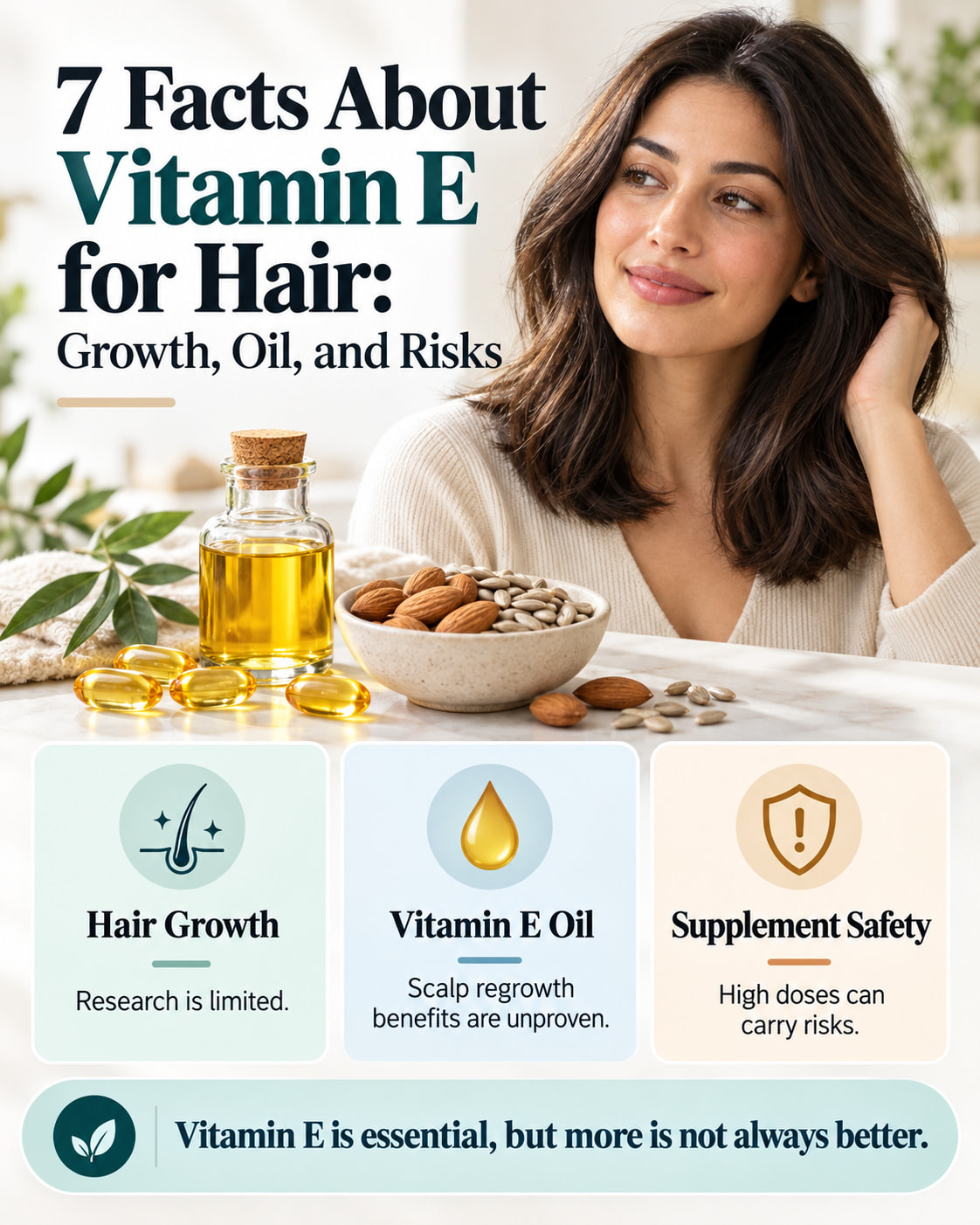
Vitamin E for hair has limited evidence for improving growth, and vitamin E oil has not been established as a hair-regrowth product. Getting enough of this nutrient matters for your health, but extra supplements or scalp applications do not guarantee thicker or longer hair.
A small study found encouraging results with a particular oral vitamin E mixture. Understanding what that study tested—and how supplements differ from hair oils—can help you make more informed choices.
7 Facts About Vitamin E for Hair
1. Vitamin E Comes in Different Forms
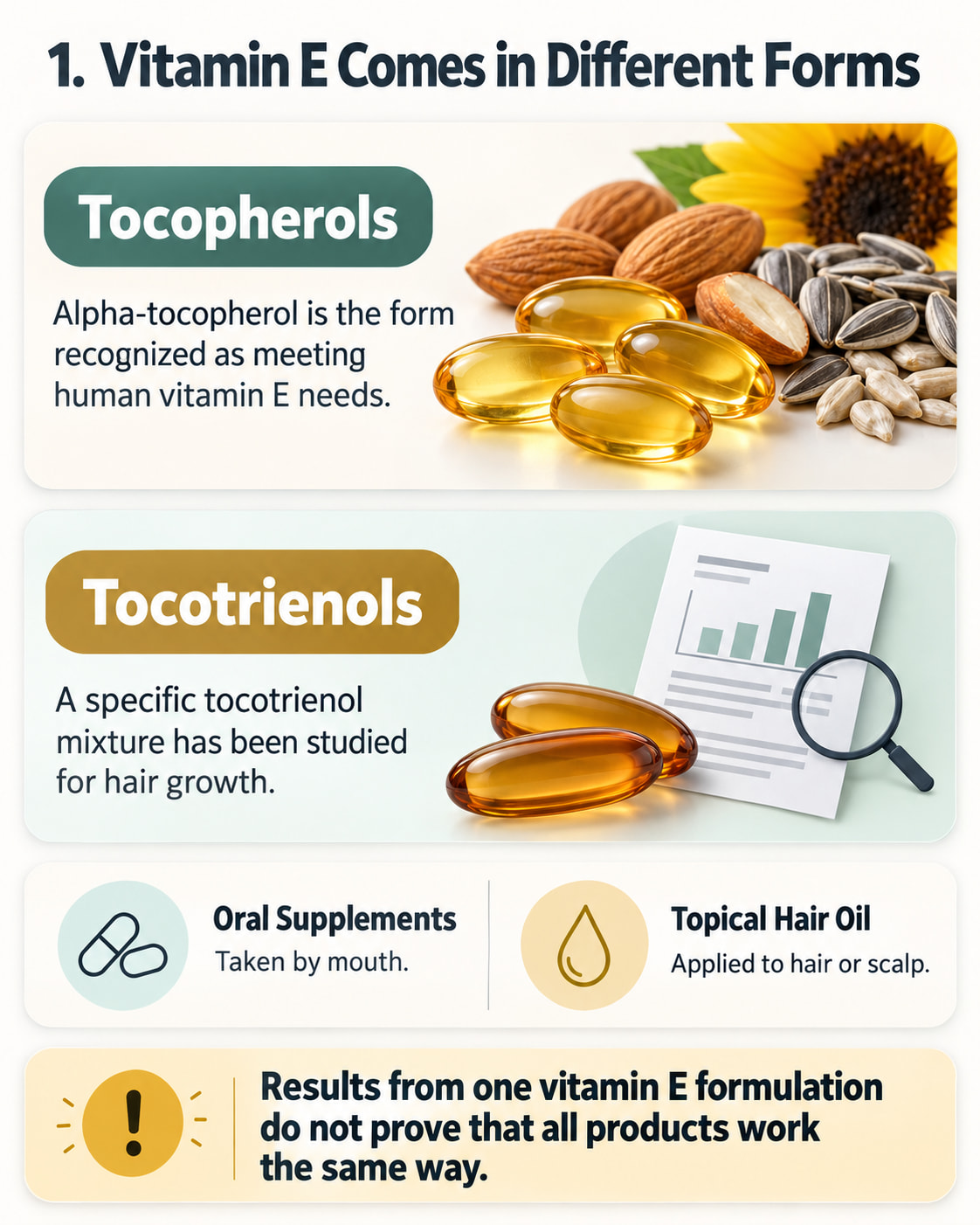
Vitamin E is a family of fat-soluble compounds with antioxidant activity. Its forms include tocopherols and tocotrienols. Alpha-tocopherol is the form recognized as meeting human vitamin E requirements.
This matters when you read product labels or research headlines. A study of one vitamin E mixture cannot establish that every capsule, oil, or shampoo produces the same result.
Antioxidant activity also does not automatically translate into visible hair growth. Researchers need human studies that measure hair outcomes to establish whether a particular product helps.
2. Hair-Growth Research Is Promising but Limited
A small 2010 clinical trial enrolled 38 volunteers with hair loss, and 35 completed eight months. Participants received either a specific oral supplement or a placebo.
| Study detail | What the researchers reported |
|---|---|
| Daily supplement | 100 mg mixed tocotrienols plus 46 IU alpha-tocopherol |
| Duration | Eight months |
| Hair-count change | A 34.5% increase in the supplement group versus a 0.1% decrease with placebo |
| Area measured | A marked section of the scalp |
| Hair-clipping weight | No significant improvement |
The study was small and included mostly men. Its results describe hair counts in the measured area, not faster hair lengthening or guaranteed improvement across the entire scalp. The dose was part of a research protocol, not an established recommendation for hair growth.
A 2026 network meta-analysis also reported a favorable finding for tocotrienols. However, that finding relied on the same 2010 trial. The review’s broader results covered several different supplements.
The practical conclusion: There is an encouraging signal worth further study, but the evidence does not establish that extra vitamin E reliably improves hair growth.
3. Vitamin E Oil Has Not Been Proven to Regrow Hair
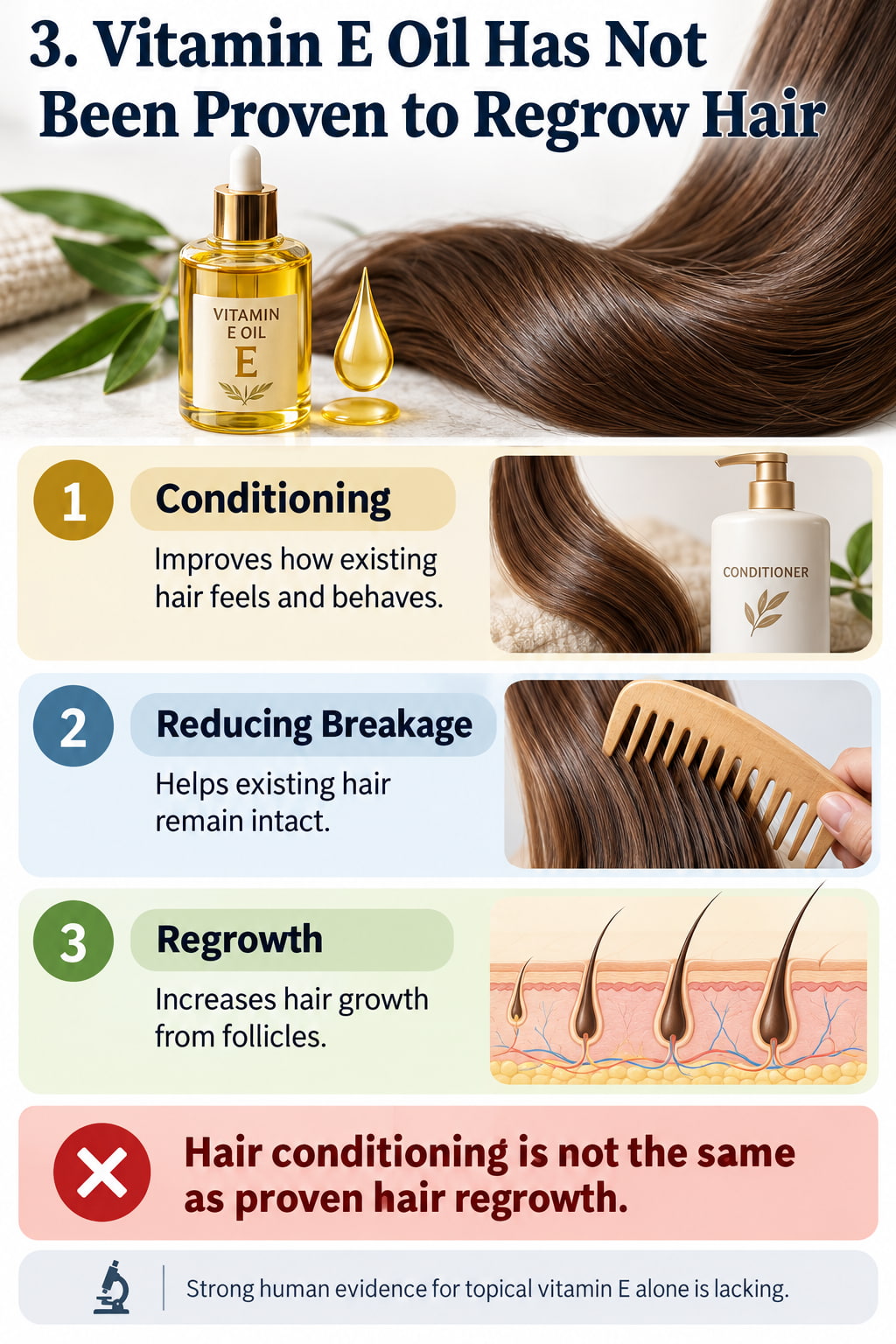
The oral study does not show that applying vitamin E oil to your scalp will produce similar results. Strong human evidence supporting topical vitamin E alone for hair regrowth remains lacking.
It also helps to separate three different goals:
- Conditioning: Improving how existing strands feel and behave.
- Reducing breakage: Helping existing hair remain intact.
- Regrowth: Increasing hair growth from follicles.
The American Academy of Dermatology recommends moisturizing conditioner to reduce breakage and split ends. That recommendation does not establish that vitamin E is the ingredient responsible.
If a vitamin E hair product leaves your hair feeling softer, that experience alone cannot tell you whether vitamin E increased growth. Judge a cosmetic product by its intended use and how your hair and scalp tolerate it, rather than treating softness as proof of regrowth.
4. Food Can Help You Meet Your Vitamin E Needs
According to the NIH Office of Dietary Supplements, adults need 15 mg of vitamin E daily. The recommendation is also 15 mg during pregnancy and 19 mg during breastfeeding.
Foods that contribute vitamin E include:
| Food | Serving | Vitamin E |
|---|---|---|
| Dry-roasted sunflower seeds | 1 ounce | 7.4 mg |
| Dry-roasted almonds | 1 ounce | 6.8 mg |
| Wheat germ oil | 1 tablespoon | 20.3 mg |
| Boiled spinach | ½ cup | 1.9 mg |
You might add seeds to oatmeal, choose almonds as a snack, or include spinach with a meal. These foods contribute to nutritional adequacy; none is a proven hair-regrowth remedy.
Clear vitamin E deficiency is rare. It is more likely with conditions that affect fat absorption or certain inherited disorders. Hair thinning alone does not establish a vitamin E deficiency.
5. High-Dose Supplements Can Cause Harm
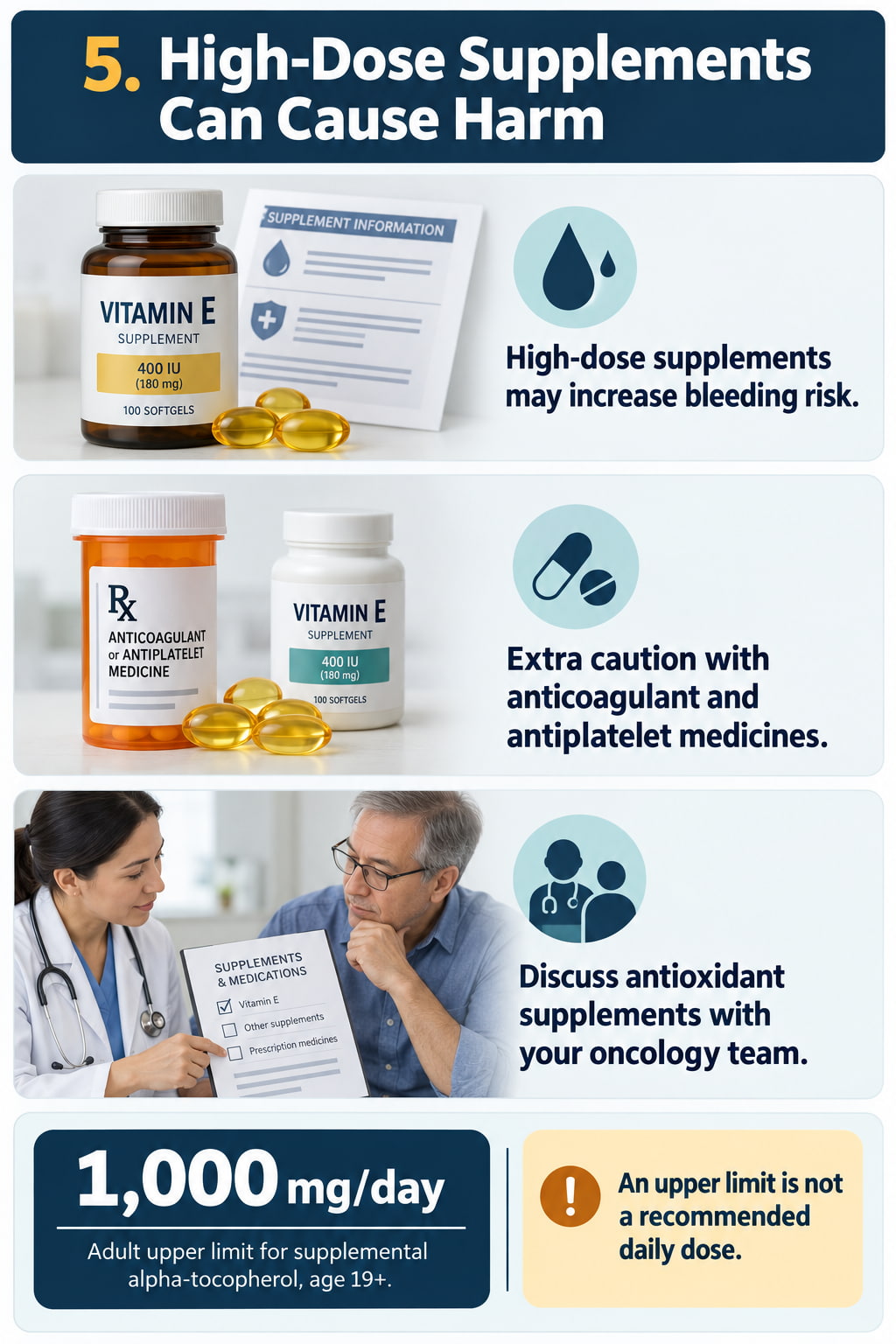
Taking more vitamin E is not a reliable way to improve your hair. NIH warns that high-dose supplements can increase bleeding risk, including serious bleeding in the brain.
Vitamin E supplements may also interact with:
- Anticoagulant and antiplatelet medicines: These combinations can increase bleeding risk.
- Chemotherapy or radiation therapy: Antioxidant supplements may alter their effects, so discuss them with the oncology team.
The upper limit for supplemental alpha-tocopherol is 1,000 mg daily for adults age 19 and older. This is not a target intake or a hair-growth dose. Some harms have occurred below that limit.
Before adding a supplement, review what you already take. A multivitamin and a separate hair supplement may both list vitamin E. Bring the labels to a clinician or pharmacist if you need help assessing the combined amount or possible interactions.
These supplement risks should not be generalized to vitamin E naturally present in food.
6. Topical Vitamin E Can Irritate Your Skin
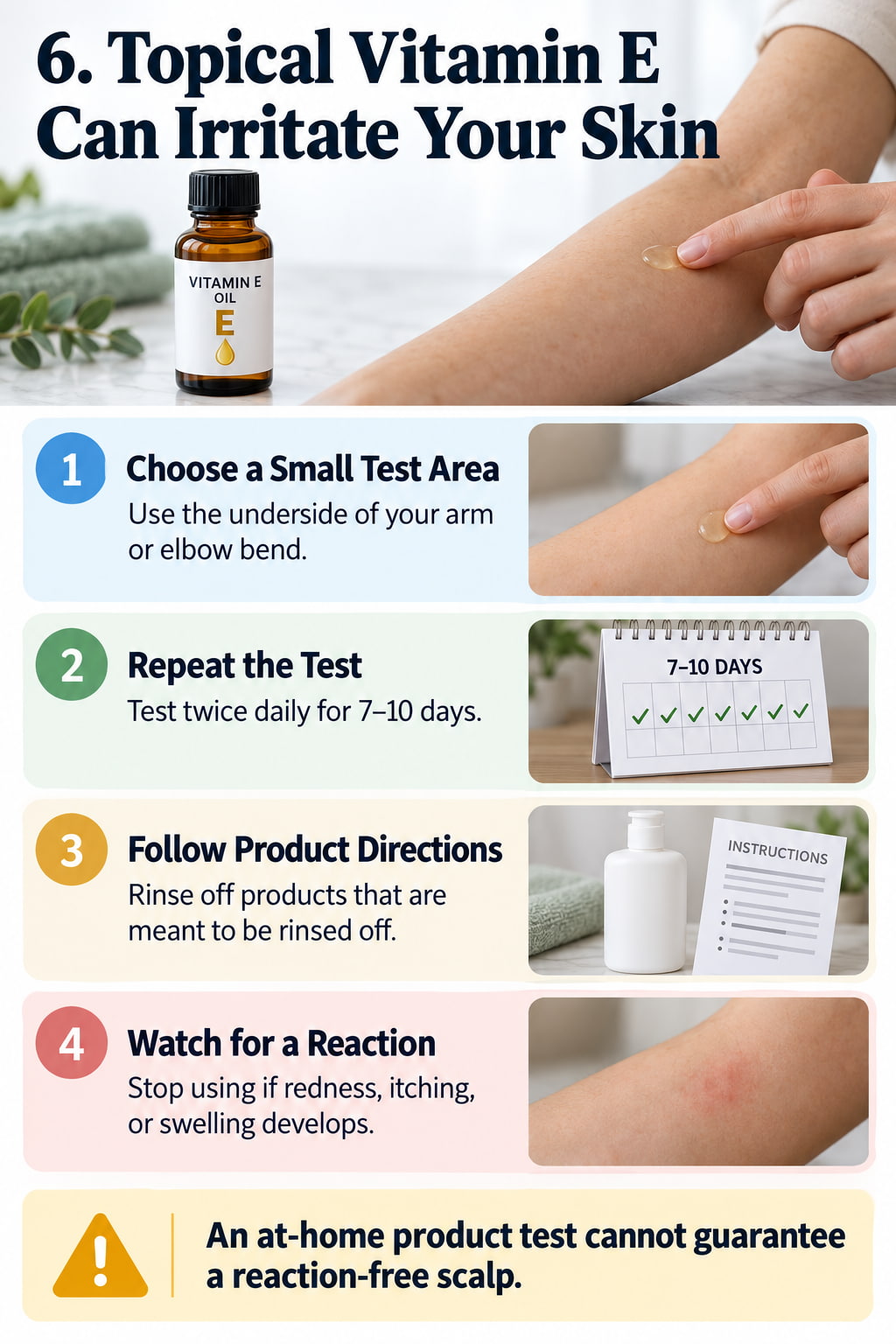
Vitamin E in skin-care products can cause allergic contact dermatitis in some people. A 2021 study published in Dermatitis documented positive patch-test reactions to tocopherol and tocopherol acetate.
A new hair product may also contain other ingredients that irritate your skin. Stop using it if you develop redness, itching, or swelling.
Before trying a new topical product, the American Academy of Dermatology recommends a small-area product test:
- Apply the usual amount to a small area on the underside of your arm or the bend of your elbow.
- Repeat twice daily for seven to 10 days.
- Leave the product on only as long as its normal instructions allow. Rinse-off products should still be rinsed off.
- Wash it off and stop using it if a reaction develops.
This home test cannot guarantee that later scalp use will be reaction-free. Seek medical advice for a severe or persistent reaction.
7. Finding the Cause of Hair Loss Matters More Than Choosing a Supplement
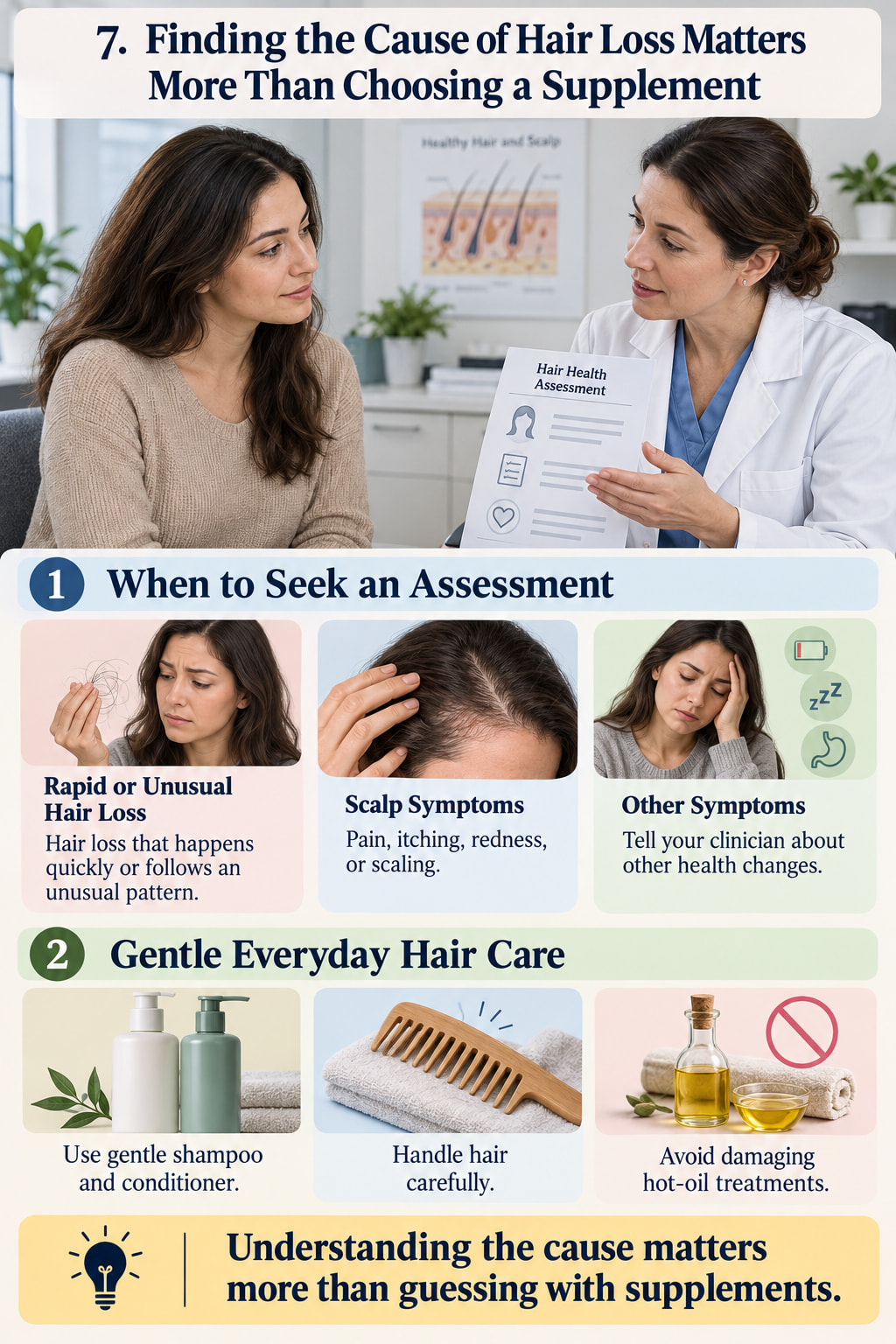
Hair loss can have several causes, and a vitamin E product cannot tell you which one applies.
The American Academy of Dermatology explains that assessment may include questions about your symptoms, an examination of your scalp and hair, and testing when a medical condition or deficiency is suspected.
Arrange an assessment if hair loss is rapid, occurs in an unusual pattern, or comes with pain, itching, redness, or scaling. Mention other symptoms, recent illnesses, medication changes, and supplements you use.
For everyday care, use gentle shampoo and moisturizing conditioner, handle your hair carefully, and avoid damaging hot-oil treatments. These habits support hair care while you investigate ongoing shedding or thinning.
FAQs About Vitamin E for Hair
Does Vitamin E Actually Help Hair Grow?
Evidence is limited. One small trial found increased hair counts with a specific oral mixture containing tocotrienols and alpha-tocopherol. Larger studies are needed before the results can support routine use for hair growth.
Can I Apply Vitamin E Capsules Directly to My Hair?
There is no established hair-growth benefit from opening oral capsules and applying the contents. Oral research does not validate this use. If you choose a topical product, use one intended for hair or scalp application and follow its directions.
Can I Leave Vitamin E Oil on My Hair Overnight?
There is no established overnight vitamin E routine for hair growth. Follow the product’s instructions, including its rinse-off directions. Leaving a product on longer is not proven to improve growth.
How Much Vitamin E Should I Take for Hair Growth?
There is no established vitamin E supplement dose specifically for hair growth. Adults generally need 15 mg daily for nutrition, with 19 mg recommended during breastfeeding. These recommendations do not mean you need to obtain the full amount from a supplement.
How Long Does Vitamin E Take to Work for Hair?
There is no reliable timeline for vitamin E oil. The small oral study lasted eight months, but that does not establish an expected result or timeline for other products.
Can Too Much Vitamin E Cause Hair Loss?
The American Academy of Dermatology cautions that excessive intake of certain nutrients, including vitamin E, has been linked to hair loss. This does not mean vitamin E is the cause of every case of shedding. Avoid adding high-dose supplements without a clear reason.
Conclusion
Vitamin E is an essential nutrient, but its role as an extra hair-growth supplement remains uncertain. Topical vitamin E oil also lacks strong evidence for regrowth.
Start by meeting your nutritional needs, choosing gentle hair care, and checking product directions. If thinning or shedding continues or concerns you, arrange an assessment before spending more on supplements.
This content is for informational purposes only and not medical advice.
References
- NIH Office of Dietary Supplements: Vitamin E—Health Professional Fact Sheet.
- NIH Office of Dietary Supplements: Vitamin E—Consumer Fact Sheet.
- Effects of Tocotrienol Supplementation on Hair Growth in Human Volunteers.
- Effects of Dietary Supplements on Androgenetic Alopecia: A Systematic Review and Network Meta-analysis.
- Patch Testing With Tocopherol and Tocopherol Acetate.