
Vitamin B12, vitamin D, and B-complex supplements are not proven weight-loss aids. If you are considering vitamins for weight loss, the most useful question is whether you have a deficiency, dietary gap, or another established nutritional need.
Correcting a low vitamin level can be important for health, but it does not guarantee weight loss. Understanding the research can help you avoid unnecessary supplements and choose practical next steps.
Do Vitamins for Weight Loss Actually Work?
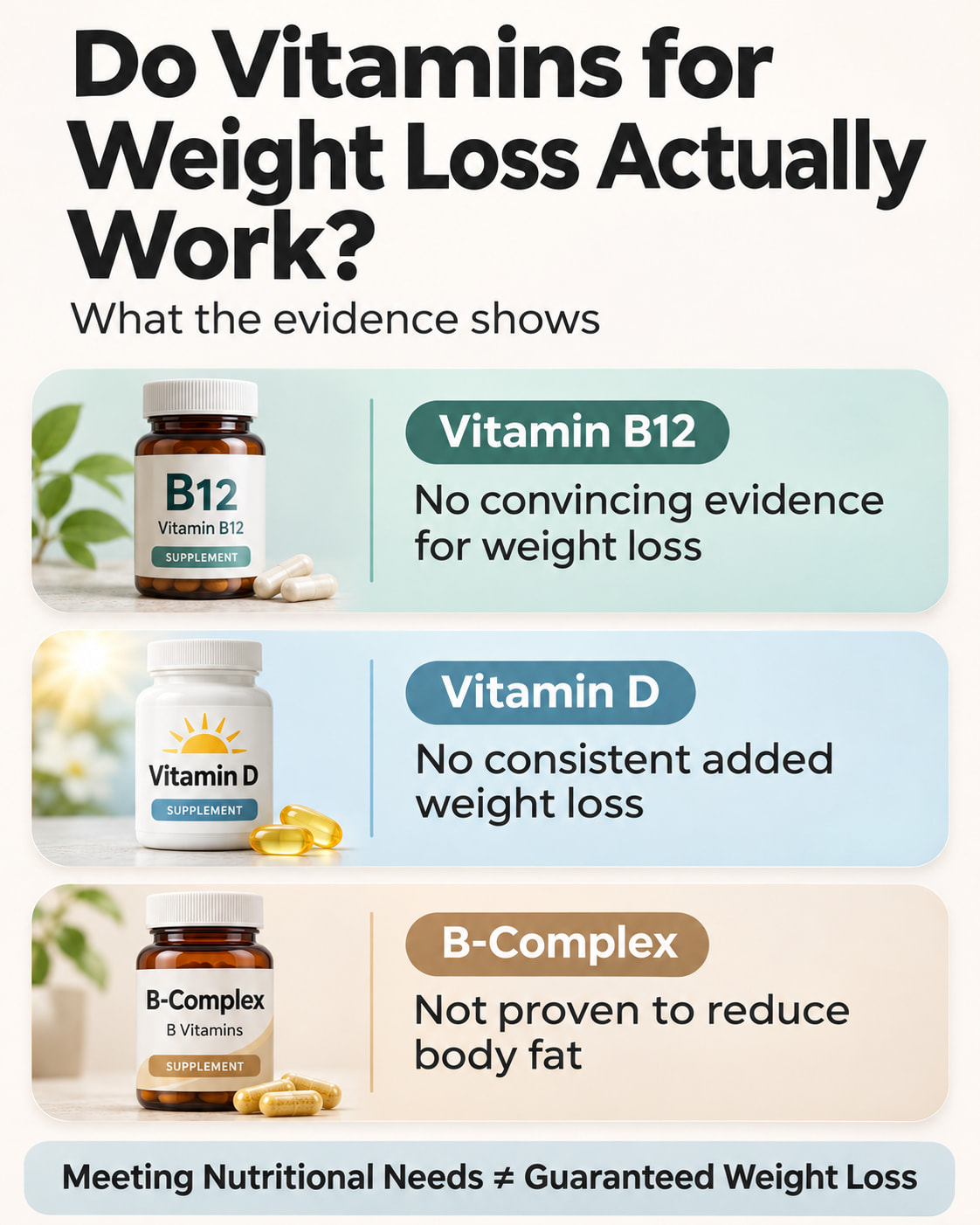
Vitamins help your body function normally. B vitamins participate in the processes that release energy from food, while vitamin D supports calcium metabolism and bone health. Those functions do not establish that extra vitamins increase calorie burning or reduce body fat.
| Supplement | What the weight-loss evidence shows |
|---|---|
| Vitamin B12 | No convincing evidence supports using supplements or injections specifically for weight loss. |
| Vitamin D | Trials do not show consistent added weight loss. |
| B-complex | Its role in energy metabolism does not establish that taking a combination supplement reduces weight. |
Someone may lose weight while taking a vitamin, especially if they also change their eating or activity habits. That alone cannot show that the supplement caused the change.
Does Vitamin B12 Help With Weight Loss?
B12 supports healthy blood cells and nerve function. A deficiency can cause fatigue and neurological symptoms, but extra B12 does not appear to improve exercise performance or endurance when B12 status is already sufficient, according to the NIH vitamin B12 fact sheet.
Addressing a deficiency serves a nutritional and medical purpose. It should not come with a promise of faster fat loss.
Do B12 Shots Help You Lose Weight?
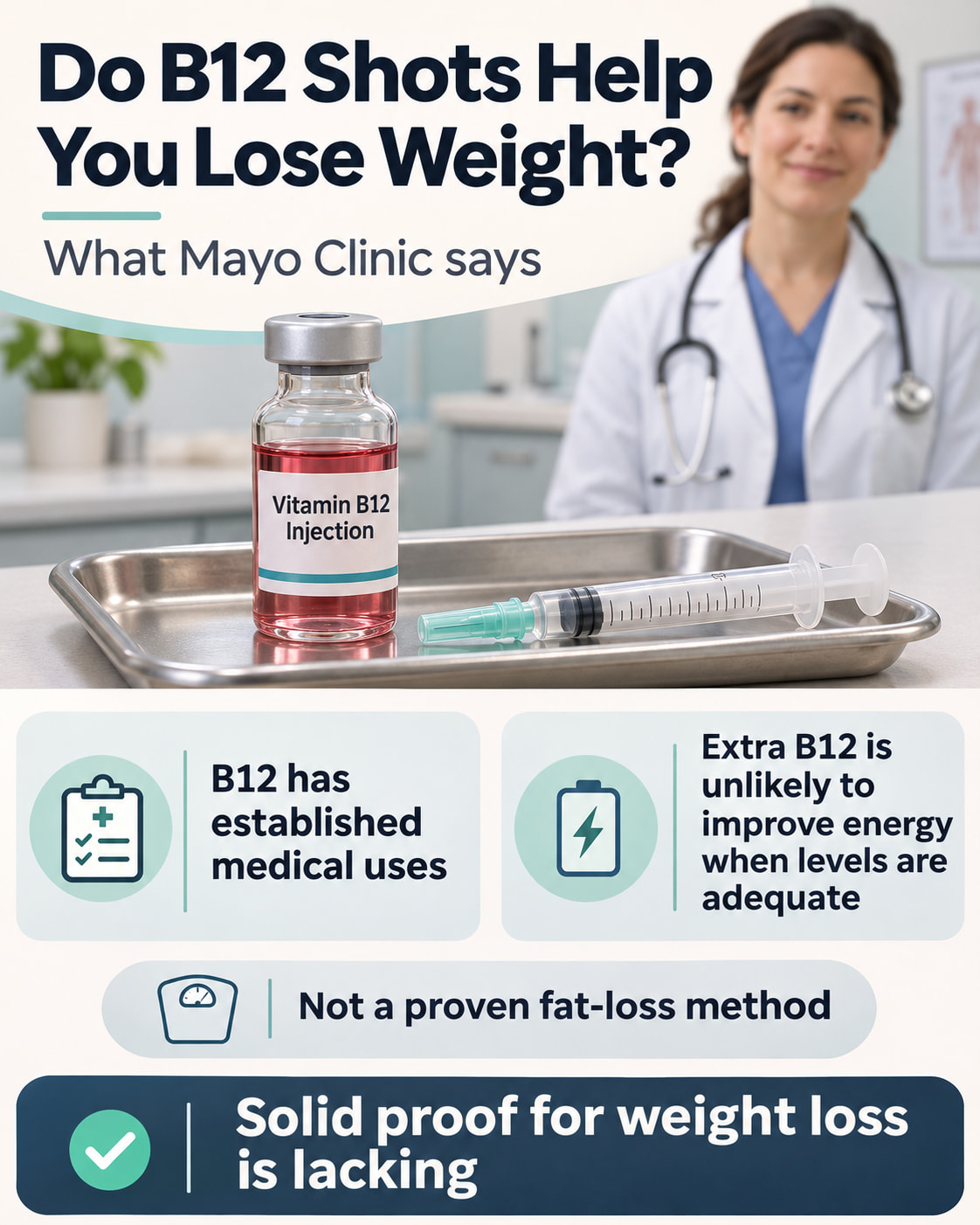
Mayo Clinic guidance, dated March, 2025, states that solid proof supporting B12 injections for weight loss is lacking.
B12 injections have established medical uses, including for certain people with B12 deficiency. However, injections are unlikely to improve energy or exercise performance if your B12 levels are already adequate.
Be cautious about packages that promise predictable weight loss from repeated B12 shots.
Does Vitamin D Help With Weight Loss?
People with obesity often have lower circulating vitamin D levels. This association does not prove that low vitamin D causes weight gain or that supplements reverse it.
The NIH vitamin D fact sheet, updated June, 2025, concludes that available research does not support vitamin D supplements for promoting weight loss.
What Did a Weight-Loss Trial Find?
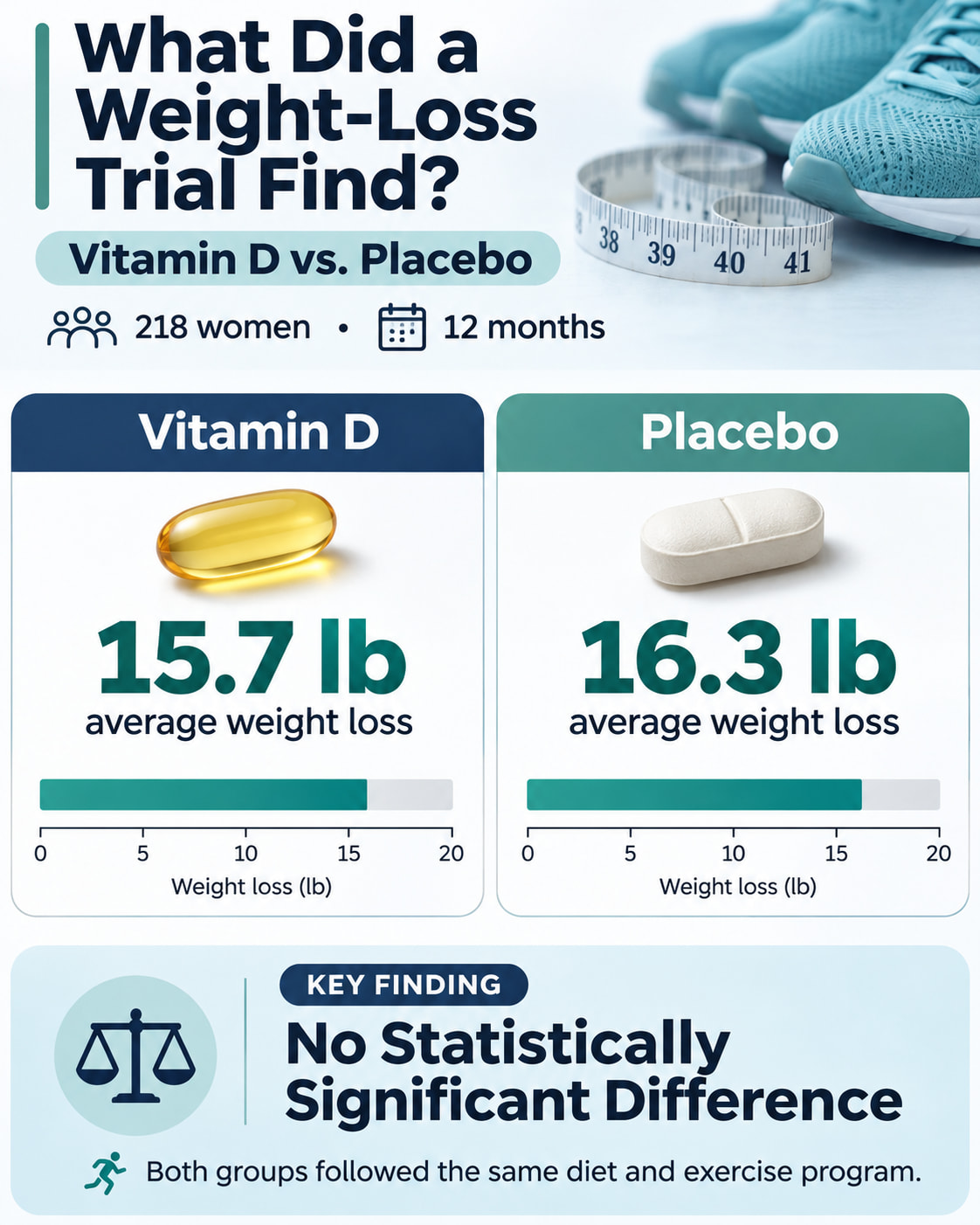
A 2014 randomized trial published in the American Journal of Clinical Nutrition followed 218 women ages 50–75 with overweight or obesity for 12 months. Participants received vitamin D3 or a placebo while following the same reduced-calorie eating and exercise program.
Average weight loss was approximately:
- 15.7 pounds with vitamin D
- 16.3 pounds with placebo
The difference was not statistically significant. In this study, adding vitamin D did not improve weight loss beyond the shared program.
Does B-Complex Help With Weight Loss?
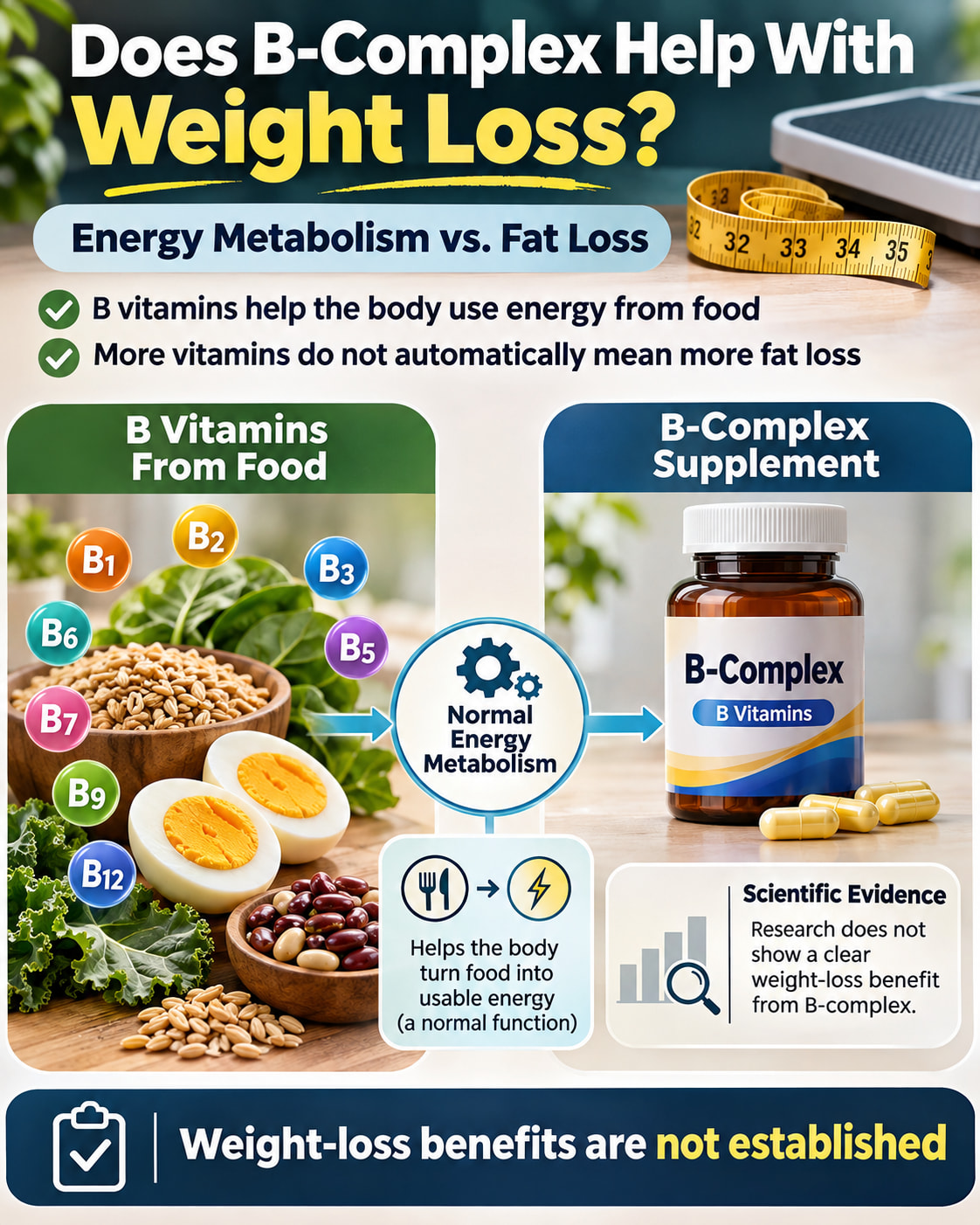
B-complex refers to combinations of B vitamins. B12 is already part of this vitamin family; the others include B1, B2, B3, B5, B6, B7, and B9.
These nutrients help the body use energy from food. They do not directly supply calories, and their involvement in metabolism does not mean that taking more produces greater fat loss.
A 2023 randomized crossover trial involving 32 healthy adults, published in the International Journal of Medical Sciences, tested a supplement containing B vitamins, taurine, and vitamin E during 28-day supplementation periods. Researchers reported improved exercise endurance, but no significant changes in body weight, BMI, muscle mass, or body fat percentage.
Because the product contained several ingredients and the study was small and short, it cannot establish the long-term effects of B-complex supplements on weight.
Is B-Complex Better Than B12?
There is no established weight-loss advantage to choosing B-complex over B12.
If a particular nutrient is needed, the appropriate supplement depends on that need. A product containing more vitamins is not automatically more useful, and ingredient amounts vary between products.
When Might You Need a Vitamin Supplement?
The reason to consider a supplement is a nutritional need, dietary limitation, absorption problem, or another clinical indication.
For B12, groups with a greater risk of inadequacy include:
- People following vegan or some vegetarian diets.
- Older adults.
- People with certain gastrointestinal conditions or previous gastrointestinal surgery.
- People taking medicines that can affect B12 status, including metformin and gastric acid inhibitors.
Persistent fatigue, numbness, or tingling deserves assessment rather than assuming a vitamin product will solve the problem. Symptoms alone cannot identify the cause.
Do You Need a Vitamin D Blood Test?
Not automatically.
The Endocrine Society’s 2024 guideline suggests against routine vitamin D screening in generally healthy adults, including generally healthy adults with obesity, when there is no established reason for testing.
A healthcare professional can consider your symptoms, diet, medical history, and medications when deciding whether testing would be useful.
How Much B12 and Vitamin D Do Adults Need?
The following US reference amounts describe daily nutritional needs. They are not weight-loss doses.
| Nutrient | Adult daily reference amount |
|---|---|
| Vitamin B12 | 2.4 micrograms for most adults |
| Vitamin D, ages 19–70 | 15 micrograms, or 600 IU |
| Vitamin D, older than 70 | 20 micrograms, or 800 IU |
These amounts refer to intake from food, fortified foods, and supplements combined—not an amount everyone must add in pill form. B12 requirements differ during pregnancy and breastfeeding.
The adult vitamin D upper intake level is 4,000 IU daily. This is not a recommended target; clinician-directed care for a specific condition may differ.
B-complex does not have one universal daily requirement because each B vitamin has its own reference amount.
Foods That Provide B12, Vitamin D, and Other B Vitamins
Food choices can help meet nutritional needs while contributing to a balanced eating pattern.
| Nutrient | Examples of food sources |
|---|---|
| B12 | Fish, meat, eggs, dairy, fortified cereals, and fortified nutritional yeast |
| Vitamin D | Fatty fish and fortified foods, including some milks and plant-based alternatives |
| Other B vitamins | Beans, peas, leafy vegetables, grains, poultry, eggs, and dairy, depending on the vitamin |
Check labels on fortified foods because products differ. For example, choosing a plant-based milk does not automatically guarantee that it contains B12 or vitamin D.
The vitamin content of a food does not make it a fat-burning food. Its place in your overall eating pattern matters more than a claim about one nutrient.
Safety Tips for Vitamins and Weight-Loss Supplements
Check the Amount of Vitamin B6
Some B-complex products supply large amounts of B6. Excessive supplemental intake can damage sensory nerves, according to NIH vitamin B6 guidance.
Being water-soluble does not make a vitamin harmless at any dose.
Review All the Products You Take
A multivitamin, B-complex capsule, and fortified drink may contain overlapping ingredients. Check serving sizes and amounts across products, and ask a pharmacist if you are unsure about the total.
Too much supplemental vitamin D can cause high blood calcium and kidney problems. Higher amounts should not be used in an attempt to accelerate weight loss.
Discuss Supplements Alongside Your Medications
Tell your healthcare professional or pharmacist about supplements as well as prescription and over-the-counter medicines. This helps them assess interactions and identify medicines that may affect nutrient status.
Do not change a prescribed medicine because you suspect it is affecting a vitamin level.
Question Weight-Loss Marketing Claims
FDA does not approve dietary supplements for safety and effectiveness before they reach the market. A product being sold legally is not proof that it produces weight loss.
Claims such as guaranteed fat burning, rapid results without lifestyle changes, or a fixed number of pounds lost from vitamin injections deserve skepticism.
What Supports Sustainable Weight Loss?
If weight loss is appropriate for you, focus on an approach that fits your health needs and daily life.
CDC guidance emphasizes eating patterns, regular physical activity, adequate sleep, and stress management. It also recognizes that medicines, medical conditions, hormones, genetics, and other factors influence weight.
Practical starting points include:
- Choose a manageable eating plan. Use food choices and portions that support your goals while meeting nutritional needs.
- Build activity into your routine. Start with movement you enjoy and can repeat consistently.
- Give sleep attention. Consider whether your schedule allows adequate rest.
- Track useful habits. Notice patterns in meals, activity, sleep, and progress instead of relying on supplement promises.
- Seek individual support when needed. A registered dietitian or healthcare professional can help assess barriers and appropriate options.
You do not need to identify a “best vitamin for weight loss” before making these changes.
Frequently Asked Questions
What Is the Best Vitamin for Weight Loss?
There is no established best vitamin for weight loss. B12, vitamin D, and B-complex may meet particular nutritional needs, but none has demonstrated a dependable weight-loss benefit that justifies recommending it for everyone.
Can B12 Help You Lose Belly Fat?
There is no convincing evidence that B12 pills or injections selectively reduce belly fat. Having a role in metabolism does not establish an ability to target abdominal fat.
Does Low Vitamin D Cause Weight Gain?
Lower vitamin D levels are associated with higher body weight, but this does not establish cause and effect. Taking vitamin D has not consistently produced weight loss in clinical trials.
Does B-Complex Boost Metabolism Enough to Lose Weight?
B vitamins participate in normal energy metabolism. That does not establish that a B-complex supplement increases calorie burning enough to produce meaningful weight loss. An improvement in an exercise measure is also different from demonstrated fat loss.
Should You Take Vitamins While Eating Fewer Calories?
Eating fewer calories does not automatically mean you need a supplement. The decision depends on what you eat, which nutrients may be missing, and any medical or absorption issues. A supplement may help fill a specific gap, but it cannot replace a varied eating pattern.
How Long Do Vitamins Take to Work for Weight Loss?
There is no evidence-based timeline for weight loss from B12, vitamin D, or B-complex. When a supplement is recommended for a deficiency, its purpose and follow-up should relate to that nutritional need rather than a promised change on the scale.
Conclusion
Use supplements to meet a clear nutritional need, and build weight-management goals around habits you can sustain.
If you are considering a supplement, review your diet and bring your medication list and supplement labels to a healthcare professional or pharmacist. They can help you decide what is appropriate for your circumstances.
This content is for informational purposes only and not medical advice.
References
- National Institutes of Health, Office of Dietary Supplements. Vitamin B12: Health Professional Fact Sheet.
- Mayo Clinic. Vitamin B12 Injections for Weight Loss: Do They Work?.
- National Institutes of Health, Office of Dietary Supplements. Vitamin D: Health Professional Fact Sheet.
- Mason C, et al. Vitamin D3 Supplementation During Weight Loss: A Double-Blind Randomized Controlled Trial.
- MedlinePlus. B Vitamins.
- Lee MC, et al. B-Complex Supplementation and Exercise Performance: A Randomized Trial.