
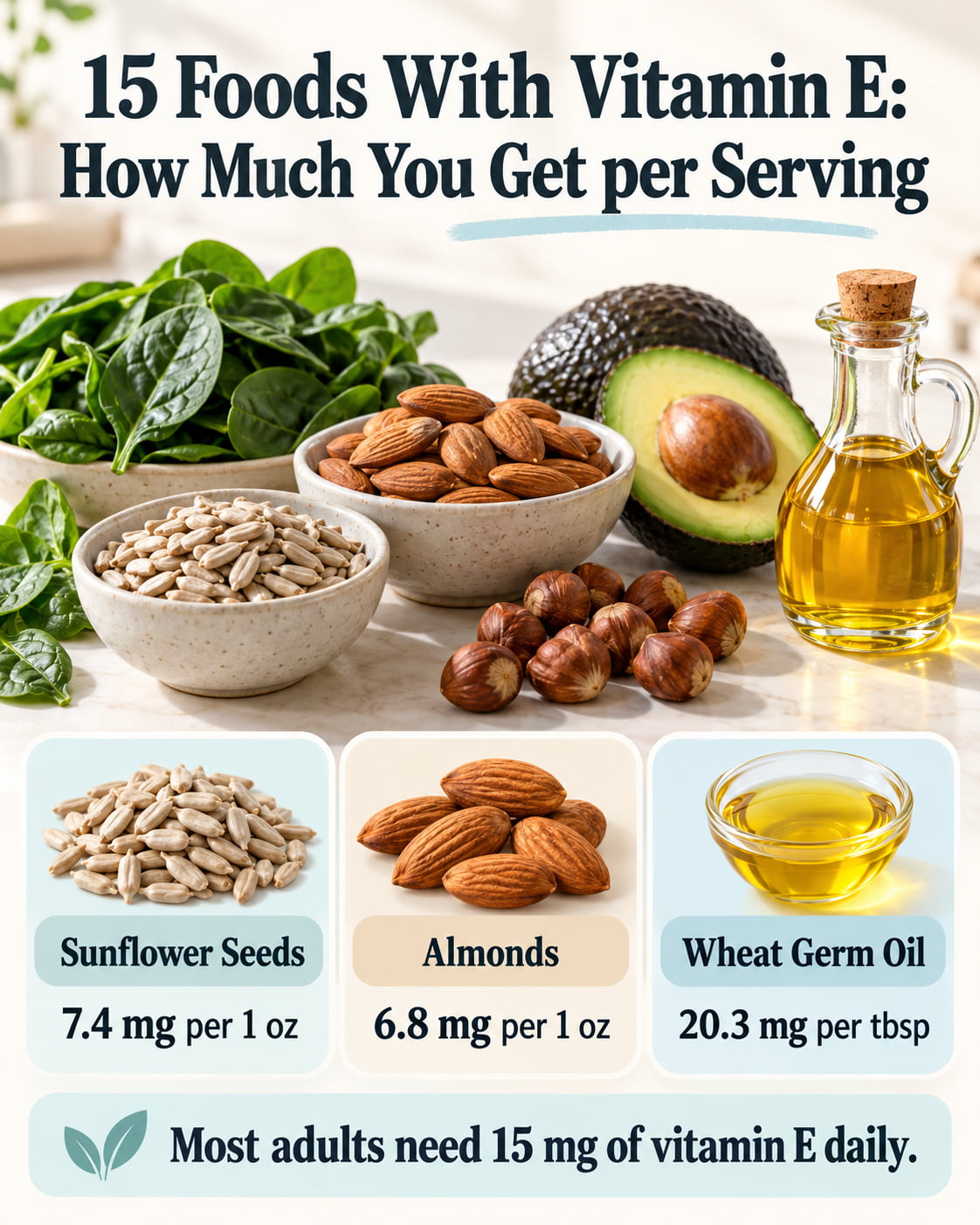
Foods with vitamin E include sunflower seeds, almonds, hazelnuts, vegetable oils, spinach, avocado, and several fruits. Most adults need 15 milligrams (mg) daily, and comparing ordinary portions can help you see which foods contribute the most.
You do not need to eat every food on this list. Start with options you enjoy, check the serving size, and work a few into meals you already make.
What Is Vitamin E, and Why Do You Need It?
Vitamin E is a fat-soluble nutrient that helps protect cells from oxidative damage and supports normal immune function. MedlinePlus guidance explains these roles and the recommended amounts for different ages.
The food amounts below refer to alpha-tocopherol, the form used to express vitamin E requirements. The goal is to get enough through a varied eating pattern.
How Much Vitamin E Do You Need Each Day?
Recommended daily amounts depend on age and life stage:
| Age or life stage | Recommended daily amount |
|---|---|
| Children ages 1–3 | 6 mg |
| Children ages 4–8 | 7 mg |
| Children ages 9–13 | 11 mg |
| Teens ages 14–18 and adults | 15 mg |
| During pregnancy | 15 mg |
| While breastfeeding | 19 mg |
Understanding the Daily Value
The FDA’s Daily Value guidance sets the vitamin E labeling reference at 15 mg. The percentage Daily Value, or %DV, shows how much a serving contributes toward that reference.
A serving with 20% DV or more is considered high in a nutrient. For vitamin E, that means at least 3 mg. Foods with smaller amounts can still contribute to your daily intake.
The Daily Value is a comparison tool; a child’s age-specific requirement can be lower.
15 Foods With Vitamin E and Their Serving Amounts
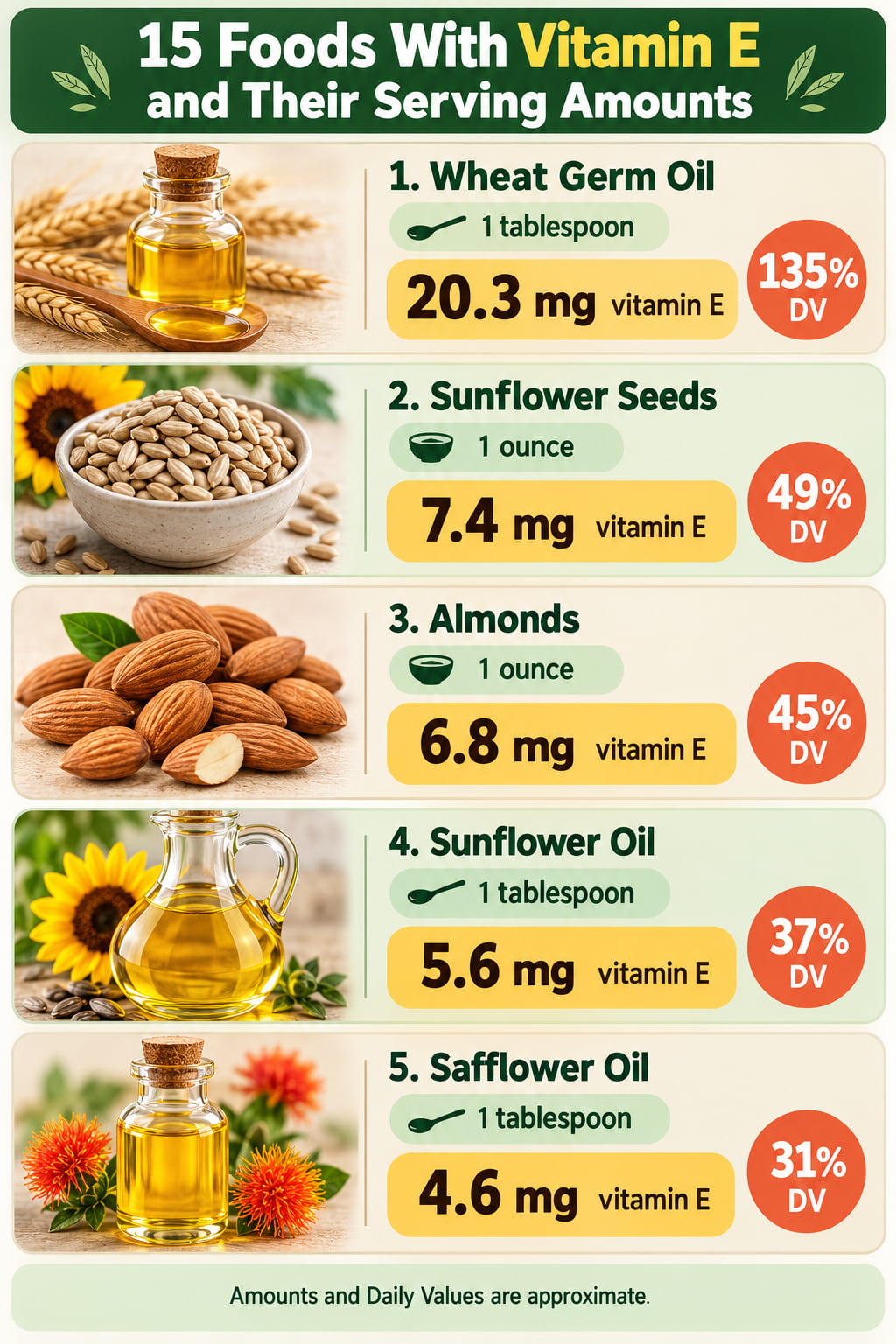
Use this table for a quick comparison, then explore the serving ideas below.
| Food | Serving | Vitamin E | Approximate %DV |
|---|---|---|---|
| Wheat germ oil | 1 tablespoon | 20.3 mg | 135% |
| Sunflower seed kernels, dry-roasted | 1 ounce | 7.4 mg | 49% |
| Almonds, dry-roasted | 1 ounce | 6.8 mg | 45% |
| Sunflower oil | 1 tablespoon | 5.6 mg | 37% |
| Safflower oil | 1 tablespoon | 4.6 mg | 31% |
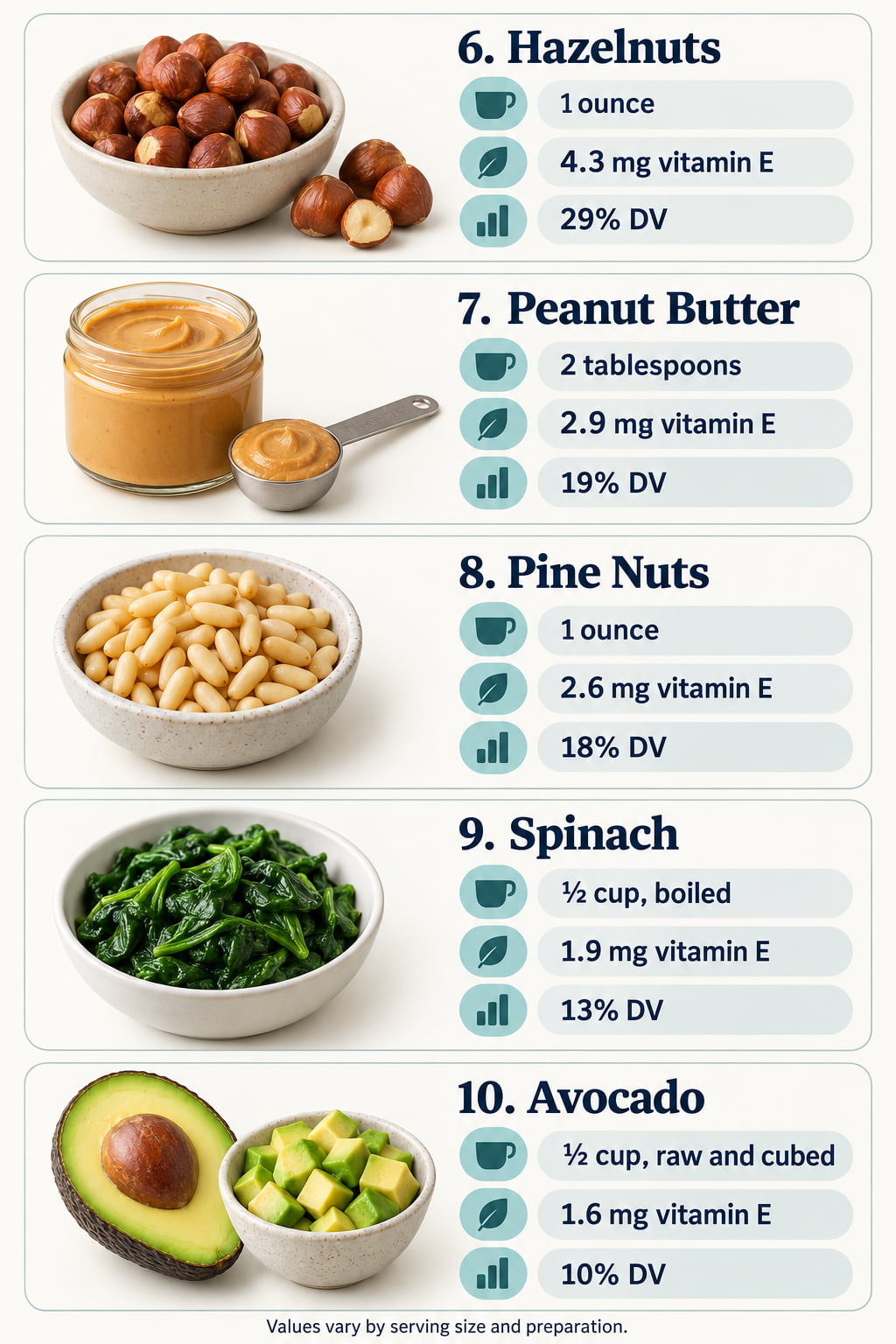
| Hazelnuts, dry-roasted | 1 ounce | 4.3 mg | 29% |
| Peanut butter, smooth | 2 tablespoons | 2.9 mg | 19% |
| Pine nuts, dried* | 1 ounce | 2.6 mg | 18% |
| Spinach, boiled | ½ cup | 1.9 mg | 13% |
| Avocado, raw and cubed* | ½ cup | 1.6 mg | 10% |
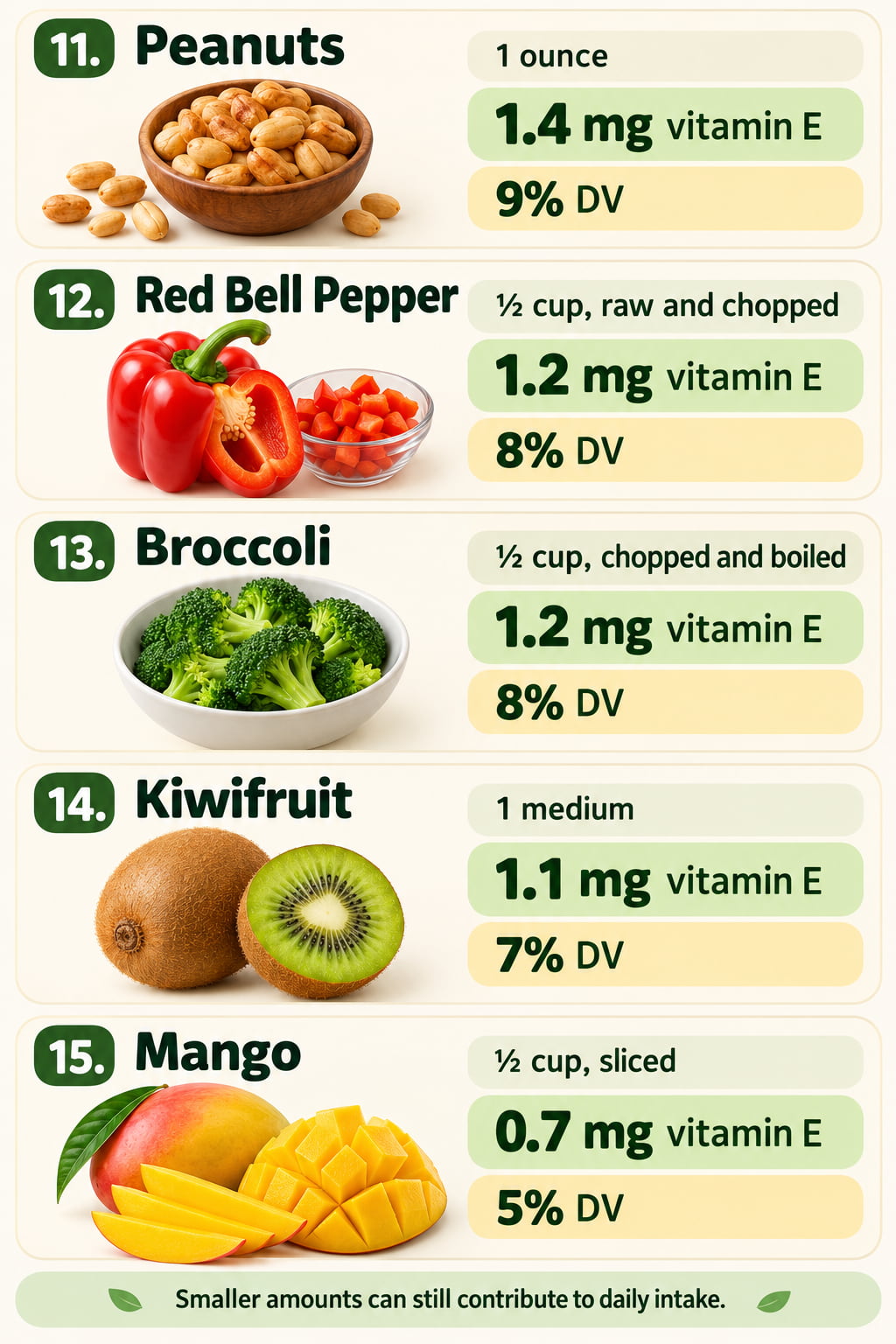
| Peanuts, dry-roasted* | 1 ounce | 1.4 mg | 9% |
| Red bell pepper, raw and chopped* | ½ cup | 1.2 mg | 8% |
| Broccoli, chopped and boiled | ½ cup | 1.2 mg | 8% |
| Kiwifruit | 1 medium | 1.1 mg | 7% |
| Mango, sliced | ½ cup | 0.7 mg | 5% |
Amounts are based on the NIH vitamin E food table and, for starred foods, USDA food composition data. Values vary with the food, preparation, and product. Amounts and percentages are rounded, so %DV may not match calculations using the displayed milligrams.
One ounce is about 28 grams. The half-cup portions of avocado cubes and chopped red pepper are each approximately 75 grams.
1. Wheat Germ Oil
Wheat germ oil provides the most vitamin E per listed serving in this comparison. It is different from wheat germ, so make sure you are comparing the correct product.
Try a little in homemade salad dressing or drizzle it over a finished grain bowl. Follow the bottle’s storage and cooking directions.
2. Sunflower Seeds
Dry-roasted sunflower kernels are easy to sprinkle over oatmeal, yogurt, salads, or cooked vegetables. Their crunch also works well in a homemade snack mix.
The serving in the table refers to the edible kernels. If you buy seeds in their shells, do not include the shells when weighing your portion.
3. Almonds
Almonds work as a snack or an ingredient. Chop them into oatmeal, scatter them over a fruit bowl, or add them to a salad.
Measure an ounce into a small container if you want to match the table’s serving. You can spread that amount across meals.
4. Sunflower Oil
Sunflower oil contributes vitamin E when used in dressing or food preparation. Choose a product suited to how you plan to use it and follow its cooking directions.
Count the amount you actually eat. A tablespoon used in a recipe shared among four people is divided across those servings.
5. Safflower Oil
Safflower oil is another option for incorporating vitamin E into meals. You can use it in a homemade dressing or a recipe that calls for an appropriate vegetable oil.
There is no need to buy several oils just to complete this list. Choose one that fits your cooking habits, taste, and budget.
6. Hazelnuts
Chopped hazelnuts can add texture to oatmeal, yogurt, roasted vegetables, or salads. Keeping them chopped in a small container makes it easy to add a spoonful when assembling a meal.
The table refers to hazelnuts themselves. For a hazelnut spread, use the product’s label because its ingredients and nut content differ.
7. Peanut Butter
Smooth peanut butter is easy to spread on toast, serve with sliced fruit, or stir into oatmeal. You can also thin it with warm water and add seasonings to make a sauce.
Use measuring spoons when comparing your portion with the listed two-tablespoon serving. A heaped spoonful may be larger than you expect.
8. Pine Nuts
Pine nuts work well in pasta, pesto, grain bowls, and vegetable dishes. A small sprinkle adds texture without needing much preparation.
The one-ounce serving in the table is larger than a light garnish. If you use only a spoonful, it will contribute a smaller amount of vitamin E.
9. Spinach
Boiled spinach offers a vegetable option for adding vitamin E to your day. Fold it into eggs, rice, soup, or pasta, or serve it as a side.
Measure the half-cup portion after cooking. Raw and cooked spinach occupy different volumes, so the same cup measurement does not represent the same amount of leaves.
10. Avocado
Cubed avocado fits into salads, sandwiches, grain bowls, or toast toppings. You can also mash it into a dip.
Use a measuring cup if you want to match the listed serving. “Half an avocado” is less precise because fruit sizes vary, while the table specifies half a cup of cubes.
11. Peanuts
Dry-roasted peanuts can be eaten as a snack or chopped into noodle dishes, salads, and homemade sauces. They also work in a simple mix with dried fruit.
For this comparison, the amount comes from USDA’s dry-roasted peanut entry. Raw, oil-roasted, and flavored products should be compared using their own preparation or product information.
12. Red Bell Pepper
Chopped red bell pepper is easy to add to wraps, bean salads, sandwiches, or a plate of vegetables with dip.
The table uses a raw, chopped serving.
13. Broccoli
Broccoli contributes a smaller amount of vitamin E than the leading nuts, seeds, and oils in this list. It can still be part of a meal that includes several sources.
Serve it alongside rice or pasta, or combine it with other vegetables. The listed value applies to chopped, boiled broccoli.
14. Kiwifruit
Kiwifruit provides a fruit option for adding some vitamin E. Halve it and scoop out the flesh, or peel and slice it into a fruit bowl.
Try serving it with plain yogurt or alongside a meal. The table’s reference portion is one medium fruit.
15. Mango
Sliced mango offers another way to include vitamin E in a varied eating pattern. Serve it on its own, add it to yogurt, or use it in a fresh salsa.
A whole mango can provide several portions, depending on its size.
How to Add More Vitamin E Foods to Your Meals
Choose a few foods that fit naturally into your routine. For example, you might use almonds at breakfast, sunflower seeds in a salad, and cooked spinach with dinner.
Using the table’s amounts, these portions provide approximately:
- 1 ounce of almonds: 6.8 mg.
- 1 ounce of sunflower seeds: 7.4 mg.
- ½ cup of boiled spinach: 1.9 mg.
Together, they provide about 16.1 mg. This illustrates how several foods can add up across the day. Adjust the choices and portions to suit your overall eating pattern.
Can You Get Enough Vitamin E From Food?
A varied diet can supply the recommended amount. Some fortified cereals and other products also contribute; check the current label for the amount per serving.
Vitamin E deficiency is rare in healthy people. Conditions that interfere with fat absorption can increase the risk, so people with those conditions may need individualized guidance.
Vitamin E Foods vs. Supplements: What to Know
Vitamin E naturally present in food has not been associated with the same risks as high-dose supplements.
NIH supplement safety guidance explains that high doses can increase bleeding risk, particularly with anticoagulant or antiplatelet medicines.
Check with a healthcare professional before adding a vitamin E supplement, especially if you take medication. A supplement is not automatically necessary because one day’s food intake falls below the recommended amount.
Frequently Asked Questions
Which Food Has the Most Vitamin E per Serving?
Wheat germ oil provides the most among the foods and portions listed here, at approximately 20.3 mg per tablespoon. Sunflower seeds and almonds are other concentrated options.
Do Sunflower Seeds or Almonds Have More Vitamin E?
For the dry-roasted foods in this table, sunflower seeds provide slightly more per ounce. Both contribute a substantial amount toward the Daily Value.
Which Fruits Contain Vitamin E?
Avocado, kiwifruit, and mango all provide vitamin E. Their contributions depend on the portion, so use the listed serving sizes when comparing them.
Which Vegetables Provide Vitamin E?
Spinach, broccoli, and red bell pepper are examples. Check whether a value refers to a raw or cooked portion before comparing amounts.
Do You Need Fat to Absorb Vitamin E?
Yes. Vitamin E needs dietary fat for absorption. Including it in a mixed meal with some fat is a practical approach.
Does Everyone Need a Vitamin E Supplement?
No. Food can meet vitamin E needs for many people. Those with absorption problems or other medical concerns should ask a healthcare professional about their individual needs.
Why Do Vitamin E Numbers Differ Between Sources?
Nutrition databases may use different samples, preparation methods, serving weights, or versions of a food record. Product recipes also vary. Compare the same food form and portion, and treat reference values as estimates.
Conclusion
Foods with vitamin E range from concentrated sources such as oils, nuts, and seeds to everyday fruits and vegetables. Use the serving table to compare options, then choose a few that fit meals you already enjoy.
For your next grocery trip, pick one or two foods from the list and plan where you will use them during the week.
This content is for informational purposes only and not medical advice.