
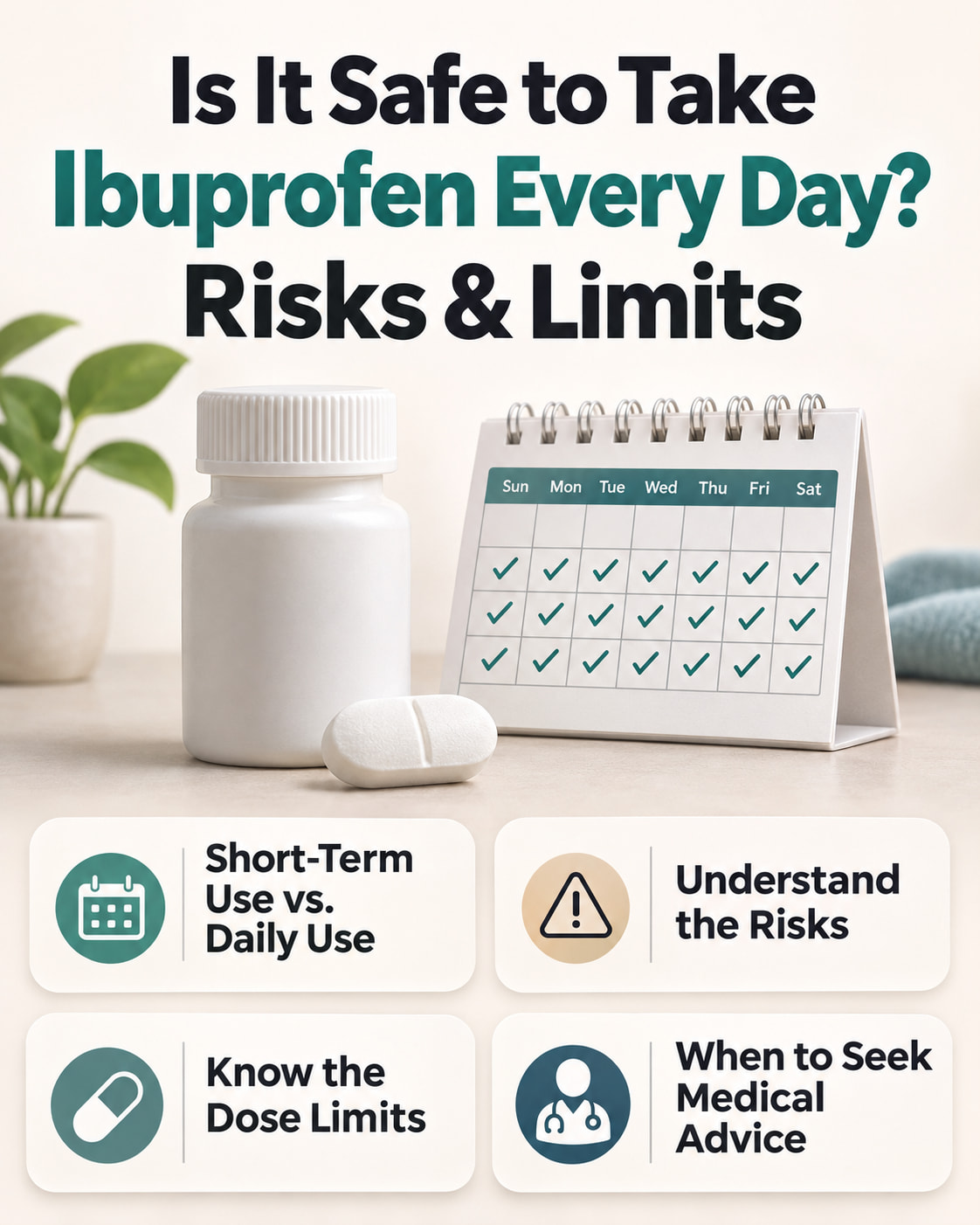
The answer to “Is it safe to take ibuprofen every day?” depends on your dose, health history, and how long you use it. Short-term daily use may be appropriate for some adults, but ongoing daily use should be supervised by a clinician.
Ibuprofen can relieve pain and inflammation, but it can also affect your stomach, kidneys, blood pressure, and heart. Understanding the dose limits and warning signs helps you recognize when self-care needs to become a conversation with a healthcare professional.
Is It Safe to Take Ibuprofen Every Day for Ongoing Pain?
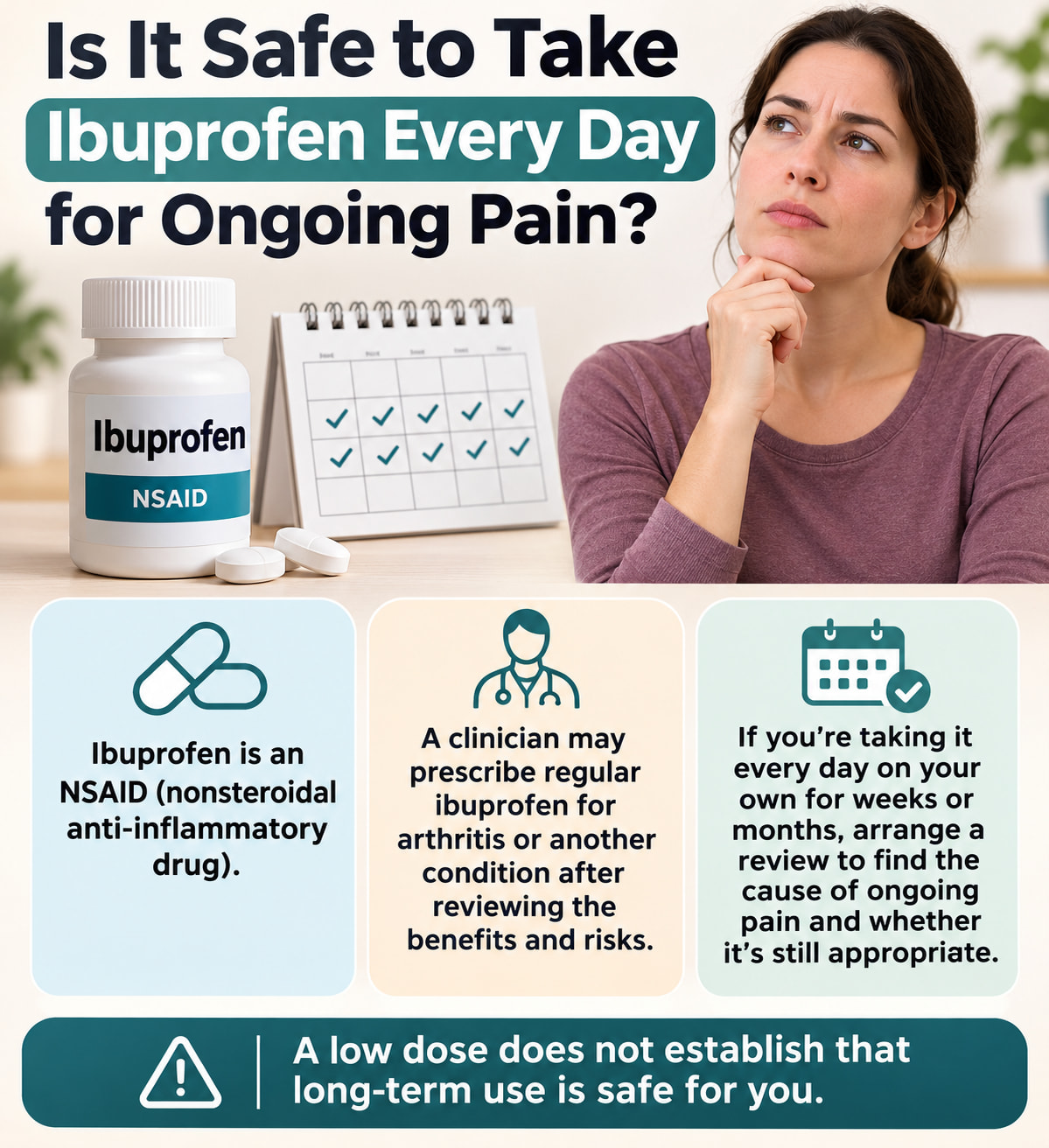
Ibuprofen belongs to a group of medicines called nonsteroidal anti-inflammatory drugs, or NSAIDs. It is available over the counter and by prescription.
A clinician may prescribe regular ibuprofen for arthritis or another condition after reviewing the benefits and risks. That plan may include follow-up appointments and laboratory testing.
Taking it on your own every day for weeks or months needs a different approach: arrange a review of why the pain keeps returning and whether ibuprofen remains appropriate. A low dose does not establish that long-term use is safe for you.
OTC Ibuprofen Dose and Duration Limits
The US Advil Drug Facts label, updated July, 2026, gives these directions for its 200 mg oral capsules. This article focuses on adults; the label covers ages 12 and older.
| Limit | Label directions |
|---|---|
| Initial dose | One 200 mg capsule, with doses 4–6 hours apart while symptoms persist |
| If one capsule is insufficient | Two capsules, totaling 400 mg, may be used |
| Maximum without a doctor’s direction | Six 200 mg capsules, totaling 1,200 mg in 24 hours |
| Persistent pain | Stop use and contact a doctor if pain worsens or lasts more than 10 days |
| Persistent fever | Stop use and contact a doctor if fever worsens or lasts more than 3 days |
Check your own package because formulations and strengths differ. The six-capsule limit applies to 200 mg capsules, not six doses of any strength.
Prescription labeling permits up to 3,200 mg daily in selected regimens, but only under medical direction. Follow your prescription rather than using that ceiling to choose your own dose.
Ten days is a limit for self-directed use, not a guarantee of safety. Serious side effects can occur sooner, and worsening symptoms deserve earlier attention.
Risks of Taking Ibuprofen Every Day
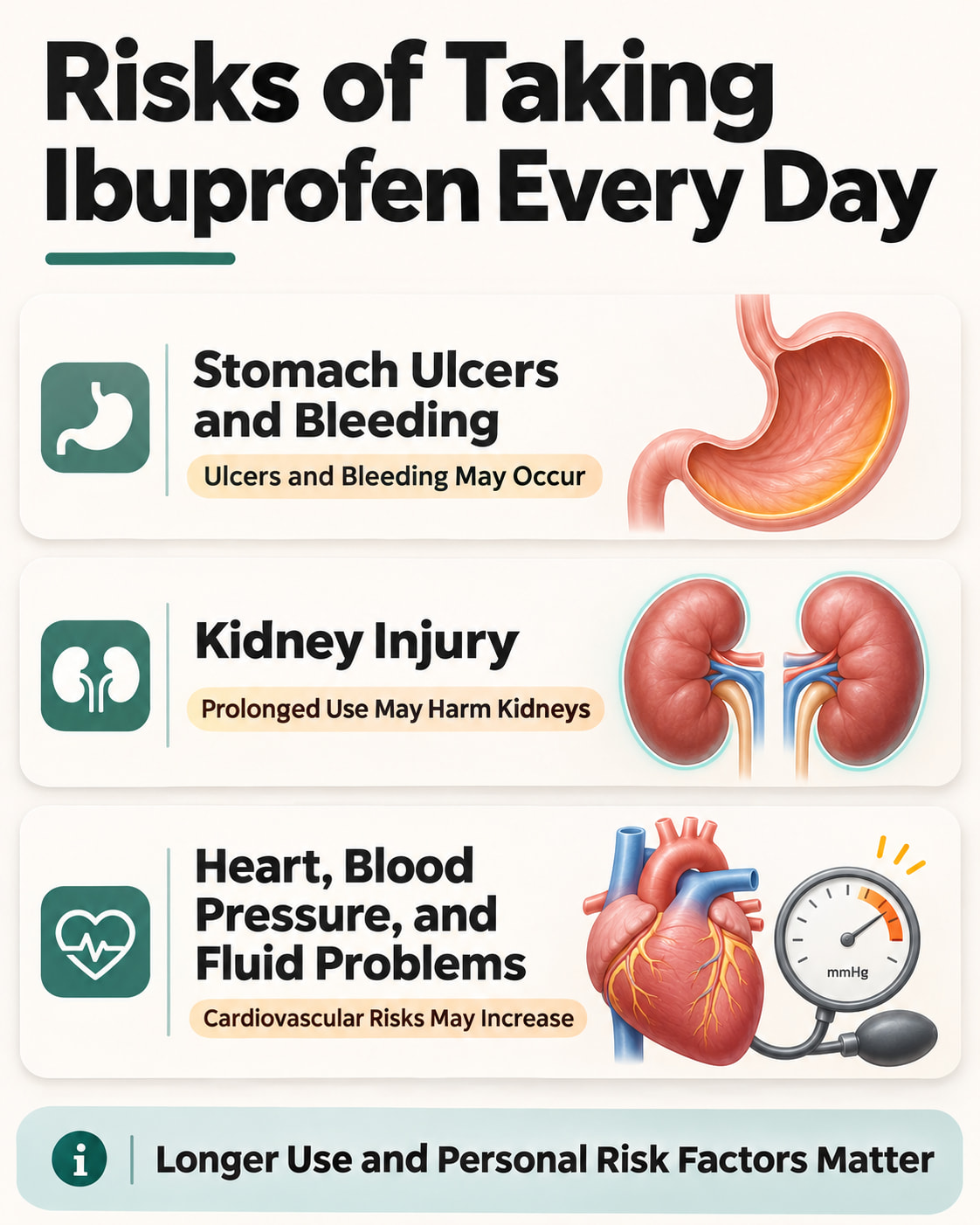
Stomach Ulcers and Bleeding
Ibuprofen can cause ulcers, bleeding, or a hole in the stomach or intestines. Serious bleeding may occur without earlier stomach discomfort.
Risk is greater with longer use, previous ulcers or bleeding, and certain medication combinations. The OTC label also identifies age 60 or older and three or more alcoholic drinks daily as risk factors. Drinking less than that does not guarantee safety.
Kidney Injury
NIDDK guidance explains that NSAIDs can harm the kidneys with prolonged use. They can also cause acute kidney injury when you are dehydrated or your blood pressure is low.
Vomiting, diarrhea, or difficulty drinking enough fluids can make this concern more relevant. Kidney disease and some blood pressure medicines add reasons to check with a clinician or pharmacist before using ibuprofen.
Heart, Blood Pressure, and Fluid Problems
The prescription ibuprofen warnings describe increased risks of heart attack and stroke. These risks can begin early and may increase with higher doses or longer use.
Ibuprofen can also raise blood pressure, cause fluid retention, and worsen heart failure. Having previously taken it without problems does not establish that it remains suitable after your health or medications change.
Who Should Check With a Clinician Before Taking Ibuprofen?
Ask before using it regularly if you have:
- Previous stomach ulcers, gastrointestinal bleeding, or a bleeding disorder.
- Kidney disease, heart disease, heart failure, high blood pressure, or liver disease.
- Asthma, especially a history of reactions to pain relievers.
- A previous stroke or recent heart attack.
- Pregnancy or plans to become pregnant.
- Other prescription or nonprescription medicines.
Do not use ibuprofen if you have had an allergic reaction to it or another NSAID. It should not be used around coronary artery bypass graft surgery. After a recent heart attack, use requires specific clinician guidance.
Asthma alone does not mean every person must avoid ibuprofen. However, do not use it if aspirin or another NSAID has previously caused an asthma attack, hives, or another allergic reaction.
Ibuprofen Interactions to Check
Bring your complete medication list to a pharmacist or clinician, including cold remedies, sleep products, vitamins, and supplements.
| Medicine or product | Main concern |
|---|---|
| Other NSAIDs, such as naproxen | Combining them increases adverse-effect risks |
| Products that already contain ibuprofen | You may unintentionally take too much |
| Blood thinners, corticosteroids, and certain antidepressants | Bleeding risk may increase |
| Low-dose aspirin for cardiovascular protection | Ibuprofen can interfere with aspirin’s benefit |
| Certain blood pressure medicines and diuretics | Kidney function and blood pressure control may be affected |
If you take prescribed low-dose aspirin, ask about ibuprofen before combining them. The appropriate plan depends on the aspirin formulation and medication schedule. Do not stop prescribed aspirin or rearrange your medicines on your own.
Ibuprofen During Pregnancy and Breastfeeding
FDA pregnancy guidance advises avoiding NSAIDs at 20 weeks of pregnancy or later unless a health professional specifically recommends them. They can affect the baby’s kidneys and reduce amniotic fluid.
At about 30 weeks and later, there is an additional risk of premature closure of an important fetal blood vessel. Ask your prenatal clinician before using ibuprofen at any stage of pregnancy.
Breastfeeding has different considerations. LactMed identifies ibuprofen as a preferred option because very little reaches breast milk. However, frequent use still needs to account for the nursing parent’s health and other medicines.
What to Do if You Need Ibuprofen Every Day
If daily use is becoming a routine, these steps can help you prepare for a useful medication review:
- Write down your actual use. Record the product name, strength, amount taken, and number of days you have used it.
- Describe the pain clearly. Note its location, when it started, what brings it on, and whether it is improving or worsening.
- Check every active-ingredient label. Include combination products so your pharmacist can identify duplication and interactions.
- Ask about a plan for ongoing relief. Discuss options appropriate to the cause of your pain and whether ibuprofen should remain part of that plan.
- Keep recommended follow-up appointments. Longer-term prescribing may involve blood pressure checks, blood counts, and blood chemistry tests to assess kidney function and other concerns.
If ibuprofen has already been prescribed, discuss changes with the prescriber. Warning symptoms need prompt attention rather than waiting for a routine appointment.
When to Get Medical Help
MedlinePlus safety guidance identifies symptoms that require immediate attention.
Get Emergency Help
Call 911 in the United States for:
- Chest pain or severe breathing difficulty.
- Sudden weakness on one side or slurred speech.
- Swelling of the face or throat, especially with trouble breathing or swallowing.
Stop Ibuprofen and Seek Urgent Medical Care
Warning signs include:
- Vomiting blood or material resembling coffee grounds.
- Black, tarry, or bloody stools.
- Severe or persistent stomach pain, especially with faintness.
- New significant swelling or unexplained weight gain.
- A rash with blisters, peeling skin, or fever.
For a suspected overdose, contact US Poison Control at 1-800-222-1222 promptly. Call 911 for collapse, seizures, breathing problems, or inability to wake the person.
Frequently Asked Questions
Is One 200 mg Ibuprofen Tablet Every Day Safe?
A smaller dose does not guarantee safety with indefinite use. Your health conditions, other medicines, and reason for needing daily relief still matter. Ask a clinician to review ongoing use, even when you stay below the OTC daily maximum.
Can I Take Ibuprofen for More Than 10 Days?
Longer use may be appropriate when a clinician directs it. If you are using OTC ibuprofen on your own and pain lasts more than 10 days, stop and seek medical advice. Worsening pain needs attention sooner.
Does Taking Ibuprofen With Food Protect My Stomach?
Food or milk may help with stomach upset. However, reduced discomfort does not mean you are protected from ulcers or bleeding. Follow the dose and duration limits even when taking it with meals.
Can I Take Ibuprofen Every Day for Headaches?
Repeatedly needing it for headaches deserves medical review. Frequent use can contribute to medication-overuse headache in susceptible people.
International Headache Society criteria include NSAID use on at least 15 days per month for more than three months, alongside headaches on at least 15 days per month and an existing headache disorder. Those diagnostic thresholds are not a safe-use allowance.
Does Drinking More Water Make Daily Ibuprofen Safe?
Dehydration increases kidney concerns, but drinking water does not remove ibuprofen’s stomach, cardiovascular, or interaction risks. If illness makes it difficult to stay hydrated, ask a clinician or pharmacist about your medicines.
Is Acetaminophen Safer to Take Every Day Instead?
It has a different risk profile, so it is not an automatic substitute for ongoing daily use. Excessive acetaminophen can cause severe liver damage, and combination products can unintentionally increase your total dose. Ask which option fits your health history and pain.
Will I Need Blood Tests if Ibuprofen Is Prescribed Long Term?
Possibly. Prescribing information calls for periodic blood counts and blood chemistry testing during long-term NSAID use. Your clinician decides which checks you need and how often, based on your health and medication plan.
Conclusion
Ibuprofen can be useful for short-term pain relief, while ongoing daily use needs an individualized plan. Follow your product’s limits, check for interactions, and pay attention to warning signs. If you keep needing it each day, bring your medication list and pain history to a clinician or pharmacist for a review.
This content is for informational purposes only and not medical advice.