
If you keep asking, “Why is my hair so frizzy?” common reasons include humidity, insufficient conditioning, friction, and damage from heat or chemical processing. Your natural texture also affects how your hair responds to these factors.
The most useful changes depend on what is causing the frizz. A gentler drying method may help after washing, while a different detangling routine may work better for curls. Start with your everyday habits before adding more products.
What Causes Hair to Look Frizzy?
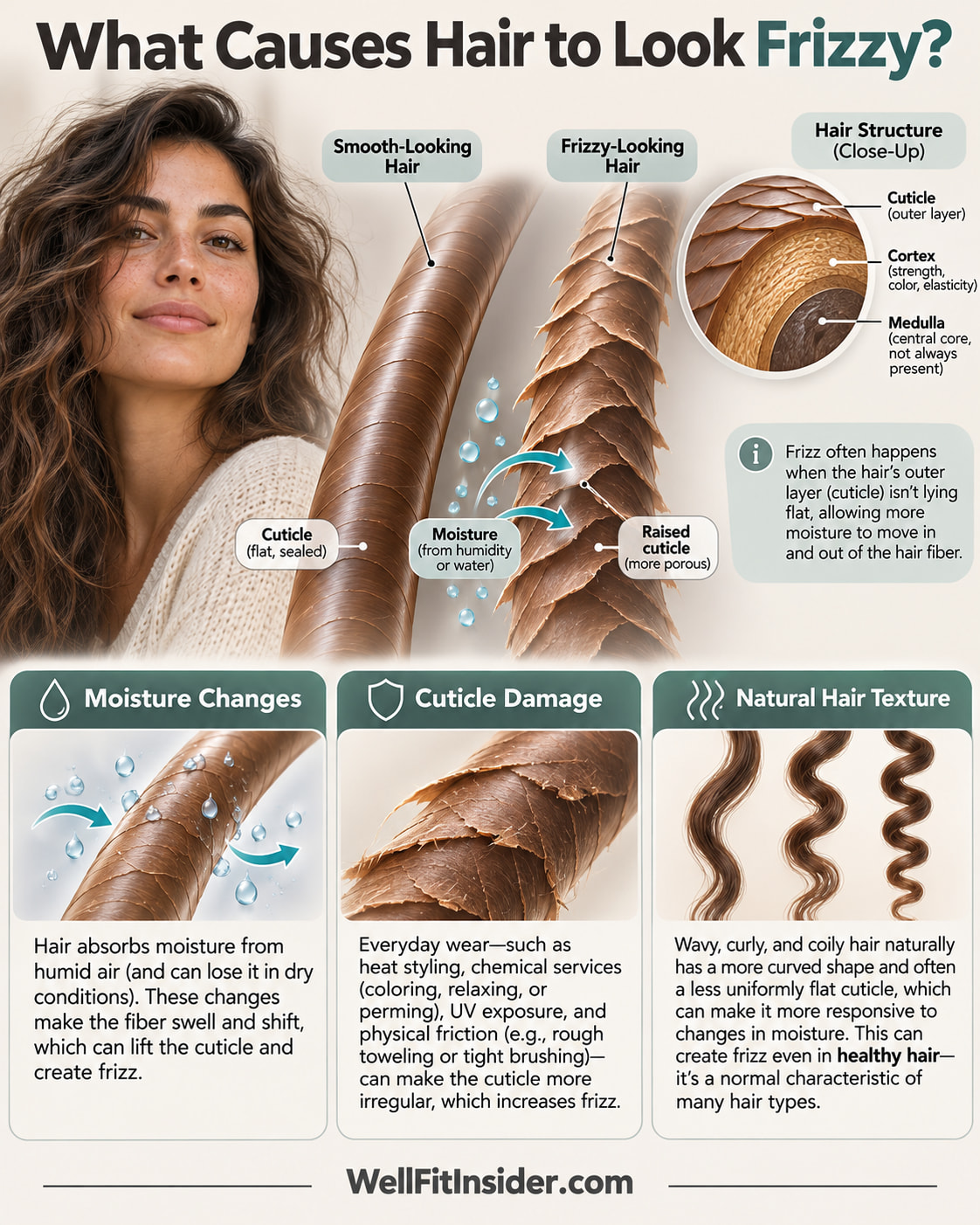
Frizz describes strands that sit away from the surrounding hair, creating a fuzzy outline or reducing definition. It can happen when moisture changes how hair behaves or when breakage leaves strands sticking out.
The cuticle is the hair shaft’s protective outer layer. Damage to this layer can make the surface rougher and the hair more vulnerable to breakage. However, frizz alone does not tell you whether your hair is damaged.
Natural texture matters, too. Curly and coily hair often needs more conditioning and different handling than straight hair. A routine that suits one texture may leave another looking frizzy.
Why Is My Hair So Frizzy? 9 Common Triggers
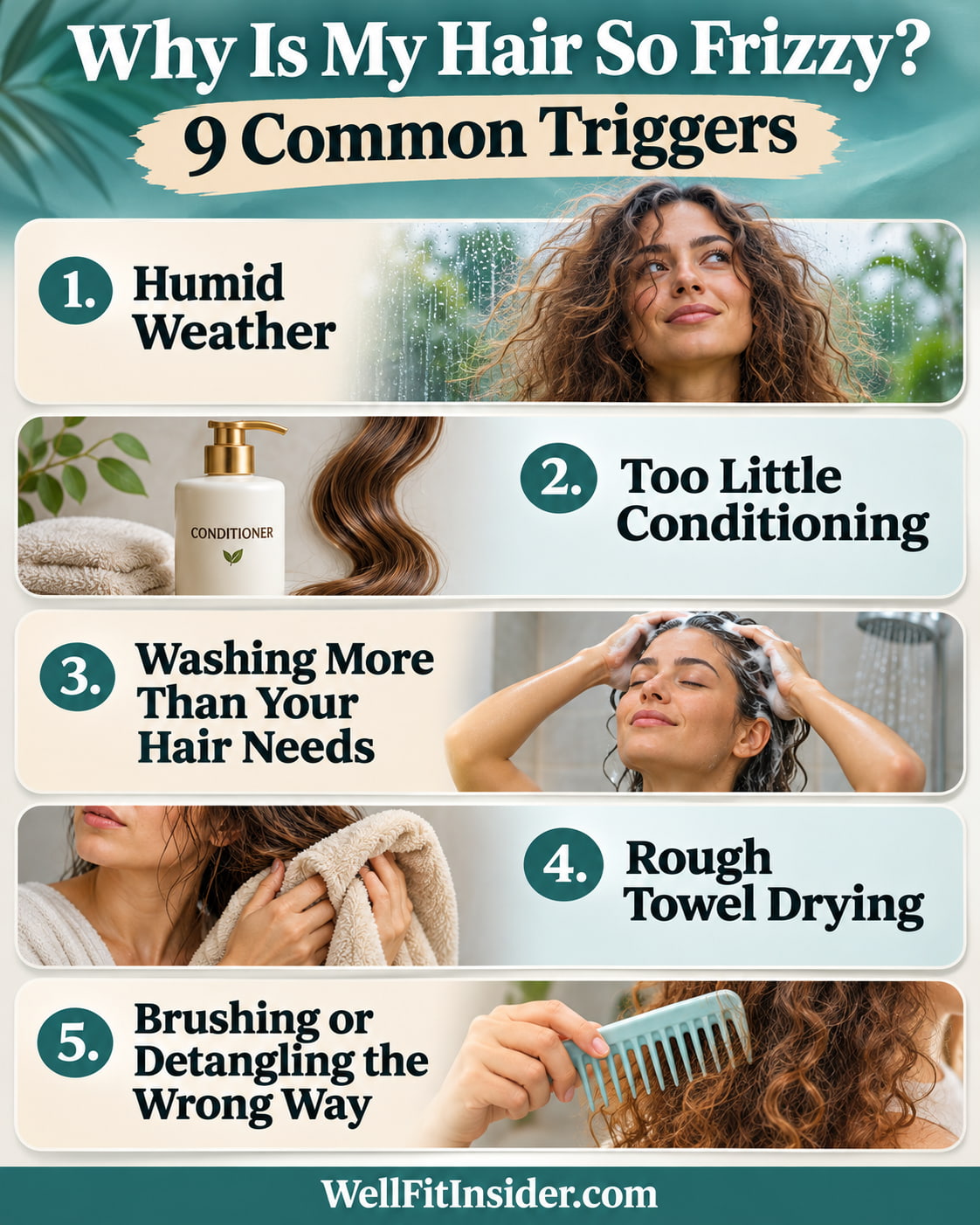
1. Humid Weather
Hair absorbs moisture from its surroundings and swells. That response can affect how a style looks and feels, including its smoothness and curl definition.
A 2025 study in the International Journal of Cosmetic Science examined how different parts of the hair fiber respond to moisture. It helps explain the physical response to humidity; it did not establish which anti-frizz product works best.
What helps: Condition hair regularly and minimize additional damage from heat and rough handling. These changes support manageability, although weather may still affect your style.
2. Too Little Conditioning
Conditioner coats the hair and improves slip, making strands easier to detangle. Without enough conditioning, hair may feel rough and become harder to manage.
The American Academy of Dermatology’s leave-in conditioner guidance notes that these products can reduce frizz, static, and flyaways.
What helps: Use conditioner after shampooing. Choose a lighter leave-in for fine hair and a formula intended for curly or dry hair when appropriate. Start with a small amount on damp lengths and ends, following the label.
Use a product designed to stay in the hair rather than leaving a rinse-out conditioner on indefinitely.
3. Washing More Than Your Hair Needs
Washing too frequently can leave curly hair dry and frizzy. However, frequent washing may suit someone with straight hair and an oily scalp.
The AAD’s healthy-hair recommendations emphasize washing according to how dirty or oily your hair gets.
What helps:
- Adjust frequency to your scalp, texture, and product buildup.
- Massage shampoo gently into the scalp.
- Let the rinse water carry shampoo through the lengths instead of scrubbing them aggressively.
Avoid following a fixed washing schedule simply because it works for someone else.
4. Rough Towel Drying
Vigorously rubbing wet hair with a towel adds friction and can damage strands. This habit may contribute to the roughness or flyaways you notice after washing.
What helps: Gently squeeze out excess water, then use a soft towel or cotton T-shirt to absorb the remaining moisture. Wrap or blot the hair without rubbing it back and forth.
You do not need an elaborate drying routine. Gentle handling is the main change.
5. Brushing or Detangling the Wrong Way
The best time to detangle depends on your texture. A blanket rule to always brush hair wet—or always wait until it is dry—does not suit everyone.
According to the AAD’s curly-hair guidance, brushing curls while dry can contribute to frizz and breakage.
What helps:
- Curly or coily hair: Detangle while damp or wet and conditioned, using fingers, a wide-tooth comb, or a suitable detangling tool.
- Straight hair: Let it dry a little before gently combing.
- All textures: Work through the ends first, move upward gradually, and avoid pulling through knots.
6. Frequent High-Heat Styling
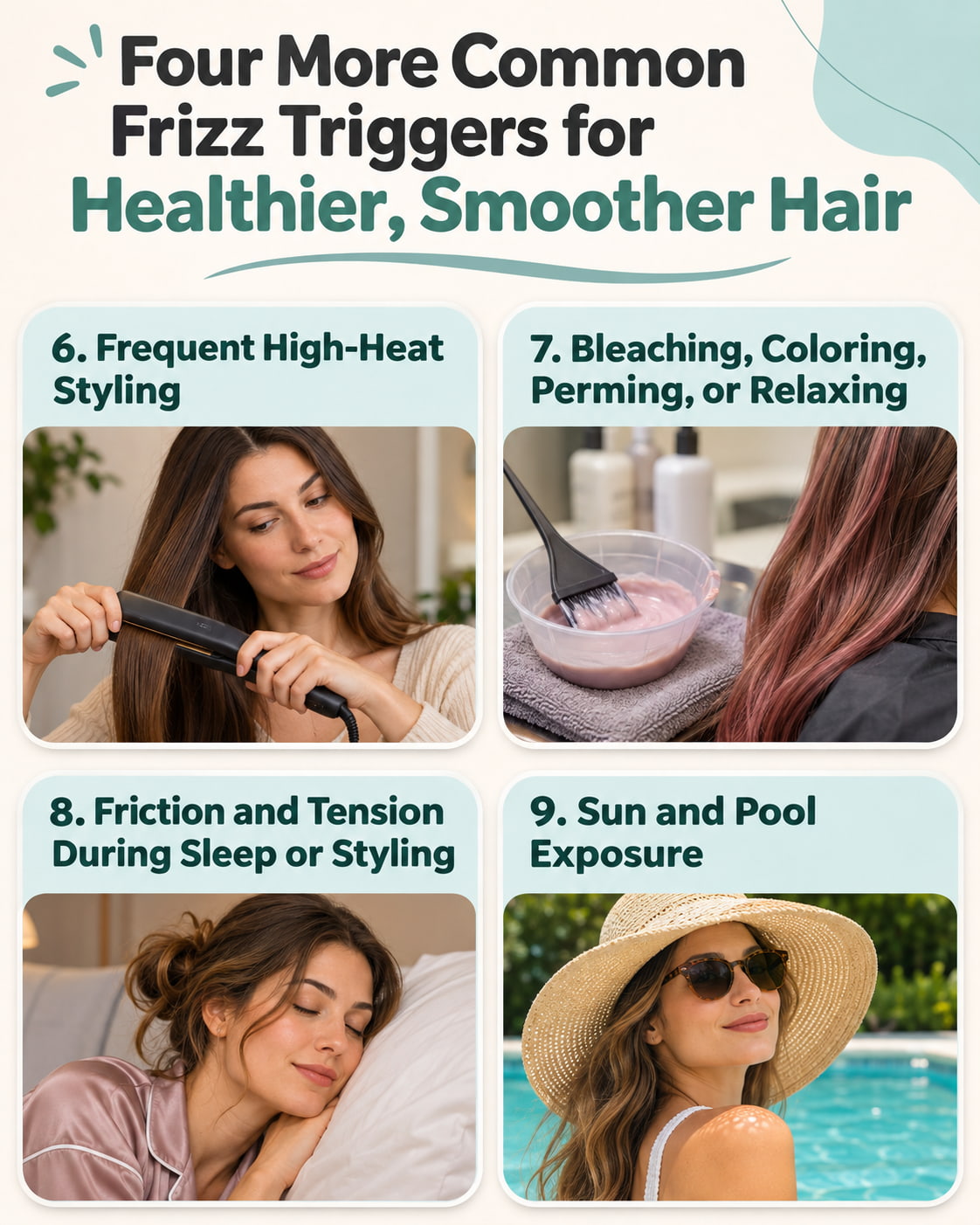
Repeated exposure to excessive heat can damage hair. A hot tool may smooth the surface temporarily while frequent use contributes to more fragile strands over time.
What helps:
- Reduce how often you use flat irons, curling irons, or hot combs.
- Use a lower heat setting.
- Limit how long a hot tool stays against one section.
- Use a product specifically labeled for heat protection.
If you use a flat iron, use it on dry hair. A heat protectant is a useful precaution, but it does not make excessive heat harmless.
7. Bleaching, Coloring, Perming, or Relaxing
Chemical processing can leave hair dry or brittle. The amount of damage depends on the service and how it is performed; all coloring processes are not equally harsh.
For example, substantial lightening requires stronger processing than a smaller color change. Repeated or combined chemical services can add further stress.
What helps: Discuss existing dryness or breakage with your stylist before another service. Allow more time between chemical processes and avoid repeatedly processing already fragile lengths.
The AAD’s damage-prevention guidance recommends spacing services and using conditioner after shampooing.
8. Friction and Tension During Sleep or Styling
Rubbing against a pillow can disturb curls and contribute to frizz and breakage. Tight ponytails, buns, extensions, and other styles that repeatedly pull on hair can also damage strands.
What helps: For curls, try a loose braid or a loose ponytail high on the head, often called a “pineapple,” before bed.
During the day, choose styles that do not pull tightly. Use hair accessories made for styling, and loosen any style that causes discomfort. The aim is to reduce repeated rubbing and tension while keeping hair comfortable.
9. Sun and Pool Exposure
Prolonged sun exposure can damage the cuticle, leaving hair dry, brittle, or frizzy. Pool chemicals can also make hair more vulnerable to additional damage.
This may be especially noticeable when swimming, sunshine, heat styling, and chemical processing become part of the same routine.
What helps:
- Wear a wide-brimmed hat during extended sun exposure.
- Consider a swim cap in the pool.
- Rinse pool water out of your hair after swimming.
- Follow with appropriate cleansing and conditioning.
A Simple Hair-Care Routine to Reduce Frizz
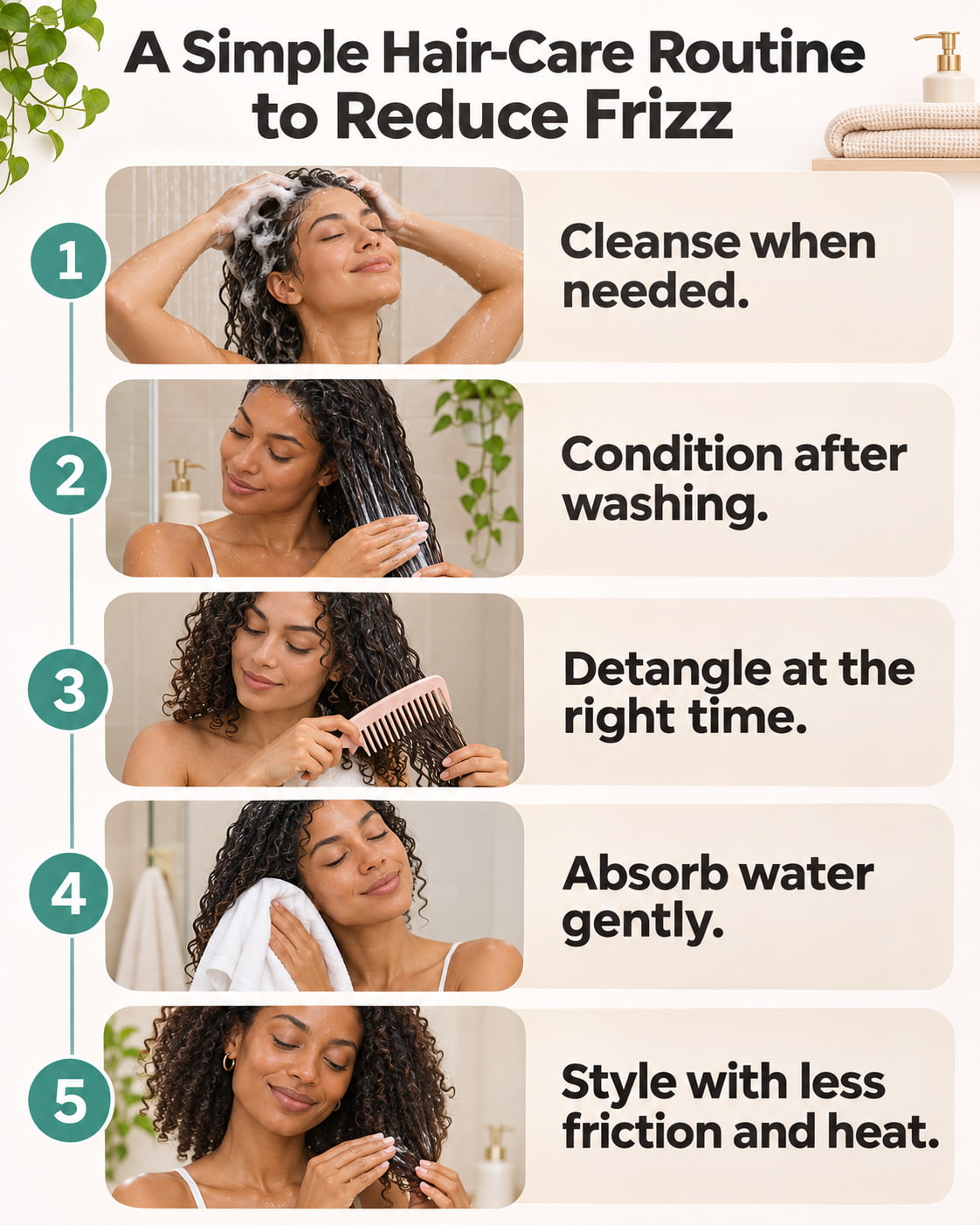
Use these steps as a starting point, then adjust them to your texture and scalp:
- Cleanse when needed. Focus shampoo on the scalp and handle the lengths gently.
- Condition after washing. Concentrate on the ends for fine or straight hair; distribute through the lengths when hair is dry or curly.
- Detangle at the right time. Use conditioned, damp detangling for curls and partial drying before combing straight hair.
- Absorb water gently. Blot or wrap instead of rubbing.
- Style with less friction and heat. Add a small amount of leave-in conditioner if needed.
Choose one or two changes that address your most likely triggers. For example, if frizz appears after vigorous towel drying, change that habit before buying several new products.
When to See a Dermatologist About Frizzy Hair
Consider a dermatologist if your hair keeps breaking or remains difficult to manage despite gentler care and appropriate conditioning.
Arrange an evaluation if you also notice:
- Sudden or unusually heavy shedding.
- Thinning, a widening part, or bald patches.
- Persistent scalp itching, burning, tenderness, sores, or scaling.
These changes deserve attention beyond adjustments to your styling routine. A dermatologist can assess the hair and scalp and help identify the cause. The AAD also provides guidance on recognizing hair loss signs and symptoms.
Frequently Asked Questions
Why Is My Hair So Frizzy After Washing?
Several parts of wash day can contribute, including vigorous shampooing of the lengths, too little conditioner, rough towel drying, or detangling in a way that does not suit your texture. Review the whole routine before assuming your shampoo is the only problem.
Why Is My Hair Still Frizzy After Using Conditioner?
Conditioner can improve smoothness and manageability, but humidity, heat damage, chemical processing, and friction may still affect your hair. Product choice and application also matter. More conditioner is not always the answer, particularly if it leaves fine hair heavy or greasy.
Does Frizzy Hair Always Mean It Is Damaged?
No. Hair can respond to humidity and show frizz as part of its natural texture. Damage and breakage can also contribute, but frizz alone cannot distinguish between these possibilities. Persistent snapping or noticeable thinning is a reason to seek a closer assessment.
Can Hair Oil Help Reduce Frizz?
A little oil, such as argan oil, may help smooth hair that still feels dry after conditioning. Use it sparingly, especially on fine hair. Oil should not be expected to permanently reverse damage.
Will Cutting My Hair Get Rid of Frizz?
Trimming can remove split or damaged ends and reduce tangling associated with those sections. It will not change your natural texture or prevent the remaining hair from responding to humidity. Gentler care still matters after a trim.
Can Frizzy Hair Be Permanently Fixed?
There is no universal permanent fix for every cause of frizz. Hair continues to respond to weather and handling, and damaged shafts do not regenerate like living skin. Products can improve appearance and manageability, while consistent care helps limit further damage.
Conclusion
Frizz becomes easier to manage when you match your routine to your hair’s texture and the habits affecting it. Conditioning, gentle detangling, careful drying, and less excessive heat are useful places to start.
At your next wash, choose one clear adjustment—such as blotting instead of rubbing or detangling curls with conditioner—and build from there.
This content is for informational purposes only and not medical advice.
References
- American Academy of Dermatology: Tips for Healthy Hair
- American Academy of Dermatology: Leave-In Conditioner Tips
- American Academy of Dermatology: Curly Hair Care
- American Academy of Dermatology: Hair-Care Habits That Can Cause Damage
- American Academy of Dermatology: Hair Styling Without Damage
- American Academy of Dermatology: Coloring and Perming Tips
- International Journal of Cosmetic Science: Hair-Fiber Swelling Study, 2025