
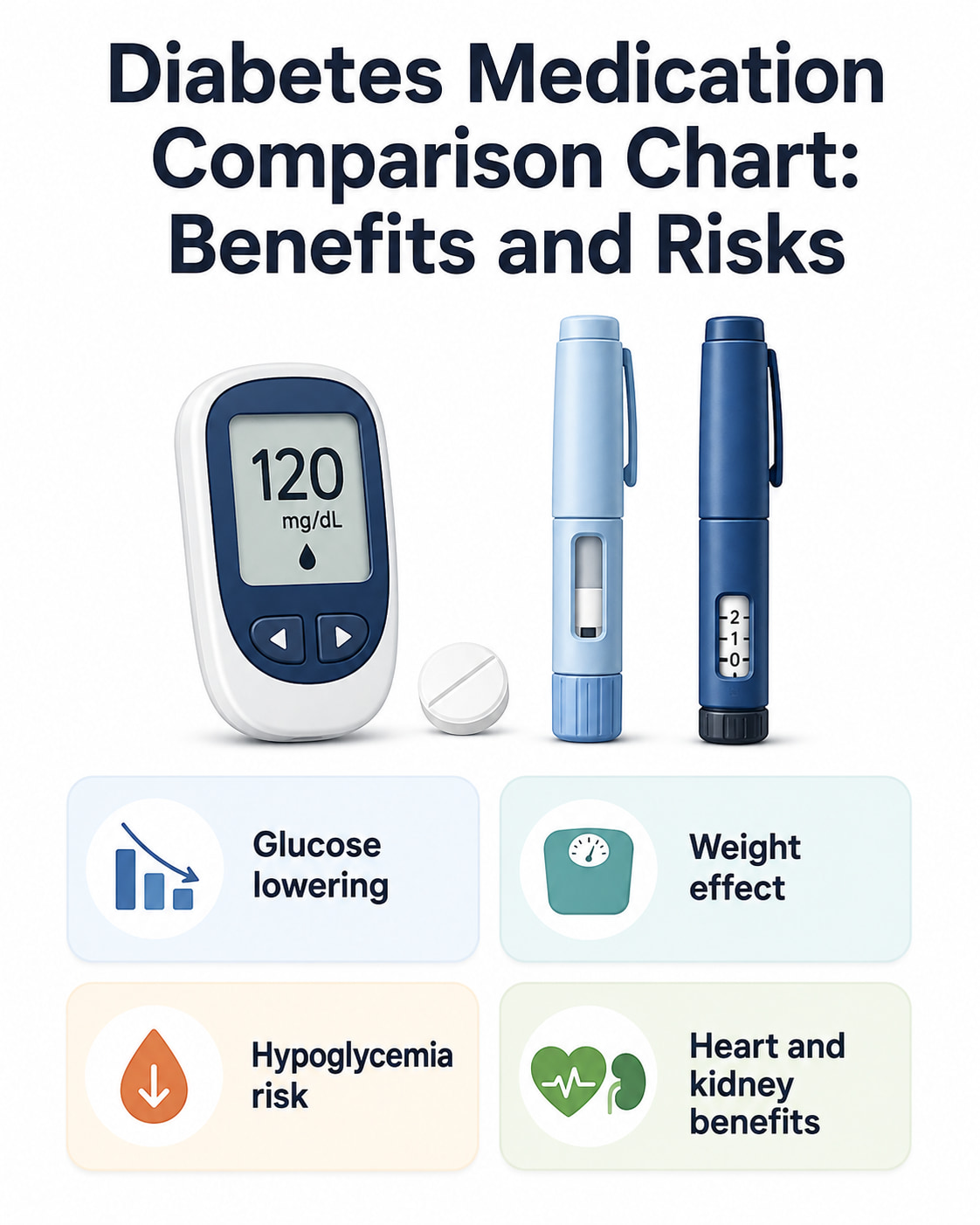
A diabetes medication comparison chart shows that metformin is usually the most affordable option, SGLT2 inhibitors are especially valuable for certain heart and kidney conditions, GLP-1–based medicines offer strong glucose and weight benefits, and insulin provides the greatest glucose-lowering power but has a higher risk of hypoglycemia.
There is no single best diabetes medication for everyone. The right choice depends on your A1C, blood glucose pattern, kidney function, cardiovascular health, weight goals, risk of low blood sugar, medication cost, side effects, and preferred method of taking medicine.
The American Diabetes Association’s 2026 Standards of Care recommends individualized treatment rather than requiring every person to begin with the same drug. Medication plans should also be reviewed regularly as health needs, laboratory results, and treatment goals change.
This guide primarily compares medications for adults with type 2 diabetes. People with type 1 diabetes require insulin because the pancreas produces little or no insulin. Pregnancy, childhood diabetes, and other forms of diabetes need separate medical guidance.
Diabetes Medication Comparison Chart
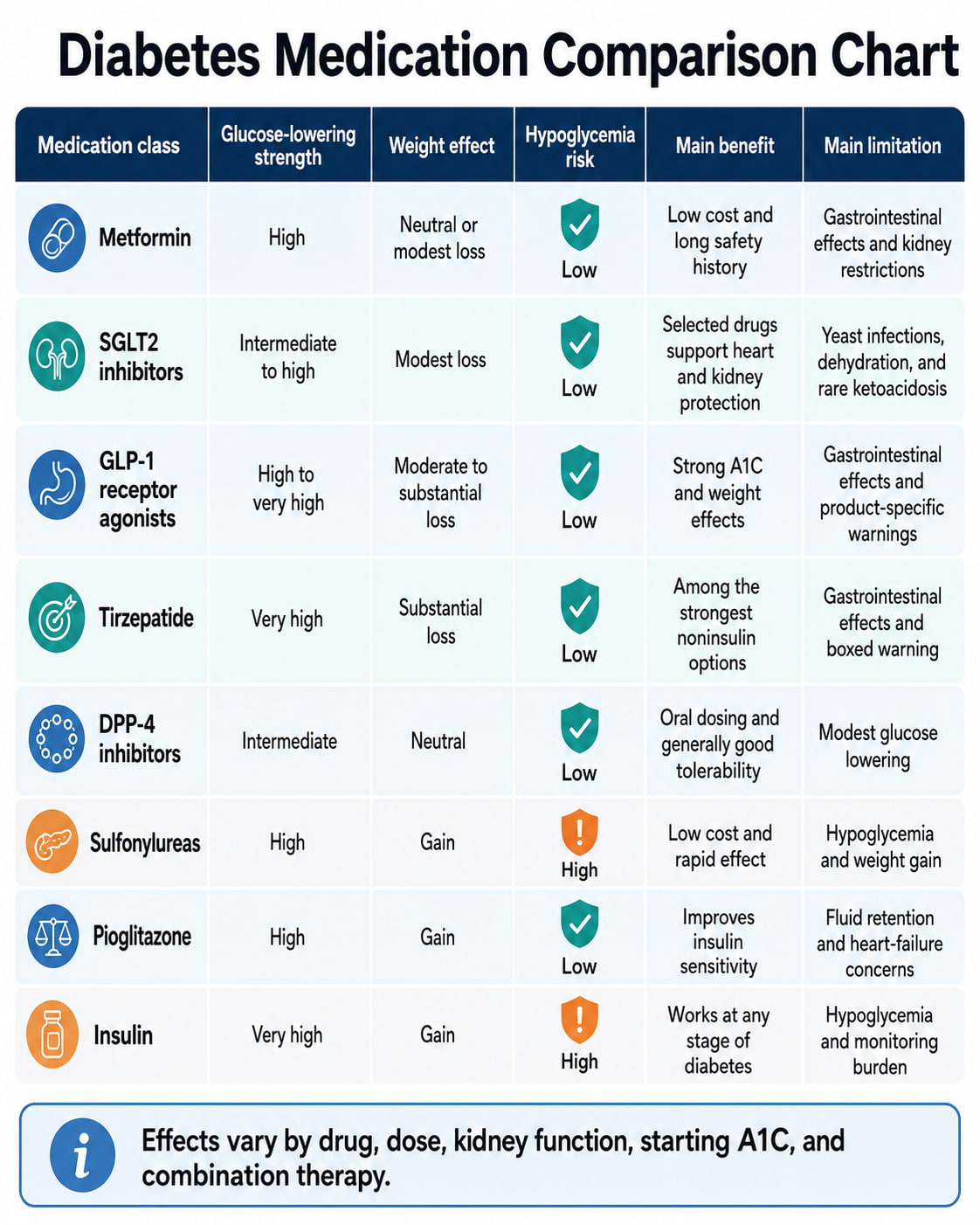
| Medication class | Common examples | Glucose-lowering strength | Typical weight effect | Hypoglycemia risk when used alone | Main benefits | Important risks or limitations |
|---|---|---|---|---|---|---|
| Metformin | Metformin immediate-release and extended-release | High | Neutral or modest loss | Low | Low cost, oral dosing, long safety history | Diarrhea, nausea, vitamin B12 deficiency, kidney-function restrictions |
| SGLT2 inhibitors | Empagliflozin, dapagliflozin, canagliflozin, ertugliflozin | Intermediate to high | Modest loss | Low | Selected drugs support heart and kidney protection | Genital yeast infections, dehydration, low blood pressure, rare ketoacidosis |
| GLP-1 receptor agonists | Semaglutide, dulaglutide, liraglutide | High to very high | Moderate to substantial loss | Low | Strong A1C reduction; selected drugs have cardiovascular or kidney benefits | Nausea, vomiting, constipation, gallbladder problems, product-specific boxed warning |
| Dual GIP/GLP-1 receptor agonist | Tirzepatide | Very high | Substantial loss | Low | Among the strongest noninsulin options for A1C and weight reduction | Gastrointestinal effects, gallbladder problems, pancreatitis warning, boxed warning |
| DPP-4 inhibitors | Sitagliptin, linagliptin, saxagliptin, alogliptin | Intermediate | Neutral | Low | Oral dosing and generally good tolerability | Modest A1C reduction, little weight benefit, heart-failure concern with some products |
| Sulfonylureas | Glipizide, glimepiride, glyburide | High | Gain | High | Low cost and relatively rapid glucose lowering | Hypoglycemia and weight gain |
| Thiazolidinediones | Pioglitazone | High | Gain | Low | Improves insulin sensitivity and is inexpensive | Fluid retention, heart-failure worsening, fractures, weight gain |
| Insulin | Glargine, degludec, NPH, lispro, aspart, insulin icodec-abae | Very high | Gain | High | Works at any stage and is essential when insulin production is insufficient | Hypoglycemia, injection burden, weight gain, monitoring and dosing requirements |
| Meglitinides | Repaglinide, nateglinide | Intermediate | Gain | Moderate to high | Short action can help manage mealtime glucose | Multiple daily doses and hypoglycemia |
| Alpha-glucosidase inhibitors | Acarbose, miglitol | Modest | Neutral | Low | Mainly lower after-meal glucose | Gas, bloating, diarrhea, and frequent dosing |
These ratings describe typical class effects, not guaranteed results. The exact benefit depends on the individual drug, dose, starting A1C, kidney function, food intake, activity level, other medications, and how consistently the medicine is taken.
Cardiovascular and kidney benefits are also drug-specific. A benefit shown for one SGLT2 inhibitor or GLP-1 receptor agonist should not automatically be attributed to every medicine in that class.
How to Compare Diabetes Medications
When selecting a medication, healthcare professionals usually consider more than its ability to lower A1C.
Important questions include:
- Does the person have heart failure, chronic kidney disease, or cardiovascular disease?
- Is avoiding hypoglycemia a priority?
- Would weight loss be beneficial?
- Can the person comfortably use an injectable medicine?
- Does kidney or liver function limit certain choices?
- Is the medication affordable and covered by insurance?
- Are gastrointestinal effects or frequent urination likely to be difficult?
- How complex will the dosing and monitoring schedule be?
A person may need two or more medications because different drug classes work in different ways. Combination treatment does not necessarily mean diabetes has been managed poorly. Type 2 diabetes often changes over time as the pancreas gradually produces less insulin.
Benefits and Risks of Major Diabetes Medications
Metformin
Metformin decreases glucose production by the liver and improves the body’s response to insulin. It remains widely used because it is effective, inexpensive, available as a generic, and unlikely to cause hypoglycemia by itself.
Common adverse effects include:
- Diarrhea
- Nausea
- Abdominal discomfort
- Reduced appetite
- A metallic taste
Starting with a low dose, taking it with food, or using an extended-release formulation may improve tolerability. Dose changes should be made with a healthcare professional.
Long-term metformin use may lower vitamin B12 levels. Testing may be appropriate for people who develop anemia, weakness, numbness, tingling, balance problems, or other possible deficiency symptoms.
Metformin should not be used when estimated glomerular filtration rate, or eGFR, is below 30 mL/min/1.73 m². Kidney function, dehydration, severe illness, and some contrast-imaging procedures can affect whether it should be temporarily stopped or permanently discontinued.
Metformin may be a practical option when:
- Medication cost is a major concern.
- Oral treatment is preferred.
- Hypoglycemia needs to be minimized.
- Significant weight loss is not the primary goal.
- There is no immediate need for a medicine with a specific heart or kidney indication.
Metformin is not automatically the first choice in every situation. Someone with heart failure, chronic kidney disease, or established cardiovascular disease may need an SGLT2 inhibitor or GLP-1–based medicine regardless of whether metformin is prescribed.
SGLT2 Inhibitors
SGLT2 inhibitors help the kidneys remove glucose through urine. They generally provide moderate glucose lowering, modest weight loss, and a low risk of hypoglycemia when used alone.
Their most important advantage is that selected drugs provide benefits beyond glucose control. Depending on the product and patient, these benefits may include:
- Reducing hospitalization for heart failure
- Slowing chronic kidney disease progression
- Reducing certain cardiovascular events
- Lowering albuminuria
- Modestly lowering blood pressure
The ADA recommends an SGLT2 inhibitor with proven benefit for many adults with type 2 diabetes and heart failure. An SGLT2 inhibitor or GLP-1 receptor agonist with supporting evidence is also recommended for many people with chronic kidney disease, including those with an eGFR of 20–60 mL/min/1.73 m² or albuminuria.
SGLT2 inhibitors become less effective at lowering blood glucose when eGFR falls below approximately 45. However, their heart and kidney benefits may still be clinically valuable. The approved kidney-function limits differ by drug and indication.
Common or important risks include:
- Genital yeast infections
- Increased urination
- Dehydration
- Dizziness or low blood pressure
- Urinary infections
- Rare diabetic ketoacidosis
- Rare serious infection around the genital area
Ketoacidosis can occasionally occur without extremely high blood glucose. Nausea, vomiting, abdominal pain, unusual fatigue, confusion, or difficulty breathing require prompt medical attention.
SGLT2 inhibitors may need to be paused before surgery, during prolonged fasting, or during a serious illness. Patients should follow the specific instructions given by their healthcare team rather than stopping the medicine on their own.
GLP-1 Receptor Agonists
GLP-1 receptor agonists increase insulin release when glucose is elevated, reduce glucagon, slow stomach emptying, and may decrease appetite. Depending on the drug, they are taken daily, weekly, or orally.
These medications generally offer:
- Strong A1C reduction
- Low hypoglycemia risk when used alone
- Moderate to substantial weight loss
- Cardiovascular benefits with selected products
- Kidney benefits with selected products
Gastrointestinal symptoms are the most common difficulty. These may include nausea, vomiting, diarrhea, constipation, abdominal pain, or reduced appetite. Symptoms are often more noticeable during dose increases.
Selected GLP-1 medicines carry a boxed warning about thyroid C-cell tumors observed in rodents. It is unknown whether they cause these tumors in humans. Products with this warning are generally contraindicated in people with a personal or family history of medullary thyroid carcinoma or multiple endocrine neoplasia syndrome type 2.
Other product-specific warnings can include pancreatitis, gallbladder disease, severe gastrointestinal reactions, dehydration-related kidney injury, and worsening diabetic retinopathy during rapid glucose improvement.
The current FDA prescribing information for Ozempic states that injectable semaglutide is approved to reduce the risk of sustained eGFR decline, end-stage kidney disease, and cardiovascular death in adults with type 2 diabetes and chronic kidney disease. This indication is specific to the approved product and should not be applied automatically to every GLP-1 receptor agonist.
Tirzepatide
Tirzepatide activates both GIP and GLP-1 receptors. Mounjaro is the tirzepatide product approved to improve glucose control in people with type 2 diabetes.
It is among the strongest noninsulin options for reducing A1C and body weight. It is injected once weekly and has a low risk of hypoglycemia unless it is combined with insulin or a medicine that directly stimulates insulin release.
Common adverse effects include:
- Nausea
- Diarrhea
- Reduced appetite
- Vomiting
- Constipation
- Indigestion
- Abdominal discomfort
Its FDA labeling also includes warnings involving acute pancreatitis, gallbladder disease, dehydration-related kidney injury, severe gastrointestinal reactions, diabetic retinopathy complications, and pulmonary aspiration during anesthesia or deep sedation.
Tirzepatide carries a boxed warning about thyroid C-cell tumors found in rats. It is contraindicated in people with a personal or family history of medullary thyroid carcinoma or MEN2. People using oral contraceptives may need an additional or alternative contraceptive method for four weeks after starting tirzepatide and for four weeks after each dose increase because delayed stomach emptying can affect absorption.
Tirzepatide is not insulin. It cannot replace insulin when the body does not produce enough insulin to prevent severe hyperglycemia or ketoacidosis.
DPP-4 Inhibitors
DPP-4 inhibitors increase the activity of naturally occurring incretin hormones. They are taken by mouth, are generally weight-neutral, and have a low risk of hypoglycemia when used without insulin or a sulfonylurea.
Their advantages include simple dosing and generally mild gastrointestinal effects. Their main limitation is that they usually lower A1C less than GLP-1 receptor agonists, tirzepatide, or insulin. They also do not typically provide meaningful weight loss.
Important considerations include:
- Most require dose adjustment when kidney function declines.
- Linagliptin generally does not require kidney-based dose adjustment.
- Saxagliptin and alogliptin require particular caution in people with heart failure.
- Product warnings may include pancreatitis, severe joint pain, hypersensitivity, and bullous pemphigoid.
A DPP-4 inhibitor should not normally be combined with a GLP-1 receptor agonist or tirzepatide. These drugs affect overlapping biological pathways, and the combination does not provide enough additional glucose lowering to justify the cost and treatment burden.
Sulfonylureas
Sulfonylureas stimulate the pancreas to release insulin. They are inexpensive and can lower glucose relatively quickly.
Their main disadvantages are:
- Hypoglycemia
- Weight gain
- Reduced effectiveness over time
- Greater risk when meals are missed
- Higher risk with declining kidney function
Glyburide can cause prolonged hypoglycemia and is generally avoided in people with chronic kidney disease and many older adults. Glipizide is often preferred when a sulfonylurea is necessary in someone with reduced kidney function, but individual dosing is still essential.
Sulfonylureas can be useful when affordability is the main concern, but their low cost must be weighed against hypoglycemia risk.
Pioglitazone
Pioglitazone improves insulin sensitivity in muscle, fat, and the liver. It is inexpensive, taken by mouth, and does not normally cause hypoglycemia when used alone.
Its disadvantages include:
- Fluid retention
- Swelling
- Weight gain
- Heart-failure worsening
- Increased fracture risk
- Bladder-cancer precautions
- A slow onset of effect
Pioglitazone is generally unsuitable for people with symptomatic heart failure. It may be useful in selected people with substantial insulin resistance or certain forms of metabolic liver disease, but the decision requires an individualized risk assessment.
Insulin
Insulin is the most dependable glucose-lowering medication. It can be adjusted over a wide dose range and works even when the pancreas produces little insulin.
Insulin is essential for type 1 diabetes. In type 2 diabetes, it may be needed when:
- Blood glucose is very high.
- Symptoms such as excessive thirst, frequent urination, or unintended weight loss are present.
- Ketones or a hyperglycemic crisis are suspected.
- Other medications no longer provide enough control.
- Severe illness, surgery, pregnancy, or hospitalization changes insulin needs.
- The body produces too little insulin.
The ADA advises considering insulin when symptoms of hyperglycemia are present or when A1C is above approximately 10% or blood glucose is at least 300 mg/dL. These values are clinical decision points, not instructions to begin insulin without medical assessment.
Important insulin risks include:
- Hypoglycemia
- Weight gain
- Injection-site problems
- Incorrect dose timing
- Confusion between different insulin products
- Greater monitoring requirements
When there is no evidence of severe insulin deficiency or a hyperglycemic crisis, GLP-1–based therapy is often considered before insulin because it may lower A1C with less hypoglycemia and more favorable weight effects.
New once-weekly basal insulin
On March, 2026, the FDA approved Awiqli, or insulin icodec-abae, for adults with type 2 diabetes. It is a long-acting U-700 basal insulin administered once weekly.
The concentrated formulation requires careful dose selection and clear patient education. FDA labeling warns about hypoglycemia, accidental overdose, and medication errors caused by confusion with other insulin or injectable products. It is not approved for type 1 diabetes or pediatric use.
Which Diabetes Medications Can Support Weight Loss?
The amount of weight change differs among individuals, but the general pattern is:
Greatest average weight reduction
- Tirzepatide
- Semaglutide
Moderate to substantial weight reduction
- Other higher-efficacy GLP-1 receptor agonists, including dulaglutide and liraglutide
Modest weight reduction
- SGLT2 inhibitors
- Metformin in some people
Usually weight-neutral
- DPP-4 inhibitors
- Alpha-glucosidase inhibitors
Commonly associated with weight gain
- Insulin
- Sulfonylureas
- Pioglitazone
- Meglitinides
Weight effect is only one consideration. A less expensive medicine with modest weight effects may still be appropriate when affordability, tolerability, or another health condition is the higher priority.
Which Diabetes Medications Have the Lowest Hypoglycemia Risk?
When used alone, the following classes generally have a low risk of causing hypoglycemia:
- Metformin
- SGLT2 inhibitors
- GLP-1 receptor agonists
- Tirzepatide
- DPP-4 inhibitors
- Pioglitazone
- Alpha-glucosidase inhibitors
The highest-risk medications are:
- Insulin
- Sulfonylureas
- Meglitinides
Even a normally low-risk medication can contribute to hypoglycemia when combined with insulin or a sulfonylurea. Doses may need to be reduced when a new medication is added or when eating patterns, weight, kidney function, or physical activity change.
Possible hypoglycemia symptoms include shaking, sweating, hunger, dizziness, confusion, weakness, blurred vision, and a rapid heartbeat. Severe hypoglycemia can cause seizures or loss of consciousness and requires immediate help.
Best Medication Options for Heart and Kidney Conditions
Heart failure
An SGLT2 inhibitor with demonstrated heart-failure benefit is generally prioritized for an appropriate adult with type 2 diabetes and heart failure, regardless of current A1C.
Pioglitazone is generally avoided in symptomatic heart failure because it can cause fluid retention and worsen the condition.
Chronic kidney disease
For many adults with type 2 diabetes, chronic kidney disease, an eGFR of 20–60, or albuminuria, an SGLT2 inhibitor or GLP-1 receptor agonist with demonstrated benefit may be appropriate.
In advanced chronic kidney disease with an eGFR below 30, a suitable GLP-1 receptor agonist may be preferred for glucose lowering because of its lower hypoglycemia risk and cardiovascular evidence. Drug-specific labeling and tolerability still matter.
Atherosclerotic cardiovascular disease
For someone with established cardiovascular disease or a high cardiovascular risk, treatment may include a GLP-1 receptor agonist or SGLT2 inhibitor with demonstrated cardiovascular benefit, regardless of whether the person has reached an A1C target.
This means medication selection may be based on heart protection even when additional glucose lowering is not the main concern.
Diabetes Medication Cost Comparison
Medication costs vary by pharmacy, dose, insurance plan, deductible, manufacturer program, and location. A list price, pharmacy acquisition cost, and patient copay are not the same.
The ADA’s 2026 report includes National Average Drug Acquisition Cost data collected on July, 2025. These figures estimate what pharmacies paid and should not be interpreted as guaranteed retail or out-of-pocket prices.
| Medication class | Approximate 30-day pharmacy acquisition cost |
|---|---|
| Standard metformin tablets | $1–$3 |
| Sulfonylureas | $2–$13 |
| Pioglitazone | About $4 |
| DPP-4 inhibitors | $143–$504 |
| SGLT2 inhibitors with available data | $343–$604 |
| GLP-1 receptor agonists | $577–$966 |
| Tirzepatide | About $1,041 |
Insulin costs vary too widely to summarize with one useful figure. Human insulin, biosimilar insulin, analog insulin, pens, vials, pumps, and continuous glucose-monitoring supplies can have very different costs.
On April, 2026, the FDA announced approval of the first generic dapagliflozin tablets. Generic approval may increase competition, but it does not guarantee immediate availability or a particular patient price.
Before starting an expensive medication, ask the prescriber or pharmacist to check:
- Insurance formulary coverage
- Prior-authorization requirements
- Preferred drugs within the same class
- Generic or biosimilar alternatives
- Manufacturer assistance programs
- The cost of monitoring supplies
- Whether a 90-day prescription is less expensive
Medication Combinations That Need Extra Caution
Many diabetes medications can be used together, but some combinations need careful review.
DPP-4 inhibitor plus GLP-1–based medicine
Combining a DPP-4 inhibitor with a GLP-1 receptor agonist or tirzepatide is generally not recommended because it adds cost without meaningful additional glucose lowering.
Insulin plus sulfonylurea
Both increase insulin activity and can substantially raise hypoglycemia risk. The sulfonylurea may need to be reduced or stopped when insulin is intensified.
Insulin or sulfonylurea plus GLP-1 or tirzepatide
The GLP-1–based drug does not usually cause hypoglycemia alone, but the insulin or sulfonylurea dose may need adjustment.
SGLT2 inhibitor during fasting, illness, or surgery
The risk of ketoacidosis may increase during prolonged fasting, dehydration, acute illness, or the perioperative period. Patients should obtain specific instructions before a procedure.
Pioglitazone plus insulin
Both may contribute to weight gain and fluid retention. The combination requires caution, particularly in people at risk of heart failure.
Current Safety Concerns About Compounded GLP-1 Products
Compounded medications are not FDA-approved and do not undergo the same premarket review for safety, effectiveness, quality, or manufacturing consistency as approved products.
In 2026, the FDA reported fraudulent compounded semaglutide and tirzepatide products with false or misleading labeling. The agency has also reported dosing errors, use of unapproved salt forms, and adverse events associated with some compounded GLP-1 products.
The FDA’s guidance on unapproved GLP-1 drugs recommends obtaining prescriptions from a licensed healthcare professional and filling them through a state-licensed pharmacy. A compounded product should not be described as a generic version of an FDA-approved GLP-1 medicine.
How to Discuss Medication Choices With Your Healthcare Professional
Bring an updated medication list and recent glucose records to your appointment. Ask questions such as:
- What is my current A1C goal?
- Is this medicine being prescribed mainly for glucose, weight, heart, or kidney benefits?
- How likely is hypoglycemia?
- Will I need to monitor glucose more often?
- Does my kidney or liver function affect the dose?
- What symptoms should prompt an urgent call?
- Should another diabetes medicine be reduced or stopped?
- What will the medicine cost with my insurance?
- What should I do if I am sick, fasting, or having surgery?
- When should my response and side effects be reviewed?
Do not stop insulin, a sulfonylurea, an SGLT2 inhibitor, or a GLP-1–based medicine without instructions. Abrupt changes can cause severe hyperglycemia, hypoglycemia, dehydration, or other complications.
Frequently Asked Questions
What is the best medication for type 2 diabetes?
There is no universal best medication. Metformin may be a good low-cost starting option, while an SGLT2 inhibitor or GLP-1 receptor agonist may be prioritized for someone with cardiovascular or kidney disease. Tirzepatide or a GLP-1 receptor agonist may be considered when strong A1C and weight effects are important. Insulin may be necessary for severe hyperglycemia or inadequate insulin production.
Which diabetes medication lowers A1C the most?
Insulin has the greatest overall glucose-lowering capacity because its dose can be adjusted extensively. Among noninsulin medications, tirzepatide and higher-efficacy GLP-1 receptor agonists generally provide the strongest A1C reduction.
Which diabetes medication is least likely to cause hypoglycemia?
Metformin, SGLT2 inhibitors, GLP-1 receptor agonists, tirzepatide, DPP-4 inhibitors, and pioglitazone have a low hypoglycemia risk when used alone. The risk rises when they are combined with insulin, sulfonylureas, or meglitinides.
Can metformin, an SGLT2 inhibitor, and a GLP-1 medicine be taken together?
Yes. These classes work through different mechanisms and are sometimes combined when appropriate. Kidney function, side effects, hydration, cost, and the risk of excessive glucose lowering still require monitoring.
Is a GLP-1 medicine better than metformin?
Not in every situation. GLP-1 medicines generally provide greater weight loss and may lower A1C more, but they are more expensive and commonly cause gastrointestinal effects. Metformin is inexpensive, effective, and available as a generic. The better option depends on the person’s goals and health conditions.
When should insulin be considered for type 2 diabetes?
Insulin may be considered when there are symptoms of severe hyperglycemia, A1C is above approximately 10%, blood glucose is at least 300 mg/dL, ketones are present, significant unintended weight loss occurs, or other medicines are not sufficient. A healthcare professional should evaluate the cause and urgency.
Can diabetes medication be stopped after A1C improves?
Sometimes a medication can be reduced or stopped, particularly after significant lifestyle changes, weight loss, resolution of temporary glucose elevation, or improvement after severe hyperglycemia. However, stopping medication without guidance can cause glucose to rise again. The decision should be based on glucose records, A1C, health conditions, and the reason the medicine was originally prescribed.
Conclusion
A diabetes medication comparison chart can clarify the major trade-offs, but medication selection should never be based on A1C alone. Heart and kidney protection, weight effects, hypoglycemia risk, side effects, dosing burden, and affordability can be equally important.
Review your medications regularly with your healthcare professional, especially after a change in kidney function, weight, eating patterns, insurance coverage, or glucose results. The most effective plan is one that is medically appropriate, affordable, understandable, and realistic to follow.
This content is for informational purposes only and not medical advice.
References
- American Diabetes Association: Pharmacologic Approaches to Glycemic Treatment—Standards of Care in Diabetes 2026
- National Institute of Diabetes and Digestive and Kidney Diseases: Insulin, Medicines, and Other Diabetes Treatments
- U.S. Food and Drug Administration: Ozempic Prescribing Information
- U.S. Food and Drug Administration: Mounjaro Prescribing Information
- U.S. Food and Drug Administration: Awiqli Prescribing Information