
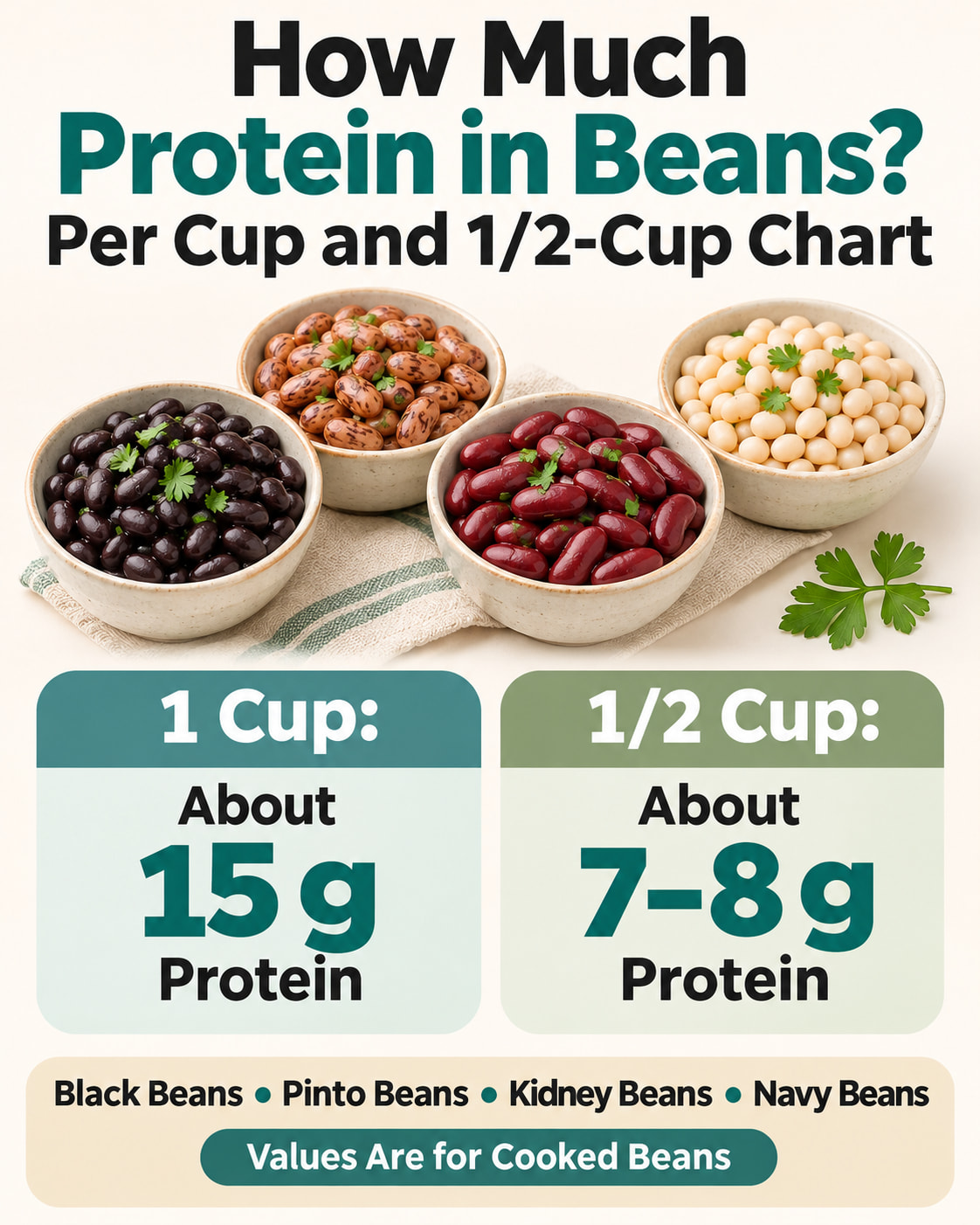
Black, pinto, red kidney, and navy beans provide about 15 grams of protein per cooked cup, or 7–8 grams per 1/2 cup. Other varieties provide different amounts, and mature soybeans contain considerably more.
Knowing how much protein is in beans helps you estimate what a serving adds to your meal. The key is to match the bean type, preparation, and portion size. A cup of cooked beans, a cup of dry beans, and a serving of canned beans are different measurements.
Use the charts below to compare cooked servings, then check your package label when using a specific product.
How Much Protein in Beans? Cooked Serving Chart
The following values use USDA FoodData Central entries for mature beans boiled without salt. The gram weights refer to the cooked beans.
| Bean type | Protein per 1 cup | Protein per 1/2 cup | Weight of 1 cup |
|---|---|---|---|
| Black beans | 15.2 g | 7.6 g | 172 g |
| Pinto beans | 15.4 g | 7.7 g | 171 g |
| Red kidney beans | 15.3 g | 7.7 g | 177 g |
| Navy beans | 15.0 g | 7.5 g | 182 g |
| Great Northern beans | 14.7 g | 7.4 g | 177 g |
| White beans, generic USDA entry | 17.4 g | 8.7 g | 179 g |
| Chickpeas, or garbanzo beans | 14.5 g | 7.3 g | 164 g |
| Large lima beans, mature | 14.7 g | 7.3 g | 188 g |
| Black-eyed peas, mature | 13.2 g | 6.6 g | 171 g |
| Fava beans, mature | 12.9 g | 6.5 g | 170 g |
| Mung beans | 14.2 g | 7.1 g | 202 g |
| Adzuki beans | 17.3 g | 8.6 g | 230 g |
Source: USDA SR Legacy records available through FoodData Central, checked November, 2026. Protein values are rounded to one decimal place. Half-cup values were calculated before rounding.
Cup weights differ between beans, so this chart compares equal household volumes rather than identical food weights. The generic white-bean entry is separate from the specific navy and Great Northern entries.
These values describe plain cooked beans. For canned beans, baked beans, refried beans, or beans in a sauce, use the matching product label or recipe information.
Soybeans, Edamame, Lentils, and Green Beans
These additional USDA entries provide useful comparisons.
| Food and preparation | Protein per 1 cup | Protein per 1/2 cup | Weight of 1 cup |
|---|---|---|---|
| Mature soybeans, boiled without salt | 31.3 g | 15.7 g | 172 g |
| Edamame, frozen and prepared | 18.5 g | 9.2 g | 155 g |
| Lentils, boiled without salt | 17.9 g | 8.9 g | 198 g |
| Green snap beans, boiled and drained without salt | 2.4 g | 1.2 g | 125 g |
Measure the edible edamame beans without their pods. Lentils are included as a related legume for comparison.
Mature soybeans and edamame have separate nutrition entries. Green beans also have a substantially different protein content from the mature beans in the main chart.
Which Beans Have the Most Protein?
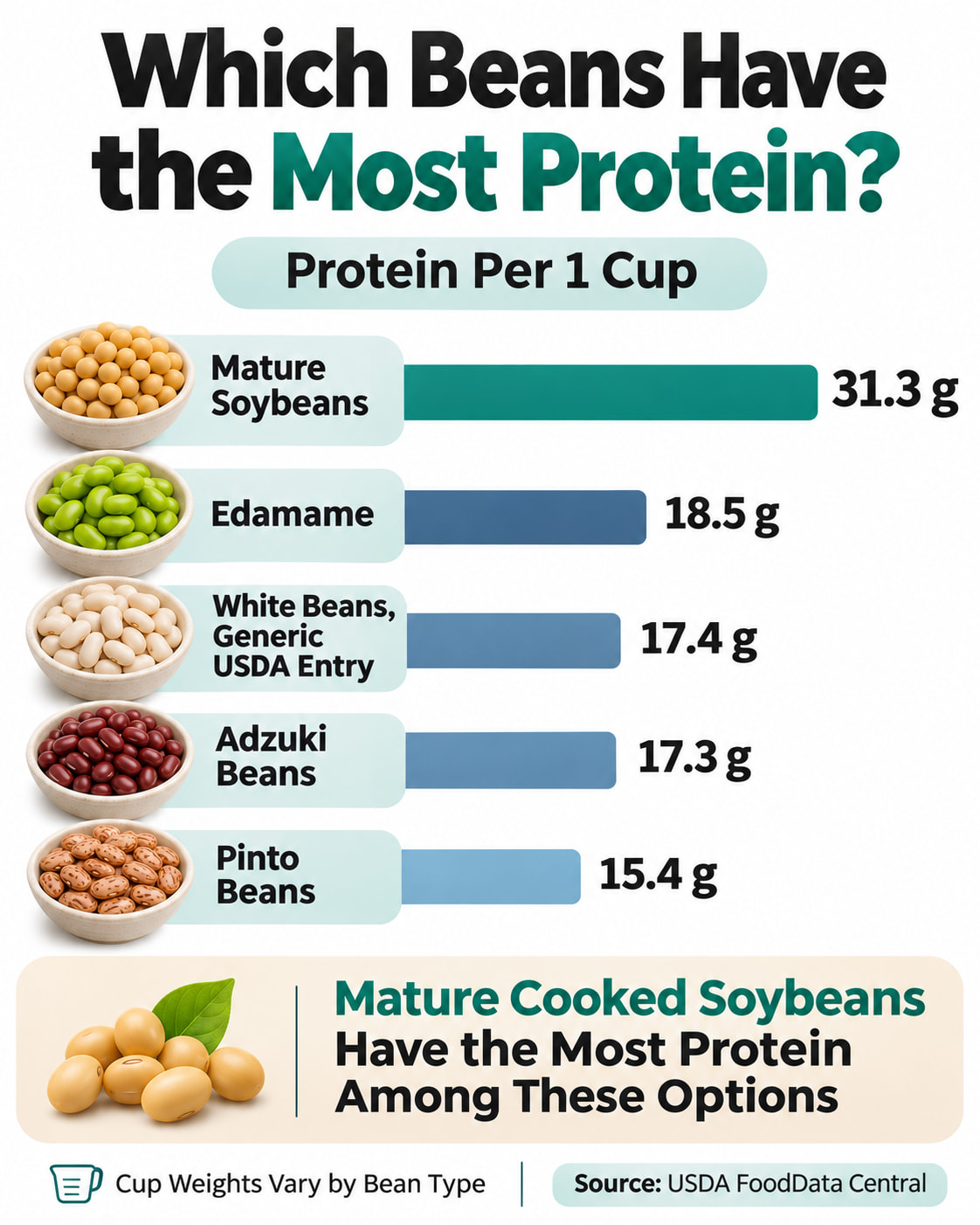
Mature cooked soybeans have the most protein among the foods listed here, with about 31.3 grams per cup. Prepared edamame provides about 18.5 grams.
Among the 12 varieties in the main chart, the generic white-bean entry and adzuki beans provide the most protein per USDA cup, at 17.4 and 17.3 grams, respectively.
However, per-cup rankings partly reflect serving weight. A USDA cup of adzuki beans weighs 230 grams, while a cup of white beans weighs 179 grams. If you want to compare equal weights, look at protein per 100 grams instead.
For everyday meals, black, pinto, red kidney, and navy beans have similar protein amounts per cooked cup. Choose a variety that suits the recipe and measure the portion you actually eat.
How Much Protein Is in Canned Beans?
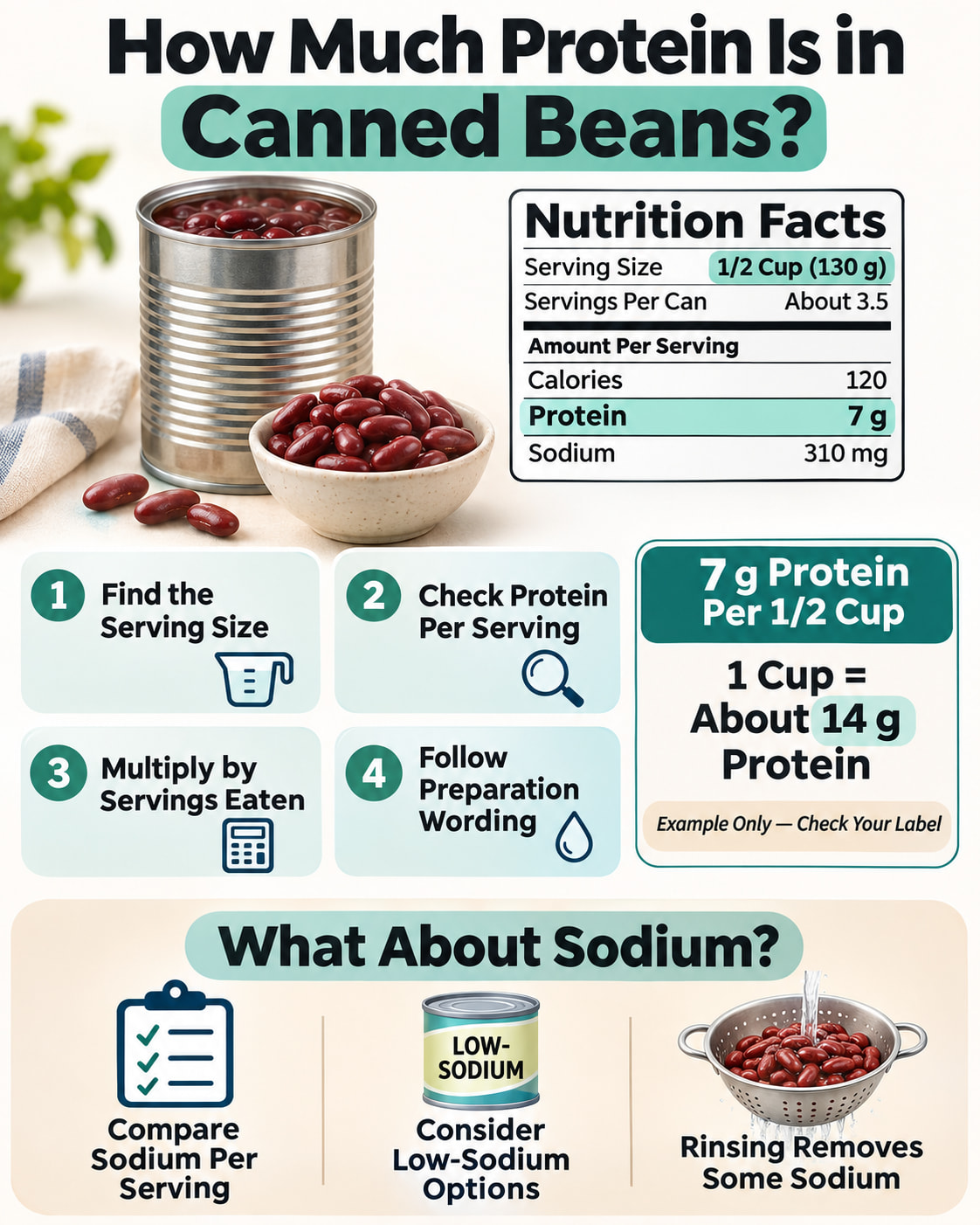
Use the Nutrition Facts label for the canned beans you buy. A generic cooked-bean chart cannot account for every product’s serving weight, liquid, sauce, or added ingredients.
The FDA’s serving-size guidance explains that nutrient amounts usually apply to one listed serving. Eating two servings means consuming approximately twice the listed protein.
To calculate your portion:
- Find the serving size, including its gram weight.
- Check the protein grams per serving.
- Multiply by the number of servings you eat.
- Follow any preparation wording, such as “drained” or “as prepared.”
For example, if a label lists 7 grams of protein per 1/2 cup, a full cup of that same product provides approximately 14 grams.
When draining beans, use nutrition information that matches the drained product when available. The net weight of a can can include liquid, so it should not automatically be treated as the weight of the beans you eat.
What About Sodium?
Compare sodium amounts using equivalent servings. Low-sodium or no-salt-added options may be useful when you want less sodium.
According to FDA sodium guidance, rinsing sodium-containing canned foods such as beans removes some sodium. The amount removed varies, so avoid assuming a fixed reduction for every product.
Why Dry and Cooked Bean Measurements Differ
Dry beans absorb water during preparation, changing their weight and volume. A cup measured before cooking therefore represents a different amount of food from a cup measured afterward.
This is why a dry-bean nutrition label can show substantially more protein per cup than a cooked-bean entry. The difference alone does not show that cooking removed that amount of protein.
For the charts in this article, measure beans after cooking. If you weigh them instead, choose a database entry that matches the cooked preparation.
You can calculate protein for a weighed portion with this formula:
Protein in your portion = protein per 100 grams × portion weight in grams ÷ 100
For example, the USDA cooked black-bean entry provides 8.86 grams of protein per 100 grams. A 150-gram portion supplies:
8.86 × 150 ÷ 100 = approximately 13.3 grams of protein
Match the preparation first, then adjust the portion.
Are Beans a Complete Protein?
A complete protein supplies all nine essential amino acids in adequate amounts. The FDA’s protein guidance identifies soy as a complete protein source.
Other common beans have a different amino-acid balance and are relatively low in methionine. Grains tend to be relatively low in lysine, so eating a variety of foods can provide complementary amino acids.
Beans contribute protein even when you eat them without rice. You do not need to combine complementary foods at every meal. MedlinePlus guidance emphasizes amino-acid balance across the whole day.
Practical combinations include beans with rice, whole-grain bread, or other grains. Your overall diet can also include other protein sources such as tofu, nuts, seeds, eggs, dairy, fish, or meat, depending on your preferences.
Easy Ways to Add Bean Protein to Your Meals
Start with a measured portion so you know how much protein the beans contribute.
| Meal idea | Bean portion | Protein from the beans |
|---|---|---|
| Add chickpeas to a salad | 1/2 cup cooked chickpeas | 7.3 g |
| Use pinto beans in tacos | 1/2 cup cooked pinto beans | 7.7 g |
| Add black beans to a rice bowl | 1/2 cup cooked black beans | 7.6 g |
| Stir white beans into soup | 1 cup cooked white beans, generic USDA entry | 17.4 g |
These amounts describe the bean portion only. Rice, tortillas, vegetables, toppings, and other ingredients change the meal’s overall nutrition.
For soups and mixed dishes, calculate how many beans go into the full recipe, then divide by the number of portions. One cup of bean soup does not necessarily contain one cup of beans.
Frequently Asked Questions
How Much Protein Is in 1/2 Cup of Beans?
A 1/2-cup cooked serving provides about 7.6 grams in black beans, 7.7 grams in pinto or red kidney beans, and 7.5 grams in navy beans. The amount varies by type and preparation, so use the matching chart entry or package label.
How Much Protein Is in 100 Grams of Beans?
For the plain cooked USDA entries used here, 100 grams provides approximately 8.9 grams of protein in black beans, 9.0 grams in pinto beans, and 8.7 grams in red kidney beans. These values apply to cooked portions.
How Much Protein Is in a Whole Can of Beans?
Multiply the label’s protein per serving by the number of servings you consume. For example, a product labeled with 7 grams per serving and 3.5 servings per container would provide approximately 24.5 grams if you eat the entire labeled contents. Check whether the label describes drained beans.
Are Beans a Protein Food or a Carbohydrate Food?
Beans provide both protein and carbohydrates, including fiber. For example, a cooked cup of black beans contains about 15.2 grams of protein, 40.8 grams of total carbohydrate, and 15.0 grams of fiber. Fiber is included in the total carbohydrate amount.
Do Green Beans Have as Much Protein as Black or Kidney Beans?
Green beans provide much less protein per cup. The cooked green snap-bean entry in this article contains about 2.4 grams per cup, compared with 15.2 grams in black beans and 15.3 grams in red kidney beans.
Can Beans Provide 20 Grams of Protein in a Meal?
Yes, depending on the type and portion. For example, 1 1/2 cooked cups of black beans provides approximately 22.9 grams of protein, while 1 cup of mature cooked soybeans provides about 31.3 grams. These are comparison portions, not recommended serving sizes for everyone.
Conclusion
Black, pinto, red kidney, and navy beans each provide about 15 grams of protein per cooked cup. Other varieties differ, with mature soybeans supplying substantially more.
Choose the bean you enjoy, measure the cooked portion, and check the label for packaged products. Use the chart to see what the beans contribute to your next salad, soup, taco, or grain bowl.
This content is for informational purposes only and not medical advice.
References
- USDA FoodData Central: SR Legacy food-composition records and serving weights.
- FDA: Serving Size on the Nutrition Facts Label.
- FDA: Sodium in Your Diet.
- FDA: Interactive Nutrition Facts Label—Protein.
- MedlinePlus: Protein in Diet.