
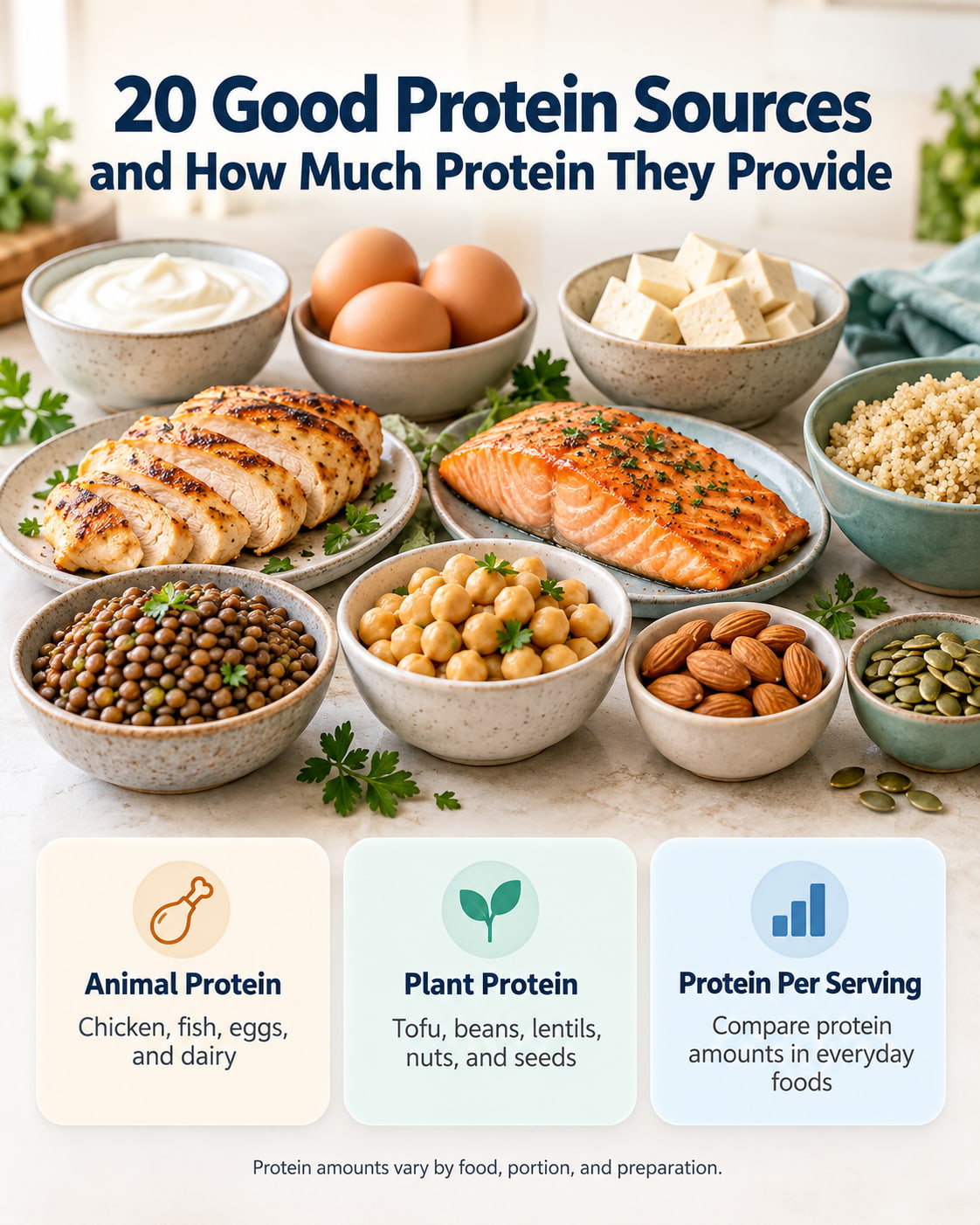
Good protein sources include chicken, fish, eggs, Greek yogurt, tofu, tempeh, beans, lentils, nuts, and seeds. The example portions below provide roughly 6–26 grams of protein.
Protein helps your body maintain tissues and make new cells. Knowing how much your usual foods provide can make meal planning easier, whether you eat animal foods, plant foods, or a combination.
The guide below compares 20 options and explains how to use them.
20 Good Protein Sources and Their Protein Content
The amounts below are rounded estimates from USDA food-composition data and federal nutrition reference tables. Actual amounts vary by product, variety, and preparation.
Three ounces is approximately 85 grams, and one ounce is approximately 28 grams. Meat and seafood portions are cooked or drained as specified. Beans, lentils, edamame, and quinoa are measured after cooking.
| No. | Protein source | Serving | Approximate protein |
|---|---|---|---|
| 1 | Skinless chicken breast, roasted | 3 oz cooked | 26 g |
| 2 | Turkey breast, meat only, roasted | 3 oz cooked | 26 g |
| 3 | Lean top sirloin steak, trimmed and broiled | 3 oz cooked | 26 g |
| 4 | Pink or chum salmon, cooked | 3 oz cooked | 22 g |
| 5 | Canned light tuna in water, drained | 3 oz drained | 17 g |
| 6 | Shrimp, cooked without added ingredients | 3 oz cooked | 21 g |
| 7 | Egg, poached | 1 large | 6 g |
| 8 | Plain nonfat Greek yogurt | 170 g container | 17 g |
| 9 | Cottage cheese, 2% milkfat | ½ cup, about 113 g | 12 g |
| 10 | Milk, 1% milkfat | 1 cup | 8 g |
| 11 | Firm tofu, prepared with calcium sulfate | 3 oz, before additional cooking | 15 g |
| 12 | Tempeh, cooked | 3 oz cooked | 17 g |
| 13 | Edamame, cooked and shelled | ½ cup | 9 g |
| 14 | Lentils, cooked | ½ cup | 9 g |
| 15 | Chickpeas, cooked | ½ cup | 7 g |
| 16 | Black beans, cooked | ½ cup | 8 g |
| 17 | Peanuts, dry-roasted and unsalted | 1 oz | 7 g |
| 18 | Pumpkin seed kernels, dried and shelled | 1 oz | 9 g |
| 19 | Almonds, plain | 1 oz | 6 g |
| 20 | Quinoa, cooked | 1 cup | 8 g |
These portions have different weights and calorie contents. Use them as meal-planning examples, and check the label when you are tracking a particular packaged product.
1. Chicken Breast
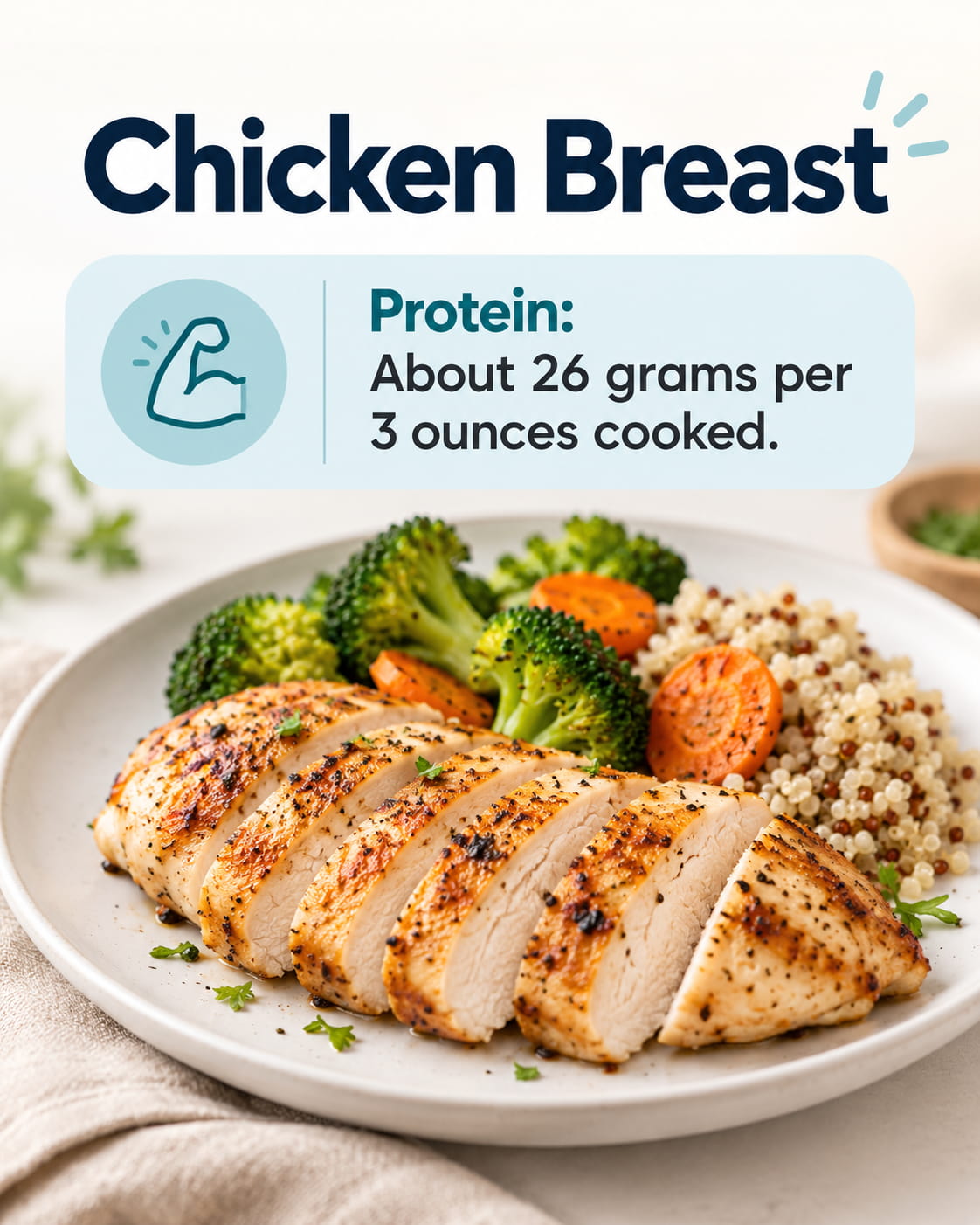
Protein: About 26 grams per 3 ounces cooked.
Roasted, skinless chicken breast provides a substantial amount of protein in a relatively small portion. Its mild flavor makes it easy to use in salads, sandwiches, soups, and rice bowls.
For a simple meal, pair sliced chicken with a grain and vegetables. When measuring your portion, use the cooked weight to match the table.
2. Turkey Breast
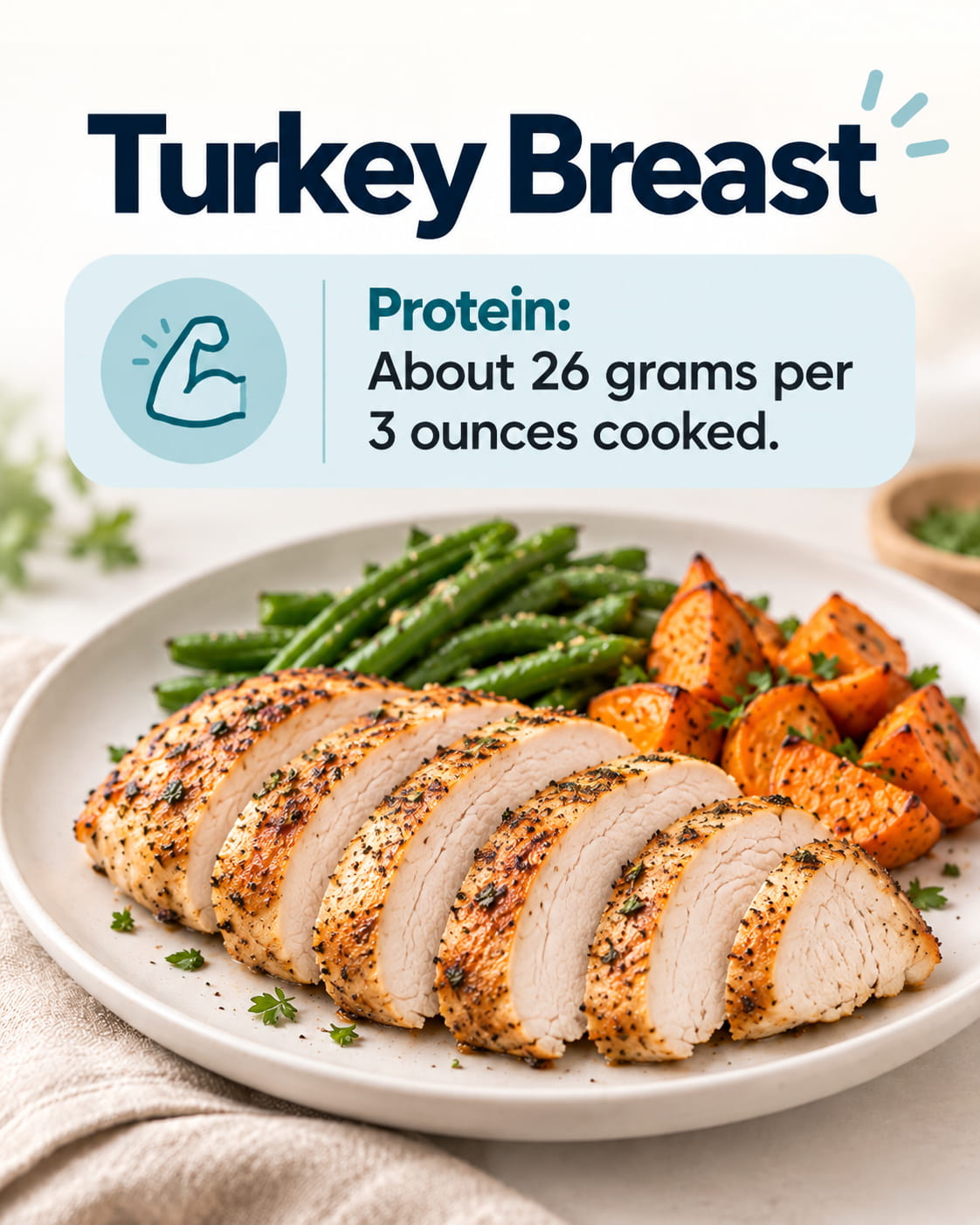
Protein: About 26 grams per 3 ounces cooked.
Plain roasted turkey breast works well in wraps, grain bowls, and sandwiches. You can also chop it into soups or combine it with cooked beans.
The listed amount applies to roasted breast meat. Packaged deli turkey has its own serving size and nutrition information, so use that product’s label when calculating protein and comparing sodium.
3. Lean Top Sirloin Steak
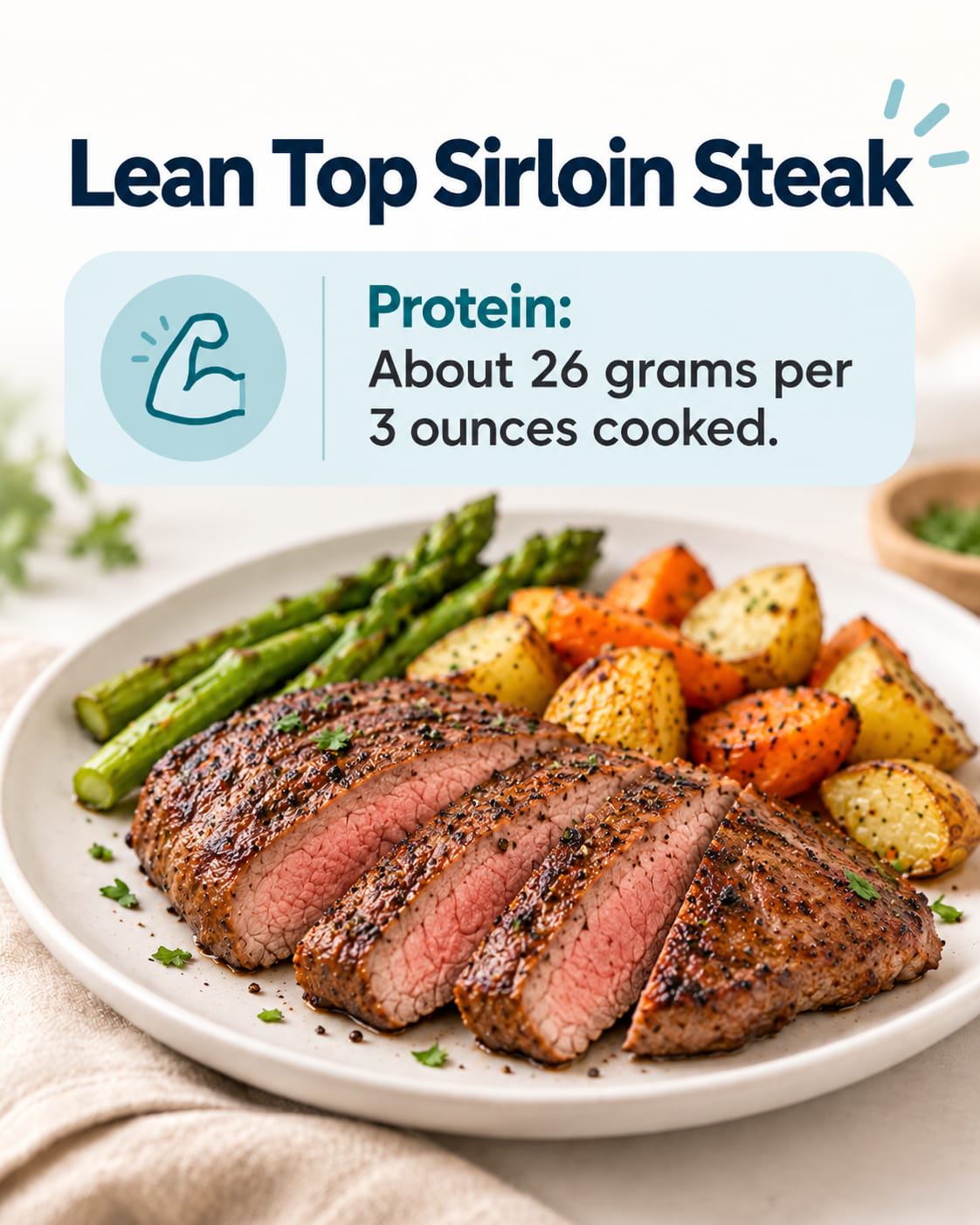
Protein: About 26 grams per 3 ounces cooked.
Top sirloin offers a concentrated protein option for people who eat beef. The table uses broiled steak with visible fat trimmed away.
Slice it thinly for a vegetable stir-fry, serve it with roasted vegetables, or add a small portion to a bean bowl. The protein amount will vary with the cut and cooking method.
4. Salmon
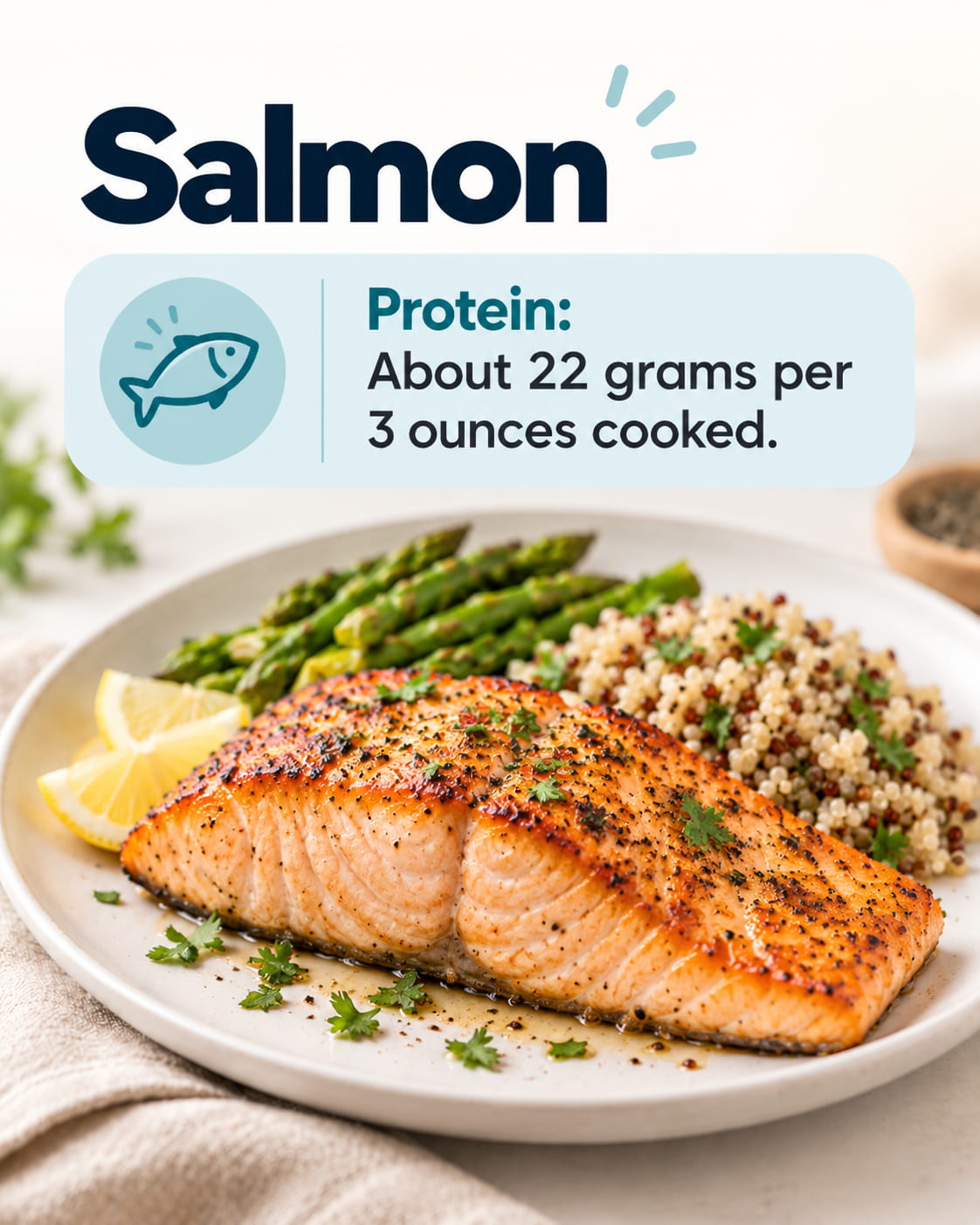
Protein: About 22 grams per 3 ounces of cooked pink or chum salmon.
Salmon provides protein along with omega-3 fats. Its flavor works well with lemon, herbs, rice, potatoes, and vegetables.
Bake or grill a portion and use leftovers in a salad or grain bowl. The amount listed is for pink or chum salmon; other salmon varieties can have different protein and fat amounts.
5. Canned Light Tuna
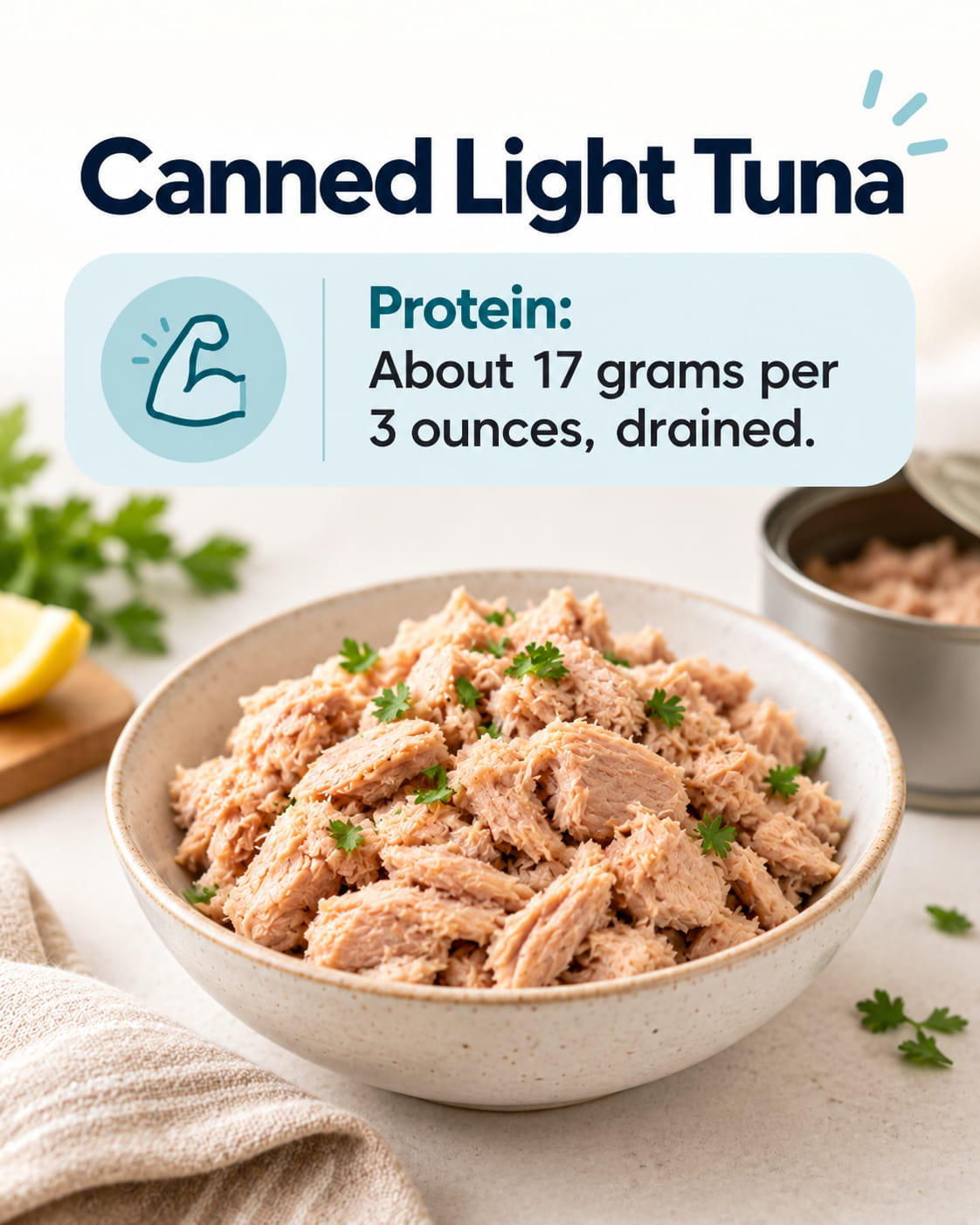
Protein: About 17 grams per 3 ounces, drained.
Canned tuna is a convenient choice when you want a protein food that requires little preparation. Mix it with chopped vegetables, spoon it over a salad, or use it in a sandwich.
The estimate here comes from a specific USDA entry for light tuna packed in water. Brands and products can differ, so check the drained serving information.
Canned light tuna and albacore have different mercury classifications. If you are pregnant, breastfeeding, or choosing fish for children, follow the FDA/EPA advice about eating fish.
6. Shrimp
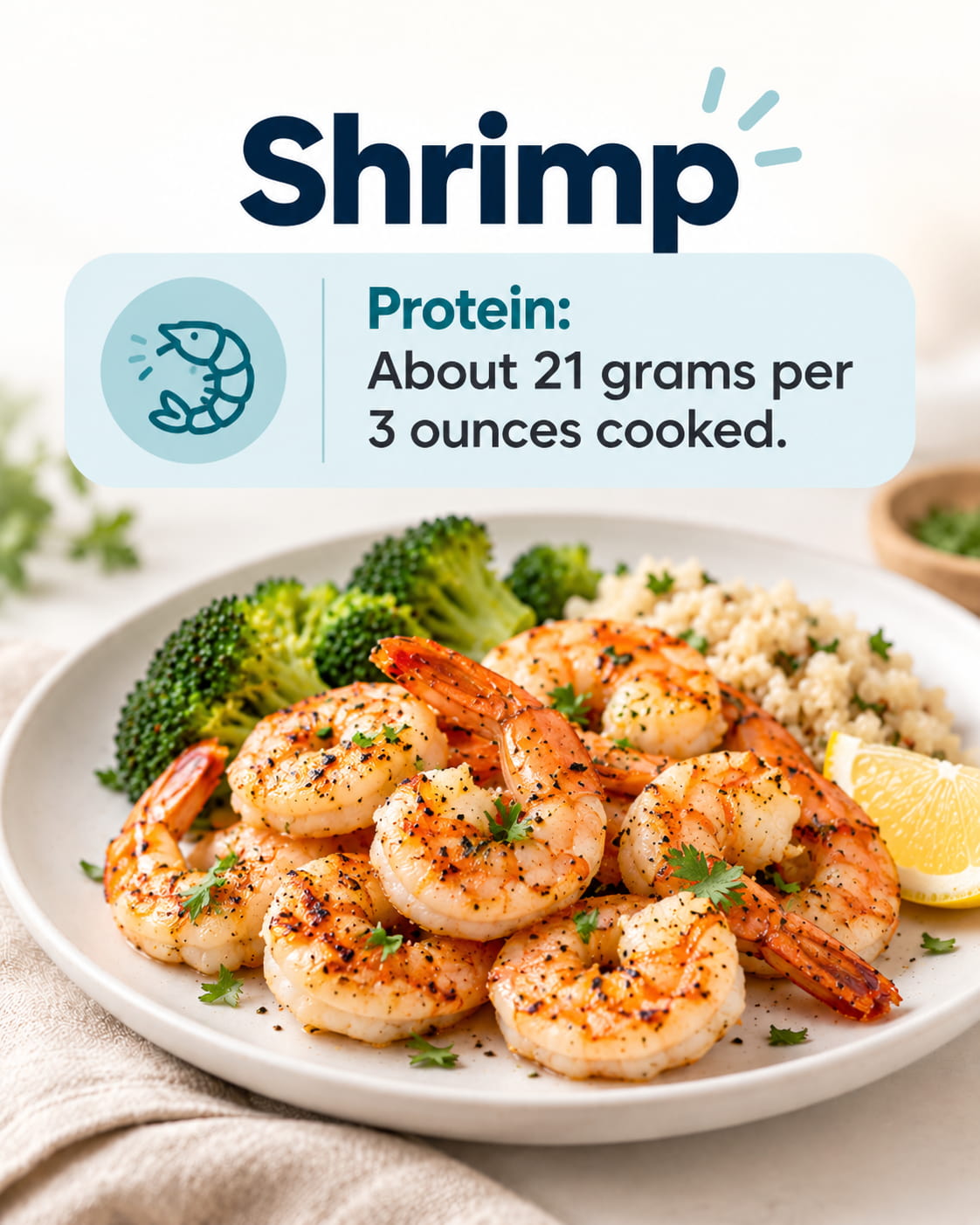
Protein: About 21 grams per 3 ounces cooked.
Plain shrimp can add protein to stir-fries, tacos, pasta, and grain bowls. Frozen shrimp can also be useful to keep available for planned meals.
The table refers to cooked shrimp without added ingredients. Breaded shrimp and shrimp served with sauce have different nutrition profiles, so check the label or recipe when tracking the full dish.
7. Eggs
Protein: About 6 grams per large poached egg.
Eggs are easy to work into breakfast, lunch, or dinner. Try a poached egg over cooked vegetables, an egg sandwich, or an omelet with beans on the side.
One egg contributes a modest amount of protein. Combining it with another protein food can help you build a meal that fits your needs.
8. Greek Yogurt
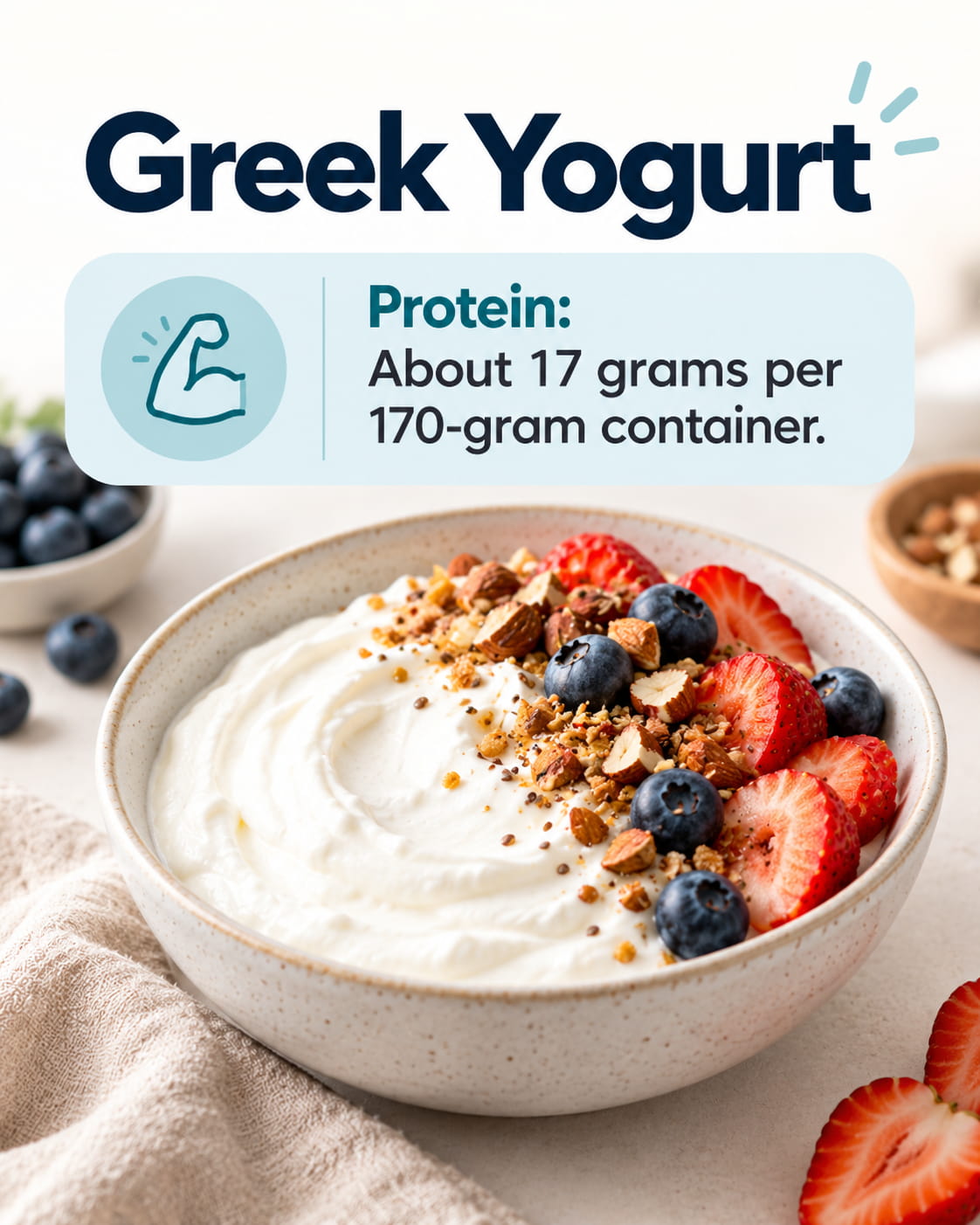
Protein: About 17 grams per 170-gram container of plain nonfat Greek yogurt.
Greek yogurt is useful for quick breakfasts and snacks. Add fruit and nuts, blend it into a smoothie, or use it as the base for a savory dip.
Container sizes, fat levels, and formulations vary. Compare the protein listed for the amount you plan to eat, and check added sugars when choosing flavored versions.
9. Cottage Cheese
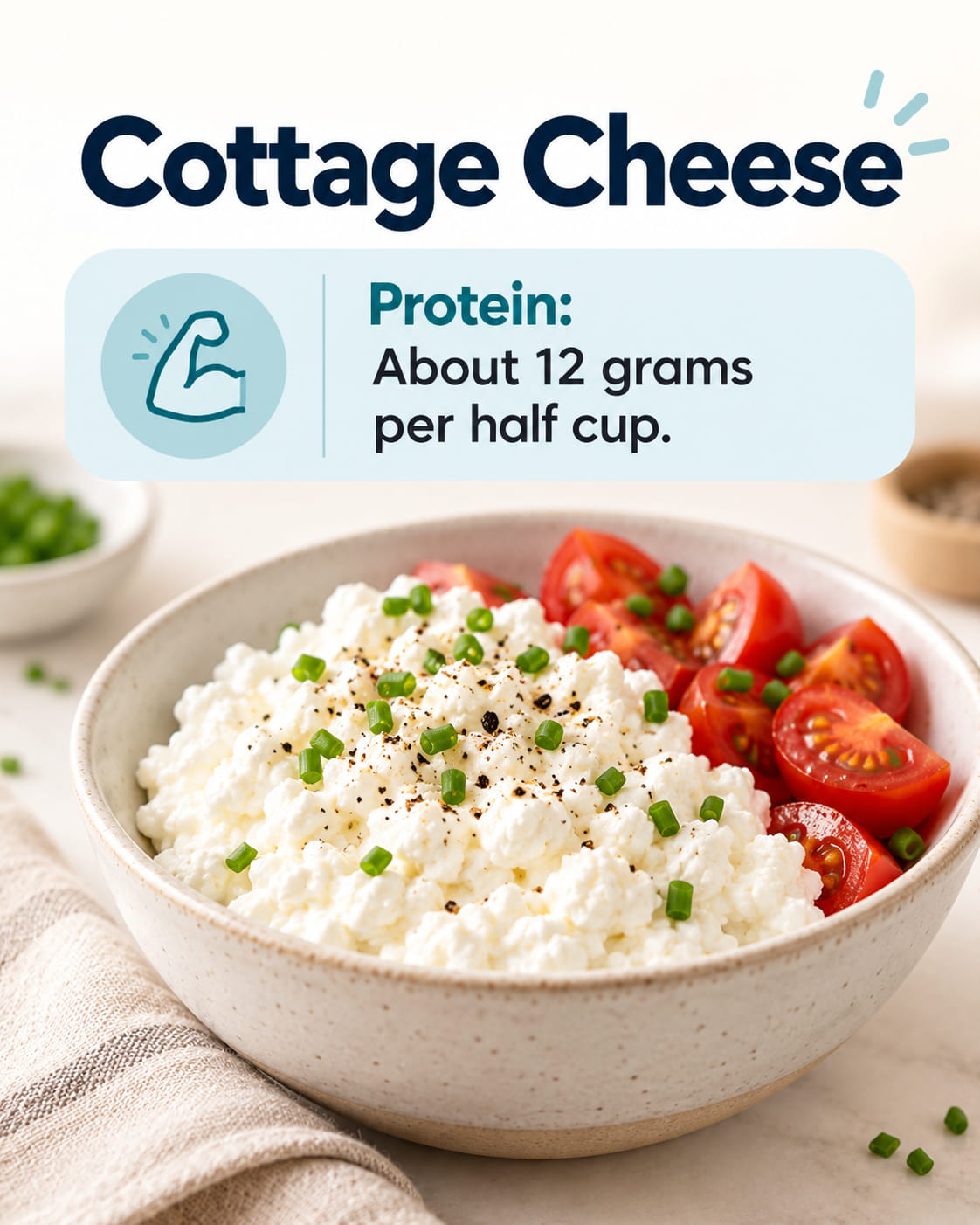
Protein: About 12 grams per half cup of 2% cottage cheese.
Cottage cheese works with both sweet and savory ingredients. Pair it with fruit, add tomatoes and black pepper, or spread it over toast.
Compare labels for protein and sodium, especially if you eat it regularly. Different fat levels and brands may provide different amounts.
10. Milk
Protein: About 8 grams per cup of 1% milk.
Milk can contribute protein as a drink or an ingredient. Use it to prepare oatmeal, blend it into a smoothie, or serve it alongside a meal.
The table uses cow’s milk. Plant-based beverages vary in protein content, so compare their Nutrition Facts labels if you are choosing an alternative.
11. Firm Tofu
Protein: About 15 grams per 3 ounces of the firm, calcium-set tofu used in this reference.
Tofu absorbs the flavors of sauces and seasonings, making it useful in stir-fries, curries, soups, and baked dishes. Cube it for a grain bowl or crumble it into a breakfast scramble.
This estimate applies to a specific firm tofu measured before additional cooking. Check your package: silken tofu and other firm products can have substantially different protein amounts.
12. Tempeh
Protein: About 17 grams per 3 ounces cooked.
Tempeh is made from fermented soybeans and has a firm texture that works well in sandwiches, stir-fries, and bowls.
Slice and season it before cooking, or crumble it into a sauce or taco filling. Follow the package’s preparation instructions. The listed amount uses a cooked portion, so measure after cooking if you want to match the reference.
13. Edamame
Protein: About 9 grams per half cup of cooked, shelled beans.
Edamame are young soybeans. They work as a snack or an addition to salads, rice bowls, and noodle dishes.
Prepare frozen edamame according to the package directions. Measure the edible beans after removing the pods: a half cup of pods does not represent the same portion as a half cup of shelled beans.
14. Lentils
Protein: About 9 grams per half cup cooked.
Lentils contribute protein and fiber and can fit into many meat-free meals. Use them in soups, curries, salads, or a sauce for pasta.
A cup provides approximately 18 grams of protein, making lentils a useful base for a larger meal. Pair them with vegetables and a grain, and measure the cooked portion when using the table.
15. Chickpeas
Protein: About 7 grams per half cup cooked.
Chickpeas are versatile enough for salads, curries, soups, and mashed sandwich fillings. You can also roast them for a different texture.
The listed value is for cooked whole chickpeas. Hummus contains additional ingredients and is often eaten in smaller portions, so use its own label or recipe information when estimating protein.
16. Black Beans
Protein: About 8 grams per half cup cooked.
Black beans add protein and fiber to tacos, chili, burrito bowls, and soups. They can also be mashed into a sandwich filling or combined with eggs.
Keep cooked or canned beans available if they fit your routine. For canned products, use the serving size and nutrition information on the label.
17. Peanuts
Protein: About 7 grams per ounce of dry-roasted, unsalted peanuts.
Peanuts can add protein to a snack or provide crunch in salads and noodle dishes. Pair a measured portion with fruit, or chop them over a vegetable and grain bowl.
A handful can vary considerably in size. Measuring an ounce occasionally can help you recognize the portion used in the nutrition table.
18. Pumpkin Seeds
Protein: About 9 grams per ounce of dried, shelled kernels.
Pumpkin seed kernels, often sold as pepitas, are easy to sprinkle over oatmeal, yogurt, salads, or soups. They can also be mixed into a homemade snack mix.
The protein estimate refers to the edible kernels. Seeds weighed with their shells do not provide the same edible portion. Roasted and seasoned products may have different label values.
19. Almonds
Protein: About 6 grams per ounce.
Almonds contribute protein to snacks and meals. Eat a measured portion with fruit, stir chopped almonds into oatmeal, or add them to a yogurt bowl.
If you choose coated or flavored almonds, check the label for added sugars and sodium as well as the serving size.
20. Quinoa
Protein: About 8 grams per cup cooked.
Quinoa is a grain-like seed that works as the base of a bowl or as a side dish. Combine it with beans, lentils, tofu, poultry, or seafood.
Its protein contribution adds to the rest of the meal. Measure quinoa after cooking to match the table; a cup of dry quinoa represents a much larger quantity of prepared food.
How Much Protein Do You Need Each Day?
Your protein needs depend on factors such as body size, activity, life stage, and health.
The Dietary Guidelines for Americans, 2025–2030, released in January 2026, give a daily protein goal of 1.2–1.6 grams per kilogram of body weight, adjusted for individual calorie needs.
The National Academies’ established adult Recommended Dietary Allowance, or RDA, is 0.8 grams per kilogram per day. It is designed to meet the needs of nearly all healthy adults and remains a separate nutrient reference from the newer federal dietary goal.
For example, for an adult weighing 70 kilograms, or about 154 pounds:
| Reference | Calculation | Daily amount |
|---|---|---|
| Established adult RDA | 70 × 0.8 | 56 g |
| Current dietary guideline goal | 70 × 1.2–1.6 | 84–112 g |
These calculations illustrate the guidance. They do not establish the right target for every person at that weight.
How to Add Good Protein Sources to Your Meals
A practical starting point is to identify a protein food you enjoy and build the meal around it. Then add vegetables or fruit, grains or other starches, and fats that fit the meal.
Here are several combinations using the rounded amounts above:
| Combination | Approximate protein from the listed foods |
|---|---|
| 170 g Greek yogurt + 1 oz almonds | 23 g |
| 1 cup cooked lentils + 1 cup cooked quinoa | 26 g |
| 3 oz cooked chicken breast + ½ cup black beans | 34 g |
| ½ cup cottage cheese + 1 cup milk | 20 g |
Additional ingredients will contribute their own nutrients and calories. These examples are meal components, and the portions can be adjusted to your appetite and needs.
To make planning easier:
- Choose two or three protein foods for the week that suit your schedule.
- Keep convenient options available, such as yogurt, canned beans, or frozen edamame.
- Include a protein food at breakfast if your usual breakfast contains little.
- Rotate your choices so that your meals remain varied.
What to Consider When Choosing Protein Foods
Check the Full Nutrition Label
Look at protein alongside serving size, sodium, saturated fat, and added sugars. A product’s protein claim does not tell you everything about its nutritional profile.
If you eat two labeled servings, you also consume twice the listed protein and twice the other listed nutrients.
Account for Allergies and Individual Needs
Several foods on this list are major allergens, including milk, eggs, fish, shellfish, peanuts, tree nuts, and soy. Choose foods that fit your known allergies and check ingredient labels.
If you have kidney disease or have been given a protein restriction, ask your clinician or registered dietitian about your target. NIDDK’s guidance on protein and kidney disease explains that needs vary and may change over time, including during dialysis.
Frequently Asked Questions
Which Foods on This List Provide the Most Protein Per Serving?
The listed 3-ounce portions of roasted chicken breast, roasted turkey breast, and lean broiled top sirloin each provide approximately 26 grams. Serving size matters: comparing a larger portion with a smaller one does not show which food has the highest protein concentration.
Can You Get Enough Protein Without Eating Meat?
Yes. A varied diet can supply protein through soy foods, beans, lentils, nuts, seeds, and grains. People who eat dairy or eggs can include those too. MedlinePlus explains that animal products are not necessary to meet protein needs.
Do Plant Proteins Need to Be Combined at Every Meal?
No. You do not need to pair foods such as beans and rice at every meal to obtain essential amino acids. Eating a varied selection of protein-containing foods across the day is more important.
How Much Protein Is in Two Eggs?
Two large eggs generally provide about 12–13 grams of protein. The exact amount depends on egg size and preparation. Whether that fits a meal depends on your overall needs and what else you eat with them.
Are Nuts and Seeds Good Protein Sources?
Yes. An ounce of the foods listed provides approximately 6 grams from almonds, 7 grams from peanuts, or 9 grams from dried pumpkin seed kernels. They can contribute protein through snacks and toppings, while portion size remains important.
Should You Count Protein From Grains and Other Foods?
Yes. Your daily total includes protein from all the foods you eat. For example, the protein in quinoa adds to the protein supplied by lentils or chicken in the same bowl. Use the serving amount for each ingredient when estimating a meal.
Conclusion
Good protein sources can fit many eating preferences and routines. Poultry, seafood, eggs, dairy, soy foods, beans, lentils, nuts, seeds, and quinoa all offer useful options.
Choose a few foods you enjoy, check how much protein your usual portion provides, and include a variety across your meals. For your next grocery trip, pick one convenient protein food for breakfast and two options for lunch or dinner.
This content is for informational purposes only and not medical advice.