
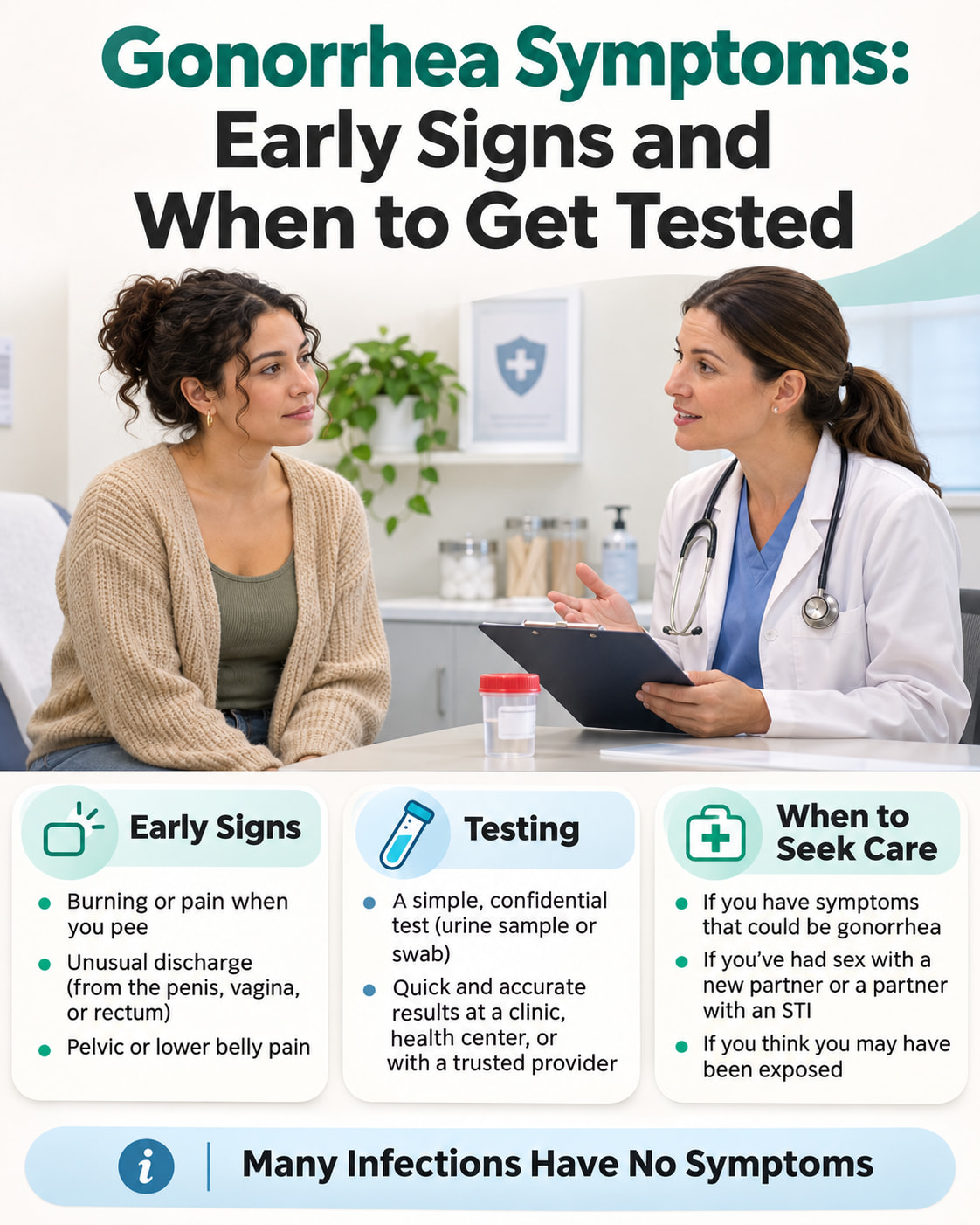
Gonorrhea symptoms can include burning when you pee, unusual genital discharge, bleeding between periods, and rectal discomfort, but many infections cause no noticeable symptoms. If you develop possible symptoms or a sexual partner tests positive, contact a healthcare professional promptly. Testing is needed to confirm the infection.
Knowing which signs to watch for can help you seek care sooner. Just as important, feeling well does not rule out gonorrhea or mean you cannot pass it to someone else.
What Is Gonorrhea?
Gonorrhea is a sexually transmitted infection, or STI, caused by Neisseria gonorrhoeae bacteria. It can spread through vaginal, anal, or oral sex and may affect the genitals, rectum, throat, or eyes.
The infection can also pass from a pregnant person to a baby during childbirth. Symptoms depend on the infected body site and your anatomy.
When to Get Medical Help Right Away
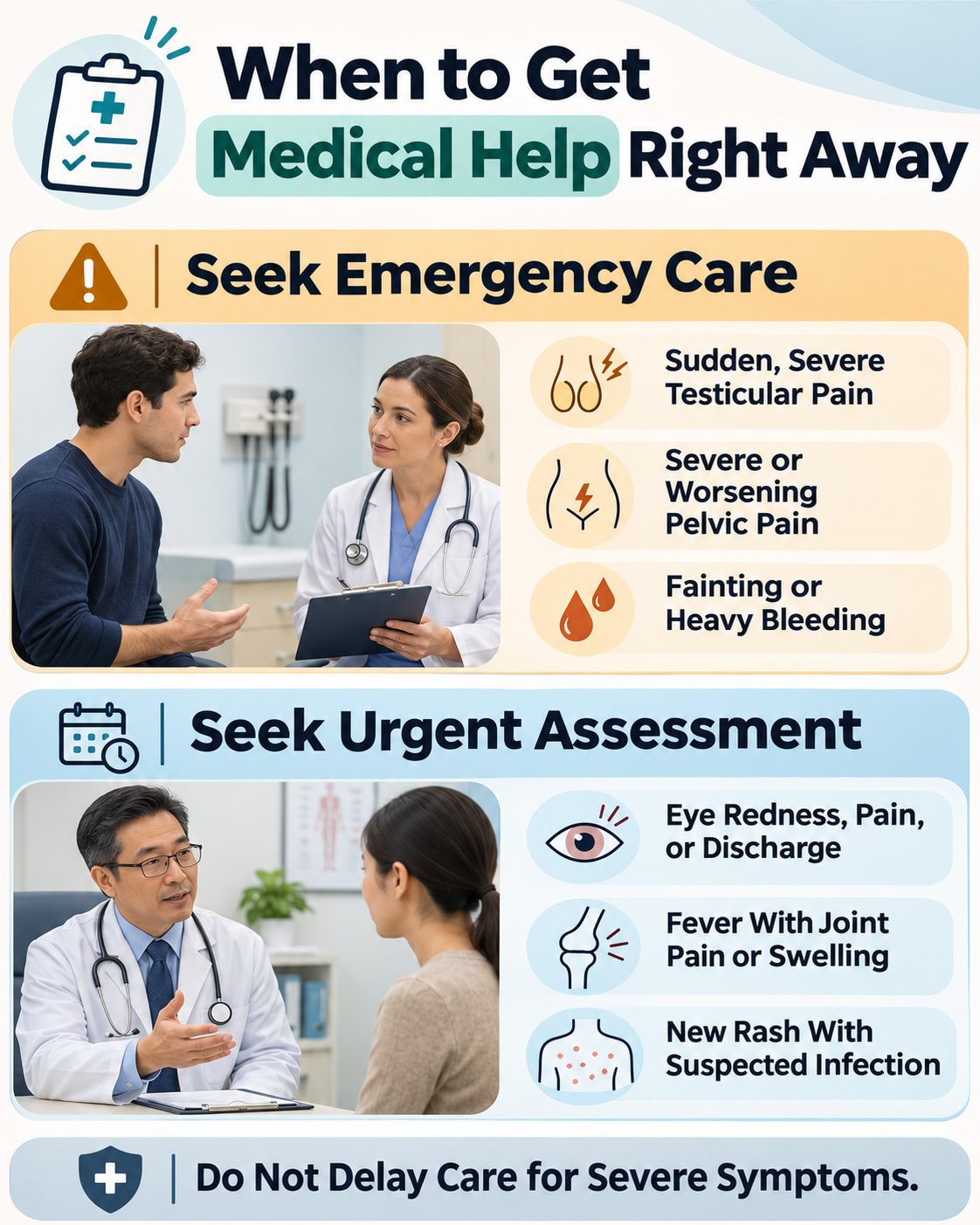
Some symptoms need faster assessment than a routine STI appointment.
Seek Emergency Care
- Sudden, severe testicular pain: This can indicate testicular torsion or another urgent problem. Do not assume it is caused by an STI.
- Severe or worsening pelvic or lower abdominal pain: Get emergency help, especially if you also have fainting, heavy vaginal bleeding, vomiting, or feel very unwell.
Seek Urgent Assessment
If you may have gonorrhea, NHS guidance recommends urgent assessment for eye redness, pain, or pus-like discharge, or for fever, joint pain or swelling, or a new rash. These can be signs of a more serious infection.
What Are the Early Gonorrhea Symptoms?
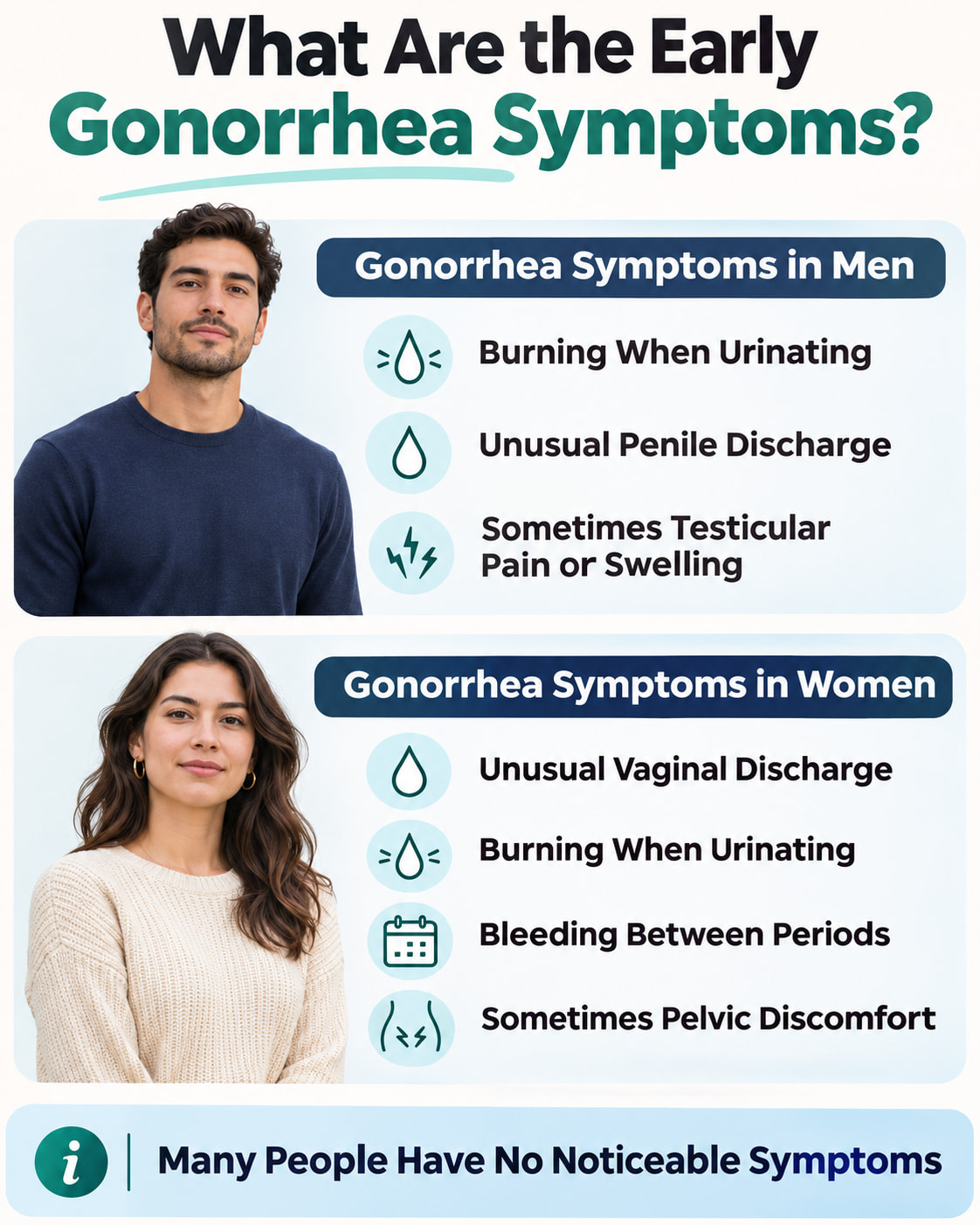
There is no single first symptom that everyone develops. Some people notice changes soon after infection, while others do not notice anything.
Gonorrhea Symptoms in Men
Symptoms affecting the penis and urinary passage may include:
- Burning or pain when you pee.
- White, yellow, or green discharge from the penis.
- Pain or swelling in a testicle, which is less common.
CDC guidance explains that gonorrhea can also be present without symptoms. Discharge color alone cannot confirm what infection you have.
Gonorrhea Symptoms in Women
Most women with gonorrhea have no symptoms or do not recognize them. When symptoms occur, they may include:
- More vaginal discharge than usual or another change in discharge.
- Burning or pain during urination.
- Bleeding between periods or during sex.
- Lower abdominal or pelvic discomfort.
These changes can overlap with other conditions. New pelvic pain, unusual bleeding, or discharge deserves assessment even when discomfort is mild.
Gonorrhea Symptoms in the Throat, Rectum, and Eyes
These infections can affect people of any sex.
| Infection site | Possible symptoms |
|---|---|
| Throat | Often no symptoms; sometimes soreness, redness, or pain |
| Rectum | Anal itching, discharge, soreness, bleeding, or painful bowel movements; sometimes no symptoms |
| Eyes | Redness, pain, and discharge, which need urgent assessment when gonorrhea is suspected |
A sore throat or rectal irritation does not automatically mean you have gonorrhea. Your sexual history and appropriate testing help a clinician determine the cause.
How Soon Do Gonorrhea Symptoms Appear?
According to the WHO fact sheet, updated October, 2025, symptoms usually begin 1–14 days after sexual contact with an infected person, when symptoms occur.
That range is not a deadline. Some people never notice symptoms, and signs may be recognized later. Having no symptoms after two weeks does not rule out infection.
Symptom timing and test timing are different. An early negative result may need to be checked again.
When to Get Tested for Gonorrhea
Testing may be appropriate because of symptoms, a possible exposure, or a routine screening recommendation.
If You Have Symptoms or a Partner Tests Positive
Contact a healthcare professional or sexual health clinic promptly if you notice possible symptoms or learn that a partner has gonorrhea. You do not need to wait until symptoms become severe.
If you are pregnant or could be pregnant and are concerned about exposure, tell your prenatal care team or another healthcare professional.
If the Exposure Was Recent
Tell the clinic when the sexual contact happened and whether you have symptoms. They can advise whether to test now and whether an early negative result needs a repeat test.
There is no single waiting period that is appropriate for every test and situation. Symptoms or a known infected partner are reasons to seek assessment promptly.
If You Have No Symptoms
Routine screening can identify an infection you would otherwise miss. The CDC screening recommendations include:
| Group | General screening recommendation |
|---|---|
| Sexually active women younger than 25 | Every year |
| Sexually active women 25 and older with increased risk | Every year; risk factors include new or multiple partners or a partner with an STI |
| Sexually active men who have sex with men | At least annually; every 3–6 months when risk is increased |
| Pregnant people younger than 25 or with increased risk | During pregnancy, with repeat screening when indicated |
Screening should also reflect anatomy and sexual exposure, including for transgender and gender-diverse people. These routine schedules do not replace assessment for symptoms or a known exposure.
How Gonorrhea Testing Works
Clinicians commonly use a nucleic acid amplification test, or NAAT, which looks for genetic material from the bacteria. Depending on the possible infection site, you may provide:
- A urine sample or genital swab to check for genital infection.
- A throat swab when oral exposure makes throat testing appropriate.
- A rectal swab when anal exposure makes rectal testing appropriate.
You may be able to collect some swab samples yourself after receiving instructions.
A negative urine test does not rule out gonorrhea in a throat or rectum that was not sampled. Tell the clinician which types of sexual contact you have had so they can choose the appropriate samples.
You can ask about testing through primary care, a sexual health clinic, a local health department, or a student health center. Some services offer confidential testing at low or no cost; ask about availability and fees when booking.
What Happens After a Positive Gonorrhea Test?
A positive result needs professional medical care. A clinician can prescribe the appropriate antibiotics and explain the next steps. Antibiotic resistance makes choosing the correct medication important, so do not use leftover or shared antibiotics.
Your clinician will also discuss:
- Partner care: Current and recent sexual partners may need evaluation, testing, and medical care even if they feel well.
- Other STI tests: A gonorrhea diagnosis is a reason to check for chlamydia, syphilis, and HIV.
- When to resume sex: CDC advises waiting seven days after treatment. You and your partners should have completed treatment, and symptoms should be gone before sex resumes.
Follow-Up Testing and Retesting
The CDC clinical guidance distinguishes two follow-up purposes:
| Follow-up | Timing and purpose |
|---|---|
| Checking that throat infection has cleared | A follow-up test 7–14 days after initial treatment |
| Checking for reinfection | Retesting approximately three months after treatment, even if partners received care |
An early clearance test is usually unnecessary for uncomplicated genital or rectal infection after a recommended regimen. Your clinician will tell you whether you need one.
If symptoms persist or return, contact the clinic instead of waiting for the three-month retest.
Why Prompt Care Matters
Without appropriate care, gonorrhea can lead to pelvic inflammatory disease, ongoing pelvic pain, fertility problems, or an increased risk of ectopic pregnancy. It can also cause painful inflammation near the testicles. Rarely, the infection spreads to the blood or joints.
These complications are possible, not inevitable. Testing and professional care help address infection before it causes further problems.
Frequently Asked Questions
What Is Usually the First Sign of Gonorrhea?
There is no universal first sign. Burning during urination or unusual discharge may be noticeable early symptoms, particularly with infection involving the penis. Many people have no noticeable symptoms.
Can You Have Gonorrhea Without Knowing It?
Yes. Genital, throat, and rectal infections can be present without obvious symptoms. Feeling well does not establish that you or a partner is infection-free.
Can You Tell Gonorrhea and Chlamydia Apart by Their Symptoms?
No. Both can cause painful urination and unusual discharge, and both can be symptom-free. They can also occur together. Testing is needed to distinguish them.
Can You Test for Gonorrhea at Home?
Yes, options include collecting a sample at home for a laboratory and certain tests performed entirely at home. In March 2025, the FDA authorized a nonprescription vaginal-swab test for gonorrhea, chlamydia, and trichomoniasis that gives results in about 30 minutes. A vaginal test does not check the throat or rectum.
What if My Test Is Negative but I Still Have Symptoms?
Contact a healthcare professional. Testing may have happened too early, the relevant body site may not have been sampled, or another condition may explain your symptoms. A negative home result should not end the assessment when symptoms or exposure concerns remain.
Can You Get Gonorrhea Again?
Yes. Having gonorrhea before does not prevent another infection. Partner care and the recommended three-month retest remain important even after you complete prescribed treatment.
Conclusion
Gonorrhea symptoms vary, and an infection can be present without obvious warning signs. If you notice new symptoms, learn that a partner has gonorrhea, or are due for routine screening, arrange testing with a healthcare professional or sexual health clinic. Share when the exposure occurred and which body sites may have been exposed so the testing plan fits your situation.
This content is for informational purposes only and not medical advice.